Galtonia is a bulbous perennial plant belonging to the Liliaceae family. It was named after the scientist Francis Galton. Galtonia is native to South Africa and grows in moist meadows and on rocky outcrops. It was brought to Europe in 1870. Since then, it has been cultivated as a late-flowering ornamental plant. It is also known as Cape hyacinth. There are four species of this plant, but gardeners primarily grow Galtonia alba (whitening).
Content
Description of the Galtonia flower
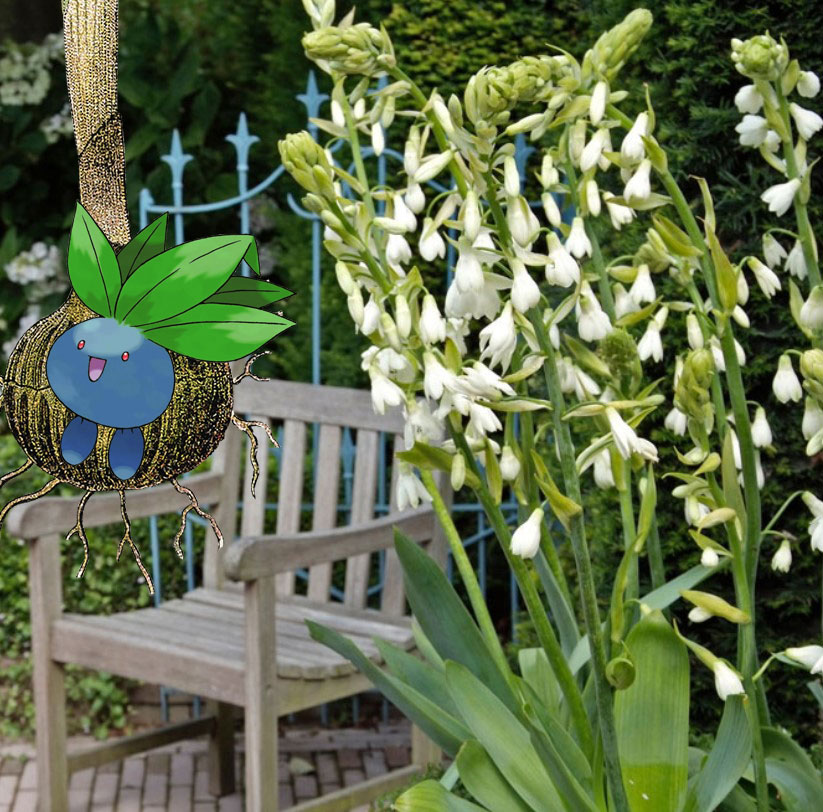
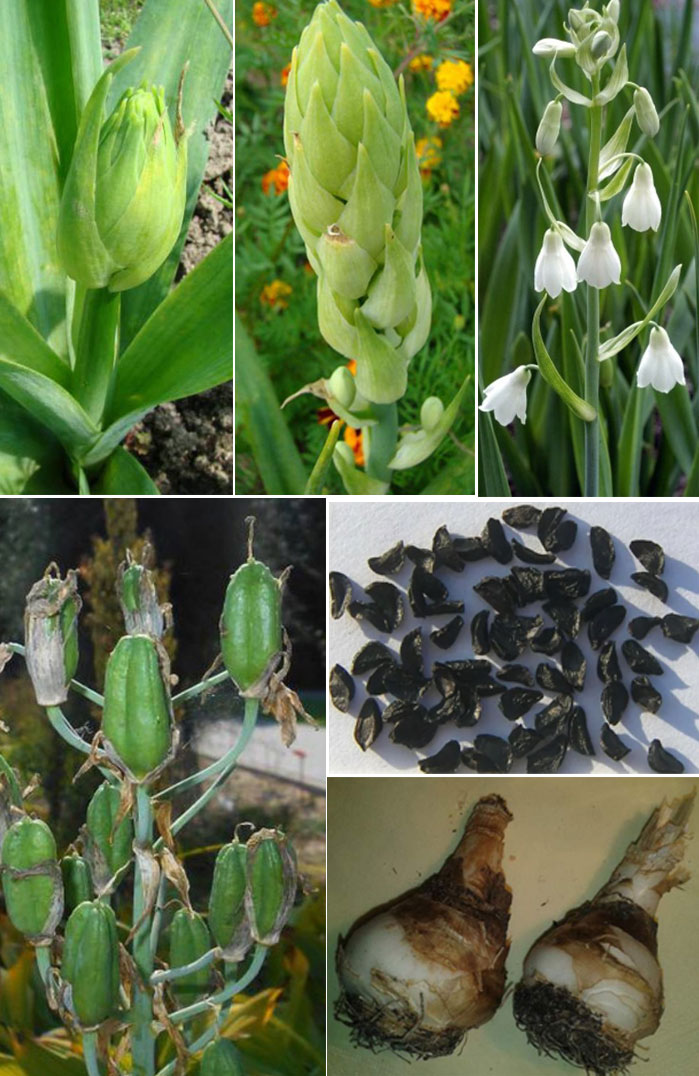
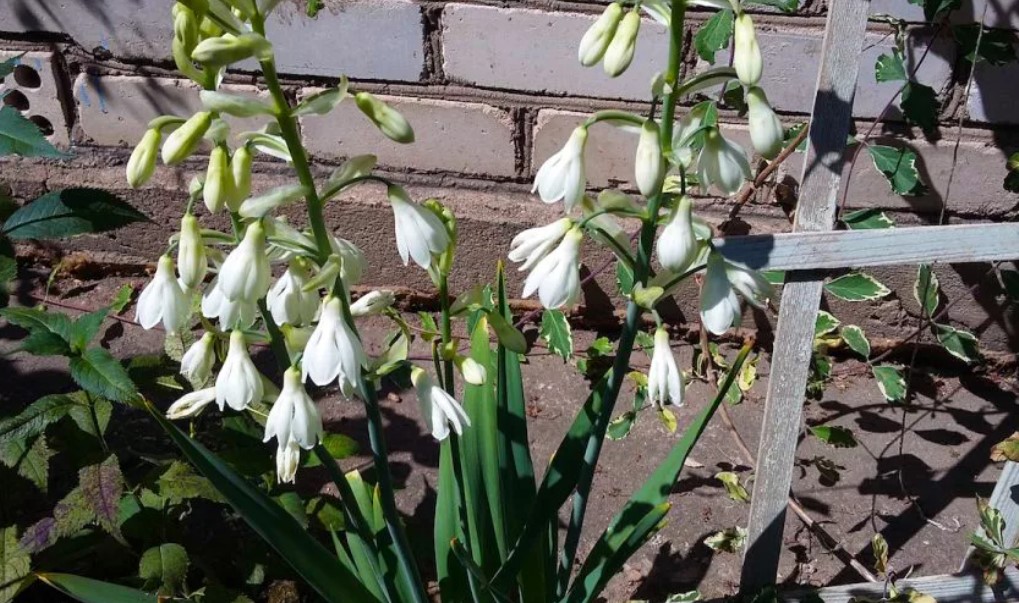
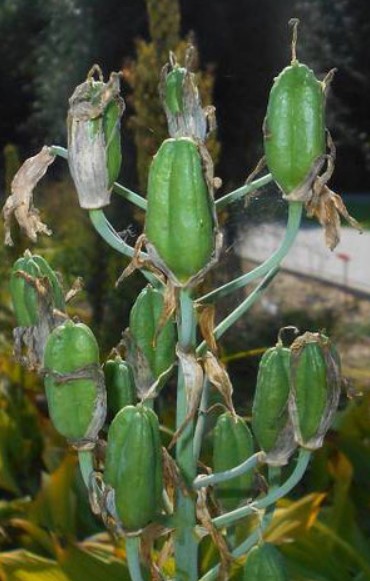
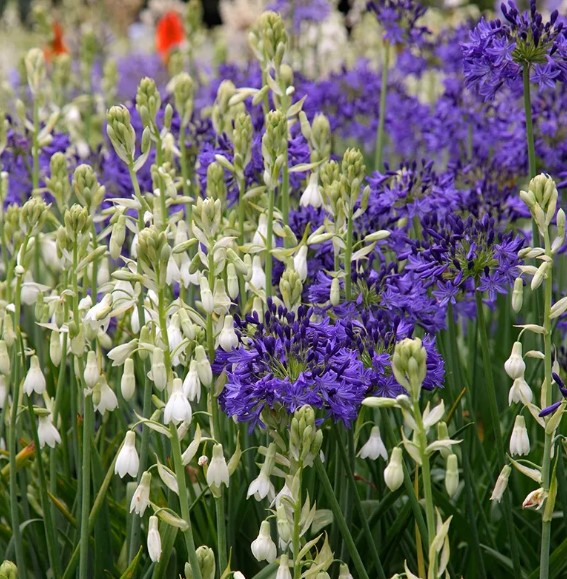
The plant can reach a height of 60 to 120 cm, depending on the soil fertility. In the spring, erect, ribbon-like green leaves grow, 0.5 to 1 m long. In the fall, they turn yellow, and with the onset of winter, they fall off, and the plant enters dormancy until warm weather arrives the following season. Flowering occurs from July to September. Numerous white, bell-shaped flowers form, drooping downward and 3 to 4 cm long. After flowering, capsules appear in place of the inflorescences, containing dark, triangular-shaped seeds.
Types and varieties of Galtonia
The plant is divided into four main species. Let's take a closer look at each one.
Whitish (whitening)
Galtonia candicans is the most popular species grown in gardens. It resembles a hyacinth in appearance. The plant reaches a height of 0.8-1.3 m, has erect stems and pointed green leaves 0.5-1 m long.
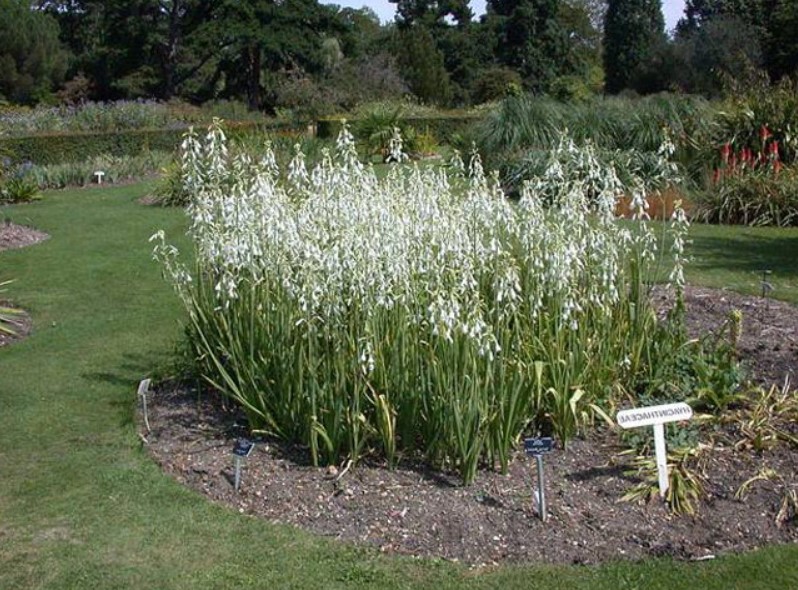
A cylindrical stem bears 20-40 white, pleasantly fragrant flowers that hang downwards. The whitening galtonia blooms from late summer to early fall.
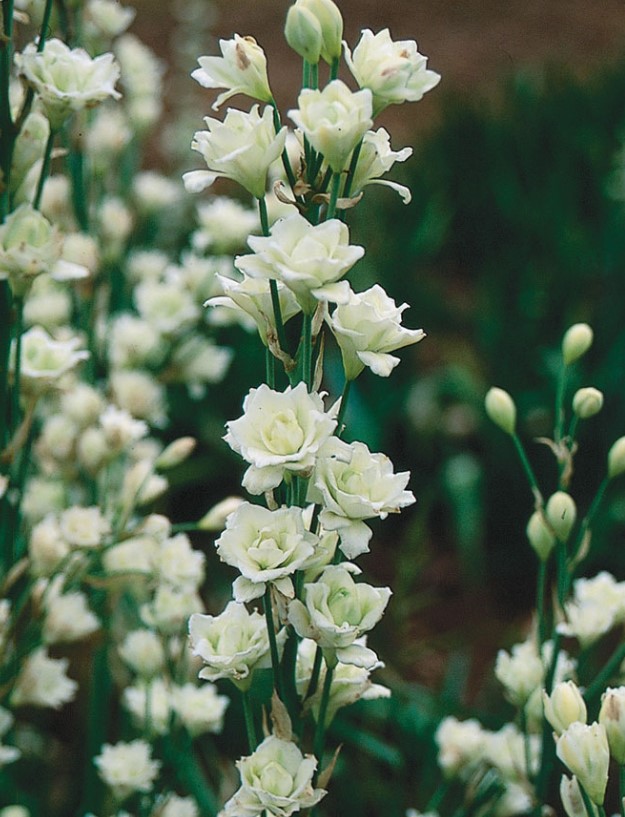
One cultivar, Moonbeam, was developed from this species. Moonbeam has double flowers, grows up to two meters in height, and is grown for cut flowers.
Excellent
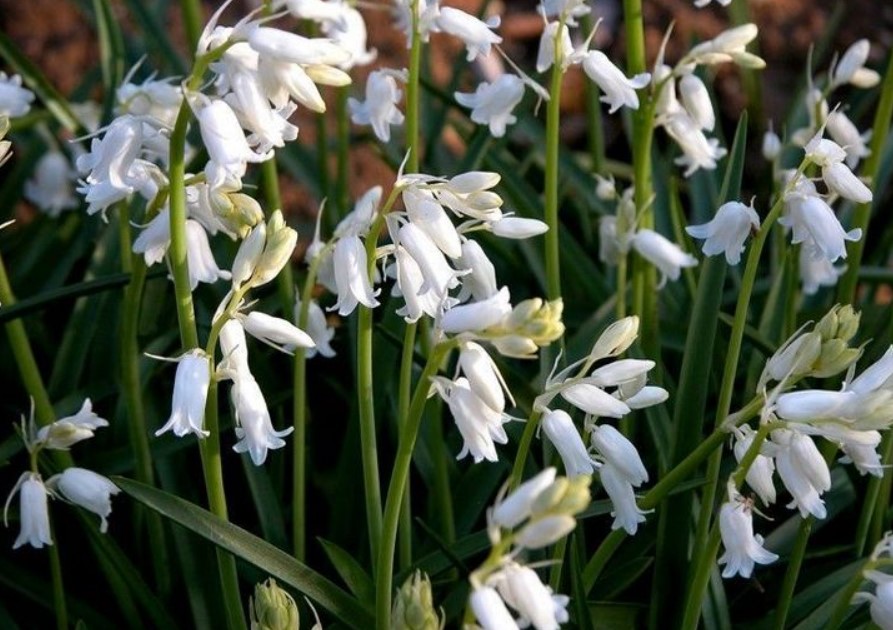
Galtonia princeps is occasionally cultivated in our climate zone. It is primarily found in South Africa. Bushes of this species grow up to 100 cm tall. The plant blooms in early autumn, producing approximately 10-15 white flowers, slightly greenish on the outside. They are 35 mm long.
Galtonia viridiflora
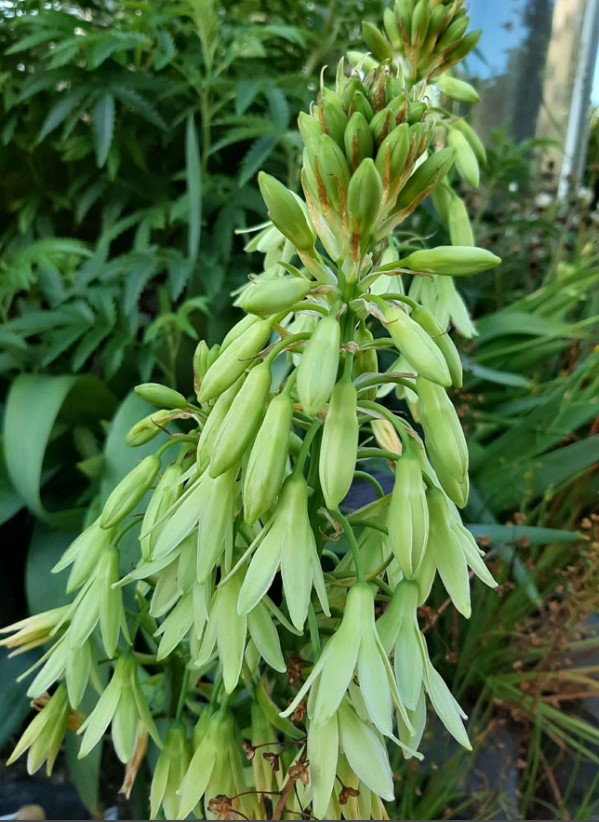
Galtonia viridiflora is grown exclusively from bulbs. The plant gets its name from the green color of its flowers. Another name for the flower is Galtonia viridiflora.
It has erect green leaves 45-65 cm long. Despite its relatively small height, the plant has strong and numerous flower stalks that do not break or bend under the weight of the flowers, creating a very graceful appearance.
This species is grown outdoors in the south. In other regions, it can only be grown indoors, as it is a heat-loving plant.
When grown in the garden, it needs to be dug up for the winter to prevent it from dying. When planted indoors, it can fully reveal its true splendor.
Galtonia reginae
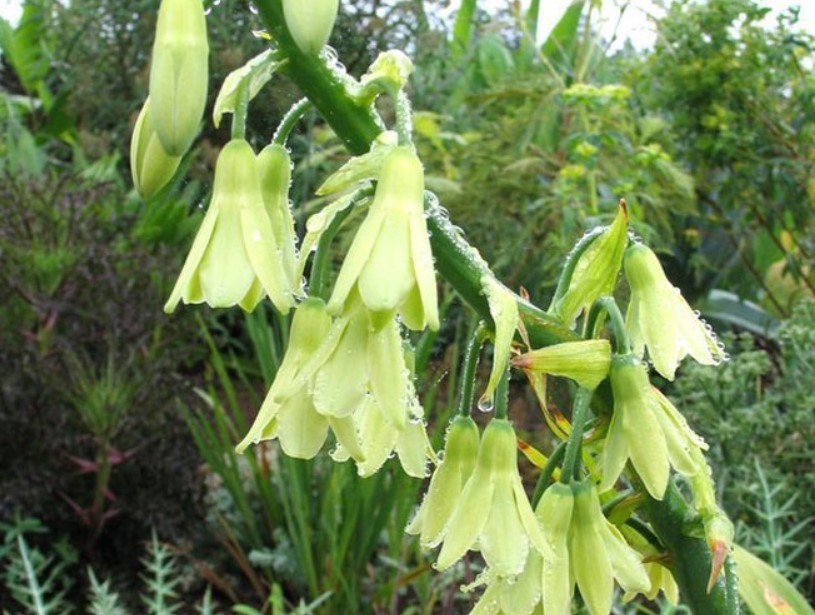
Galtonia regalis has large, arch-shaped green leaves. It blooms from July to September, producing creamy-yellow flowers.
Planting Galtonia in open ground
To get a healthy and strong plant, you should follow certain rules when planting it.
Planting dates
Galtonia should be planted in conditions familiar to it—a spot where water doesn't linger in the spring—to prevent excessive moisture, which can lead to root rot and eventual death of the plant. It's best to plant on a south-facing, rocky slope with full sun. The soil should be light, slightly acidic, and rich in humus.
Depending on the weather and climate in a particular region, galtonia should be planted from the end of March to May.
Landing rules
Galtonia is grown from bulbs or seeds. Seed propagation is a rather lengthy process. It's best to buy bulbs from a store; then you can be sure they'll quickly produce a large number of shoots and flowers.
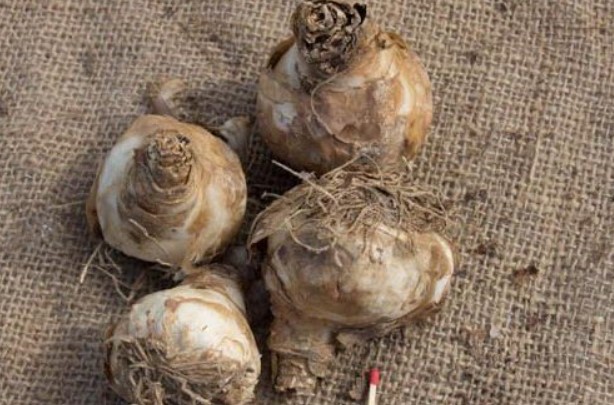
Galtonia can be planted according to the following schemes:
- place the bulbs at intervals of 50 cm;
- to form a bed, plant at least 5-6 bulbs in a circle, keeping a gap of 25 cm between them;
- If there are a large number of bulbs, they can be planted at intervals of at least 15 cm.
To plant the plant, the soil should be prepared in the fall by digging up the area with humus, compost or special mineral fertilizers.
Rules for planting Galtonia:
- Dig a hole at least 15 cm deep, or 20 cm in cooler regions.
- To prevent the bulbs from rotting, place a layer of drainage at the bottom of the hole.
- Plant the bulb vertically with the roots down and cover with soil.
- Gently compact the soil to help the roots form better.
Care in open ground
After planting, the plant doesn't require any special care. The most important thing is to remember to water it. Galtonia doesn't tolerate drying out.
Watering
The plant prefers sunny weather. However, it's important to prevent the soil from drying out during the growing season. Regular watering is necessary during flowering. In hot weather, the plant should be watered daily.
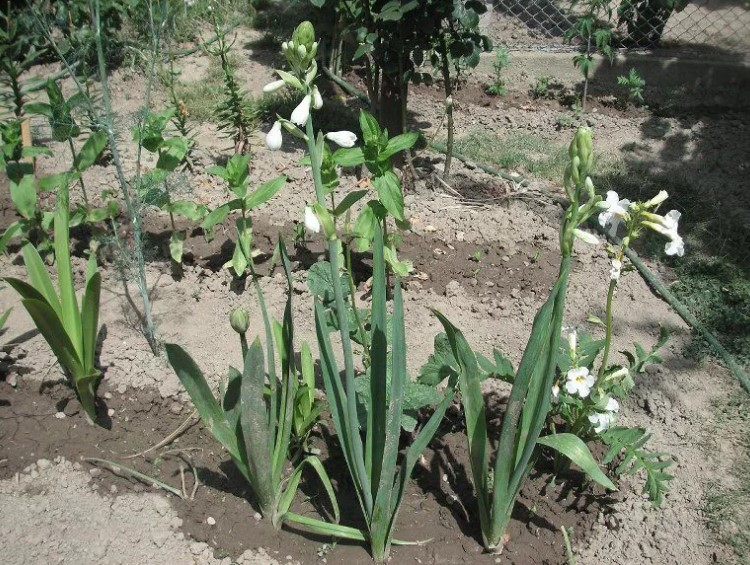
After watering, it is necessary to loosen the soil.
During flowering
To encourage the formation of new flower stalks, it's important to remove faded flowers promptly. To collect seeds, you can leave a single flower on a mature plant.
Top dressing
If Galtonia is planted in fertile soil, the plant doesn't require any special feeding. Occasionally, you can fertilize it with compost.
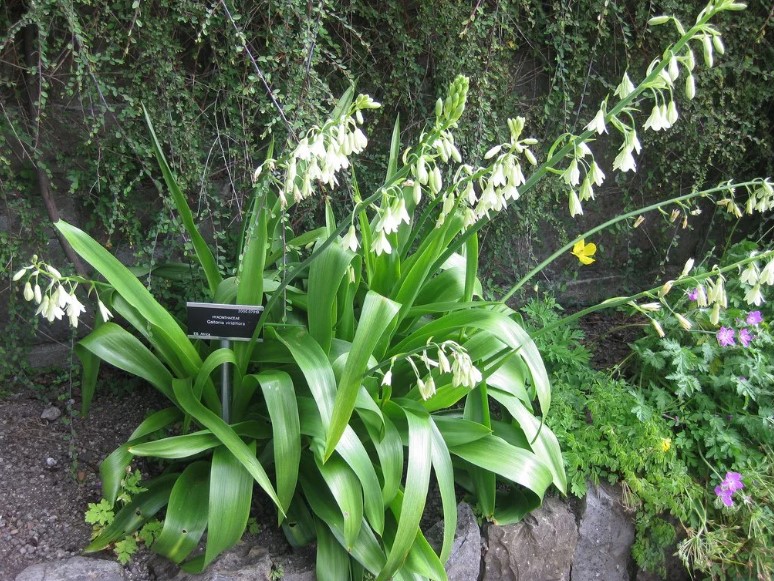
Galtonia alba produces about 35 flowers, and several shoots can form from a single bulb. Therefore, the plant requires a large amount of nutrients. If the soil is poor, it is best to fertilize it several times a year using a fertilizer for flowering plants.
Trimming
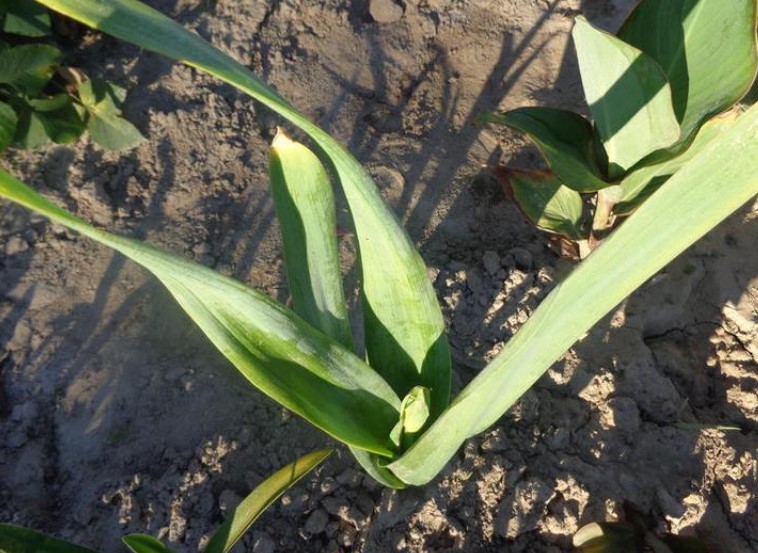
When the flowering period ends, remove the faded flower stalks without touching the leaves. They will die on their own, releasing valuable nutrients into the bulb. Leaves should be trimmed only after they are completely dry.
Wintering
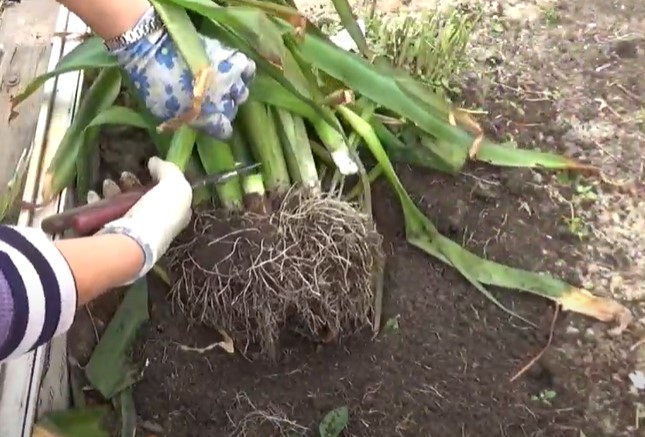
If the soil is well-drained and excess water is not retained during the winter, galtonia can withstand temperatures down to -15°C. When grown in cold regions, the plant must be prepared for winter. In October, dig up the bulbs and store them in a cool place in containers filled with sand until spring. If frost occurs, cover the planting material. During the winter, store them indoors, away from light, in a dry place at a temperature of +8…+10°C.
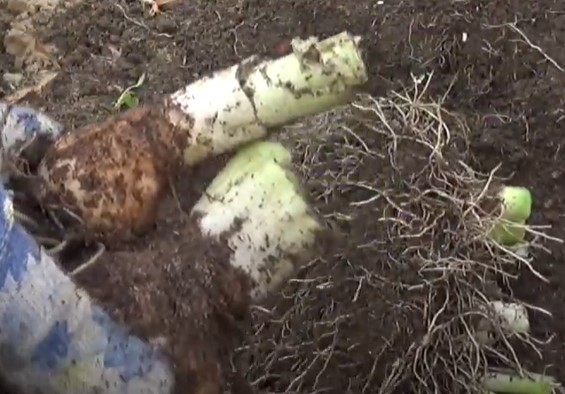
In warm climates, you can leave a few bulbs in the soil overwinter, covered with leaves. Because they stick to the soil, this provides excellent protection until severe frost sets in. When that happens, add a 10 cm layer of compost on top and cover with a covering material. This method works best if the soil is dry; otherwise, the bulbs will rot in damp soil.
In Russian regions, it is better to dig up galtonia bulbs.
Planting and care at home
Compared to other indoor bulbous plants, galtonia tolerates some shade. It prefers filtered light. Direct sunlight can cause burns on the leaves and flowers. When shoots appear, cover the plant with a dome or move it away from bright light until the shoots have grown. After this, it can be moved to a room with normal lighting.
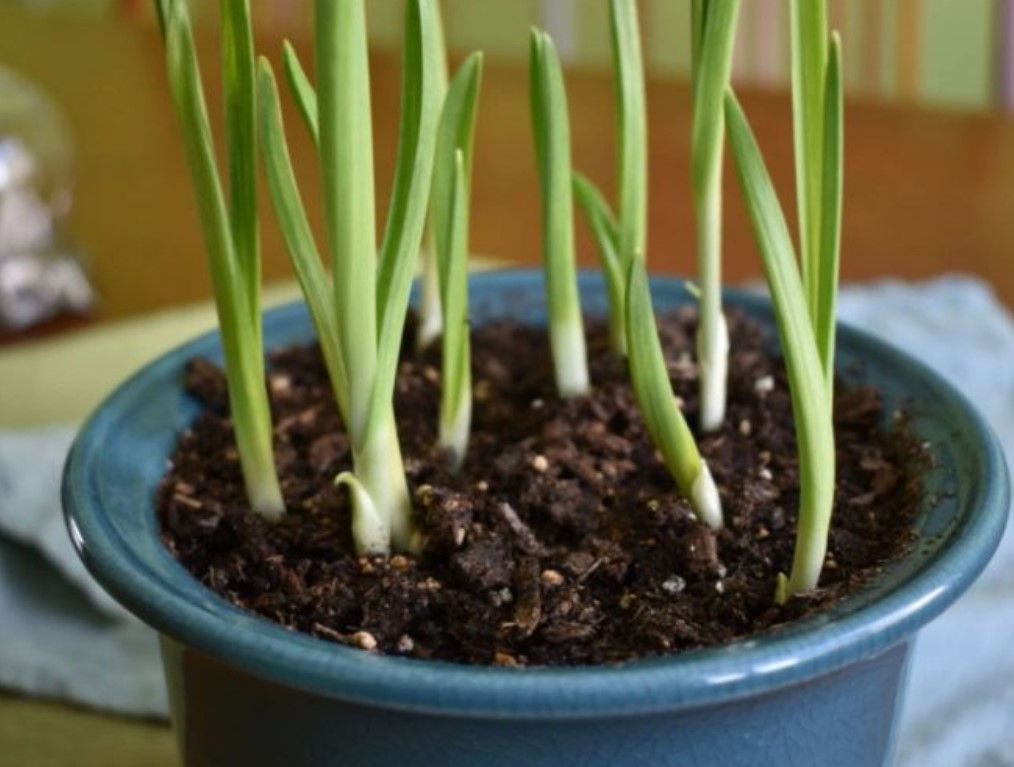
For long and lush flowering during the active growth phase of galtonia leaves and flowers, the recommended ambient temperature should be +16…+18 °C.
To overwinter indoor galtonias, you don't need to remove the bulbs from the soil. Once the soil is completely dry, transfer the plant to a location with a temperature of 8–12°C, dropping slightly to 4–5°C. Keep it in these conditions until sprouts appear, then move it to a warmer location.
Please note! To ensure longer and more vibrant blooms, avoid exposing galtonia to drafts, although the plant is known to be tolerant of them.
Regular care is only required during the plant's active growth period. Watering should be done carefully, as potted plants are susceptible to excessive moisture, as excess water is retained in the container. When watering, ensure the soil is allowed to dry out halfway. Water carefully, avoiding water from splashing onto the plant itself. As flowering nears its end, watering frequency can be reduced.
Galtonia requires high humidity. You can install a humidifier nearby or periodically mist the leaves with water. Even during the dormant period, it's important to monitor the humidity in the room.
After 14-21 days of moving the galtonia to a warm location, you can begin fertilizing it. Fertilize once every 14 days. When the flowers begin to fade, you can stop fertilizing. Suitable fertilizers for forcing flowers, bulbous and tuberous plants, and flowering plants are suitable for galtonia.
Pricking out is done in September-October. A light substrate is ideal for replanting. The soil should be loose and permeable. When purchasing a ready-made substrate, it's best to choose a special soil for bulbous or flowering plants.
Planting galtonia is easy. Line the bottom of small containers with a thick layer of drainage material. Fill the pot with substrate, then plant the bulb. After planting, move the plant to a quiet location for a couple of months.
Diseases and pests
To prevent fungal infections when planting galtonia, it's recommended to ensure good drainage. In damp weather, snails and slugs can cause damage to the plant. To prevent this, scatter wood ash around the area. If they do appear on the bushes, remove them manually and set traps.
To do this, place a container of dark beer near the plant. Its scent attracts slugs in huge numbers. Some don't even make it to the beer, becoming frozen somewhere nearby. This way, they can be quickly collected by hand and destroyed.
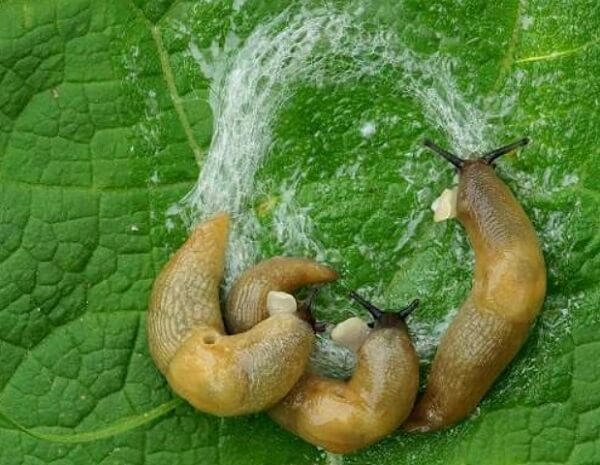
If there are a lot of pests, it's advisable to use specialized products. One of the safest is considered to be "Ulicid," a product based on iron phosphate. A single treatment at a rate of 3-5 kg/sq. m is sufficient to eliminate slugs from the area. The remaining product will be completely digested by microorganisms living in the soil.
Reproduction of Galtonia
Galtonia is propagated by seed or by dividing the tubers. However, it should be noted that the plant produces few new bulbs and numerous seeds. For this reason, it makes sense to propagate it by seed.
Seeds
Sowing of seeds is carried out immediately after the end of the dormant period, that is, in the 2nd ten days of February.
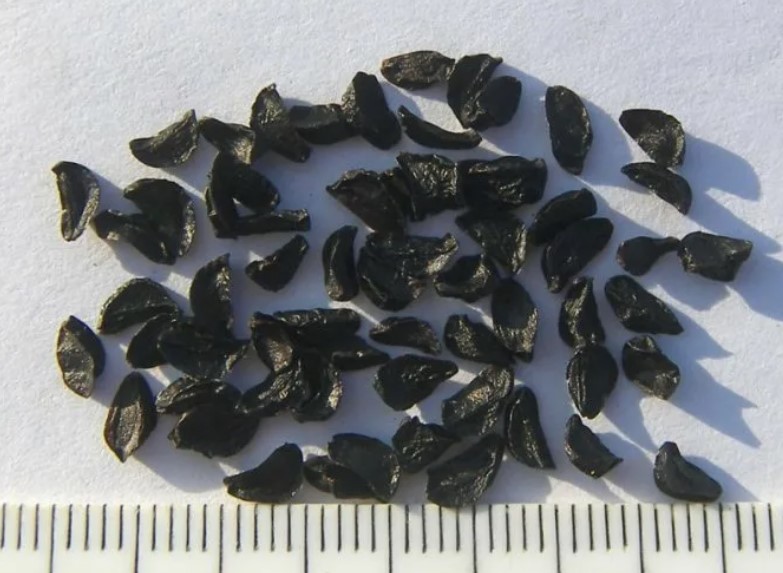
Step-by-step diagram:
- Collect the required number of seeds from the plant.
- Plant them in suitable containers.
- Keep seedlings in a greenhouse or other warm place with a soil temperature of at least +20 °C.
- You need to keep the seedlings at home for about a year, that is, plant them in a permanent place only the following season.
Growing galtonia from seed is quite simple, but you'll need to consider where to store it before planting. Also, keep in mind that flowering from seed will only occur 3-4 years after transplanting to its permanent location.
Bulbs
Dividing the bulbs is done during the dormant period—in the fall, when the leaves have completely faded, or, even better, in the spring. It is recommended to do this during the waning moon.
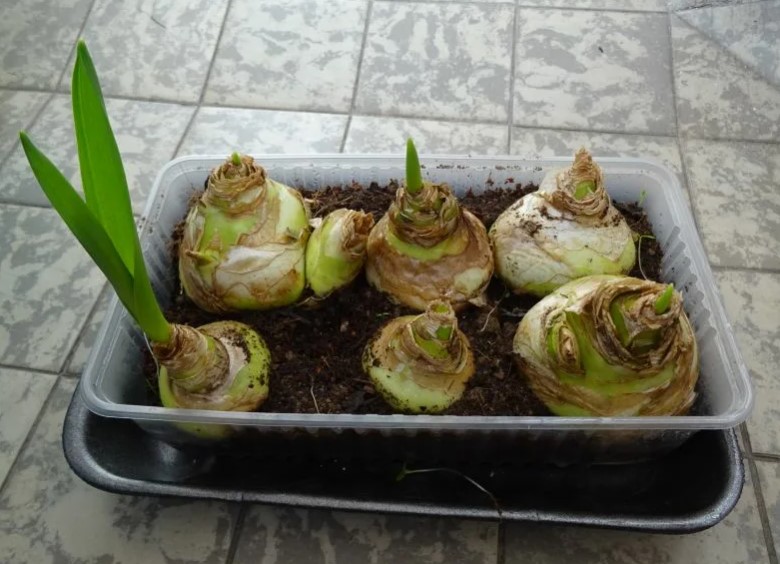
Step by step actions:
- Dig up the bulbs carefully to avoid causing any damage.
- Use your hands to separate the babies that have formed at the base of the main bulb.
- Plant them in a pot in nutritious soil.
- Wait until they grow and bloom. Only then can the young plants be transplanted to their permanent location.
Please note: Since the plant produces few bulbs, you should wait until it is 5 years old before dividing.
Galtonia flower in the landscape
It's recommended to plant Galtonia alongside plants that require similar environmental conditions and care and bloom at the same time. These include:
The plant should be planted in a sunny spot. It looks best in a lawn, planted in groups. Use contrasts by planting it next to other flowers.
Reviews and advice from gardeners
Galtonia candicans (Whitening Galtonia). I bought 10 of them about eight years ago. Not a single one has survived to this day. I only liked the Galtonia during its first year of flowering – it had wide, strap-shaped leaves and a tall stem (up to 1 m) with drooping, scentless white flowers. It blooms in the second half of summer (in the Leningrad region). After a couple of years, the stems became fewer, and they only reached 30-40 cm in height. I didn't dig them up for the winter, as the reference books recommended. Hessayon, in fact, recommends buying new plants every year. Search online; there are articles about Galtonia. I'm not a fan of it.
The plant is subtropical, so it tolerates 30°C (82°F) watering very well. I planted it in the spring and didn't dig it up in the fall, but now it's not sprouting. I suspect I should have dug it up. But I wanted it to grow, as I don't like a single plant, and the whole bush seemed imposing to me. Hymenocalis is generally a delicate plant, very heat-loving, and only requires digging. We keep it as a houseplant. It prefers to be kept in a pot buried in a flowerbed (as with all indoor bulbous plants that love the sun).
But neither they nor cannas will tolerate frost. Cannas, however, produce new shoots very well, even after frost damage.
You can grow everything from seeds, but for subtropical and tropical bulbous plants, it’s better to overwinter them at home.
I've had a galtonia growing for about 7 years now. I dig it up every year, I'm afraid to leave it.
One plant really does look lonely, but in a group it looks quite good.
I only planted it in pots the first year, then I stopped—it grows so quickly and then kind of dies when I repot it, probably because it's getting sick. Now I plant it directly in the ground on May 1st. So mine is already planted. I plant it deep, about 15 centimeters, in a circle. It forms a kind of "bush."
I've had some experience growing galtonia, but not much. My experience has shown that it overwinters poorly, and it's not always the same. I covered it well, with 20 cm of peat and leaves. Of the three bulbs, two sprouted in the spring. The next winter, another one died, and then the last one. My plot is dry and there's no standing water, so waterlogging was out of the question. If you want to grow it, it's best to play it safe and dig it up. Galtonia bulbs are stored like gladioli, but unlike gladioli, it's not recommended to remove the roots. Has anyone had success overwintering galtonia? Please respond and share your experiences.
I've been growing a galtonia for two years. I was afraid to plant it outdoors, so I planted it in the soil of a greenhouse. The plant grew to a gigantic size, as tall as a person. One bulb produced two strong flower stalks covered with small, fragrant white bells this season. This year, it was shorter. Galtonia prefers moist, sandy soil and a sunny location. It's winter-hardy to -15 degrees Celsius, so it won't freeze even outdoors in a mild winter. You can also propagate it by seed; galtonias produce them in abundance in greenhouses. Literature suggests that galtonias need to be replanted every few years, as flowering won't be as profuse. Seedlings will bloom only in the third or fourth year. Galtonias also don't like being transplanted or disturbed. You can, of course, dig them up and store them like gladioli.