Kniphofia (Kniphofia) is a herbaceous perennial belonging to the Asphodelaceae family. It grows wild in Madagascar and Africa. The genus comprises 75 species. Cultivated hybrids are grown in gardens. The botanist I. I. Kniphofa was the first to describe this beautiful flowering plant. Kniphofias are heat-loving, so they thrive in southern regions.
Description of Kniphofia
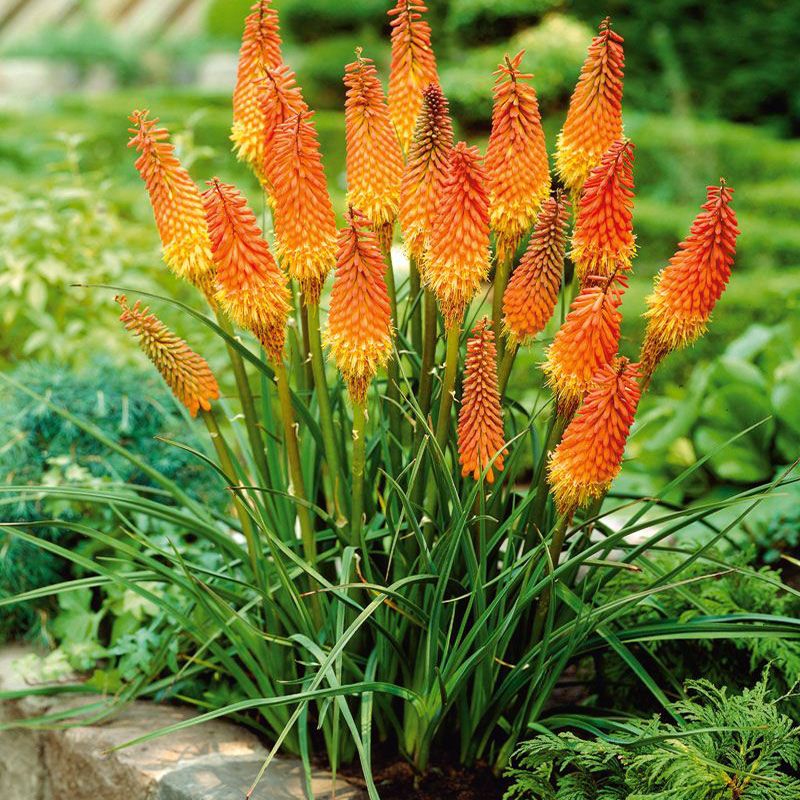
Kniphofia have the following characteristics:
- height – from 1 to 3 m;
- spike-shaped inflorescences collected from small flowers;
- corolla-shaped perianth;
- three-locular ovary.
The fruit is a capsule in appearance. The flowers are located at the top of the stem. Also noteworthy are the presence of six stamens and a syncarpous gynoecium formed by three carpels. Nectaries are located between the locules. Nectar is secreted through a canal located at the base of the style.
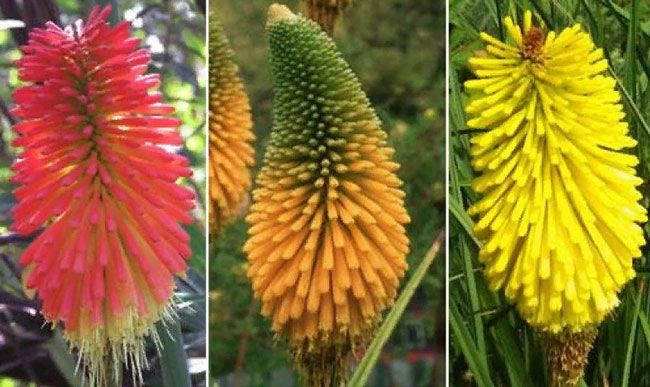
The color of the inflorescences and buds varies. Flowering begins in July. After this period, the plant acquires a decorative appearance that lasts until late autumn.
All varieties are perennials. Kniphofia resembles lupine in shape. Its spectacular, bright flowers have a more graceful appearance.
Kniphofia: varieties and varieties
These flowers decorate the garden throughout the growing season. Finding a place for them is quite easy. They are planted in rock gardens and mixed flower beds.
Kniphofia is distinguished by its two-tone coloring. The shade changes gradually. Flowering time depends largely on the climate. In temperate climates, vibrant blooms adorn flowerbeds from June to September.
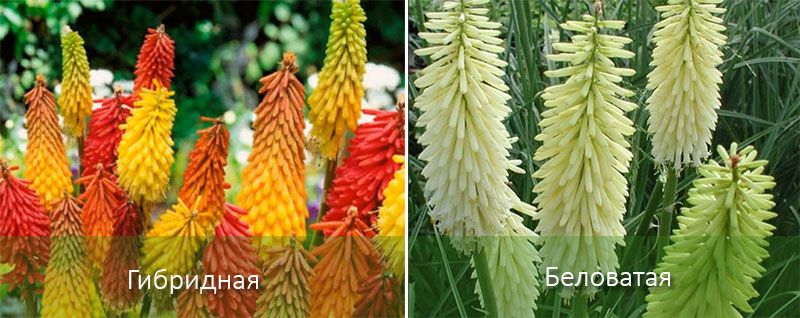
Kniphofia species of horticultural value:
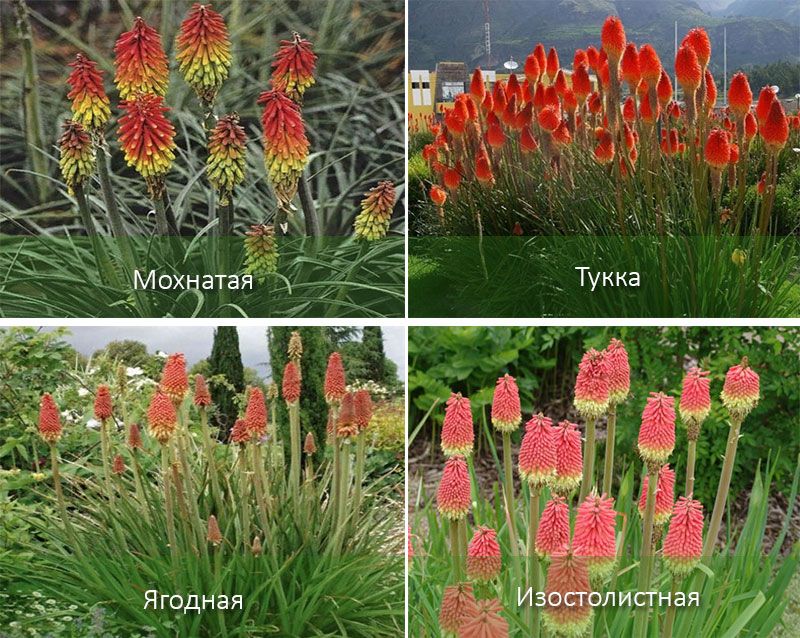
| View | Description, varieties, inflorescence color |
| Tukka |
Resistant to low temperatures. The height of the bush and inflorescences are 0.8 m and 15 cm, respectively. It is distinguished by a rich red-yellow hue. It blooms throughout the month (July-August). |
| Hybrid |
It was bred from Kniphofia bacatina. It is characterized by a variety of colors. Height ranges from 60 to 100 cm.
|
| Berry |
Abundant greenish-gray foliage, long-lasting flowering (2 months), beginning in midsummer. Cone-shaped inflorescences.
|
| Shaggy | The leaves have hairs on their surface. The inflorescences are conical. The flowers are bicolored: yellow below, reddish-pink above. The flower height is 3 cm. |
| Isostoleaf | Linear leaves and funnel-shaped flowers bloom from top to bottom. The flower stalk height ranges from 60 to 100 cm. |
| Whitish | May have multiple stems. Leaves are glaucous and dull green. Flower buds are erect, pinkish-white. During flowering, the inflorescences point in different directions. |
| Early |
Capable of growing in arid conditions. Height does not exceed 1.5 m. Blooms in the second half of summer. |
Planting Kniphofia in open ground and further care
It is not recommended to plant these plants in shaded areas or lowlands.
Otherwise, the inflorescences and leaves will become less vibrant, and their growth will slow significantly. Kniphofias should be protected from drafts. They do not tolerate stagnant water well.
Before planting, the soil should be loosened and fertilized. The desired depth is determined based on the plant's height. A drainage layer is first placed in the hole, and then the prepared soil is added.
To ensure proper heating, stones covered with a dark material are placed near the plantings. Their size can vary.
Kniphofia is a perennial that tolerates drought. Therefore, it doesn't require much watering. Therefore, it's best planted in areas with good drainage.
Fertilizers are applied in several stages. The first application is done immediately after the first leaves appear, and the second stage is usually initiated after the flowering period has ended.
The list of fertilizers used:
- mixtures containing nitrogen;
- peat;
- ash;
- compost;
- humus.
Another essential step is pruning. This is done in the spring. If the plant has overwintered outdoors, do so only after removing the cover. Damaged, yellowed, and frost-damaged parts of the kniphofia should be removed. Seeds that ripen in the capsules are useless.
Winter-hardy plants (Tukka) can be grown outdoors during the cold season in regions such as the Moscow region and central Russia. However, even then, they need to be covered with special film, spruce branches, and foliage.
Ventilation holes are essential. If the protective layer is applied correctly, the plant can survive temperatures as low as -15°C. Overwintering indoors is a must for most Kniphofia varieties. The room temperature should not exceed 8°C.
Growing and propagating Kniphofia
New plants are produced by vegetative and reproductive methods. When choosing the latter, seeds are used. Planting material must be purchased from specialized stores. This is necessary due to the insufficient number of warm days. Growing seedlings from seeds is a labor-intensive process.
Sowing takes place in the second half of March. To increase germination, cover the box with glass or film for 2-3 weeks. The greenhouse should be removed for ventilation, and the soil should be regularly moistened.
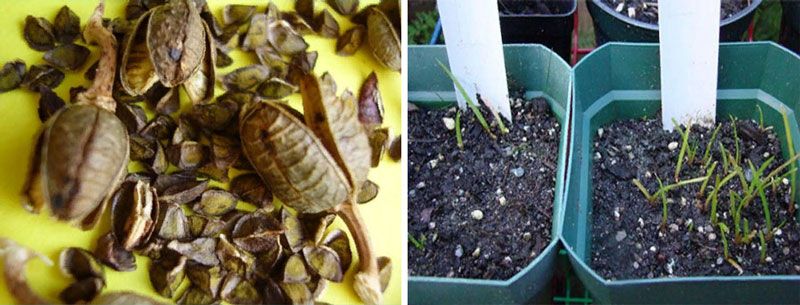
After germination, the seedlings begin to harden off at room temperature. They need to be pricked out when two leaves form on the stem. Planting in open ground occurs in mid-summer. The perennial doesn't bloom until the third season.
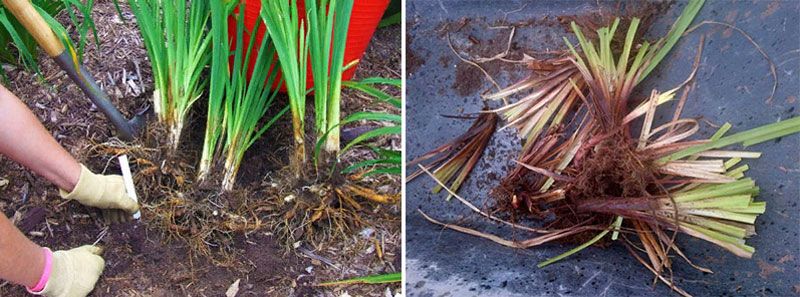
Vegetative propagation involves separating daughter rosettes. Three-year-old bushes are suitable for this purpose. The resulting cuts are treated with charcoal. The resulting rosettes are planted in holes. The seedlings require temporary shade. In this case, Kniphofia blooms within a year after planting.
Kniphofia pests and diseases
Flowers growing in the garden can suffer from root rot. It's triggered by excess moisture and dense soil.
If signs of this disease appear, the damaged parts of the plant must be removed. This will require digging up the plant and treating it with antiseptic solutions. The bush should then be replanted.
Pests are possible. These include spider mites and thrips. To eliminate infestations, Kniphofia is treated with insecticides. To prevent infestations, green manure and aromatic herbs are planted. If the gardener follows all care guidelines and regulations, the risk of flower diseases is minimal.
Top.tomathouse.com recommends: Kniphofia in landscape design
Tall varieties are used to create a background. These plants are planted behind shorter flowers. Kniphofias, characterized by their small size, are a beautiful addition to rock gardens and alpine gardens.
Thanks to the variety of shades, the mix of colors, and the ease of planting and care, the finished arrangement will delight with its decorative beauty for a long time. Suitable companion plants include bearded irises, rudbeckia, rhipsalis, santolina, and eremurus.