Once lobelia has sprouted, its tender young shoots require careful, specialized care. If neglected, the bush will grow stunted when planted in the ground, fail to bloom on time, or not at all, and in the worst case, the shoots will die within a day.
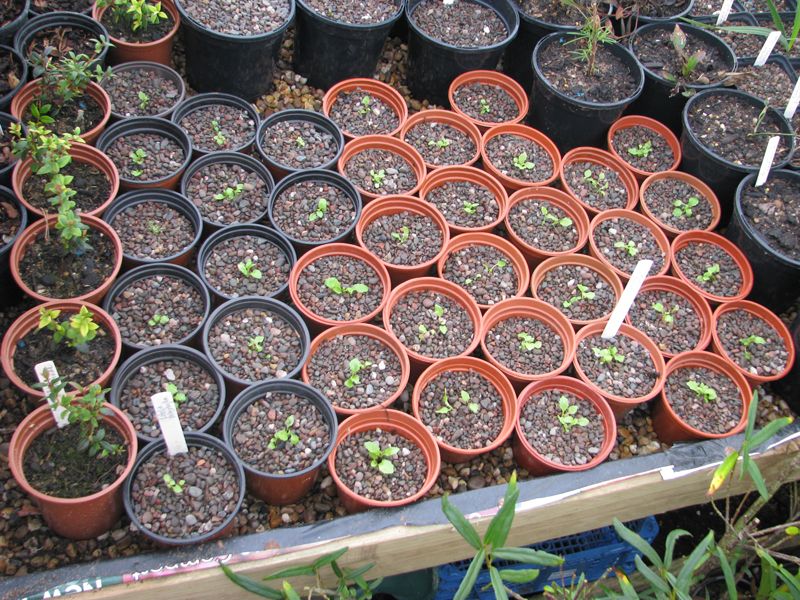
Caring for lobelia seedlings
It's important to consider all factors affecting plant development, as ignoring even one can result in the loss of seedlings. Sowing should begin in February or March, but be aware that February-planted plants will be much more challenging, and they will begin flowering only slightly earlier than March-planted ones. Seedlings will emerge within 5-10 days after sowing.
Light
After lobelia seeds have sprouted, they need an additional source of light, especially if planted in winter.
Fluorescent lamps are ideal for this. Without proper lighting, the seedlings will be spindly and elongated. Even in spring, artificial lighting is extremely beneficial. For example, in March, it's worth providing additional light for 4-5 hours daily, and in April, 2-3 hours. Diffused lighting is preferable. Shade the plants with gauze when they're exposed to strong sunlight.
Watering
Thin and frail lobelia seedlings will collapse to the ground with conventional watering and will be unable to rise. You can gently lift them, but it's best to avoid getting water on their stems and leaves. This will prevent the risk of blackleg in young plants. Planting in clusters will make subsequent watering much easier. Use a thin tool to make small indentations in the soil and then inject water into them with a syringe. This will allow the soil to soak evenly and be sufficiently moistened, while preserving the fragile stems. If the container is small, you can squirt water down the side of the container with a syringe, with the same effect. These measures are only effective for the first 2-3 weeks of growth; after that, the seedlings will gain strength. It's important to water moderately, as too much water in the tray will cause the plant to become diseased, while excessively dry soil will hinder the seedling's development.
Picking
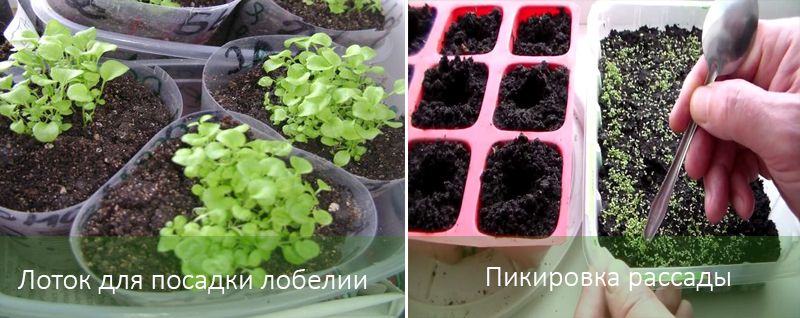
It's recommended to water the seedling container beforehand; the new container with soil also needs to be moistened beforehand. Next, transplant the seedlings, which have already grown and developed a couple of leaves. They are usually at least one month old. This process is carried out for a group at a time: use a garden trowel to lift a bush and place it in a glass. If the seedlings are densely growing, separate the soil with the seedlings and plant them in a larger container. Then, lightly cover the plant with soil and gently compact it. After this procedure, avoid direct sunlight for a few days; it's best to keep the plant in the shade, but be sure to water it regularly. Energen, diluted at a rate of 7 drops per 1 liter of water, will help the plant establish itself better.
Topping
Once the transplanted seedlings have settled in and grown a few centimeters, they need to be pinched. The easiest option is to trim off all the tops at once with scissors. This will promote root development and dense growth. Repeating this process several times will result in a large, full-bodied bush.
Top dressing
A one-month-old lobelia already requires fertilization. General-purpose fertilizers are suitable, but be mindful of the concentration when applying them to the soil. Young lobelias should be fertilized at 2-3 times lower concentrations than those recommended for mature plants. Seedling germination can be accelerated by spraying the soil with solutions of products such as Zircon and Epin.
Hardening
Harden off the plant 1-2 weeks before planting. If the outside temperature is at least +10°C, the plant can be taken outside for a few minutes.
The time spent outdoors is gradually increased. Eventually, the flower is left outdoors for a full day, provided there is no frost or precipitation.
Top.tomathouse.com warns: mistakes that cause lobelia sprouts to die
It is important to avoid mistakes when caring for young lobelia shoots:
- Seedlings won't survive watering with a watering can, spray bottle, or similar methods. The best option is to pour water into their tray or use a syringe.
- Seedlings are sensitive to temperature conditions. Sudden changes in temperature and drafts are harmful. However, the room containing the seedlings must be ventilated; during this time, the seedlings should be moved to another location. The favorable temperature range for lobelia is 17–18°C, along with high humidity.
- Using tweezers or a toothpick is acceptable for transplanting, but the process can be lengthy and difficult for the gardener. An alternative, simpler method is to cut the "sod" into small pieces with a spoon-like tool and place them in separate small containers with drainage holes. Don't transplant until at least a month after germination. Fertilizing should be avoided during this period.
- Before planting lobelia seedlings in acidic soil, it's best to add wood ash; dolomite flour is also suitable. It's a good idea to sift the soil immediately before planting the seeds.
- When the first shoots appear, don't remove the film abruptly. It's better to spread this process out over several days, gradually uncovering the surface. Otherwise, the plant may quickly die.
- After removing the plastic wrap, sprinkle the soil with sandy soil with vermiculite added. This ensures reliable root coverage and prevents the plant from becoming too elongated.
- You can disinfect lobelia soil by simply freezing it or microwaving it. A light, loose soil substrate without humus is ideal.
- Regular seedling boxes are not suitable as a container for lobelia; a shallow, transparent plastic container with holes in the bottom and sides is ideal.
Despite proper care, lobelias often develop blackleg. To combat this problem, you can use:
- 2 tablespoons of hydrogen peroxide (3%);
- Activated carbon powder;
- A weak solution of manganese;
- Calcined river sand;
- Metronidazole solution (1 tablet per 1 liter of water).