The iris belongs to the Iridaceae family. It grows everywhere and has over seven hundred varieties. Its name comes from the Greek and means "rainbow." It has been cultivated for over two thousand years. The flower decorates gardens, alleys, parks, squares, and summer cottages. The plant is also used to make perfume essences.
Content
- 1 Varieties and types
- 2 Rhizome irises + 12 varieties
- 3 Bulbous + 8 types, varieties
- 4 Differences in planting and care
- 5 Planting rhizome varieties in open ground
- 6 Planting bulbous irises in open ground
- 7 Pruning and replanting rhizome varieties
- 8 Features of storing bulbs
- 9 Features of reproduction
- 10 Diseases
- 11 Insect pests
- 12 Reviews and tips on growing irises from gardeners
Varieties and types
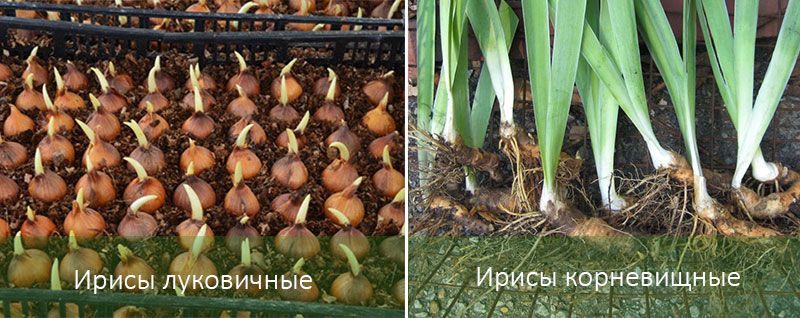
"Iris" is the general name for plants with both a rhizomatous and a bulbous axial vegetative organ. Both types are thickened shoots.
There is no universal classification of these flowers. In Russia, rhizomatous irises are considered true irises, while elsewhere in the world, bulbous irises are considered true irises.
All varieties fit a common description: the iris has an annual flower stalk with a large bud that exudes a pleasant aroma.
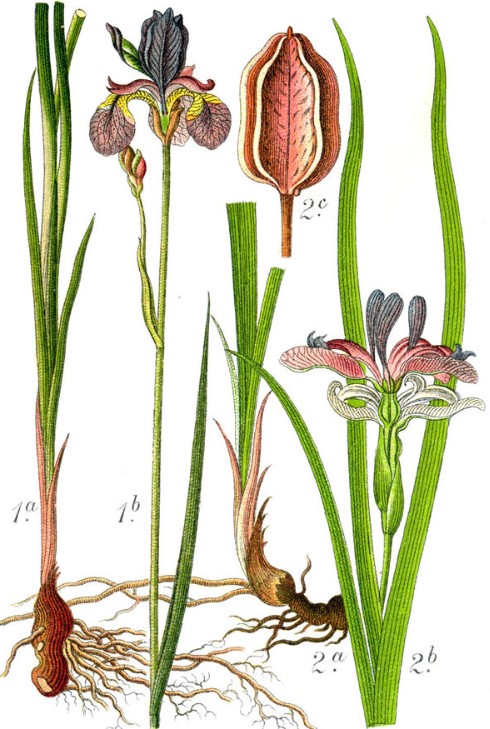
The petals are thin, flat, and coated with a waxy coating. The flower has six petals arranged in two rows: three of them curve outward, while the inner ones are raised upward like a dome.
Rhizome irises + 12 varieties
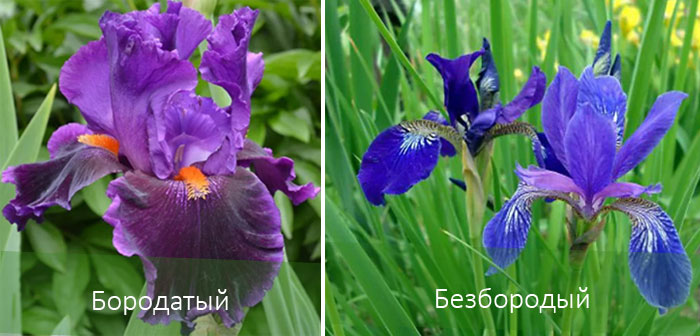
They are divided into bearded and beardless varieties. They are easy to care for and easily tolerate the frosts of the Moscow region and other regions of the country. Beardless varieties are classified into subspecies: Siberian, Spuria, Japanese, and Louisiana.
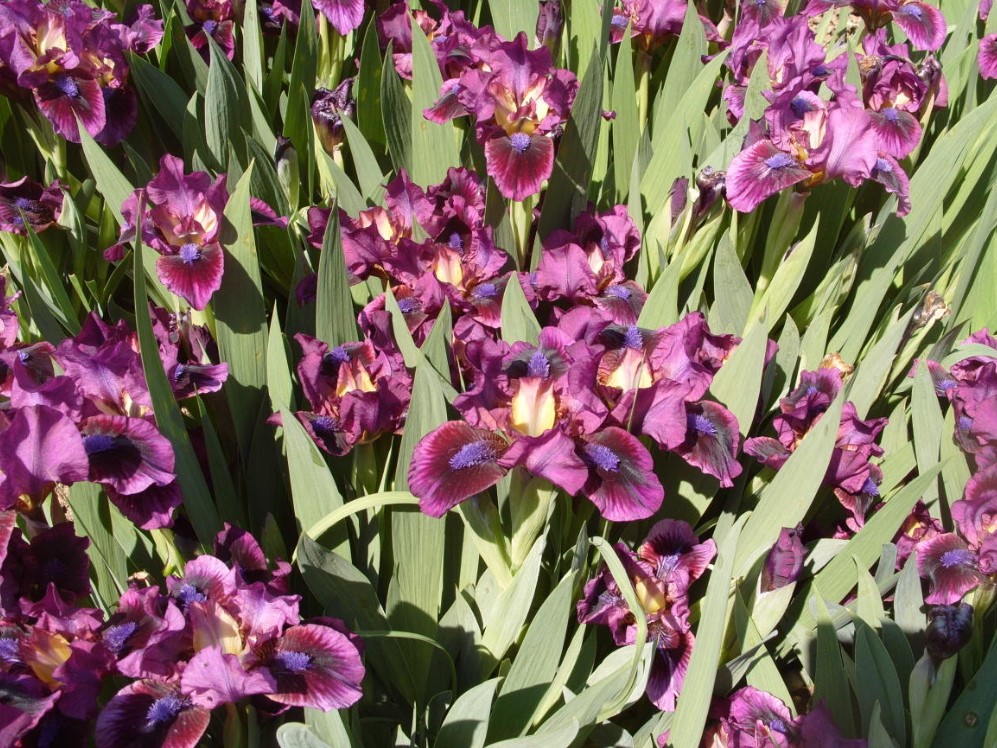
Dwarf varieties, reaching 25-35 centimeters, are called dwarf and are the first to bloom (Schegol, Karaty, Chanted, Demon). Dwarf bearded flowers: the color range of their buds varies depending on the variety, and can be burgundy, light blue, blue, lilac, yellow, and other shades. They will decorate areas across the country and are able to thrive in any environment.
Medium-sized ones grow up to 70 centimeters (Blue Staccato, Burgomaster, Kentucky Derby, Kilt Ilt).
Tall plants are the largest, reaching a height of over 1 m. (Gold of Canada, Arkady Raikin, Beverly Hills, Supreme Sultan).
Let's take a closer look at the popular varieties.
Beau
A dwarf, early-flowering variety. The top is lilac-purple, the bottom is light blue, edged with a light lilac stripe and a dark purple center.
Carats
A mid-late variety, no taller than 40 cm. The top is yellow-orange, the bottom is fawn-orange with a bright orange center. The beard is white with red-orange tips.
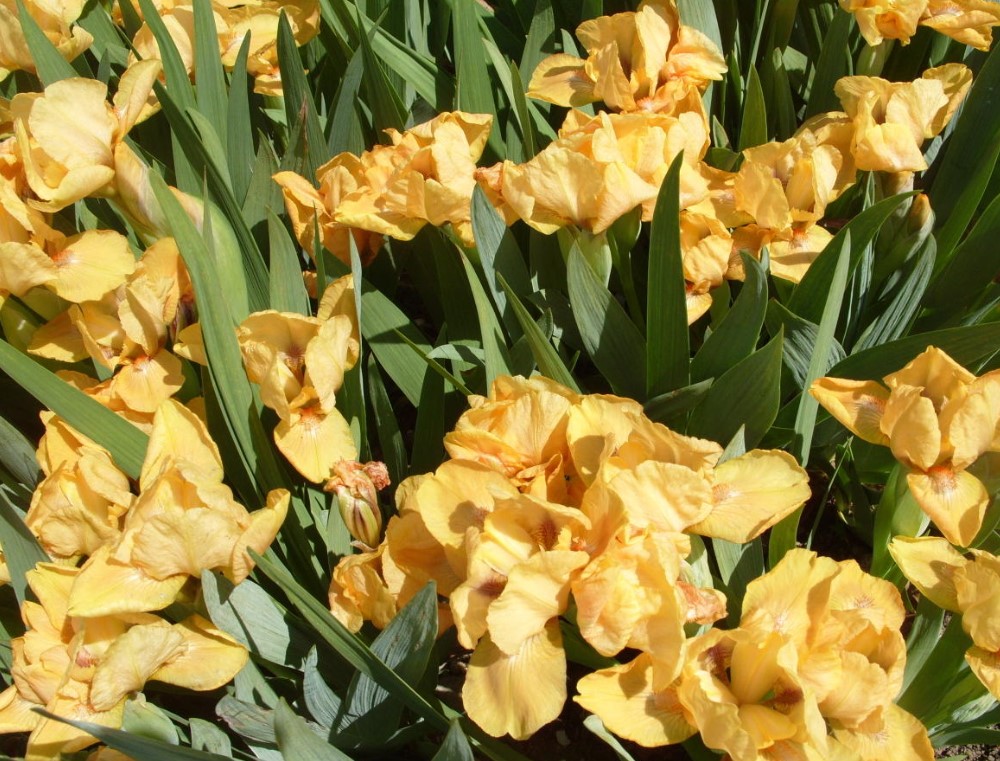
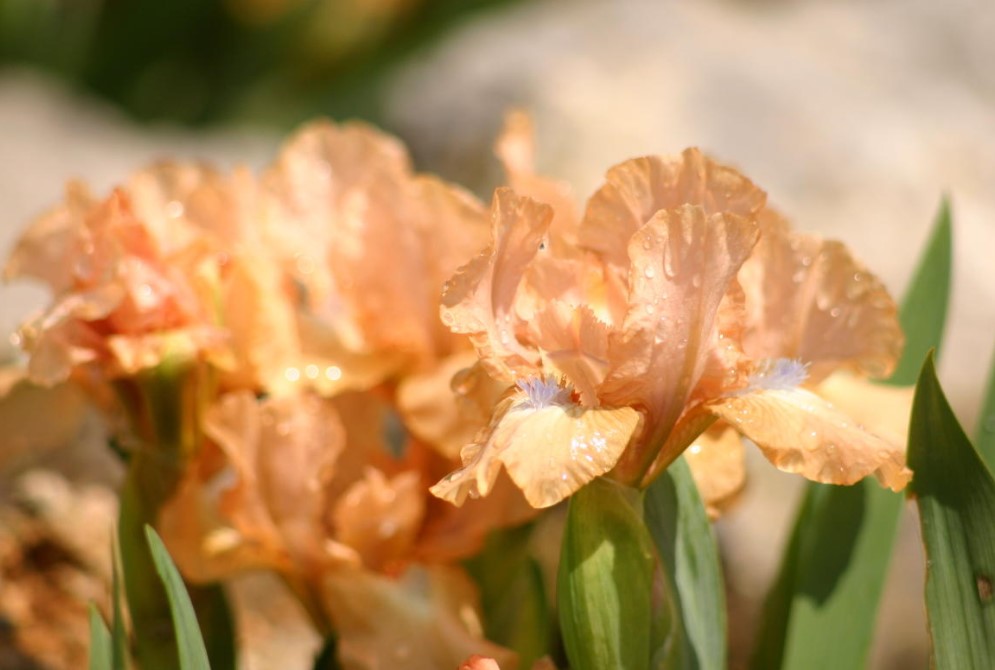
Chanted
A pink variety with a lavender-blue beard. Mid-flowering period. Height: 36 cm.
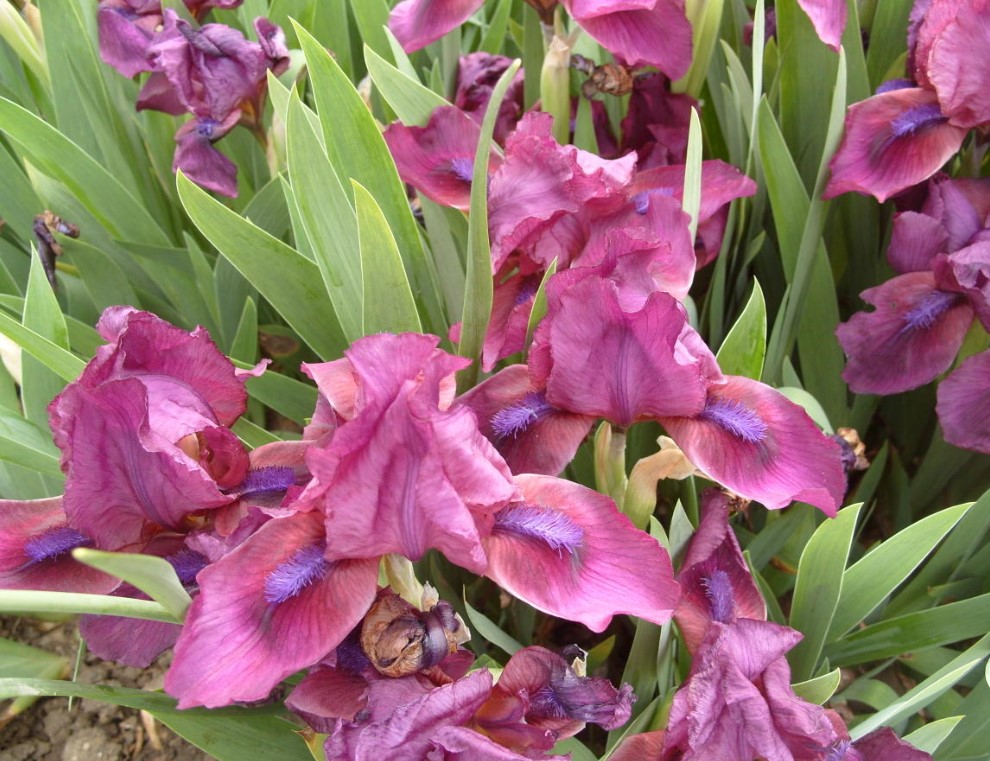
Demon
This dwarf variety, no more than 30 cm tall, is called 'Vrubel's'. It features large, purple-red flowers with a purple beard, 12 cm in diameter and 7 cm in height.
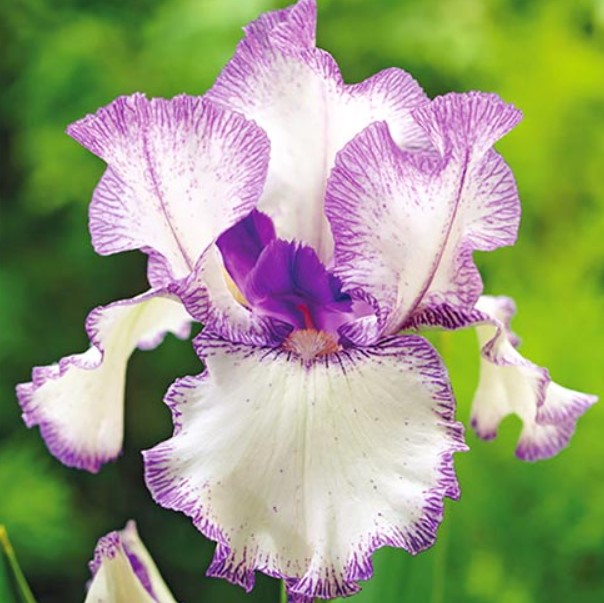
Blue Staccato
White flower with a blue-violet border. Blooms in May. Medium-sized bush.
Burgomaster (Burgermeister)
A vigorous iris, 70-80 cm tall. The lavender flower has a purple-violet beard, reminiscent of an orchid. Blooms June-July.
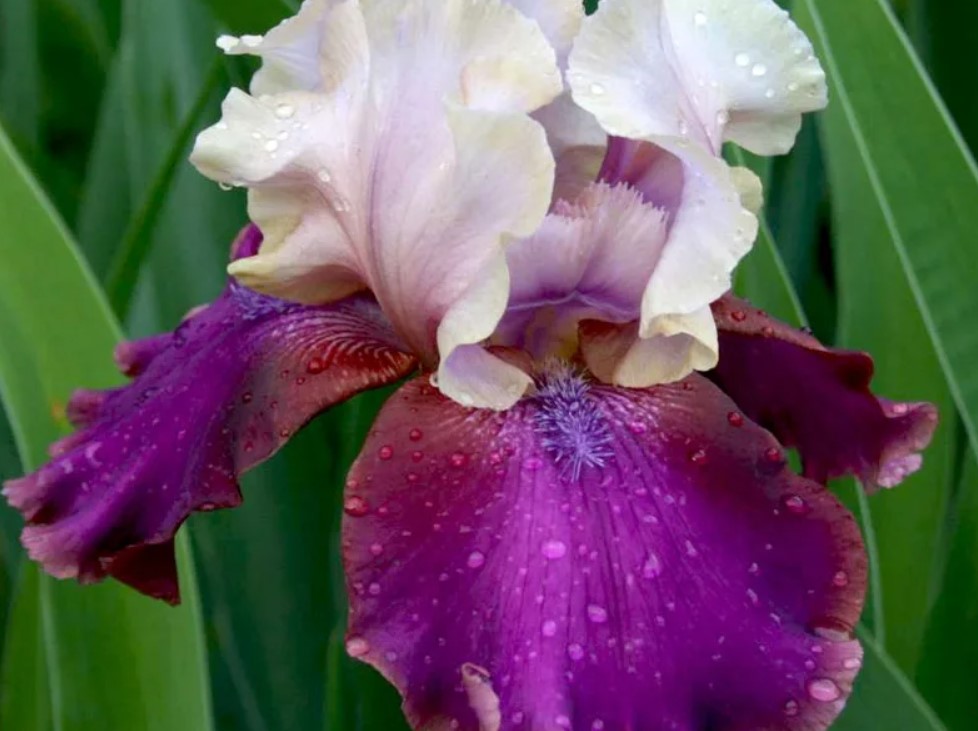
Kentucky Derby
Bush 50 cm with peduncle 80 cm. Flowers lemon-yellow with a white spot on the beard, 5-6 pieces in a peduncle.
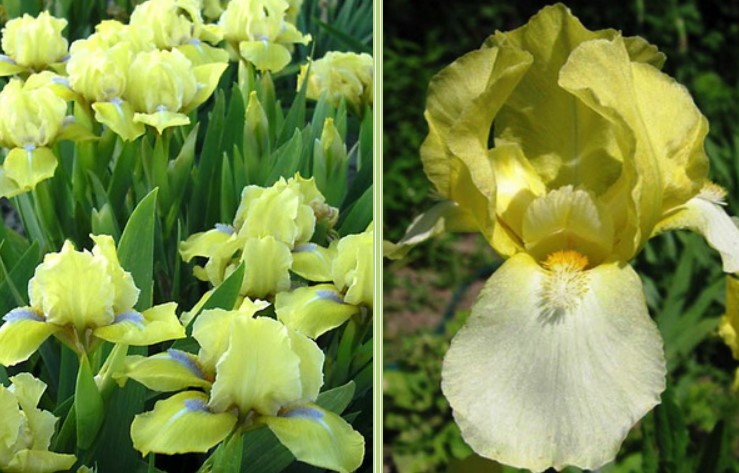
Arkady Raikin
A tall peduncle over 1 m with 5-7 peach-colored flowers, about 12 cm in size. Flowering begins in late May.
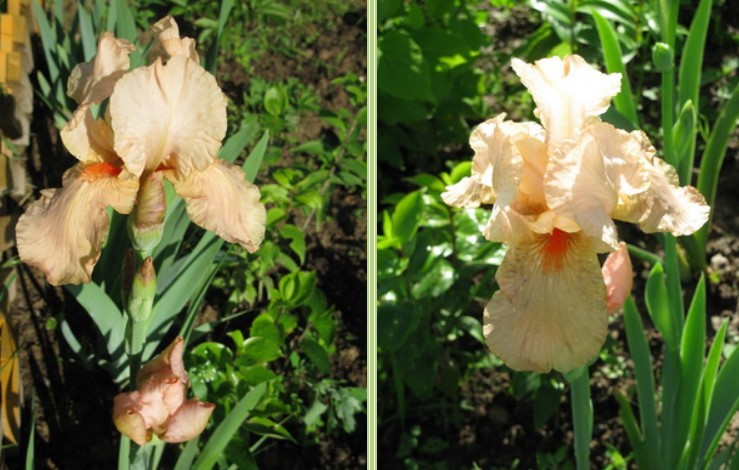
Beverly Hills
Bush 50 cm, peduncle 80 cm with pink wavy flowers 17 cm in diameter, 3-4 on each. Flowering in May.
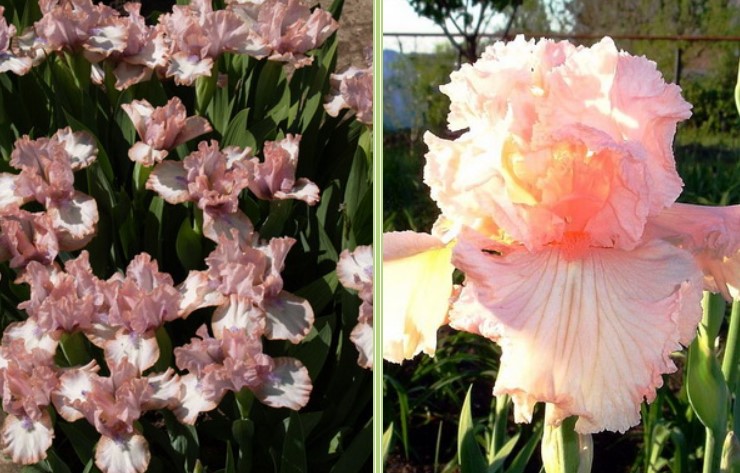
Kilt Ailt
A medium-sized bush, 60 cm tall, with a 90 cm peduncle bearing 4-6 yellow, wavy flowers and a reddish-brown spot on the beard. Flowering occurs in late May.
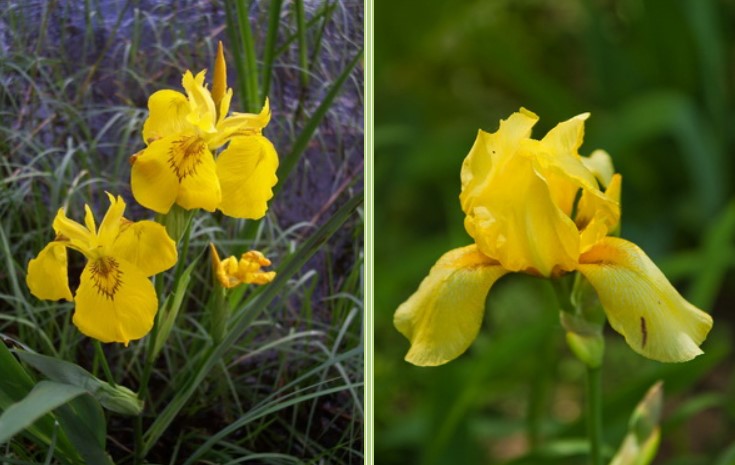
Canadian Gold
The flower height is 90-105 cm. The inflorescence contains 7-9 golden-yellow flowers with an orange beard, 3-4 of which bloom simultaneously. Flowering begins in the second half of June and lasts 20 days.
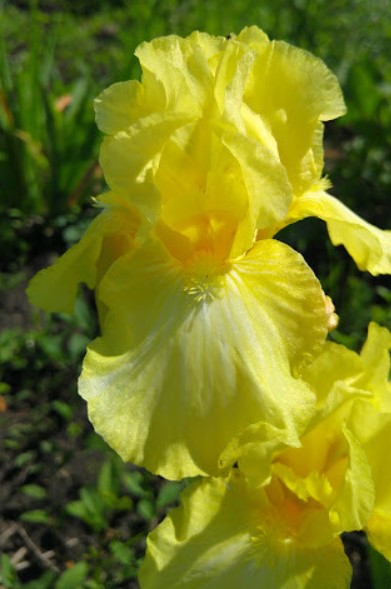
Supreme Sultan
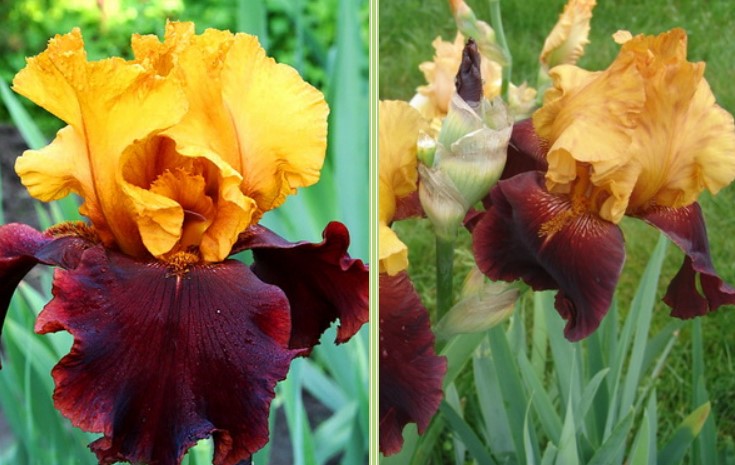
A vigorous bush 1.2 m tall. The flowers are the largest, 20 cm or more in diameter, with bronze-yellow inner lobes and red-brown outer lobes, heavily corrugated.
Bulbous + 8 types, varieties
Plants are divided into groups: Iridodictyum, Xiphium, and Juno. The second group includes six subspecies. Breeders crossbreed them to develop new flower varieties. This is how English, Dutch, and Spanish hybrid irises were created.
The most common species and varieties:
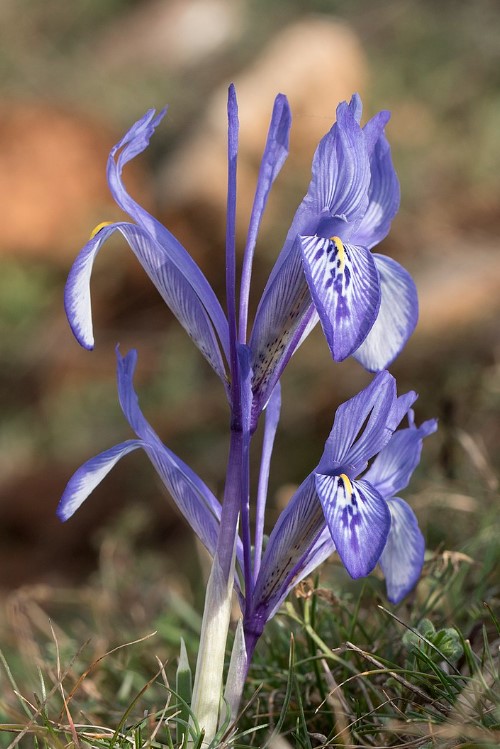
Iridodictyum reticulatum
Bulbous iris, 10-15 cm. Flowers come in dark or pale violet, red-purple, blue, and white. This flower is listed in the Red Book.
Iridodictyum vinohradowii
Grows no more than 20 cm. Light yellow single flowers. Blooms from early May for up to 15 days.
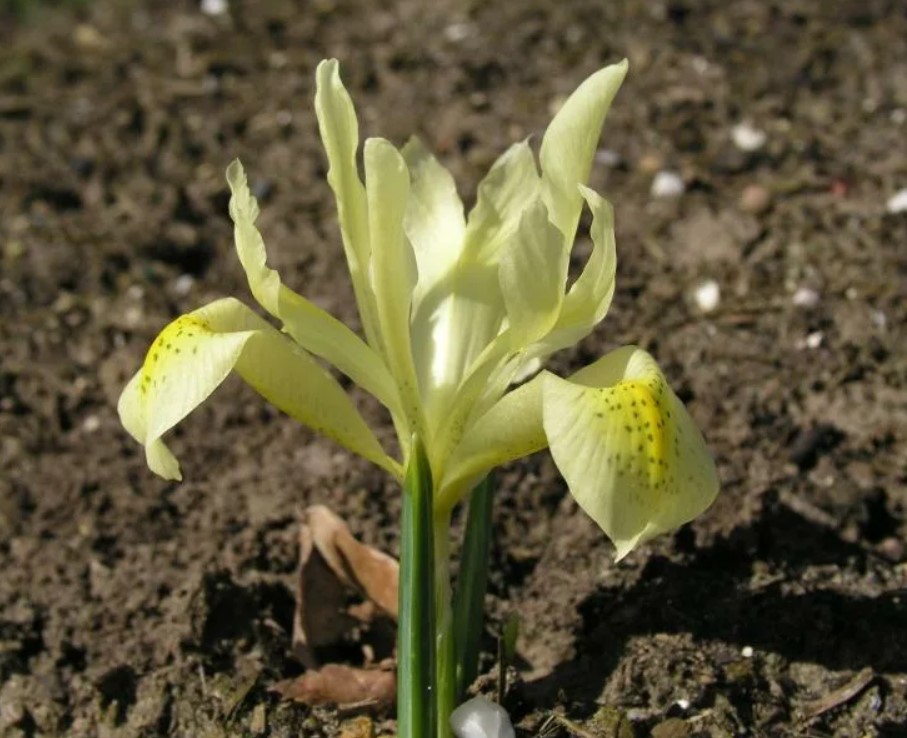
Iridodictium Dunford
The first bright yellow flower of spring, appearing along with crocuses and snowdrops. Grows up to 20 cm.
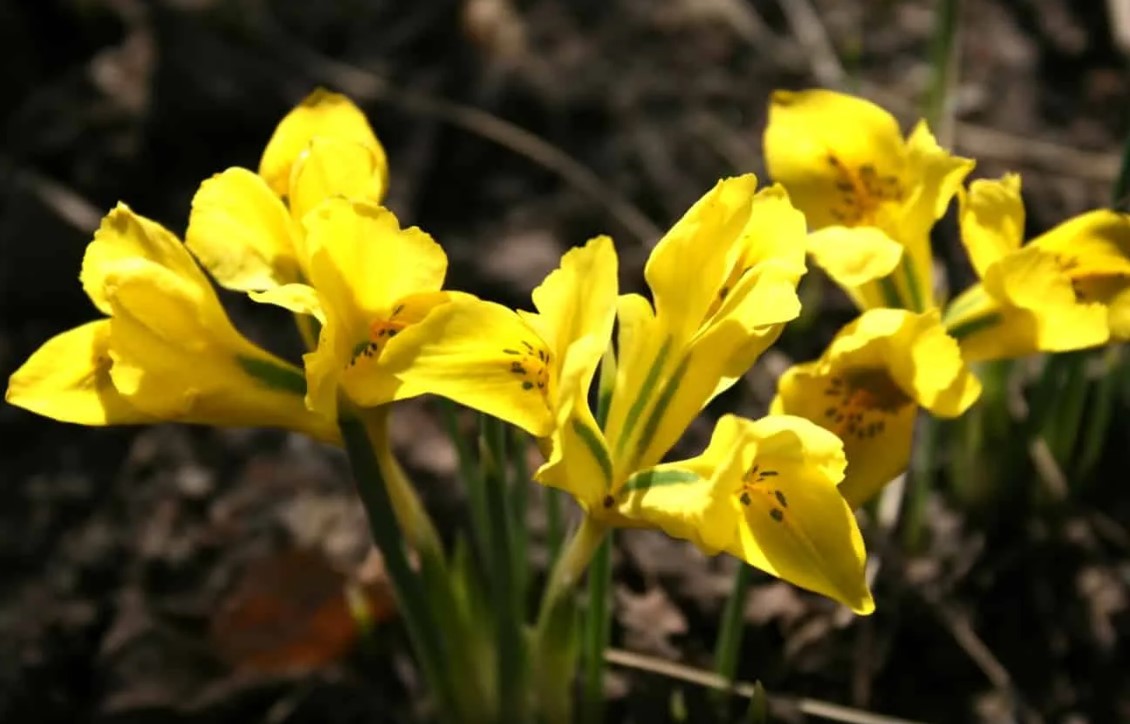
Iridodictyum kolpakovskyi
Height: 10-20 cm. Flowers range from light lilac to bluish, violet, and purple-violet. The outer perianth leaflets have a darker, velvety-violet spot on the upper surface. Blooms early in March-April.
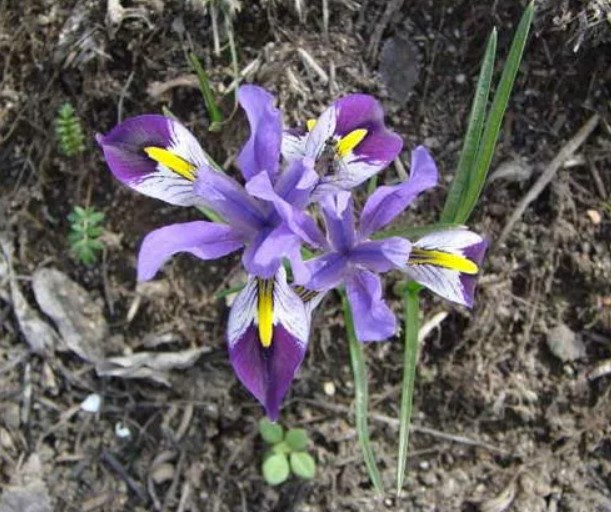
Variegated George
Bulbous iris, 15 cm. Purple flowers. Blooms March-April.
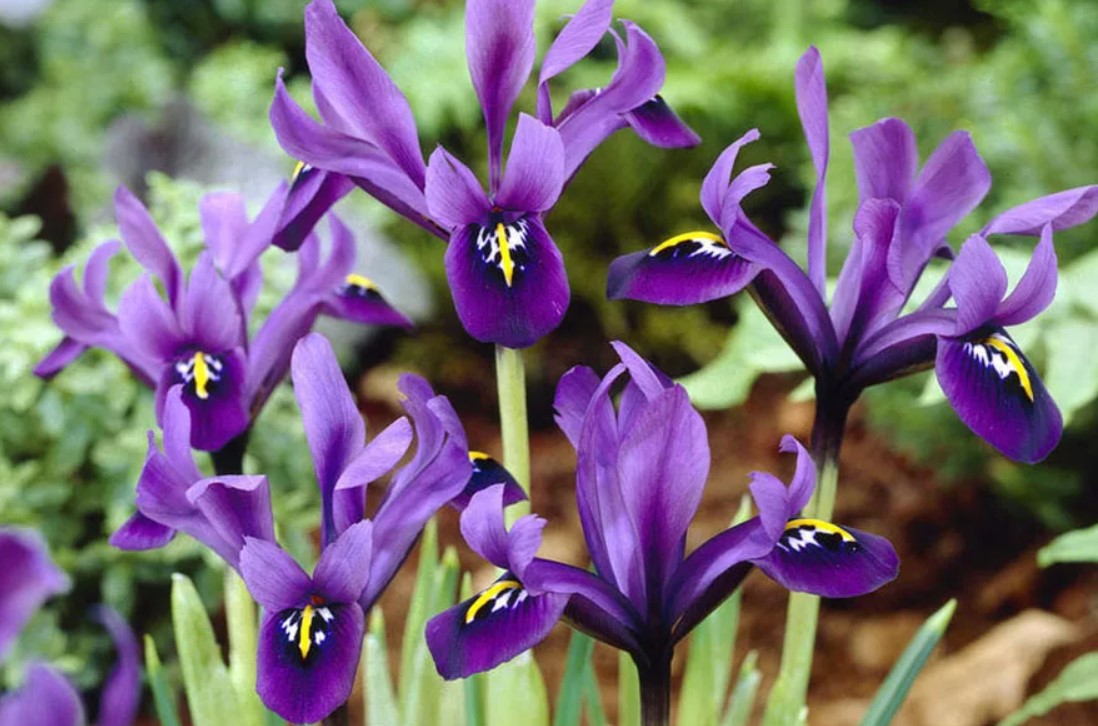
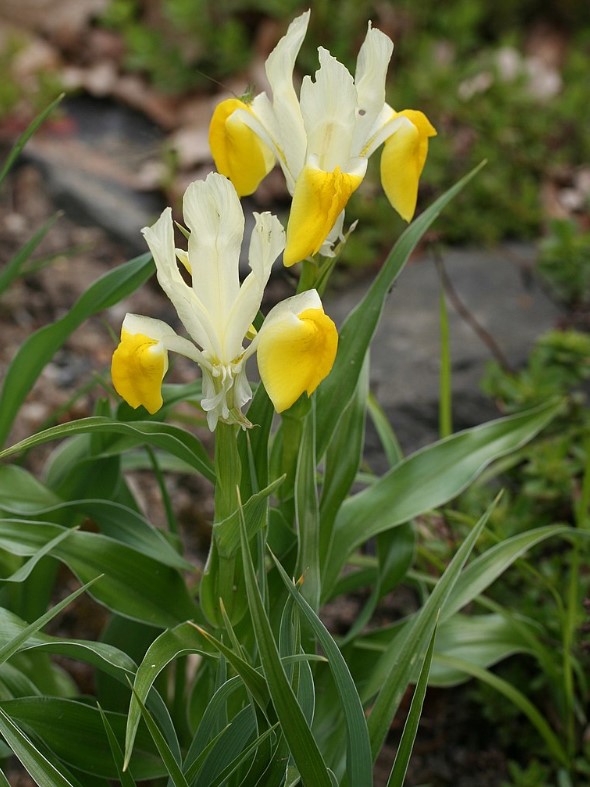
Bukhara (from the species Juno)
The iris grows 20-40 cm. The flowers are white or creamy white with yellow tips. Blooms in April-May.
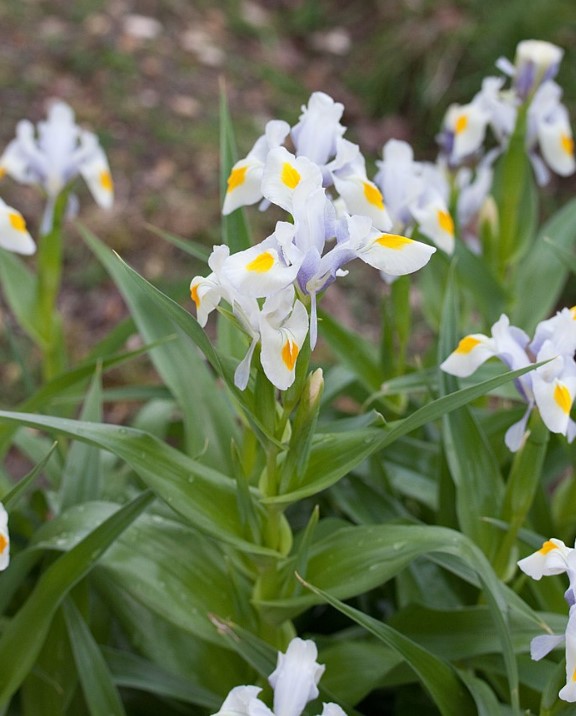
Magnificent (from the species Juno)
The bush is 60 cm tall. The flowers are pale lilac or white. It blooms in spring.
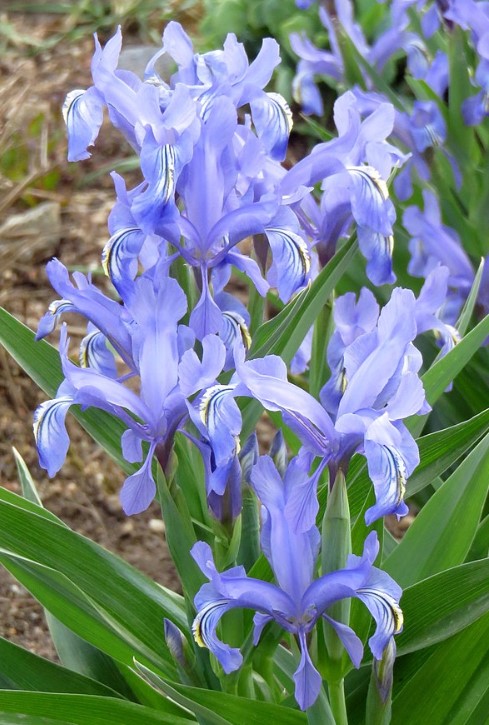
Greberianovsky
Height: 45 cm. Flowers range from pale silvery-lilac to bluish-lavender and blue-violet. There are 4-6 flowers per stalk. Blooms in April-May.
Differences in planting and care
Planting and caring for irises in open ground differs depending on the variety:
| Parameter | Rhizomes | Bulbous |
| Location | They do not tolerate excessive heat. In warm conditions, they are grown in the shade. Excessive sunlight causes petals to fall off. These plants love the sun and should be planted half a meter apart. | They prefer warmth and sunlight. They bloom for a long time only if favorable growing conditions are created. |
| Priming | The soil should be loose; peat or sand should be added. In an acidic soil, irises will produce foliage but not bloom. Roots are prone to rot. Therefore, a drainage layer should be laid before planting. | Fertile loose soil. |
| Watering | A moisture-loving variety. Water regularly and generously. The soil should always be moist. Bearded iris requires abundant evening watering only when flowering. |
Periodic, abundant watering. If the area is damp, reduce the frequency of watering. |
| Fertilizers | Fertilize the plant a week before planting. Nitrogen-rich mixtures are recommended. Avoid overfeeding. Adding manure is prohibited. | Fertilize when inflorescences are forming (visible compactions between the leaves). Mineral fertilizers are recommended. Manure should not be used. |
| Deadlines | Buds appear in May and last until mid- to late June. They may reappear in August or September. | Flowering continues for a couple of months: from mid-May to the end of June. Planting takes place in September or early October. |
Planting rhizome varieties in open ground
Rhizome varieties are planted in the spring. The soil should be airy, rich in nutrients, and rich in fat. Soil moisture is adjusted individually (based on the subspecies):
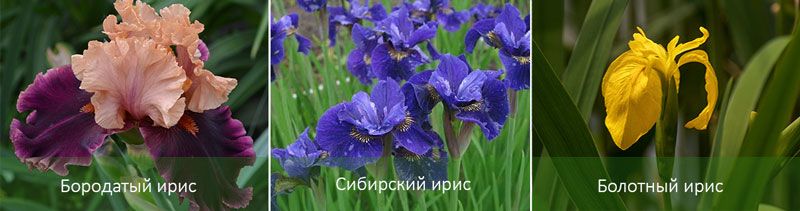
- Bearded rhododendron is planted fan-shaped on slopes. Good drainage of rain and melt water is essential.
- Siberian and marsh rhinoceros prefer damp, shady areas, such as near a pond, bay, or backwater.
Before planting, the soil is dug up and treated with insecticides and weed suppressants. If the soil is highly acidic, it is mixed with ash, chalk, or a common powder.
Step-by-step planting of rhizome varieties:
- a hole is dug with a mound in the central area;
- the central shoot is placed on a mound, the roots are distributed on the sides;
- the main root is covered with soil, sand is placed on top, and everything is lightly compacted;
- the rhizome is not planted very deep, close to the surface layer of soil;
- the central bud does not fall asleep.
Planting bulbous irises in open ground
Bulbous varieties are planted after the snow melts or in the fall before frost sets in. Soil temperatures must be at least ten degrees above zero. Otherwise, the bulbs will die.
Lunar calendar dates for 2023
Favorable dates for planting, as well as when it should not be done, are given in the table.
| Month | Favorable days | Unfavorable, prohibited days |
| August | 7 (from 09:24)-14 (until 13:35), 19 (from 14:53)-21 | 1,2, 15 (from 12:38 p.m.), 16, 17 (up to 12:38 p.m.), 30,31 |
| September | 1 (until 16:25), 3 (from 18:00)-5 (until 23:05), 8 (from 07:59)-10 (until 19:35), 13, 16-20 (until 17:06), 22 (from 23:00) 21m.)—24 | 1 (from 16:25)-3 (until 18:00), 14, 15,25-26,28, 29,30 |
| October | 1-13 (until 20:55), 16, 20-22 (until 09:06), 30 (until 18:07). | 14,15,28,29 |
Rules for planting bulbs
Step-by-step instructions:
- a narrow, long hole is dug, and the bulbs are placed there to a depth of three to four centimeters;
- the total planting depth is 10-12 centimeters;
- the dug soil is mixed with sand, coal powder, and double superphosphate;
- the trenches are disinfected with a solution of potassium permanganate and watered with a growth stimulator (for example, Kornevin);
- the bulbs are placed in furrows with the sprout towards the sky, not deep, at a distance of 15-20 centimeters;
- the previously removed and mixed soil is poured on top and compacted slightly;
- Watering is done after three to four days.
Varieties with small bulbs shouldn't be planted too deeply. Three times their height is sufficient. These subspecies are undemanding when it comes to moisture.
Pruning and replanting rhizome varieties
Repotting is recommended before flowering begins, in early spring, in March or April. Only strong, healthy plants that are certain to thrive in their new location should be repotted.
The irises are removed from the soil and divided into segments, each containing a leaf bud. Excess foliage and damaged shoots are trimmed off. The injured area is treated with charcoal and a small amount of sulfuric acid. Before planting, the roots are soaked for 15 minutes in a potassium permanganate solution to disinfect.
Irises are repotted into shallow trenches or holes 50-60 centimeters apart. This is necessary periodically. Without it, flowering becomes poorer and buds become smaller. With proper care, the plant grows quickly, so repotting should be done in the fourth or fifth year.
After flowering, prune all stems supporting the bud. In the last month of summer, remove 1/3 of the leaf blades.
Features of storing bulbs
Irises need to be dug up for the winter to prevent them from freezing. It's crucial to follow all storage rules and requirements to prevent the bulbs from rotting.
The bushes are dug up a couple of weeks after flowering (when they begin to wither and turn yellow). If the area where the irises are planted has a warm and dry climate, they can be left in the ground all summer. Storage conditions are the same for all varieties.
The dug-up bulbs are disinfected in a potassium permanganate solution or commercial disinfectants (such as Maxim Dachnik or Fundazol). They are then dried for two to three weeks. The temperature depends on the variety:
- Xiphiums - +30-35 degrees;
- Iridodictyums and Junos - +20-25 degrees.
During the final days of drying, the temperature is lowered to 15-18°C. Irises are stored in a dry, cool, ventilated area (open vents or windows can provide ventilation).
Do not place bulbs in plastic bags or cloth.
Features of reproduction
Irises reproduce:
- rhizome;
- shoots;
- seeds.
The latter method is long and arduous. For example, when propagated by rhizome, flowers will appear the following year, while when propagated by seed, they will appear in two to three years.
When dividing the iris bush, it should bloom at least once. After this, the cuttings are separated from the mother plant. Rooting should take place from March to April in a shady location with greenhouse-like conditions.
If the decision has been made to propagate irises from seeds, it is done as follows:
- in autumn, the planting material is sown in a container with sandy soil;
- the pot is covered with plastic film or glass;
- the shelter is cleaned daily and condensation is eliminated;
- By spring, when the seeds have sprouted, they need to be picked and planted in open ground.
The best months for planting are March and April. The seedlings will become stronger and root well.
Diseases
Irises are susceptible to various diseases if not properly cared for. Poor maintenance can lead to fungal and viral infections:
| Disease | Description | Methods of control |
| Mosaic | Caused by aphids, the disease develops abnormal stripes and yellowish spots of varying sizes and shapes on the foliage. The leaf blades become wrinkled and textured. The disease spreads rapidly. | The disease is infectious, and there are no effective treatments. To avoid it, preventative measures are necessary: follow all watering guidelines and fertilize the plant. It is recommended to purchase insect repellents from the store and treat the flowers with them, such as Actellic or Confidor. If the iris is affected by the disease, the infected leaves should be destroyed immediately. |
| Bacterial rot | Brown spots form on the foliage. The disease becomes apparent in the spring after wintering. It is caused by freezing of the rhizome, excessive soil moisture, close planting, and a lack of calcium and phosphorus in the substrate. | Affected leaves should be removed, and the affected area treated with a potassium permanganate solution. If the disease is severe, the plant will need to be destroyed and the soil disinfected with commercial antibacterial agents (Maxim, Fitolavin). |
| Gray mold | Affects the leaves or root system. The disease is usually caused by stagnant moisture in the soil. Therefore, irises require good drainage (except for the marsh variety). A lack of nutrients in the soil can also cause the disease. | Treatment is carried out with fungicides (Trichofit, Fitodoctor, Fitosporin, Mikosan). If the disease is advanced, the irises are destroyed. |
Insect pests
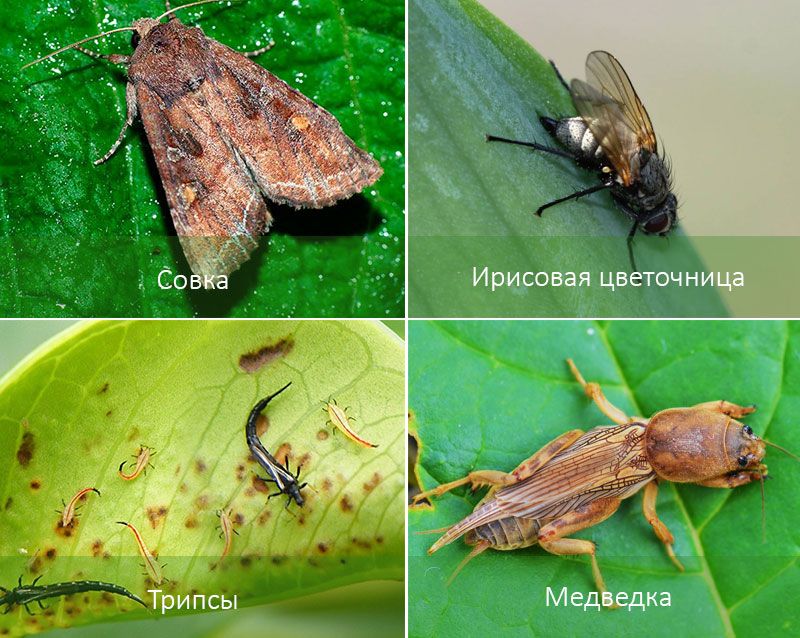
Flowers of any kind and variety are susceptible to attack by the following insects:
| Pest | Description | Methods of control |
| Owls | A nocturnal pest. It eats the beginning of the flower stalk. The plant becomes stunted, turns a sickly yellow, and gradually dies. This insect causes bacterial blight and can be seen with the naked eye. | Treatment with Karbofos, Decis, and Arrivo. Performed at dusk. |
| Iris flower girl | It resembles a common fly in appearance. It feeds on unopened flower buds. The flower begins to rot. | Treated with Actellic, Aktara. |
| Thrips | They're small, but very dangerous. The insects first attack the foliage, then move on to the flowers. The buds are damaged and fail to open. | You can get rid of the pest by treating it with laundry soap containing malathion, or with toxic preparations such as Actellic and Aktara. |
| Mole cricket | A common insect pest, often found in the southern regions of the country, it attacks the rhizome and bulb, after which the plant dies. | To prevent mole crickets from attacking irises, add eggshells soaked in sunflower oil to the soil. The insects leave tunnels in the soil, which are then filled with a solution of laundry detergent. Planting marigolds nearby also helps repel the pest. |
| Slugs | They settle on greenery and become agents of bacterial rot. | Insects must be collected by hand. The soil is treated with superphosphate. Products such as Groza, Meta, Metaldehyde, and Ulicid can be used. As a preventative measure, weeds around the iris should be removed promptly. |
Sometimes plants are also affected by other diseases and harmful insects. The most common pathological conditions are listed above.
Reviews and tips on growing irises from gardeners
Review: Garden Plant "Iris" - Wonderful Shards of Rainbow in My Garden
ADVANTAGES:
+Variety of colors and shapes +Unpretentiousness +Durability
FLAWS:
-No
Hello, readers and authors of Otzovik!I still consider myself a “lazy” gardener) I go to my dacha quite rarely -
In between work and travel, flowers—perennials—are my lifesaver.
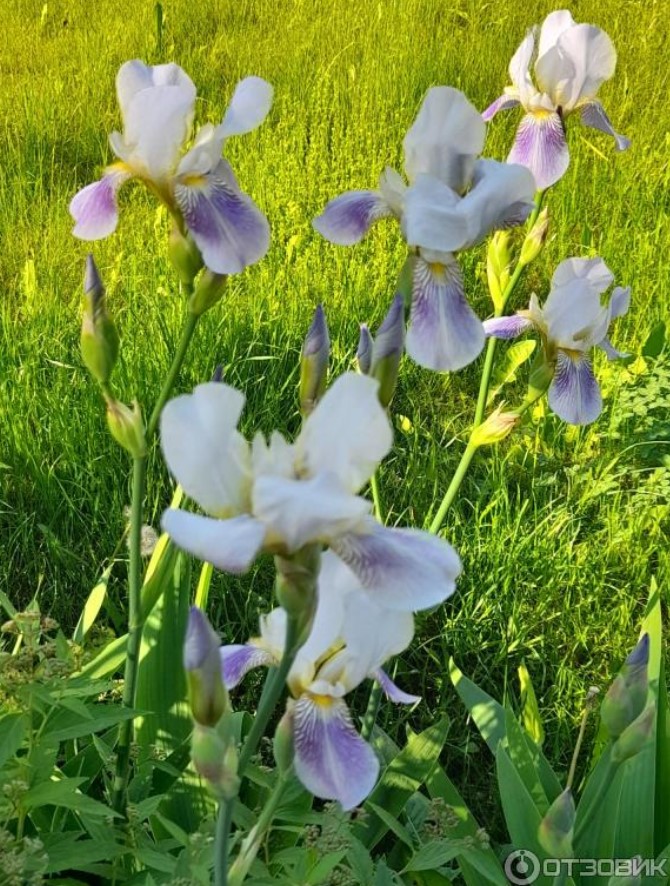
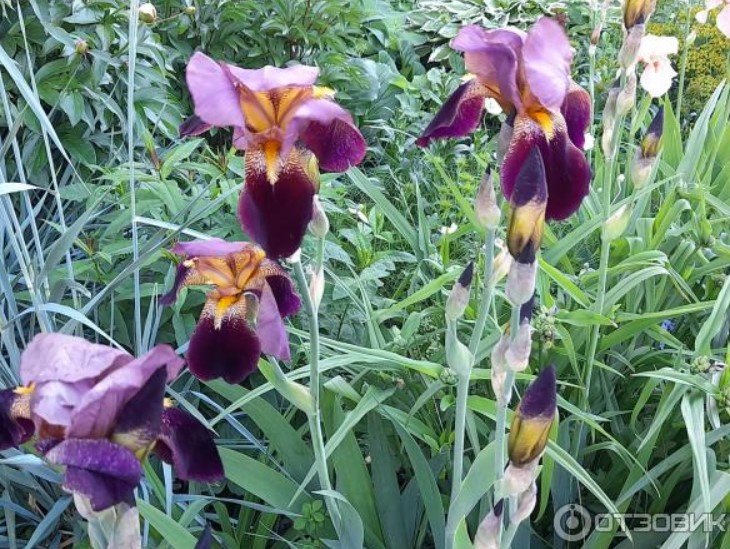
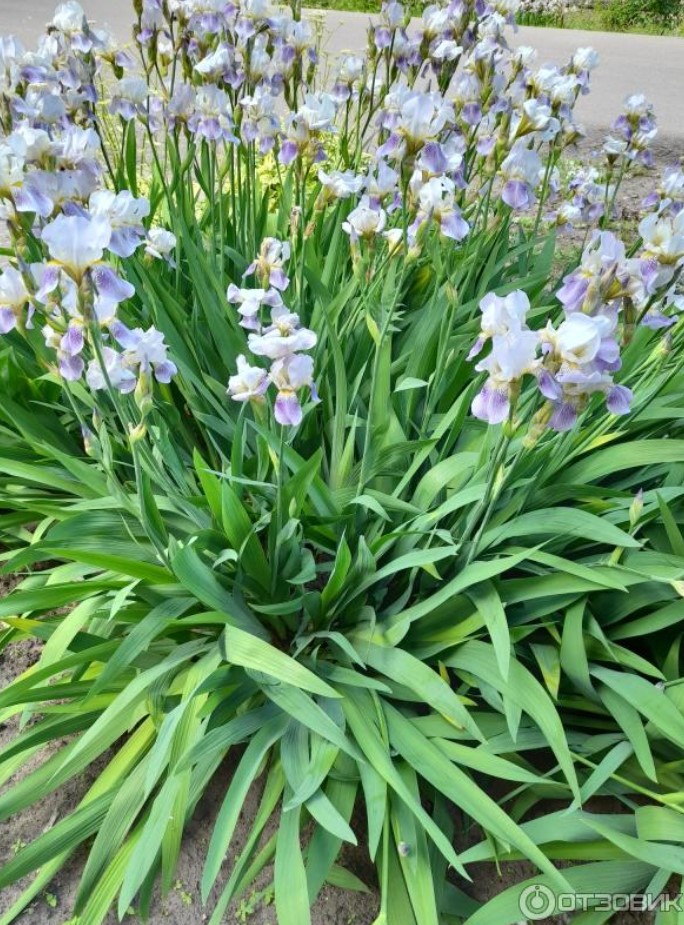
These include irises - fragments of the rainbow on earth, as the ancient Greeks believed.I grew my first irises from seeds. This is what they look like after five years of growing them.
in my garden:
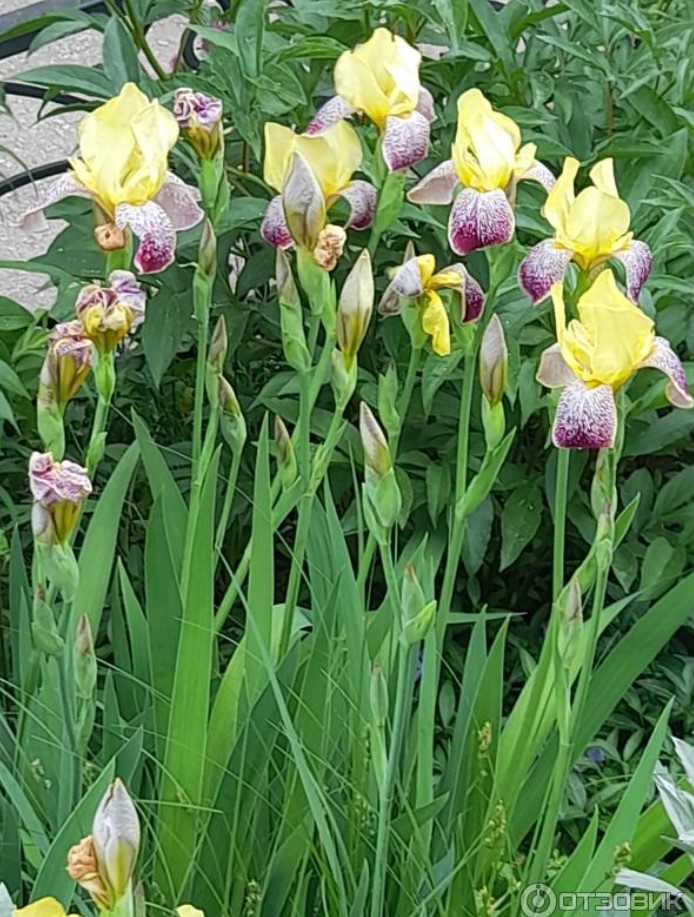
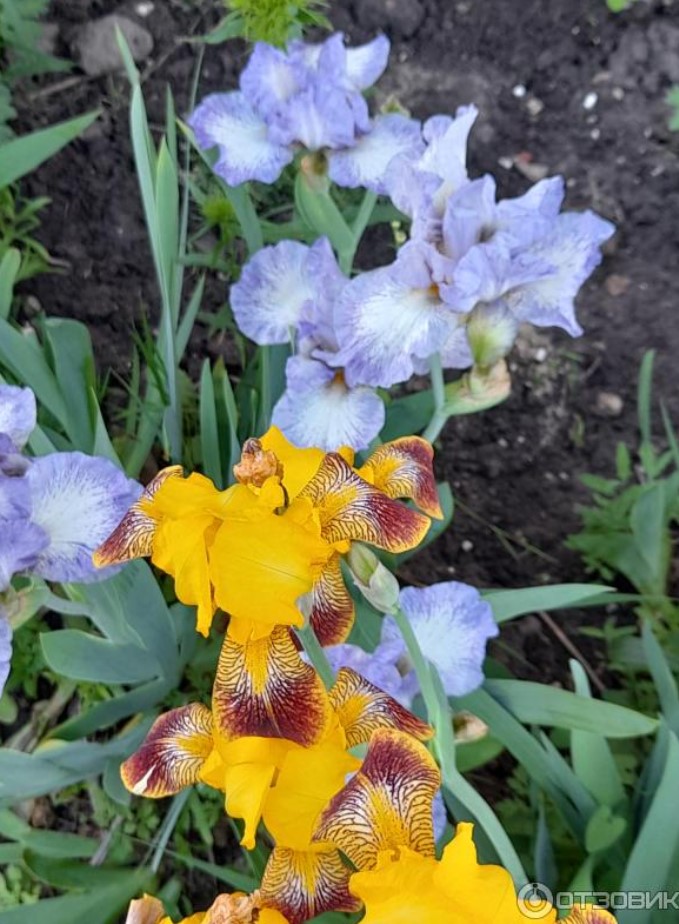
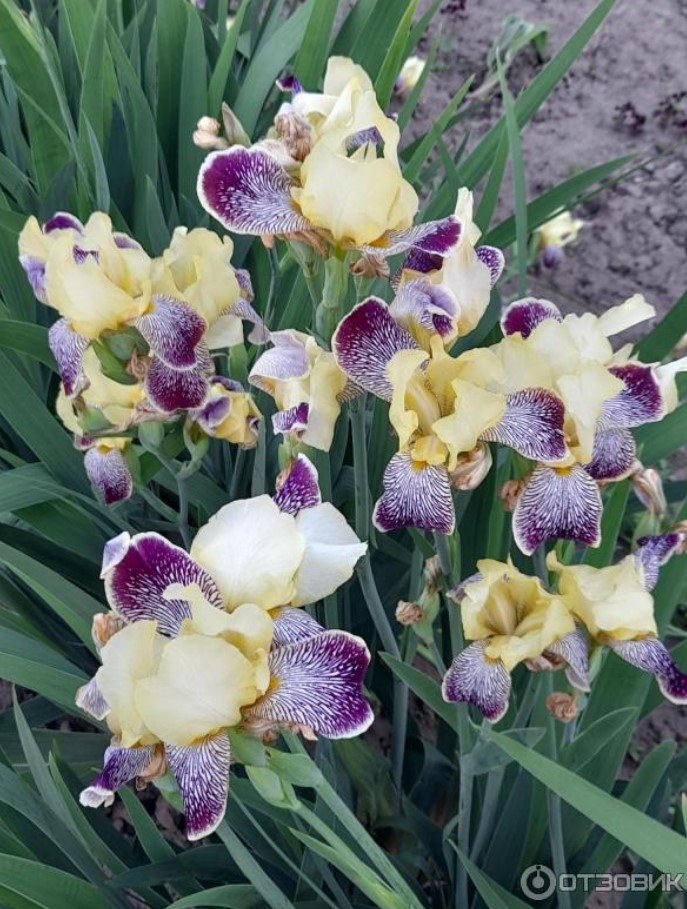
I borrowed the second variety from a friend at her dacha, I took a one-year-old one
growth on the rhizome. The iris took root, grew, and here it is in all its glory:
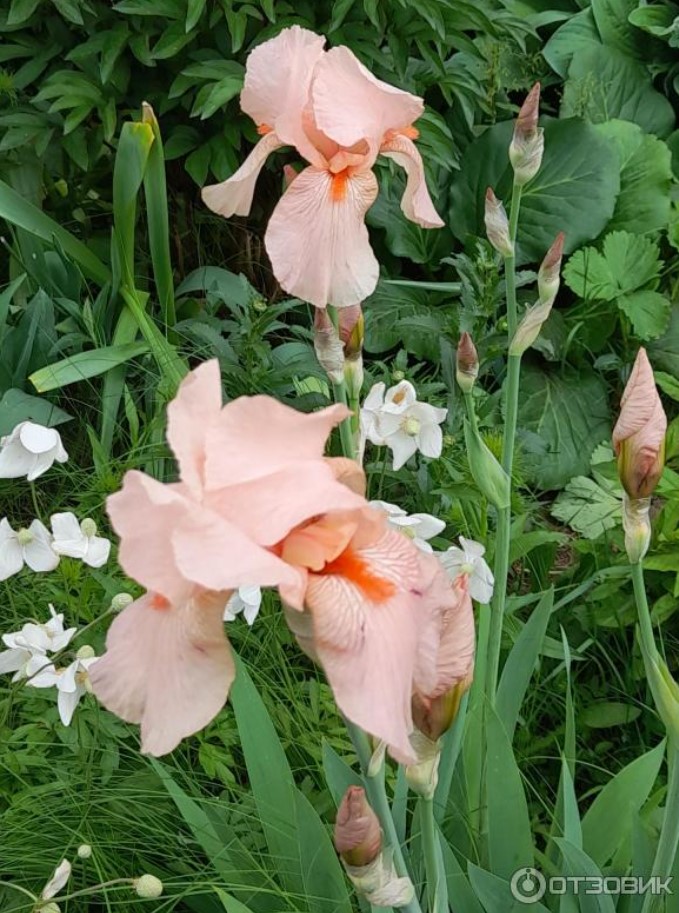
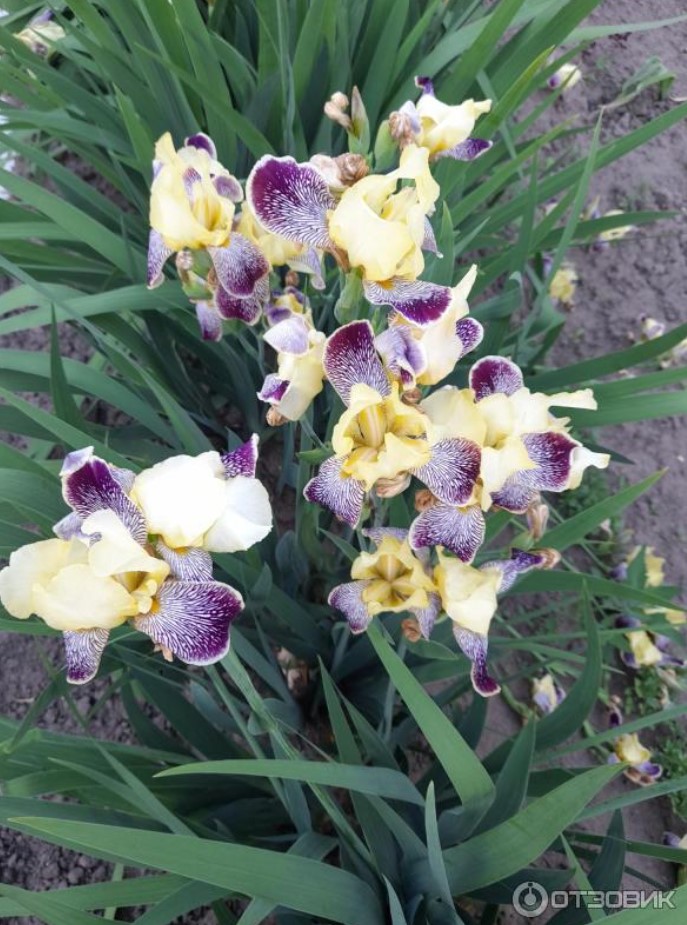
Subsequent varieties migrated from neighbors.
Irises in my garden usually bloom in mid to late May. This year it was
It happened because of the cold and rainy weather, which was unusual for our area.
the last month of spring in mid-June.
I water the irises generously only when they are blooming, once a week.
I don't feed them with anything, the flowers don't seem to mind)
I propagate these flowers using parts of rhizomes that have buds.
Once every five years it is necessary to transplant the iris to a new location,
otherwise flowering may stop.
Every year I try to add one variety to my iris collection.
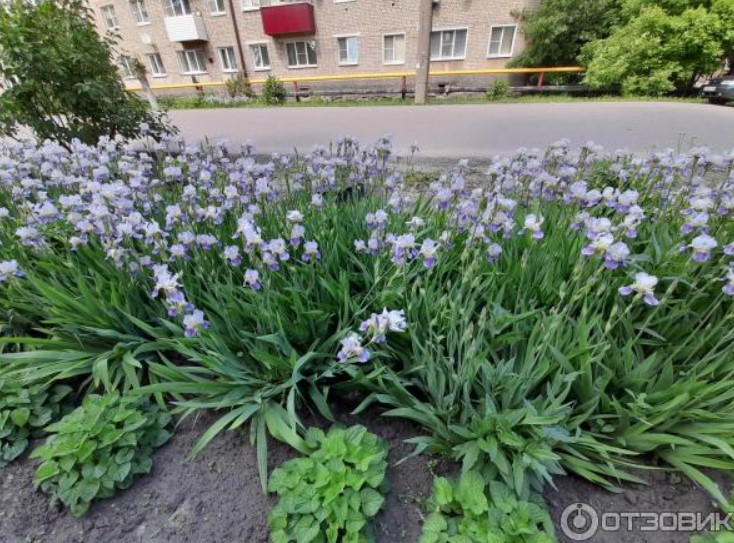
This year, a trip to Michurinsk, where sky-blue irises were blooming everywhere, helped me expand my collection:
A shoot was purchased at the market, and I hope it will enjoy life.
in my garden.I still have a lot of room for improvement in expanding my iris collection.
After all, this plant has more than 800 species of different forms
and colors.Irises are completely unpretentious in care, and at the same time, they give
its charming bloom and aroma for a long time.
I am pleased to recommend the wonderful rainbow shards to all gardeners -
and lazy and not lazy))

Irises love the light and thrive in sunny areas. They can tolerate light shade from sparsely spaced trees. They don't tolerate excessive moisture, but they are very demanding during the flowering period. Excessive moisture is dangerous for irises, as it can cause soft rot. However, if dry and hot weather sets in during the second half of May or early June, irises will respond gratefully to watering and will bloom significantly better.
Irises should be fed at least three times. The first is a nitrogen-phosphorus fertilizer (after removing the cover), with 20 g each of ammonium nitrate and potassium sulfate. The second (after 2-3 weeks) is a nitrogen-potassium fertilizer (1:1). After flowering, apply a phosphorus-potassium fertilizer (50 g superphosphate and 25 g potassium sulfate per 10 l/m). Complex fertilizers for flowering irises are suitable. During flowering, do not allow faded flowers to fall onto the leaves, as this causes leaf rot. Remove faded flowers, and after flowering, break off the entire flower stalk.
Watering is strictly avoided in late summer and fall. Dry weather during this time will slow shoot growth and provide the irises with the best conditions for overwintering.I repeat again and again... Iris is an easy-to-care-for plant; it can indeed be repotted even while it's blooming. It's recommended (and I do too) either immediately after blooming—when the first wave of root growth begins (the irises are small, but have time to root well) or in July or early August.
In autumn, when the temperature drops below 5-6 degrees Celsius, the back of the irises should be covered with light soil 5-7 cm deep (preferably coarse sand so that moisture does not linger), otherwise the iris flower bud will freeze and then it will not bloom.
In the Non-Chernozem zone, especially in its northern regions, many bearded iris varieties require winter protection. The most reliable shelter for perennials is snow, especially loose, uncompacted snow. Every centimeter of such snow reduces frost risk by 1–1.5°C. With a snow depth of 30–35 cm, irises are practically safe from frost.It's recommended to trim foliage at a height of 10-15 cm. I don't trim leaves in winter. By not trimming iris leaves, we create additional insulation for the flower bud and the entire rhizome. The iris leaf is hollow for three-quarters of its length from the rhizome. By trimming the fan, as recommended in the literature, we allow cold air and water to enter, which then freezes right at the flower bud. The results won't take long to appear.
Various materials are used for covering: spruce branches, dry fallen leaves, straw, sawdust, dry peat, moss, etc. The insulating material must be dry and is placed on the bushes in mounds 15-25 cm high, or 1.5-2 times higher in Kazakhstan and Siberia.
It's important to create an air gap between any covering (except spruce branches) and the ground. To do this, place spruce branches or a loose bundle of twigs on the iris bush to prevent damping off. Inadequate covering can only make wintering worse.
In regions with frequent winter thaws followed by frosts without snow, irises are best protected with a dry shelter, similar to that used for roses or clematis. Roofing felt, plastic film, and other materials can be used for this purpose. Various waterproofing materials used in roofing construction have recently proven effective. They allow air to pass through from below but prevent moisture from entering, preventing damping off.
There's no need to rush to cover irises. You can wait out the light autumn frosts, and only when the air temperature drops below -5 degrees Celsius (at lower temperatures, the iris itself won't freeze, but the flower buds might) should you begin covering.
Irises prefer neutral and alkaline soil. They are replanted immediately after flowering, from late June to early August, into a raised bed or mound. When planting, the bush is divided into sections, the roots are shortened, the leaves are trimmed by two-thirds, a mound is made in the hole, the roots are spread out, and the heel should be facing upward.
Irises prefer a dry, sunny location. To initiate flower buds, trim the leaves by two-thirds in August and regularly remove spent flower stalks.
Fertilize three times per season: March-April and after flowering - nitrogen-potassium fertilizing, at the end of July - exclude nitrogen, fertilize exclusively with superphosphate.
Sometimes irises are damaged by onion root mites and thrips. These damage the leaves, causing them to become thin and pale. To combat these pests, it is recommended to spray with Aktara or Confidor mixed with any copper-containing fungicide and soap (for better adhesion, use a 100g/l solution).
Good afternoon
What can you think about at the beginning of spring? Flowers, of course! Mimosas and tulips, without which I can hardly imagine my March, are gifts from men. April's snowdrops and crocuses are gifts from nature. And the irises that bloom at the end of May are my gift to myself.
So, today I'll be reviewing irises - original and easy-to-grow flowers.
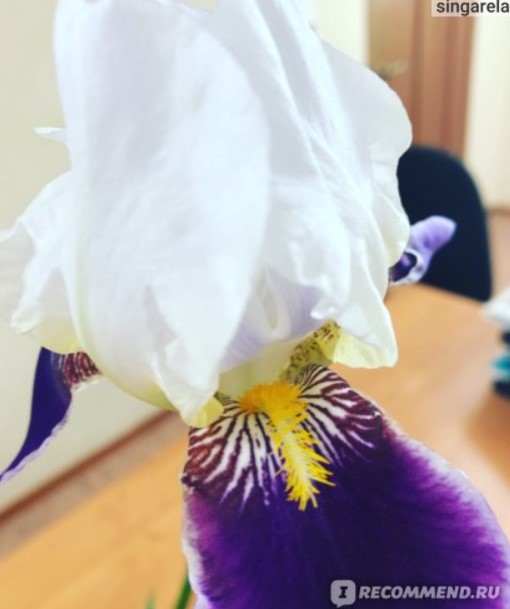
Characteristics, initial dataThe bearded iris is a perennial plant. Why is it called bearded? The outer, recurved petals have soft, bristly growths that resemble a beard. Iris breeding is extremely diverse, with several thousand varieties varying in height, color, and more.
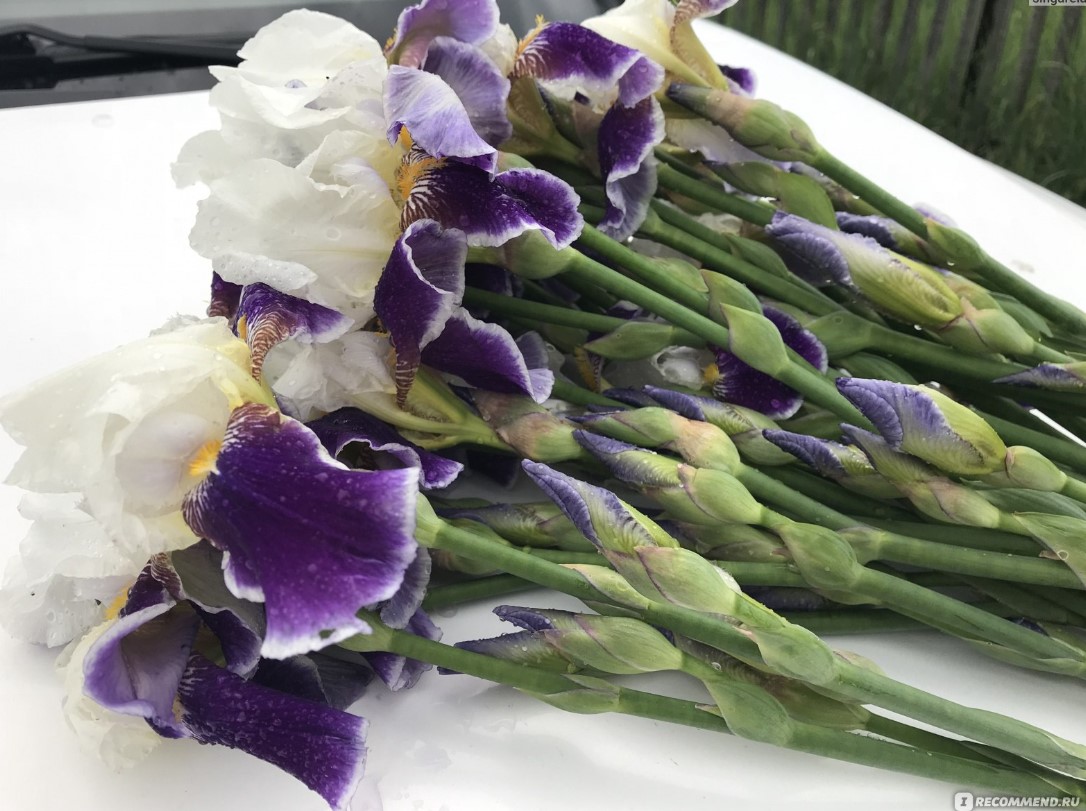
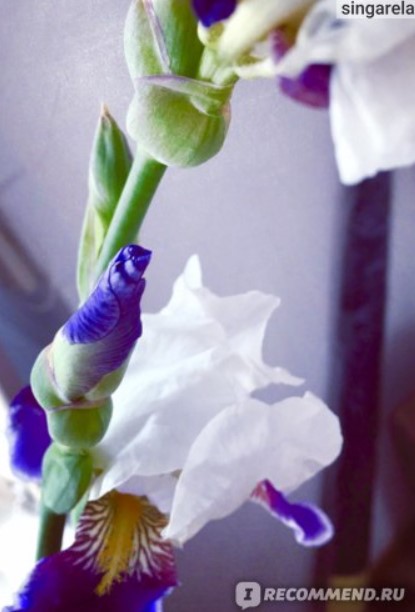
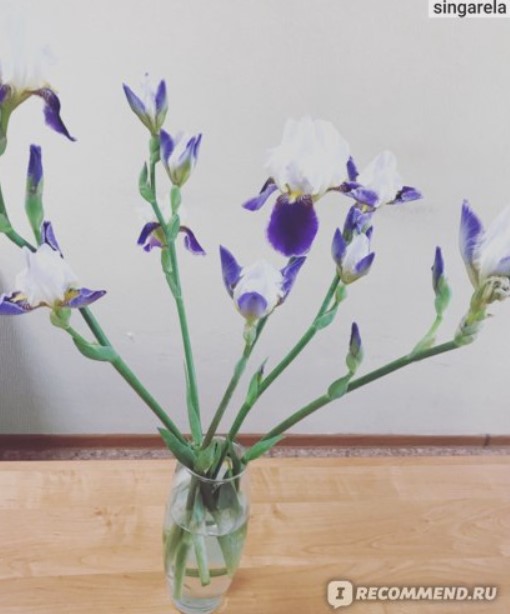
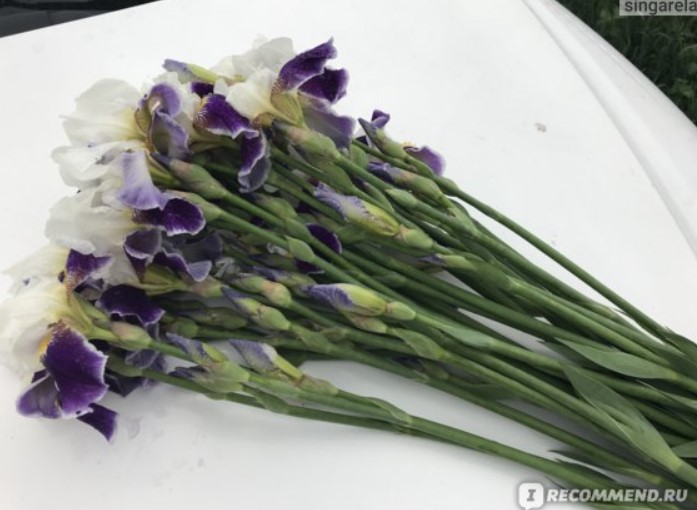
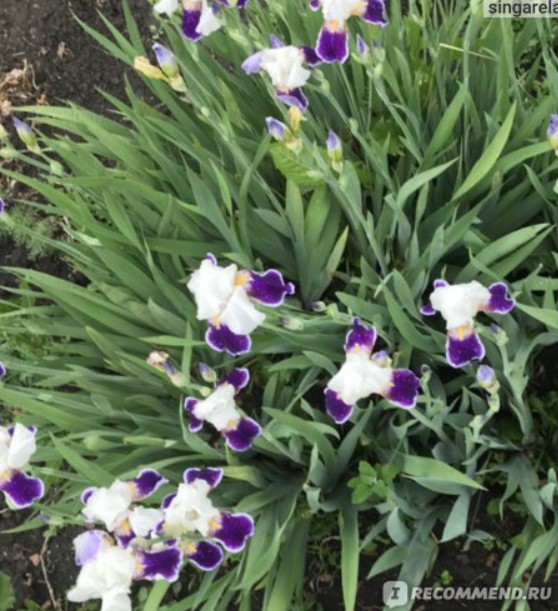
We grow one variety - white and purple tall bearded irises.
Advantages:
Irises take root easily and reproduce well: about 5 years ago we planted several of them at our dacha, and now we have a whole flowerbed.
The plant is unpretentious, does not require special care and can easily tolerate a lack of water.
Overwinters in the ground (unlike, for example, dahlias and gladioli).
It has a long flowering period due to the fact that iris buds open unevenly; therefore, if you remove spent blooms promptly, it will delight the eye for a long time.
When cut, irises have a shorter lifespan, but if you change the water daily, they can also last quite a long time (up to 5 days).
Iris stems are both flexible and stable, and they tolerate transportation well.
Perfect for home and office use, no strong odor (everyone has different tastes).
Finally, it's simply a cosmically beautiful flower, graceful and noble. It's touchingly vulnerable when new shoots appear, beautiful when its stems reach for the sun, and magnificent in bloom.
History of originIrises have been consistently popular for thousands of years: for example, they were depicted on the frescoes of the Palace of Knossos in Crete.
As is usually the case, the myth about the origin of the flower is no less beautiful than the flower itself.
The iris is named after the Greek goddess Iris, goddess of the rainbow, whose mission was to mediate between gods and mortals. It received its name for its wide range of color variations.
Cultivation:
I want to say: some of what I read below (except for some very simple things) I learned while preparing this review. We haven't encountered any particular difficulties planting and caring for the irises yet. The process isn't particularly labor-intensive: water, weed, feed, replant, and admire.
Landing location:
Permeable or rocky soil with neutral pH. Flowers grow well on a slope; they love the sun: this determines the number of flower buds set for the following year. (…) To grow irises, select a sunny, wind-protected location.
Boarding time:
The best time for planting and replanting a flower is considered to be the time after flowering, when the plant forms new roots, (...) or in the fall, when the roots become fibrous and hard.
Planting method:
If the rhizome is very long, trim it slightly and soak it in a weak solution of potassium permanganate for about 20 minutes. Make a slight depression with a small mound. Place the flower on this mound, spread the roots, and cover with soil. When planting in the ground in spring, treat with growth stimulants.
Care and watering:
Extreme care must be taken when loosening the soil, as the flower's roots are close to the surface and must be very careful not to damage them. Irises accumulate water and nutrients in their root system. Therefore, they only need watering during dry summers and during the flowering period to prolong their blooming period.
Personal experience:
We chose a sunny spot—there was no other. Regarding drafts, there are lilac bushes on one side of the flowerbed, and shorter plants on the other three sides. Before planting, we soaked the plants in a weak solution of potassium permanganate. Since the soil is very dry, we watered them frequently, fertilized them with organovit, and watered them with a nettle infusion. I weed as weeds appear, but without fanaticism. I cut off unopened buds—they open beautifully in a vase, thus prolonging the flowering period. I prune the plants in August, when the leaves are still green.
That's it. The review doesn't contain much useful information, but I hope it's enough to inspire you to grow irises. Incidentally, they're now sold in all supermarkets.
Happy shopping and have a nice spring!
Advantages
A wide variety of colors
Beautiful
Beautiful flowers of different colors
Many varieties
Unpretentious
Flaws
No