To ensure a spring flowerbed rich in delicate buds, plant tulips in the fall. You don't need to be a professional gardener to do this; simply follow a few planting and care guidelines.
Content
- 1 Planting tulips in open ground
- 1.1 Selection and preparation of seed material
- 1.2 Planting dates by region, according to the 2023 Lunar calendar, and general rules
- 1.3 The location of tulips in the garden
- 1.4 Soil for tulips
- 1.5 Methods for planting tulips in open ground
- 1.6 Tulip planting pattern: depth, distance between bulbs
- 1.7 Step-by-step instructions for planting tulips in open ground
- 2 Top.tomathouse.com informs: Planting mistakes, how to protect yourself from rodents?
- 3 Tips from gardeners on planting and growing tulips
Planting tulips in open ground
As well as hyacinths, lilies, daffodils and a number of others bulbous Tulips are planted in the fall. Planted at this time, they undergo a kind of cold hardening, take root, and become acclimated to their natural environment.
Additionally, there are optimal temperature, humidity, and soil conditions that should be adhered to during planting. The result will be healthy, well-shaped flower stalks with large, vibrant buds. If done correctly, they will bloom earlier and enjoy their beauty for longer.

Selection and preparation of seed material
You can obtain planting material in one of several ways:
- Dig up the roots annually once the tulips have finished blooming. This prevents them from becoming too deeply planted and becoming smaller. Maintain a storage temperature of at least 25ºC for the tubers to form a full flower stalk.
- Buy new seeds. Check them for integrity, absence of any unnatural inclusions, rot, or other signs of disease. They should be covered with a brown husk, which protects the seed from damage. Furthermore, a healthy plant should only have a slightly visible stem bud before planting, and the root section should be dry, hard, and without any growing roots.
In any case, only whole bulbs should be planted, and it's best if they're large enough, about 3-5 cm in diameter. Small bulbs won't flower, and larger ones are best for off-season indoor growing.
It's also important to prepare them for planting in the flowerbed. To do this, use a 0.5% solution of potassium permanganate or a special preparation such as Fitosporin, briefly soaking the tuber. This neutralizes bacteria that can cause disease and disinfects the plant as much as possible.
Planting dates by region, according to the 2023 Lunar calendar, and general rules
It's important to identify the optimal timing for planting tulips. There can be no absolute certainty here, as several factors must be considered simultaneously:
- The air temperature should not be below +15 ºС during the day and +5 ºС at night, and in the soil layer about 10 cm deep it should not fall below +10 ºС.
- Weather changes. It's best to plant plants with frosts in mind so they have at least a month to establish roots.
- A chilling period is essential to allow the rhizomes to begin to develop nutrients needed for growth. Suitable weather conditions should encourage the tulip to root, but at the same time prevent it from sprouting before frost.
The time for planting tulips also directly depends on the climate in the region:
- in the middle zone, located at the level of the Moscow region, it can begin on September 20-30;
- in the south and in the Volga region this can wait until October;
- for the Leningrad region and the Urals, planting work should begin in the first days of autumn;
- The harsh climate of Siberia requires planting to begin as early as mid-August.
Florists recommend following the lunar calendar. In 2023, we'll be choosing the right dates.
| Month | Favorable days | Unfavorable, prohibited days |
| August | 7 (from 09:24)-14 (until 13:35), 19 (from 14:53)-21 | 1,2, 15 (from 12:38 p.m.), 16, 17 (up to 12:38 p.m.), 30,31 |
| September | 1 (until 16:25), 3 (from 18:00)-5 (until 23:05), 8 (from 07:59)-10 (until 19:35), 13, 16-20 (until 17:06), 22 (from 23:00) 21m.)—24 | 1 (from 16:25)-3 (until 18:00), 14, 15,25-26,28, 29,30 |
| October | 1-13 (until 20:55), 16, 20-22 (until 09:06), 30 (until 18:07). | 14,15,28,29 |
In addition, weather variability should be taken into account and plantings should be covered with leaves or spruce branches to protect them from frost. Favorable times for gardening should be chosen based on the air temperature during a given period.
The location of tulips in the garden
The location of tulips significantly influences their growth. When choosing a planting site, follow these guidelines:
- a well-lit, unshaded area promotes the appearance of regularly shaped flower stalks with strong stems and bright color;
- the wind can break the stems;
- Make a drainage channel for water from under the rhizome yourself, and drain 2-3 cm of sand underneath it.
The optimal location for a garden bed is the south side, near a tree, house, or any building that will not shade it.
It's also important to choose the right companion plants for tulips, ones that won't require regular watering. You can choose other bulbous plants or drought-tolerant plants that draw moisture from the soil, such as alyssum or gypsophila.
If you take this matter seriously, you can prepare a small plan for the layout of your future flowerbed. This will allow you to change the design of your plot annually and add variety to its appearance.
Soil for tulips
Tulips are extremely demanding plants, requiring a neutral or slightly alkaline environment to thrive. Most importantly, it needs to be loose and permeable.
This gives advice on improving the soil before planting:
- clay is too heavy, so it is diluted with sand, which also drains excess moisture from under the roots;
- increased soil acidity indicates the need to dilute it with chalk or slaked lime, 0.2-0.5 kg per 1 m2;
- additionally fertilize the soil with aged humus, ash and various special agents;
- carefully dig up the flower bed to a depth of 25-30 cm a month before planting;
- When planting, water the holes only if the weather is dry outside; otherwise, watering is not necessary.
Fertilization of a land plot involves the use of the following agents per 1 m2 of soil:
- as an organic source of potassium and phosphorus – wood ash, about 100-150 g;
- 2 buckets of rotted manure or compost that has been 2-3 years old;
- 40-50 g of superphosphate;
- 20-30 g of potassium sulfate;
- 25 g of ammonium nitrate.
It is permissible to use medicinal preparations, such as Fundazol, against fungal bacteria, which are applied to the soil surface no more than once every 3-4 years.
At any stage of planting or caring for flower stalks, you should refrain from using fresh manure or fertilizers containing chlorine, which can burn the roots.
Methods for planting tulips in open ground
When planting tulips, you can plant them in a strip along paths, in a circle, a semicircle, or any other shape. However, there are several basic principles to consider when creating a flowerbed:
- Creating full-fledged flowerbeds. Planting occurs directly into the soil, which is pre-treated and loosened.

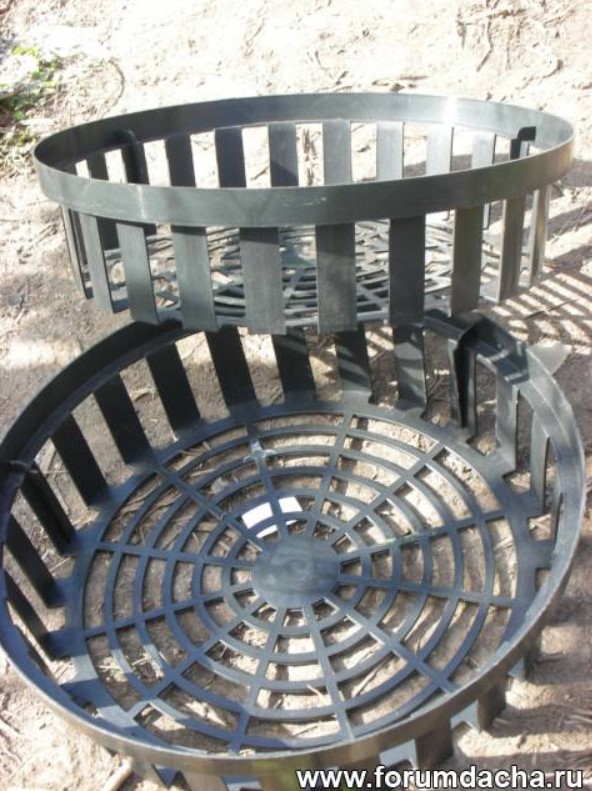
- Using a container, basket, or box, either freestanding or dug into the soil, simplifies the growing process and creates optimal conditions. It protects against pests and makes digging minimally traumatic for the bulbs.
- Layered planting involves arranging plants at different levels. It's convenient to use a tub or large pot for this, starting with the largest rhizomes, which are placed almost to the bottom, and then gradually decreasing in size.
Tulip planting pattern: depth, distance between bulbs
The tulip planting scheme involves creating rows or holes so that the plants are spaced 8-10 cm apart and at least 25 cm from other objects. To do this, remove the top layer of soil and arrange the bulbs in the desired order, then sprinkle them with ash, sand, and previously removed black soil.
They should not be pressed too deeply into the soil, but should be placed with the bottom down, from which the root will grow.
The planting depth of tulips directly depends on their variety and the diameter of the bulbs, and should be three times their size.
On average, these are the parameters:
- babies up to 3 cm long are located no lower than 5-10 cm deep, usually not strong and produce small flowers, therefore they grow better at the edge of the flower bed;
- medium ones are 10-15 cm and are the most optimal for obtaining beautiful flowers;
- Large extra-large bulbs, over 5 cm in size, are planted at 15 cm intervals, as they grow taller and therefore require more space.
The latter are also used for indoor forcing, accelerating their growth to quickly produce flowers. This allows for a beautiful bouquet to be produced in time for the New Year or early spring holidays.
I wonder how to get it blooming tulip, hyacinth for New Year, March 8th or another holiday?
Step-by-step instructions for planting tulips in open ground
Growing tulips begins with planting them in open ground. This process can be divided into the following stages:
- Choose a location for the flower bed, dig it up thoroughly and fertilize it a month before planting, removing weeds along the way.
- In dry weather, water the flower beds several days beforehand to establish biological balance in them.
- Choose a sunny and windless day, taking into account the weather and recommendations on when exactly to plant bulbous plants.
- Select healthy bulbs and soak them for 30-40 minutes in a solution of potassium permanganate.
- Remove the top layer of soil and form holes or trenches.
- If there is no precipitation, water the dry soil with a small amount of water.
- If necessary, add some sand, ash, or lime to the bottom of the hole.
- Place the onions bottom down without pressing on them.
- Cover the top with loose black soil and level the surface with a rake.
- Mark the planting site with sticks; you can cover it with dry leaves or peat for the winter.
- In dry climates, watering will be necessary a week after planting.
- To grow strong, healthy plants, you need to cover the flowerbed with fabric tarps, cinquefoil, or dry grass in case of frost.
Top.tomathouse.com informs: Planting mistakes, how to protect yourself from rodents?
When planting tulips, everyone may encounter some mistakes in caring for these delicate plants in open ground.

Among the most common are the following:
- Late planting of bulbs makes them vulnerable to the first frosts; the rhizomes do not have time to form and take hold;
- If you plant too early, the sprouted seedling will die from the cold or be choked by weeds in the spring;
- spring planting makes them sickly, small and dull, no matter whether it is Dutch, peony, terry, or any other variety;
- the use of damaged, infected rhizomes that infect healthy plants;
- Incorrect deepening of the holes causes them to freeze or remain dormant for a long time, resulting in delayed growth.
Onions can be stored in any conditions, but to ensure complete safety, it is worth considering that they can become a delicacy for mice and rats.
While a handful of dormant tubers can still be protected from attack, when planted in the ground they become vulnerable.
To prevent damage by rodents, a number of measures are taken:
- surround tulips with daffodils, fritillaries, comfrey and other plants that repel mice;
- the planting material is treated with kerosene and ground red pepper;
- use baskets for planting, limiting access to the rhizomes;
- use other methods to combat pests.
If you do everything correctly in the early stages, when planting tulips, you can get beautiful, bright buds, just like in the best photos in glossy magazines.
Tips from gardeners on planting and growing tulips
Growing tulips outdoors is easy. Several years ago, I planted varietal needle-shaped tulips in my village without any problems.
They are planted in the fall. The best time to plant tulips is the second and third ten days of September, when the soil temperature at a depth of 15 cm drops to 9°C. Tulips root poorly at higher temperatures. Early-blooming varieties are planted one to two weeks earlier than late-blooming ones. It's important to plant them at the correct depth. It should be equal to three times the height of the bulb. For large bulbs, this should be up to 15 cm in light soils and 2-3 cm shallower in heavy soils.That's it. In the spring, when the bulbs sprout, you need to make sure the soil doesn't dry out and loosen it. Adding manure to the soil is a must; tulips love fertile soil. They bloomed magnificently! In August, the bulbs were carefully dug up, dried, stored in a dark place, and replanted at the end of September. Normally, bulbs are dug up earlier, but these tulips had green leaves for a long time, so I had to wait for them to dry out.
Last year, my mother experimented and didn't dig them up for the winter. Local varieties are never dug up; they bloom beautifully. They survived the winter fine; she just made sure the bed was always covered, meaning with snow. This fall, they covered the bed with sawdust to prevent everything from freezing in such a winter.
Alisa is right about the manure; it absolutely has to be "proper," well-rotted. And not just for tulips, but for all crops.
I plant the bulbs in the fall, like all bulbs, at a depth three times the height of the bulb itself. If you plant them shallower, the flowers will be smaller. I space the bulbs 10-15 cm apart. If the soil is poor, I add a little humus and ash to the hole. Tulips don't like acidic soil or wireworms.
Don't use fresh manure or partially rotted compost. It's best if the bulb base rests on sand to prevent rotting. That's all. Then it's weeding, light loosening, and fertilizing if needed. I use Kemira Universal or Bioton for fertilizing. I dig up the bulbs every year.
I used to have no idea what to do with them after they finished blooming. They fade quite quickly and stand around all summer looking ugly, with yellowed, half-dried leaves. They take up space and are unsightly. And the bulbs aren't ripe enough to dry yet.
They overwinter well, and even better if left undisturbed, because they're well-rooted. But the catch is, if you don't dig them up for several years, the bulbs will sink so deep that they'll be impossible to find. The flowers themselves also become smaller. If you're using cultivars, it's a shame to lose them, and it's best to separate the offspring so they can grow on their own.
My neighbor digs it up once every two years. That's normal. I dig it up every year because I use that space for other flowers.Since tulips are such a beautiful addition to the garden when they're in bloom, we gave them a prominent place. That's how I do it now.
In a secluded spot, I dig up some soil and make a planting hole a spade deep. When the tulips have finished blooming, I carefully dig them up and place them in the prepared hole, leveling the soil. And that's it. The bulbs ripen peacefully in their new location.This method may be a bit barbaric, but it doesn't harm the hair follicles. I came to this conclusion purely empirically. I've been doing it this way for several years now, and I'm happy with the results.
And in the place where the tulips grew, I plant petunias, asters, impatiens, and stocks. My tulips grow all over the garden, in clumps large and small. I plant them close together so that when they bloom, there's no gap. And after they bloom, other, also very colorful, annuals begin to bloom in those same spots.
The second method is very simple. But it doesn't last long. In some places, tulips grow in small clumps (5-7) right on the lawn. After they bloom, we mow them down along with the grass. And nothing happens. They grow back the following year. But I'll never dig up these tulips again. When they're gone, I'll plant new ones if necessary.
Tulips planted in spring won't bloom until next year. Alas. I would have waited until autumn (or at least until the end of July).
), I would buy fresh planting material and plant it properly. It would be a shame if I rushed in the spring and didn't get flowers next year.
Although it’s so difficult to walk past all this beauty in the store, the bulbs bursting at the buds, all sorts of packets with seeds
I had experience planting tulips in the spring. I bought them at the beginning of winter and kept them in the refrigerator until planting. They bloomed in the summer.
For a tulip bulb to bloom, its flower bud must mature. This requires, among other things, a sufficiently long period of exposure to low temperatures.
There is another option for planting tulips in the ground:
The bulbs are planted in a large iron herring can.
(after making holes in it with a nail) and into the ground.
This is to prevent the bulbs from going too deep and from getting cut when digging them out.
I haven't tried this method myself yet.
Now at the dacha, for some reason there is a problem with large jars.
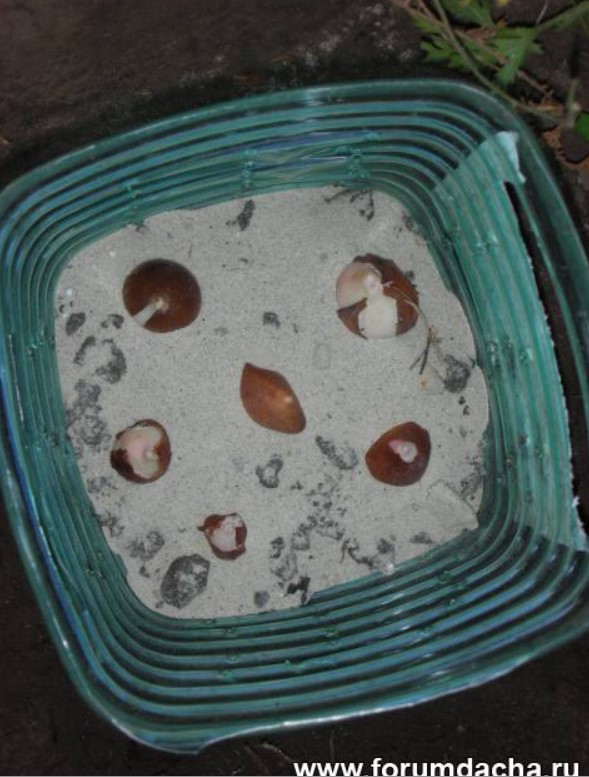
I read about this method of growing tulips: a five-liter water bottle with holes punched in the bottom and the top cut off is filled with soil, tulips are planted in it and covered with soil on top, then these jars are buried in the ground almost level with the surface.
After the tulips have finished blooming, we remove the jars from the ground and place them in a shaded spot, such as under an apple tree. We add soil to the holes left by the removed jars and plant other plants there. The tulips, undisturbed, ripen as they should, without spoiling the flowerbed.
I stopped adding compost to my tulips and other bulbous plants because I discovered it causes the bulbs (especially Dutch ones) to rot. To save space, I plant tulips in trenches, add fertilizer to the bottom, mix it with soil so it doesn't touch the bulbs, and then arrange the large bulbs, cover them with soil. Then I arrange the smaller bulbs between them, cover them with soil again, and finally arrange the tiny baby bulbs. This way, they'll sprout together in the spring, and even if the baby bulbs don't bloom that year, you'll know which variety they belong to.
In the spring, where tulips are planted, I sprinkle nitroammophoska directly on the snow, then I also feed it at the beginning of flowering and after, fertilizing it carefully to avoid overdosing.
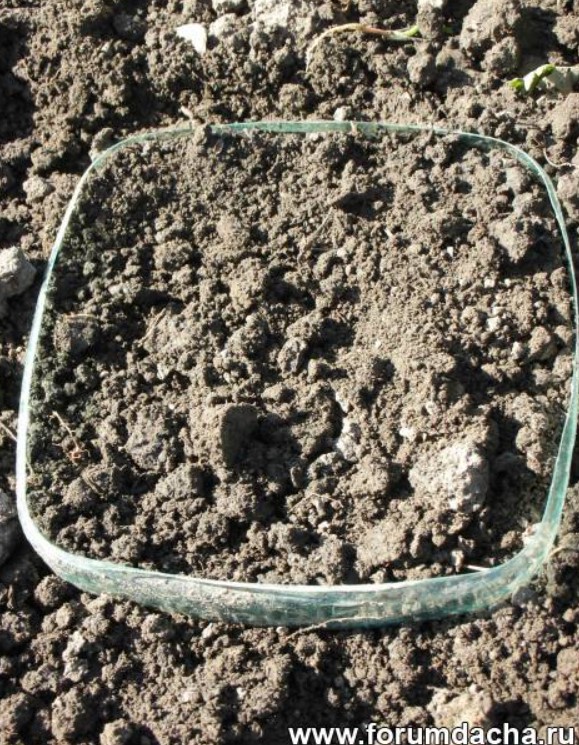
Before planting, I treat the bulbs with a fungicide to prevent viral diseases.Here we are again, planting tulips. We didn't get any rain, so I had to water the soil with a hose to prepare the beds for planting. I bought some mesh baskets for bulbs so I could plant tulips and hyacinths in the front beds, then dig them up, basket and all, immediately after they bloom and transplant them elsewhere to ripen. And then I saw a tip on TV about making these containers out of 5-liter plastic bottles. Maybe someone else will find them useful; they're quite convenient, and they're even more compact than the ones I bought.
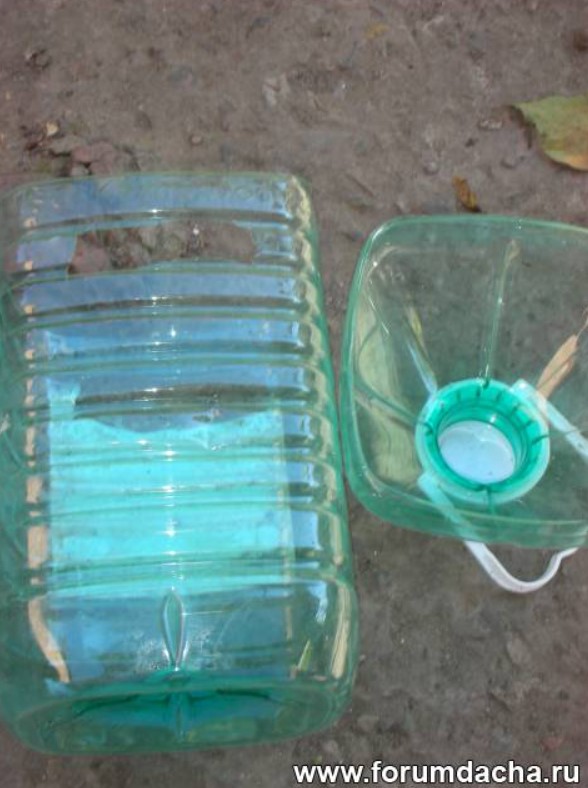
Cut off the top part, then you can use it to cover the seedlings.
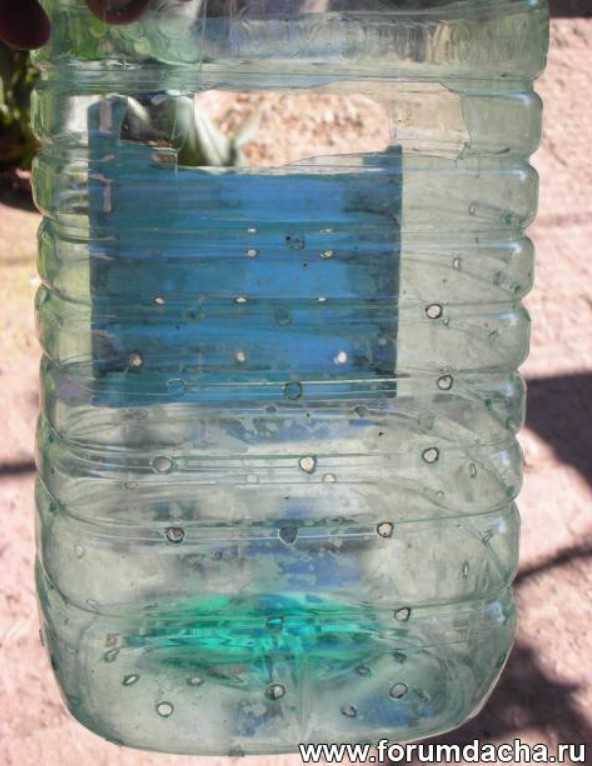
Make slits to make it easier to remove the container when replanting, and use an awl, a hot nail, or a soldering iron (ours didn't work, so we had to use a nail) to make lots and lots of holes on the bottom and sides.
Here is the container for planting, they promise that rodents won’t get to the bulbs.