Tulips are the most famous bulbous ornamental plants. They are associated with the first warm days of spring. Numerous varieties of these beautiful and easy-to-grow flowers, available in a variety of colors, shapes, and sizes, adorn gardens from early spring until summer.
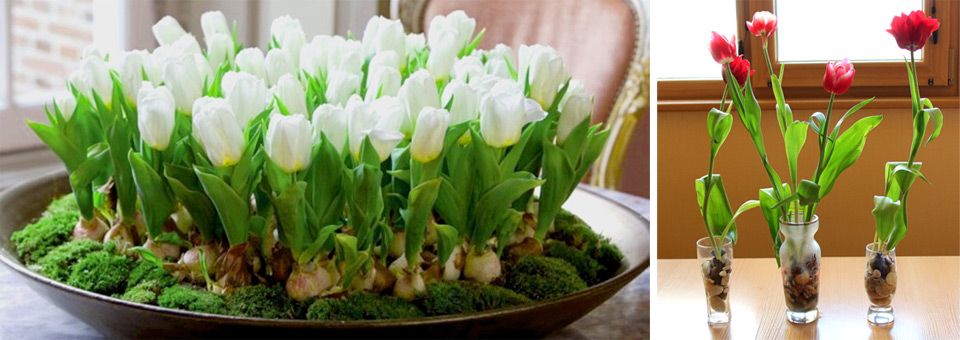
But such beauty can be enjoyed almost every season by growing these flowers at home through forcing. Tulips are among the best ornamental plants for forcing.
Content
Technology for forcing tulips at home
Forcing is a special cultivation method that creates artificial conditions for plant development and flowering. This allows you to produce beautiful, fresh flowers at any time of year.
In temperate climates, bulbous plants, like all other plants, become dormant during winter, having adapted to the cold season. But these are only external signs. Complex preparatory processes are underway to shape the future plants.
By creating certain conditions for the bulbs, you can bring them out of dormancy to stimulate growth and flowering. Therefore, it's entirely possible to grow beautiful tulips in a greenhouse for New Year's, Christmas, March 8th, and other holidays.
In nature, tulips bloom after winter. During the cold season, low temperatures in the bulbs produce substances essential for healthy plant growth and the formation of beautiful buds. Therefore, a necessary step in forcing is maintaining the bulbs in low-temperature conditions for a sufficient period. Depending on the variety, this period lasts 16-22 weeks.
The main stages of the entire forcing cycle:
- dug up bulbs are stored in suitable conditions before planting;
- during the rooting and germination periods, the bulbs planted in the ground are kept in a room with a low temperature (+5…+9 °C);
- forcing – continues at room temperature and good lighting until flowering.
Selecting bulbs for forcing
To obtain strong, healthy plants with beautiful buds, you need to properly prepare the planting material for forcing in advance. This process begins while the bulbs are still in the ground. After flowering, cut off the above-ground parts of the plants, leaving 2-3 healthy leaves. Care is continued until the leaves fade (around early July) – this allows the bulbs to grow and gain strength.
The dug-up bulbs are dried, cleaned, removing any dry tops, and sorted. The strongest and largest specimens (30-40 mm in diameter) are selected for forcing. They should be free of rot and damage. Proper storage of the selected planting material is essential.
Popular tulip varieties for forcing
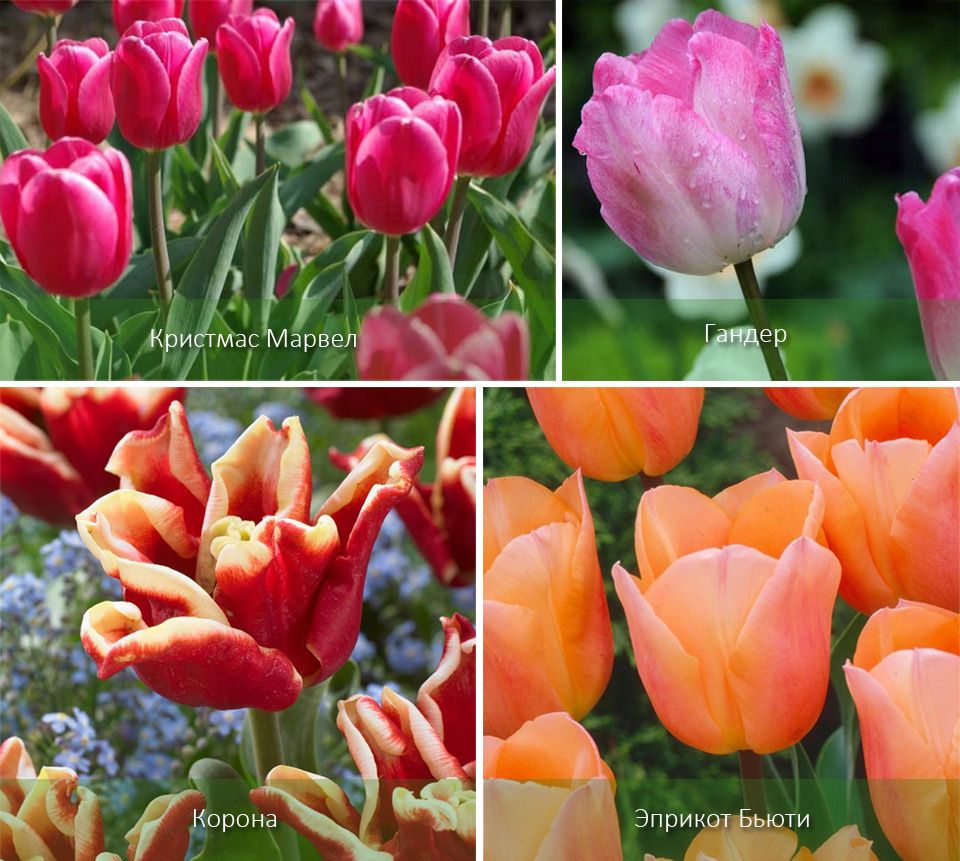
The following varieties are suitable for the New Year with minimal chilling periods: the Triumph variety, early-flowering single and double, are also suitable for the February holidays (11-15 weeks).
But you can also use mid-flowering varieties: liliaceae, parrot-shaped (15-16 weeks). Add to March-flowering varieties: double late varieties, Darwin hybrids (16-19 weeks). Any of the above varieties can be harvested on May 1st (up to 22 weeks).
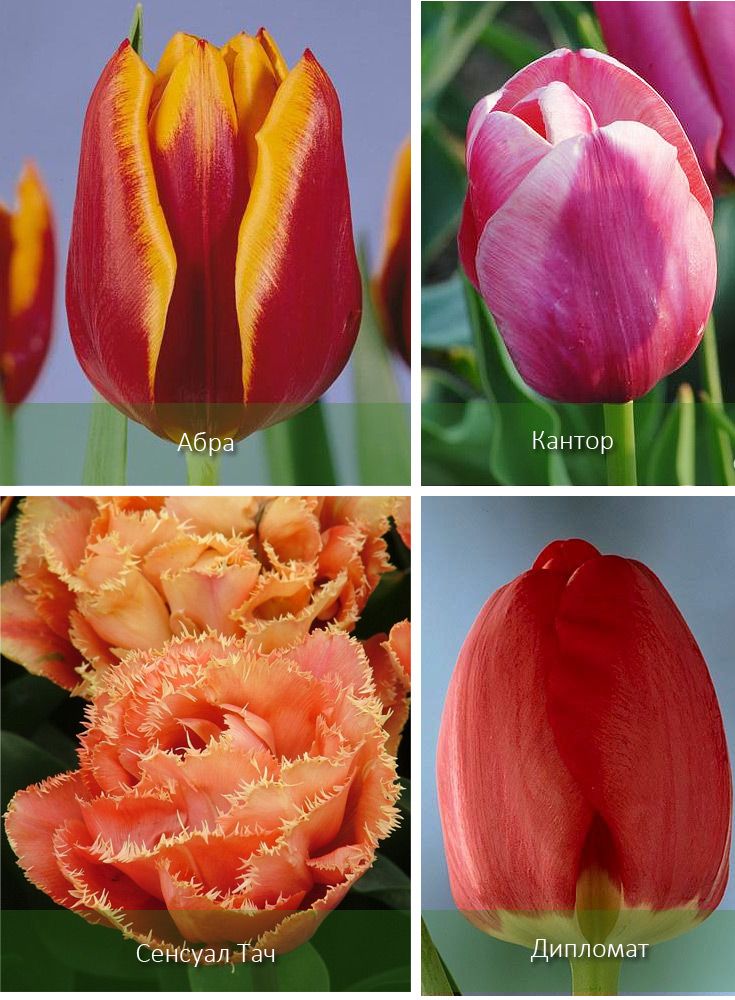
Several popular tulip varieties for specific holidays:
| Holiday | Variety | Flower color |
| New Year | Christmas Marvel | Lilac-pink, satin. |
| Gander | Fuchsia shade. | |
| Crown | Scarlet with cream edging. | |
| Lustige Witwe | Burgundy with white edge. | |
| Apricot Beauty | Peach color | |
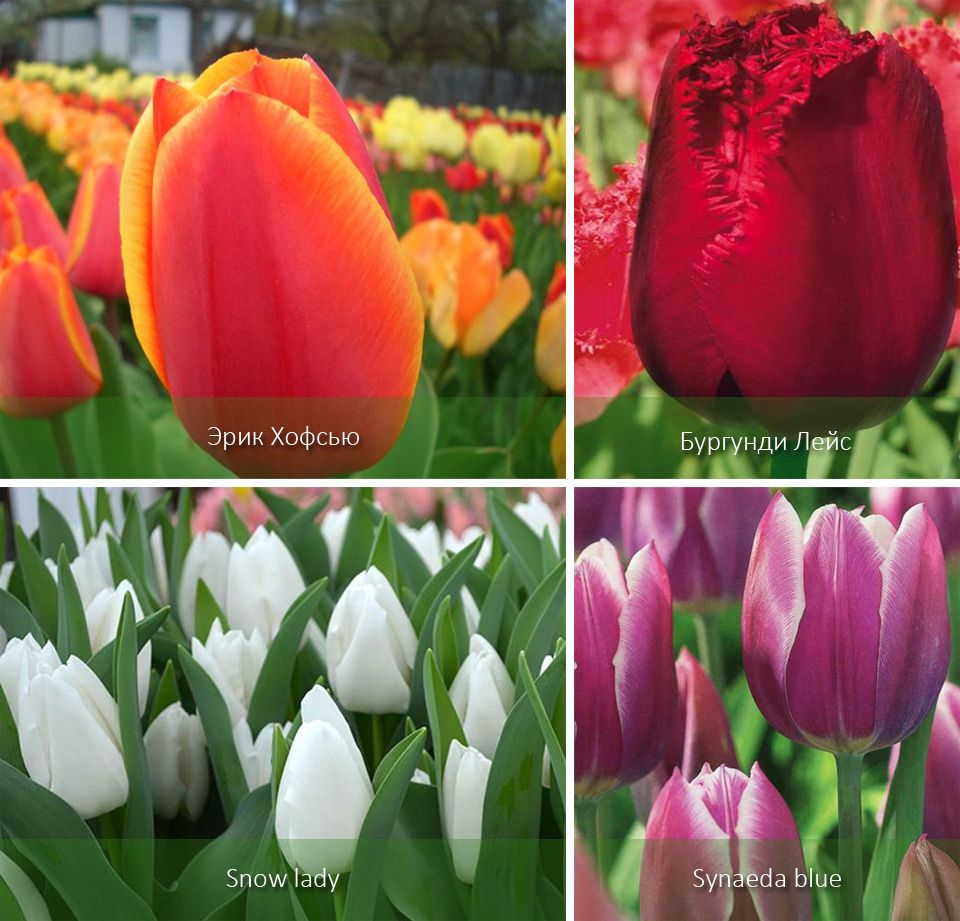
| February 14 and 23 | Eric Hofsue | Raspberry red with a cream border. |
| Strong | Yellow. | |
| Dynasty | Pink with white center. | |
| Synaeda blue | Lilac in color, white along the edge. | |
| Snow Lady | Snow-white. | |
| Jefgenia | White and raspberry. | |
| March 8 | Burgundy Lace | Fringed, raspberry pink, classic. |
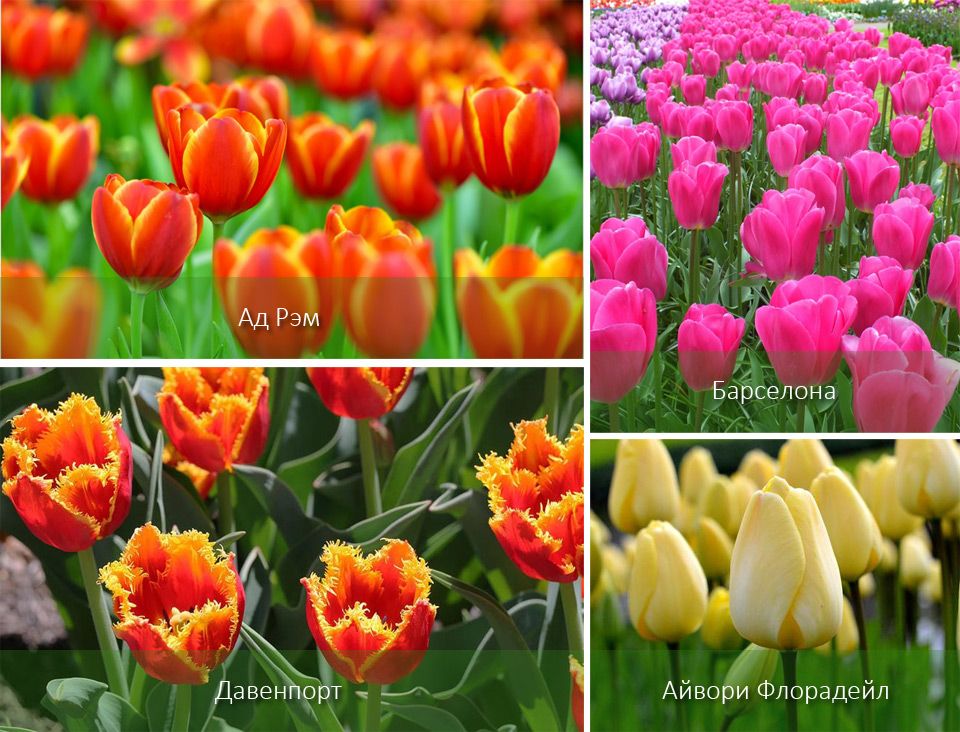
| Ad Rem | Carmine with a gold stripe. | |
| Ivory Floradale | Ivory. | |
| Aladdin | Bright orange. | |
| Barcelona | Purple with a fuchsia tint. | |
| Aristocrat | Pink with a purple tint. | |
| Davenport | Red with orange fringe. | |
| April 1, May 1 | Abra | Red-brown, yellow edging. |
| Apeldoorn | Golden. | |
| Gordon | Pink with beige. | |
| Diplomat | Red-carmine. | |
| Vivex | Tangerine colors. | |
| Cantor | Coral with a pink tint. | |
| Sensual Touch | Fringed, terry, deep orange tone. |
Timing for planting tulip bulbs for forcing
The timing of planting for forcing is determined by the biological characteristics of these plants. The exact planting date can be calculated based on two main periods:
- From the beginning of planting, the average length of time for plants to take root in a dark place at low temperatures is about 16-22 weeks, depending on the tulip variety.
- The sprouted plants are then kept at room temperature and moderate light until flowering, a period of 3-4 weeks.
By adding up the duration of these periods, you can accurately calculate the planting time.
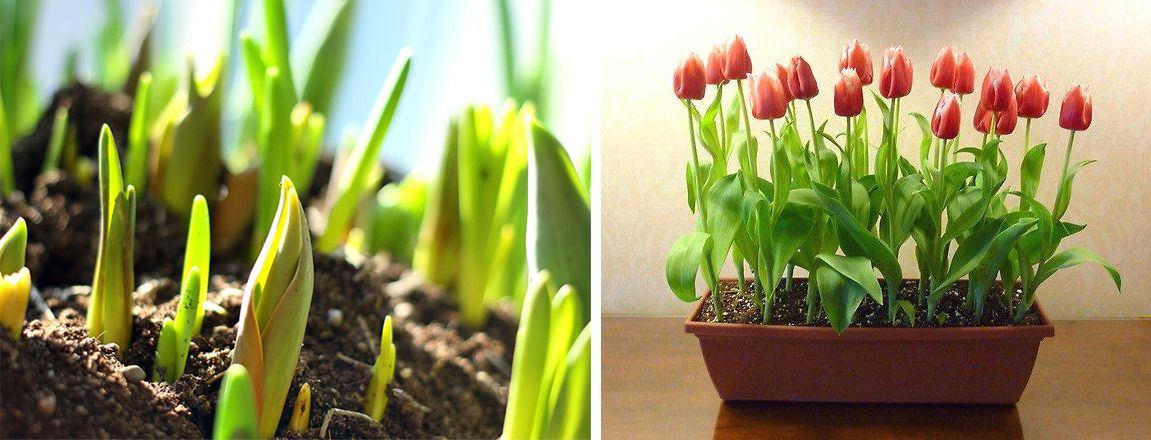
This way you can get tulips blooming by a certain date.
Soil and container for planting
Prepare any breathable, moisture-retentive, neutral soil. Acidic soils must be treated with lime.
Suitable for soil:
- a mixture of sand and peat;
- clean river sand;
- peat;
- a mixture of sand and garden soil;
- vermiculite;
- perlite.
The optimal nutrient substrate is considered to be a mixture of:
- garden soil;
- compost or rotted manure;
- river sand;
- with the addition of wood ash.
Clay pots or wooden boxes are chosen as containers. This will create the most favorable conditions for plant roots.
Preparation of planting material
The bulbs are prepared while they're still growing in the open ground. These plants require additional care to ensure they receive the necessary nutrients. Decapitation—removal of the flower stalk—is essential.
The beginnings of future leaves, stems, and buds begin to form by mid-August. To speed up these processes (when flowers need to grow in late fall or early winter), two methods are used:
- Agrotechnical. After decapitation, tulips are grown under plastic film. This accelerates the development of all plant organs by 2-3 weeks.
- Early digging of bulbs. This planting material is kept at 35°C for a week to accelerate the formation of future organs. It is then stored on the bottom shelf of the refrigerator until planting time. During this time, the development of leaf primordia is delayed, and the flower organs have the opportunity to develop better.
Planting stages
Step-by-step instructions:
- Fill the planting container with prepared nutrient substrate to 2/3 of its volume and compact it slightly.
- The selected bulbs are selected again, freed from brown scales (because they can interfere with proper root growth), and treated with special antifungal agents.
- Thanks to the energy stored in the bulbs during storage, they don't require much space in containers. They are planted approximately 1 cm apart. Up to 350 flowers can be planted per square meter.
- Add soil on top to the height of the bulbs, the top layer of which should not completely cover their tops.
- The planted plants are watered and, if necessary, if the soil settles, more water is added.
Aftercare
In the future, it is necessary to create suitable conditions for the full development of tulips:
- The containers are placed in conditions where the air has a humidity of 75-80% and a temperature of +5…+6 °C.
- Three to four weeks before the planned flowering, plants are transferred to a room temperature (15 to 18°C) environment with good lighting. It is also recommended to use phytolamps to increase daylight hours by 3 to 5 hours.
- Water the plants as the soil dries out.
- Top dressing is done with ammonium nitrate, fertilizers containing nitrogen and phosphorus.
- After the buds appear, it is recommended to reduce the air temperature by 3-5 degrees to prolong flowering.
Forcing using hydroponics
This method differs in that it uses nutrient liquid instead of soil.
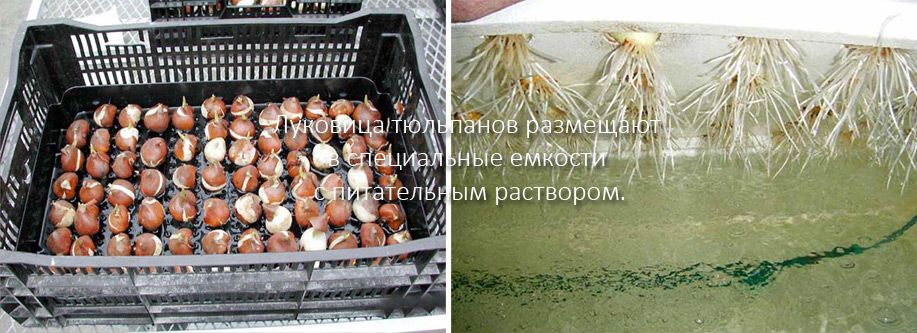
Chilled bulbs (10-14 weeks old) are placed vertically in hydro-trays with a special solution at the bottom. They are kept in a cool room (at least +5°C, no more than +9°C) for two to three weeks. If the root system develops very quickly, the temperature is lowered to +2…+3°C.
When the roots reach approximately 4 cm and the sprouts reach 6 cm, they are transferred to a warm environment (no more than 17°C, 80% humidity). These conditions are typically maintained in specialized greenhouses.
Pruning flowers for bouquets and storing them
Tulips for bouquets are cut at the base, with all the leaves, before the buds have fully opened. It's best to do this in the morning, before watering, and immediately place them in cool conditions. If the bulbs are no longer being used, they can be pulled out and scaled—this will help lengthen the stems.
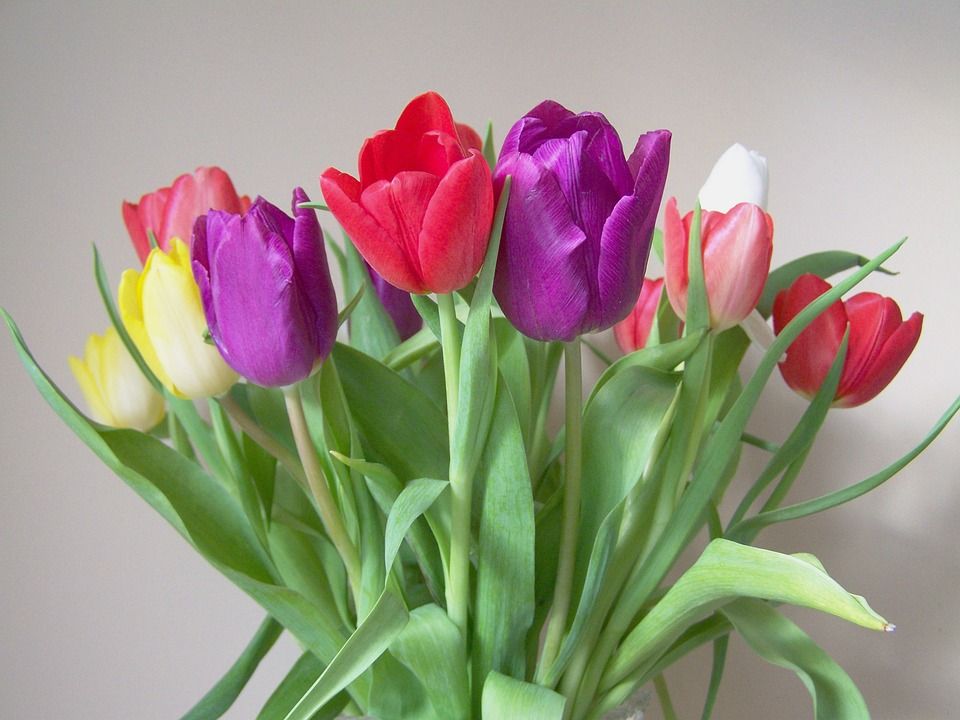
There are two ways to store cut tulips:
- Dry. Wrapped in paper (up to 50 pieces), refrigerate for up to 2 weeks. Before arranging, place in water, renewing the stem cuts.
- In water. Store for 24 hours. If with snow, store in a dark place for about 15-17 days.
Storage and further growing of bulbs after forcing
Some gardeners believe these bulbs are no longer suitable. However, this only applies to tulips grown hydroponically (in water).
In other cases, they can be restored using one of the growing methods:
- For low-growing varieties, trim the leaves after cutting the flowers. Keep the bulbs in the ground for three weeks and then dig them up.
- For varieties with long flower stalks, the leaves are left on and the plants are tended until they turn completely yellow. Then, the tops are cut off and the bulbs are dug up. This method produces fairly large specimens and also allows for the growth of baby bulbs.
Afterwards, they are dried for 2 weeks in a warm place, and then stored in cool conditions until the next time they are planted in the ground.
It's not advisable to preserve bulbs after early forcing. For such plants to bloom again, they will need to be grown for several years to become strong enough to flower.
Top.tomathouse.com warns: mistakes made during forcing
The reasons for obtaining low-quality plants may be due to incorrect actions:
- The planting material is of poor quality or has not undergone all the necessary preparatory stages.
- Sharp temperature changes during cultivation and storage.
- Recycling of soil in which putrefactive bacteria have appeared.
- Insufficient moisture or drying out of the soil during the growing period.
- Too long a cooling time for planting material or insufficient cooling time.
- Violation of ventilation in the room where flowers were grown.
If you follow all the recommendations for forcing tulips, you can avoid the appearance of defects.