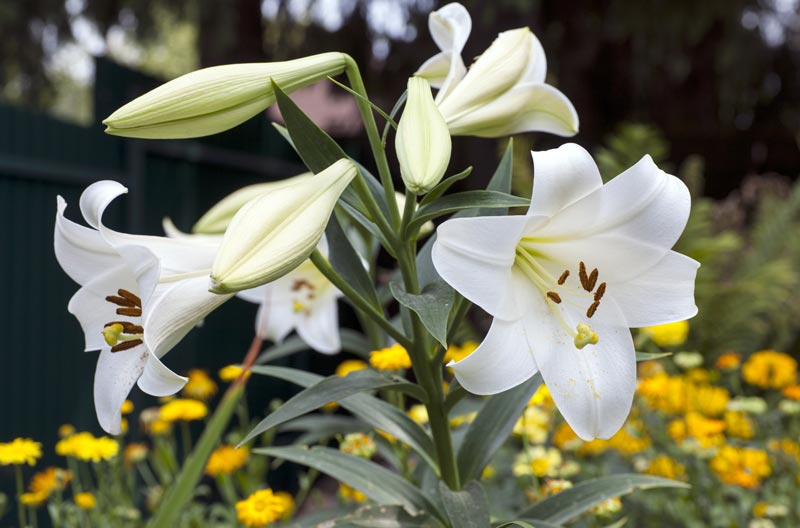
Lilies are the true queens of the garden. The diversity of their colors, sizes, shapes, and fragrances is astounding. Most varieties are easy to grow and adapt well to the temperate climate.
Some hybrids bloom even in harsh northern conditions. Planting and caring for lilies in open ground differs in several ways from other bulbous plants.
Content
Growing in open ground
To achieve large and healthy flowers, you need to know the nuances of growing them: from choosing bulbs to helping them overwinter.
Selection of seed material
Planning a front garden or lily bed begins with choosing varieties. A harmonious combination of sizes, heights, and bloom times will allow you to enjoy a luxurious flower garden all summer long.
Varieties for planting
The international botanical classification distinguishes 9 main groups of lilies:
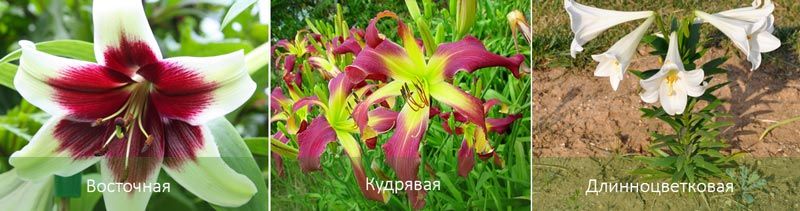
- Asian, over 5,000 hybrids, winter-hardy, undemanding. Flowers are scentless.
- Curly, about 200 varieties. The inflorescences are graceful, elongated, reminiscent of a downward-slanted candlestick.
- Snow-white, 20 varieties in total. Large, snow-white petals, sometimes with delicate yellow veins, with a strong fragrance. They are capricious, demanding in terms of climate and care.
- American peas, comprising 150 subspecies, are among the brightest, coming in incredible shades. A distinctive feature is the dark, contrasting speckles on the inside of the calyx.
- Longiflorums are more common among greenhouse and nursery inhabitants. They are very susceptible to infections and parasites. The inflorescences are long, elongated, with the cores tilted toward the ground.
- Tubular, heat-loving varieties with large, incredibly fragrant flowers.
- Orientals are the most numerous cultivar group, comprising over 1,000 subspecies. These plants thrive in warmth, require careful care, and require careful protection from disease.
- Interspecific hybrids are popular with gardeners because they combine the advantages of other groups. The most popular are LA hybrids, OT hybrids, and LO hybrids. The corolla of the lily can be up to 30 cm in diameter. They are most often used for forcing.
- Natural varieties are often inferior to their garden relatives in beauty and size, but play a key role in the development of new varieties.
Quality of bulbs
When purchasing, you need to carefully inspect the bulbs.
Weak and damaged ones will not germinate, and infected ones can spread pathogens throughout the garden and cause unpleasant problems.
When choosing a lily, you need to pay attention to the following:
- The bulb was firm to the touch, juicy, and free of rot, damage, black spots, or soft areas. If there was any noticeable damage, it likely wasn't transported or stored properly, meaning there's a high risk of it dying.
- Small shoots and fresh, not dry, roots were visible. Such plants are more viable. The living root system should be at least 4-5 cm in size.
- The bulb size was as large as possible. Bulbs with a diameter of at least 14 cm will produce strong shoots and large inflorescences. Smaller bulbs will gain strength in a year or two, while those smaller than 3 cm in diameter will only flower for two to three years after planting.
Be careful with bulbs with tall shoots. These bulbs likely weren't planted in the ground and missed a growing season. Once established, they will begin to grow vigorously and won't survive the cold.

Rules and timing for planting different varietal groups
The ancestors of ornamental garden lilies originally grew in a wide variety of regions around the world: from the cold, harsh Siberia to the steppes of Central Asia, the mountainous regions of the Caucasus, and the tropical Amazonian foothills. From these ancestors, modern varieties inherited their preferences for soil acidity, size, growing season, and sensitivity to cold and disease.
To avoid making a mistake when choosing a hybrid, you need to know their characteristics.
| Group | Location and soil | Planting dates | Popular varieties |
| Asian | A well-lit area without a high groundwater table. It prefers slightly acidic, well-drained soil, enriched with peat or humus. Different varieties can be planted in a pyramid, with low-growing Pixie on the bottom tier and larger Tango on the top. | Late August – early September |
|
| Eastern | Open, well-heated, and sunny areas on the south and southeast sides are recommended. Avoid nearby plants with extensive root systems. Stagnant water should be avoided, so locations on slopes are ideal. Neutral, loose soils should be pre-fertilized with ash, humus, peat, and mineral fertilizers. | August |
|
| Tubular | Well-lit areas, protected from wind and drafts. Loose, fertile, neutral or slightly alkaline soil is suitable. | Late August – early September |
|
| Curly (Martagon) | A spacious, bright garden location without the risk of overwatering. It requires sandy or loamy soil, with additional loosening and a slightly acidic to neutral pH. The plant is quite large, so it's best suited for solitary plantings. | Late August – early September |
|
| Snow-white | Sunny, warm spots in the southern part of the flowerbed, well protected from the wind. Prefers rich, fertile soils rich in nitrogen and potassium, sufficiently moist and loose. In September, the plant is cut back, and the bulb is dug up for winter storage. | Plant in spring after the end of frosts. |
|
| LA hybrids | Well-lit flowerbeds and front gardens with sandy and loamy soils, lightened with river sand, peat, leaf mold, and ash. Slightly acidic or neutral. | From mid-September to early October |
|
| OT-hybrid | A sunny spot in the garden, with the flowers positioned so that the tops of the flowers are in the sun and the stems at the base are in the shade. It prefers loose, fertile, well-drained soil. | Beginning of September |
|
Lunar calendar dates for 2023
Each gardener decides for themselves whether to follow the lunar calendar. We'll list the calendar dates that are favorable and unfavorable for planting lilies.
Florists recommend following the lunar calendar. In 2023, we'll be choosing the right dates.
| Month | Favorable days | Unfavorable, prohibited days |
| August | 7 (from 09:24)-14 (until 13:35), 19 (from 14:53)-21 | 1,2, 15 (from 12:38 p.m.), 16, 17 (up to 12:38 p.m.), 30,31 |
| September | 1 (until 16:25), 3 (from 18:00)-5 (until 23:05), 8 (from 07:59)-10 (until 19:35), 13, 16-20 (until 17:06), 22 (from 23:00) 21m.)—24 | 1 (from 16:25)-3 (until 18:00), 14, 15,25-26,28, 29,30 |
| October | 1-13 (until 20:55), 16, 20-22 (until 09:06), 30 (until 18:07). | 14,15,28,29 |
General location recommendations
Lilies are most often planted in the fall, about a month before the first frost. This period is necessary for the bulbs to establish rooting in the soil.
If you plant flowers too early, they will grow and die when the cold weather sets in.
In temperate climates, plants are planted outdoors in early September. Gardeners typically begin planting beds of varietal lilies and sorting the planting material in early August. Accordingly, late summer to early fall is considered the best time to purchase plants.
When planning a front garden and choosing a location for lilies, their grouping plays an important role. Trumpet, Asiatic, and Oriental lilies are best placed in spacious, sunny areas of the garden, while curly lilies tolerate partial shade.
Large-flowered plants are standouts. They can be placed where bold accents are desired, for example, against a backdrop of low-growing ornamental grasses. Small-flowered varieties are best planted in groups.
Another common way to plan a flower bed is the pyramidal one, when plants are arranged in a mound, from creeping and low-growing ones to giants with long stems.
Elevated sites and slopes in the southern and southeastern directions are considered ideal for most lilies. For both aesthetic and maintenance reasons, it's best to plant the flowers along walkways.
These garden beauties shouldn't be planted near trees or shrubs with large root systems, such as dahlias and peonies. They thrive best in the company of other bulbous plants, such as tulips, daffodils, and crocuses.
Soil preparation
You need to prepare the site for lilies in advance. For autumn planting, prepare the flowerbed in June or July. For spring transplanting of bulbs, prepare the bed in late September or early October.
Regardless of the month in which the bulbs will take root, the soil is prepared according to the following scheme:
- A bucket of humus, peat or rotted compost, 20-30 grams of superphosphate, 200 grams of wood ash per square meter are evenly scattered over the surface.
- Dig to a depth of 30-40 cm, turning over and loosening the layers.
- After this, natural processes of moisture and fermentation of microelements take place for several months so that the soil is completely ready for the planting season.
Preparing the bulbs
It is necessary to treat the seed material to prevent diseases and parasites common to lilies.
If the bulbs and their roots have dried out, they need to be soaked in water at room temperature for several hours.
After this, sanitation is carried out for 20 minutes using:
- pink solution of potassium permanganate;
- a preparation prepared from 2 g of karbofos or fundazol per liter of water;
- special product Maxim or Vitaros for processing bulbous plants.
There is no need to rinse off the disinfectant solutions; just dry them a little in the shade.
Planting diagram
The depth to plant the bulb in the soil is determined by its diameter. It should be at least three times the diameter of the tuber. Too shallow a distance from the soil surface can encourage the formation of multiple daughter shoots, which will prevent the lily from blooming.
The distance between plants should be about 30 centimeters. Varieties that produce multiple flower stalks or have wide-diameter buds require more space.
It's advisable to space them at least half a meter away from other plants. Then the flowerbed will look beautiful, no worse than in magazine photos.
Step-by-step instructions
The correct procedure for planting lilies depends on the specific material used for propagation.
Bulbs
In the selected area, dig holes of the desired depth and width, with a little extra room to accommodate the roots. Coarse sand is added to the bottom of the hole, after which the bulb is carefully placed with the sprout facing up. It's also best to lightly cover it with sand, then cover with soil, compact it, and water.

Bulbochki
The stem bulblets ripen by mid-September. After small roots appear on the bulblets, they are carefully removed from the cuttings and placed in the refrigerator at 3°C (37°F) for a month to stratify.
The bulblets are planted directly into open ground to a depth of about 3 cm at a distance of at least 10 cm from each other.
After watering, the flowerbed should be mulched with a layer of peat or leaves.
Seeds
Lily seeds are collected in the fall. After drying and treating with fungicides, they can be sown directly into the ground or grown as seedlings.
The second method is preferable, as it yields a larger number of strong, viable plants. It's best to grow flowers from seeds indoors in late February or early March.
The step-by-step process for growing lily seedlings is as follows:
- Take a container or box approximately 10 cm deep.
- Fill it with soil from a mixture of sand, peat and garden soil.
- Make grooves half a centimeter wide.
- Fill with disinfected seeds.
- Cover with soil and moisten thoroughly with a spray bottle.
- Wait for the seedlings to emerge and care for them until they are transplanted into open ground.
Transplanting young lilies into a flowerbed can be done in late spring or early autumn.