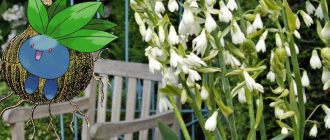
The flower got its beautiful and unusual name from a combination of two Greek words, "ornitho" and "gala," which translates as "bird's milk." It was previously classified in the Liliaceae family, but today it is considered a member of the Asparagus family. Ornithogalum is found in the Mediterranean region, Western Asia, South Africa, the Americas, and Eurasia. It has been known to humans since the 16th century, and was used as a food and even for medicinal purposes.
Content
- 1 Description and characteristics of Ornithogalum
- 2 Varieties of poultry
- 3 Planting and caring for ornithogalum in open ground
- 4 Transfer
- 5 Reproduction
- 6 Diseases and pests
- 7 Application in landscape design
- 8 Growing Ornithogalum indoors
- 9 Top.tomathouse.com recommends: the medicinal properties of ornithogalum
Description and characteristics of Ornithogalum
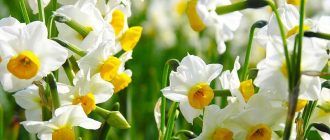
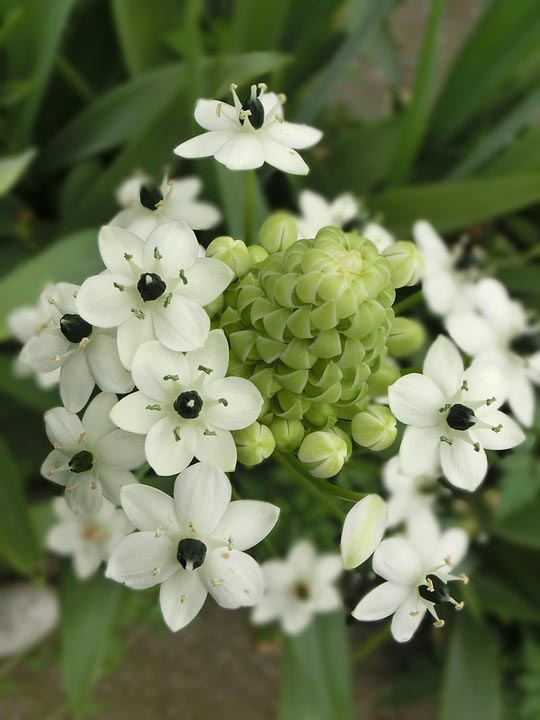
Ornithogalum is a bulbous perennial plant. There are about 150 species in the wild, of which about 10 are cultivated. The star-shaped flower is why it is also called the "Star of Bethlehem" in some European countries.
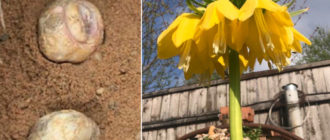
Ornithogalum bulbs can be of various shapes: ovoid, round, or elongated. The height of the bush ranges from 30 cm to 85 cm. The flower's fruit is a small capsule containing black seeds.
Varieties of poultry
Below are the most popular and widespread types.
| View | Description |
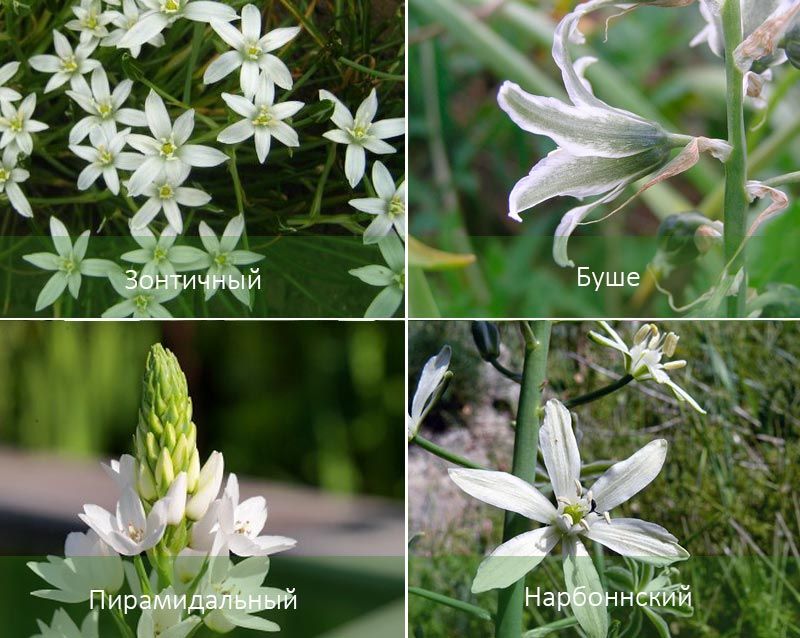
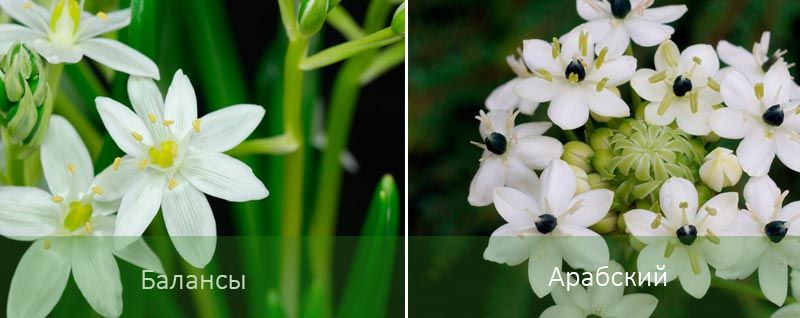
| Arab | It reaches a length of about 0.85 m, with small quantities of white flowers, 5 cm in diameter. |
| Bush | The height is about 0.5 m, the inflorescences are racemose and have up to 50 green flowers. |
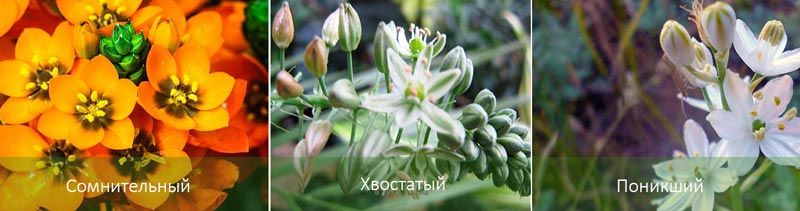
| Doubtful | It comes in orange, yellow, red, or white, with a racemose inflorescence. Due to its long-lasting bloom, this flower is often used by florists in bouquets. |
| Fischer | Height up to 0.6 m, racemose inflorescences, about 0.25 m long with many (up to 20) small white flowers. |
| drooping | It reaches 0.5 m in height. It got its name due to the drooping appearance of the inflorescences, which have up to 12 flowers. |
| Balances (Schmalhausen) | The bush is small, only 0.1 m tall. The peduncle bears three white flowers with thin green stripes down the center of each petal. Each flower is 3 cm in diameter. |
| Narbonne | The bush can reach a height of up to 0.8 m, the color of the flowers is greenish. |
| Tailed (or Indian bow) | Although the plant is poisonous, it has medicinal properties. The bush consists of several hanging flat leaves, wide at the base and pointed at the tips, which can reach 0.8 m in length. The white flowers are white with a greenish center. |
| Umbrella | This species is considered the most popular among gardeners. The plant can reach a height of up to 0.25 m. It gets its name from the resemblance of its white flower to an open umbrella. |
| Pyramidal | It reaches 1 m in height. The flowers are white with a greenish tint. |
Planting and caring for ornithogalum in open ground
Three species of Ornithogalum are most suitable for growing in gardens: Balansii, Umbelliferae, and Pendulous. These varieties thrive and can withstand even the harshest winter temperatures, requiring no special greenhouse or shelter.
Ornithogalum prefers full sun but also thrives in shade. This plant thrives even in less-than-fertile, loamy soil. The most important thing to remember when planting is to avoid standing water, otherwise the bulbs may rot. To prevent this, simply place crushed stone or broken brick at the bottom of the planting holes to protect them from moisture.
It doesn't require any special feeding; it obtains all the necessary nutrients on its own. However, it does require regular, but fairly moderate, watering, as it can die from overwatering. It should be reduced during flowering.
Ornithogalum planting dates
Ornithogalum is usually planted at the end of the summer season (last days of August – early September) in loose soil. Space the bulbs at least 15 cm apart to prevent them from interfering with each other as they germinate. Ornithogalums planted in summer take root in the soil over the winter, and begin to sprout and bloom in the spring.
Transfer
When growing ornithogalum, the most important thing is timely repotting. When the bulb remains in the soil for too long, it begins to produce numerous offspring, which negatively impacts the overall appearance and health of the plant.
A bush can remain in one place for no more than 5-6 years. However, for optimal health, it's best to repot the ornithogalum every 4 years.
Reproduction
Ornithogalum reproduces in two ways:
- kids;
- seeds.
The bulblets separated from the bulb are planted separately in sunny places or near trees at the end of summer (last days of August – beginning of September) or in spring.
Propagation by seeds occurs as follows: the seed is planted in the ground in a shallow hole before the onset of winter, and the shoots are expected in the spring.
But it's important to keep in mind that planting using both methods is a lengthy process. It will take approximately 3-4 years for the bush to bloom.
Diseases and pests
Spider mites and aphids are the main enemies of the ornithogalum, and they are the most common causes of death for the plant. Gardeners typically treat the bushes with insecticides (such as Sadovnik BT, Marshal, Gerold, and others) or use folk remedies: steeping tomato or garlic leaves in laundry soap and spraying the plantings with this solution once a week.
Nasturtiums or marigolds are also planted near the ornithogalum (they have repellent properties).
Application in landscape design
Ornithogalum is an undemanding yet beautiful plant. Its scattering of white star-shaped flowers will be a stunning addition to any garden.
These bushes are often planted by gardeners who want their garden to bloom continuously. Ornithogalum blooms when other plants typically go dormant or gather strength for flowering.
This plant is also loved by gardeners due to its unpretentiousness and ability to thrive in any soil, even infertile soil, which cannot be said about many other flowers.
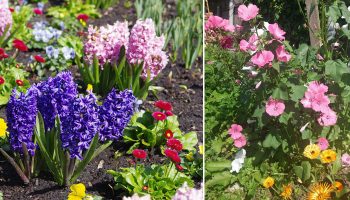
Another advantage is that it harmonizes perfectly with any other flowers, creating an attractive overall composition of the garden.
Growing Ornithogalum indoors
Ornithogalum is so easy to plant and care for that it can even be grown on a windowsill. For indoor cultivation, use bulbs (such as the Arabian and Caudate Ornithogalum), a large pot, and fertile soil.
The growing container should not be too large and deep, as the bulb will form many bulblets and the ornithogalum will not bloom.
It's important to maintain a consistent temperature (17 to 25°C) and avoid drafts, especially in winter. Also, avoid placing the plant container near a heat source (radiators, heaters, fireplaces, etc.), as dry air can cause the ornithogalum to dry out and become diseased.
Overwatering the plant is strictly prohibited, as this can cause rot and subsequent death. Water should be thoroughly absorbed into the soil, and the next watering should occur when the top layer of soil has dried out.
Short daylight hours can be detrimental to ornithogalum, so it's best to use special phytolamps during flowering. When choosing a location, aim for an east or south-facing location where the ornithogalum will receive sufficient light.
When grown indoors, ornithogalum requires feeding with mineral and organic fertilizers, which can be alternated. Feeding should be done no more than once a month.
Top.tomathouse.com recommends: the medicinal properties of ornithogalum
In folk medicine, this plant occupies a leading position due to its beneficial properties. The bulbs, flowers, leaves, and even the juice of the ornithogalum are used to treat various illnesses and ailments. It kills germs and viruses, has a healing effect (it heals minor cuts and abrasions well), reduces swelling, relieves pain, and disinfects the air in the room where it grows.
Therefore, ornithogalum (starflower) is not only a beautiful and graceful plant that can decorate any garden, but also a true natural doctor.