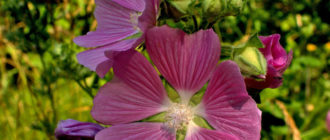
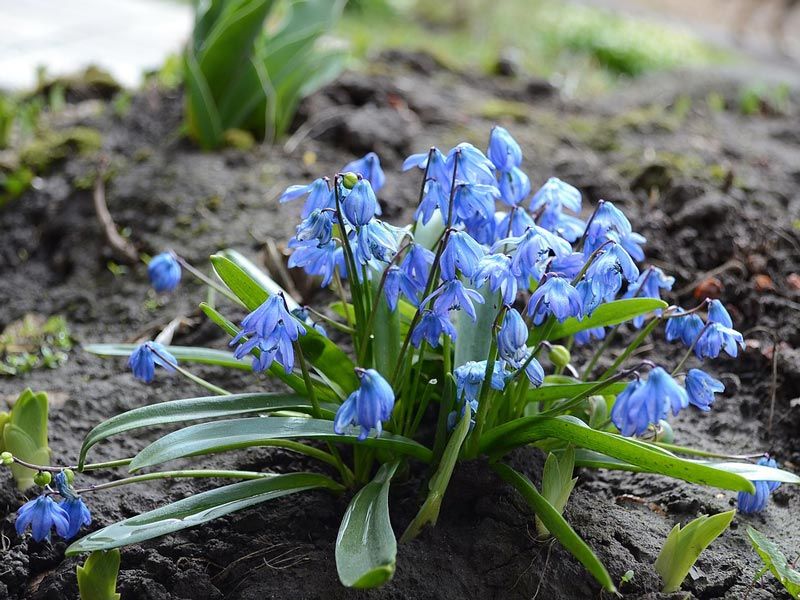
Scilla (bluebell) is a bulbous perennial plant. It tolerates cold well and quickly adapts to any conditions. Care is minimal, and the blue snowdrop itself makes a stunning addition to any garden.
Novice gardeners and those who have never grown plants before are advised to start with scilla, as its planting and maintenance do not require any specialized knowledge or extensive experience in this area.
Content
Description of the blue snowdrop
There are a wide variety of squill varieties, differing in stem length, inflorescence shape, and leaf shape. Typically, squill flowers are purple, blue, light blue, pink, or white.
The fruit looks like a capsule with small black seeds inside.
Types and varieties of bluebells
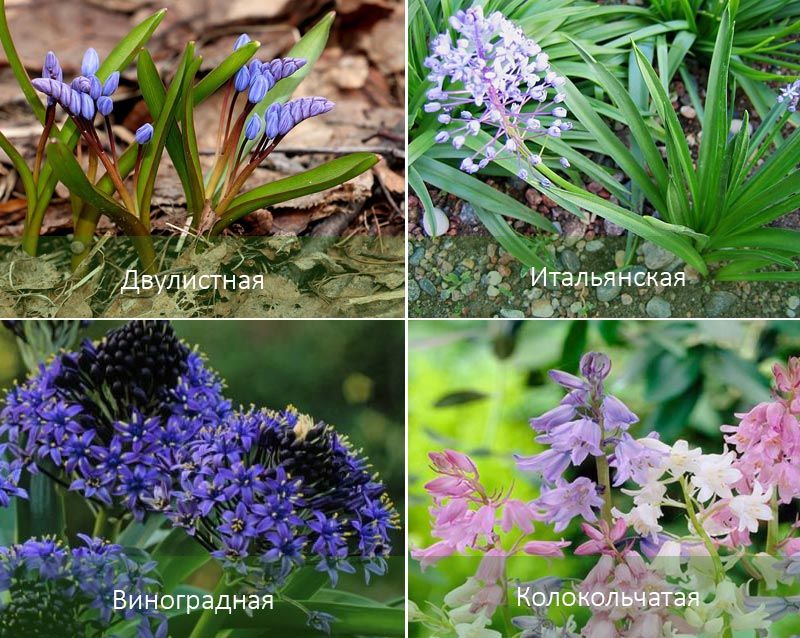
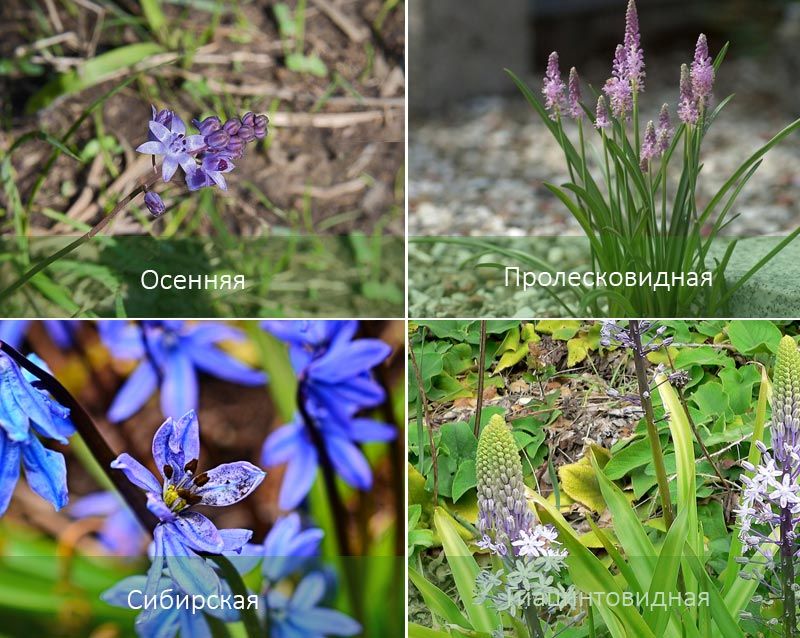
Scilla is a flower with a wide variety of cultivars (approximately 90). The species listed below are the most popular among gardeners.
| Variety | Description |
| Bell-shaped | It's the most common plant in gardens. It has a short stem (about 30 cm), which can bear 5 to 10 bell-shaped flowers. |
| Hyacinthoides | It is distinguished by its dense inflorescences. This variety is often used for ornamental purposes. |
| Siberian | The color range is varied: the ovoid flowers can be pinkish, white, or blue. The stem is short, about 10 cm tall. |
| Grape | Also sometimes called "Peruvian," it originates from the western Mediterranean region. These plants are distinguished by their rather large, cone-shaped, blue inflorescences. The leaves are linear and taper toward the tip. |
| Two-leafed | Relatively short, about 15 cm. The shape of the flowers resembles stars and is blue, pink or white. |
| Scilla-like | It blooms twice a year: in July and early autumn (late August to October). It is adorned with numerous small, soft pink flowers. |
| Autumn | It has 5-6 light purple flowers and a cone-shaped inflorescence. The stem is about 20 cm long. |
| Italian | An ovoid bulb, long, pointed leaves and a large number of soft blue flowers on a long stem. |
| Litardier | The inflorescence is oval-shaped and bears numerous light purple flowers. It blooms in July and, despite its rather attractive appearance, is not as popular as other varieties of scilla. |
| Pushkinoid | It got its name from its resemblance to another flower, the pushkinia. Considered one of the most resilient and undemanding, it has a short stem (approximately 15 cm). The leaves are linear, widening toward the middle. The racemose inflorescence contains no more than 10 soft blue flowers. Flowering occurs in early May. |
Planting in open ground
As a rule, scilla is not planted individually: plants are collected in flowerbeds or distributed around trees.
Time
Experienced gardeners recommend transplanting spring squills into open ground in mid-June, and autumn squills closer to the end of August.
Place
Flowers can be planted in either sunny or shady locations. It all depends on the variety and flowering time: spring varieties prefer warmth and sun, while autumn varieties thrive in cool, shaded areas.
During rainy or cool days, the leaves of the scilla are located horizontally and almost lie on the ground, while in sunny weather they stand upright.
Care
Because scilla is an easy-to-grow plant, it only requires regular watering and loosening of the soil. Weeding is also important.
The best time to water is considered to be morning, the main thing is that the flowers are not flooded with water, otherwise this will negatively affect their appearance.
It's important to remember that bluebells reproduce by seed, so their seed heads need to be removed if the gardener doesn't want the flowers to spread to unintended locations.
It is better to fertilize when a particular species is in bloom; for example, spring plants are fed in early spring, and autumn plants in late August-early September.
Transfer
To ensure optimal health and maintain its decorative appearance, scilla should be repotted at least once every three years. After the bush has been dug up, separate the bulblets from the bulb and replant them immediately to prevent rot.
Gardeners recommend replanting scilla at the end of September - beginning of October.
Reproduction
To propagate, you'll need seeds or scilla pupae. In addition to the method described above, you can propagate the plant using seeds, which must first be prepared.
The seed pods should be collected towards the end of June, when they turn yellow and split. The seeds are removed and immediately planted in a designated area. However, since seeds are difficult to germinate, this method is not the fastest. You won't see the first flowers for at least three years.
Diseases and pests
When scilla is infected with Achelenchoides, the bulb surface turns brown. Infected plants not only lose their visual appeal but also begin to lag significantly in growth. Affected bushes are dug up and burned.
Mold appears on scilla plants infected with gray mold, which subsequently begins to rot. As the disease progresses, the bushes turn yellow and die. Such plants must be dug up and burned immediately.
Bulb rot is a disease that occurs when humidity is high. The first signs are yellowing of the bush and brown spots on the bulbs.
It's easy to tell if a plant is being attacked by meadow root mites. Because the pest chews through the bottom of the bulb and penetrates, sucking the sap from the scilla, it first dries out, then rots, and eventually dies.
To get rid of the mite, you need to purchase a special solution at a gardening store and spray it on the affected bush.
Scylla for the holiday
Thanks to its beautiful and unusual appearance, squill makes a great birthday gift or a living home decoration. It can be grown not only in the garden but also on a windowsill. All you need is a 2-3 liter pot, soil, and the bulbs themselves. Two or three flowers can thrive in this space.