Chrysanthemums are especially beautiful in autumn. They belong to the Asteraceae family. Gardeners who choose to grow this plant have a wide selection to choose from.
Among the positive aspects, besides diversity, are their low maintenance and abundant flowering. The decorative value of plants depends on the quality of care, species characteristics, and climatic conditions.
Content
Description and characteristics of chrysanthemum
Chrysanthemums have a robust rhizome, an erect stem, and underground shoots. The inflorescence is composed of numerous flowers, ranging from 5 to 20 cm in diameter. They can be single or double. When classifying varieties, the color, shape, and size of the flower heads are also taken into account.
When determining the doubleness of chrysanthemums, it is necessary to take into account the expression of the disk and the difference between the number of flowers of different types.
Stem leaves vary in length, shape, and degree of dissection. On one side, the blades are dark green, while on the other, a dull, grayish, pubescent surface can be seen. The leaves emit a rather distinctive aroma.
The plant height varies from 15 cm to 1.5 m. Petals are ligulate, simple, spoon-shaped, and tubular.
Chrysanthemums are resistant to low temperatures, but not below -5 degrees Celsius. They are undemanding regarding soil composition, so planting is usually straightforward. These flowers become especially charming in autumn. Their blooms look beautiful against a backdrop of fallen leaves and evergreen shrubs.
Types and varieties of chrysanthemums
Extensive breeding work has resulted in the development of numerous varieties. Based on the length of their life cycle, chrysanthemums are classified as annual and perennial. Annuals are planted for a single growing season.
This explains the ease of care. Gardeners don't need to prepare the plant for winter. Under favorable climate conditions, annuals bloom from June until the first frost.
| View | Description Height (cm) | Varieties | Flowers |
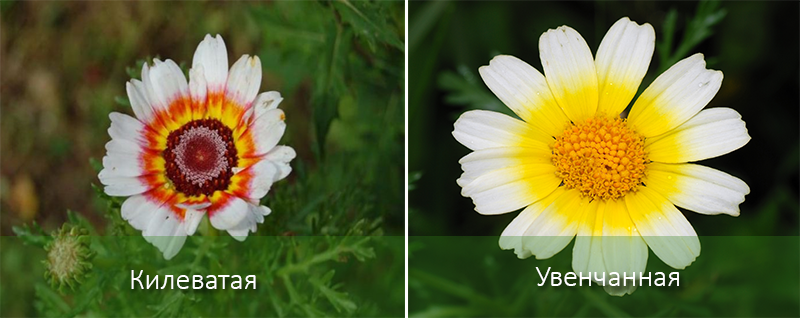
| Keeled | The upright stem bears single or double flower heads. The inflorescence diameter ranges from 5 to 7 cm. The buds begin to open in midsummer. The number of flowers does not exceed 70. | Cockade | White, bright center. |
| Dunetti | Three-colored, terry. | ||
| Stern | Dark core, light yellow petals. | ||
| A fun mix | Decorated with contrasting rings. | ||
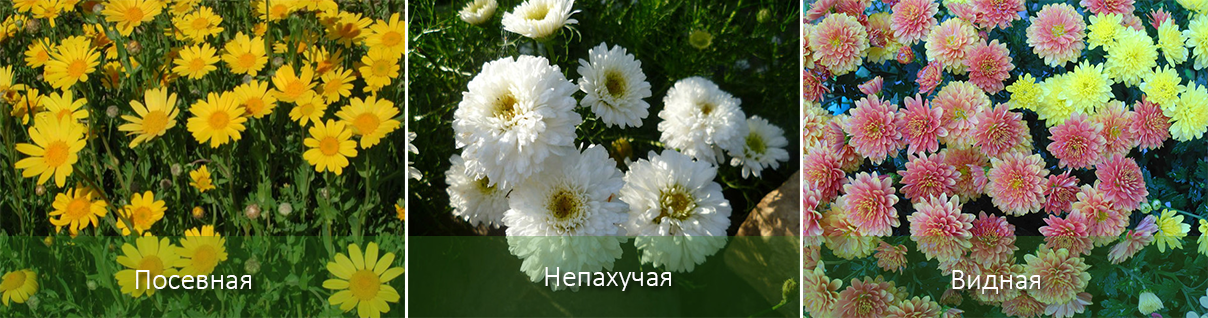
| Sowing | Resembles wild daisy in appearance. Profusely self-seeding. Branching stem. Reaches 80 cm. | Gloria | A simple basket, golden petals, a bright center. |
| Star of the East | A combination of chocolate and soft yellow shades. | ||
| Crowned | Fleshy stems are decorated with dissected leaf blades. Approximately 70 cm. | Nivea | White, large basket. |
| Orion | Large single inflorescences of a rich yellow hue. | ||
| Goldkrone | Golden, semi-double. | ||
| Odorless | Decorated with feathery foliage. Up to 20. | The bride's dress | Terry, snow-white. |
| Prominent | The diameter of the inflorescences is no more than 11 cm.120. | Annette | A combination of pinkish-white and red-orange shades. |
It's hard to imagine a garden without perennial chrysanthemums. With timely care, they'll retain their decorative beauty until late autumn.
| View | Description | Varieties | Flowers |
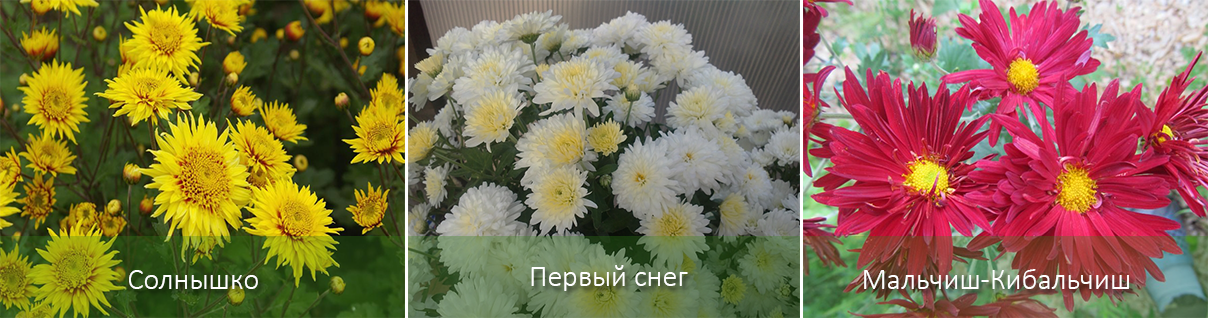
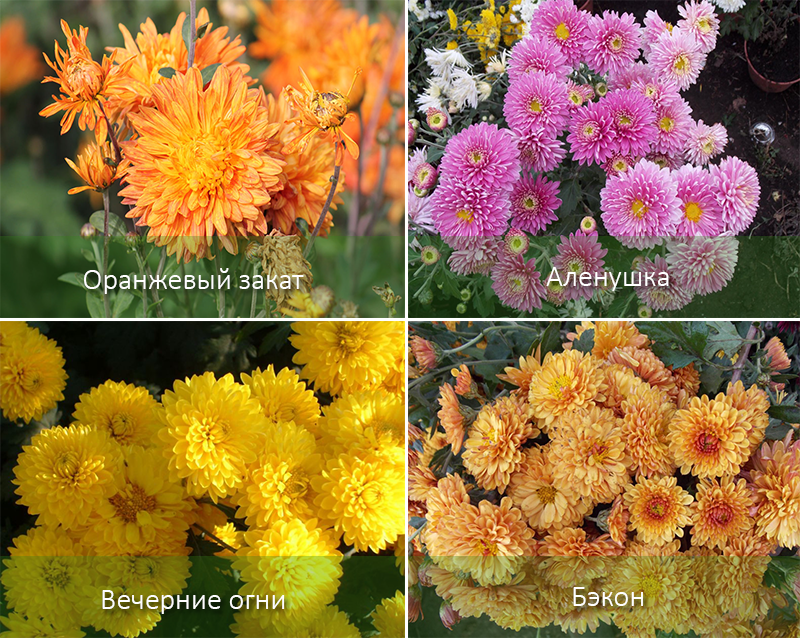
| Korean | Hybrids that are distinguished by increased resistance to adverse weather conditions, parasites and diseases. | Orange sunset | Large, brownish-red. |
| Bacon | Double red inflorescences. | ||
| Sun | Yellow-red, similar to a daisy. | ||
| Alyonushka | Simple basket, rose petals. | ||
| Evening lights | The buds are rich yellow. | ||
| Malchish-Kibalchish | Pink, no more than 8 cm in diameter. | ||
| First snow | White double inflorescences. | ||
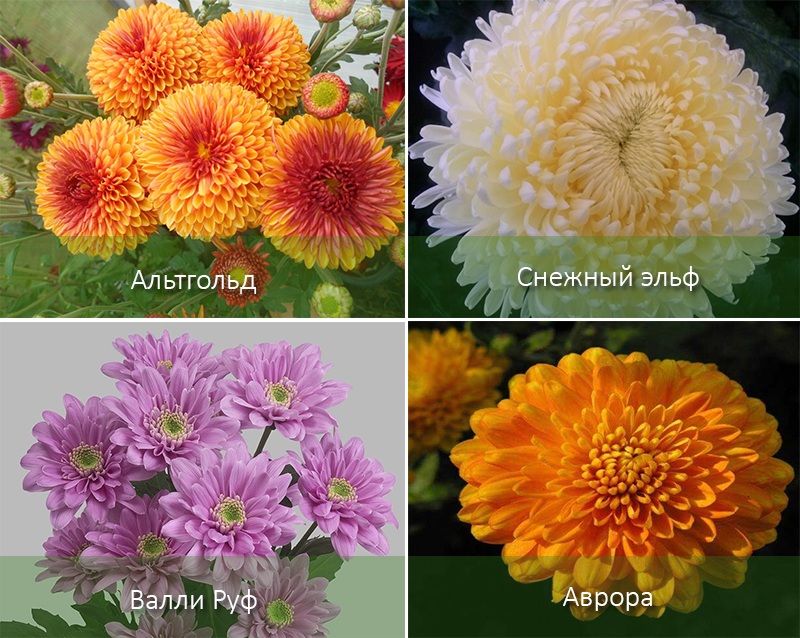
| Indian | The height of the bushes reaches 1.5 m. The inflorescences bloom in autumn. | Altgold | Pompom, double, with dark yellow petals. |
| Wally Roof | Pinkish-lilac, flat in shape. | ||
| Aurora | Large, orange. | ||
| Primzvara | Spherical, pale pink. | ||
| Snow Elf | Pompom, densely double, snow-white. |
Growing chrysanthemums from seeds
It all starts with purchasing planting material. When purchasing seeds, choose varieties that are well-adapted to the local climate.
The timing depends on how the chrysanthemums will be grown. If you decide to plant them outdoors, the seeds should be sown in April or May.
When choosing the seedling method, they are placed in pre-prepared soil at the beginning of March.
Annual chrysanthemums are not susceptible to recurrent frosts, so planting them outdoors will save significant time. The chosen location should meet the following requirements:
- maximum illumination;
- availability of protection from strong winds and drafts;
- good soil permeability.
Pay attention to the groundwater level. If it's too close, the water will stagnate. In this case, the plant is unlikely to thrive. Excessive humidity will cause the root system to rot.
It is recommended to begin preparing for planting in the fall. The area is dug and fertilized. The composition of the mixture is determined based on the initial soil condition. Plants require regular watering, weeding, and mulching. Fertilizing is done 3-4 times per season.
Sowing in the ground
Chrysanthemums grow best in moisture-retentive, medium-heavy, and loamy soils. They should never be planted in acidic soils. When planting, ensure a nutrient-rich drainage layer.
The seedlings are transplanted into the ground in mid-May. By this time, the soil is already well warmed. Leave about 20-30 cm between the seedlings. The furrows should be covered with an even layer of peat.
Thinning should be carried out after the first shoots appear.
Sowing for seedlings
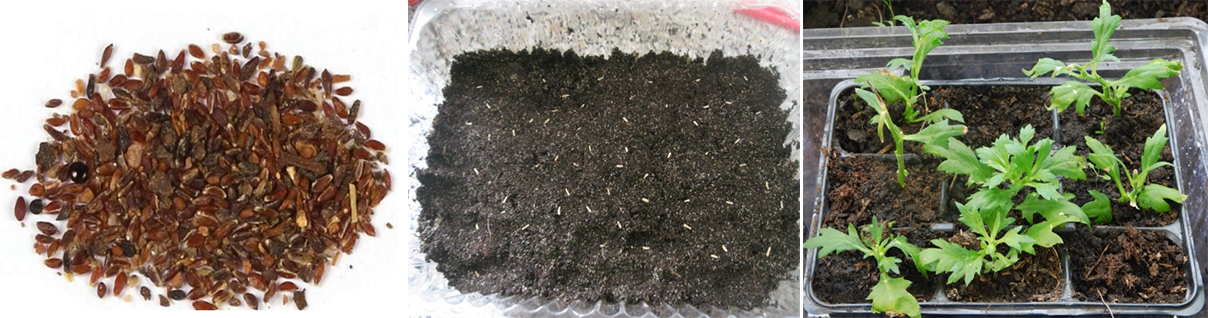
During the preparatory stage, containers are prepared. These can be shared boxes or individual containers. They are filled with a mixture of peat, loose soil, and sand. The planting depth is no more than 1 cm. To prevent the seeds from dislodging, the crops are watered with a sprayer during the first few days.
To create a temperature regime, the box is covered with glass or film.
Caring for seedlings
The first transplant is done two weeks after germination. The plants are then treated with growth stimulants. Zircon and Epin are among the most effective. Chrysanthemums are a flower that prefers a temperate climate.
It suffers from sudden temperature increases and excessive moisture. The plant requires good lighting.
Propagation of perennial chrysanthemum
This garden crop is most often propagated by cuttings and division of mature plants. This choice is based on simplicity and effectiveness. Using these methods, all varietal characteristics can be preserved. Seeds are rarely used.
A compelling reason for refusal is:
- Labor intensity of the process.
- Lack of relevant knowledge and experience.
- Possible loss of important characteristics.
- The risk that the seeds will not have time to ripen.
It is important to note that perennial chrysanthemums planted in this way will bloom only the following season.
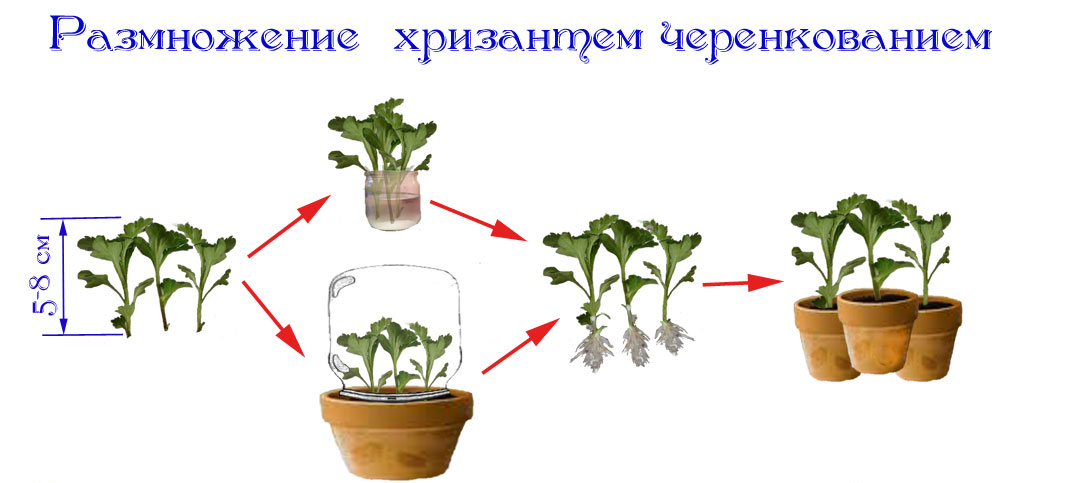
The bush from which the cutting is taken must be healthy. Planting material is taken in the spring. The optimal air temperature is +20°C to +26°C. The shoots suitable for processing should be about 15 cm tall. The planting material is placed in pre-prepared soil.
It is kept moist. The box is placed in a regularly ventilated room. Chrysanthemums root fairly quickly, usually within 2-3 weeks. After this period, the gardener can begin planting the seedlings in the garden.
It is recommended to repot the bushes at least once every 3-4 years. This is necessary to renew the root system and ensure abundant flowering.
Dividing the bush is also done in the spring. Chrysanthemums are dug up with a pitchfork. The root system is divided with a sharp knife. The roots are treated with a potassium permanganate solution. After treatment, the separated sections are planted according to the chosen pattern. In this case, flowering begins in late August.
Planting and care
Chrysanthemums that can withstand low temperatures should be planted outdoors. Spring planting is preferable to fall planting, as a plant that hasn't yet had time to take root is significantly weakened.
Seedlings should be spaced at a distance from each other. The distance is determined based on the varietal characteristics.
Temperature and lighting
Chrysanthemums are a garden crop that thrives at temperatures of 15°C (59°F). During the summer, regular watering helps cool the crops. Despite their sun-loving nature, these flowers still require shade. Coverings that provide shade should be installed at midday.
Planting dates
Chrysanthemums don't tolerate heat. Spring weather can be quite fickle, so it's recommended to plant in the morning or evening. Overcast weather is preferable. This will protect the seedlings from direct sunlight.
In regions with a mild climate, garden chrysanthemums can be planted in the fall. In any case, planting should not take place later than mid-September. If the seedlings are tall, they may require support.
Planting diagram
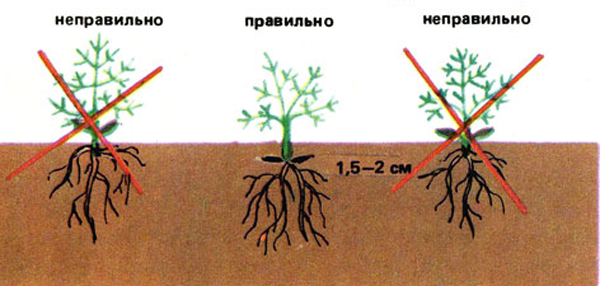
Before planting, you need to choose a suitable location. It should be open to the sun. Dig the holes according to a predetermined pattern. Tall chrysanthemums should be spaced at least 50 cm apart.
For smaller flowers, the distance can be reduced to 25 cm. The next step is fertilizing. Chrysanthemums are planted in trenches and holes, with sand or drainage material placed at the bottom of each.
Top dressing
A complex fertilizer should contain sodium, potassium, and phosphorus. The first feeding is done after the cuttings have rooted. The prepared mixture is applied under the chrysanthemums. After two weeks, bird droppings and mullein are added. The next application is done when buds are forming.
If all recommendations are followed, chrysanthemums will become more resilient to adverse environmental factors. An additional benefit will be abundant flowering. Excessive nitrogen fertilizers lead to increased foliage.
Mulching
This procedure is necessary to protect garden plants from pests and fungal diseases. Mulching the soil will prevent weeds from appearing. Sawdust, pine bark, and needles can be used for treating bush chrysanthemums.
Formation
To give the chrysanthemum a neat shape, it's necessary to pinch it back. The first pinch is performed immediately after planting, and the second pinch is done three weeks later.
In the latter case, remove a section containing no more than three nodes. Pinching results in the formation of attractive bushes. Ignoring this recommendation will result in a reduction in the number of buds.
Wintering
Applying phosphorus and potassium fertilizers is mandatory. Subsequent treatments depend on the frost resistance of the variety. Resilient chrysanthemums can be left in the garden. In late autumn, flowers overwintering outdoors are covered with dry branches and leaves.
Perennials that are less adapted to low temperatures are dug up and placed in the cellar.
Diseases and pests
Chrysanthemums can be affected by powdery mildew and gray mold. The latter disease manifests as rot and brown spots. Fungal diseases are controlled with copper-containing preparations. To reduce the risk of these diseases, pay attention to temperature, soil moisture, and fertilizer composition.
Gardeners should take preventative measures against meadow bugs, aphids, and thrips. Fitoverm, Actellic, and Aktara can be used for this purpose. Timely prevention will keep plants healthy throughout the season.
With proper planting and care, chrysanthemums can be a beautiful addition to any garden. They can be planted alone or in groups with other garden crops. Low-growing plants are often used in landscape design and container gardening. Chrysanthemums pair well with bellflowers, calendulas, marigolds, cosmos, and snapdragons. Salvia, petunias, and cineraria can also be added to this list.