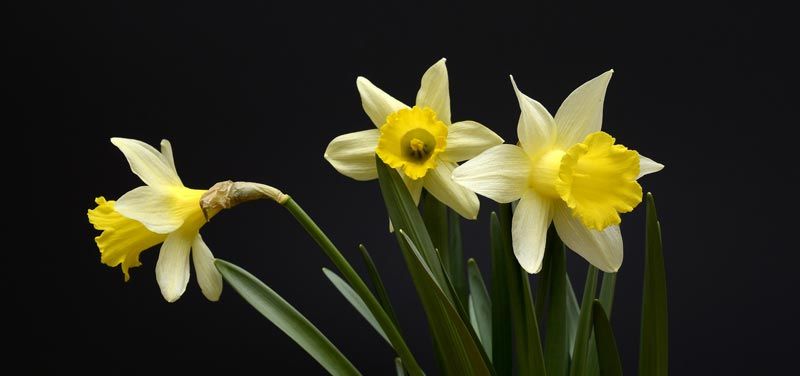
Daffodils are among the earliest flowers to bloom in spring. Their distinctive buds, consisting of six petals with a rounded center, adorn many gardens, delighting everyone with their pleasant fragrance and graceful beauty. They are relatively easy to maintain and, when grown outdoors, require neither annual digging nor special care. Growing these flowers in a pot will enhance any home or apartment, and will also provide a fragrant bouquet not only in spring but throughout the year as well.
Content
- 1 Varieties of daffodil for growing in pots
- 2 Selection of bulbs
- 3 Container for landing
- 4 Necessary soil
- 5 Conditions needed for growing daffodils in a pot
- 6 Planting daffodils indoors
- 7 Caring for a potted daffodil
- 8 Caring for daffodils after flowering
- 9 Top.tomathouse.com warns: Diseases and pests of indoor daffodils
Varieties of daffodil for growing in pots
The genus Narcissus belongs to the Amaryllis family and comprises over 30 different species. Some adapt to indoor conditions better than others. The following are considered the most popular:
- Paperflower (Papyraceus) has up to 11 white flowers, each 3 cm in diameter. They are clustered on a single stem, growing 30-45 cm tall. This is the only variety that does not require cold treatment and produces seedlings indoors in just 2-6 weeks.
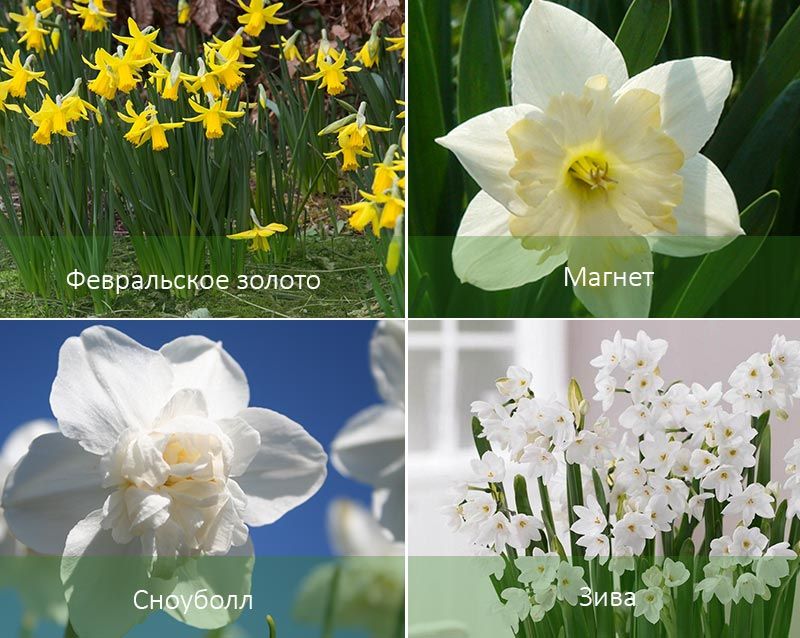
- Ziva (Ziva) has delicate white small flowers, arranged in groups of up to 10 on a single stem. Height varies depending on the variety, reaching 15-35 cm for the miniature Paperwhite variety, and 50 cm for Narcissus tazetta.
- 'Magnet' has large, single flowers, each 12-14 cm long, with a yellow crown and petals that lighten toward the tips. It grows to 40-50 cm in length and is suitable for container growing with pre-chill treatment.
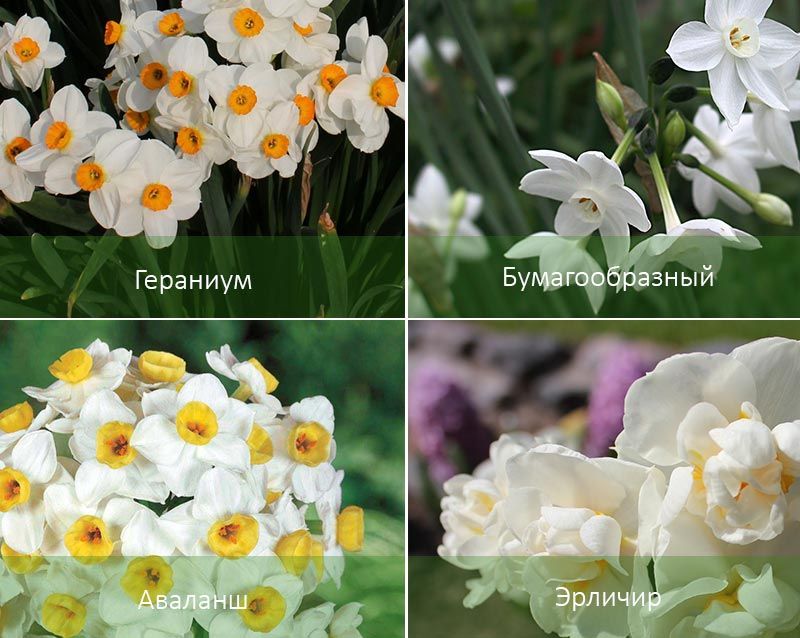
- Avalanche is multifloral, meaning it has up to 10 buds arranged in a row on a single stem. The rosette is golden, and the petals are white. The flower stalk reaches 30-45 cm in height.
- February Gold features yellow flowers, 7.5 cm in diameter, borne singly on 30 cm tall stems. Each flower has a double center and pointed petals.
- Snowball grows to 43 cm in height. The white center and perianth form a bud 8 cm in diameter. In the wild, flowers appear in May.
Florists also highlight Geranium, Verger, Erlichir, and other varieties suitable for apartments. They can be colored in various combinations of white, yellow, or beige, have a plain or fringed center, and vary in the number of perianth petals.
Selection of bulbs
To grow beautiful, healthy flowers, it's important to carefully select the planting material. Seed is rarely used for this purpose, but the growing process is very long and labor-intensive. In most cases, bulbs are used for this purpose, separating the offspring from the mother bulbs. When purchasing from third parties, pay attention to the following criteria:
- Larger material will produce stronger seedlings;
- roots that are firm to the touch will ensure healthy plant development;
- soft and rotting areas may indicate the presence of a disease or improper storage;
- Spots and damage provoke the proliferation of bulb parasites.
Purchased bulbs shouldn't be stored for long; it's best to plant them in containers as soon as possible. If necessary, they can be placed in a dark, dry, and ventilated area for a while. Otherwise, there's a risk of fungal infection or premature rooting.
Container for landing
Narcissus roots need space to spread and grow, so pots or containers should be at least 15-20 cm wide and 30-35 cm tall. For smaller varieties that grow no taller than 15 cm, smaller containers are suitable, but still provide sufficient depth for rooting. Avoid overdoing this, as too much space can harm the plant, delaying its flowering. Containers can be ceramic or glass, but wooden boxes are also suitable. Drainage at the bottom is essential to allow excess moisture to escape, preventing rot in the bulbs.
Necessary soil
The soil for planting and replanting can be dug from your garden plot or purchased at a store. It should be soft, crumbly in your hands, and not clumpy. It's best to dilute regular soil with sand or dry clay, adding sawdust, wood ash, and mineral fertilizer. This will make the soil loose, ensure air circulation, and enrich it with additional nutrients.
Some people use certain techniques to quickly produce flowers, for example, so they can give a bouquet for a holiday. To do this, they plant them in perlite or small stones and water them generously. The bulbs contain sufficient nutrients for the full development of the flower.
Conditions needed for growing daffodils in a pot
This plant is one of the most easy-to-grow. However, to produce beautiful and fragrant buds, it needs to be provided with an environment as close to natural as possible. This requires adjusting the temperature, lighting, and humidity.
| Factor | Conditions |
| Location/lighting | The location should be chosen away from sensitive plants, which could be harmed by the toxins released by daffodils. It should be sunny or partially shaded to ensure abundant and long-lasting blooms. However, direct sunlight should be avoided to prevent burns. |
| Temperature | After planting, cold treatment is required at +3…+9 °C, in the first days of embryo adaptation and during the flowering period at about +10…+12 °C, and during the rest of the growing season no higher than +15…+18 °C. |
| Humidity | For full growth and development, at least 70% is needed, especially after budding. Radiators dry out the air, so keep the plant away from them and place a container filled with water nearby. |
Planting daffodils indoors
Planting bulbs indoors is slightly different from planting them outdoors. Specifically, they will require cold treatment and seedling initiation in a specially created environment.
Planting dates
You can plant daffodils in soil at any time of year, but many people want to have them bloom by a specific anniversary. This is most often done during the following timeframes:
- planting no later than mid-autumn allows you to get a bouquet by the New Year;
- bulbs rooted in December-January will bloom in the first days of spring;
- Planting at the end of March will ensure flower stalks for the May holidays.
More specific timing is determined by the description of the variety, each of which has different periods for emergence.
The process of planting daffodils in a pot
When planting bulbs in the soil, you should follow the step-by-step procedure:
- Place a drainage layer of 2-3 cm of crushed pebbles, stones, or expanded clay into the selected container. This will allow excess water to drain and provide oxygen to the roots. Top with potting soil almost to the brim.
- Place the bulbs in the container, pressing them in root-side down, leaving space between them. The top of each bulb should be at least a third of the way above the soil. For a 9 cm diameter container, use three bulbs, each about 1 cm in diameter.
- Water the soil lightly, avoiding contact with the rhizomes. You can mulch the soil with a loose layer of leaves or sawdust. Water regularly until the seedlings emerge, preventing them from drying out.
- After planting, place the pots in a dark, dry place at a temperature of +3 to +9°C. If necessary, cover the containers. Only the Paper-shaped and Ziva varieties, which can be left indoors, do not require such complications.
- Once the seedlings reach a height of 5-7 cm, no sooner than 1-3 months later, they need to adapt to warmer conditions. For the first 2-3 days, place them in a room with diffused light at 10°C, then choose a permanent, brightly lit location at 15…18°C.
If done correctly, the first flower stalks will appear within 1-1.5 months. A more precise flowering time can be determined by knowing the variety of flowers being planted.
Caring for a potted daffodil
Home care involves regular watering, fertilizing, and trimming dried flower buds. Water with settled water and only around the edges of the planting container or into the tray. The frequency required varies at each stage of growth:
- for the first time, the soil needs to be moistened immediately after planting;
- during rooting, add water twice a month;
- After moving the pots into a warm place, make sure that the soil does not dry out;
- during the flowering period, an increase in humidity in the air and soil is required;
- When the leaves turn completely yellow, you should stop watering.
From the time the shoots begin to emerge until flowering, daffodils should be fed with fertilizers containing phosphorus, potassium, and nitrogen. Carefully choose the timing and amount of feeding to avoid damaging the flowers:
- At the beginning of the growing season, when seedlings appear, use a liquid or water-soluble composition.
- Then mulch the top layer of soil by spreading a thick layer of leaf humus or rotted manure on it.
- The second time, apply mineral fertilizer when buds appear on the flower stalks and repeat the procedure every 2 weeks until they begin to bloom.
- After flowering, add bone meal or granulated substances to the soil, which will allow seedlings to emerge in the second year.
To prolong the flowering period, from the moment the buds open, provide cool temperatures in the range of +10…+12 °C.
Caring for daffodils after flowering
Once the daffodils have finished blooming, trim off the faded flowers, leaving the green stems intact. Reduce watering, and add a slow-release fertilizer to the soil, which will be absorbed until the next growing season. Leaves and flower stalks can be trimmed back to the roots only after they have yellowed and completely dried out. Use clean scissors or a knife for this.
If the bulbs aren't dug up, the container containing them should be moved to a cool, dark place. The collected material is placed in cloth or paper bags. Next year, the bulbs can be planted outdoors only, and it's best to select the offspring for indoor use.
It's also worth weeding out any rotten or damaged bulbs and discarding them immediately. Store the remaining bulbs in a dry, dark place. Flowers from a single bulb can be grown up to three times, and it's best to use their offspring for further propagation.
Top.tomathouse.com warns: Diseases and pests of indoor daffodils
Growing flowers can pose many challenges. The most common ones include:
- Fusarium wilt is a fungal infection that occurs with overwatering, excessive ammonia fertilizer, and keeping bulbs warm and damp. To prevent the disease, they need to be properly maintained and treated with fungicides before each planting. If the disease is present, the plants and bulbs should be culled and destroyed.
- The large narcissus fly lays eggs in the roots. These hatch into larvae that feed on the bulb's flesh, causing it to rot. To identify them, press on the root; it shouldn't be dented at the tip. The infested material should be treated with malathion or soaked in a pot of hot water for a couple of hours, maintaining the temperature no higher than 43°C.
- Bulb aphids appear under dry scales and feed on the rhizome juices. This softens the rhizomes, making the plant weak and reducing flowering. To eliminate the parasite, heat treatment in hot water is necessary, as with flies.
- Gray mold (botrytia) attacks leaves, leaving silvery and brown spots, then penetrates the rhizomes. Fungal spores develop in excessively humid air. To control the disease, spray infected areas twice a month with 1-1.5% Bordeaux mixture, 0.5% captan solution, or a copper-soap mixture (2 g copper sulfate and 20 g green soap). Roots are treated with 0.2% Fundazole.
- Onion mites live in the soil and penetrate the bulb through damage. Plant growth is stunted, and flowers and leaves wilt. Damaged bulbs should be removed, and healthy ones should be treated with heat.
- Nematodes feed on the sap of leaves and flower stalks, from which they migrate to the rhizomes. They can be controlled by immersing the material in water at 40 to 50°C for a period of time.
Infection often occurs due to inadequately disinfected soil collected in the garden. In this case, the substrate will need to be sanitized. Additionally, to prevent daffodil diseases, follow these guidelines:
- regularly loosen the soil and promptly remove dry and wilted leaves;
- prevent waterlogging of the soil by creating drainage and balanced watering;
- create optimal conditions for planting material, store it at a temperature not exceeding +10 °C.
Taking all this into account can help avoid many problems with growing daffodils. And then your blooming windowsill will delight your eyes for days to come.