Amorphophallus is a tuberous plant of the genus Araceae. It is native to the lowlands of the tropics and subtropics. Many species in this family grow on cliffs, in secondary forests, and in wastelands.
Content
Description
The Amorphophallus family comprises up to 100 species, varying in size and flower stalks. They grow from a tuber weighing up to 90 kg, which is active only six months a year, remaining dormant the rest of the time. Its aboveground portion is a robust shoot with a large, dissected leaf and flower.
Species for indoor growing
Only a few species of Amorphophallus belong to this genus of houseplants. The lower part of the spadix bears numerous flowers.
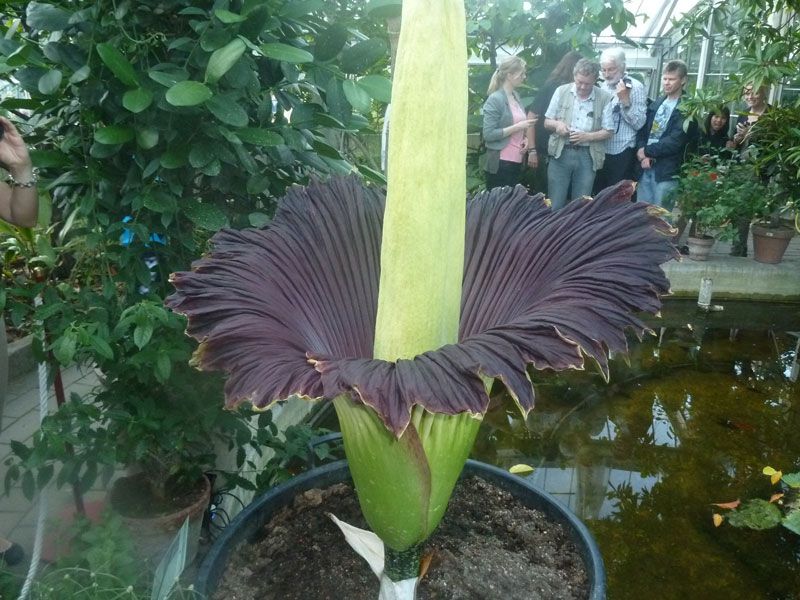
The corrugated spathe is green on the outside and dark red on the inside, resembling an upside-down skirt. During flowering, the top of the cob heats up to 40 degrees Celsius, causing it to emit an unpleasant odor, attracting pollinators.
The inflorescence matures over about 30 days, then suddenly opens for one night. After several days of flowering, the cob's crown breaks open, and berries appear on the lower part.
When ripe, they are the size of cherries and bright orange. The tuber is enormous, weighing up to 90 kg. The leaf is 6 meters tall, with a crown over 4 meters in diameter, and dies after about a year and a half.
| View | Distinctive features |
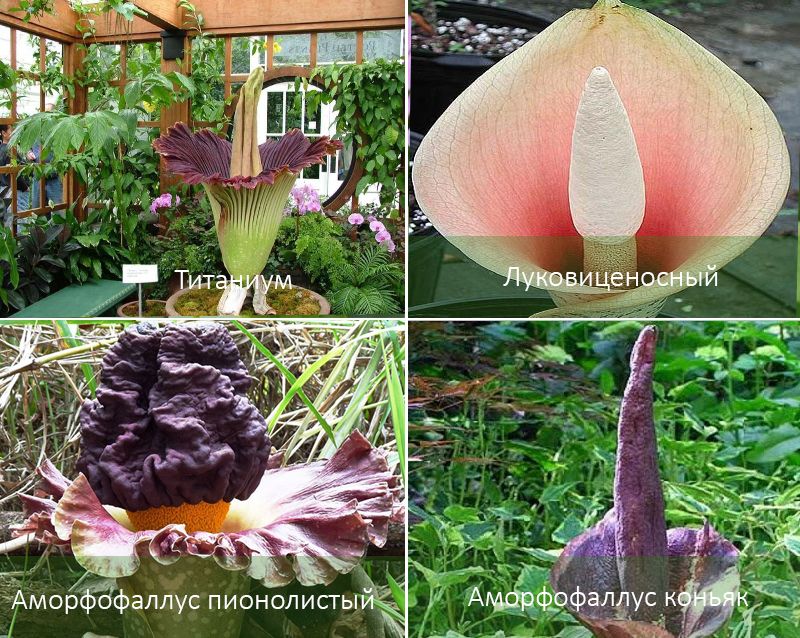
| Amorphophallus konjac (river) | The spadix is lilac-hued with a spathe-like petal. Flowers of both sexes appear at the base of the peduncle. The leaf is green, deeply dissected, and resembles an umbrella. The indoor plant's inflorescence can be up to 80 cm long, with the leaf height and crown diameter no more than 1 meter. The tuber diameter is up to 30 cm. The flower is propagated by tubers. |
| Amorphophallus bulbifera | The spadix is up to 30 cm tall with a pink spathe-like petal, occasionally with green speckles. The leaf is lush green with a distinct dissection and a hollow petiole. Propagation is by bulbils. Otherwise, it is similar to the konjac plant. |
| Titanium | The flower reaches over 3 meters in height and weighs 70 kg. Due to its large size, the Amorphophallus titanum is grown only in botanical gardens. It rarely grows in the wild. |
| Amorphophallus peony-leaved | Similar to the titanic plant, but smaller. In terms of the development of the peduncle, leaf, and tubers, it is identical to the konjac plant. |
Home care
The plant requires a microclimate reminiscent of its native habitat. The flower is unpretentious, tolerating sudden temperature changes, drafts, and low light. Shading produces leaves a rich, dark green hue with a red stripe along the edges. Under favorable climate conditions, the amorphophallus can be placed outdoors.
| Factor | Recommendations |
| Location | Near a southeast or southwest-facing window. Shade is needed for south-facing plants. |
| Lighting | Bright but diffused light is preferred. During dormancy, shade is necessary. |
| Temperature | During the growing season, the temperature should be between 20 and 23 degrees Celsius, and during winter dormancy, between 11 and 13 degrees Celsius. Lower temperatures are harmful to the plant. |
| Air humidity | High humidity is preferred. Regular misting is required. |
Planting and replanting (step by step)
Amorphophallus is repotted early each spring after the tuber emerges. The container should be wider than the tuber and of equal diameter and height. Ceramic pots are preferred as they are more stable.
The main steps during transplantation:
- Prepare a new container. Cover the drainage hole with a shard of a ceramic pot.
- Fill the container one-third full with drainage—a mixture of fine expanded clay, coarse sand, and brick chips. Add fresh, disinfected substrate to the middle of the reservoir.
- Prepare the tubers. Use a clean, sharp knife to peel them down to the healthy tissue. Treat the cut surfaces with iodine and sprinkle with crushed chalk. Leave to dry for several hours.
- Make a small hole in the soil, fill it with sand, and bury the tuber one-third of the way in. Add soil to cover the tuber, leaving only the growing tip exposed. Water the plant lightly and place it in a bright spot, but not in direct sunlight. Add more soil as needed.
Soil
Amorphophallus prefers loose, fertile soil. You can purchase ready-made soil for aroids or prepare your own substrate, for example, garden soil and sand in a 4:1 ratio. It is recommended to add 10 g of superphosphate per 1.5 liters of substrate.
Watering and fertilizing
After transplanting, watering should be moderate at first, and more abundant once growth begins.
During the growing season, after the top layer of soil has dried slightly, the plant needs plenty of moisture and regular feeding. When watering and spraying, use only soft water at a comfortable temperature.
Four weeks after the first shoots appear, begin fertilizing at 10-day intervals. Water the plant a few minutes before fertilizing. It requires phosphorus, a little potassium, and nitrogen in a ratio of 4:1:1. It is recommended to alternate mineral fertilizers with organic ones. An infusion of rotted cow manure or bird droppings diluted with water (20:1) is suitable for organic fertilizers.
Flowering and dormant periods
Amorphophallus begins blooming in the spring, when it awakens, and continues until the leaf forms. The flowering period lasts approximately 14 days. During this time, the tuber noticeably shrinks due to the depletion of nutrients. After flowering, the plant again enters a short "rest" period of a month to replenish its internal resources and produce a new leaf.
The following year, another shoot, larger and taller, will emerge. Dormancy is essential for the flowering of the amorphophallus. The plant needs it to allow the tuber to regain its strength. During this period, the container containing the tuber should be placed in a shaded area with a temperature of 10°C to 14°C. Reduce the frequency of watering.
If pollination occurs during flowering, fruits containing seeds appear on the lower part of the cob. After they ripen, the plant dies. This is an extremely rare occurrence in indoor gardening, as pollination is very difficult to achieve in an unnatural environment. At least two flowers of the same species must be in bloom in the same location.
After the shoot has wilted, you can remove the tuber from the soil, clean it, trim off any rotted parts, dust the cuts with crushed charcoal, and treat them with a potassium permanganate solution before drying. Then wrap it in paper and store it in a shaded area until the beginning of the growing season.
Methods of reproduction
The flower is propagated by bulbils and tubercles. The shoots are separated from the mother tuber while the plant is resting. They are washed, soaked for several minutes in a weak solution of potassium permanganate, dried, and stored until spring in moistened sand or wrapped in paper.
The optimal storage temperature is between +10°C and +13°C. In the spring, when new shoots emerge, transplant them into containers. If the mother tuber overwinters in the soil, separate the young shoots in the spring. The same procedure is followed for the bulblets.
It's possible to divide the tuber for propagation during the sprouting period. To do this, cut it into several pieces, corresponding to the number of sprouts, without damaging them. Dust the cuts with crushed charcoal, air-dry, and plant as usual. Use a well-sharpened, clean knife when doing this.
Difficulties of growing
The main problems with this flower are related to improper watering. Other errors can ruin the decorative appearance of the leaves.
Diseases, pests
Aphids or spider mites may be present. To prevent aphid infestations, keep the container containing the flower away from infested plants. Spider mites are often caused by dry air.
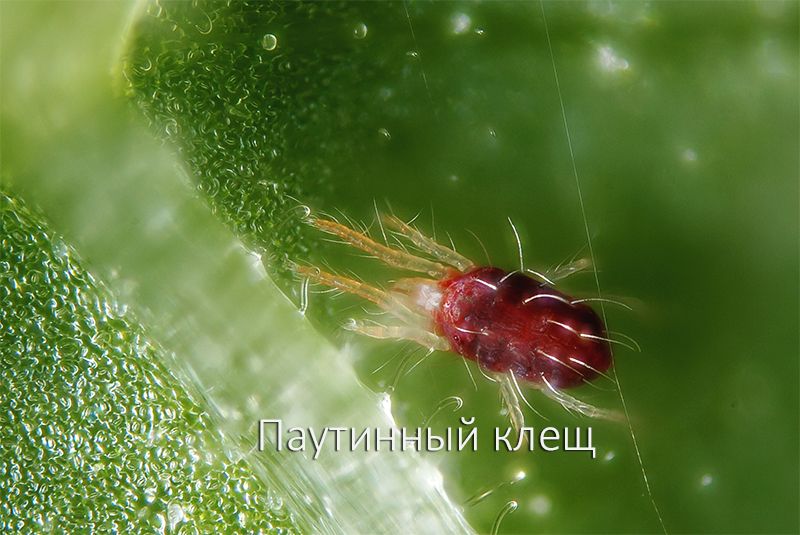
Small white spots appear on the leaf surface, and small mites and webs appear on the underside. To prevent this problem, frequent spraying and increased humidity are required.
Pests can be controlled with Fitoverm, using two spraying sessions 10 days apart. This product will also help eliminate gnats that appear in the soil when the plant is overwatered. In this case, the soil in the pot is sprayed with the product.
Mistakes in care
| Problem | Cause |
| Dark spots on the tuber and at the base of the petiole, which quickly spread. | Overwatering or low temperature. |
| The leaf dries up. | Lack of fertilizer or too dry air. |
| The leaf is getting dark. | Not enough light. |
| The leaf becomes covered with light spots. | Sunburn. |
Benefits and harms
Amorphophallus is an excellent neutralizer of toxins, benzenes, phenols, and formaldehyde, as well as staphylococci, viruses, and harmful bacteria. Being near this plant is beneficial for those suffering from heart disease, intestinal spasms, and biliary tract problems. Its leaves release sedative and stress-relieving substances into the atmosphere.
This unique plant is rarely found in home gardening. In a single year, it gradually transforms from an exotic flower into an umbrella-shaped tree reminiscent of a palm tree, and then into a potato-like tuber.