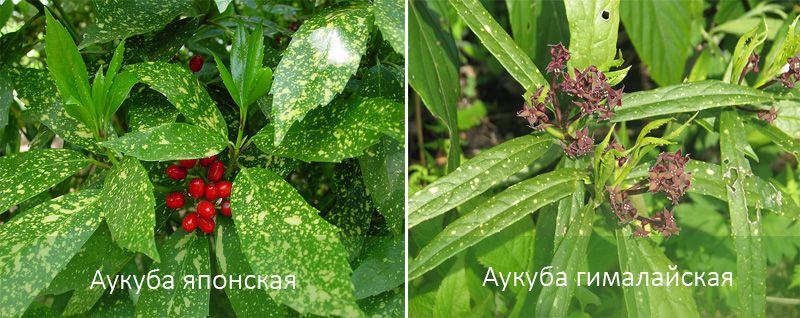
Aucuba belongs to the Garryaceae family. Other classifications include Cornus and Aucubaceae. There are three varieties of this plant. All species are very hardy, growing naturally in shady areas of the subtropical forests of Korea, the Himalayas, Japan, and China. Often, they are the only other species found there. Only two of these are suitable for growing indoors: Japanese aucuba (Aucuba japonica) and Himalayan aucuba (Aucuba himalaica).
Types of Aucuba for Home Growing
Aucuba japonica is a shrub native to the southern Korean Peninsula. It is also known as the variegated aucuba or "golden tree" because the foliage of some varieties glitters in the sun like precious metal. The plant has long attracted tourists, but the Japanese protected it from foreigners, prohibiting its export, believing it to have magical and healing properties. It only arrived in Europe in the eighteenth century.
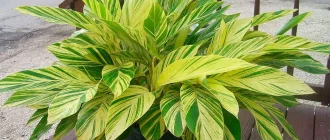
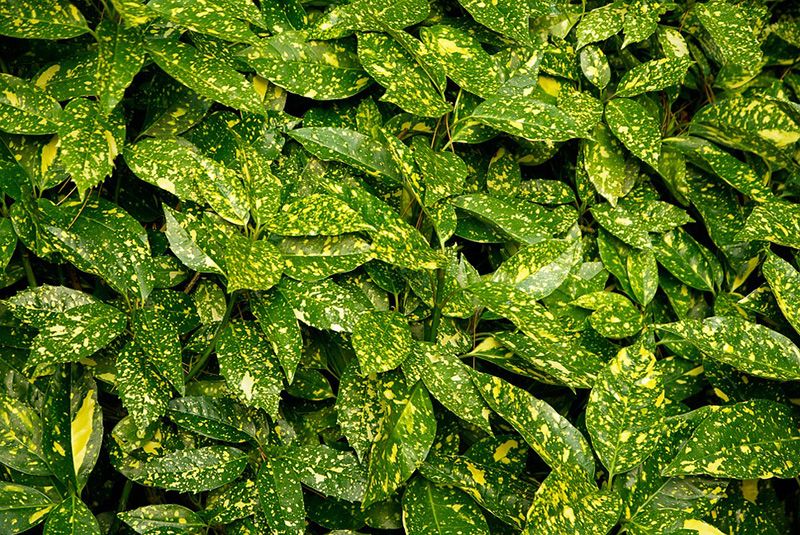
This evergreen plant has large, dense, oval leaves and a strong, woody trunk. Some varieties have serrated leaf tips. The coloring can be dark green or flecked with gold in various shapes and sizes. The shrub grows to two to five meters. Flowering begins in early spring. The flowers are dark red, and the inflorescences are paniculate. The bush rarely produces fruit when kept indoors. If it does, the berries are fiery red or orange (sometimes snow-white or emerald). The plant is poisonous, but it is still used in traditional medicine.
Aucuba himalayanica grows to three to four meters in the wild. The foliage is dark green, with lanceolate-oblong blades with an elongated or short pointed tip. The flowers are small, unremarkable, and unisexual.
Caring for Aucuba at Home
Aucuba tolerates indoor conditions well, grows quickly, and rarely gets sick. The plant requires little care and has the following positive qualities:
- easily tolerates low temperatures (not below +8°C);
- resistant to weak or, on the contrary, too intense light, but not for a long time;
- maintains a decorative appearance even in an environment unfavorable for growth;
- does not perish with sudden temperature changes.
If the bush is well cared for, it will bloom and may even produce fruit. However, this requires two plants (one male and one female), as it is dioecious.
Summer care
Aucubas don't tolerate excessively high temperatures; the ideal temperature is 20°C. When the temperature rises above this level, it's recommended to move the plant to a cool, shady location. Otherwise, the plant will begin to lose its leaves, which will negatively impact the plant's growth. In summer, aucubas thrive outdoors (for example, on a loggia or balcony). However, the pot should be covered during rain or strong winds.
In summer, there's no need to spray the bush, provided the room is regularly ventilated. Water regularly, and don't allow it to dry out too much. Keep in mind that the plant doesn't like excessive moisture. Stagnant water will cause dark spots to appear on the foliage. Fertilize in the spring with a general-purpose complex fertilizer for ornamental foliage plants (preferably by spraying).
In winter
In winter, the optimal temperature is +14°C. Temperatures as low as +8°C are acceptable. If heating is used intensively, Aucuba should be sprayed with warm, settled water. Water as needed, when the soil dries out.
How does aucuba bloom and can it be kept indoors?
Flowering occurs in the first half of spring. The reddish-brown flowers are collected in panicles. Male and female inflorescences are located on separate plants (it is impossible to determine the sex of the flowers before flowering). Fruit appears on the bush in late April-May.
Despite being poisonous, aucuba is often grown indoors. The leaves, flowers, and fruits are dangerous, so care should be taken when handling this plant.
It's best to store Aucuba high up so children and pets can't reach it. After planting or pruning the shrub, wash your hands thoroughly with soap. If the sap enters the stomach or intestines, it will cause inflammation, causing bloody diarrhea.
How to achieve a beautiful crown on an aucuba
If numerous shoots appear on the trunk in spring, the plant needs pruning. This will promote better growth. To ensure a beautiful, spreading crown, pinching is recommended.
To maintain its decorative appearance, mature plants are repotted infrequently—once every two to three years. Young plants are repotted annually.
Aucubas have a fragile and brittle root system. Therefore, when repotting, care must be taken and the process carried out using the transshipment method.
To ensure vigorous growth and a beautiful appearance, use loose soil for planting. A mixture of two equal parts peat, one part leaf mold, six parts turf, and one part sand is recommended.
When working with shrubs, it's important to remember safety precautions: wear gloves, remember to wash your hands, and avoid getting the sap on your mucous membranes.
Reproduction
Aucuba is propagated by:
- seeds;
- by cuttings.
For propagation at home, the second method is usually used. Planting is best done in March or late August-September. It's done as follows:
- The cuttings are cleared of greenery, leaving only two or three leaves.
- For good rooting, shoots are planted in a moist substrate of equal parts peat and sand.
- Containers with seedlings are covered with polyethylene.
- The bushes are periodically opened and ventilated, and condensation is removed from the shelter.
- Young plants are kept at a temperature of +20…+22°C.
- Rooted shoots are transplanted into separate pots with a diameter of 7-8 cm.
When growing heterosexual plants, they must be pollinated independently. Only then will seeds for further propagation appear. Planting material loses its viability very quickly, so it must be sown immediately. It's also important to keep in mind that varietal traits may not be passed on with this method of propagation.
Plant the seeds in moist soil made from peat or sand. Cover the seedlings with plastic and regularly ventilate them and spray them with warm, settled water. The recommended room temperature is 21°C.
It takes a long time (several weeks) for the seedlings to emerge. Once they emerge, the shoots will have two or three leaves and can be transplanted into a separate pot or into open soil with moderate acidity.
Top.tomathouse.com: Aucuba Helper
The flower not only looks beautiful but also has healing properties. The shrub's foliage contains beneficial elements that help destroy pathogens in the air.
The plant is used in alternative medicine to treat injuries, burns, and frostbite. Aucuba compresses are applied to the affected area and changed regularly. They reduce pain, disinfect wounds, and promote faster healing. In addition, preparations containing aucuba extract are used to treat various gastrointestinal ailments. It is very important to follow the prescribed dosages and consult a doctor first to avoid any potential harm to your health.
The Japanese believe that the plant is beneficial for family relationships. It brings relatives closer together and unites them. The shrub will bring peace, understanding, and harmony to the home.
Purchasing a flower brings prosperity not only to family members but also to guests in the apartment. Furthermore, aucuba helps remove negative energy brought into the home by ill-wishers.
According to ancient Japanese legend, the plant attracts good luck and wealth to the family. Caring for this indoor plant boosts vitality, helps unlock potential, and instills self-confidence. Aucuba makes a wonderful gift for someone who is indecisive or withdrawn.