This ornamental plant was brought from tropical India. Evergreen with large, serrated leaves, the rex begonia prefers warmth, is undemanding in light, and delights its owners with pink flowers once a year. It typically grows no taller than 60-70 centimeters. The asymmetrical leaf features a distinct spiral pattern. This plant is also known as rex begonia or Napoleon's ear.
Content
Botanical description
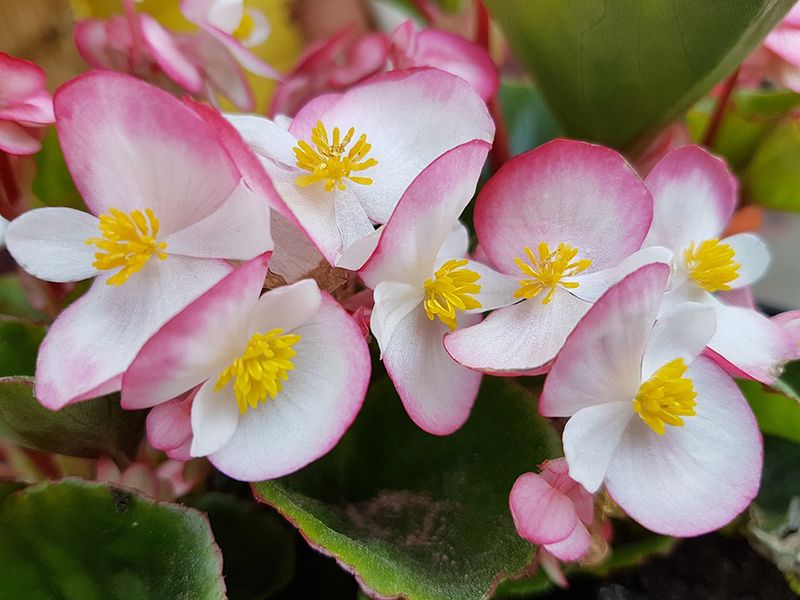
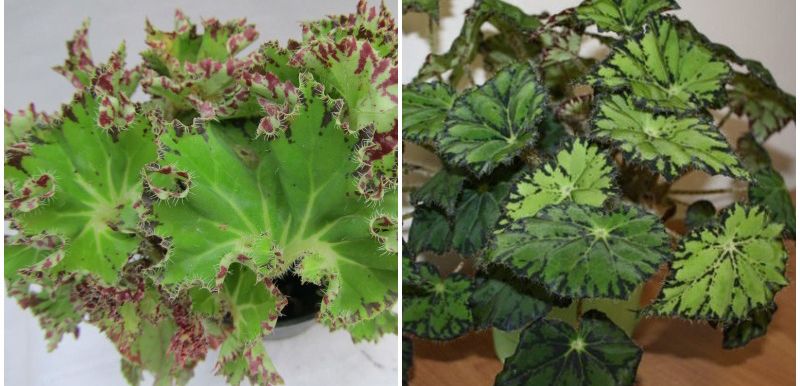
The indoor rex begonia is a racemose herbaceous plant in the begoniaceae family. The stem is thick and succulent, recumbent, usually drooping. Large leaves, up to 25 centimeters long, are arranged asymmetrically along the trunk, each with a distinctive coloring. The intricate spirals are dark green, silvery, and purple. Varieties with almost black, brown, and bright crimson spots are also found. The rex begonia blooms once a year with large, soft pink inflorescences on a short stem.
Popular varieties
Florists have long had favorite varieties. These varieties are particularly decorative and perfectly adapted to life in a city apartment.
| Species name | Characteristic features |
| Begonia Bauer | A tuberous variety that needs to be removed from the ground for the winter. A low plant, up to 25 cm tall, with an upright stem and large, asymmetrical leaves. Flowers come in all shades from red to white. |
| Begonia glabra | Long, creeping stems root at the nodes. Small, ovate foliage. Small, racemose inflorescences. Popular with winter gardeners. |
| Begonia Arthur Mallet | A long, drooping stem with light green, rounded leaves with contrasting burgundy or crimson spots near the petiole. A common hybrid variety. |
| Begonia rich | A perennial plant with a short, thick stem. Large, oval-shaped leaves range in shades from light olive to silver. Small, creamy-white flowers. |
It's best to choose varieties based on your interior design and personal aesthetic preferences. Photos will help you navigate the wide variety.
Content Rules
Growing regal begonias indoors is easy and even a novice gardener can handle it. Care primarily involves providing the plant with comfortable conditions for the species.
Humidity
Since the plant is tropical in origin, it is quite demanding of the air's moisture content. In a city apartment with central heating, it's best to provide additional humidification, for example, by installing a decorative fountain, an ultrasonic mist sprayer, or placing the pot on a tray filled with damp expanded clay.
Spraying can damage the leaves and lead to loss of decorative qualities or rotting.
Watering
Don't allow the root ball to dry out. The soil should always be moderately moist. Overwatering can cause disease. If the variety is overwintering in a pot, water it with warm water.
Light
Begonia rex does not tolerate direct sunlight. Bright but diffused light is ideal. Placing the pot near east- and west-facing windows will provide the plant with comfortable daylight, sufficient for proper growth.
Temperature
The plant does not tolerate heat or cold well. The average room temperature should be between 18 and 25 degrees Celsius. There is no need to provide a winter cooler. The plant regulates its own periods of active growth and dormancy.
Priming
Begonias love light, nutrient-rich soils with a neutral acid-alkaline balance.
Ready-made mixtures are sold in specialized stores, but you can make it yourself by assembling a mixture of leaf soil, humus, peat and sand in a ratio of 2:3:1:1 according to the recipe.
Transplantation
The plant requires repotting once a year. This is best done in early spring, while it's dormant. The container should be 1-3 centimeters larger than the previous one, wide, and shallow, as the begonia's root system is fibrous and located close to the surface.
When replanting, it's important not to bury the stem base too deeply to prevent rot. Don't forget about pot drainage. Excess moisture should drain easily. To achieve this, place a layer of expanded clay or pebbles on the bottom, and add a generous amount of river sand or vermiculite to the soil itself.
Fertilizer
Fertilizing should be done during the active growth period from mid-spring to late summer. Twice a month, watering the begonia with a solution of complex mineral mixtures is sufficient. As autumn approaches, fertilizers with reduced nitrogen and potassium levels are preferred.
Organic matter is also good for enriching the soil. Fermented horse or cow manure is diluted with water 1:5 and watered approximately once a month.
Formation
Before the start of active growth, around the end of February, the tips of the shoots are pinched back, and the newly grown roots are tucked into the pot. This encourages several new shoots to emerge from dormant buds, giving the plant a lush and aesthetically pleasing appearance.
Reproduction of begonias
The flower reproduces easily both by seed and vegetatively. Each method has its own unique characteristics that must be considered.
You can get new plants:
- Growing from seeds. To do this, you need to wait until flowering ends and the seed pods ripen.
- Leaf and stem cuttings. The material is cut, treated with a root stimulant, and dug into the soil. To maintain adequate moisture, the cuttings can be covered with plastic film.
- Rooting leaf fragments. To obtain planting material, the leaf is cut into triangles with a succulent vein at the top of each. These are pressed firmly into the soil and covered with cling film. New shoots will appear within a few weeks.
- Dividing the rhizome. Typically, when replanting, a portion of the roots is separated and planted in loose, moist soil. Soon, new shoots will emerge from the dormant buds.
Cultivation errors and pathogens
The Royal Rex is particularly susceptible to rot and mold. Overwatering or residual moisture on the leaves can lead to the development of fungal and bacterial infections. Treating an infected plant is very difficult. You can try to save the plant by intentionally drying out the surrounding air and treating it with fungicides. Severely affected stems and leaves will need to be cut off.
If the rot begins to rise from the roots, the begonia will have to be destroyed.
Air that's too dry, hot, or cold causes leaves to lose color and dry out at the edges. Once the microclimate is restored, the plant will regain its full strength and beauty.
If it's weakened, pests can take over. Spider mites, scale insects, thrips, and aphids can destroy a flower in a matter of days.
To get rid of pests, you need to mechanically remove their clusters, thoroughly wash the leaves and stems with a soap solution, and then repeatedly treat them with a specialized insecticide.
Top.tomathouse.com recommends: Begonia Rex – a doctor for asthmatics
Thanks to its large, fleshy leaves, the Rex plant is an excellent air purifier. It produces a lot of oxygen and active phytoncides. It has been shown that the concentration of Staphylococcus aureus decreases in rooms where certain varieties are grown.
People with asthma benefit from having this flower in their home. It has antimicrobial properties, reduces the risk of allergies, and boosts immunity.
Humidified air, so necessary for plant health, prevents the formation of flying dust particles in the air and makes breathing easier.
According to popular belief, begonia helps people in creative professions and contributes to a favorable atmosphere at home.