Many mistake the exotic indoor cycas for a palm tree. However, this ancient flower is not related to a palm tree. It is a plant related to ferns.
This species appeared on Earth before the Ice Age. Fossilized leaf remains are found in Mesozoic deposits. Cycas, a member of the Cycad family, can be found in tropical forests. There are approximately 90 varieties of this ornamental flower.
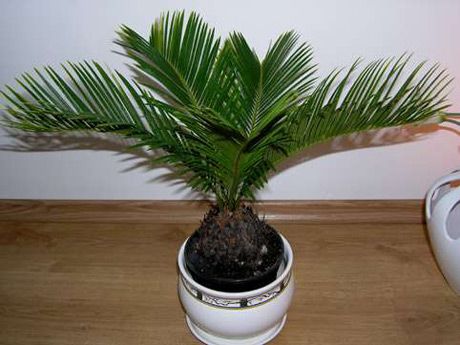
The plant's native land is considered to be the humid tropics of the Eastern Hemisphere. It can be found in some African countries and on the islands of Japan. In Russia, it grows on the Black Sea coast.
Description: appearance, trunk, leaves, features
Cycas is a coniferous plant. Its spreading crown resembles a palm tree.
A sturdy trunk with a diameter of 20-80 cm reaches a height of 7 m. Its bark resembles a shell. Indoor cycads grow slowly, producing 1-2 leaf shoots per year. They are resilient and resistant to environmental conditions. The plant requires little care indoors.
The plant has stiff leaves that emerge simultaneously from the lower part of the downy rosette. Initially, they resemble unfurling fern fronds. Within 1-2 months, they become leathery and stiffer. Upon reaching the reproductive stage, the semi-glossy leaves take on a strongly curved shape.
Cycas is a bisexual plant. You can distinguish males from females by the cone. It appears at the top of the plant. The female plant's cone resembles a cabbage, and large, dark-red seeds ripen within it. The male plant produces pollen.
Cycas is a poisonous plant. Toxins contained in the flower parts cause severe poisoning if ingested. This ornamental plant should be kept out of the reach of children and animals.
Types of Cycas for indoor cultivation
In areas with a mild, warm climate, sago palm is used for landscaping streets and squares.
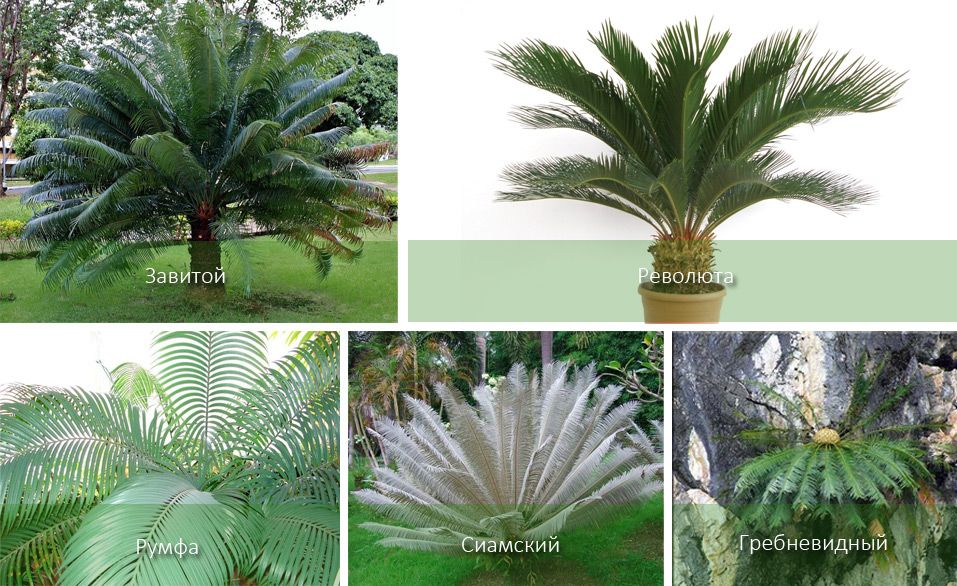
In indoor floriculture, a small number of varieties are used for breeding.
| View | Description |
| Revolution | The most common variety. Its columnar trunk reaches a height of 3 m and is crowned with a lush crown. The odd-pinnate, dark green leaves are 2 m long. |
| Siamese | The thickened trunk grows to a height of 1.6-1.9 m. The pointed leaves are 10 cm long. The petiole is covered with thorns. The leaves are bluish-white in color. |
| Curled | On the 2-meter-tall columnar trunk, leaves form in clusters of 15. The rachis is covered with spines from the crown to the middle. The trunk of a mature plant has lateral shoots, which are used for rooting. |
| Rumfa | The tallest variety. The pinnate leaves reach 2 m in length. |
| Comb-shaped | A small tree with dying leaves hanging down the trunk. The plant's name comes from its resemblance to a cockscomb. |
Cycas Care at Home – Seasonal Chart
This ornamental flower should be planted in good, permeable soil. Cycas requires moderate watering: the colder the room, the less frequently it needs to be watered. Water should immediately permeate the soil and drain into the tray. Drain after half an hour.
When watering the plant, be careful not to let large drops of liquid fall on the leaves. A fine mist should create a high humidity cloud around the plant (70-80%). Cycas thrives in these conditions.
When caring for cycads, wipe the leaves with a soft cloth. Cycads respond well to misting with warm water and any humidification. In winter, reduce watering and allow the plant to remain dormant.
| Parameter | Spring | Summer | Autumn | Winter |
| Location | Placement on the north or east side. Shade if placed on a south-facing window. | Safe from drafts. | ||
| Lighting | Sufficient supply of bright light. | Diffused sunlight. | Needs additional lighting. | |
| Temperature | +22°C | +26°C | +15…+17°C | Coolness (not below +15°C) |
| Humidity | 50-80%, moisturizing 1-2 times a day. | Spray at least 2 times a day. | ||
| Watering | Water thoroughly twice a week. | Moderate watering as the soil dries out (once every 10 days). | ||
| Soil heating | Not required. | If the plant's condition worsens, warm the soil 3-5 degrees above room temperature. | ||
| Top dressing | Fertilize every 10-14 days. Use a liquid, complex palm fertilizer. | Apply a general-purpose fertilizer for non-flowering plants once a month. Avoid adding calcium and magnesium salts to the fertilizer. | ||
Cycas grows 3 cm per year, forming a single layer of leaves. With proper care, this long-lived plant will thrive for decades.
Mistakes in care and their elimination
| Parameters | Reasons | Elimination |
| Yellowing of leaves |
|
Fertilize, place on a north or east side, avoid direct sunlight. Water moderately. |
| Loss of external decorative appearance | Lack of light | Place on a sunny window to provide additional artificial lighting. |
| Lack of growth |
|
Create a substrate that's optimal for cycas growth. Water with warm, filtered water. |
Repotting: Pot, Soil, Step-by-Step Description, Features
For good growth, cycads require slightly acidic, nutritious soil. The art of creating a substrate is the key to the prosperity of any indoor plant. Natural materials are used in approximately equal quantities:
- sphagnum moss with leaf litter;
- pine bark of various fractions - pre-processed, boiled;
- pine nut shells – prevent soil acidification;
- thorn soil – light, nutritious;
- peat – rich in microelements that improve the composition of any soil;
- small fractions of brick chips;
- coarse river sand;
- crumbs of birch charcoal.
Sterilize the mixture before use (for example, in a microwave at 200°C, or in a water bath at 80°C). You can also use ready-made palm soil.
Cycas is a slow-growing flower. In a light, well-drained soil, it will survive for at least three years.
- Remove the cycas from its transport pot. To remove it safely, allow the soil to dry for two days beforehand.
- Remove old soil from the roots.
- Dry the tuber under an ultraviolet lamp for 2 hours.
- Choose a new pot made of a harder plastic: the plant will live in it for several years. Poke holes in the sides for additional aeration.
- Use a prepared substrate; the usual drainage expanded clay is not necessary. The new pot is slightly larger in volume than the previous one.
- Place a 3 cm layer of substrate on the bottom. Leave the bulb on the surface of the substrate, not burying it in the soil, and cover with soil.
- Water the soil thoroughly, filling the pot to the base of the root ball. Allow excess moisture to drain. Continue watering as the soil dries to a depth of 3 cm. Use lukewarm reverse osmosis or filtered water.
- Choose a suitable location for the plant. An east-facing window is ideal. It benefits from ample sunlight without exposure to the scorching midday rays.
It is advisable to transplant at an early age.
Young plants can be repotted by transshipment when the root system begins to expand. Mature cycads should be disturbed only in extreme cases. Repotting is acceptable if the roots have grown beyond the drainage system. You can place the plant in a plastic pot. As it grows, use a larger pot that suits the room's decor.
Reproduction
The plant does not bloom indoors. Growing cycas from seed takes over three months. Florists propagate by using the offshoots that form at the base of the trunk. Planting is done in the spring.
The shoot is ready when it reaches 7 cm in size.
The best option is to purchase an adult plant, which costs between 5,000 and 7,000 rubles.
Diseases, pests
The main problem for flower growers is the susceptibility of plants to rot.
All kinds of pests cause trouble.
| Damaging factors | Signs | Elimination |
| Scale insect | Small gray or light brown plaques appear on the underside of leaves. These brown spots soon lead to death. | Isolate the plant. Collect the pests. Wipe with rubbing alcohol and apply a thick lather of laundry soap. After half an hour, apply a warm shower, avoiding the plant's trunk. Spray with garlic, red pepper, and celandine infusions. Apply insecticides. Perform three treatments, each with a 7-day interval. |
| Rot | A common disease of cycads. The leaves turn brown, curl, and gradually droop. Mold develops on the cone. The flower dies. | Remove the plant, clean and rinse the roots. Treat with a Bordeaux mixture solution. Replant in new sterile soil. |
| Spider mite | Small black spots appear on the leaves. A fine web envelops the trunk. The leaves turn yellow, curl, and fall off. | Spray the plant, cover with plastic, and leave for 3 days. Use acaricides, onion infusions, and wormwood. |
| Mealybug | White cotton-like coating in the leaf axils. | Irradiate the plant with a quartz lamp. Use a soap solution and insecticides. |
This exceptionally beautiful plant will be a worthy addition to any room. It's easy to care for.