"On the Sea-Ocean, on the island of Buyan, stands a green oak"—these lines from Russian folk tales are familiar to everyone from childhood. The oak, mighty and majestic, has been more than just a tree since time immemorial, but a true symbol for the Slavs.
In Slavic mythology, the oak represented the World Tree—the axis of the universe, connecting heaven, earth, and the underworld. Its roots reached deep into the earth, its trunk rose to the heavens, and its branches spread like a crown, protecting all things. The oak was the center of life, wisdom, and strength.
It's no surprise that oak appears in the folklore and literature of various peoples. Magic flutes were carved from it, it bestowed youth and health, and it became a witness to history and a keeper of secrets. Consider the oak from "The Song of Hiawatha" or Pushkin's Lukomorye, where the "green oak" is not just a tree, but part of a magical world.
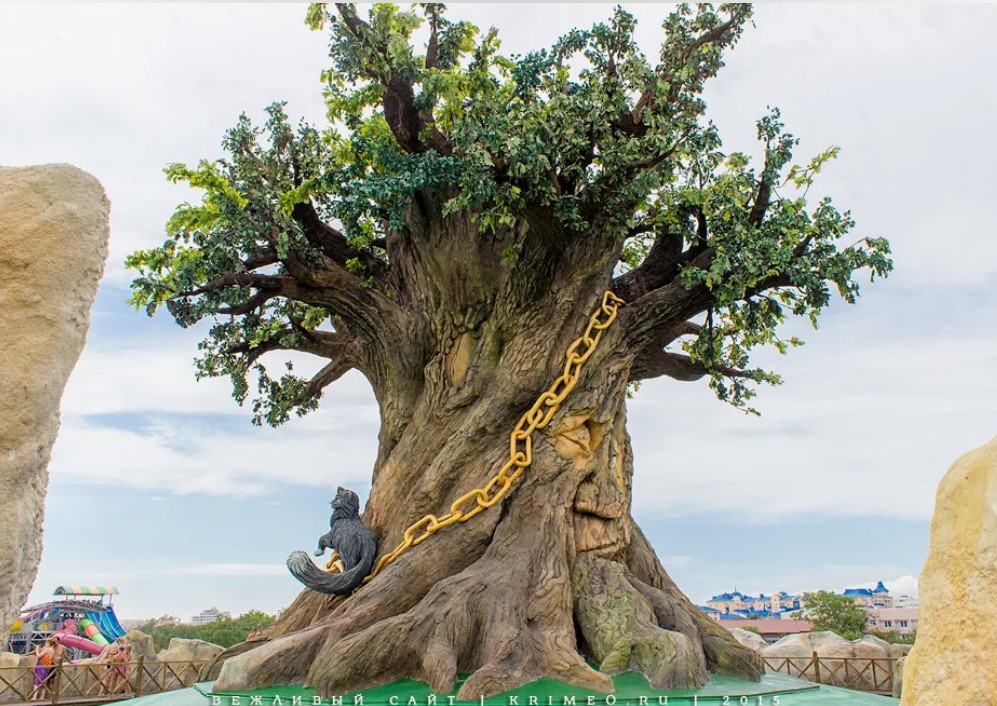
The image of the oak in Pushkin's works is multifaceted. It embodies power and fortitude ("Dubrovsky"), a connection with ancestors ("Ruslan and Lyudmila"), eternity and immutability ("A Green Oak by the Seashore").
The oak is a tree of significance, majesty, and worthy of respect. Its image permeates myths, fairy tales, and literary works, reminding us of humanity's connection to nature, of eternal values, and of the power of life.
Botanical description of oak + photo
Content
- 1 Botanical description of oak + photo
- 2 Oak species common in Russia
- 2.1 English oak or common oak (Quercus robur)
- 2.2 Dentate oak (Quercus dentata)
- 2.3 Chestnut-leaved oak (Quercus castaneifolia)
- 2.4 Large-anthered oak (Quercus macranthera)
- 2.5 Mongolian oak (Quercus mongolica)
- 2.6 Downy oak (Quercus pubescens)
- 2.7 Sessile oak (Quercus petraea)
- 2.8 Red oak (Quercus rubra)
- 2.9 Red oak "Aurea"
- 2.10 Red oak "Haaren"
- 3 Types of Mediterranean oaks
- 4 Oak species from America
- 5 Decorative oak varieties
- 5.1 Oak Monument (Quercus Monument)
- 5.2 English oak Asplenifolia
- 5.3 English oak Atropurpurea
- 5.4 English oak Variegata
- 5.5 Pedunculate oak Compacta
- 5.6 English oak Concord
- 5.7 English oak Nigra
- 5.8 English oak Pyramidalis
- 5.9 English oak Fastigiata
- 5.10 English oak Fastigiata Koster
- 5.11 English oak Fastigiata purpurea
- 5.12 English oak Fastigiata Hoopsi
Oak (Quercus) Oak is a genus of trees belonging to the Beech family. It contains over 600 species, but about 20 are most common. A distinctive feature of oak is its unique fruit—acorns, which are nuts. However, the shape, size, and color of acorns vary greatly depending on the species.
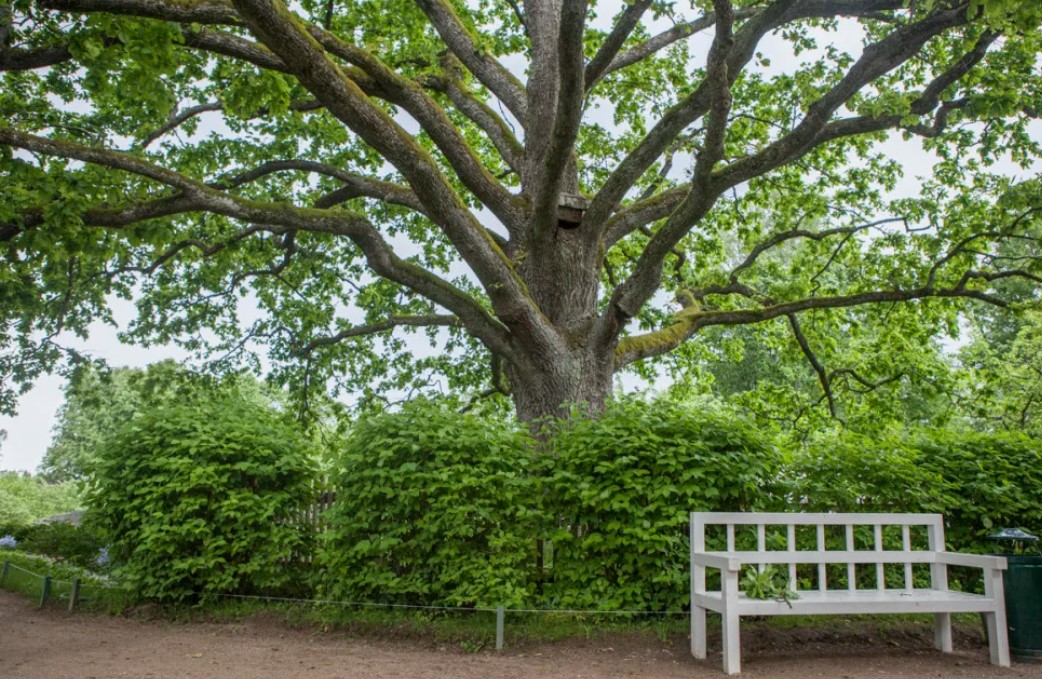
Most oaks are large, vigorous trees. Almost all species shed their leaves annually, but some retain their leaves for several years. Leaves can be either entire or lobed.
The flowers are monoecious, meaning male and female flowers are borne on the same tree. Female flowers are borne in clusters or catkins, while male flowers are borne in long, drooping or erect catkins.
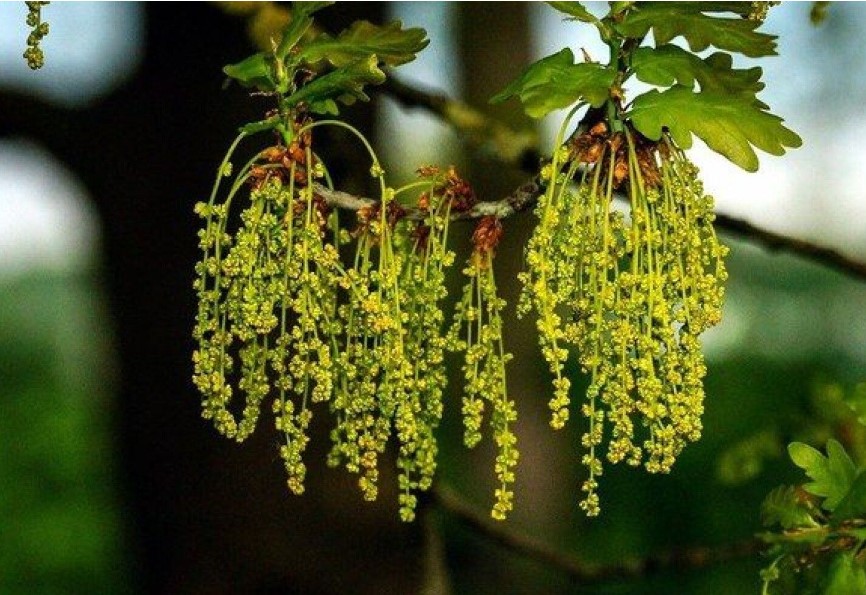
It is worth noting that some oak species are evergreen, meaning their leathery leaves remain on the tree for several years.
When the fruit ripens, a ridge with scales grows at the base of the female flowers, forming a characteristic “saucer” - a cup that envelops the acorn from below.
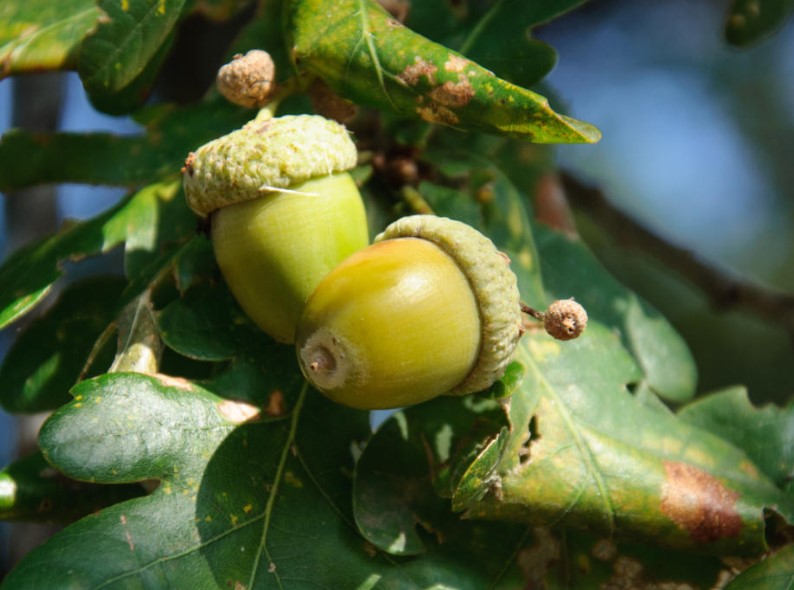
The ovary of the flower is three-locular, but upon ripening only one lobe expands, resulting in the formation of a fruit with one seed.
Oak species common in Russia
English oak or common oak (Quercus robur)
| Other names | Description Spreading |
Height Life expectancy Frost resistance |
Economic value Application |
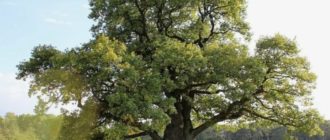
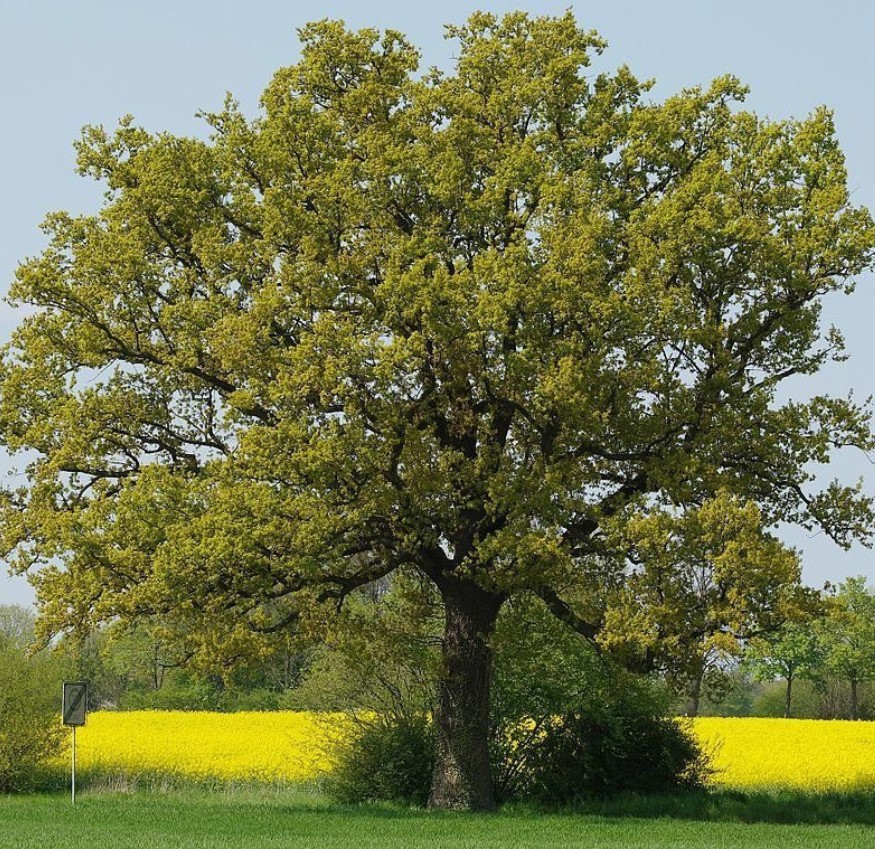
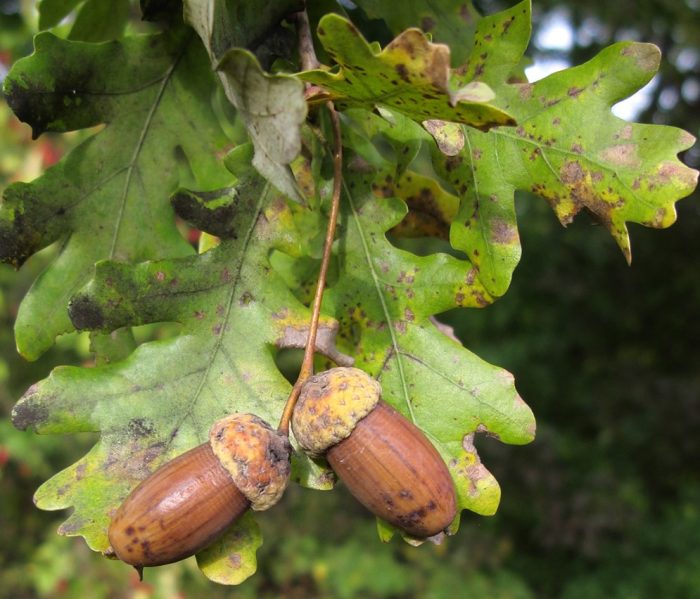
| Summer oak, common oak, English oak | Large size, branching: The English oak can reach a height of 40 meters, with a trunk diameter of 1 meter. These giants often grace landscapes, towering over other trees like wise elders. Powerful root system: The oak's taproot goes deep into the ground, as if clinging to life, providing the tree with stability and access to life-giving moisture. Bark: In young trees, it is smooth and light gray, like the delicate skin of a youth. With age, oak bark turns grayish-brown, becomes cracked like the wrinkles of a wise old man, and can reach 10 cm in thickness. Leaves: Simple, alternate, oblong-lobed, with short petioles. Bright green in summer, they adorn the tree's crown like emerald banners. In autumn, the leaves of the English oak turn golden and crimson, creating a veritable fiery show. Fruit: The acorns, brownish-yellow with stripes, like miniature amphorae, are immersed in a cup-shaped cup. They ripen in late September to early October, becoming a true decoration of the tree. Fruiting: The pedunculate oak begins to bear fruit at the age of 40-60 years, and abundant harvests are repeated after 4-8 years. Flowers: Unisexual, divided into male (yellow-green, drooping catkins) and female (reddish, on short peduncles). Flowering occurs in late April to early May, concurrent with leaf emergence. Spreading: grows in Western Europe, the European part of Russia, North Africa and Western Asia. |
Height: 20-40 meters. Trunk diameter: up to 1 meter. Height growth ceases at 100-200 years. Thickness growth continues throughout life.
300-400 years (up to 2000 years) up to -40°C (zone 3) |
Construction
Furniture production Other industries |
The most famous subspecies are:
- Imeretian oak: grows in the Caucasus, is distinguished by narrower leaves and later flowering.
- Oak peduncle: found in Crimea, its distinctive feature is the long peduncles on which the acorns are held.
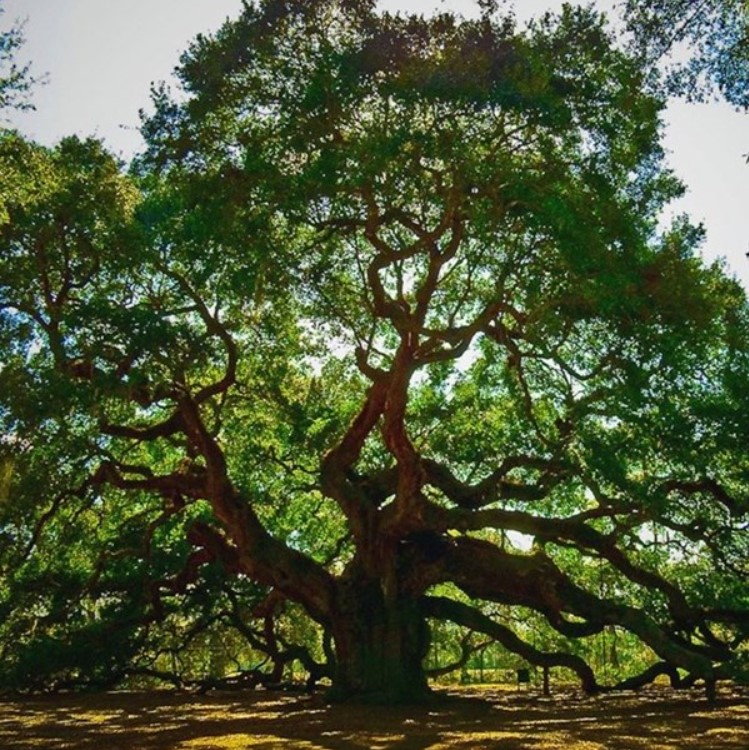
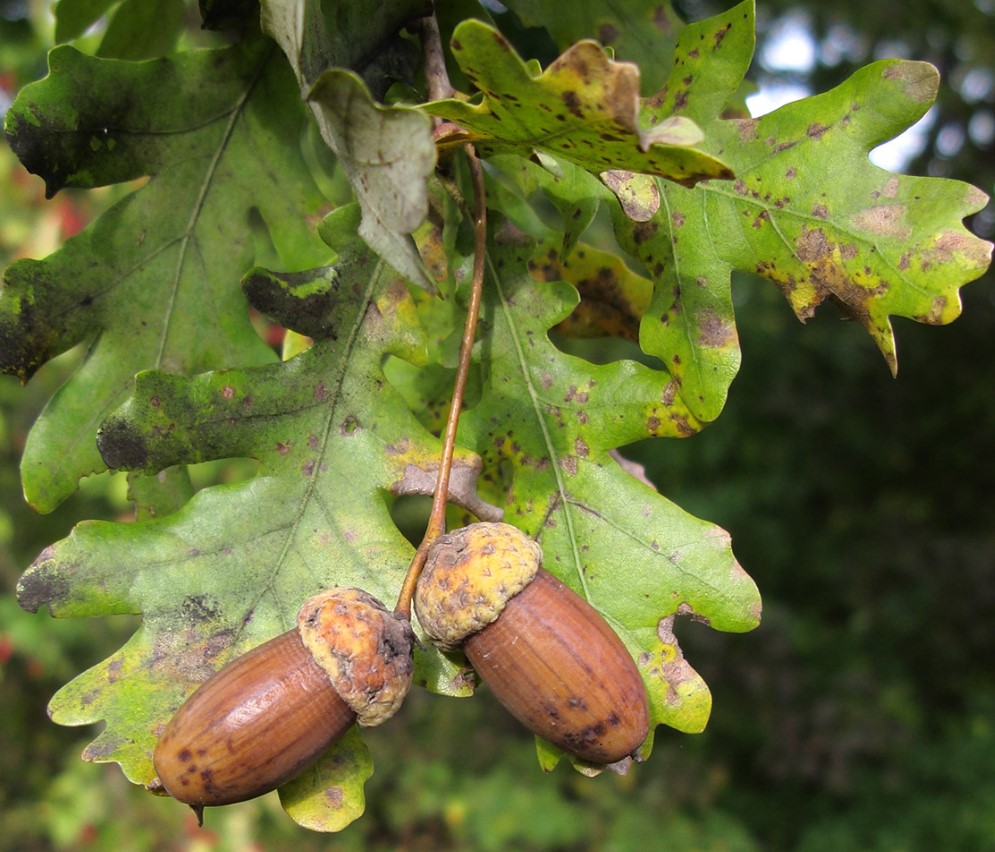
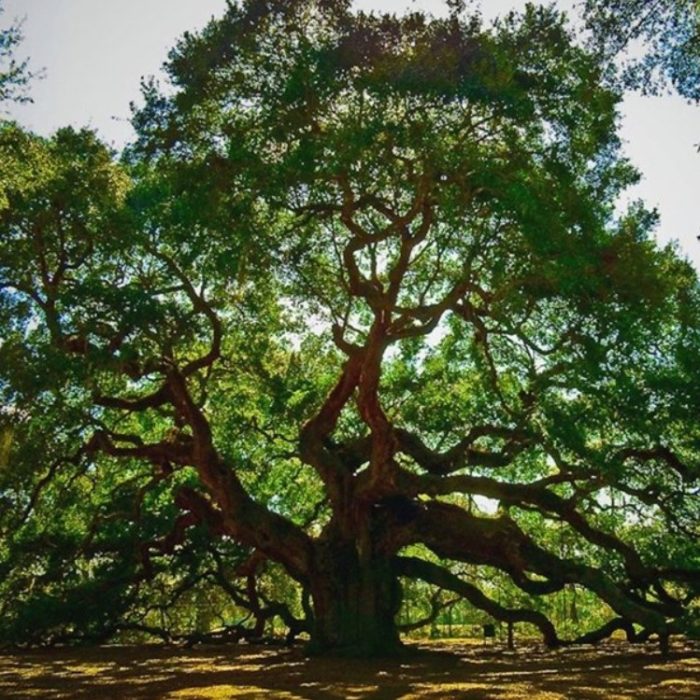
But the world of the common oak is not limited to subspecies. Scattered across the planet are legendary giants, their ages measured in centuries and their histories shrouded in legend. Here are just a few:
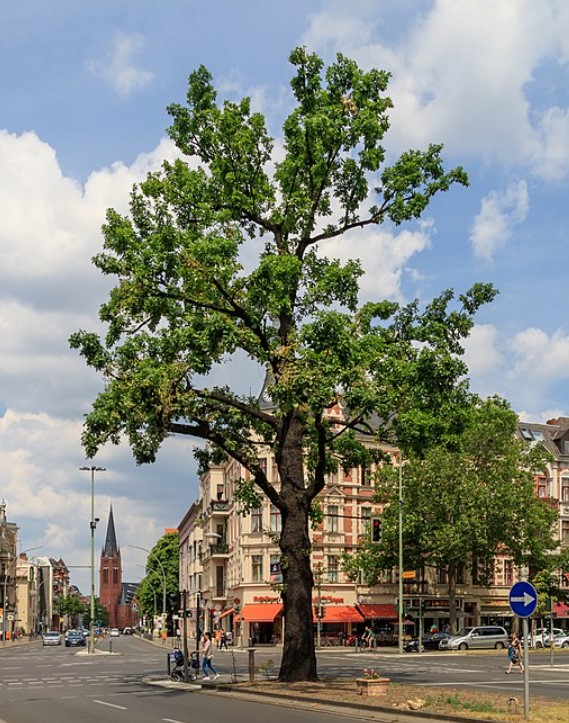
- Kaiser's Oak: a centuries-old giant from Germany, under whose crown Kaiser Wilhelm I himself rested.
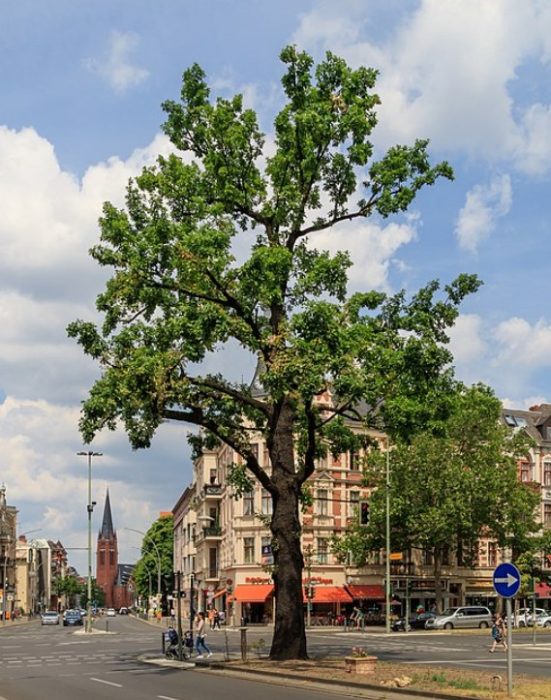
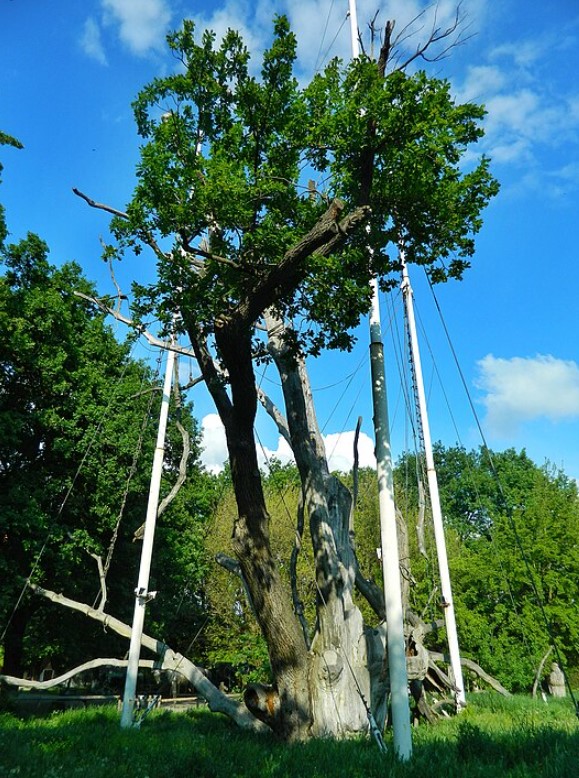
- Zaporizhian oak: a symbol of Ukrainian Cossack freedom, over 700 years old.
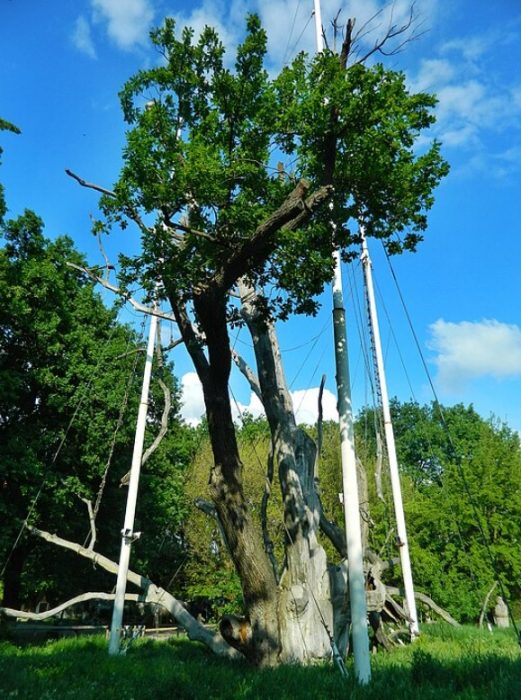
- Tsar Oak: the patriarch of Belovezhskaya Pushcha, whose girth is 6 meters and whose age is more than 800 years.
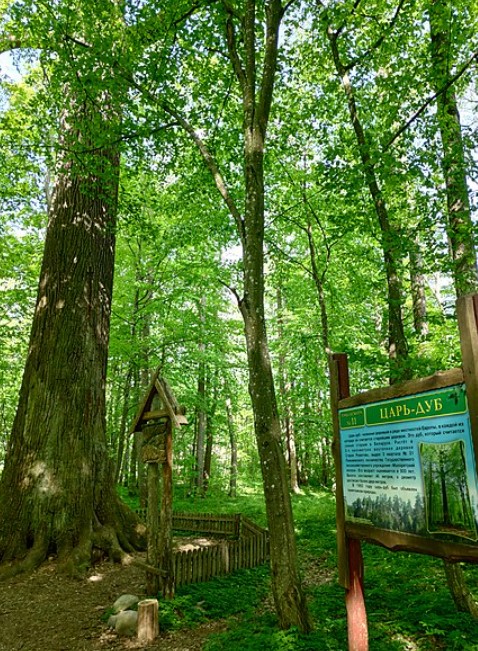
- Stelmuzhsky oak: revered by local residents as a sacred tree, the age of which has exceeded 500 years.
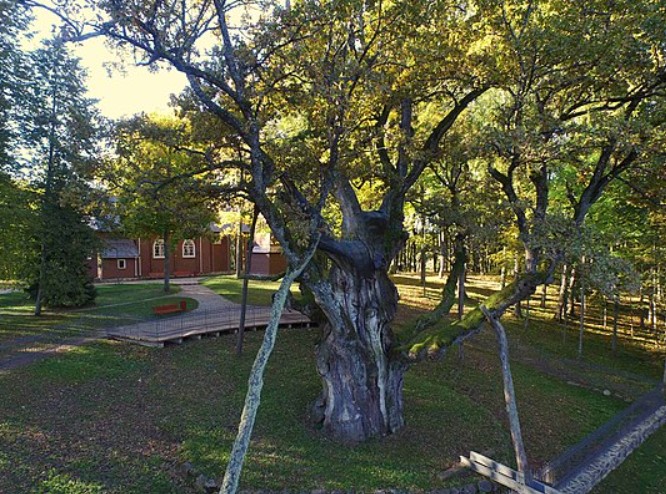
- Oak "Bogatyr Taurida": a Crimean giant, under which, according to legend, Alexander Pushkin himself rested.
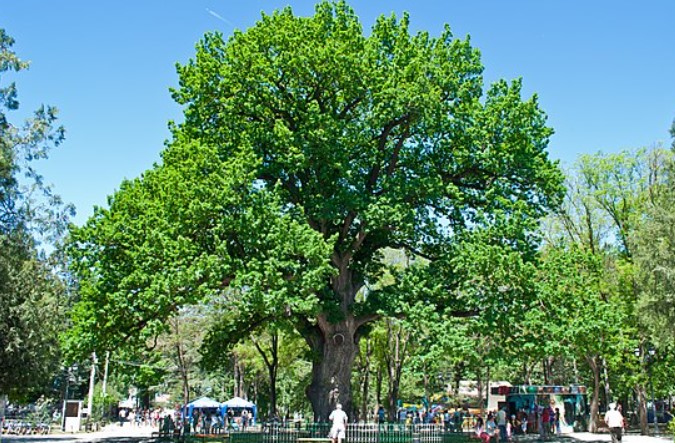
- Chapel Oak: a unique tree from France with a chapel built inside its trunk.
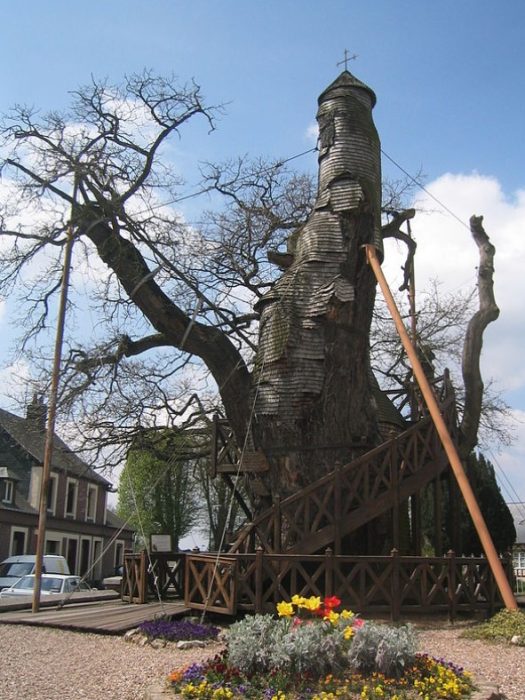
- Tamme-Lauri oak: an Estonian long-liver, estimated to be between 400 and 700 years old.
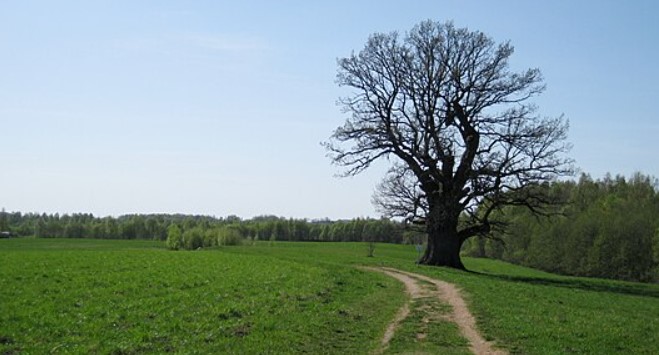
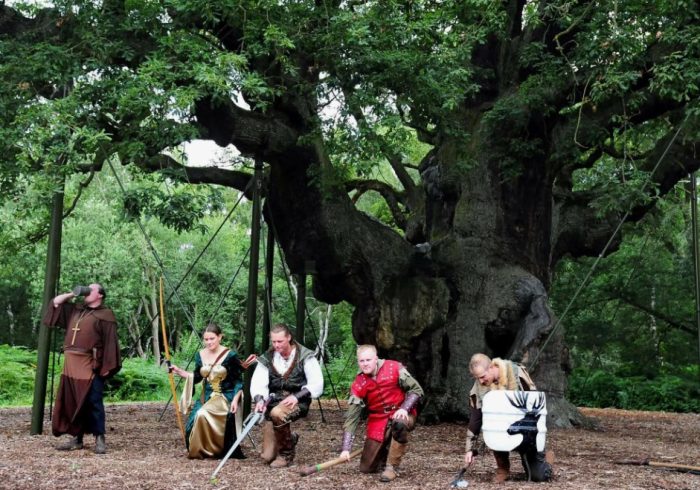
- Oak Major: a majestic tree from Sherwood Forest, under which Robin Hood himself may have rested.
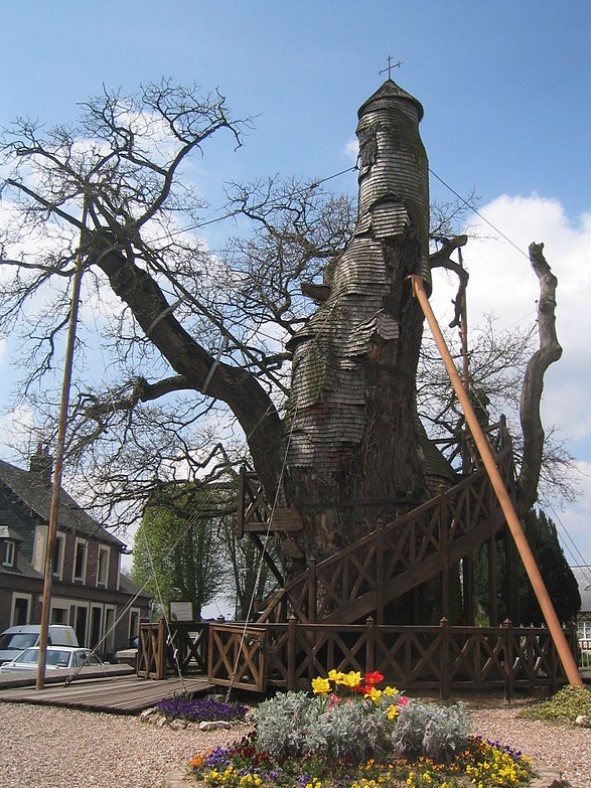
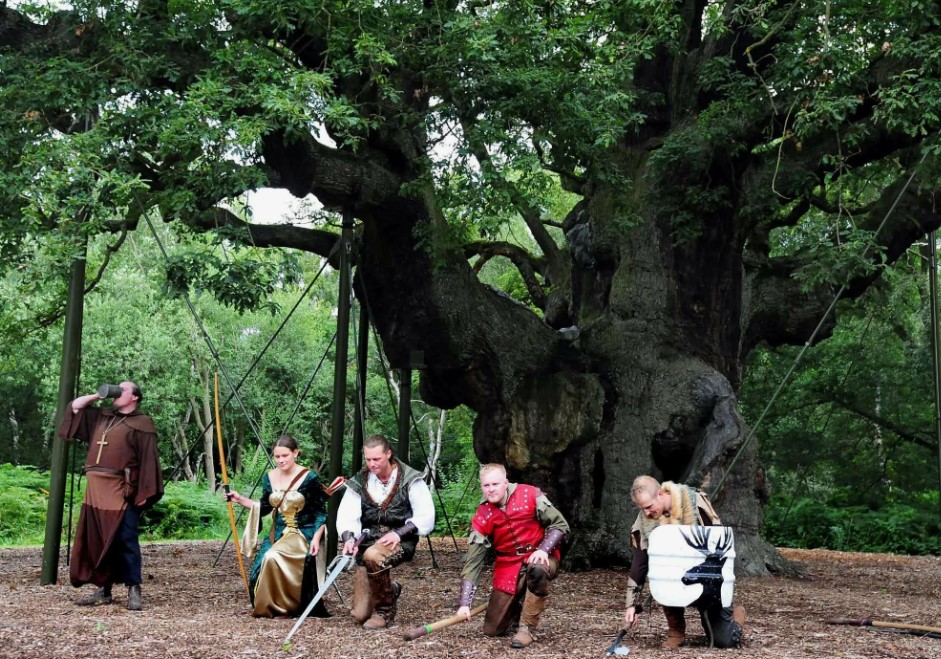
Dentate oak (Quercus dentata)
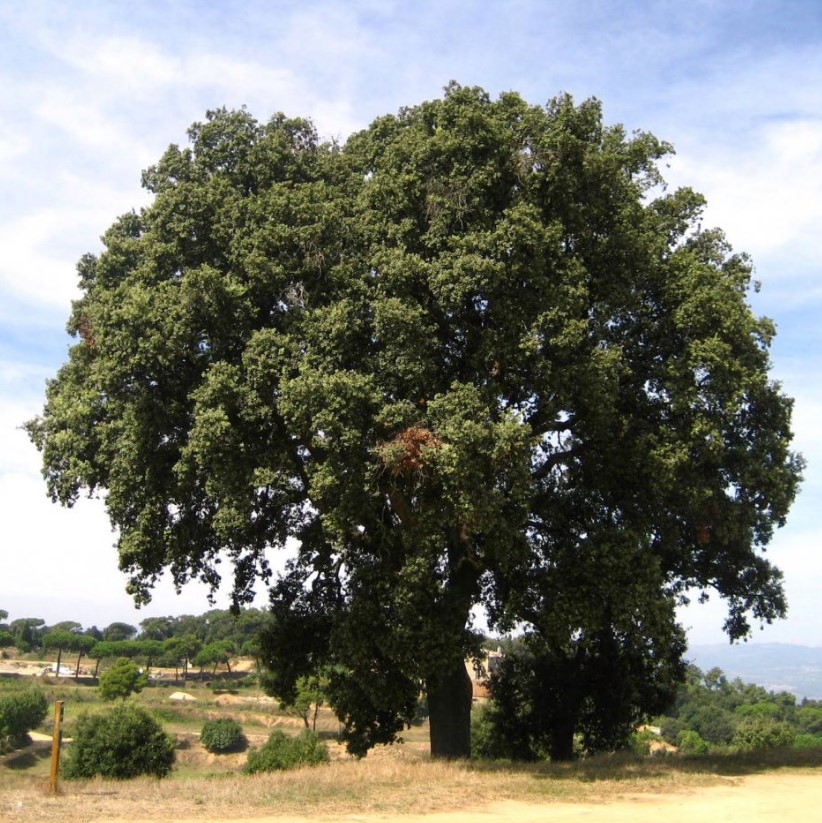
| Other names | Description Spreading |
Height Life expectancy Frost resistance |
Economic value Application |
| Japanese Imperial Oak | Appearance: Thick, fissured bark. Tent-shaped crown. Leaves: The leaves are similar in shape to those of the English oak, but significantly larger (up to 50 cm long and 30 cm wide). They are dark green above and covered with reddish, stellate hairs below. In autumn, they turn a bright orange-red. Flowering and fruiting: Flowering occurs in May. Acorns ripen in September-October. Large acorns, arranged in clusters of 2-3. A hemispherical cupule, covered with narrow lanceolate scales, encircles the acorn almost halfway. Spreading: Japan (Hokkaido, Honshu, Kyushu, Shikoku), Korea, China, Russia (Primorsky Krai, Kunashir Island (Kuril Islands)). Peculiarities: A powerful, durable tree. A valuable source of timber. An ornamental tree. |
20-25 meters. Trunk diameter: up to 1 meter.
up to 500 years up to -28°C (zone 5) |
Decorative. |
It is often crossed with Mongolian oak, producing an interesting hybrid, Quercus x mongolicodentata, which is both decorative and frost-resistant.
The species is listed in the Red Data Books of Russia, Primorsky Krai and Sakhalin Oblast.
Chestnut-leaved oak (Quercus castaneifolia)
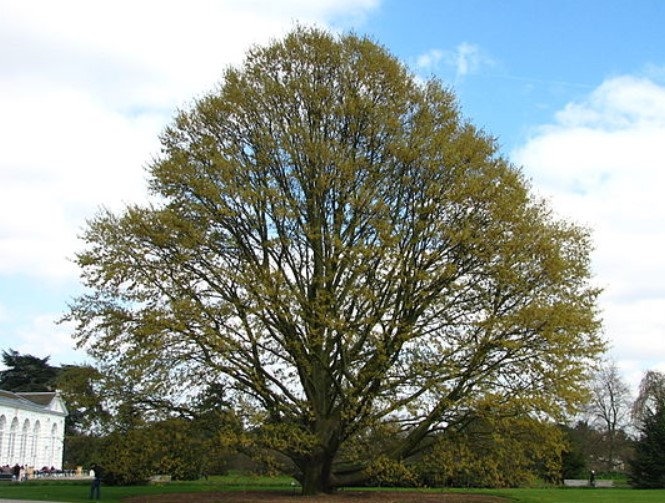
| Other names | Description Spreading |
Height Life expectancy Frost resistance |
Economic significance Application |
| Doesn't have | Appearance: Height up to 40 m, trunk diameter up to 2 m. Spreading crown providing shade. Bark: On young branches it is grey and smooth. On the trunk it is dark, with deep cracks. Leaves: The name "chestnut-leaved" refers to its resemblance to the leaves of a chestnut tree. The leaves are oblong-elliptical or broadly lanceolate, 10-18 cm long, and have large, sharp, triangular teeth along the edges. The upper part is pubescent, green, and glossy. The underparts are grayish and pubescent. They turn brown in the fall, with some remaining on the tree. Flowering and fruiting: April-May. Lush male catkins (7-10 cm). Pistillate fruits and flowers are solitary or in 2-3 clusters, sessile or on a stalk (1-3(5) cm). Fruiting is abundant: 1,500 acorns from a 100-year-old tree. Spreading: Armenia, Caucasus, Northern Iran. Listed in the Russian Federation Red Book. Cultivated in the Hyrcanian Nature Reserve. Grows in deciduous forests on mountain ridges. Peculiarities: A light-loving mesoxerophyte. Found in parks in Sochi, Vladikavkaz, Pyatigorsk, Ukraine, and Western Europe. |
25-45 m
Up to 350 years. Zone 3: from -34°C to -40°C |
Furniture production. Preparation of coffee substitute. Fattening pigs. |
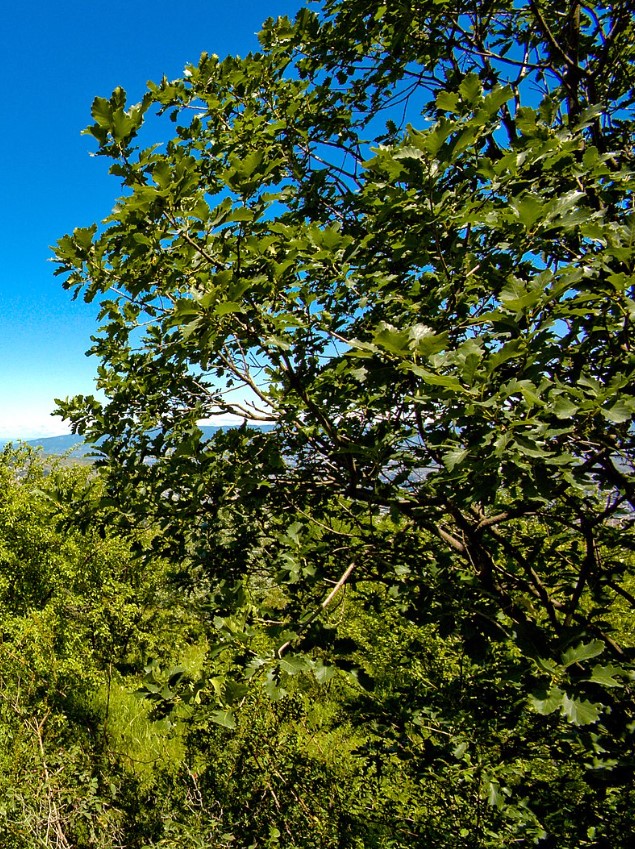
Large-anthered oak (Quercus macranthera)
| Other names | Description Spreading |
Height Life expectancy Frost resistance |
Economic value Application |
| Oriental oak, Caucasian highland oak | Appearance: Reaches 25 meters in height. The crown is spreading and lush. The bark of young shoots is velvety, later becoming smooth and thick. The buds are ovoid, with a few scales. Leaves: Alternate, obovate. 6-18 cm long, 5-10 cm wide. 7-11 rounded lobes along the margin. Dark green and glossy above, grayish-pubescent below. In autumn, they turn yellow or yellow-brown. Bloom: May. Male catkins, long and numerous, hang from the branches. Does not bloom in Moscow. Fruit: Acorns are 2 cm long, half-covered by the calyx. They are joined together in groups of 2-4. Spreading: Slopes of the Caucasus Mountains, Armenia, Northern Iran. Status: A rare and valuable species. Listed in the Red Data Book of the Krasnodar Territory. Growing: It thrives in warmth, requires a sheltered location, and is drought-resistant. It can be damaged by late frosts, so it's best planted in warmer climates. |
Most often 12-16 m, but grows up to 20 m
400 years or more Zone 6: from -18°C to -23°C |
Decorative. |
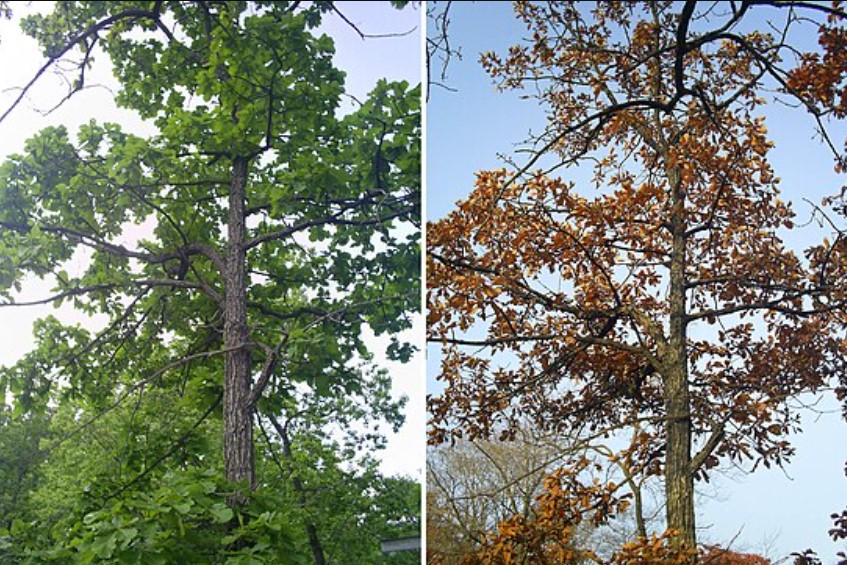
Mongolian oak (Quercus mongolica)
| Other names | Description Spreading |
Height Life expectancy Frost resistance |
Economic value Application |
| No | Origin: Mongolia. Spreading: China, Korea, Japan, Russian Far East (Transbaikalia, Primorye, Khabarovsk Krai, Amur Oblast, southern Sakhalin and the southern Kuril Islands). Appearance: Young shoots are reddish-brown. Leaves: short-petioled, oblong, green in summer, brown in autumn. Buds are ovoid and pointed. Bloom: Flowers are dioecious. Male flowers are collected in long catkins. Fruit: Ovoid acorns (1.5 cm x 1.3 cm). One or two at the ends of branches. Hemispherical cupule, slightly pubescent. Peculiarities: A tree resistant to harsh conditions. Long-lived (up to 300 years). A valuable source of timber. Interesting fact: One of the most common oak species in Asia. It possesses unique fire resistance. It is often used to restore forests after fires. Two or three or more trunks can grow from a single stump. |
30 m, slow growing.
About 350 years. Up to -50 °C. |
It is used in underwater structures, shipbuilding, wagon production, and for the production of veneer, plywood, parquet, furniture, barrels, and building materials. The leaves are also valuable as food for some animals. |
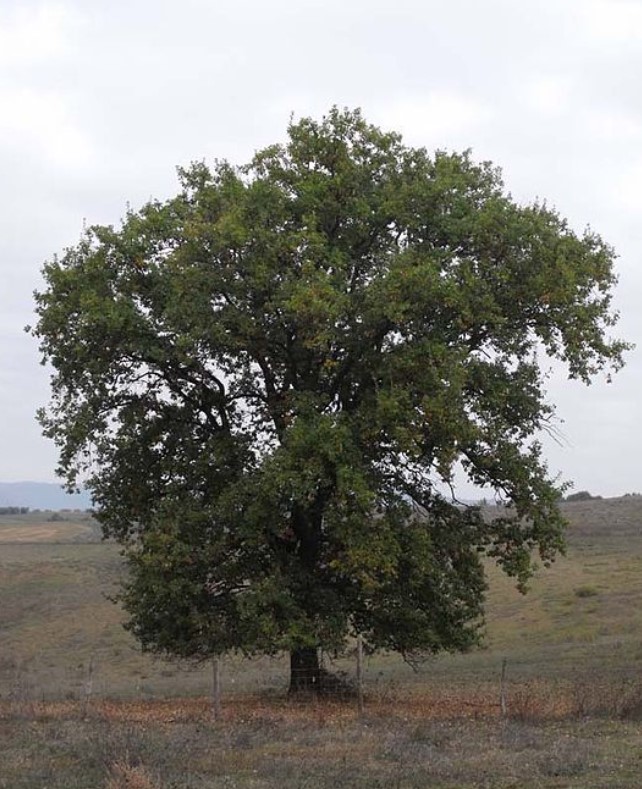
Downy oak (Quercus pubescens)
| Other names | Description Spreading |
Height Life expectancy Frost resistance |
Economic value Application |
| No | Appearance: A non-linear trunk with wavy bends, spreading branches forming a dense crown. Leaves: Varying in shape and size (5-10 cm). 4-8 blunt or pointed lobes. Dark green above, gray-green and pubescent below. Fruit: Elliptical acorns (1-1.5 cm) with a pubescent cupule. Spreading: Southern Crimea, Northern Transcaucasia, Southern Europe, Asia Minor. Peculiarities: Xerophyte (drought-resistant). Grows on limestone rocks. Forms sparse forests. Interesting fact: One of the oldest oak species in Europe. |
Up to 15 m.
1000 years. 6 hon: from -23°C to -29°C |
Serves as a source of high-calorie fuel. Seedlings are used as rootstocks to improve the resistance of species more sensitive to frost and drought. |
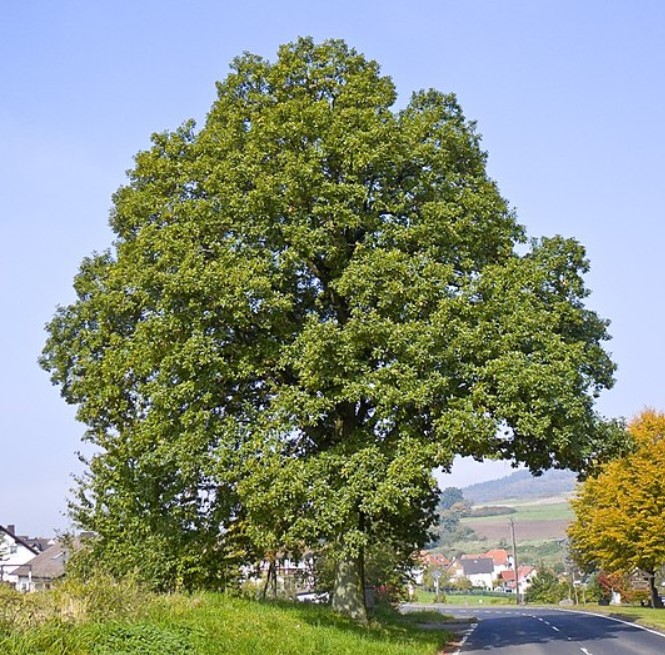
Sessile oak (Quercus petraea)
| Other names | Description Spreading |
Size Life expectancy Frost resistance |
Economic value Application |
| Welsh oak | Appearance: A wide, tall crown tightly covers the trunk. The straight, sturdy trunk rises to the sky. Glossy olive-gray shoots bear sharp, ovoid buds. Leaves: Rich dark green, glossy above, light beneath. In autumn, golden-yellow and brown tones appear. Inversely ovate or oblong-oval, with 5-7 lobes along the edges. Length 8-12 cm, width 5-7 cm. Petiole up to 1.6 cm long. They decompose quickly, reducing soil acidity. Fruit: Acorns on a short stalk, grouped in several pieces, partly in a cup. Root system: Powerful, penetrating deep into the ground. Taproot for the first 30-50 years, then lateral roots. Spreading: Europe, Caucasus, Western Asia. Preferences: Humid air, moderate winters, moderately dry summers. Plains, mountains (up to 700 m, in the Alps up to 1500 m). Interesting factsOld oak trees are often struck by lightning. Growing: drought- and heat-resistant, it also grows well in urban areas. It can be susceptible to late frosts. It grows well after pruning. |
Up to 40 m in height and up to 25 m in width. Annual growth is 35 cm and 25 cm, respectively. It stops growing at 100-120 years.
Up to 500-800 years. Zone 5: from -23°C to -29°C |
It has medicinal properties and is used in folk medicine. It is also used as a coffee substitute.
Used for the production of building materials and wine barrels. The bark contains up to 16% tannins, which are used in tanning production. |
There are four subspecies, the most popular of which is the Georgian oak. It was introduced into cultivation in the 18th century by the Nikitsky Botanical Garden and is often found in parks across the Transcaucasus.
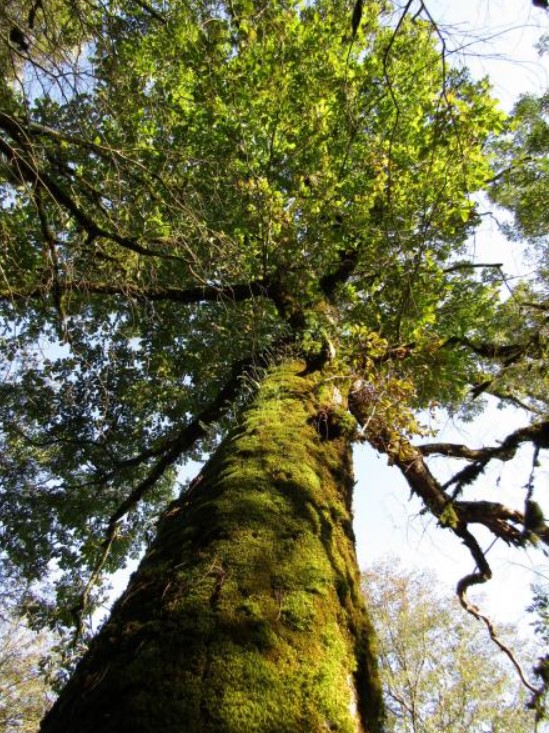
Although considered a mountain tree, the sessile oak impresses with its diverse ornamental qualities, leading to the development of several small cultivars. Each has its own unique tree and leaf shape, as well as a distinctive hue. Let's take a look at some of them:
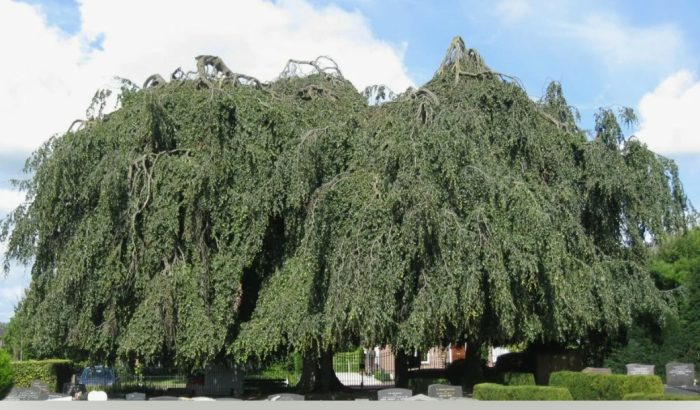
- Pendula. Commonly known as the "weeping willow," it is a tree with drooping branches reminiscent of a willow.
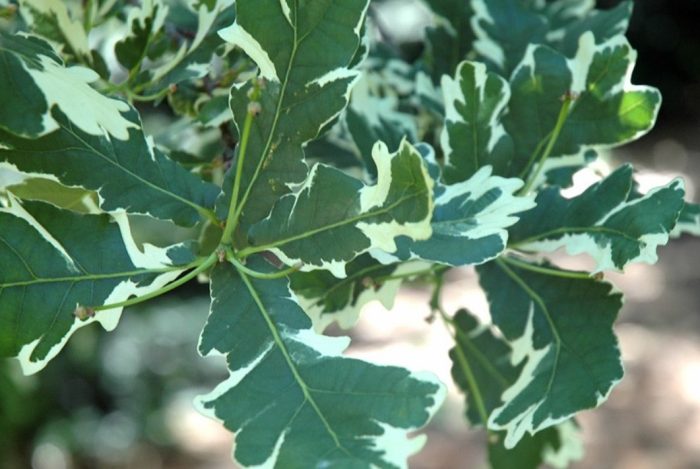
- Variegate. With patterns of white spots on dark leaves.
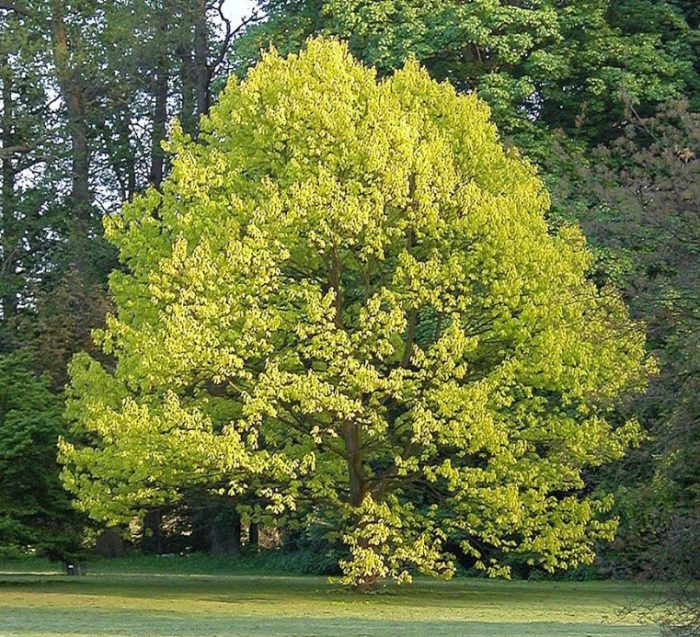
- Aurea. Distinguished by its bright golden color, fading to dark green.
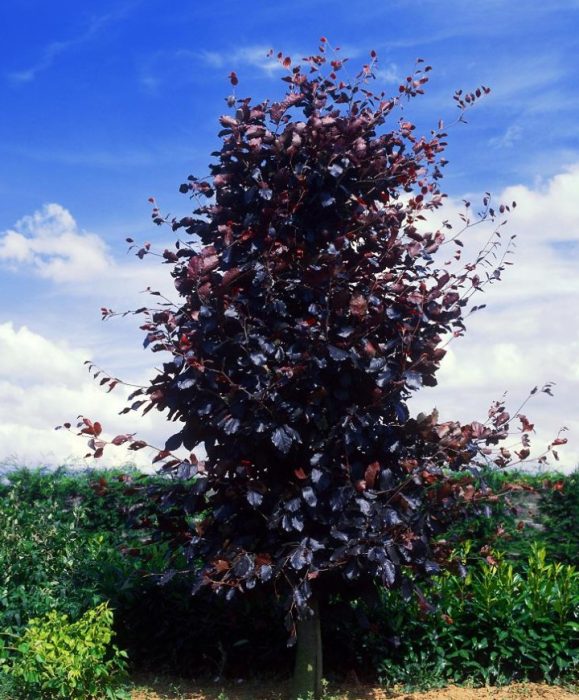
- Purpurea. Similar to Aurea, but young leaves have a red tint that later turns green.
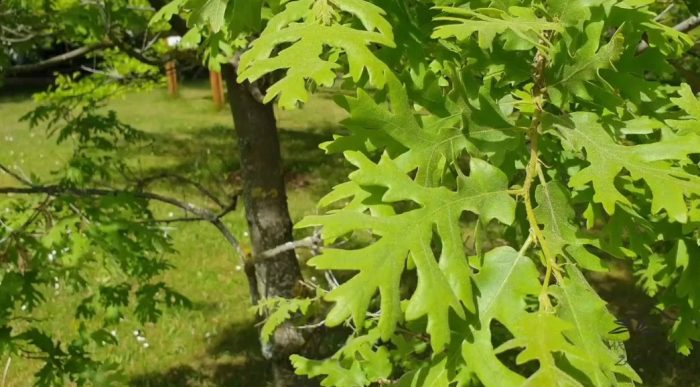
- Laciniata. It has beautiful, serrated leaves with deep, narrow lobes.
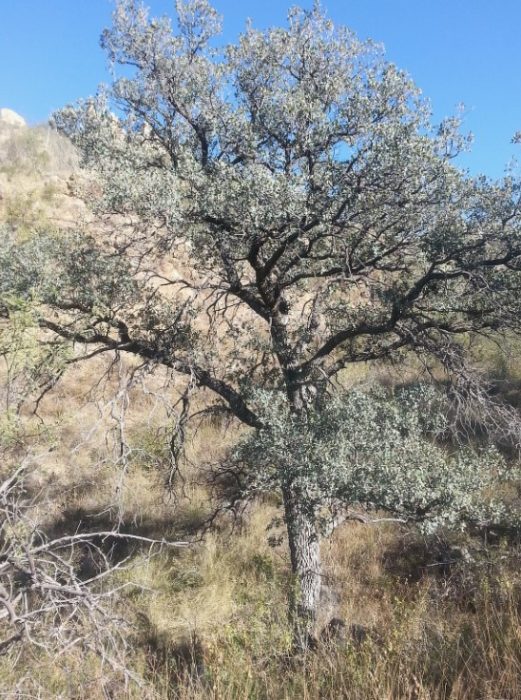
- Oblongifolia. The leaves are oblong with three lobes on the blade.
- Mespilifolia. Characterized by its shape and leaves resembling medlar.
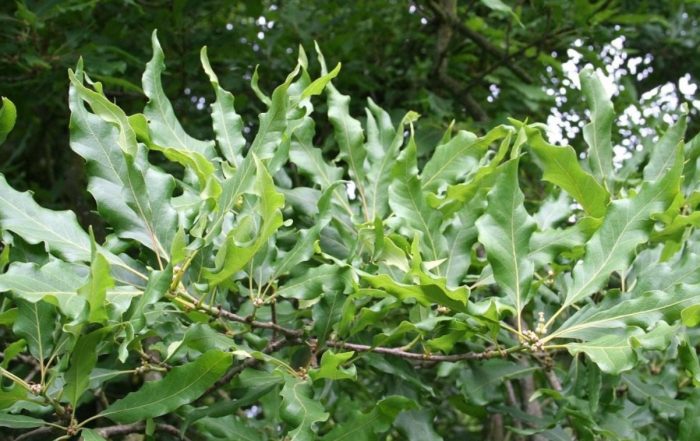
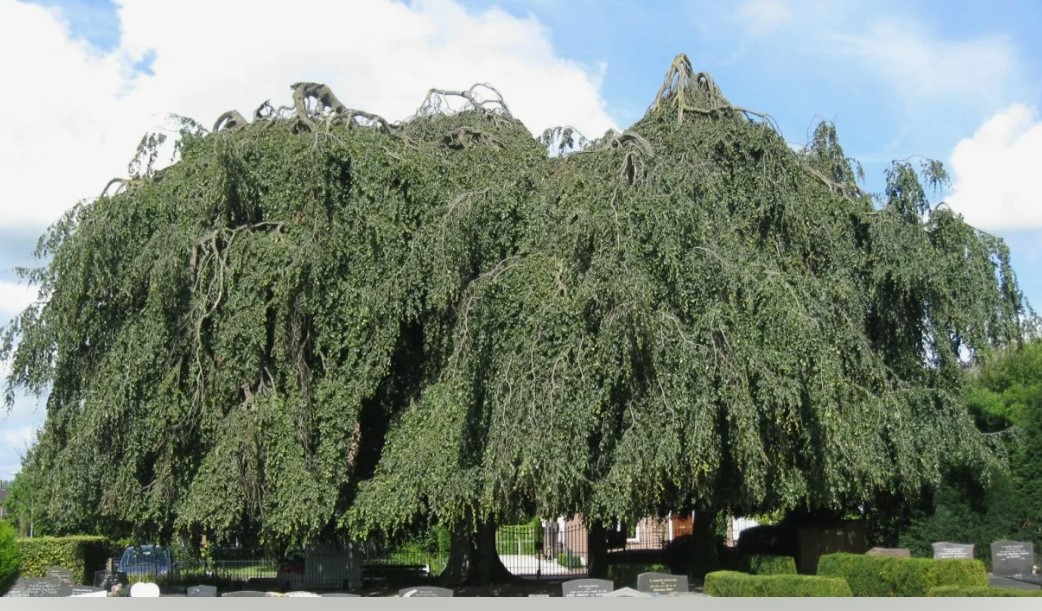
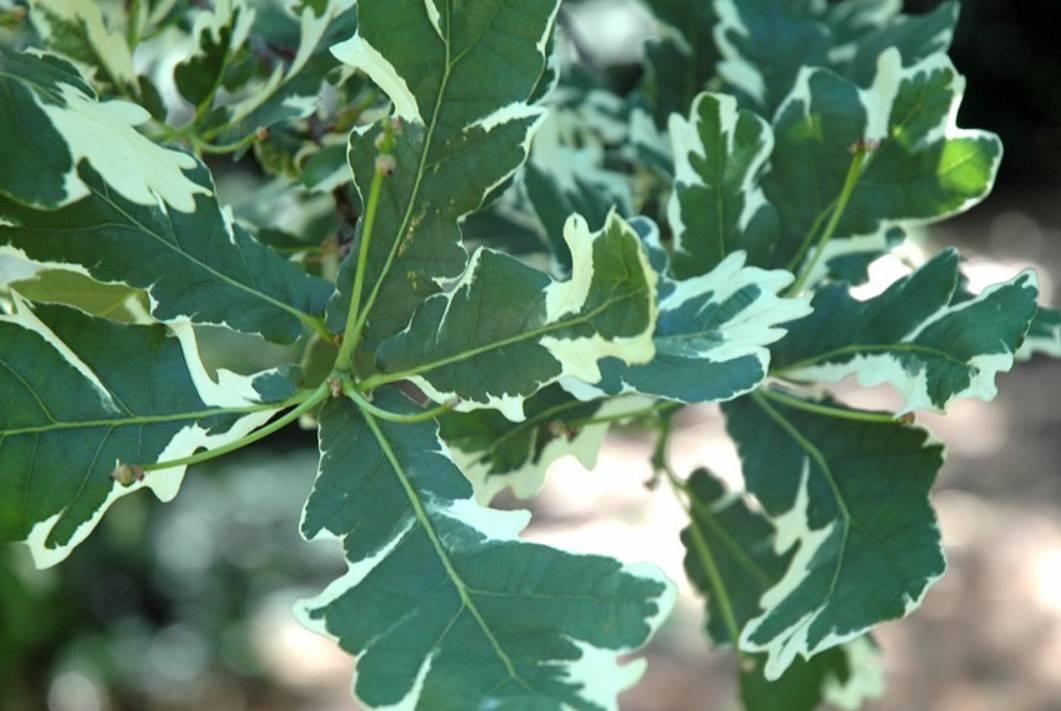
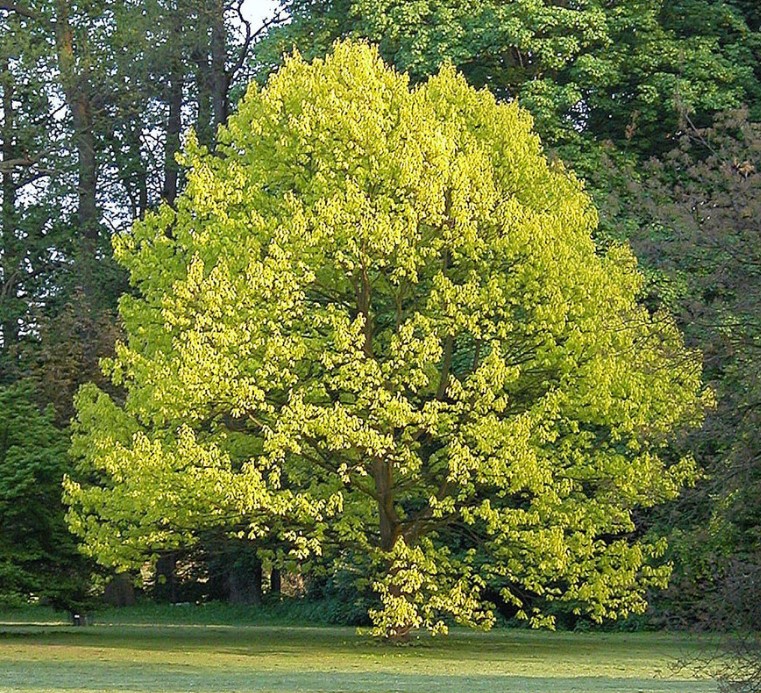
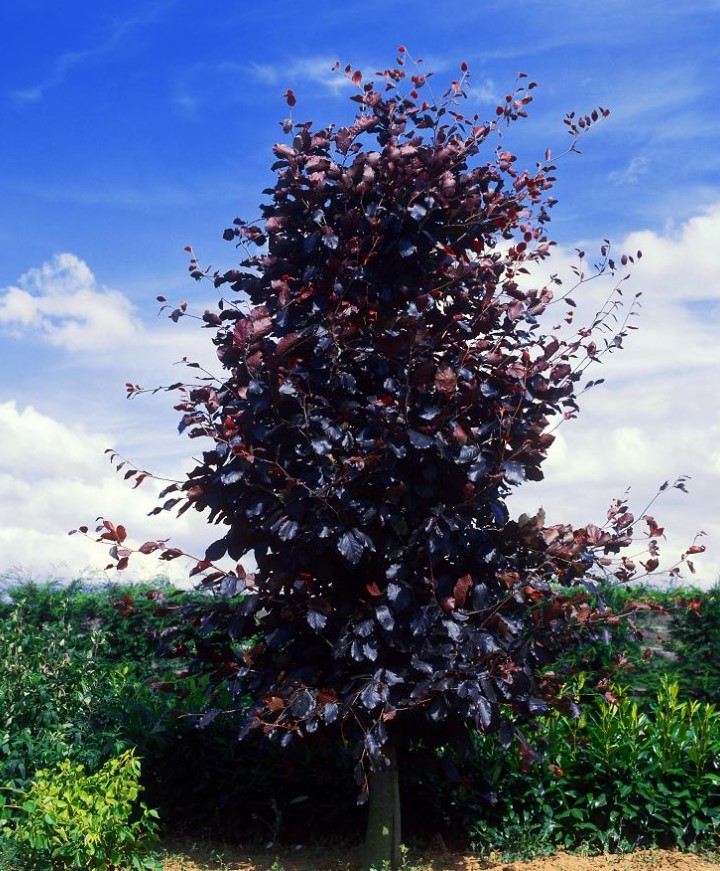
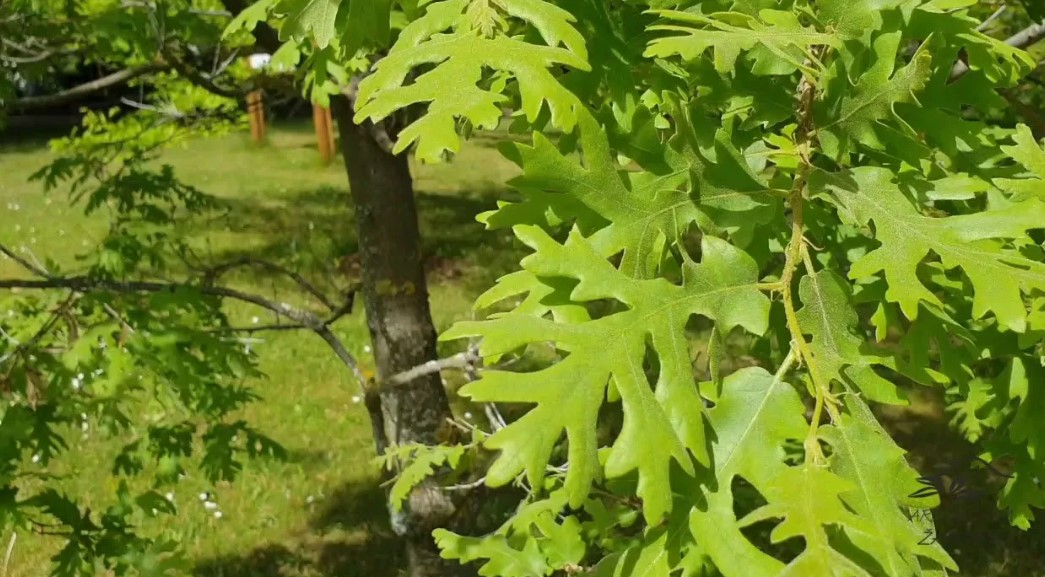
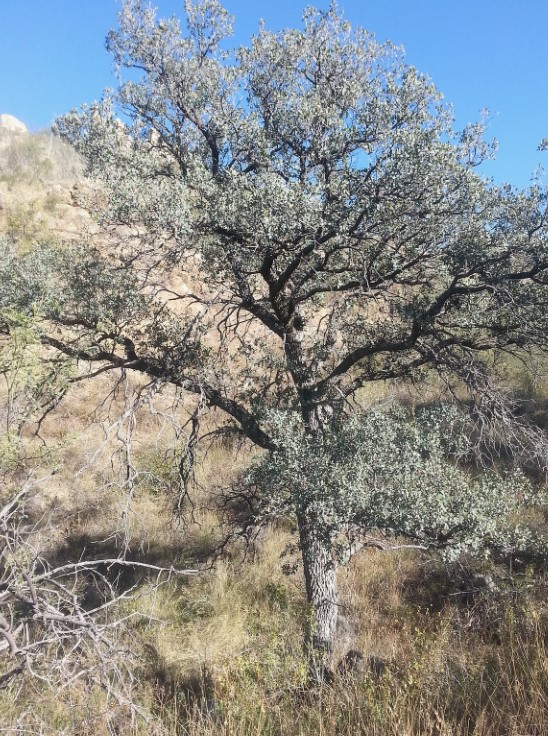
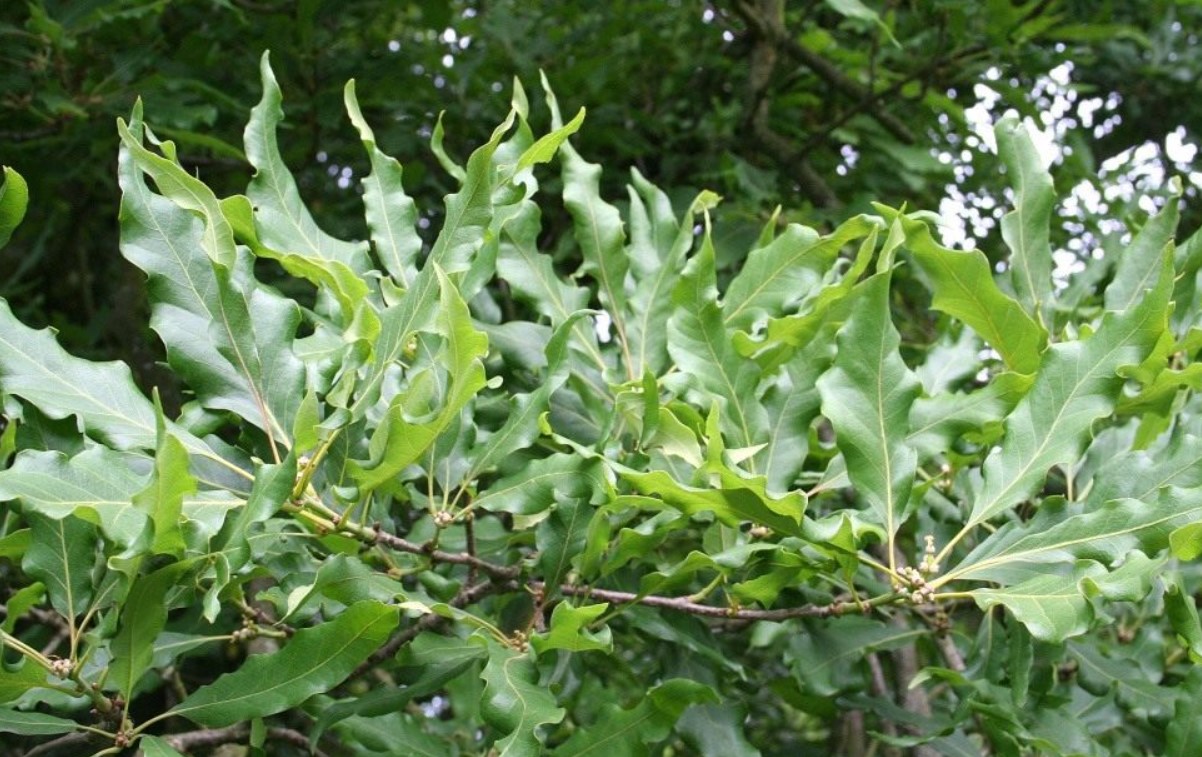
The varieties presented above are decorative and small, which makes them an ideal choice for planting in small areas.
Red oak (Quercus rubra)
| Other names | Description Spreading |
Height Life expectancy Frost resistance |
Economic value Application |
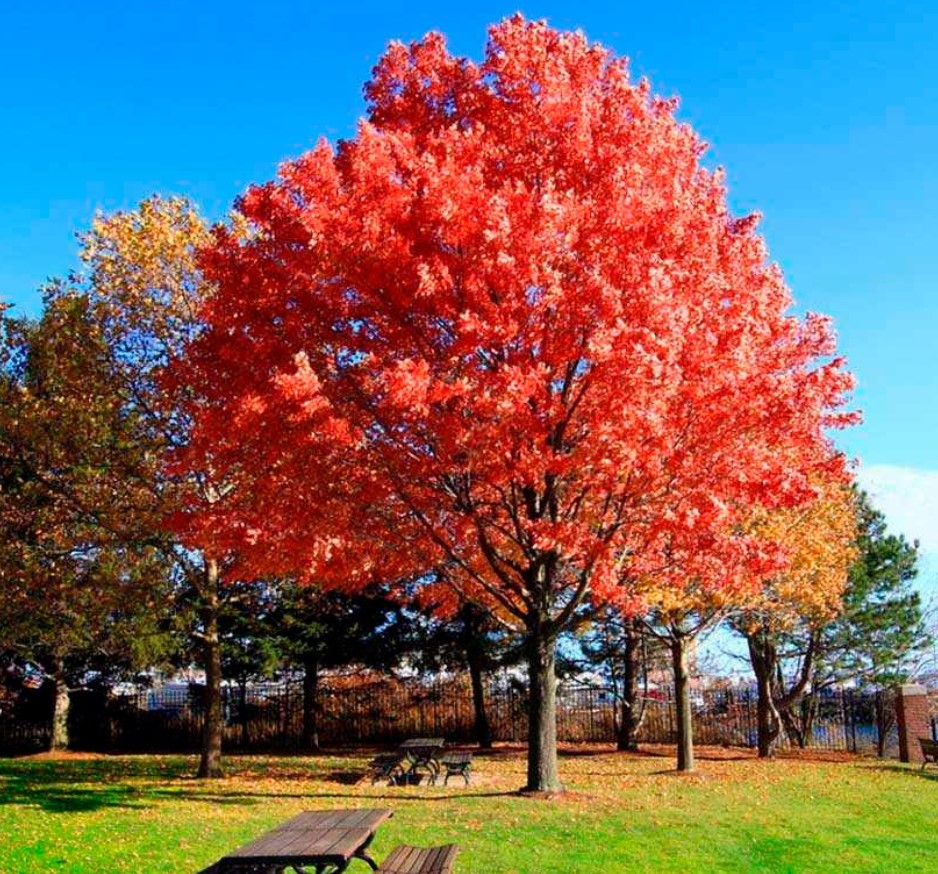
| Norway oak, Canadian oak, Northern oak | Appearance: A slender tree with a dense, tent-shaped crown. The trunk is covered with thin, smooth, gray bark, which cracks in older trees. It has a well-developed root system that extends deep into the ground. Young shoots are reddish-tomentose, while one-year-old shoots are reddish-brown and smooth. Leaves: Deeply notched, thin, glossy, up to 15–25 cm long. Four to five pointed lobes on each side. Reddish when emerging, dark green in summer, lighter beneath. In autumn, before falling, the leaves turn scarlet-red on young trees and brownish-brown on older trees. Flowering and fruiting: It blooms at the same time as the leaves unfold. Acorns: Spherical, up to 2 cm. Reddish-brown. Seemingly truncated at the bottom. Ripens in the fall of the second year. Spreading: Eastern North America. Most abundant in the forests of Canada. In culture: Cultivated in the USA. Cultivated in Europe since the 17th century (England, France, Germany). It grows in Belarus and Ukraine. It has been known in Russia since the early 19th century. It thrives in the Moscow and Oryol regions. It overwinters in Rostov-on-Don but does not flower. It is found in the North Caucasus and Yekaterinburg (but large branches freeze there). The oldest specimens grow in St. Petersburg (in the Botanical Garden and the park of the Forestry Academy). Interesting facts: One of the fastest-growing oaks in North America, its wood is highly prized for its strength and beauty. It is the state tree of Connecticut (USA). |
On average 25 m, sometimes up to 40 m.
200-500 years. Zone 4 from -29°C to -34°C |
Used in the creation of ships and boats.
It is used to make high-quality furniture, construction timber and parquet. Suitable for making barrels and other wooden containers. The branches, bark, leaves and acorns are processed and used for technical purposes, such as producing ink and permanent dyes for fabrics and leather. Used in medicine. |
Red oak "Aurea"
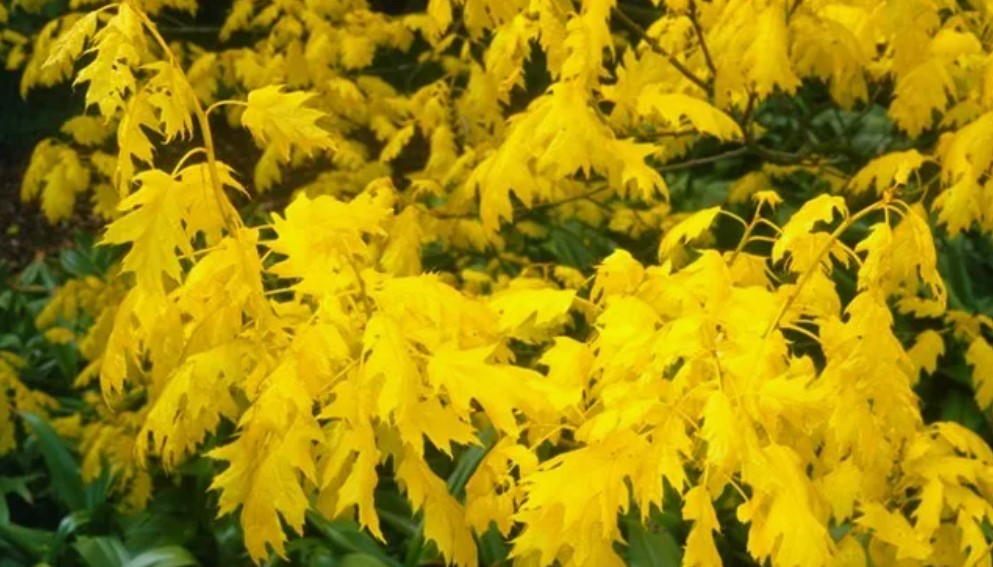
- A variety of oak with yellow spring leaf colouring.
- Grows up to 20 m tall, with bright yellow leaves in spring, green in summer and orange in autumn.
- Requires full sun and fertile, moist soil.
- High resistance to air pollution makes it a good choice for streets and parks.
Red oak "Haaren"
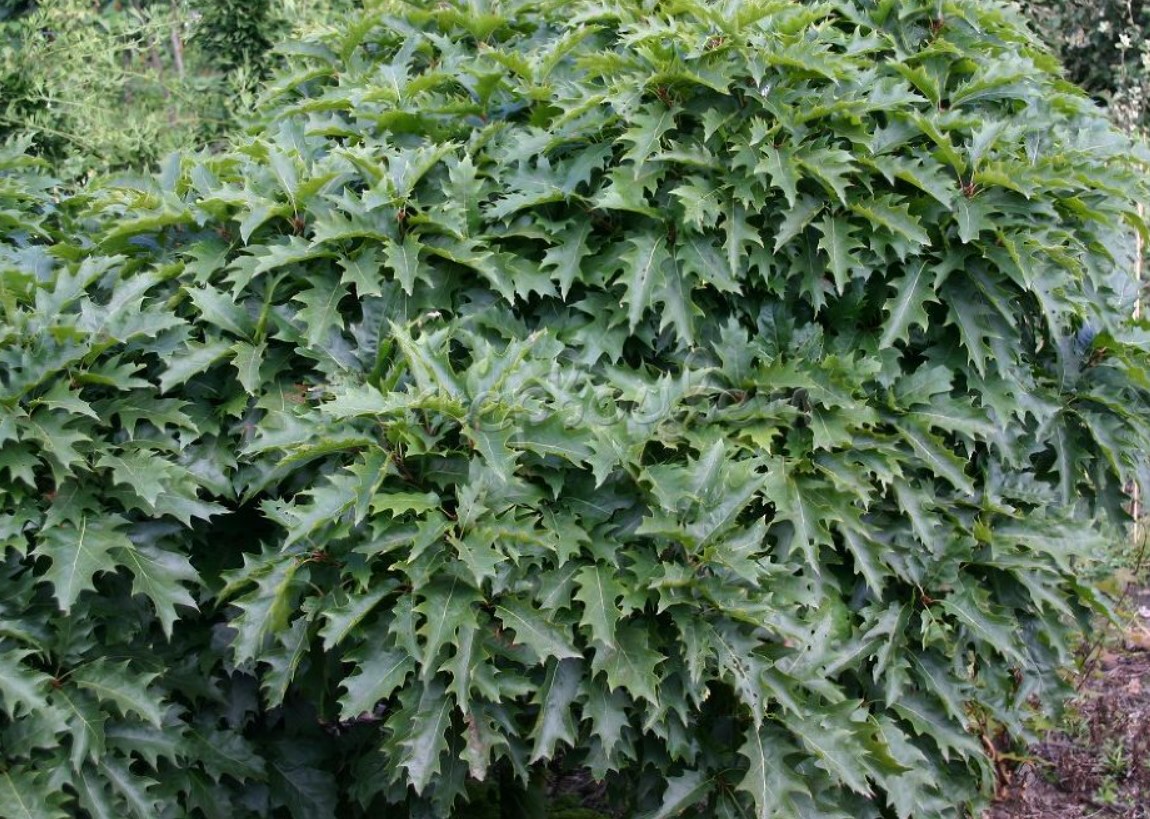
- It has a round, compact habit.
- A slow-growing variety that forms a compact crown up to 3 m in diameter.
- Light-loving, but tolerates lateral shading well.
- Suitable for parks, gardens, and can also be used in small gardens and along alleys.
Types of Mediterranean oaks
Holm oak (Quercus ilex)
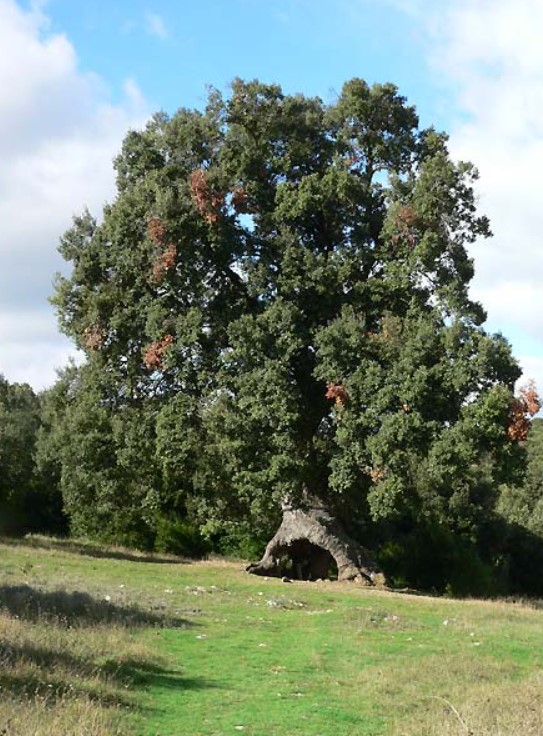
| Other names | Description Spreading |
Height Life expectancy Frost resistance |
Economic value Application |
| It doesn't. | Appearance: An evergreen tree reaching 20-25 meters in height. The crown is spreading and tent-shaped. The wood is hard and durable. Its strength increases in marshy soils and decreases in dry areas. Leaves: Dense, leathery, with a shiny upper surface, oval in shape, they are deep green in color and modest in size: up to 3 cm wide and 5 cm long. Powerful root system: Long taproot. Strong branches. Bark: Dark brown, almost black in color. Bloom: It begins in early spring. The inflorescences are divided by gender: females are greenish, males are pinkish. Fruiting: It bears acorns, which ripen in the second year after flowering. They can be used for food, for example, to make flour. Distribution area: Extensive. Found in the European part of the country and the Caucasus. |
20-27 m
300-500 years. Zone 6: -20 °C |
It is used in construction due to its strength and durability, as well as in the production of furniture and musical instruments.
Oak barrels are used for storing alcoholic beverages. |
Oak species from America
Velvet oak (Quercus velutina)
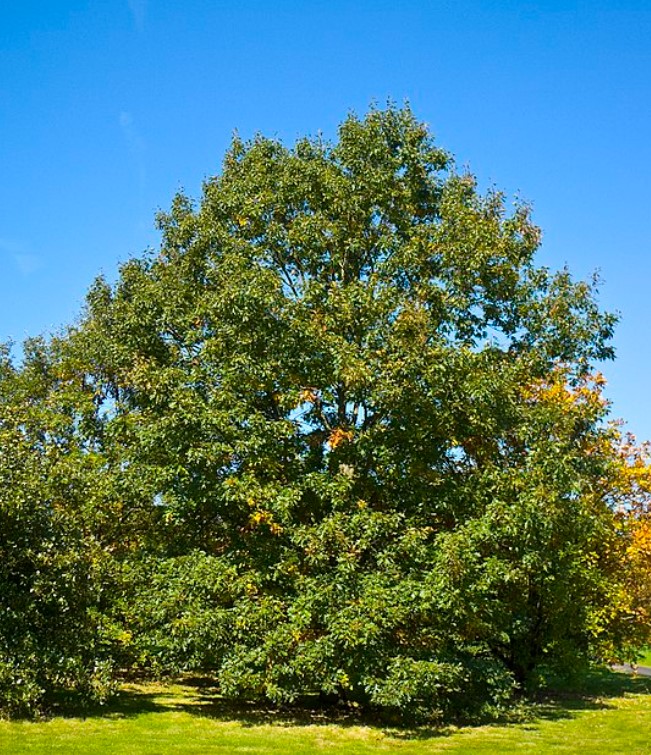
| Other names | Description Spreading |
Height Life expectancy Frost resistance |
Economic value Application |
| Velvet oak, black oak, yellow oak, dyer oak | Appearance: The bark is dark brown, deeply furrowed. The branches are dark brown. The shoots are reddish, brown, and velvety-pubescent. Leaves: Glossy green leaves with bristly, serrated edges. In autumn, they turn red. They are elliptical or obovate, 25-30 cm long and 5-15 cm wide. The margins are 5-7 lobed, with two or three ovate or triangular lobes on each side. The leaves are glabrous above, glossy, and dark green, paler beneath, initially densely pubescent, later finely pubescent. They are covered with scales and hairs at the vein corners. Root system: Well developed, penetrates deep into the soil. Fruit: Small acorns or nuts, about 1-1.5 cm long. Acorns are 1.2-2 cm long, ovoid or subglobose, paired or solitary. The cupule is covered with imbricated, overlapping, pubescent, appressed scales, covering the acorn up to half its length. Flowering and fruiting: Flowering coincides with leaf emergence. Fruit ripens in the fall of the second year. Distribution area: Native to eastern North America, it is also found in cultivation in Western Europe. It was first introduced into cultivation in the Russian Empire in 1843 in the Nikitsky Garden. It is currently found in the Batumi Botanical Garden and Veselo-Bokovenkovsky Park in Ukraine. |
20-25 m
200 years Zone 6: -20 °C |
Tanning leather, producing yellow dye. Also used for medicinal purposes. |
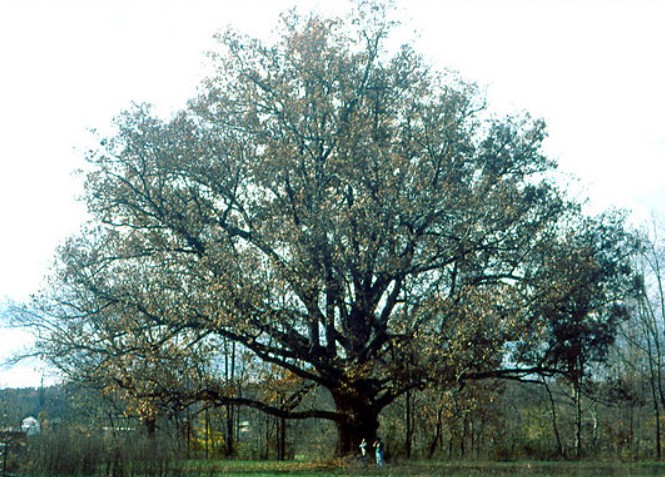
White oak (Quércus álba)
| Other names | Description Spreading |
Height Life expectancy Frost resistance |
Economic value Application |
| American oak | Appearance: A distinctive feature is its broad, tent-shaped crown. Its branches, bare and powerful, spread outward, parallel to the ground. The trunk may have a grayish tint, and the bark is usually dotted with small cracks. Leaves: They are oval and have 6–9 lobes. When they open, they are red, gradually turning green throughout the summer. However, the underside remains white. Fruit: Acorns have a tough outer shell and a hard kernel. At the base is a shallow cup covered with hairy scales. They are typically small, about 3 cm long. Distribution area: It grows in eastern North America, ranging from Quebec in the north to Florida in the south. |
25 m, sometimes up to 40 m.
Up to 600 years. Average. |
The best wood for wine and whiskey barrels. It is the state wood of Maryland in the United States. |
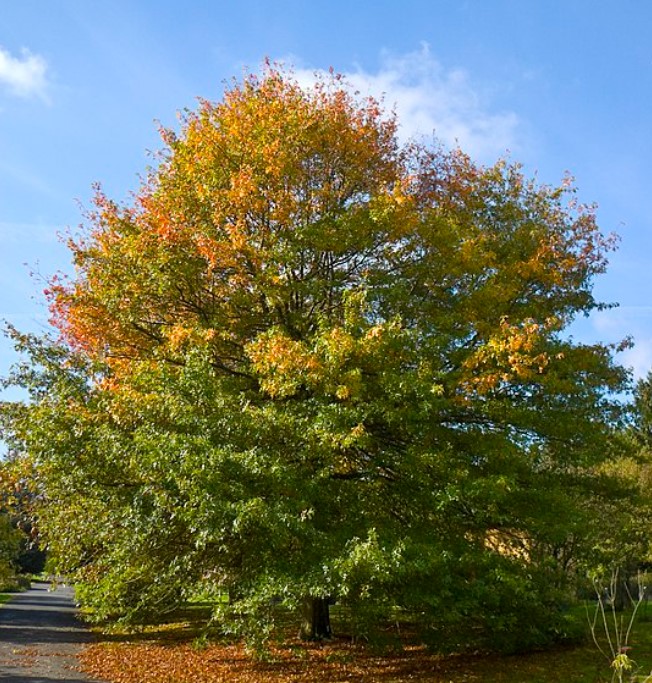
Swamp oak (Quércus palústris)
| Other names | Description Spreading |
Height Life expectancy Frost resistance |
Economic value Application |
| Doesn't have | Appearance: It is characterized by a pyramidal crown, which is narrowly pyramidal when young, but later becomes broadly pyramidal. The trunk bark is greenish-brown and remains smooth for a long time. Leaves: Up to 12 cm long, the leaves have five to seven deeply serrated lobes that extend almost to the center of the leaf. They are bright green above, while the underside is lighter, with tufts of hairs at the corners of the veins. In autumn, the leaves turn a vibrant purple. Fruit: The acorns are sessile, almost spherical, with a diameter of up to 1.5 cm, approximately a third of which is covered by a cupule. Spreading: The homeland of this species is North America, primarily in the eastern United States. |
Up to 25 m
120 years. Zone 4: from -29°C to -34°C |
Production of cellulose, fuel, railway sleepers, furniture. |
The swamp oak differs from the red and northern oak:
- Less frost-resistant and more demanding of soil and moisture.
- Tolerates urban conditions well.
- It does not take root in St. Petersburg, but grows successfully in Voronezh, Orel, and Tula, where the soil is rich in small swamps and lakes.
Swamp Oak Green Dwarf
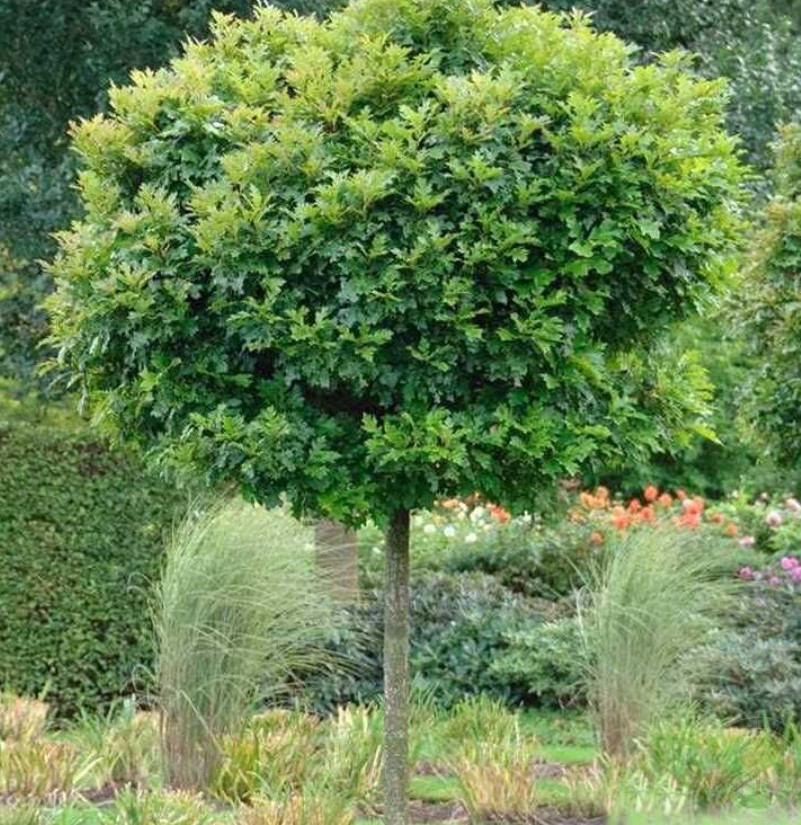
- A slow-growing tree, it reaches a height of about 1.5 m at ten years and up to 6 m in adulthood.
- Leaves up to 12 cm, bright green, glossy, with deep notches and serrated lobes, turning dark red in autumn.
- The flowers are inconspicuous, the acorns are almost spherical, up to 1.5 cm in length.
- It tolerates urban conditions well, but is less frost-resistant and more demanding of soil moisture.
- It is used in landscape design and looks impressive in parks and private areas.
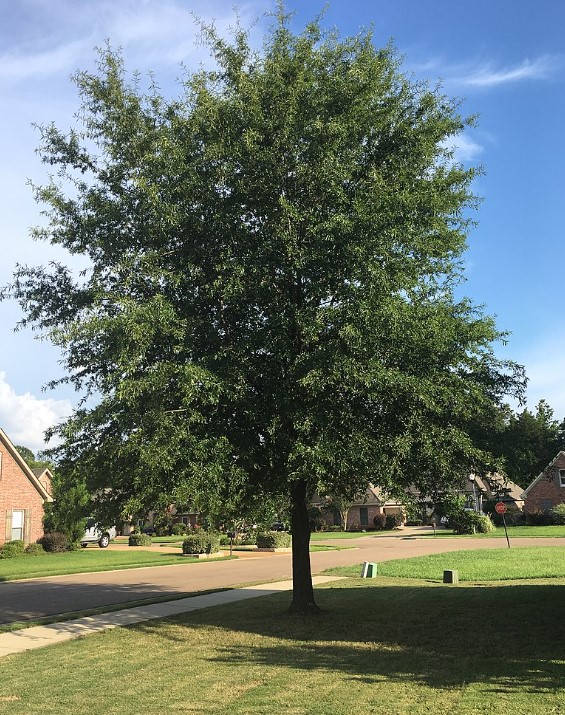
Willow oak (Quercus phellos)
| Other names | Description Spreading |
Height Life expectancy Frost resistance |
Economic value Application |
| It doesn't. | Appearance: A deciduous tree. When young, its crown is dense and pyramidal, but with age it becomes rounded. The trunk is straight and even. The bark is gray with a brown tint, furrowed. Greenish-brown lenticels are located on the branches, through which the tree breathes. The buds are elongated and reddish. The shoots are initially covered with a brownish pubescence, which later disappears. Leaves: Dark, green, usually long and lanceolate or linear, their surface is glossy and their edges are wavy. The underside is densely pubescent, becoming sparse with age. In autumn, they acquire a greenish-golden hue. Bloom: In May, it blooms with catkins with pointed petals that hang from the branches. The catkins are yellowish-gold in color. Fruit: They can be brown or sometimes greenish-yellow. The roots spread outward but remain close to the surface. Distribution area: They are found in North America, along the Black Sea coast, and in Russia. In Transcarpathia, they are grown in botanical gardens and are sometimes found in the Carpathian region. |
20-30 meters
About 200 years. -23°C. |
Landscape design (in squares, on streets) |
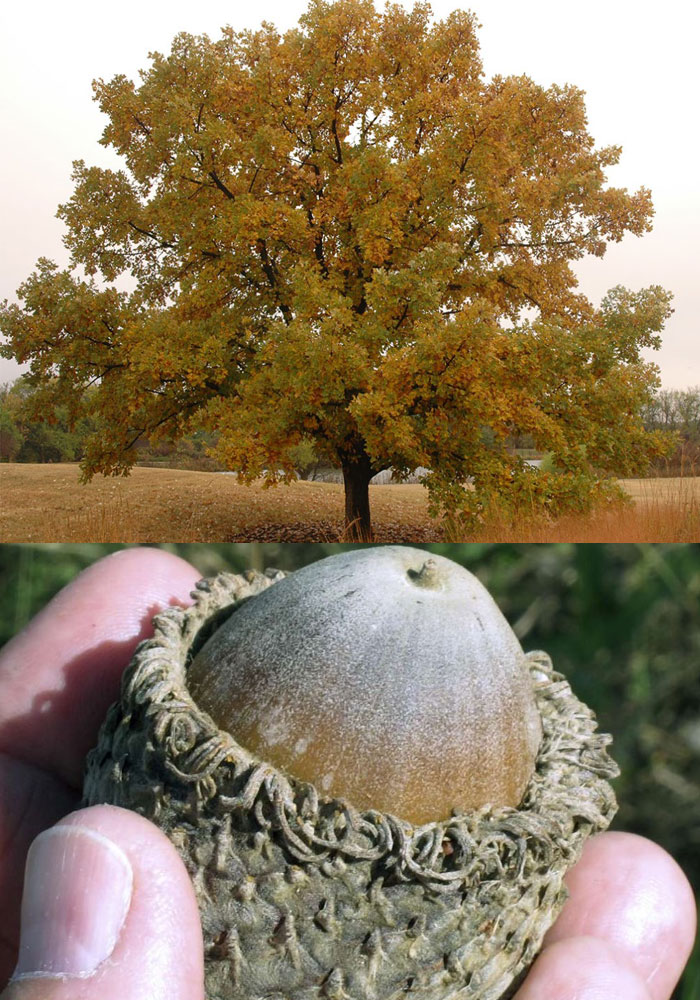
Large-fruited oak (Quercus macrocarpa)
| Other names | Description Spreading |
Height Life expectancy Frost resistance |
Economic value Application |
| It doesn't. | Appearance: It has a dense, tent-shaped, and spreading crown. The bark is light, gray-brown, fissured, and deeply furrowed. The branches are brown, and the shoots are pubescent and have a yellow-orange tint. Leaves: The leaves are arranged on petioles approximately 2 cm long. They are alternate, elongated-ovate, with a wedge-shaped base and deeply lobed margins. In summer, they are covered with a silvery down, which later disappears, leaving a shiny dark green surface above and a finely pubescent, whitish-green underneath. In autumn, they acquire a yellow-brown hue. Fruit: Acorns are usually solitary, sessile, or on a small stalk. They are large, oval, up to 5 cm long, with about a third covered by a deeply cupped cupule. Distribution area: Homeland - North America. |
25-50 m
200-400 years. -39°C. |
Medicine, including traditional medicine. Preserves biodiversity. |
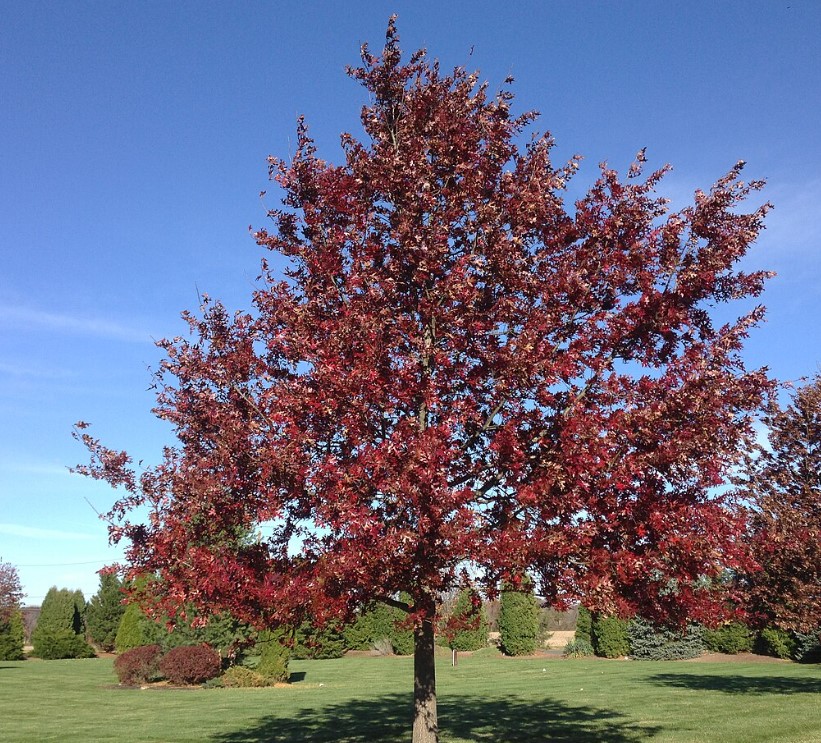
Scarlet oak (Quercus coccinea)
| Other names | Description Spreading |
Height Life expectancy Frost resistance |
Economic value Application |
| Scarlet oak, Coccinea oak | Appearance: A deciduous tree with a crown that begins as a cone and gradually becomes rounded. The trunk diameter at breast height typically ranges from 60 to 90 cm. Bark: Light gray-brown, finely fissured. Branches have a reddish-brown tint. Shoots are initially grayish-brown and pubescent, but later become bare. Leaves: From 8 to 15 cm long and from 6 to 12 cm wide, they are broadly obovate or elliptical, with a pointed apex and a truncated or wedge-shaped base. They turn crimson in autumn. Fruit: The acorns are ovoid or subglobose, 1.5 to 2.5 cm long, with a thin, reddish-brown shell. The cupule is inversely conical, covering one-third to one-half of the acorn's length. Flowering and fruiting: Flowering occurs simultaneously with the unfolding of leaves in May, and fruiting begins in September. Distribution area: It grows in the eastern United States and southern Canada. Interesting facts: The Splendens cultivar has won the Royal Horticultural Society's Award of Garden Merit. |
Up to 30 m.
300 years. — 34°C. |
Production of flooring, veneer, joinery, and furniture. For interior decoration.
The galls that oak produces after contact with insects are used to treat dysentery, chronic diarrhea and bleeding. In landscape design because of its bright red autumn colour. |
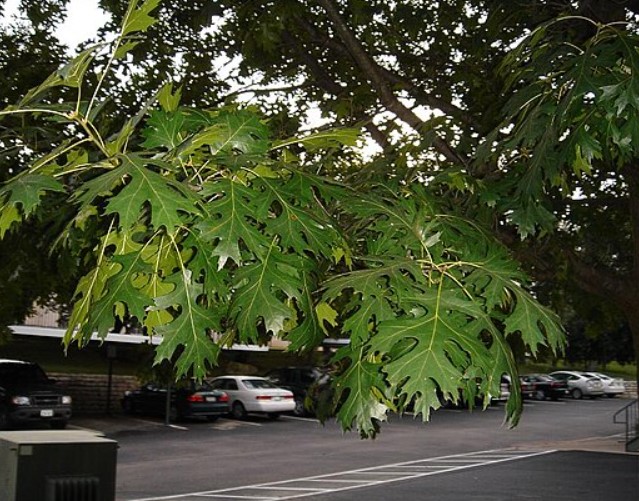
Shumard oak (Quercus shumardii)
| Other names | Description Spreading |
Height Life expectancy Frost resistance |
Economic value Application |
| None. Named after geologist Benjamin Franklin Shumard (1820–1869). | Appearance: A deciduous tree with deeply fissured bark that ranges in colour from dark grey to dark brown. Leaves: The 5-9 deeply incised leaves have widely spaced lobes and serrated apices. They are glabrous above and slightly pubescent below along the veins. Their shape can vary from oval and broadly oval to obovate, and their dimensions range from 8 to 20 cm in length and 6 to 15 cm in width. Distribution area: It is distributed throughout eastern North America, including the southern United States and the Canadian province of Ontario. This includes Alabama, Arkansas, Virginia, Georgia, West Virginia, Illinois, Indiana, Kansas, Kentucky, Louisiana, Mississippi, Missouri, Michigan, Maryland, Nebraska, Ohio, Oklahoma, Pennsylvania, North Carolina, Tennessee, Texas, Florida, and South Carolina. |
25-35 m.
Up to 400 years. from -23.4°C to -28.8°C. |
For shading, decorative purposes.
Furniture production. Acorns are eaten by songbirds, waterfowl, white-tailed deer, squirrels, and wild pigs. |
Decorative oak varieties
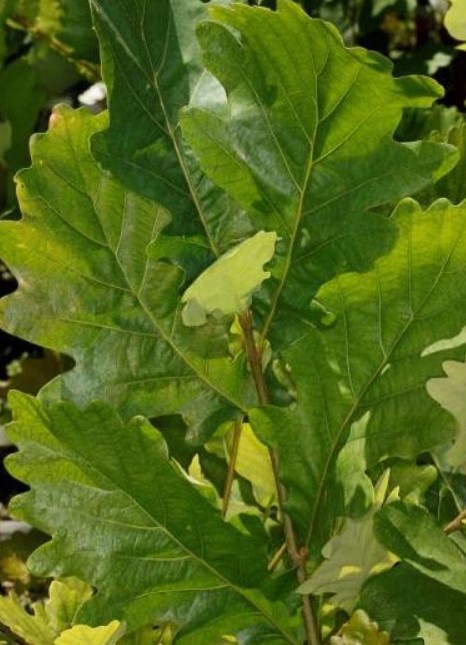
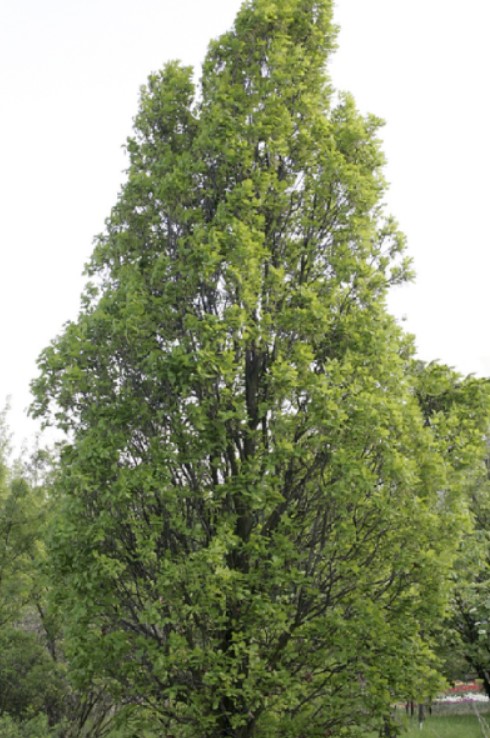
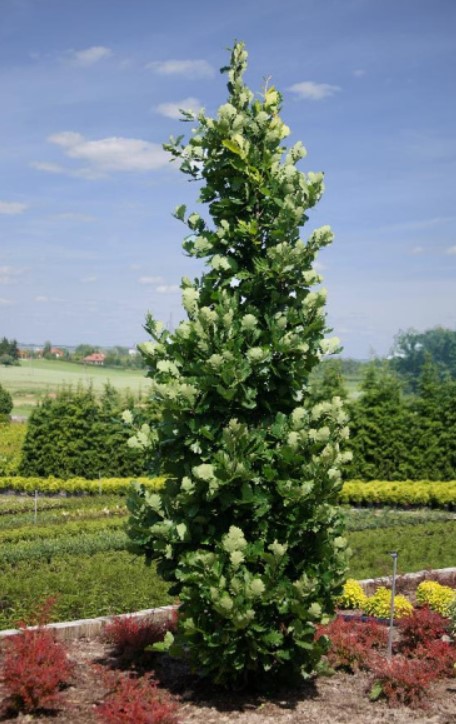
Oak Monument (Quercus Monument)
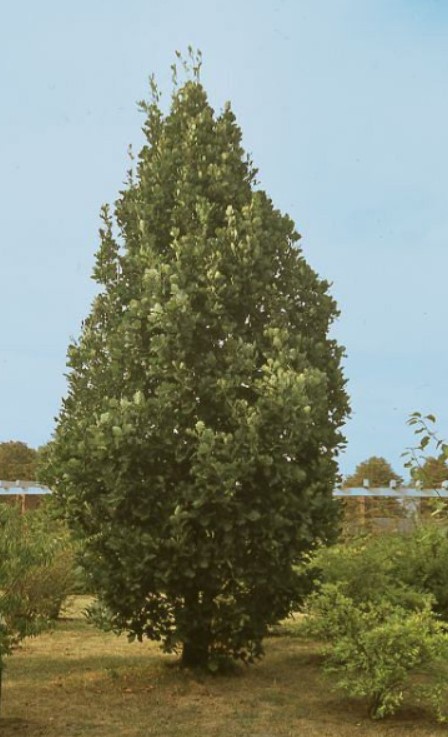
Crown shape: It has a characteristic columnar crown, which can become ovoid with age. The branches are straight and directed upward.
Leaves: Leathery and glossy, they reach large sizes of up to 20 cm. The underside is lighter than the top.
Size and usage: It reaches a height of approximately 8-10 meters. Its elegant crown makes it a beautiful addition to alleys, parks, and large gardens.
Stability: Good resistance to fungal diseases.
Origin and awards: Sectioned in 1984 by Ewa Jeżak at the Botanical Garden of the Adam Mickiewicz University in Poznań, cultivation began at the Szmit Nursery in 2009. That same year, it was awarded a gold medal at the "Green is Life" International Exhibition.
Frost resistance: Tall, USDA zone 4.
Photo gallery of the Monument oak tree
English oak Asplenifolia
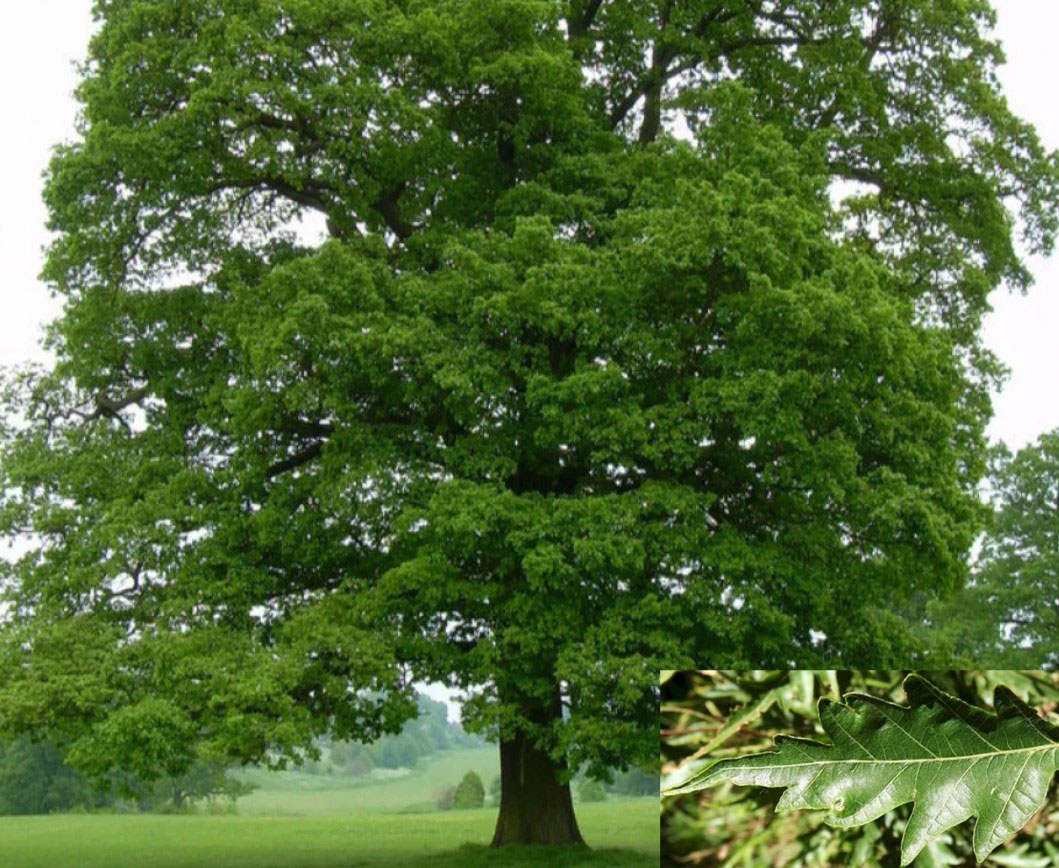
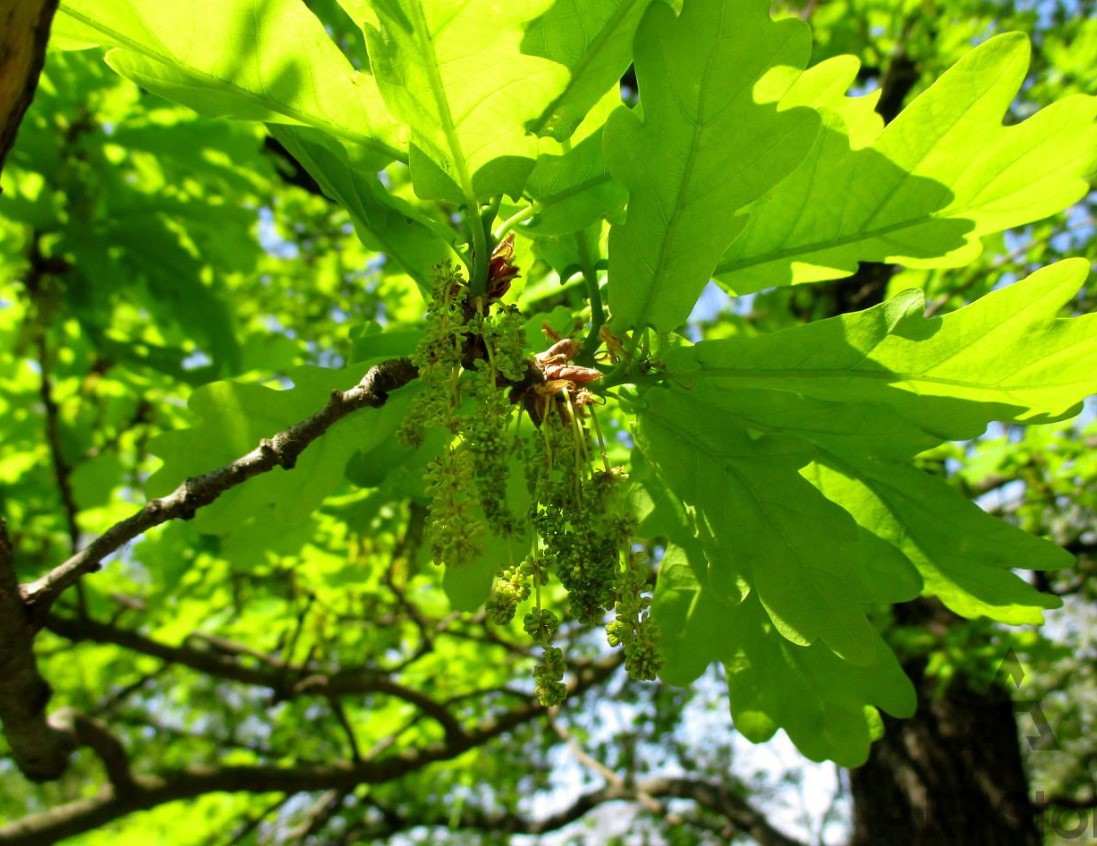
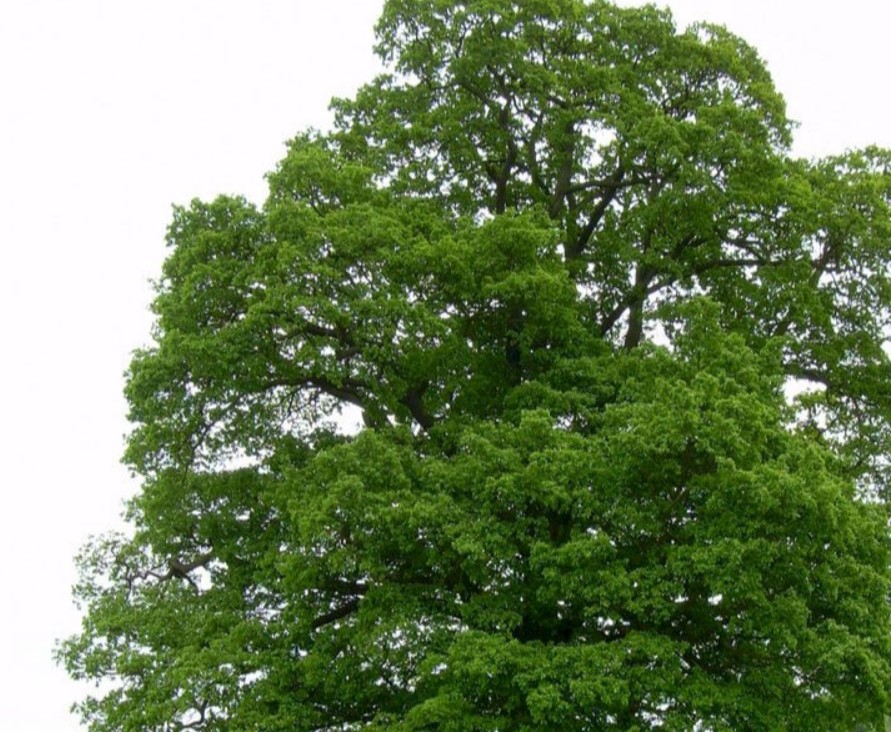
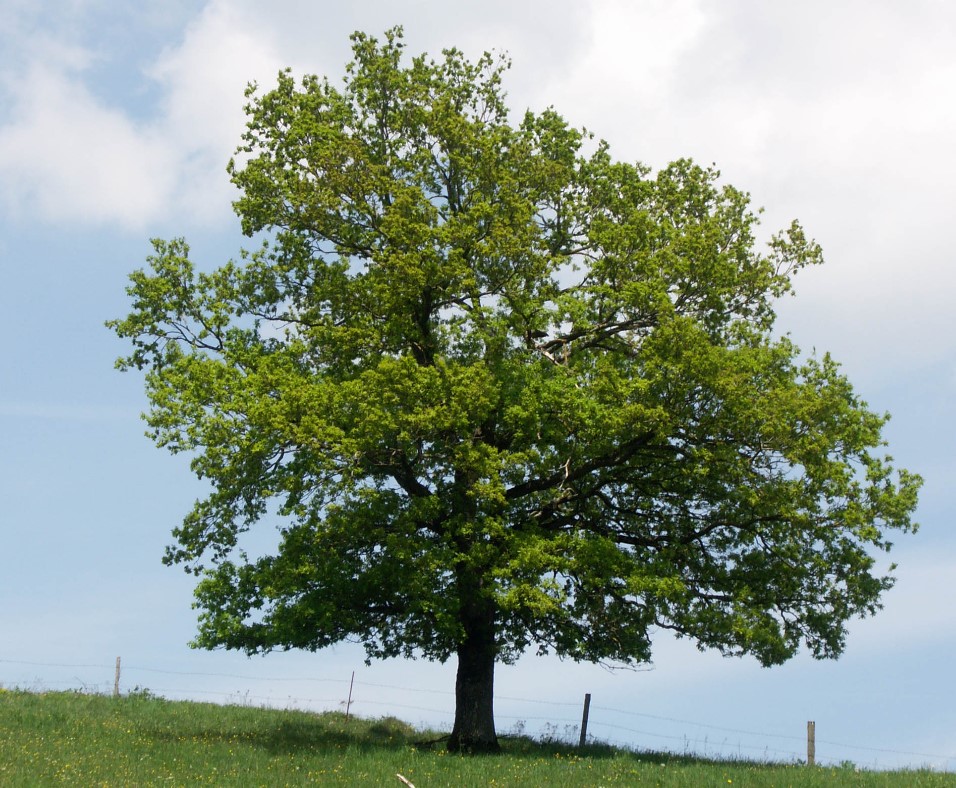
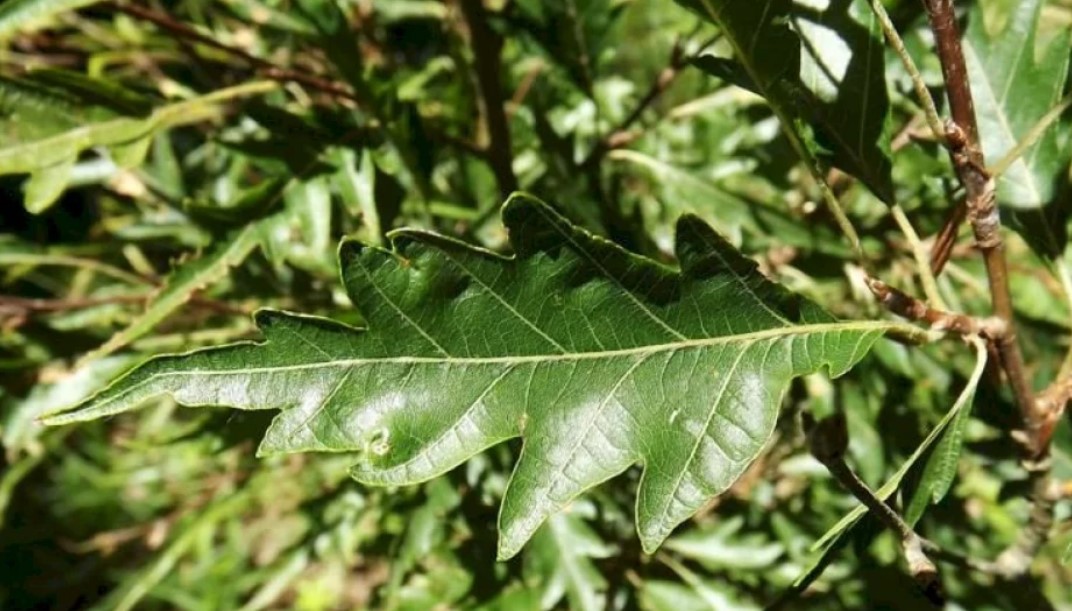
Description: A low tree with a rounded crown.
Leaves: Small and heavily dissected.
Lighting requirements: Shade-tolerant and sun-loving.
Size: The height usually reaches about 10 meters.
Photo gallery of the common oak Asplenifolia
English oak Atropurpurea
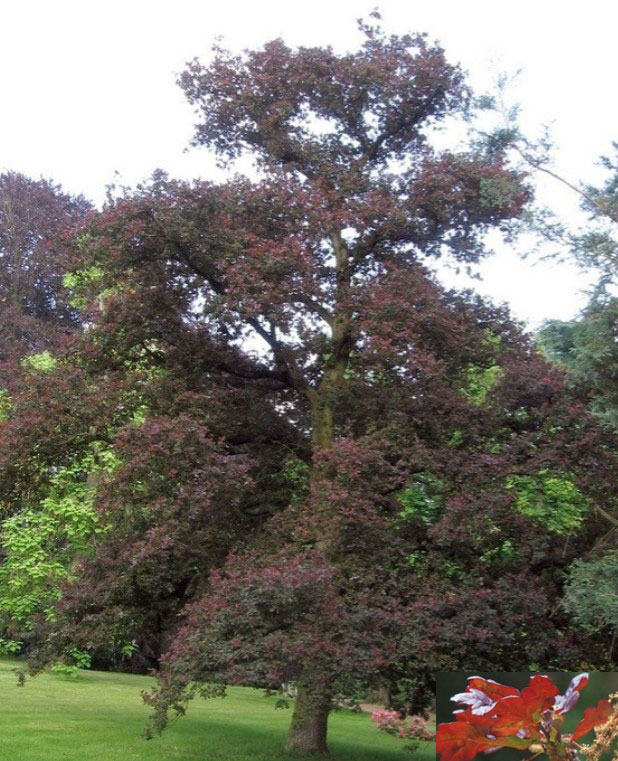
Description: A slow-growing form of oak that forms small trees, rarely exceeding 7 m in height.
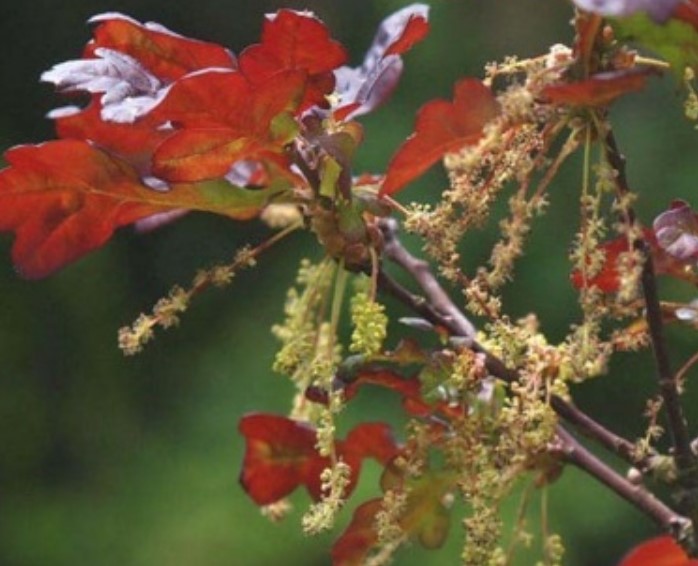
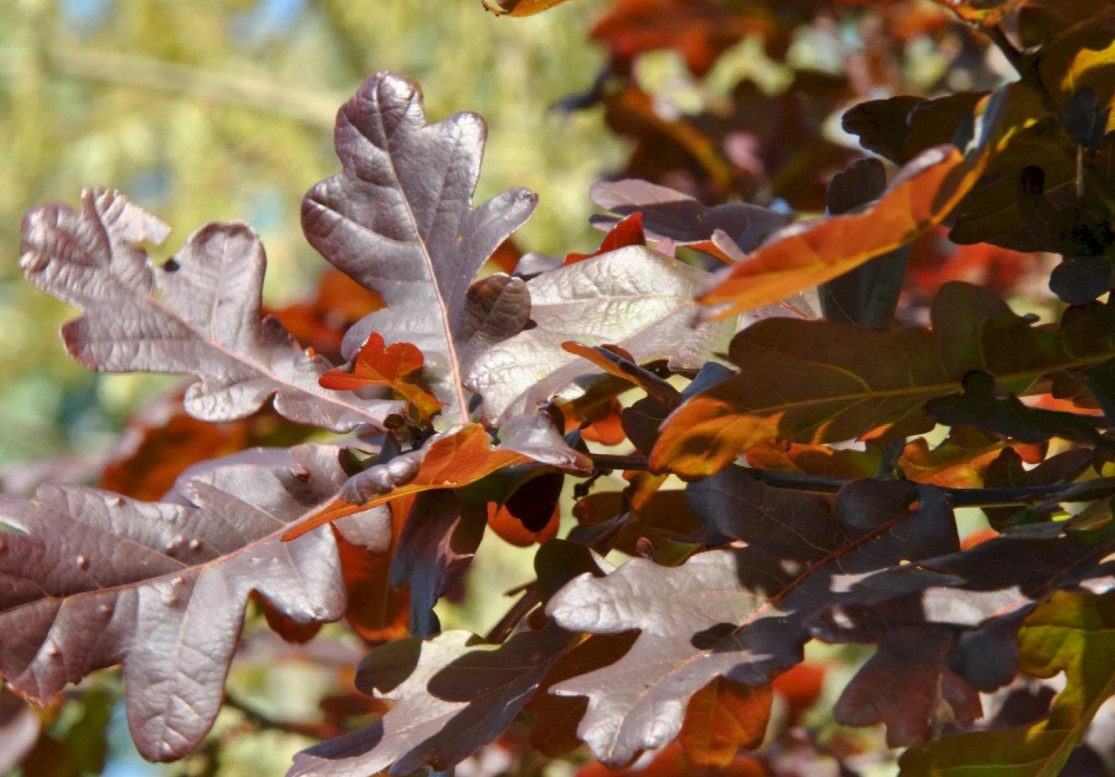
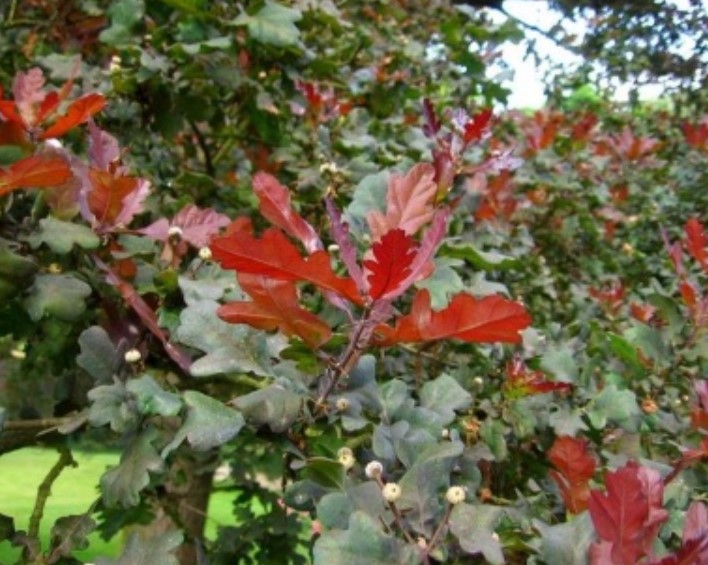
Leaves: The foliage and shoots turn a rich wine-red in spring, gradually transitioning to a greenish-purple hue in summer. This vibrant color creates an attractive contrast in the landscape and gives the tree a distinctive character. Some varieties, such as 'Nigra' and 'Fastigiata Purpurea,' retain their rich red color throughout the season.
Requirements for conditions: Sun-loving, heat- and moisture-resistant.
Winter hardiness: In the middle zone, it winters only in places protected from cold winds with a warm microclimate.
Photo gallery of the English oak Atropurpurea
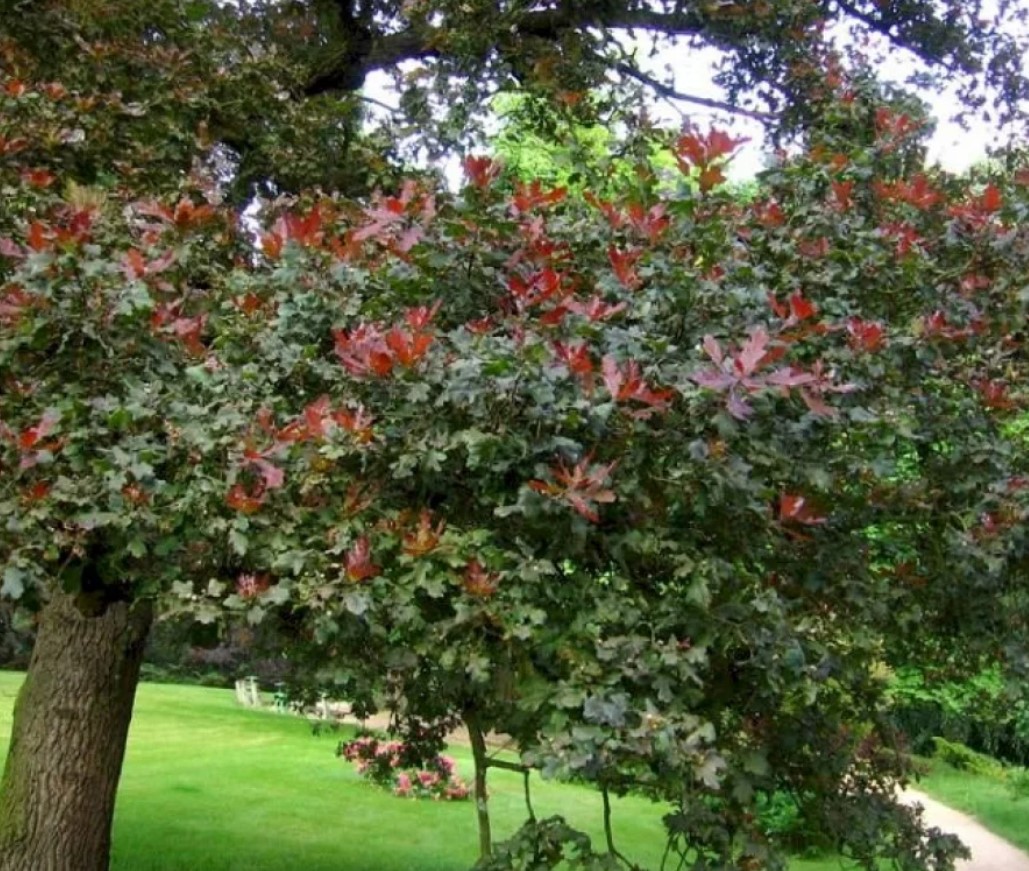
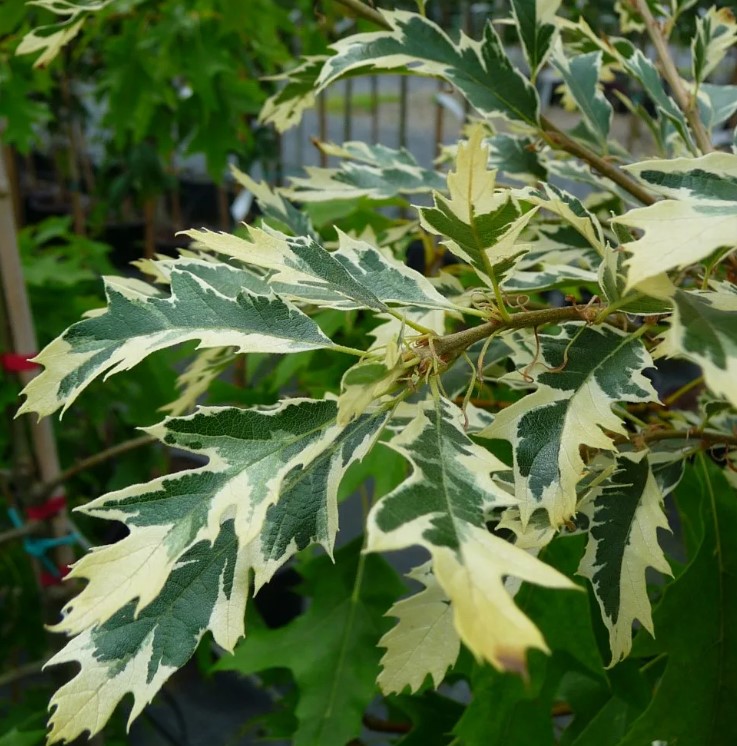
English oak Variegata
Distribution and range: It grows in various regions of the world, including Western Europe, European Russia, northern Africa, and western Asia. Its range extends as far north as Finland and west as Norway. It is not found in the wild in Siberia.
Description: The trunk is brown, and the crown is quite spreading. The flowers are small, like the acorns. This is a tall tree, reaching a height of 30 to 40 meters.
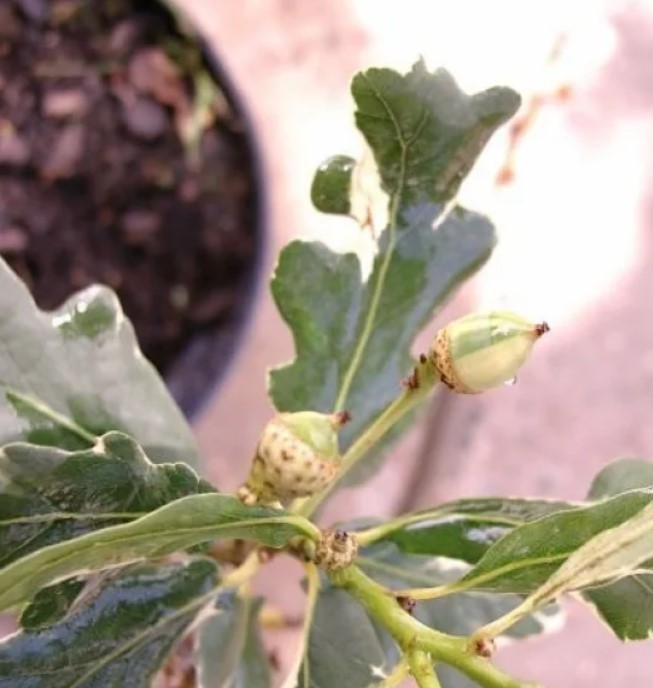
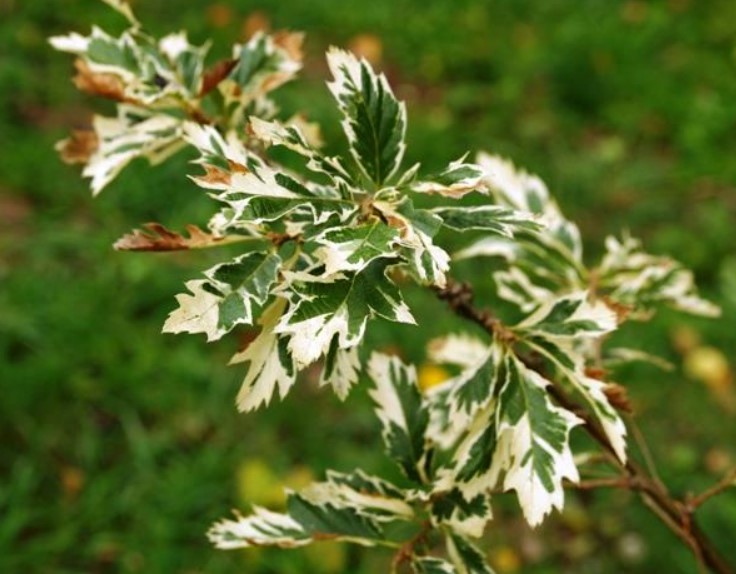
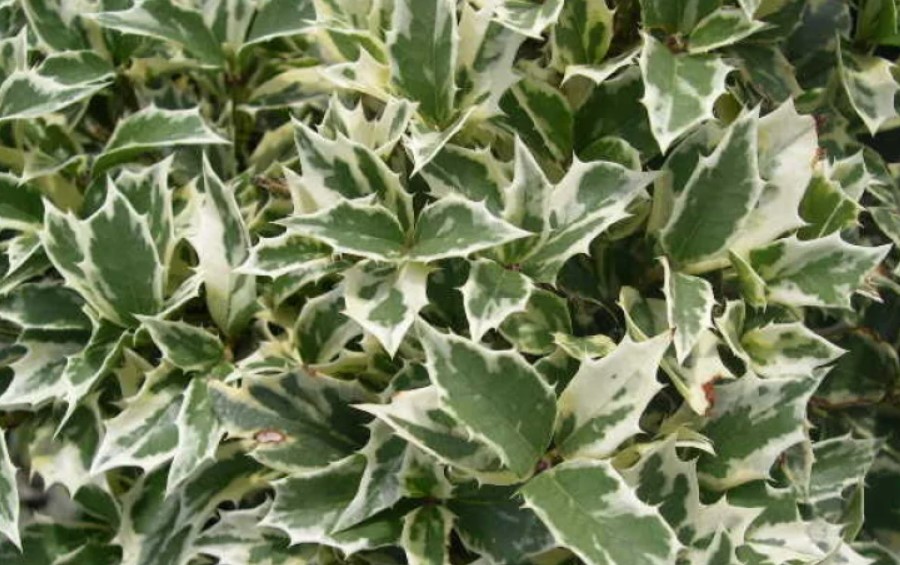
Leaves: small, green and white in color.
Growing conditions: It's important to provide good, bright light. It prefers fertile loamy soils but can also grow in poor, rocky soils. It's drought-tolerant but doesn't tolerate waterlogged soil or excessive moisture.
Care: Young plants require regular watering, loosening the soil, removing weeds, fertilizing, and mulching. Mature trees are easy to care for, but annual sanitary pruning is recommended. It's best to plant young trees in early spring, before the first leaves emerge, to ensure a favorable start to growth.
Photo gallery of the Variegata oak
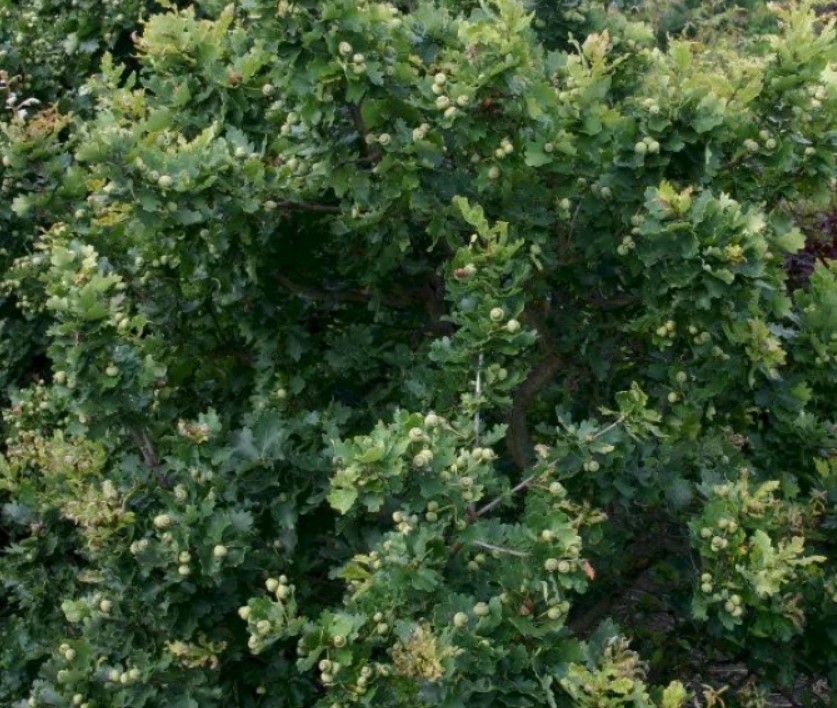
Pedunculate oak Compacta
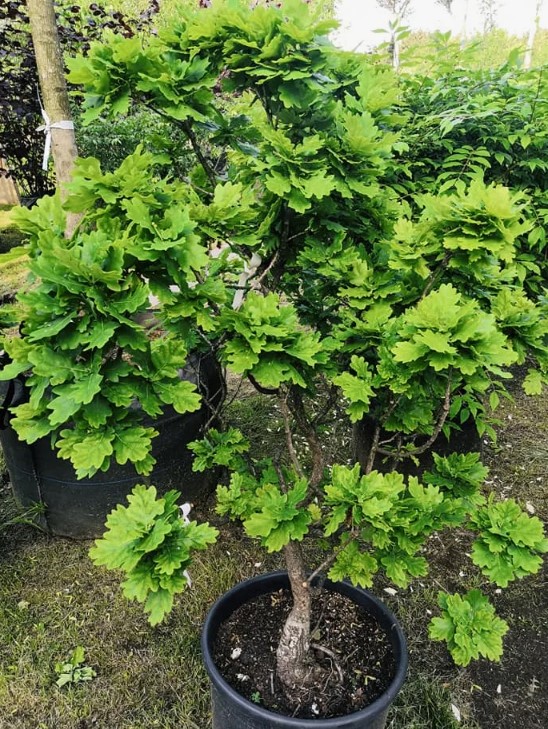
Description: A dwarf form of the common oak. The bark is dark brown.
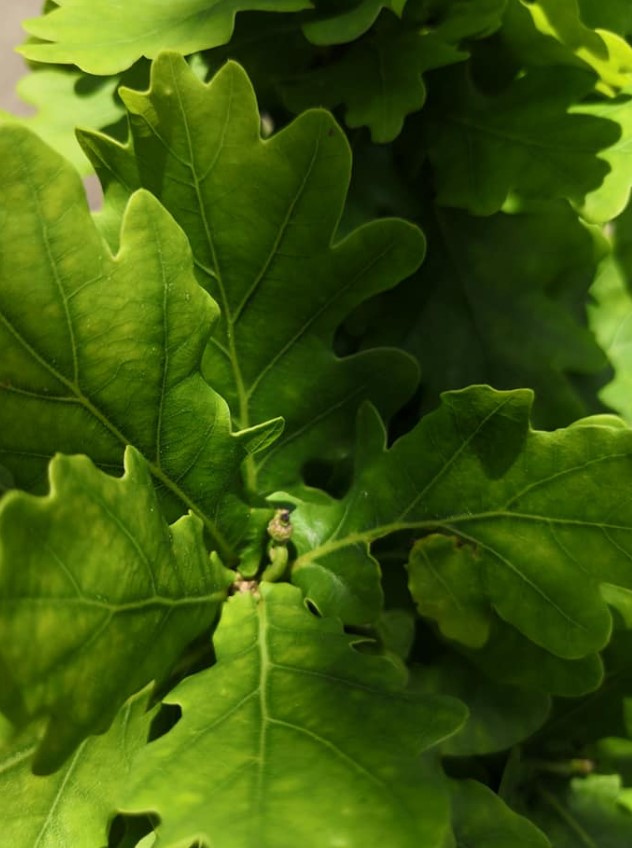
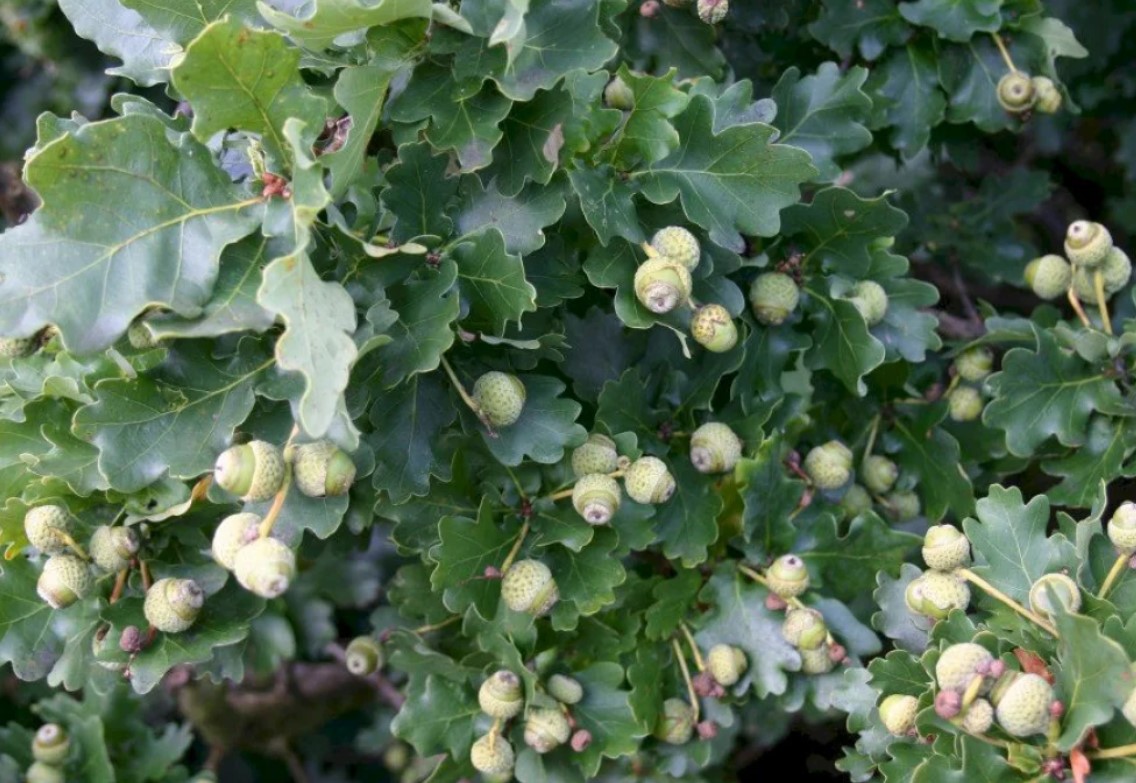
Leaves: Dark green and glossy, with prominent veins and prominent ears at the base.
Bloom: It begins in May, with the emergence of new shoots and the unfolding of leaves. Male flowers are borne in bright green, drooping catkins, while female flowers have a reddish tint. They are borne singly or in clusters on short stalks.
Fruit: The acorns are brownish-yellow, striped, and have a spike at the tip. They are attached to a small cup-shaped cup. They ripen in September to early October.
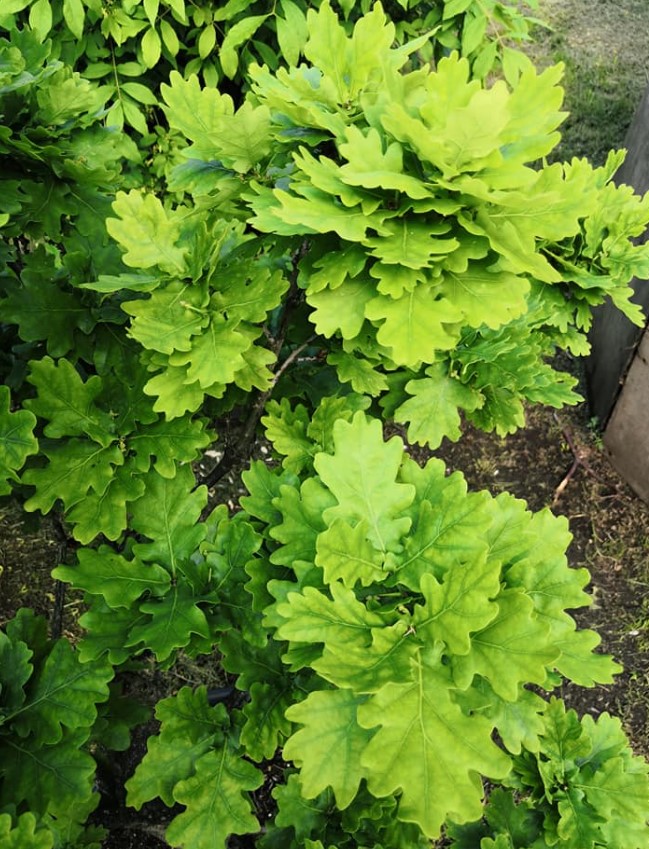
Photo gallery of the English oak Compacta
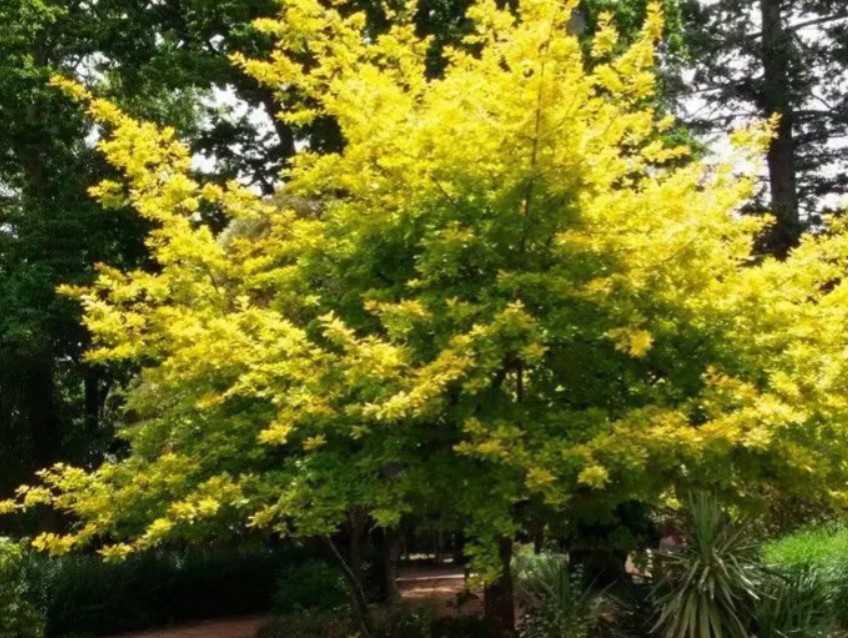
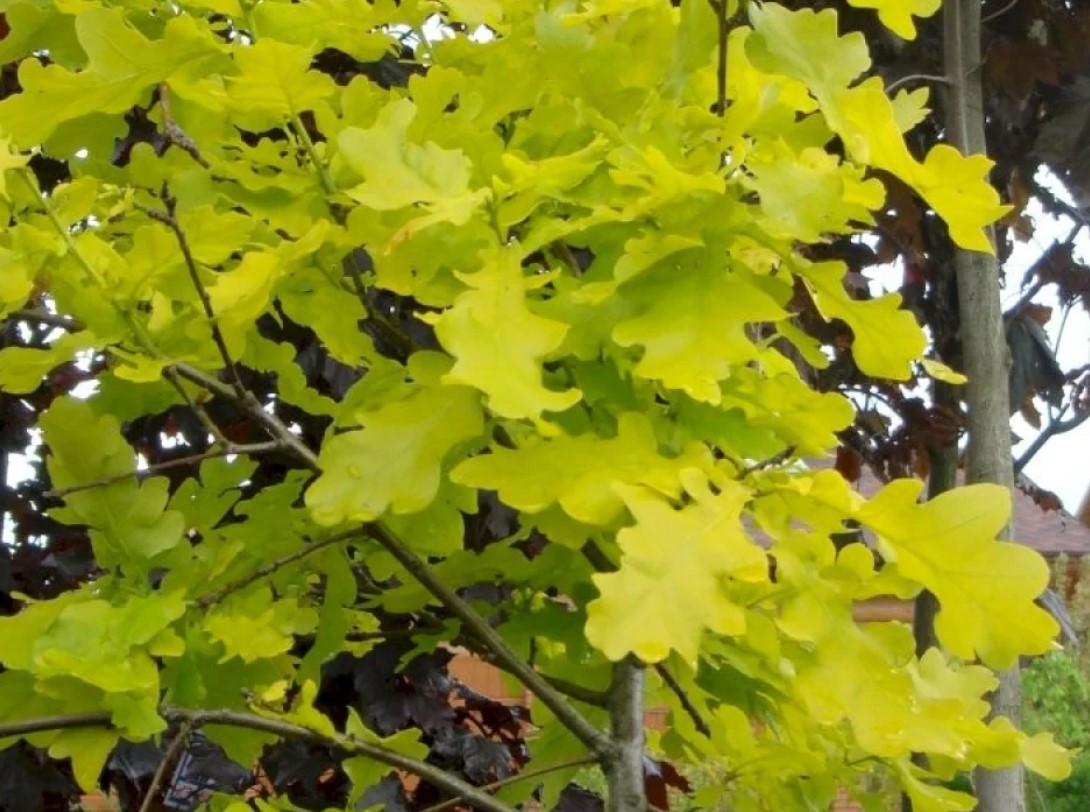
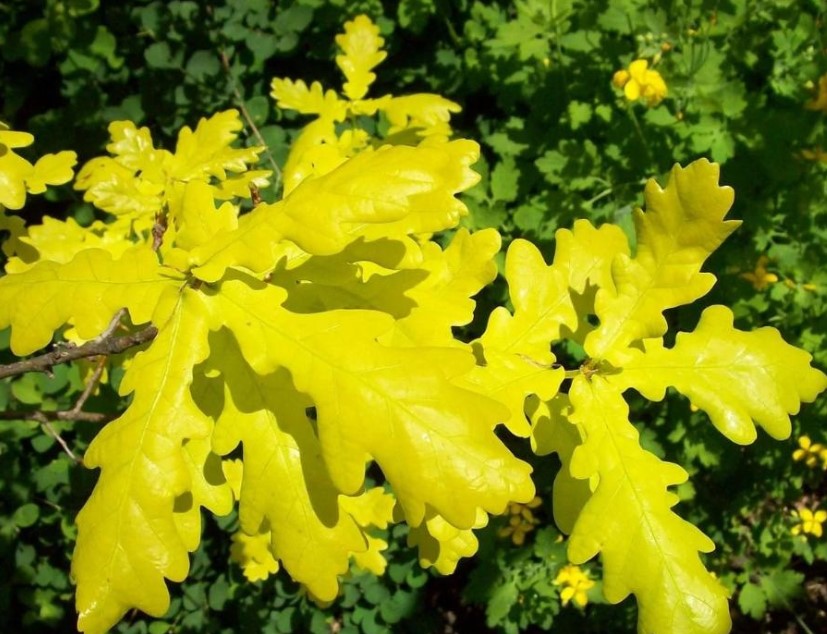
English oak Concord
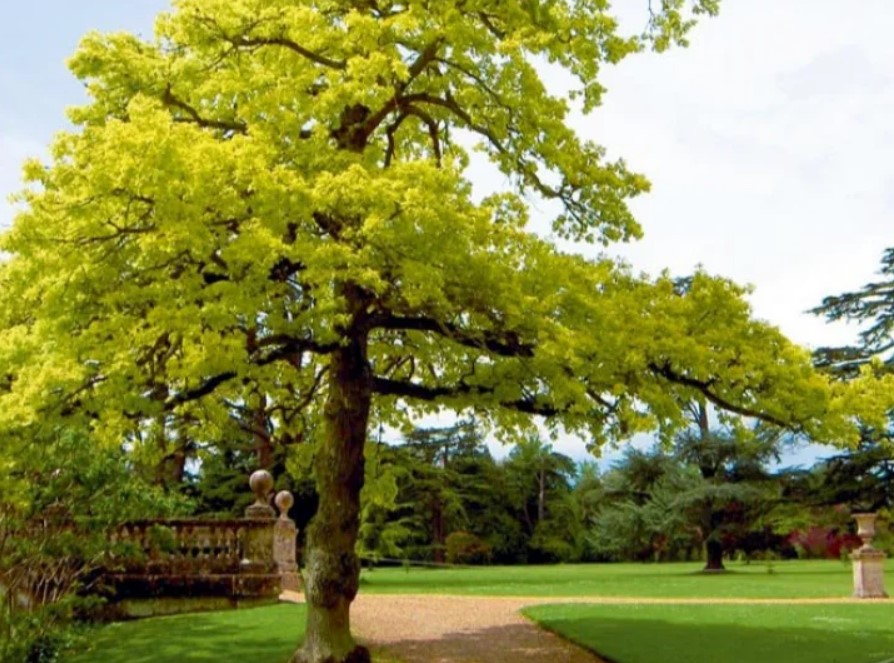
Description: A medium-sized, spreading tree with a charming crown shape. When young, it is conical, gradually becoming spherical.
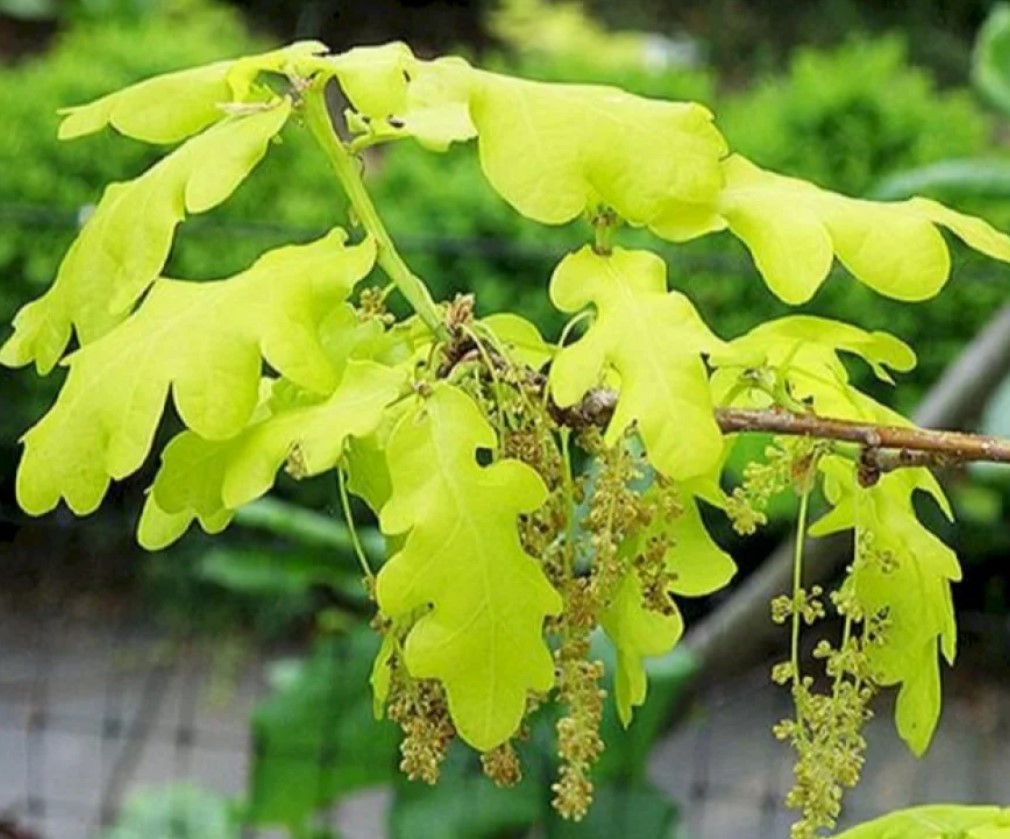
Leaves: They stand out for their unusual color: in spring they are golden-green with a lemon tint, gradually turning green, but always retaining a light color.
Height: It grows slowly, reaching its maximum size of 8-9 meters only after several decades.
Soil and care requirements: It's undemanding, although it prefers fresh, fertile soil. It enjoys moisture and moderate watering, and tolerates temporary flooding well. Its well-developed root system makes it resistant to strong winds. It's also very frost-hardy.
Application: Recommended for planting in woody arrangements that rely on color contrast. Its elegant golden crown makes it ideal for a solitary planting against a light green lawn.
Photo gallery of the Concord oak
English oak Nigra
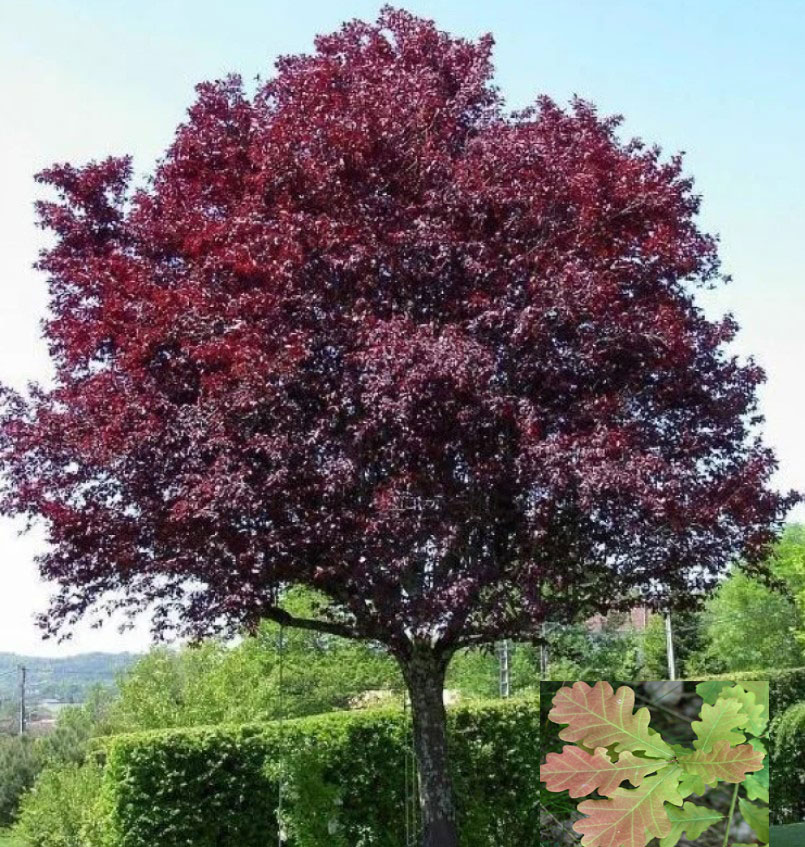
Description: LA deciduous tree reaching 20-25 meters in height. Its crown, 15-18 meters in diameter, takes on a rounded, arched shape, growing dense and lush.
Leaves: The leaves are obovate to oblong, with a rounded apex. They taper wedge-shaped toward the base and have rounded auricles at the base. Three to six deep, rounded, entire lobes are located along the margins on each side. The leaves are slightly wavy and have a dark purple hue.
Note: The color of the foliage makes this variety particularly decorative and attractive for landscape design.
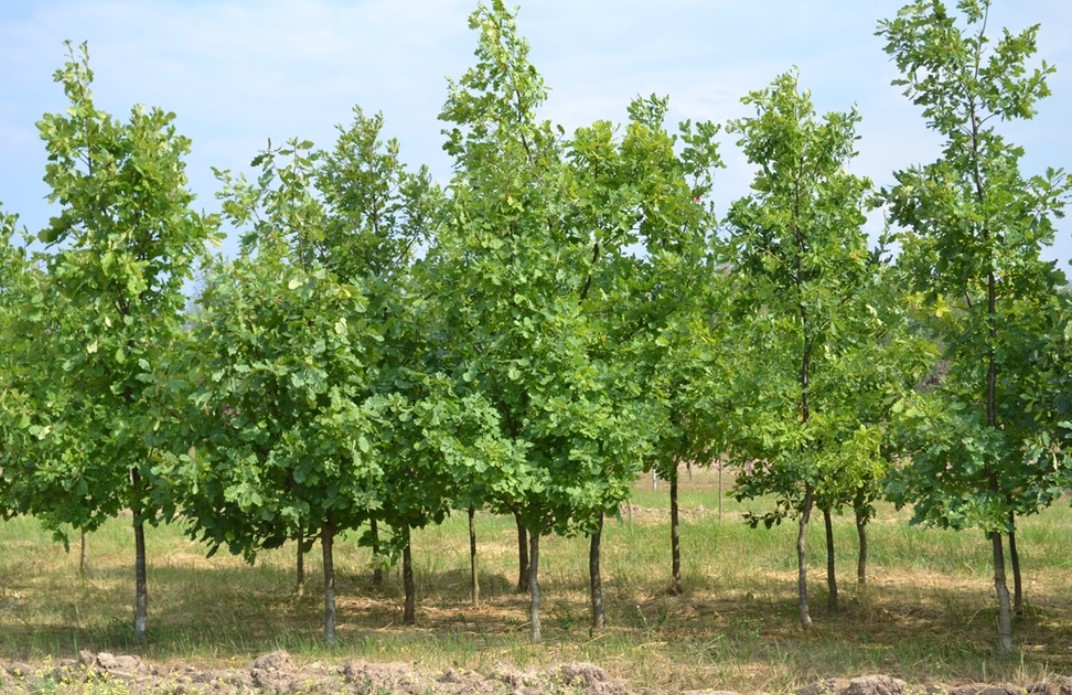
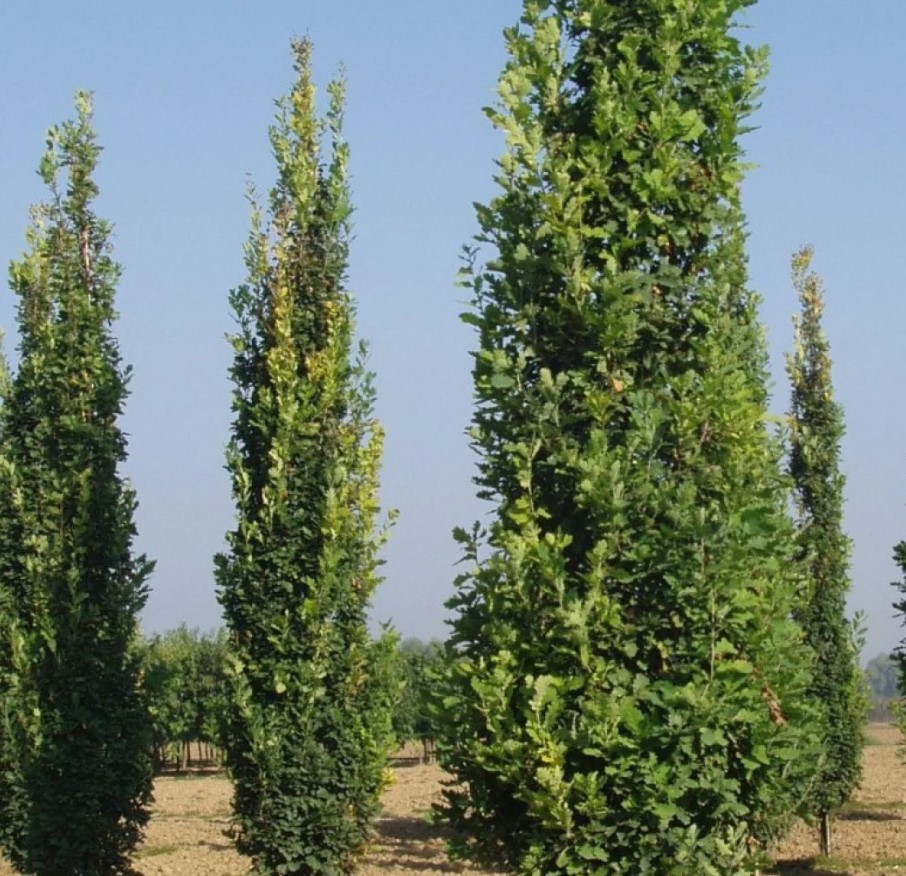
English oak Pyramidalis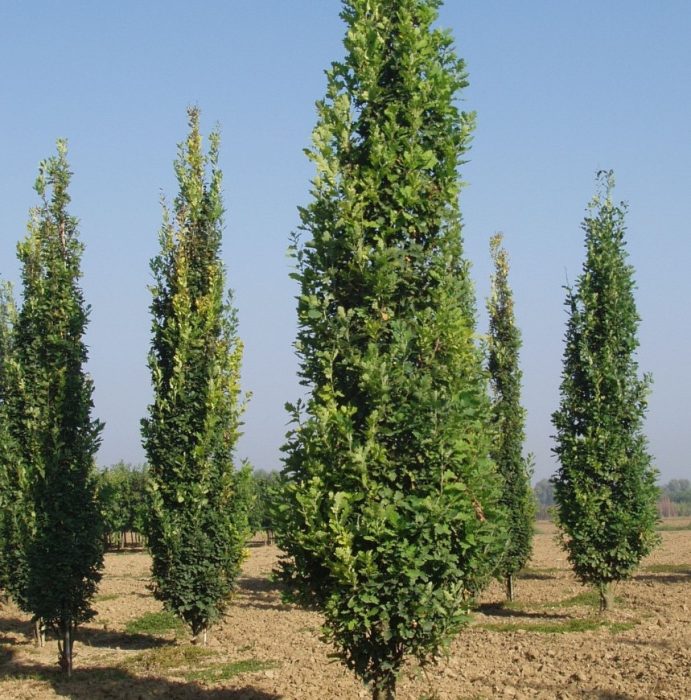
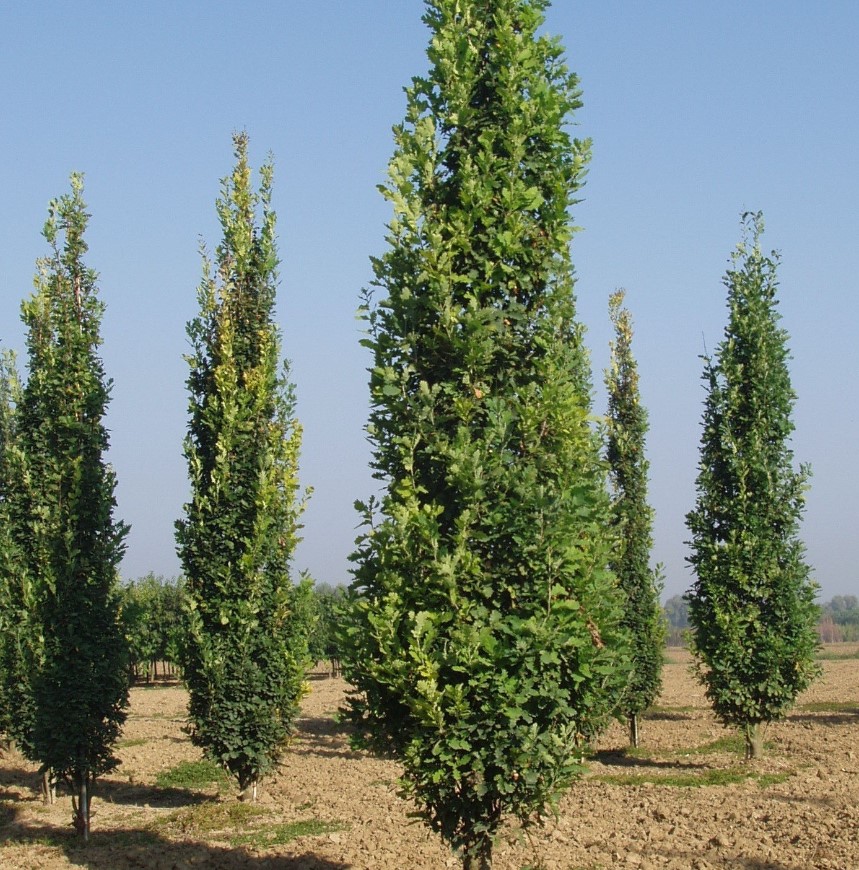
Description: It has a columnar crown. The average height is about 13 meters, yet the crown retains its shape and attractiveness.
Bark: It has a dark brown color and is decorated with deep longitudinal cracks.
Leaves: Elongated, leathery and covered with a waxy coating, which makes them more resistant to sunlight and drought.
Acorns: The nuts are oval-shaped and covered with a yellow-brown shell.
Growing conditions: Prefers sunny locations and moderate soil moisture. It is highly winter-hardy and can grow in zone 4, where temperatures can drop to -34°C.
Usage: It is widely used in urban and private landscaping, as well as in garden and park compositions. It is often planted as a solitary specimen or in combination with other conifers and deciduous trees, as in alleys or group plantings.
Photo gallery of the English oak Pyramidalis
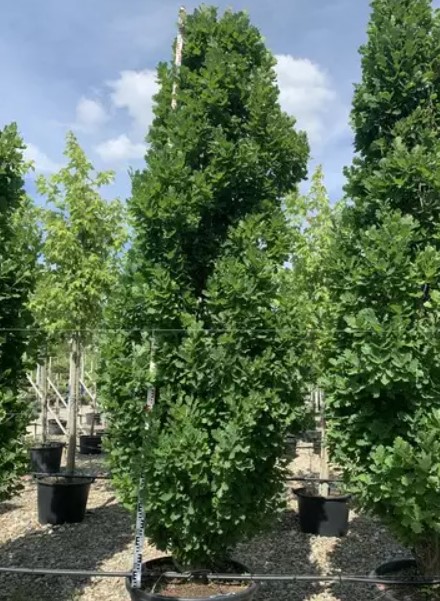
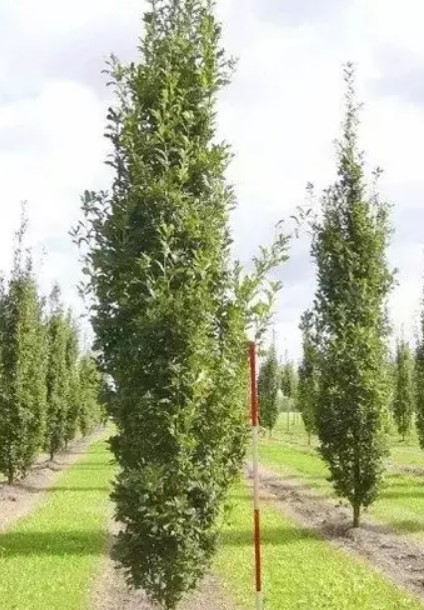
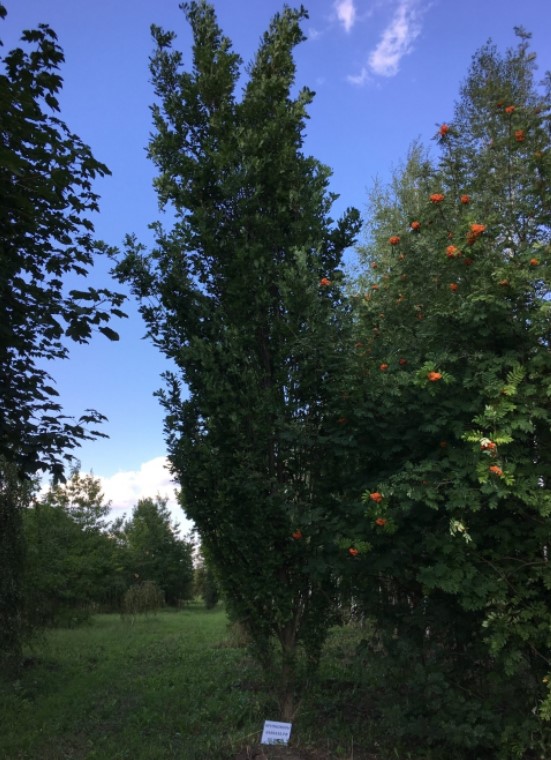
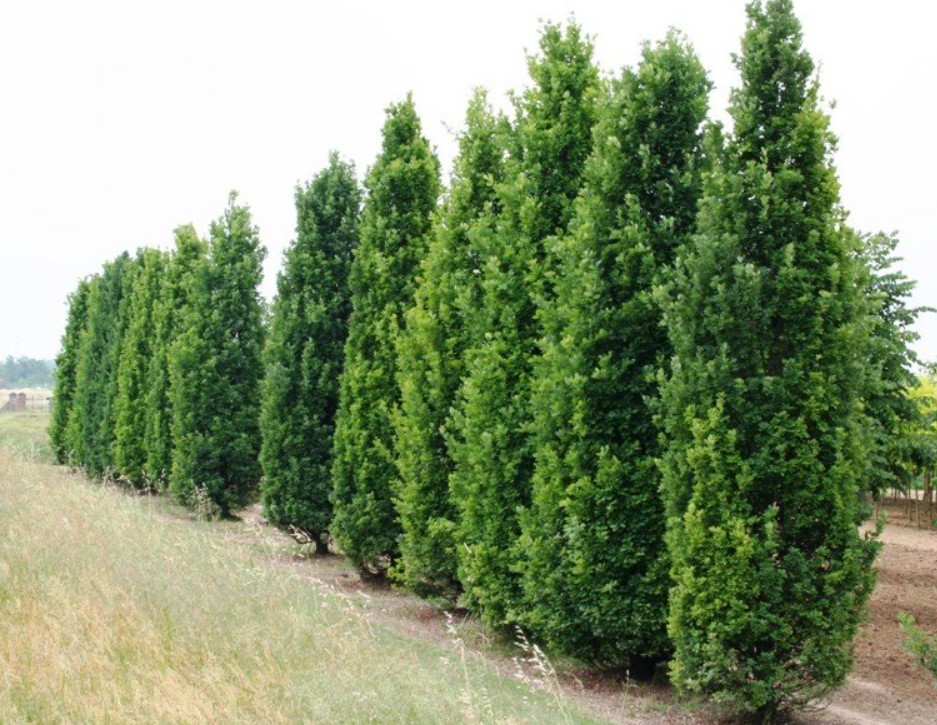
English oak Fastigiata
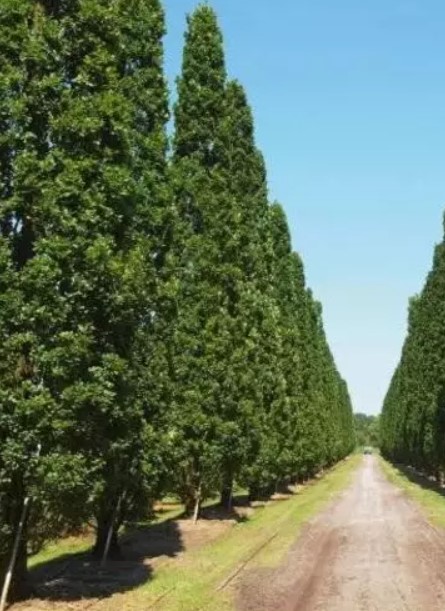
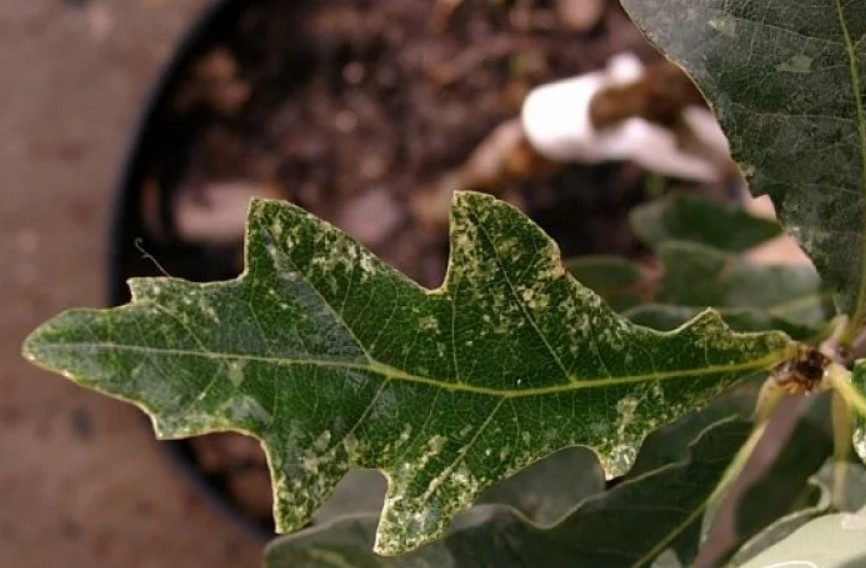
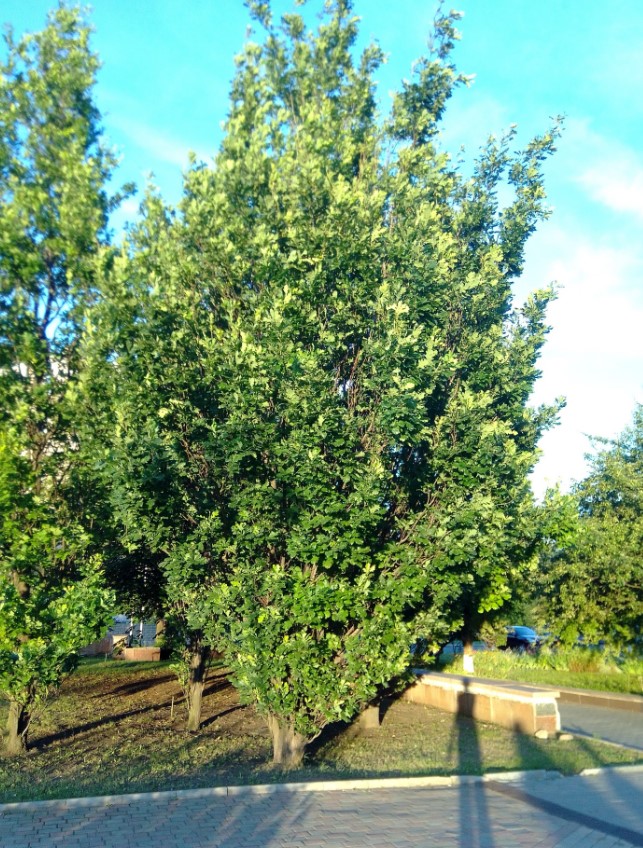
Description: A tree with a pyramidal crown. At 25 years of age, it stands approximately 8.5 meters tall, with a crown diameter of 2.5 to 3 meters. Branches begin growing from the graft and extend upward at an acute angle, forming a dense and thick crown.
Leaves: The leathery, rounded-lobed leaves are dark green, becoming slightly lighter toward the underside. They turn yellow in the fall.
Growing conditions: PPrefers a sunny location and tolerates drought and heat well. It's best planted in fertile, fresh soil.
Frost resistance: up to -35°C.
Application: Suitable for both single plantings and group compositions and alley plantings, its dense and compact crown creates dense green walls that require no pruning.
Photo gallery of the English oak Fastigiata
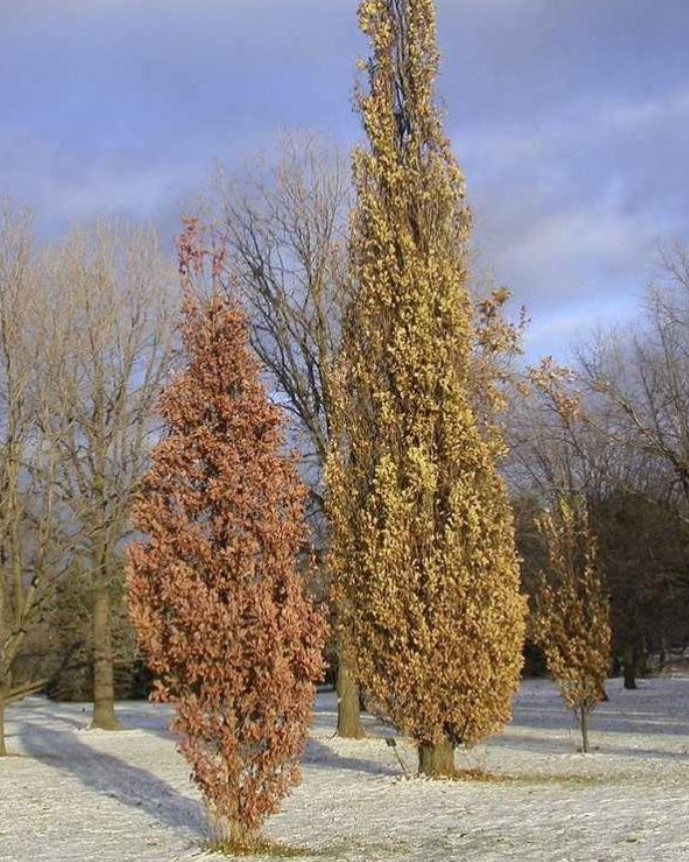
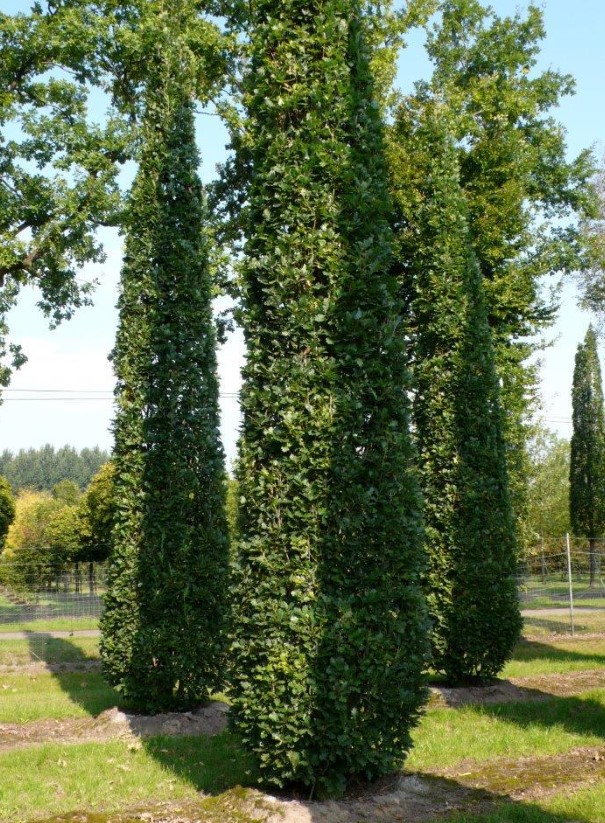
English oak Fastigiata Koster
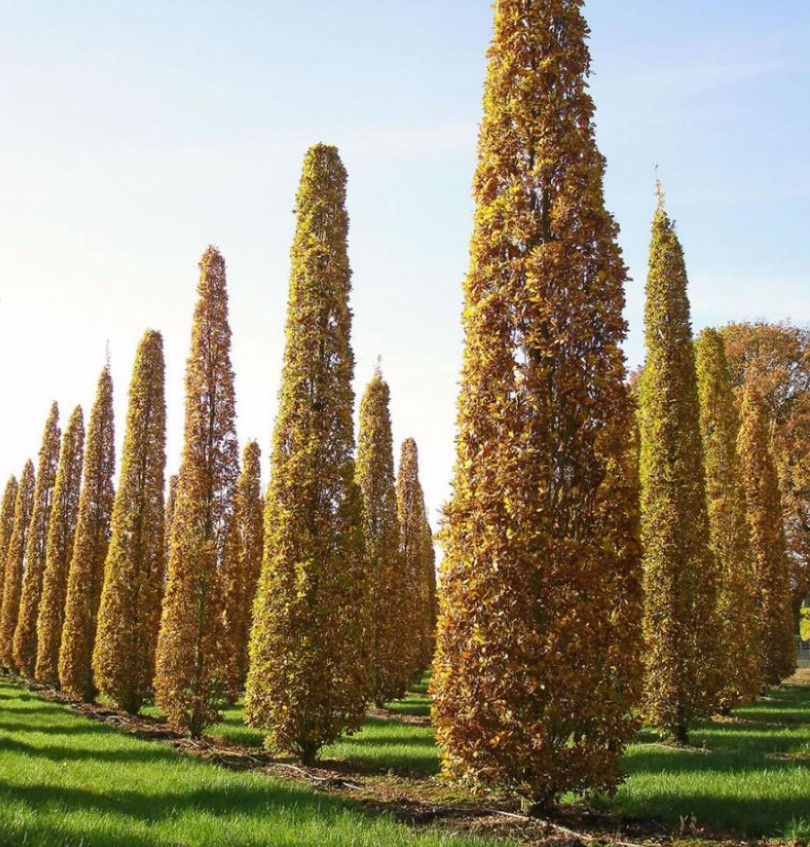
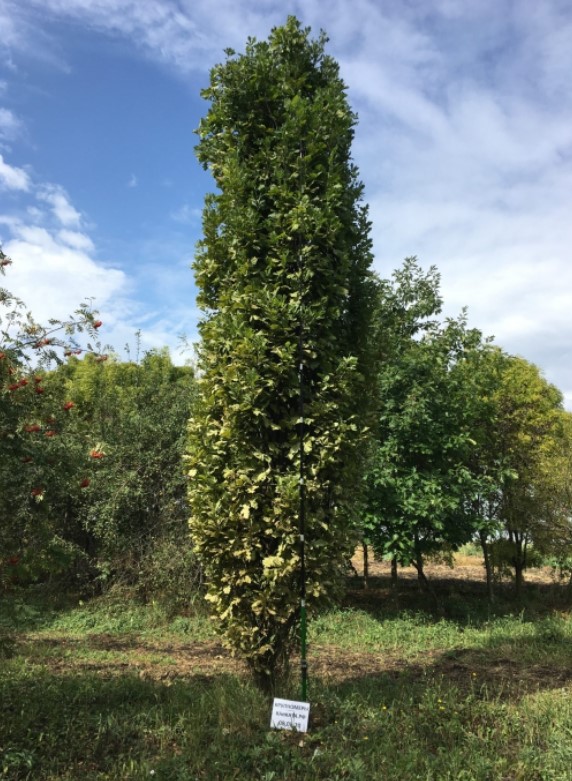
Description: A variety with an impressive crown shape. It can be conical, narrowly conical, or ovoid.
Leaves: Obovate, lobed, 8 to 15 cm long. They turn green in summer and turn various shades of orange and brown in autumn.
Acorns: They are brown in color and ripen in August-September.
Bloom: Occurs in May, with both male and female flowers present on the same tree.
Growing conditions: Young plants require regular watering during hot weather, but mature plants tolerate dry conditions better. This variety tolerates a variety of climates and adapts well to its environment.
Application: ChIt is often used in landscape design to create impressive compositions. Its beautiful crown and vibrant autumn color make it an attractive addition to parks, squares, and other public spaces.
Photo gallery of the English oak Fastigiata Koster
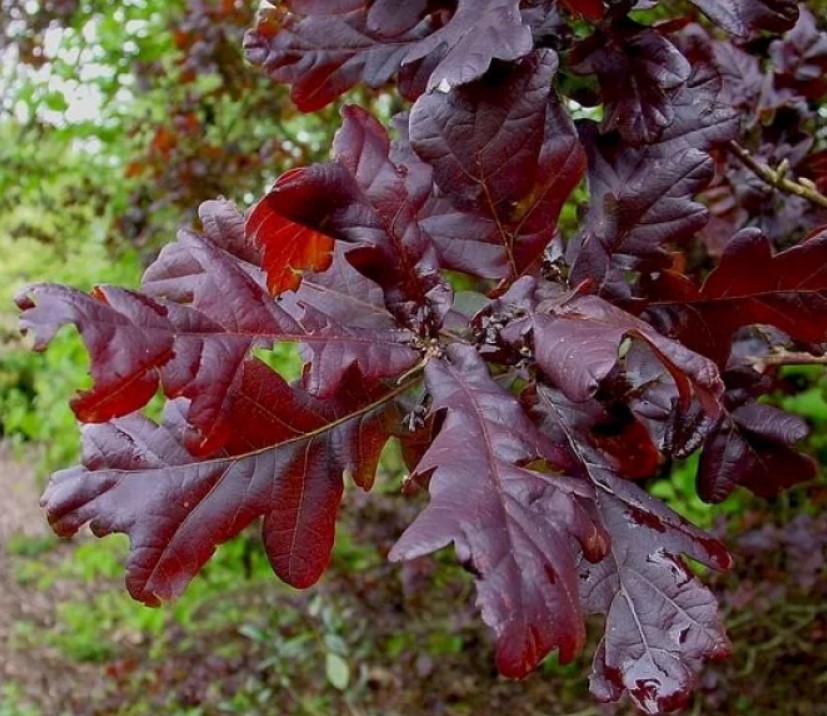
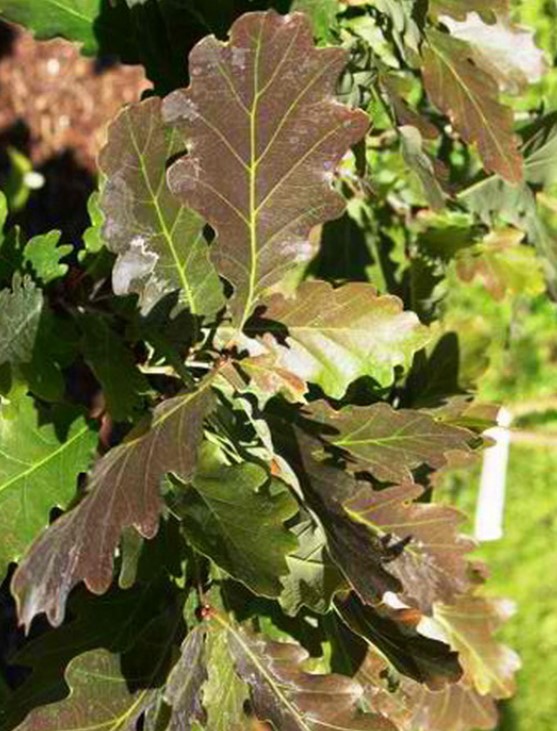
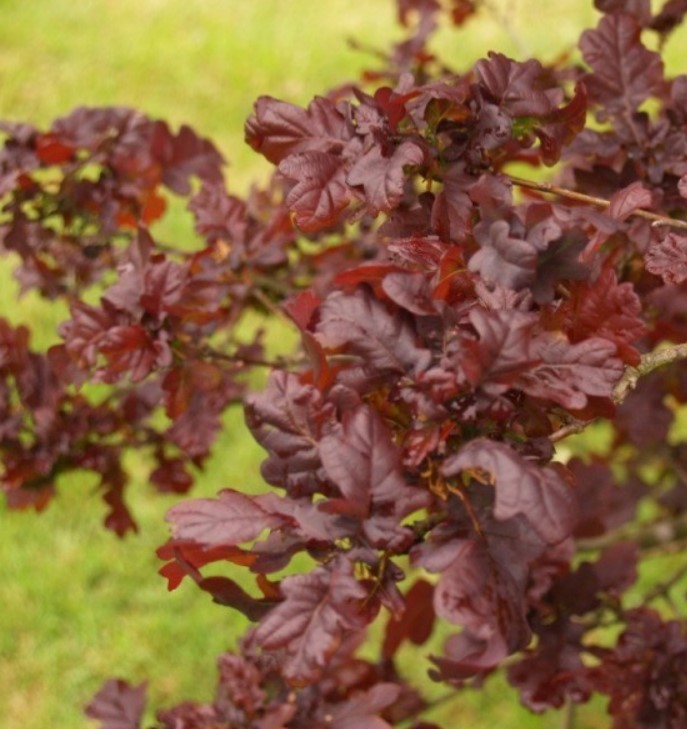
English oak Fastigiata purpurea
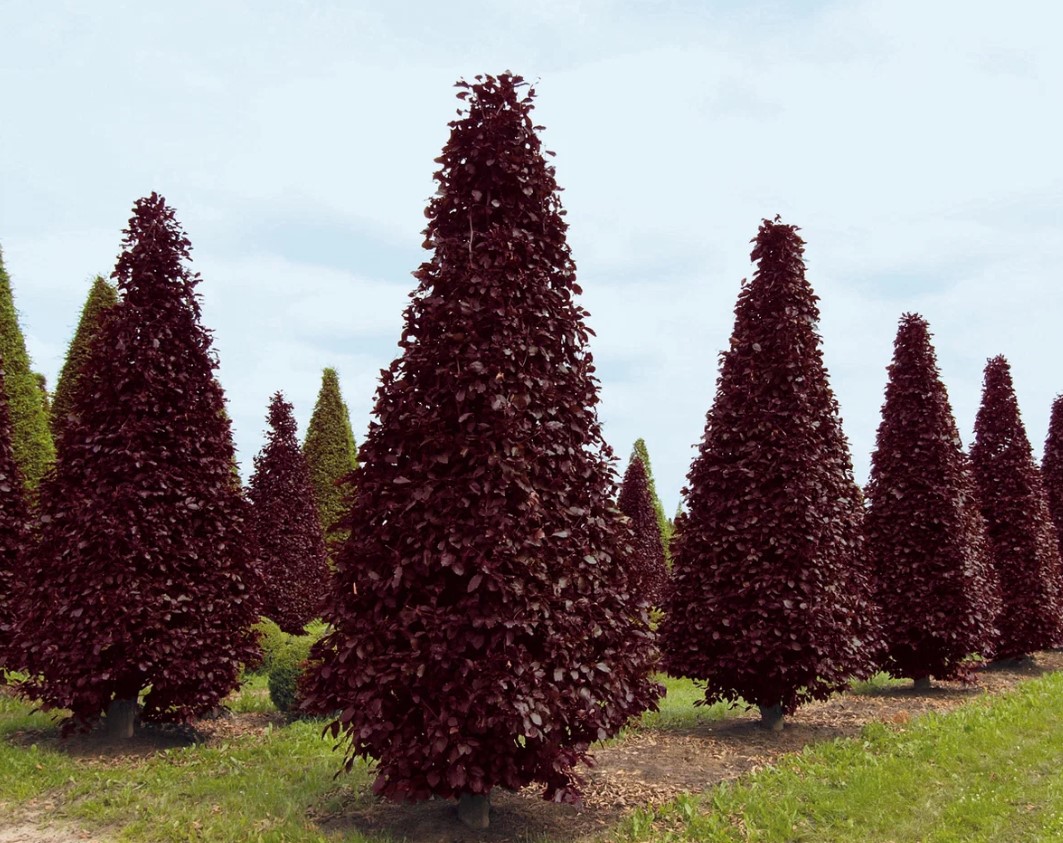
Description: A tree with a beautiful, spreading crown, reaching up to 4 meters in diameter. It can reach a height of up to 10 meters. The trunk is brown with a slight greenish tint.
Leaves: They are a vibrant red colour and have a glossy, leathery texture.
Bloom: It begins at the same time as the leaves unfold, and the tree's inflorescences are light yellow.
Stability: It is fairly drought-resistant and tolerates typical Moscow region winters well. However, when young, shoots may be susceptible to freezing, and in severe winters, branches may freeze.
Soil: Prefers fertile, fairly deep, and well-drained soils. It can also grow in sandy soils, provided they are moist.
Application: It is perfect for landscaping parks, gardens and other public places thanks to its beautiful crown and brightly colored leaves.
Photo gallery of English oak Fastigiata purpurea
English oak Fastigiata Hoopsi
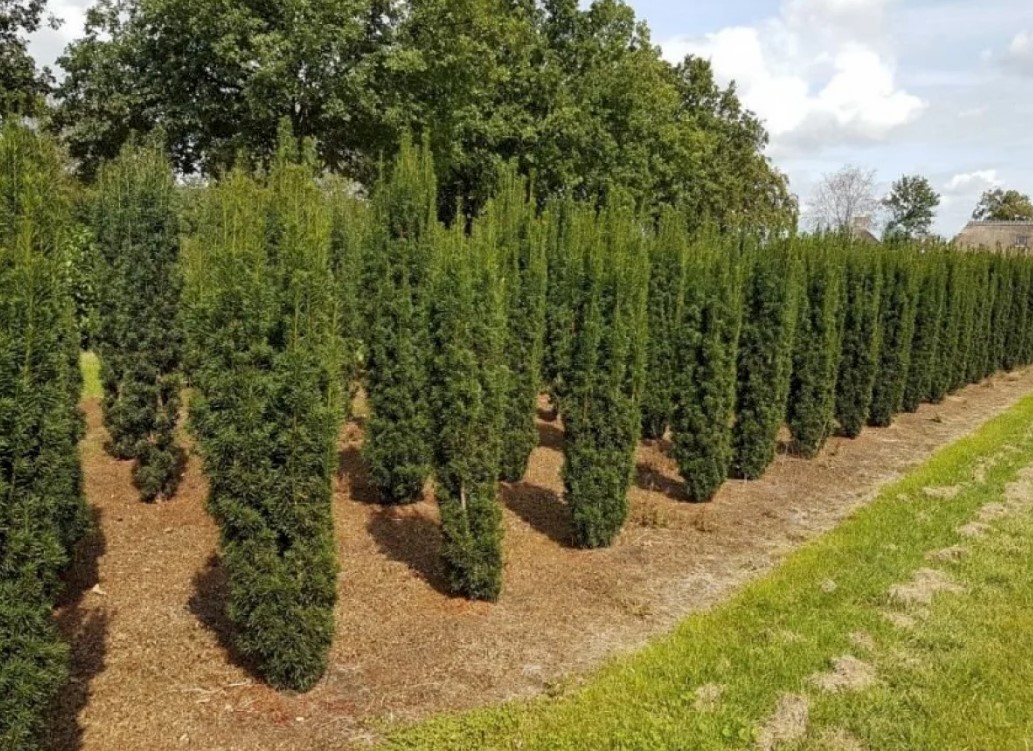
Description: A large deciduous tree with a pyramidal crown, reaching a diameter of up to 5 meters. It can grow up to 15 meters in height and is renowned for its longevity, living for hundreds of years.
Bark: Gray, smooth in young trees, but cracks appear in older trees.
Leaves: Regular-shaped, with rounded lobes, reaching up to 18 centimeters in length. Light gray below, dark green above. In autumn, they turn red and then fall off.
Flowering and fruits: Male flowers are usually yellow-green, while female flowers are red-green. Flowering occurs in May. The acorns are reddish-brown, oval, and ripen in the fall.
Soil: It's not demanding, but prefers fertile soils with a neutral or slightly acidic pH. It also enjoys sunny, moist locations.
Care: Mature plants are easy to care for, but should be treated for pests and diseases if necessary. Young plants require watering, mulching, and fertilization. It's recommended to cover them for the winter during the first few years.