White and yellow potatoes are nothing new, but did you know that purple potatoes actually exist? They appeared on our markets relatively recently – in the early 21st century. Since then, they have become known among gardeners and consumers for their pleasant taste and unusual color. Perhaps the most distinctive feature of these potatoes is that they can be eaten raw, thanks to the subtle nutty aftertaste of the flesh.
Content
- 1 Characteristics of purple potatoes
- 2 Purple Potato Photo Gallery
- 3 Advantages and disadvantages of purple potatoes
- 4 14 Purple-Skinned and Purple-Fleshed Potato Varieties: Descriptions and Photos
- 5 3 varieties of purple potatoes with white flesh
- 6 Features of planting purple potatoes
- 7 Propagation of purple potatoes
- 8 Growing and caring for purple potatoes
- 9 Harvesting and storing purple potatoes
- 10 Diseases and pests of purple potatoes, prevention and control
- 11 Composition of purple potatoes
- 12 Health benefits of purple potatoes
- 13 The harm and contraindications of purple potatoes
- 14 Using purple potatoes
- 15 Recipes with purple potatoes
- 16 The History of Purple Potatoes
- 17 Real reviews from gardeners about purple potato varieties
- 18 What to do if blue spots appear on regular potatoes
Characteristics of purple potatoes
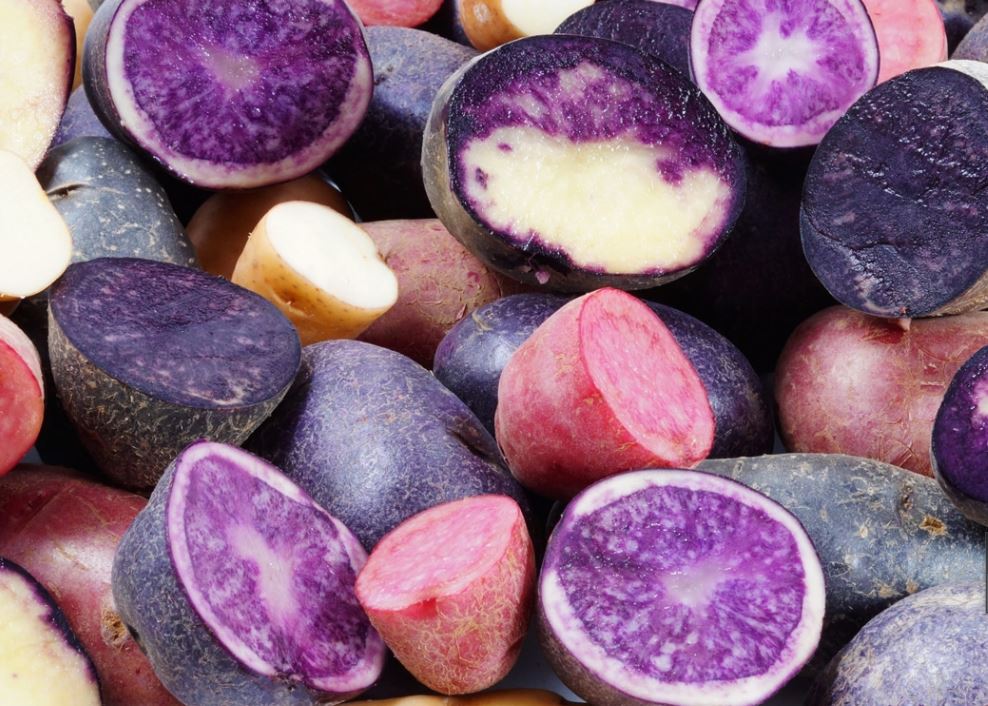
Purple potatoes originally grew as weeds in the vast expanses of South America. Their unusual coloring attracted the attention of breeders, who decided to use it as a basis for developing new varieties. They succeeded, and today gardeners have many hybrids with purple skin and flesh. Incidentally, lilac, purple, or bluish-pink skin can also conceal white flesh. But we'll discuss these varieties in more detail later.
Purple potatoes are characterized by the following features:
- medium starch content;
- friability;
- tuber weight from 50 to 200 g;
- oblong-oval tubers up to 10 cm long;
- thick skin;
- colored or partially colored pulp.
The harvest is primarily used for mashed potatoes, as the flesh crumbles during cooking. The potato's flavor is quite unique—they have tonic, nutty notes that give it a distinctive piquant flavor.
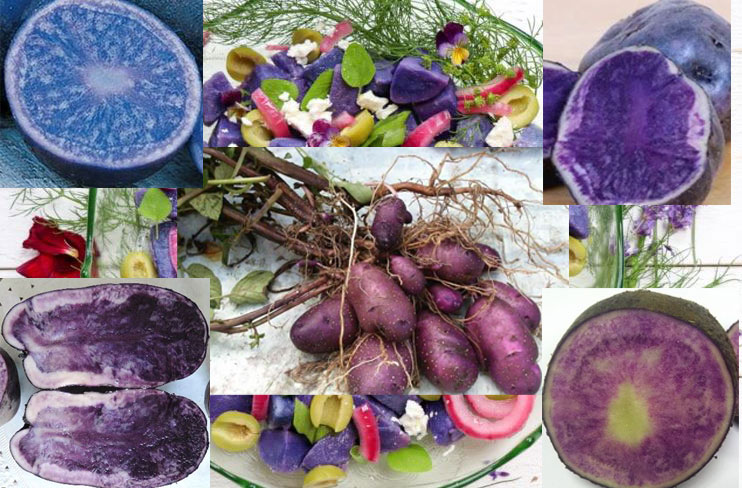
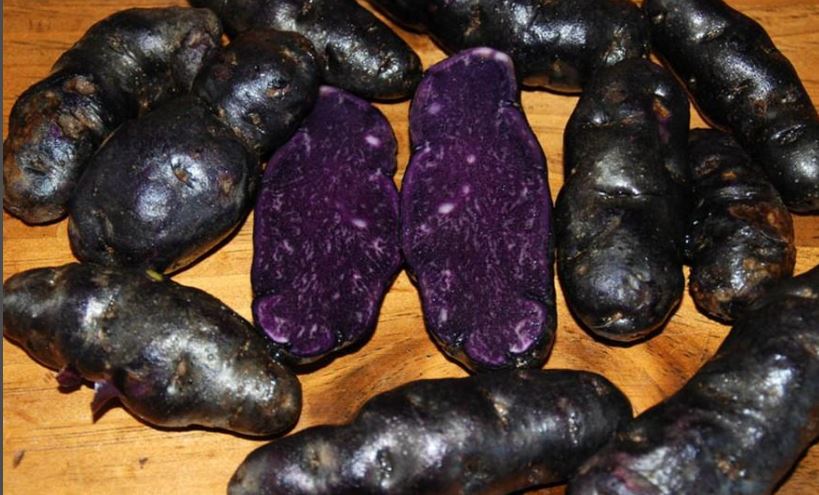
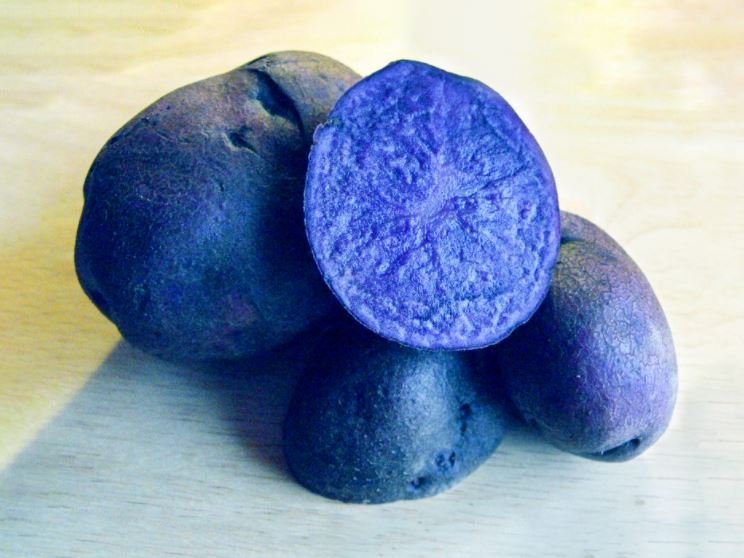
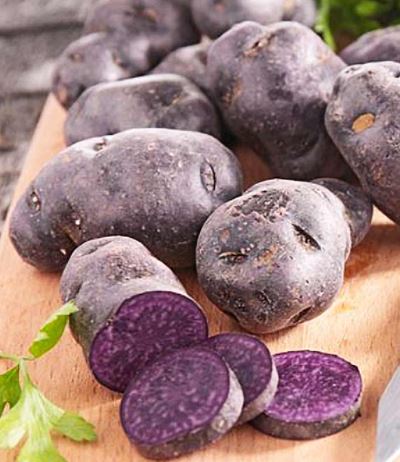
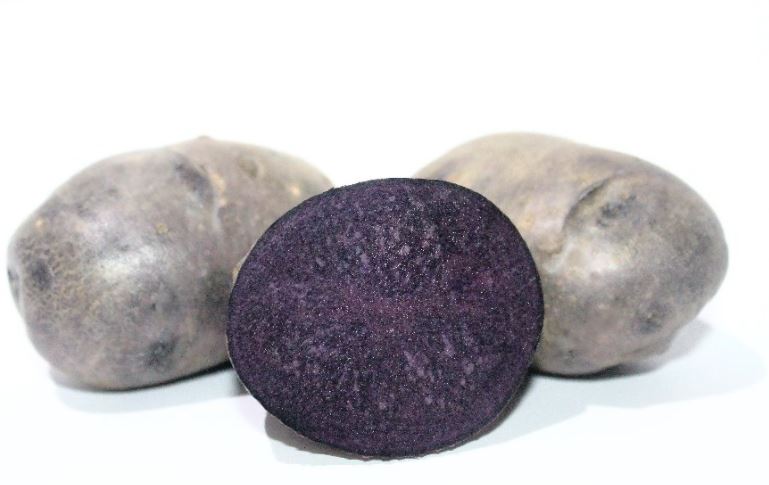
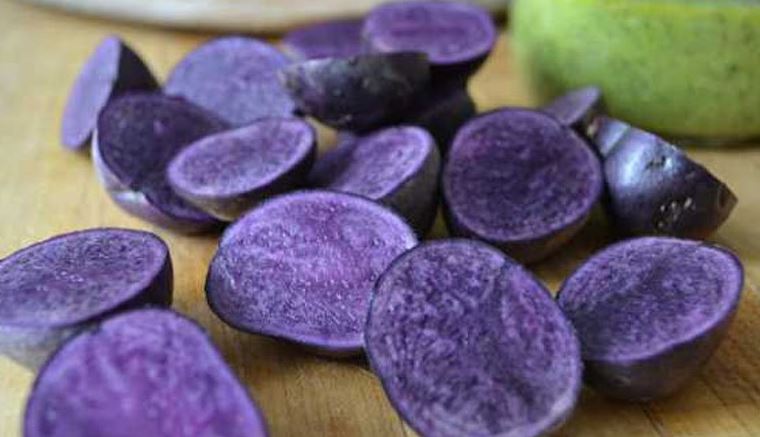
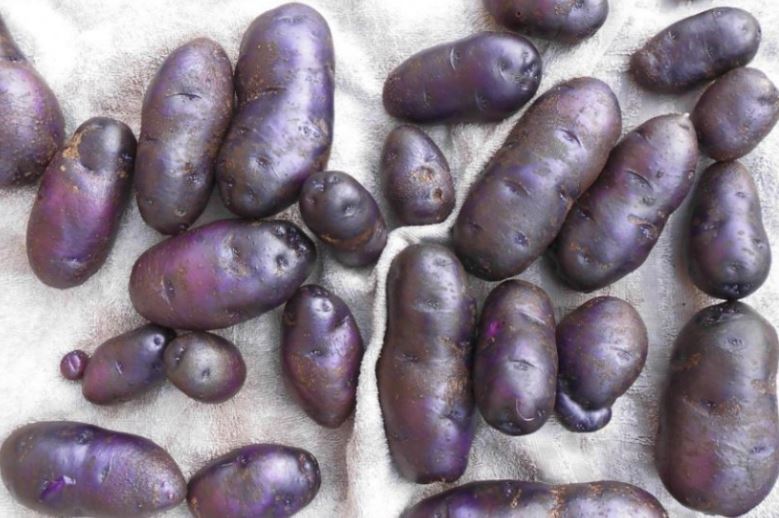
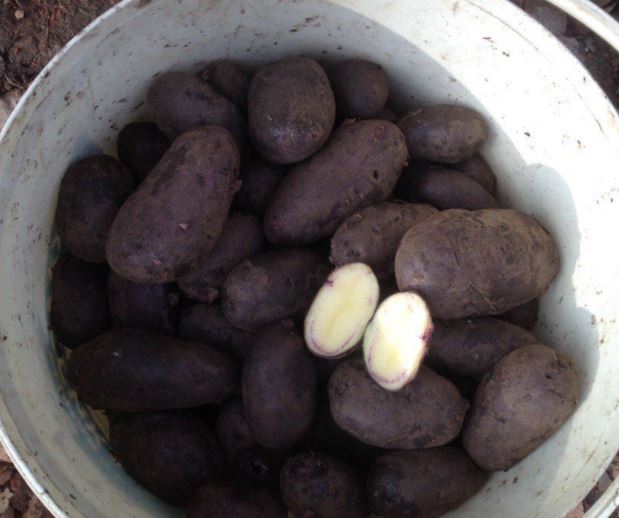
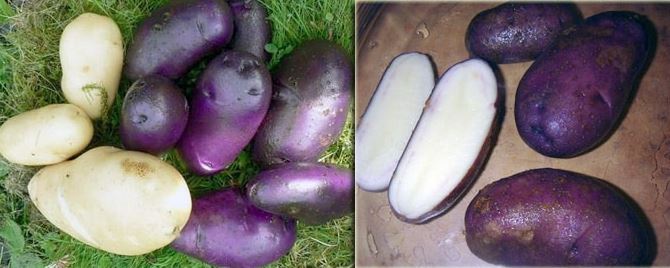
Purple Potato Photo Gallery
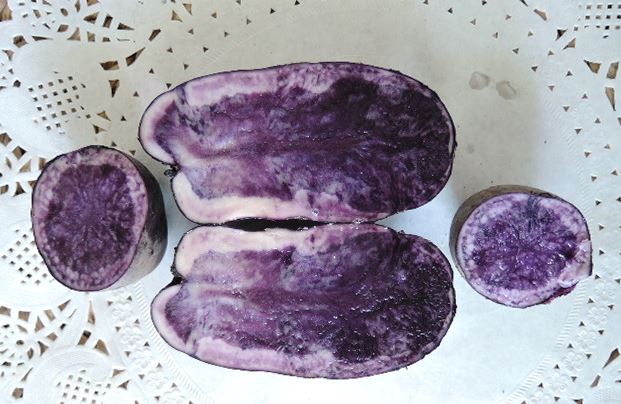
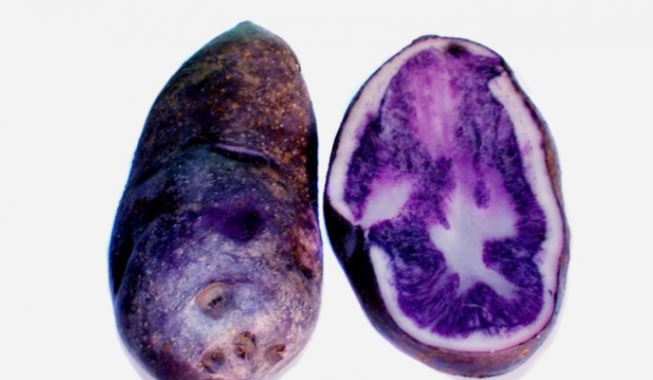
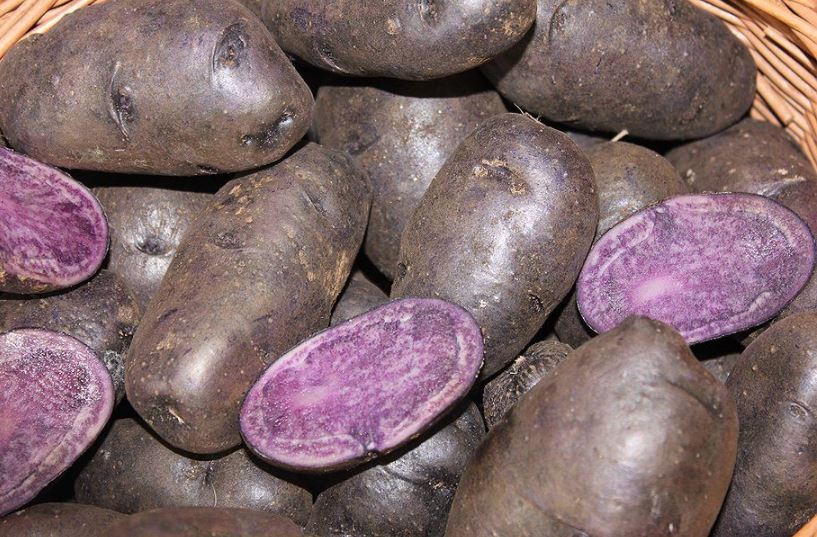
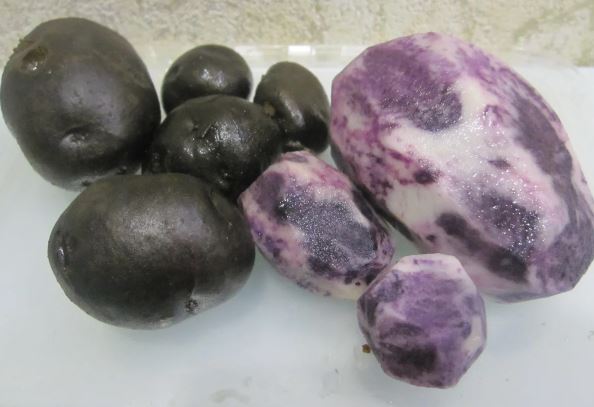
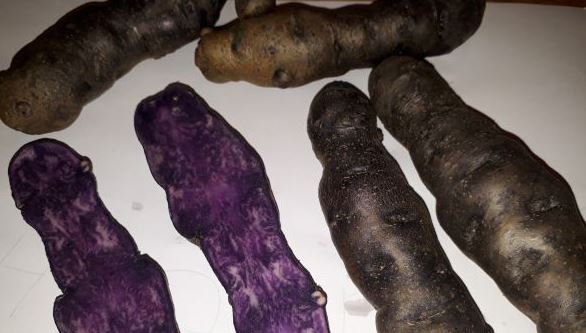
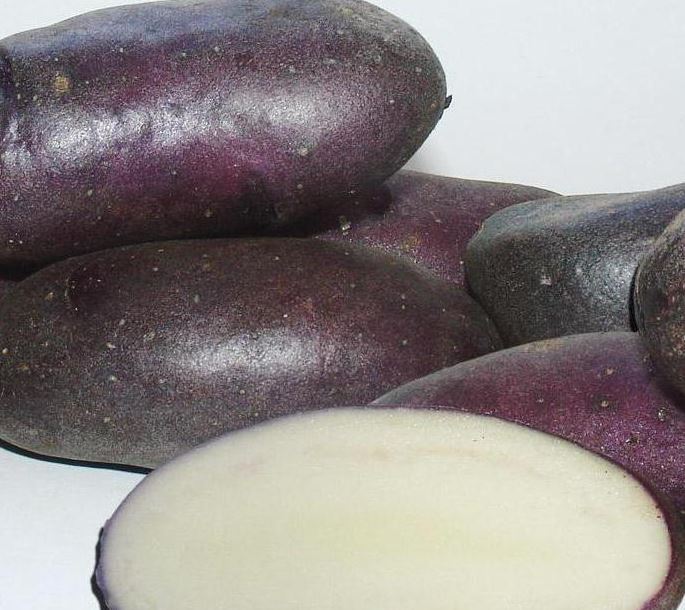
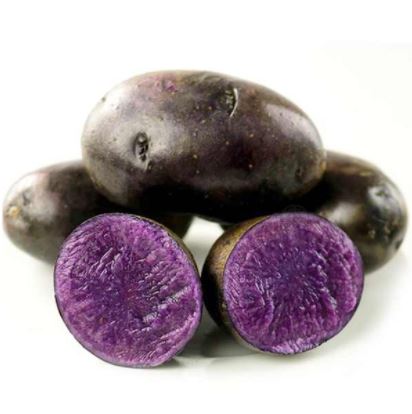
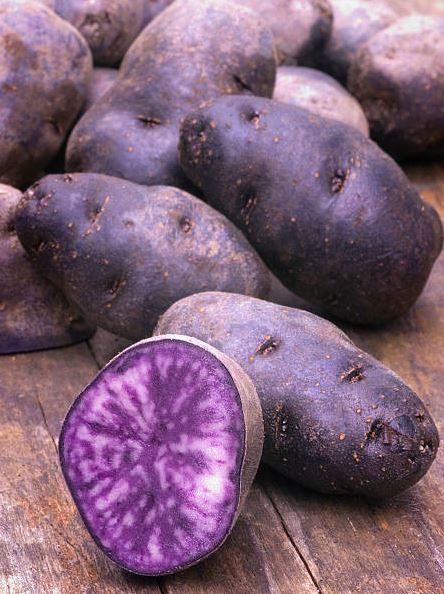
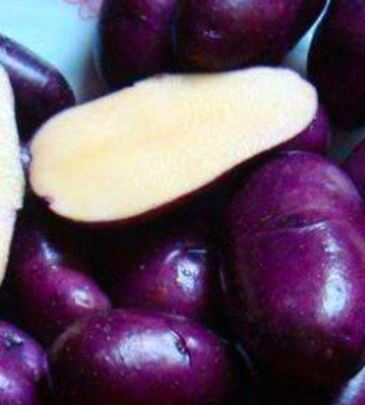
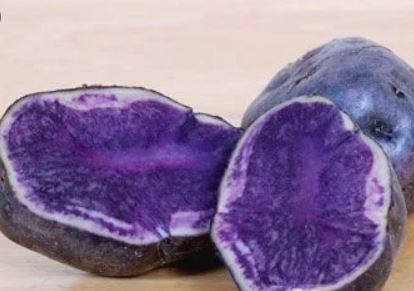
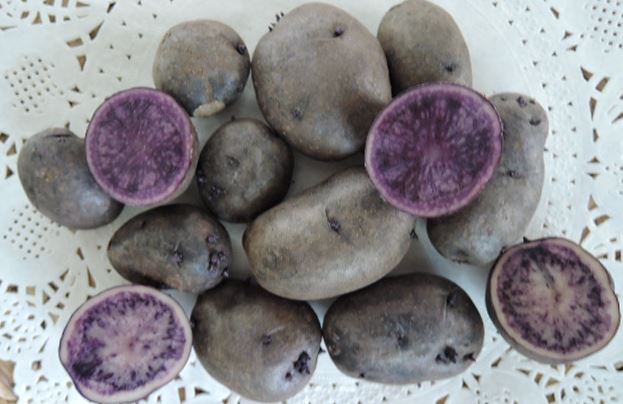
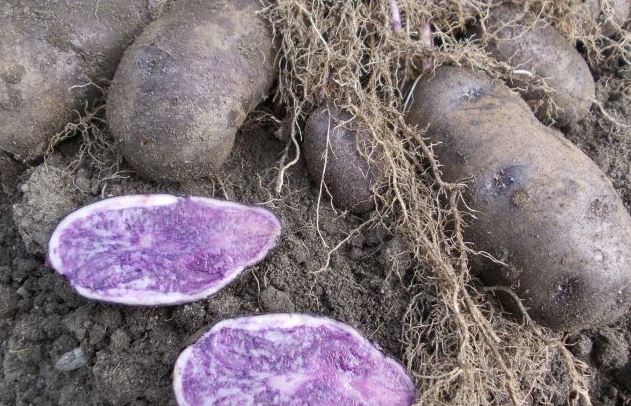
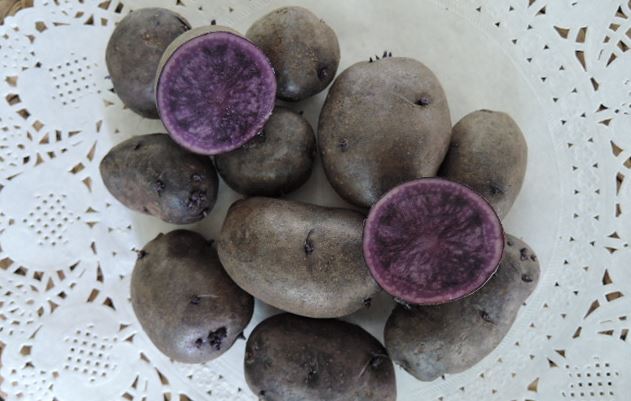
Look at the potato varieties that are purple even when cut:
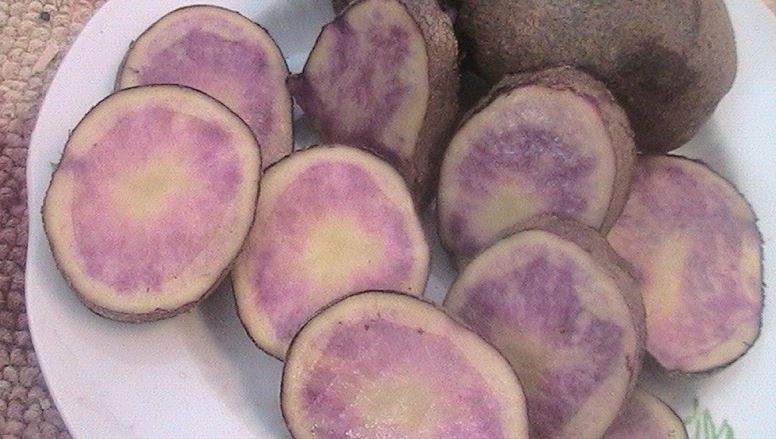
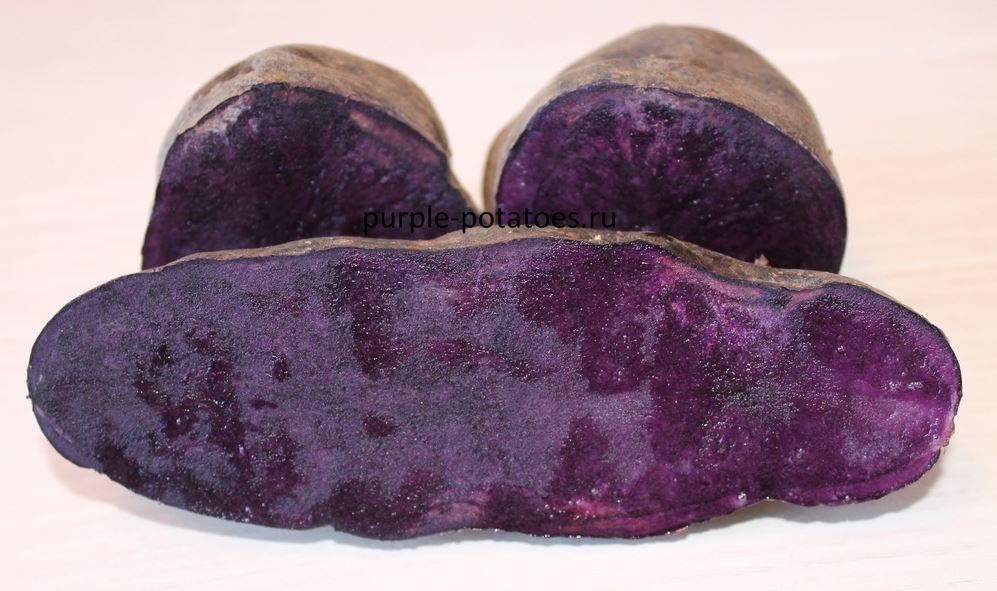
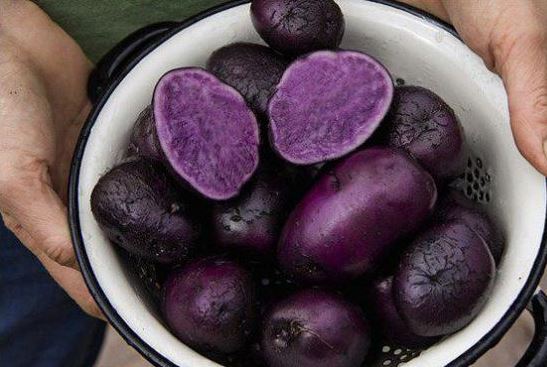
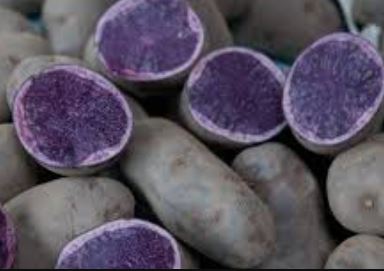
Advantages and disadvantages of purple potatoes
Purple potatoes, like all other vegetables, have a number of advantages and disadvantages. These are listed in the table below.
| Advantages | Flaws |
|
|
14 Purple-Skinned and Purple-Fleshed Potato Varieties: Descriptions and Photos
Purple potatoes have become popular among exotic lovers. Over 20 varieties are currently available commercially. These potatoes are purple both inside and out. Below are descriptions and photos of these varieties.
Vitelotte (Vitelotte or Vitelotte Noire)
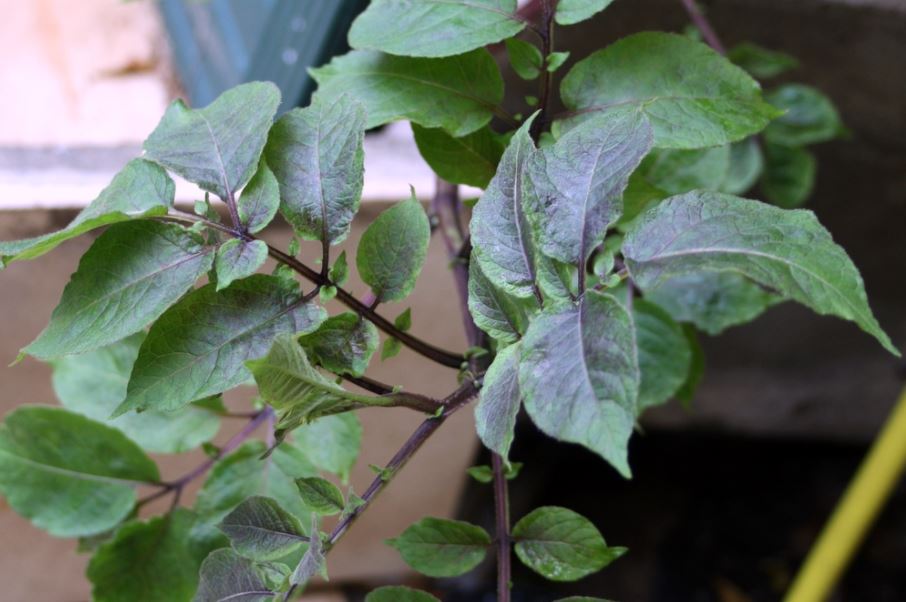
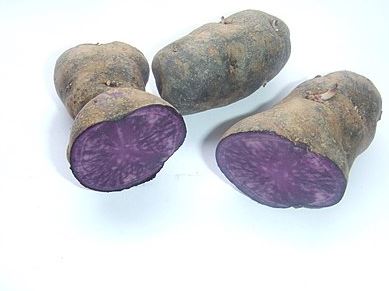
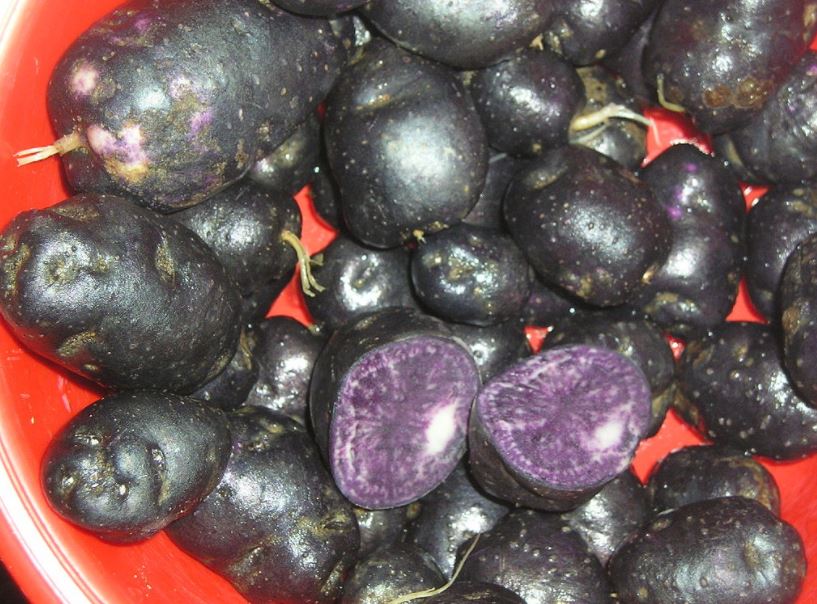
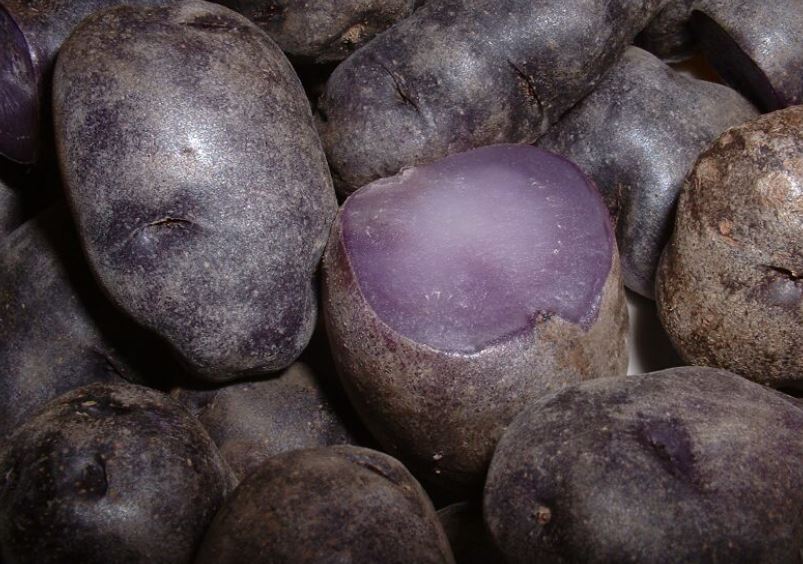
The variety's roots date back to 1812, when it was mentioned by writer Alexandre Dumas in his book "The Great Culinary Dictionary." The variety's yield is quite modest—only 200 kilograms per hectare. Its starch content is high, and a single tuber weighs no more than 90 grams. It's suitable for casseroles and mashed potatoes; it softens quickly during cooking, but retains its color. It's not listed in the registry.
Photo gallery of the Vitelot potato variety:
Indigo
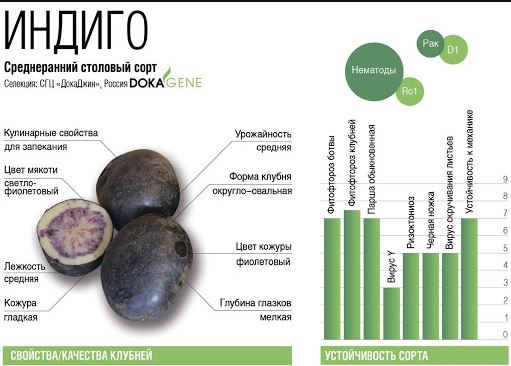
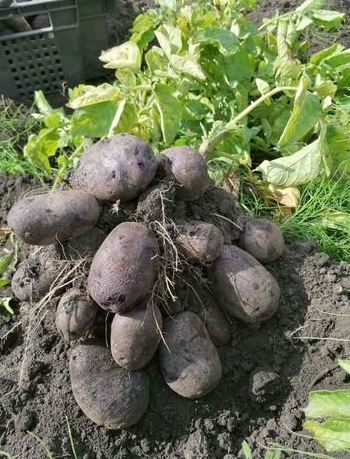
Potatoes are characterized by mid-early ripening periods; tubers can be dug up 65-80 days after the first shoots appear.
The variety belongs to the culinary type CD, which means that the potatoes become very soft when cooked, making them ideal for casseroles and mashed potatoes.
The plants have a strong immune system, are resistant to canker and nematode diseases, but are susceptible to late blight.
The shoots are medium-sized, the bushes are quite compact, there are not too many leaves.
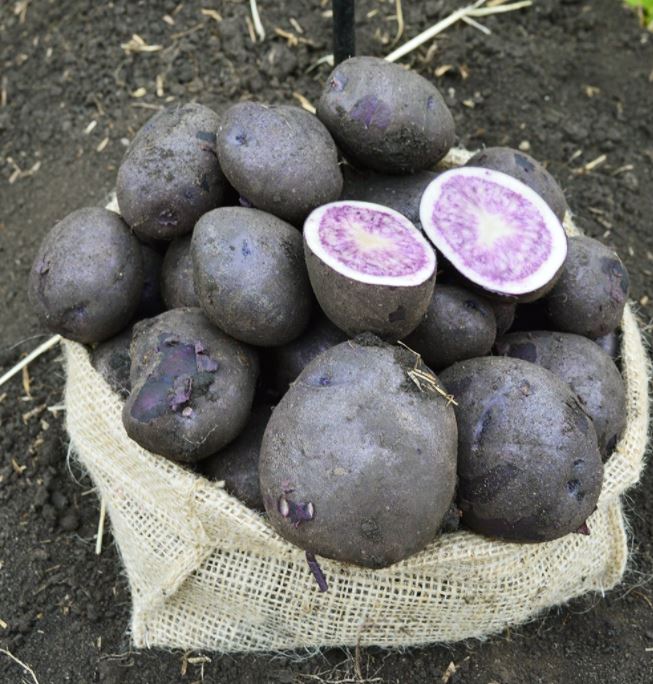
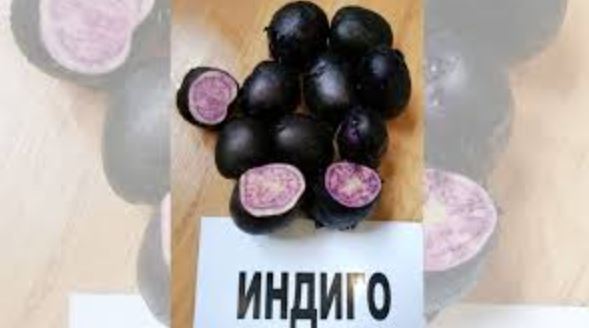
Each bush produces 8 to 11 tubers. They are oval-round in shape and weigh between 98 and 167 g. The skin is blue, as is the core. The eyes are small, located 1-2 mm deep. Yields range from 136-231 c/ha, with a maximum yield of 377 c/ha. Starch content ranges from 13.5 to 14.6%.
Included in the register in 2019.
Photo gallery of the Indigo potato variety:
Salblue
A super-elite potato with a mid-early maturity. From germination to harvest, it takes 75 to 80 days.
Table variety, can be used for making soups, salads, and frying.
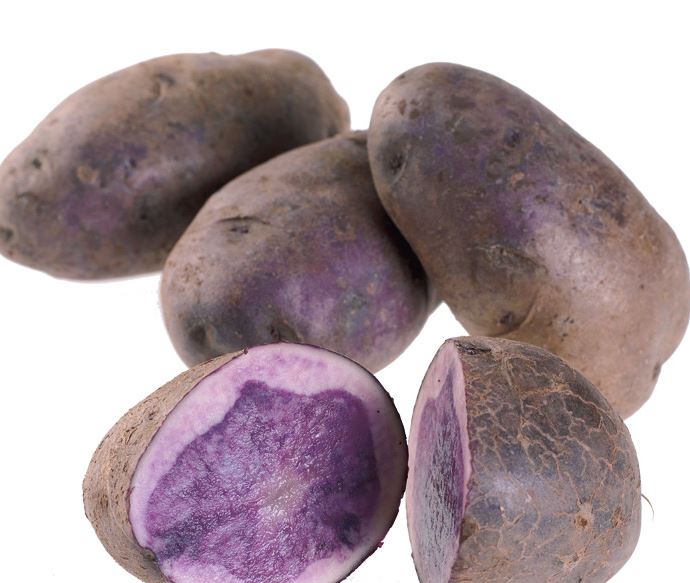
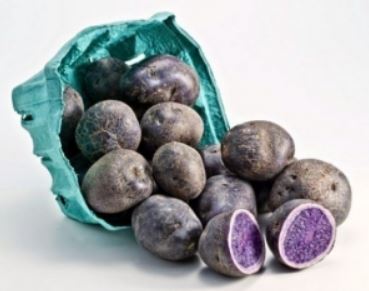
With proper care, yields reach 35-40 tons per hectare. Each bush produces approximately 14 tubers, each weighing no more than 115 g. They are round-oval in shape, with a dense, mesh-like skin, dark purple in color. The flesh is blue or dark purple.
Potatoes contain 16% starch and a fairly large amount of dry matter, so their taste will differ slightly from the taste of classic varieties.
Not included in the register.
Photo gallery of the Salblue potato variety:
All Blue
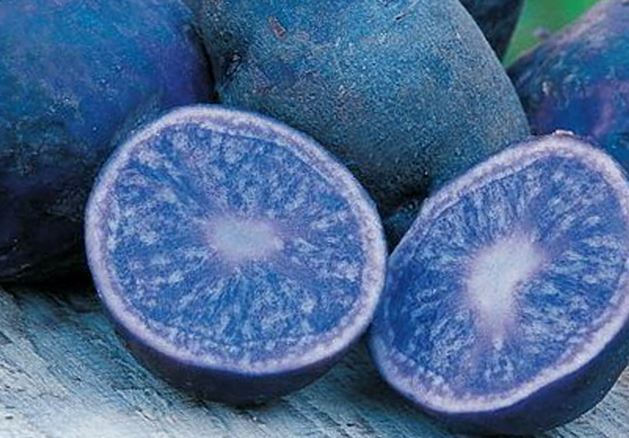
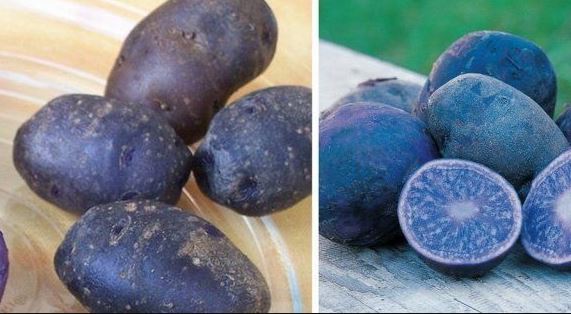
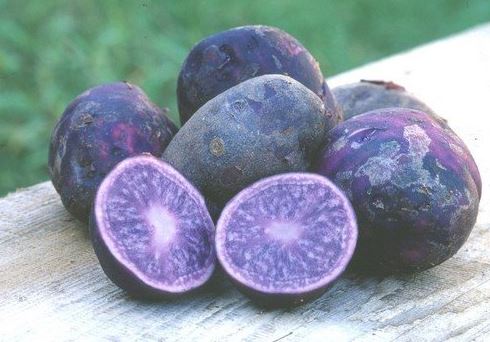
A mid-early potato variety. The tubers are oblong, weighing up to 120 g. The flesh is unevenly colored, with the center noticeably lighter than the outer part. Furthermore, the tubers become noticeably lighter when cooked. Suitable for a variety of dishes, these potatoes can be fried, baked, or boiled, and have a medium-drying time. Not included in the registry.
Photo gallery of the potato variety All Blue:
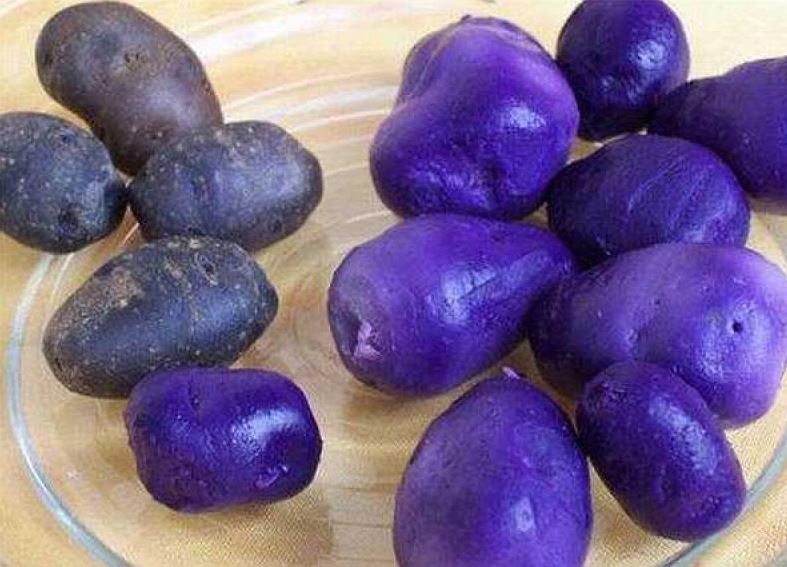
Explosion
An early-ripening potato variety, it matures in 65 days. The tubers are relatively large, weighing up to 150 g. The skin and flesh have a deep purple hue. It has a strong immune system, even being resistant to late blight. However, its shelf life is short, and the tubers won't keep for long. This potato has versatile culinary uses, including salads, soups, mashed potatoes, and casseroles. It is not included in the registry.
Photo gallery of the potato variety Explosion:
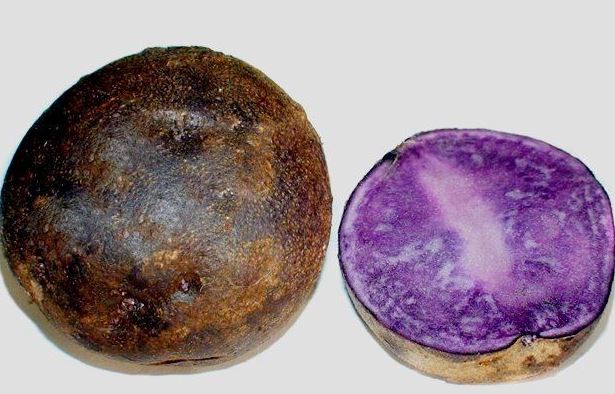
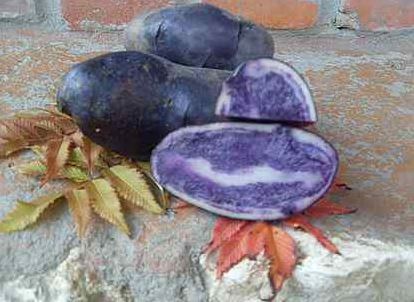
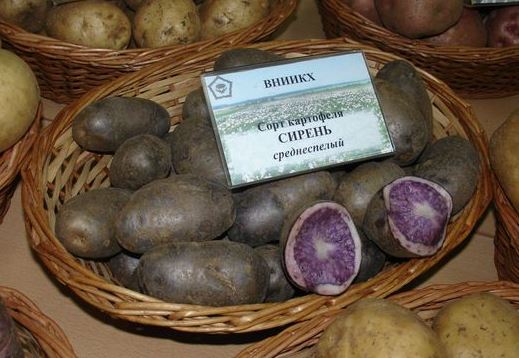
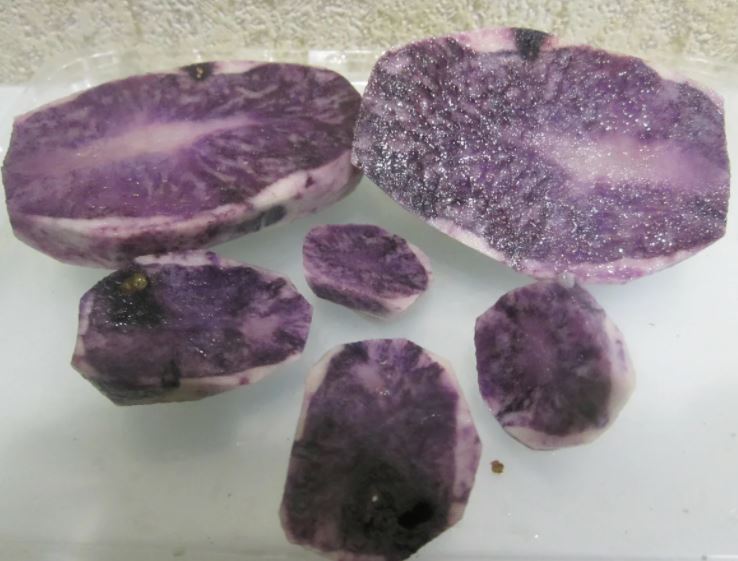
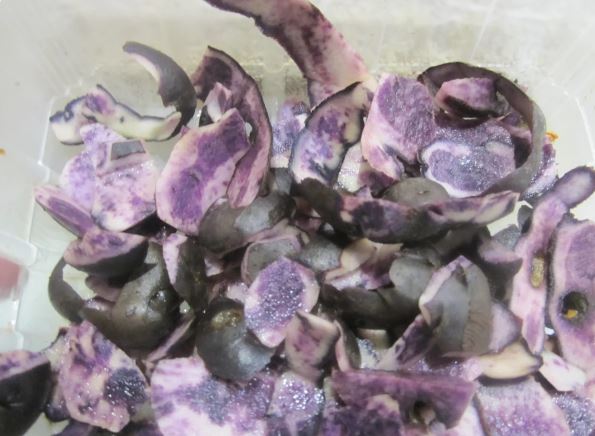
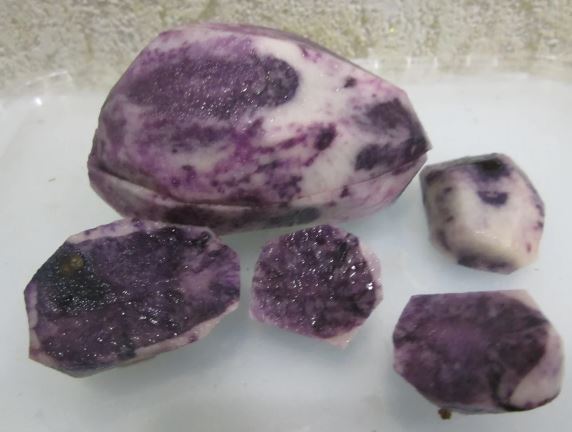
Lilac
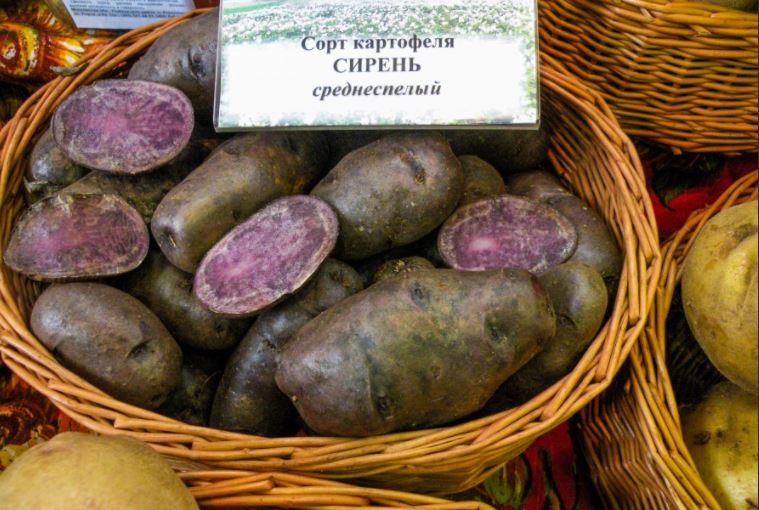
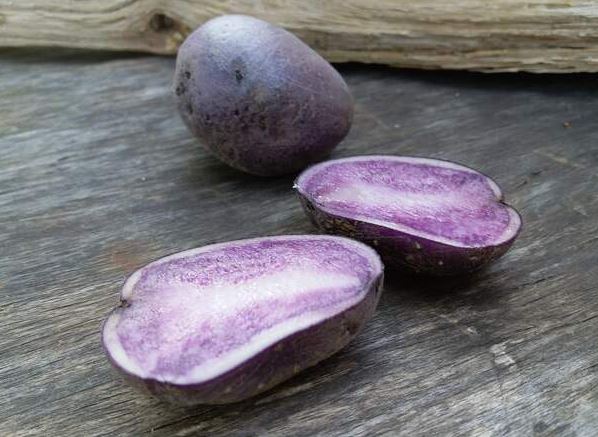
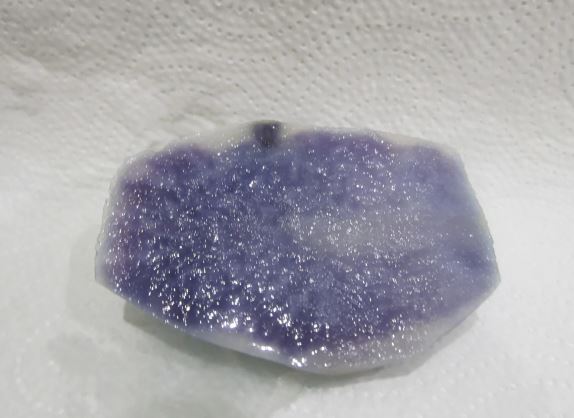
A mid-season variety developed by Russian breeders. Ripens in 95 days. The skin and flesh are purple. Up to 15 tubers weighing 80 g each ripen simultaneously on a single plant. The variety is highly resistant to canker and scab. It has a relatively long shelf life. The potato can be eaten raw or used in soups, salads, or baked goods. Not included in the register.
Photo gallery of the Siren potato variety:
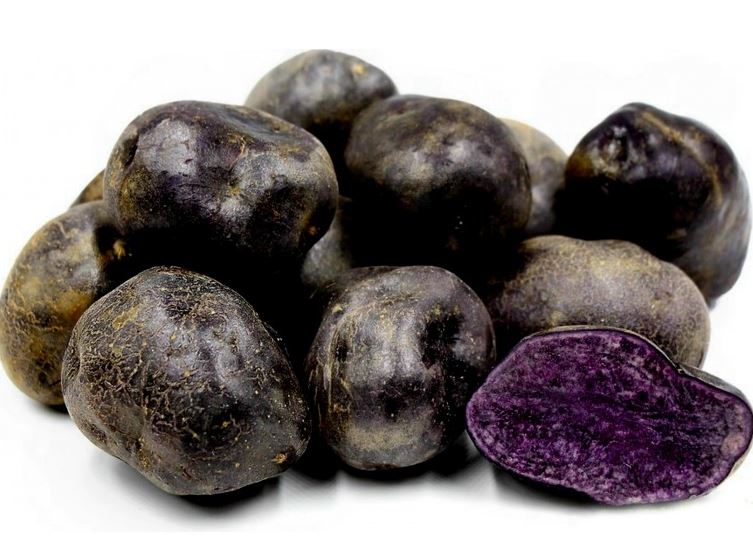
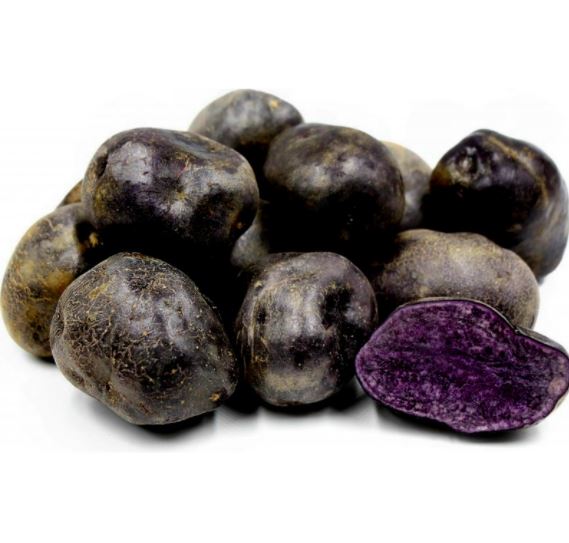
Peruvian Purple
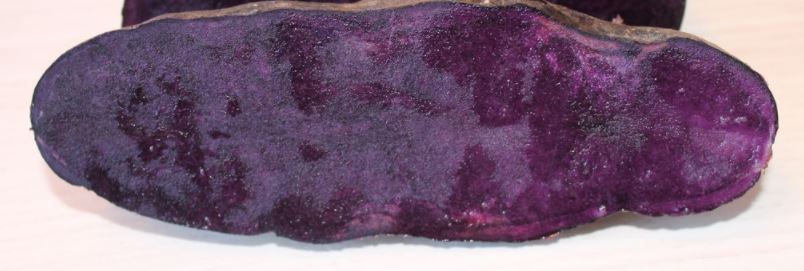
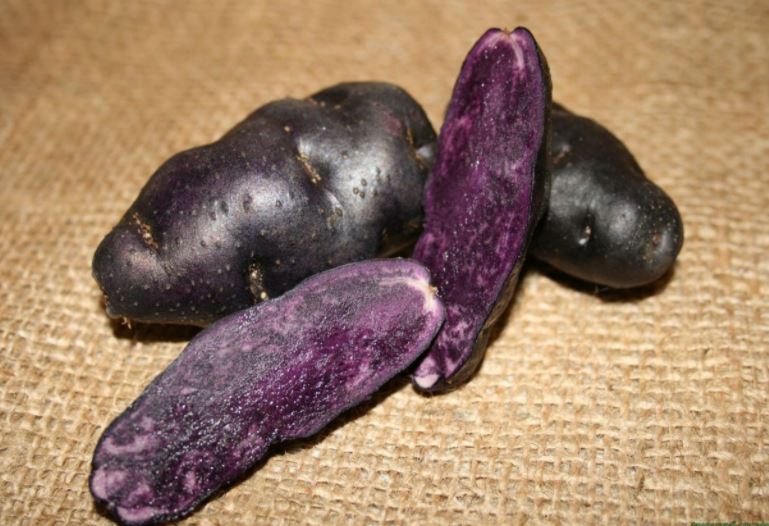
Another ancient variety, bred over a century ago. It ripens slowly, and harvesting begins approximately 110 days after planting. The yield is average. The tubers are oblong, weighing no more than 80 g. The flesh has a pleasant flavor with hints of hazelnut, making it a popular salad ingredient. All its characteristics are retained even after cooking. This variety has excellent shelf life; the harvest can be stored until spring without losing its quality. It is not listed in the registry.
Photo gallery of the Peruvian Purple potato variety:
Adirondack Blue
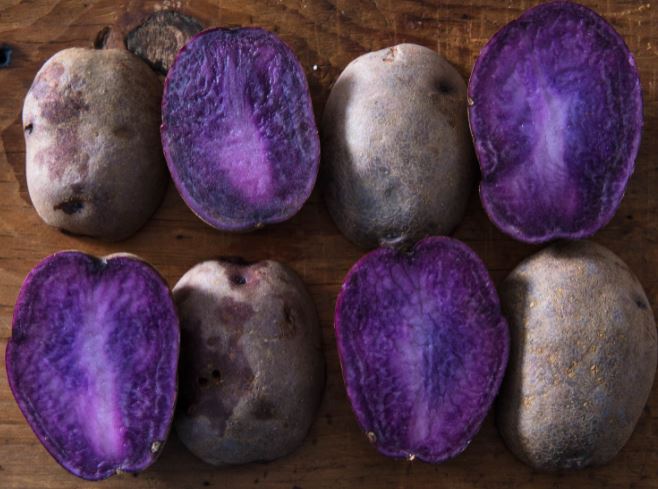
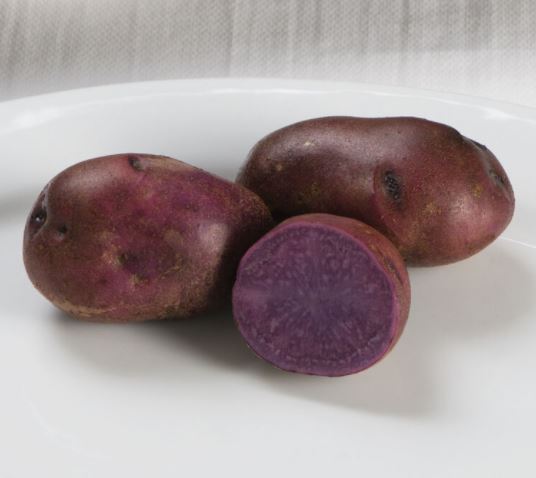
This variety was developed by American breeders in 2003. It has a medium ripening time, and can be harvested 95 days after planting. The bushes are lush and dense, with dark purple leaves. A drawback of this variety is its low resistance to common potato diseases. Tubers can weigh up to 100 g, but they do not store well due to their relatively short shelf life. This variety is not listed in the registry.
Photo gallery of the Andriak Blue potato variety:
Solokha
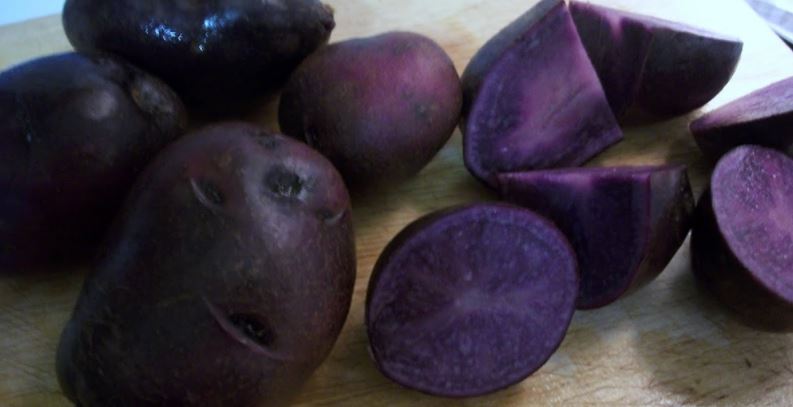
The first Ukrainian variety with purple skin and intense blue (violet) flesh. It is mid-season, ripening within 120 days of planting. Tubers can reach a weight of 150 g, with a relatively high yield. The tubers have purple skin and purple flesh, which contains approximately 20% starch. A pleasant nutty flavor persists even after cooking. It has excellent shelf life; under favorable conditions, the harvested crop can last up to 9 months. Solokha is also resistant to canker, scab, nematodes, and late blight. It is not included in the registry.
Photo gallery of potato variety C
Russian Blue
This variety was bred by domestic specialists and has a medium ripening time (70 to 90 days). Fruits weigh up to 100 g, have tasty flesh, and their color remains unchanged after cooking. Storage quality is poor, with the harvest lasting 3 to 5 months. Not included in the registry.
Photo gallery of the Russian Blue potato variety:
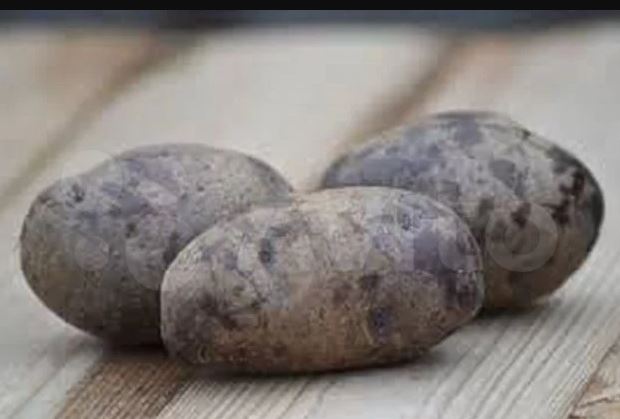
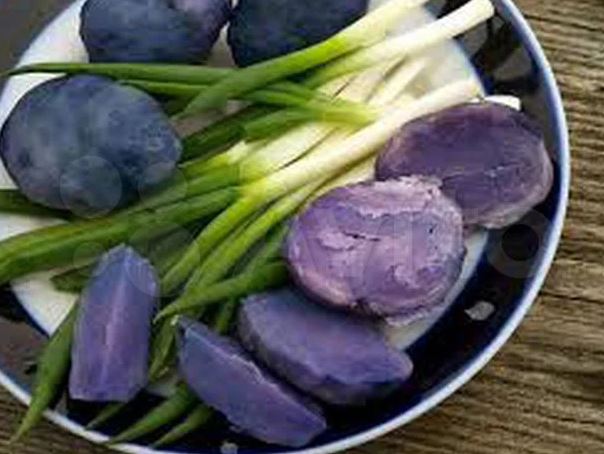
Exotic
A mid-early variety developed by Dutch breeders about 30 years ago. The fruits are fairly large and oblong, with purple skin covered in deep-set eyes. The flesh is unevenly colored, resembling a marbled pattern, with white and cream tones. It has a high immunity. It is not listed in the registry.
Photo gallery of the Exotic potato variety:
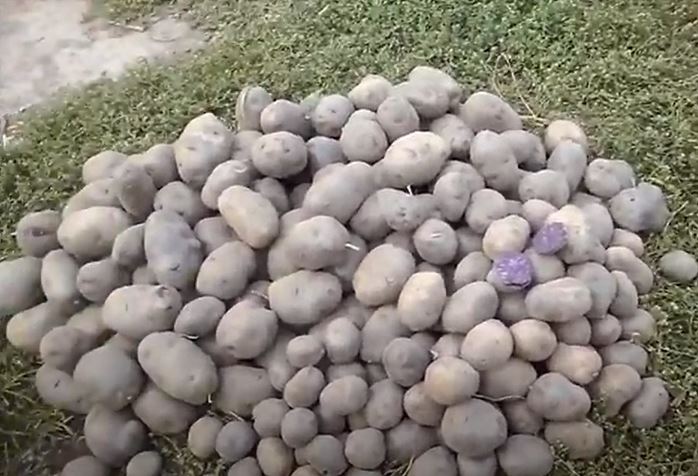
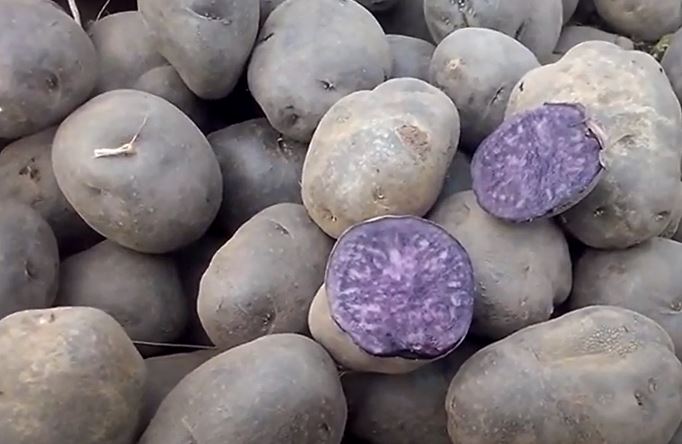
Purple Beauty)
Developed by American specialists, this variety boasts a medium ripening time and high yields. Bushes grow up to 80 cm, with round, slightly elongated fruits. The flesh is very juicy, making it suitable for juice production. Not listed in the registry.
Photo of the Purple Beauty potato variety:
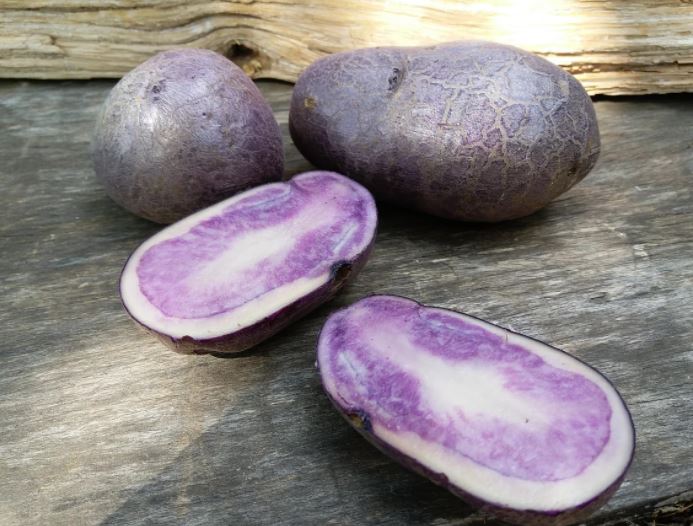
Polrasin (Polesie Early Blue)
It is based on the Exotic variety, improved by Ukrainian breeders. This potato is characterized by early maturity (up to 65-70 days) and resistance to scab and canker. It has excellent shelf life. The crop grows very compactly under the bushes. It is not included in the register.
Photo of the Polrasin potato variety:
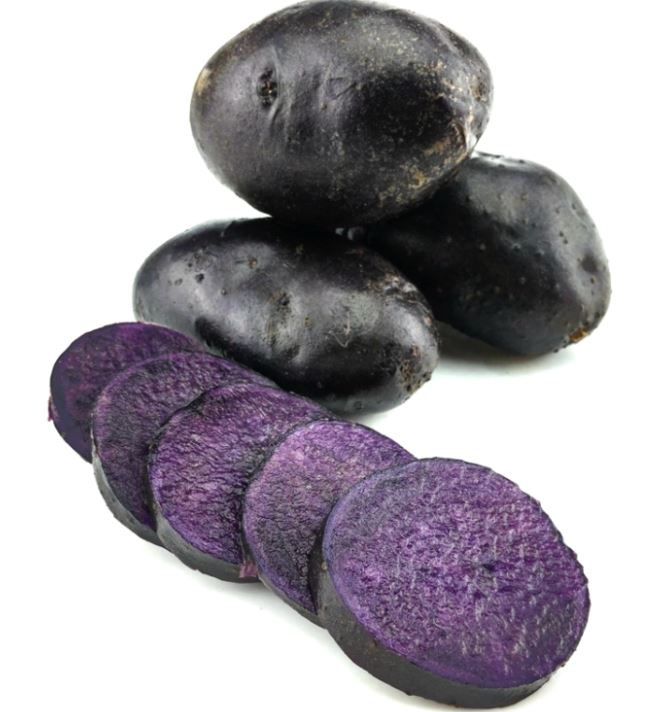
Miami
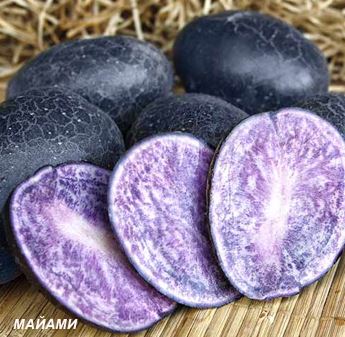
It has a mid-early ripening period. The tubers are large, oval, weighing up to 110 g. Yields are good, ranging from 35 to 40 tons per hectare. Furthermore, the Miami variety is resistant to late blight. It is not included in the registry.
By the way! Sweet potatoes, or yams, can also be purple. For example, the American Purple variety is well-known.
Photo of the Miami potato variety:
3 varieties of purple potatoes with white flesh
Not all purple-skinned potatoes have purple flesh. Here are several purple-skinned potato varieties with white flesh.
Knapweed
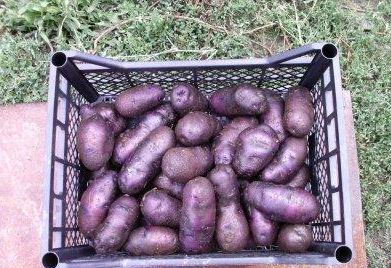
A mid-early potato variety. From germination to harvest, the potato takes 80 to 100 days. This period may vary slightly depending on the growing region. Recommended for the Central Russian region.
The bushes are distinguished by a well-developed root system; with proper care, one plant produces approximately 15 tubers weighing 77-112 g. There are very few substandard potatoes.
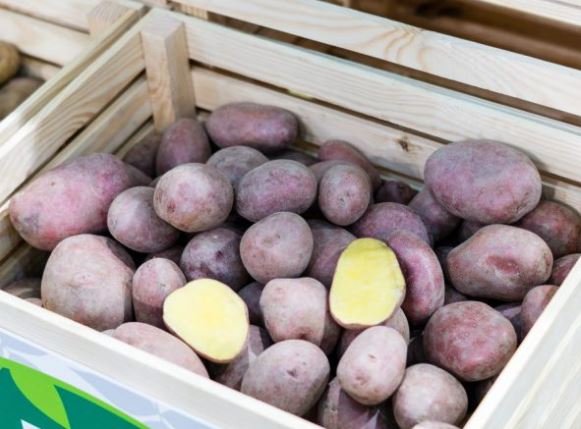
The tubers are elongated-oval in shape, with a smooth surface and a minimal number of small eyes. The skin is purple, but the color becomes less intense when cooked. The flesh is creamy, with some tubers featuring pinkish-purple flecks.
Yields vary depending on the growing region and crop management practices, ranging from 93 to 256 centners per hectare. The absolute maximum was achieved in the Moscow region, where 482 centners per hectare were harvested.
Marketability is average, ranging from 71 to 94%. Shelf life is 96%. Starch content is 12.6-15.9%.
The variety is resistant to canker, relatively resistant to late blight, and moderately resistant to rugose and striped mosaic. It is susceptible to nematodes.
Included in the register in 2014
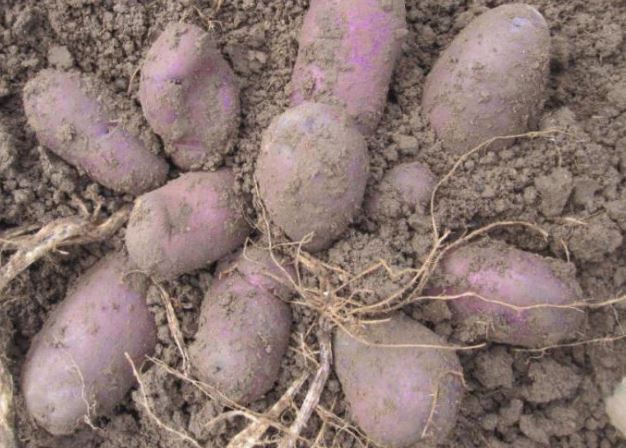
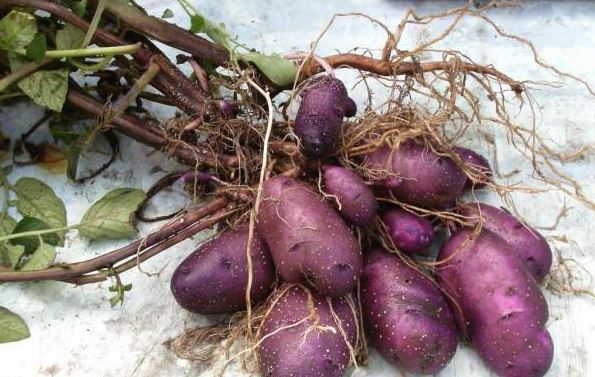
Photo gallery of the Vasilek potato variety:
Blue Danube
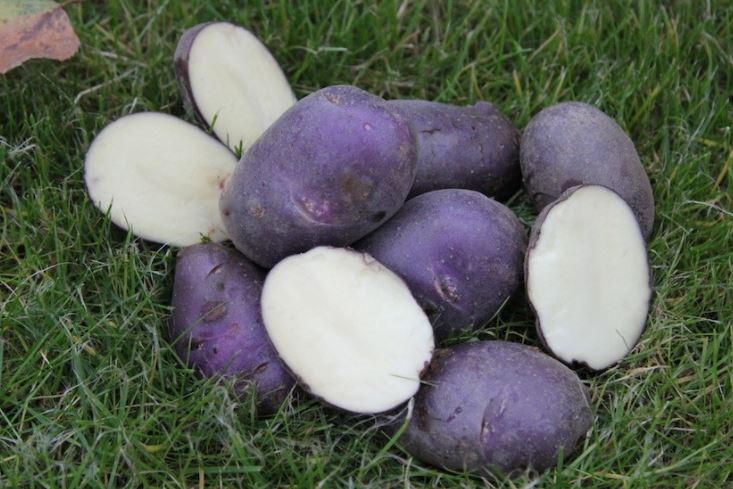
This variety was bred by specialists in the UK. It is characterized by early ripening (65-80 days). The tubers are relatively large, weighing between 100 and 200 grams, with 8 to 12 tubers ripening simultaneously on a single plant. Yields are very high, reaching 400 centners per hectare. Marketability is 96%, and shelf life is 95%. The flesh is crisp, containing up to 16% starch. The variety is characterized by excellent immunity, even resisting late blight. It is not included in the register.
Photo gallery of the Blue Danube potato variety:
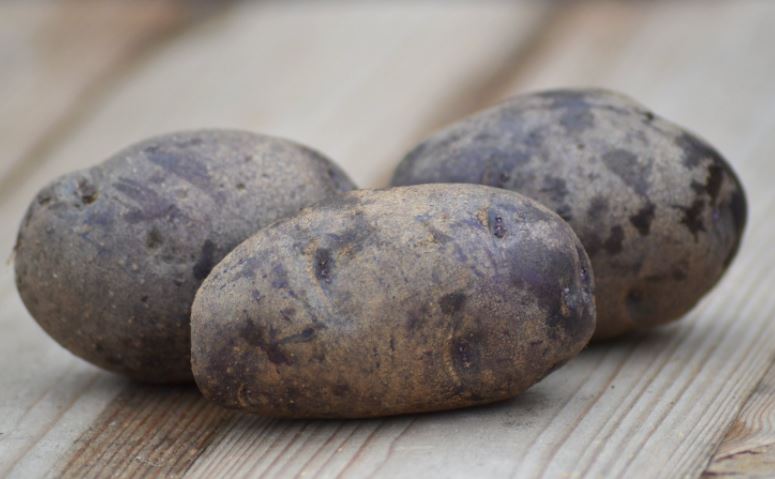
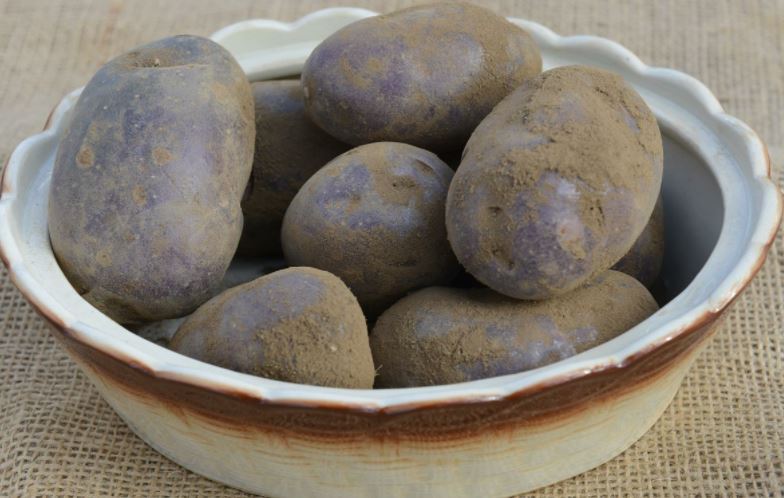
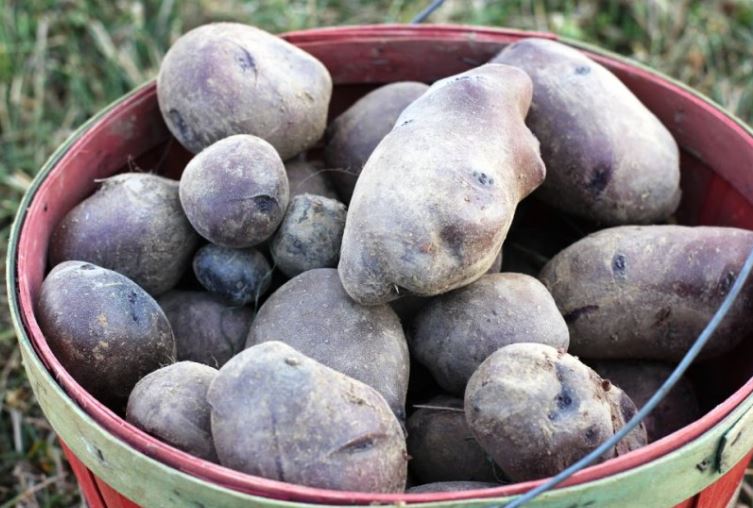
Gypsy
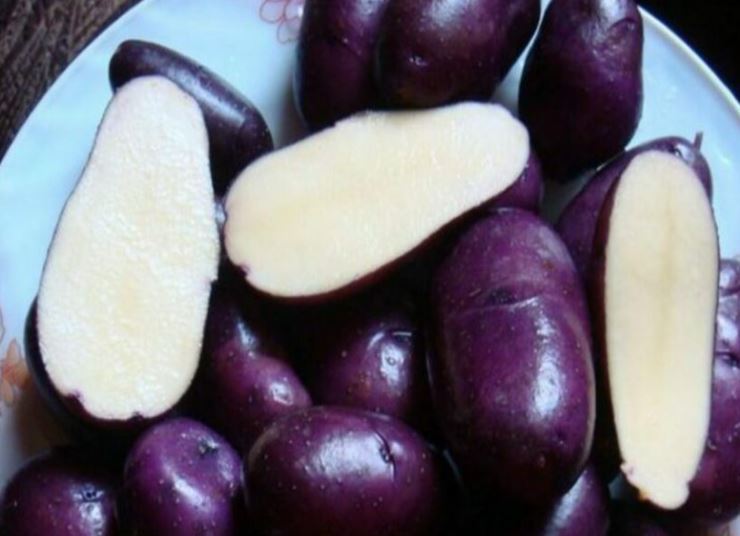
This variety has not yet been registered, but it has already become popular among gardeners thanks to its pleasantly flavored tubers. A single plant produces up to 14 potatoes. The flesh is predominantly creamy, but may have purple veins. Its immunity is not the strongest, so plantings require protection from diseases. Furthermore, the purple skin is very delicate and thin, so harvesting requires extreme care. It is not listed in the registry.
Photo gallery of the Tsyganka potato variety:
Features of planting purple potatoes
In recent decades, purple potato varieties have become increasingly popular among gardeners. However, achieving a good harvest requires following certain growing guidelines.
Soil requirements
The potato plot should be bright, with beds on the southwest side of the garden ideal. Purple potatoes prefer light soil to allow air to reach the roots. The soil should be neutral in pH.
The bed is dug up twice: in the fall with the addition of fertilizer and in the spring before planting potatoes.
Preliminary preparation
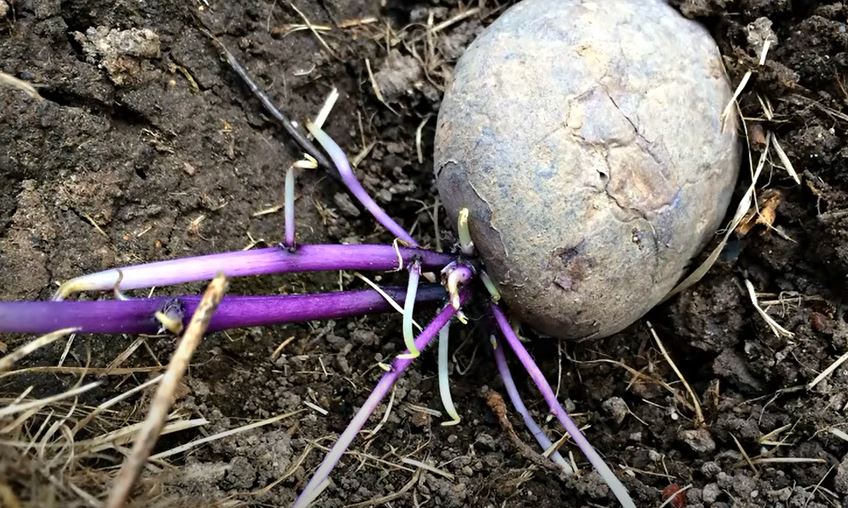
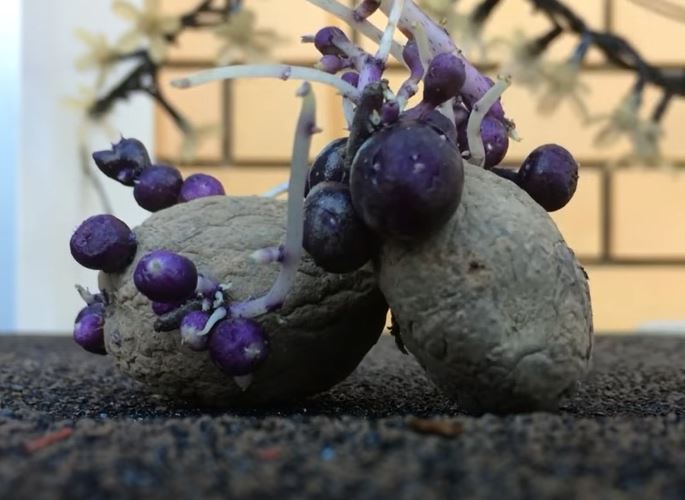
Potatoes need to be prepared before planting. Three to four weeks before planting, place the tubers in boxes and place them in a well-lit area with a temperature of 14 to 18°C.
Planting times and rules
Potatoes can be planted in open ground only after the soil has warmed up to at least +5…+8 °C without the risk of night frosts.
- Before planting in the spring, the soil is dug over, and future rows are marked on the surface of the bed. The spaces between them should be at least 60 cm.
- Next, holes are dug to a depth of 10 cm at a distance of 30 cm from each other.
- A handful of wood ash is added to each hole.
- The potatoes are laid out with the sprouts facing up and then covered with soil.
To help the plants adapt and minimize the risk of frost damage to the shoots, it is recommended to cover the bed with plastic. This can be removed when the plants reach a height of 15 cm.
Propagation of purple potatoes
Purple potatoes can be propagated in two ways:
- seeds;
- tubers.
Most gardeners prefer the second method, as it's less expensive overall. The tubers are easier to buy, they immediately indicate whether the potato is purple, and the harvested crop can be eaten immediately.
Seed propagation is typically used for very rare or expensive varieties (elite and superelite). It's best to purchase them from reputable producers to avoid counterfeits. Planting occurs in late March, using nutritious, breathable soil. A month later, the seedlings are transplanted into individual pots, and a month later, around the second half of May, the seedlings can be planted outdoors. The first harvest is not used for food, but is saved for planting the following season – it will produce the most beautiful and delicious purple potatoes.
Growing and caring for purple potatoes
To obtain an excellent harvest, it is necessary to follow agricultural cultivation rules, which are similar to those for classic potato varieties.
In autumn, the necessary fertilizers are added to the soil; if this has not been done, then additional fertilizers are added during spring digging.
Since purple varieties require a lot of oxygen for normal chemical processes, the soil should be loose. Regular weeding and loosening of the soil is essential to improve aeration, especially during the flowering stage.
It is recommended to hill up the plantings several times per season, although residents of southern regions may skip this stage.
Potatoes have special watering requirements – they need to be sufficiently abundant, especially during the fruit formation stage. However, the beds should not be overwatered, as the root system is very sensitive to overwatering. Furthermore, excess moisture can lead to diseases, particularly late blight, to which purple potatoes are generally susceptible.
Harvesting and storing purple potatoes
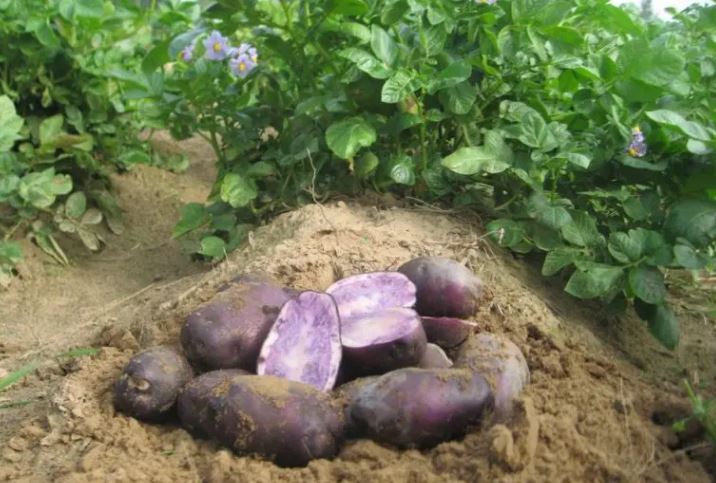
Potato harvesting is determined by maturity. Early varieties are harvested after 65-80 days, while mid-season varieties are harvested after approximately 100-110 days.
A distinctive feature of most purple varieties is their short shelf life. Some can last up to nine months, while others last no more than three.
Through selective breeding, several purple potato varieties have been developed with tubers that have thick skins. They are suitable for both hand and machine harvesting. The crop tolerates transportation well and has a long shelf life. These include:
- Russian blue.
- Lilac.
- Blue Danube.
- Peruvian violet.
- Vitelot.
When choosing a variety, carefully consider its characteristics. Because purple potatoes don't store well, avoid planting too many.
Diseases and pests of purple potatoes, prevention and control
Most varieties are resistant to scab, canker, nematodes, and viruses. However, if growing conditions are not met, rot and late blight may develop. To prevent this, avoid overwatering. Preventative treatment with specialized products is also necessary.
Potatoes are sometimes attacked by aphids or Colorado potato beetles. Insecticides are used to control them. These pests should be stopped no later than three weeks before harvest.
Composition of purple potatoes
| Element | Concentration per 100 g |
| Squirrels | 2 g |
| Fats | 0.4 g |
| Carbohydrates | 16 g |
| Dietary fiber | 1.6 g |
| Ash | 1.4 g |
| Organic acids | 0.1 g |
| Water | 80.1 g |
| Vitamins | |
| A, RE | 3 mcg |
| Beta-carotene | 0.02 mg |
| B1 | 0.12 mg |
| B2 | 0.06 mg |
| B5 | 0.3 mg |
| B6 | 0.3 mg |
| B9 | 8 mcg |
| WITH | 18 mg |
| E | 0.3 mg |
| N | 0.1 mg |
| RR, NE | 1.8 mg |
| Niacin | 1.3 mg |
| Macronutrients | |
| Potassium | 527 mg |
| Calcium | 10 mg |
| Magnesium | 31 mg |
| Sodium | 5 mg |
| Sulfur | 32 mg |
| Phosphorus | 58 mg |
| Chlorine | 46 mg |
| Microelements | |
| Aluminum | 860 mcg |
| Bor | 115 mcg |
| Iron | 1.5 mcg |
| Iodine | 5 mcg |
| Cobalt | 7 mcg |
| Lithium | 71 mcg |
| Manganese | 0.17 mg |
| Copper | 140 mcg |
| Molybdenum | 8 mcg |
| Nickel | 5 mcg |
| Rubidium | 492 mcg |
| Selenium | 0.3 mcg |
| Fluorine | 26 mcg |
| Chromium | 9 mcg |
| Zinc | 0.36 mg |
Health benefits of purple potatoes
Purple potatoes are not only harmless, they also contain many health benefits:
- normalizes the functioning of the cardiovascular system;
- has antioxidant properties;
- strengthens the immune system;
- reduces the risk of inflammation.
Purple potatoes are often included in the diet of diabetics (with diabetes mellitus), as well as people suffering from hypertension, decreased immunity, and cardiovascular diseases.
Potatoes are not recommended for those with low blood pressure, obesity, low stomach acidity, or constipation. Purple potatoes, unlike their classic counterparts, are very easy to peel after boiling.
For gourmets: to make the tubers more delicious, add a spoonful of butter to the water while boiling, and once done, place the pan under running ice water.
The harm and contraindications of purple potatoes
Purple potatoes have essentially only one contraindication: they should not be consumed by people with low blood pressure. Individual intolerance to the product is also possible. Furthermore, it's important to remember that consuming large amounts of potatoes can adversely affect the gastrointestinal tract. Therefore, eating them frequently and in large quantities is not recommended.
Using purple potatoes
The main distinguishing feature of purple potatoes is their ability to be eaten raw. The flesh has a delicate, nutty flavor, so the tubers are often added to salads without any cooking.
Most varieties tend to be very overcooked and are therefore not suitable for frying.
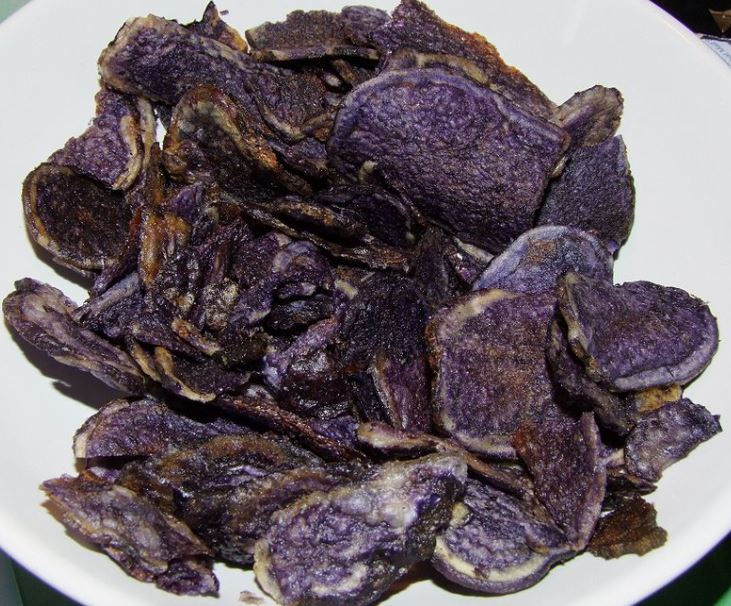
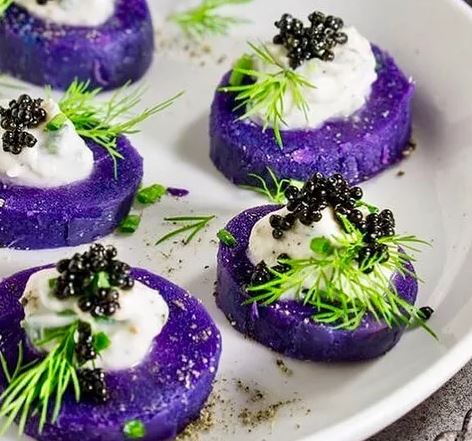
Purple potatoes are most often used for mashed potatoes and casseroles; vareniki with a purple filling also look interesting. Some varieties are even suitable for making chips.
By the way, did you know that the famous potato brand Lay's has released chips made from a mix of purple and regular potatoes, as well as coconut! It's a limited edition.

Don't be alarmed if the clear water turns emerald green during cooking. This is considered normal, as the tubers release some of their coloring.
Remember that the finer you cut the potatoes for cooking, the lower the concentration of nutrients in them will be.
Recipes with purple potatoes
Here's a list of some simple, great purple potato recipes we recommend you check out:
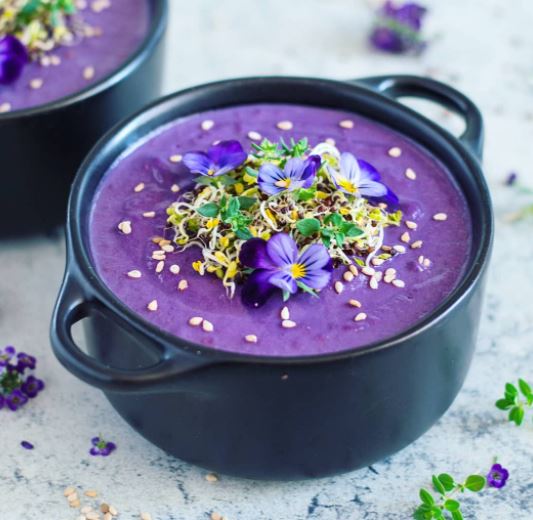
Soup
To prepare we will need: potatoes – 2 pcs., tomatoes – 2 pcs., thin vermicelli – 4 tbsp., carrots – 1 medium, onions – 1 pc., processed cheese – 1 pc.
The broth can be cooked in advance, or the soup can be made lean.
Add finely chopped potatoes to a 2.5-liter saucepan of boiling water (or broth). Chop the onion and grate the carrots, add them to the pan, and fry over low heat for 1-2 minutes. Then add the diced tomato and simmer for another 8 minutes. After the time has elapsed, add the fried vegetables to the pan and cook for another 15 minutes. Season with salt and pepper to taste. Then add the grated processed cheese, stir thoroughly until completely melted, and pour in 4 tablespoons of vermicelli. Wait for a minute and remove from the heat. The soup is ready.
Casserole
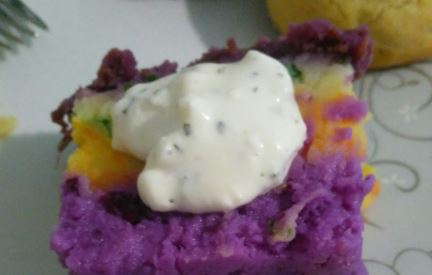
Ingredients required: 1 kg purple potatoes, 1 egg, 3 tbsp high-fat cream, 3 tbsp milk, 1 carrot, 1 onion, 250 g mushrooms, 150 g hard cheese.
Peel the potatoes and boil them in salted water until tender. Then drain and mash them with a potato masher for about 1 minute. Cool slightly. Add the milk and cream and mix thoroughly. Then add the egg. You can use a mixer. Separately, fry the onions, carrots, and mushrooms. These will serve as the filling. Take a baking sheet, grease it with oil, spread some of the puree on the bottom, top with the onions and carrots, then the mushrooms, and cover with the remaining puree. Place the dish in the oven for 20-30 minutes. Five minutes before the end of cooking, sprinkle the casserole with grated cheese and herbs. Serve with sour cream.
Zrazy
Ingredients required: 5 purple potatoes, 1 egg, 4 cloves of garlic, 2 tbsp sour cream, salt and sugar to taste.
You can use the potatoes raw, but it's best to cook them until half-cooked. Next, grate them. If using raw potatoes, squeeze them out and let the excess liquid drain. Next, add 2 tablespoons of sour cream, mix well, add the egg, squeeze out the garlic, and season with salt and pepper to taste. Spoon the potato mixture into a hot frying pan. You can make the zrazy spicy if desired; serve immediately, piping hot.
The History of Purple Potatoes
The origins of purple potatoes are well-known; they are not GMOs; they came to us from the wild, like many other vegetables. These potatoes are common in the vast expanses of South America, but for a long time, people didn't even consider domesticating them. Breeders have focused on the classic white potato, which is widely used in cuisines around the world.
But if we look back in history, we'll see that in the 19th century, there were already references to potatoes with unusual flesh and skin colors. For example, in an agricultural reference book dated 1817, we see a mention of a purple potato called "Vitelotte Noire." According to a reliable source, this particular potato was a favorite of the famous French writer Alexandre Dumas.
Vegetable growing is advancing. Breeders have carefully studied purple potato varieties, discovered that they contain a large amount of nutrients, and have begun cultivating them in cultivated conditions.
The new product primarily spread to Europe and Asia, where it gained widespread consumer recognition. The price of these tubers was very high, sometimes reaching several hundred euros per kilogram.
Experts have done a great deal of work on crossing wild purple and cultivated white potatoes, resulting in the emergence of many new and interesting varieties.
Purple potatoes have yet to become widespread in Russia. Their popularity began with the First International Potato Congress, held in Moscow in 2007. Only then did word of these unusual purple tubers slowly begin to spread among consumers. The work of Russian potato breeders was spurred on by their Korean colleagues, who brought these unusually colored tubers to the congress. It was then that the intensive development of purple potatoes in our country began.
Real reviews from gardeners about purple potato varieties
Hi all.
The hero of today's review is unusual and probably not everyone is familiar with him yet.
Meet the Purple Potato.
General information.
This variety has a name:
The Vitelot, also called the Negress, Chinese Truffle, or Blue French Truffle Potato, is a variety of potato.
It has a number of advantages:
The presence of a large number of antioxidants, due to which the aging process slows down;
The presence of a vitamin complex, the basis of which is vitamins C, E and a number of carotenoids;
The bright color of the tuber flesh is not the result of genetic engineering, but is the natural color of the pigment obtained by crossing wild African and equatorial varieties.
Show quotePlace of purchase and price.
I bought it in the Globus chain of stores.
The price for the package in the photo was 100 rubles.
Package.
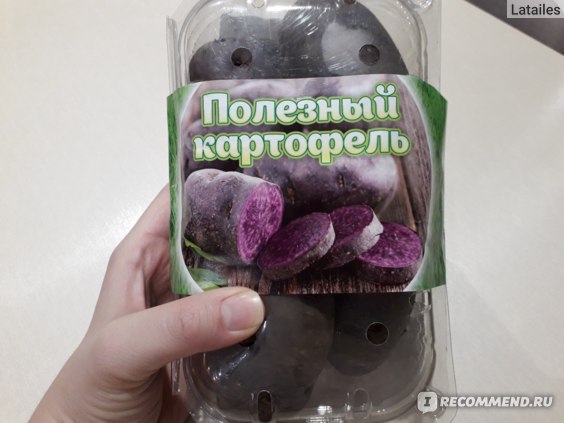
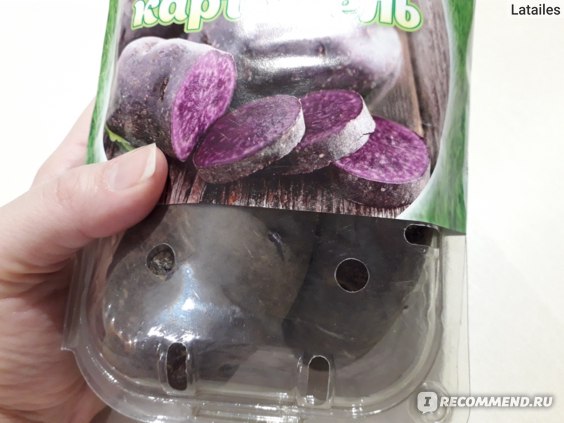
This unusual potato was sold in a small, transparent plastic container.
It had holes in it.
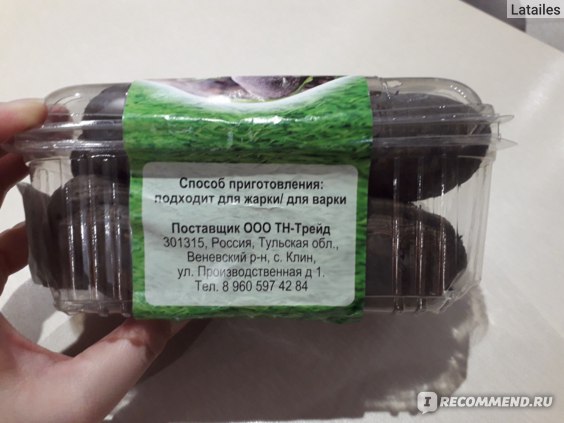
There is also an information label on the container.
.
Information about the supplier and how to prepare it is provided, although without any details.
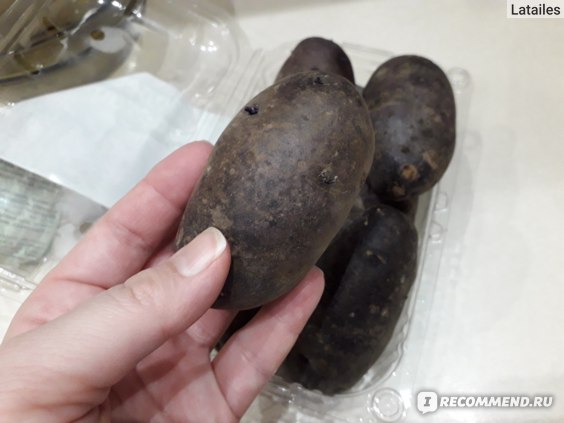
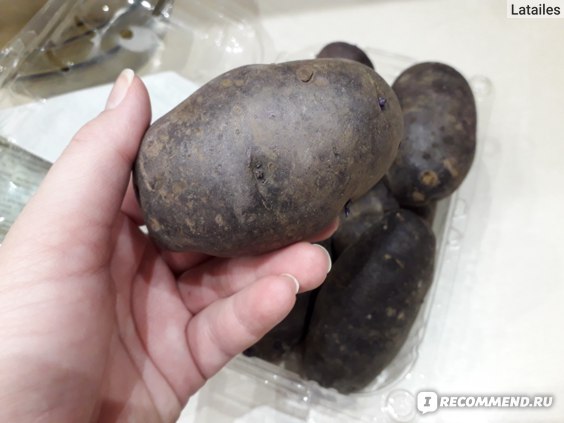
Appearance.The potatoes are not large. They have quite a few eyes, which are recessed into the inside.
Removing them is not very convenient.
The skin is dark, almost black.
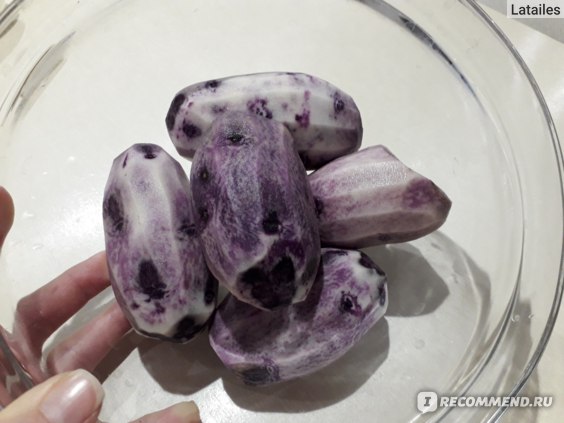
Peeled potatoes look like this:
In places it is bright.
And in some places it is paler.
Potato cut:
.
It looks very beautiful and unusual.Isn't that true?
Recipe.
When I was thinking about how to cook it, I was very worried that its unusual color would disappear.
Here's my advice to you: the main thing is not to overcook it, otherwise it will really turn pale.
I did it like this:
1. Chop 4 cloves of garlic into olive oil (4 tablespoons).
2. Let it steep for 10 minutes.
3. Peel the potatoes and cut them in half.
4. Pour the resulting oil with garlic.
5. Added rosemary.
6. Place in a baking dish.
7. Preheat the oven to 220 degrees and place the pan with potatoes in there.
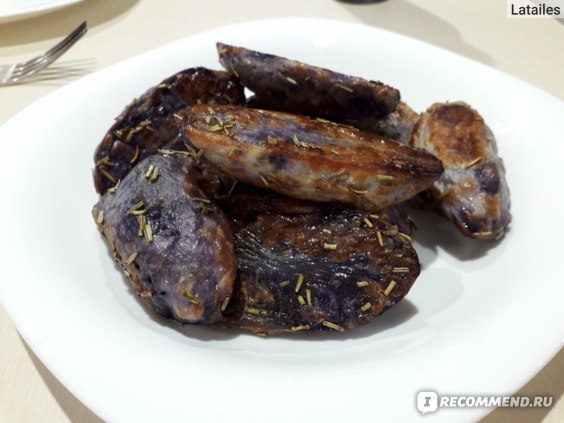
Bake until done (about 30 minutes)
And this is what I got:
Purple potato flavor.
To be honest, the potato tastes almost the same as the regular potato we are all used to.
But still, there is a slight difference.
It's kind of more crumbly. And it feels like you're eating pressed puree.
.
It did not change its rich color during cooking.
The potatoes turned out very aromatic thanks to the rosemary and garlic.Besides, it is filling.
And of course, the most important thing is that it’s unusual!
You can really surprise your guests with this dish.
Conclusion.I certainly recommend purchasing purple potatoes.
After all, he:
delicious
unusual
useful
completely natural
easy to prepare
The only disadvantages that can be highlighted are its high cost and the fact that it is not available everywhere.Thank you for your attention to the review.
I wish everyone tasty, healthy and unusual shopping.
Yesterday we harvested our first purple potato crop: a bucket containing four plants. Not bad, considering the planting material was rather small, about two to three times smaller than the recommended size. But purple potatoes, apparently, aren't particularly large; their value lies elsewhere—high antioxidant and inulin content, and low starch content. We baked some in the microwave and tried them—they tasted little different from regular potatoes. Purple potatoes are still a novelty in Russia, but in Europe and the United States, they've long been used to make wonderful, inky chips, as well as soap and rejuvenating masks.
There are many varieties of purple potatoes. The one we got seems to be the most common, a species-specific variety: oblong in shape, with numerous sunken eyes. It's a bit tricky to peel, but considering that the most nutritional value is in the skin (like any potato), it's not such a big deal...
Oddly enough, it blooms with white flowers, but its stems are purple. The plants take up more space than the familiar potato, so I recommend planting them more spacingly: 70x70 cm.
The purple potato variety does not produce seeds; tubers cost 300 rubles per kilogram.
Continuing the theme of exotic plants in our gardens, today I will continue the topic of exotic potatoes.
This time, I'll be talking about the "Exotic" variety, a purple-fleshed potato. I first encountered this potato on a forum, so when I had the opportunity to buy it at a trade show in our city, I immediately bought it along with the "All Red" variety, which I've already written about. These potatoes are quite expensive—50 UAH/kg (about 110 rubles). That was in 2014.
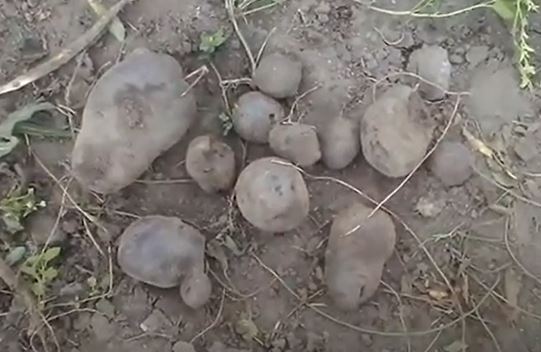
In the first year of planting, I had to cut off literally one eye at a time for propagation. Afterward, like the red variety, I intensively fed and tended it, loosening the soil several times, hilling it up, and watering it. This potato, even in the garden, looks very different from other potatoes—its tops have blackish "smears." While the red variety is almost indistinguishable from the average potato, the purple variety is clearly visible. Furthermore, it's quite difficult to dig. While the All Red variety is a pleasure to dig—it's bright and easily visible while digging—you'll need to look for the Exotic variety, as its tubers blend in closely with the soil. This mimicry can lead to poor harvesting, leaving many potatoes in the garden. Also, when comparing the two varieties with colored flesh, it's worth noting that this potato is round, unlike the elongated red variety. And both varieties don't grow large—if you're looking to impress your neighbors with a huge harvest, colored potatoes aren't the best choice. It is average, and there are also many small ones.
It is resistant to diseases, but the Colorado potato beetle chews it, like the rest, so we had to treat it.
So, in the first year, we got about a bucket of these miracle potatoes, which is already enough for planting. This year, we dug up a whole bag, so this year we were lucky not only to dig up and store them in the cellar for future planting, but also to try the potatoes.
I once asked my mom to boil some jacket potatoes for frying, and she, not knowing what kind of potato she was, used "Exotic" potatoes (I kept them separately). This is what they look like in contrast to "normal potatoes."
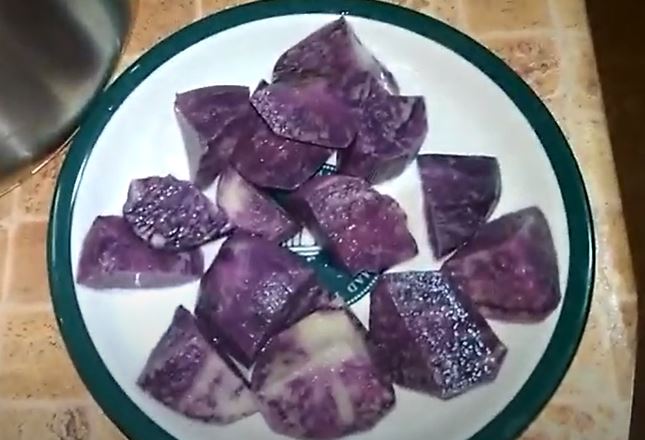
Here: boiled in its skin and peeled:
And here it is, cut for frying:
When my son was in hospital, I cooked this potato for him - he likes its color.
Here it is, cleaned, but with the eyes not yet cut out (as we can see, there are quite a lot of eyes):
As we can see, the pulp is not uniform - it is marbled, but this does not affect the final color of the puree.
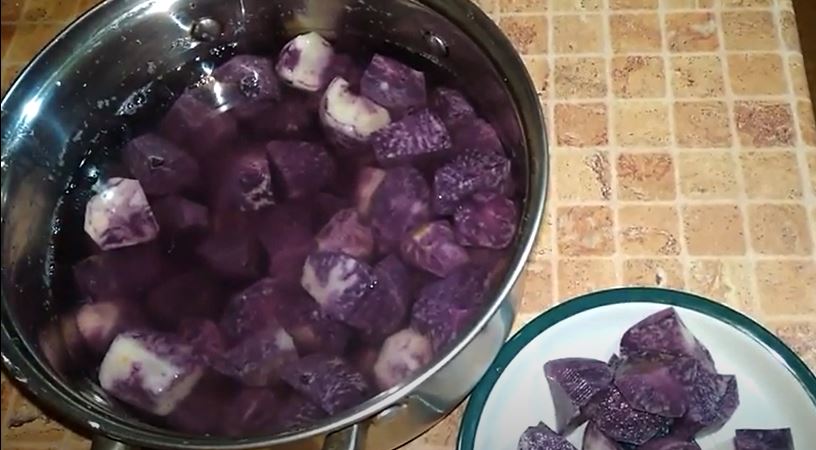
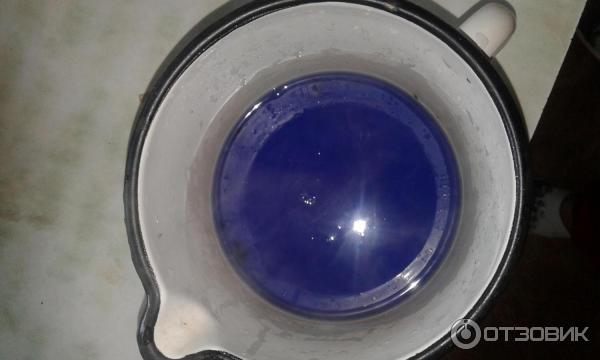
This is the water after washing raw potatoes:
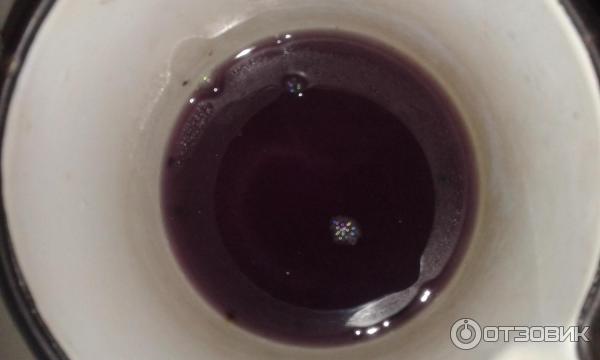
Exotic cooks very quickly and is crumbly. Here's the water after cooking:
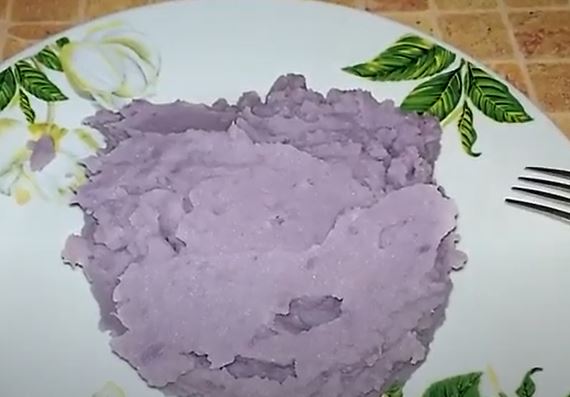
And here, actually, is the puree (there’s a bay leaf on the right, sorry):
This is a very tasty potato, and children really like the color.
The beneficial properties are the same as those of red potatoes.
Exotic is now very common here - and while few have heard of the red one, this one is grown more often.
This potato isn't a result of genetic engineering, but rather a product of natural crossbreeding. The fact is, potatoes weren't originally white, but blue. So, after 9,000 years, we've ended up where we started—blue potatoes.
I recommend the Exotic variety of potato – it’s interesting, healthy, and quite tasty.
Good day everyone! Many of you have probably heard of, or perhaps even seen, a potato with an unusual color and purple flesh. Our grandmother also had one this year. She bought some seeds of this potato to breed, and this year we have our first harvest of Exotica.
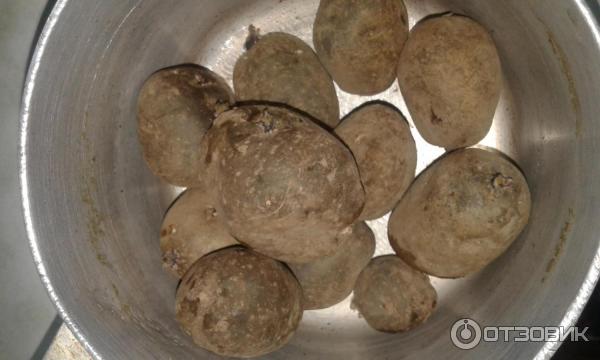
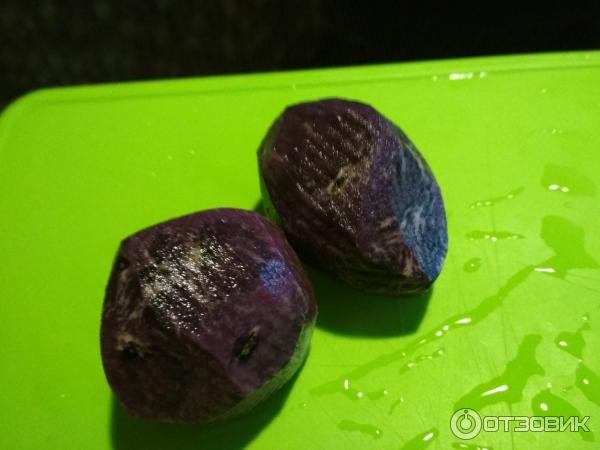
The potato is small in size, has many eyes, and the skin color is very dark, close to black.
The first photo is of washed potatoes in their skins.
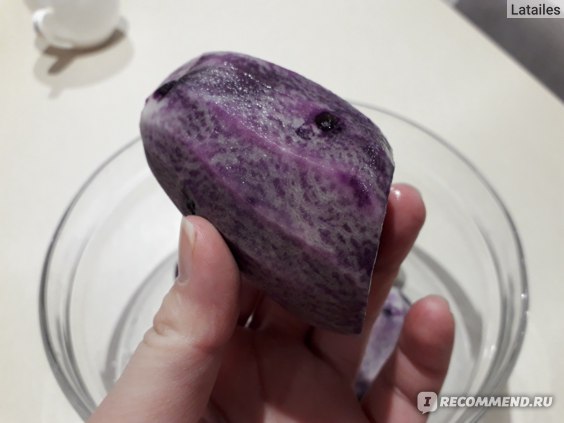
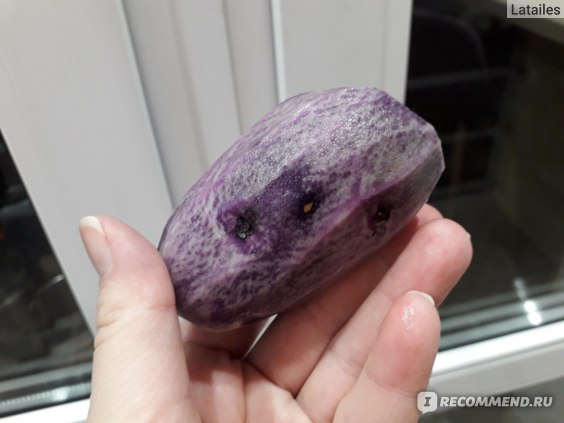
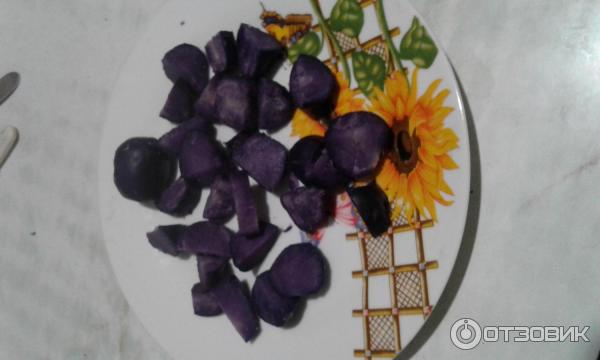
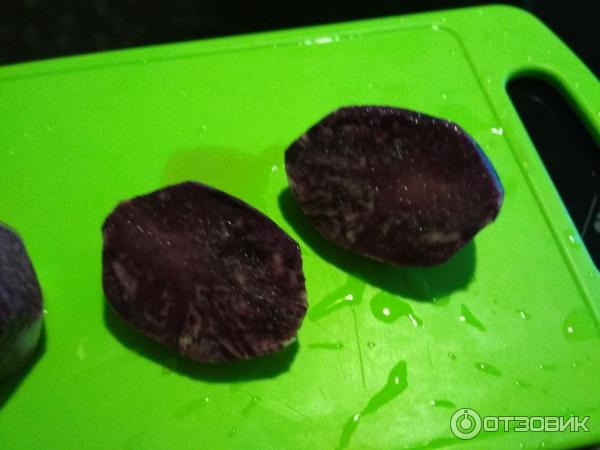
The second photo shows peeled potatoes. They are dark purple with white veins.
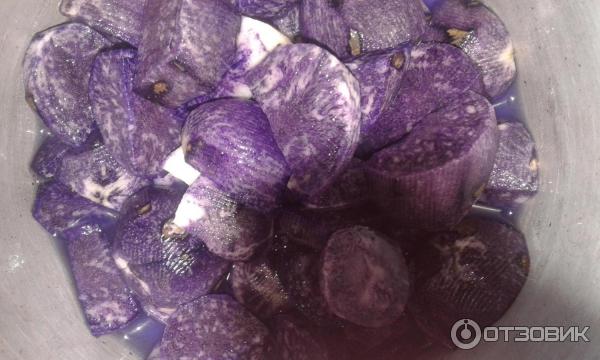
The potato, cut into two parts, has a similar color in the middle.
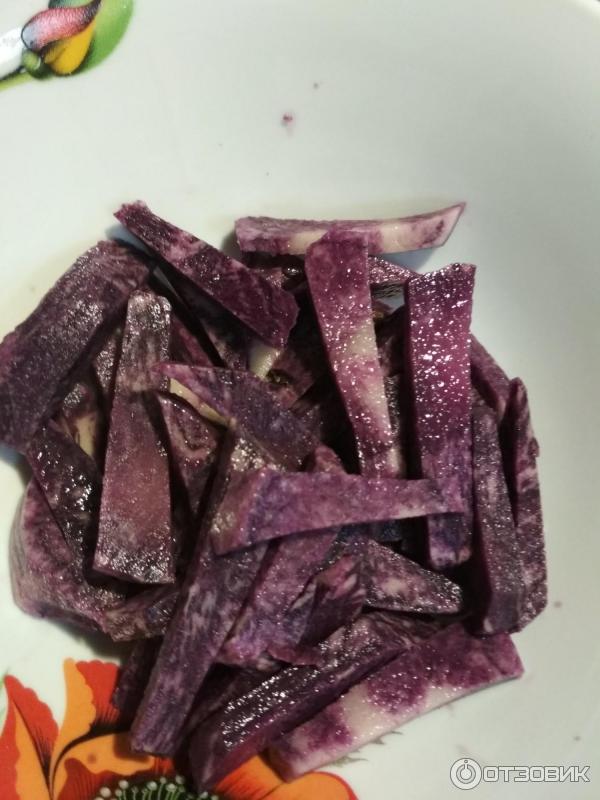
When sliced, the light veins are more visible.
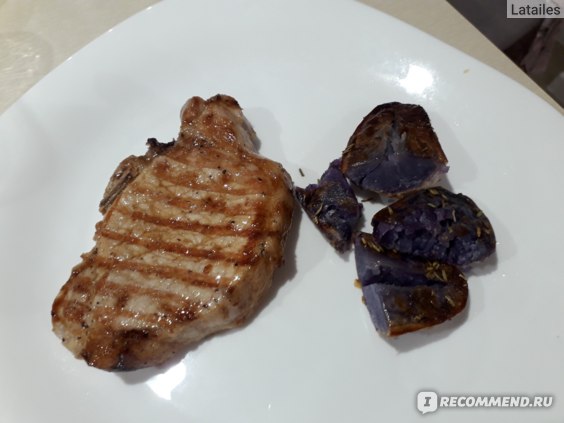
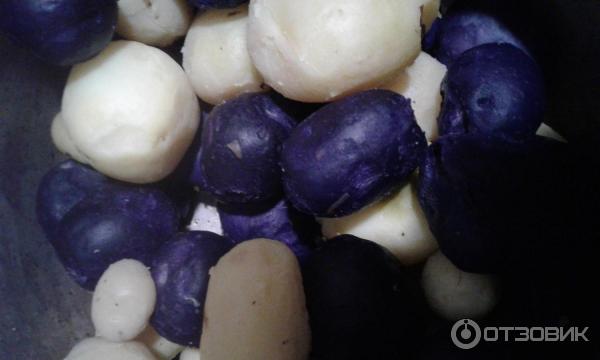
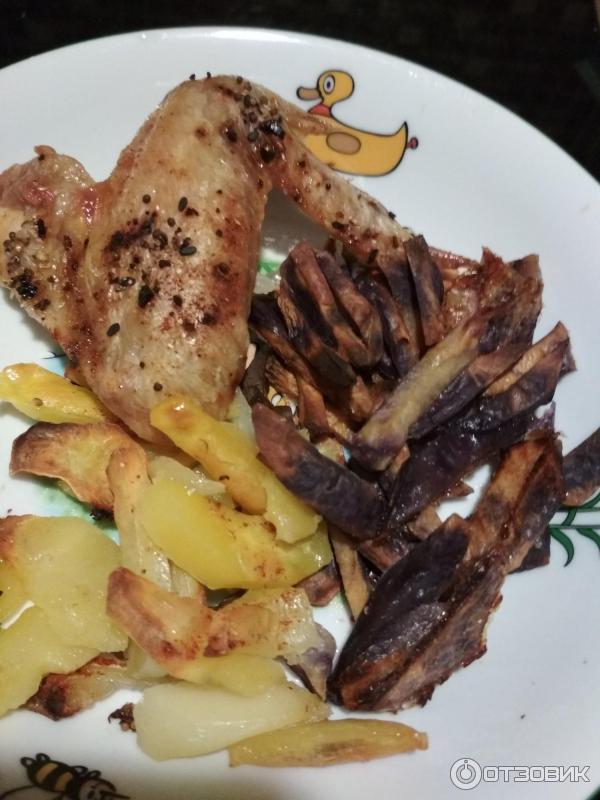
To see if the potato tasted different from regular potatoes, I cooked it alongside regular potatoes. The potatoes were baked in the oven along with chicken wings.
The photo shows what cooked Exotic potatoes look like on the right side; they don't look as appetizing as regular ones, as if they were burnt, but in fact they are not.
I liked the taste of the purple version; it's a little different from the regular version, with a richer flavor. It's very difficult to describe; you have to try it.
Now, I'll summarize the results of this unusual potato. The only positive for me is the taste. Otherwise, I found some downsides:
- low yield
— because of the dark color, it is difficult to detect the spoiled part, and you need to peel it very carefully so that no skin remains.
— a prepared dish made from colored potatoes looks less appetizing.
Overall the potatoes are good and worth trying.
Thank you for your attention!
Hi all!
This spring, just for fun, I bought a few kilograms of blue-violet seed potatoes on Avito. They're not cheap, though, costing around 100 rubles per kilo. There are several varieties, but after reading up on them, I realized there weren't any real differences between them. My variety was called Gourmet.
After planting, the seeds took a long time to emerge, about two weeks later than usual, even though I planted them on the same day.
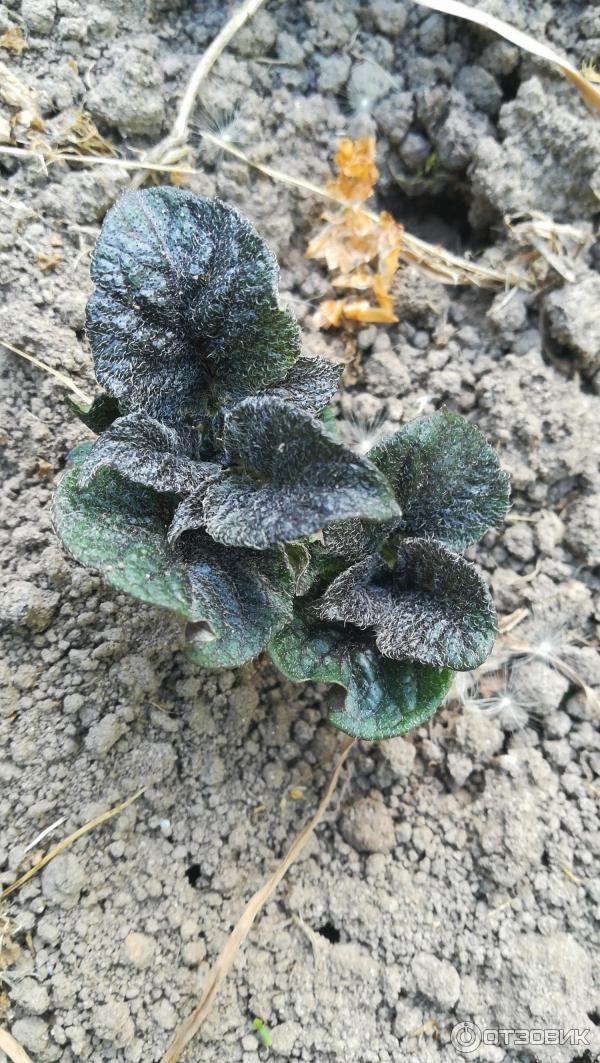
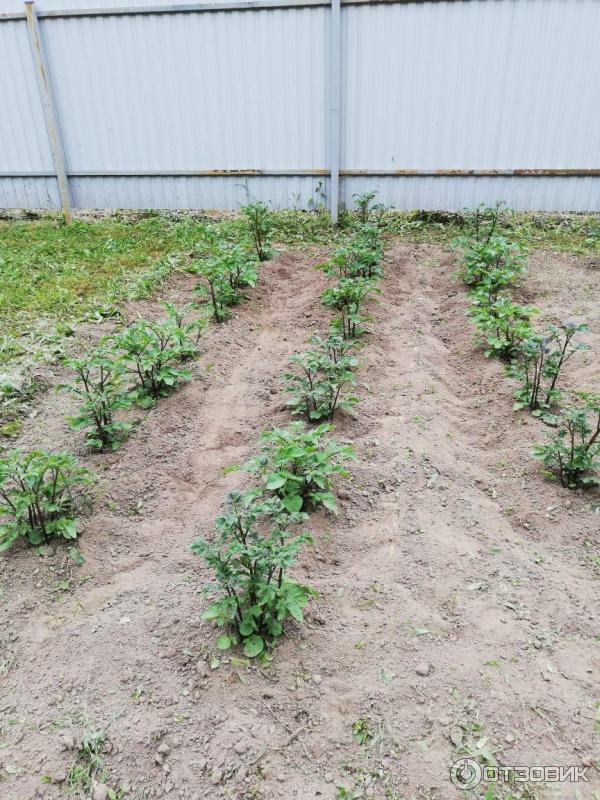
The bushes turned out bright green with a black tint, tough and dense.
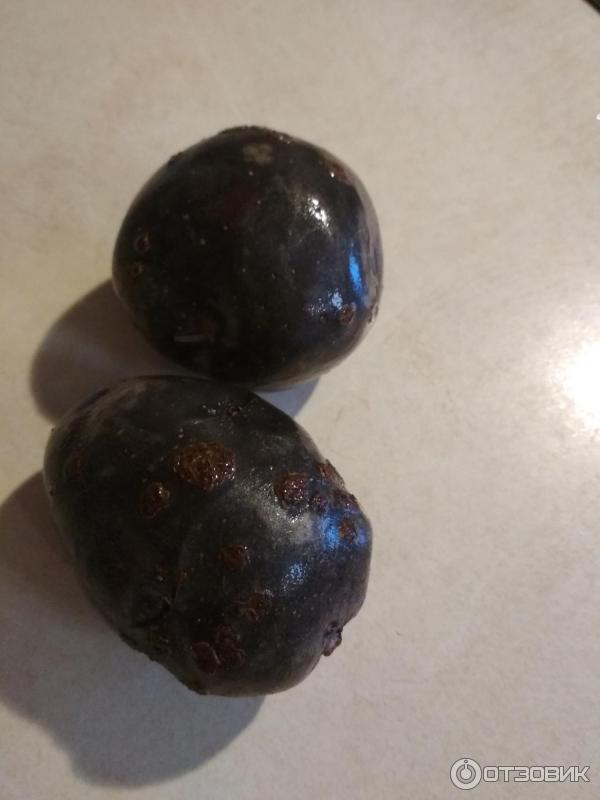
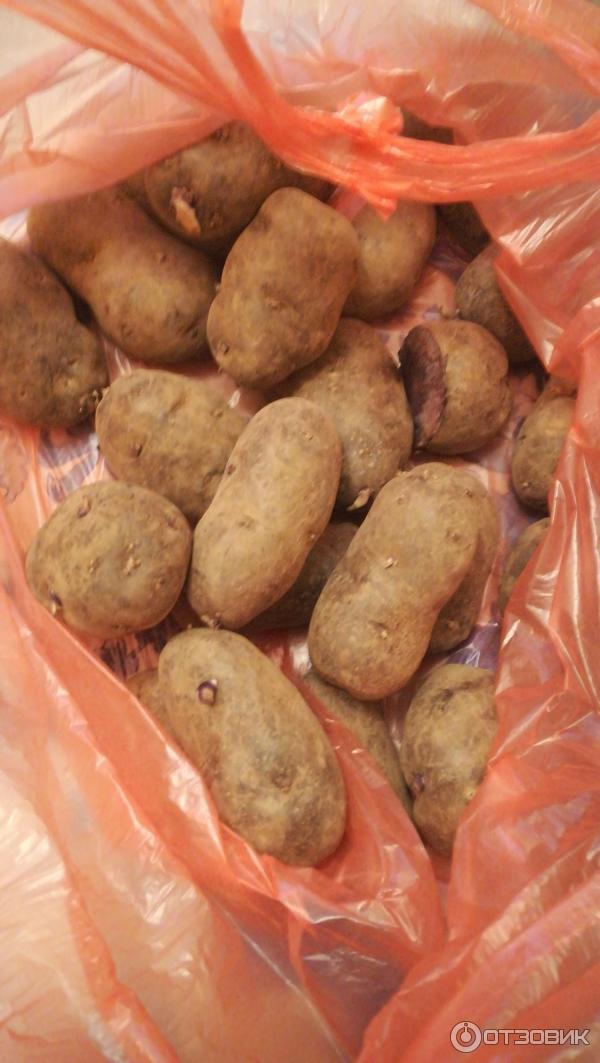
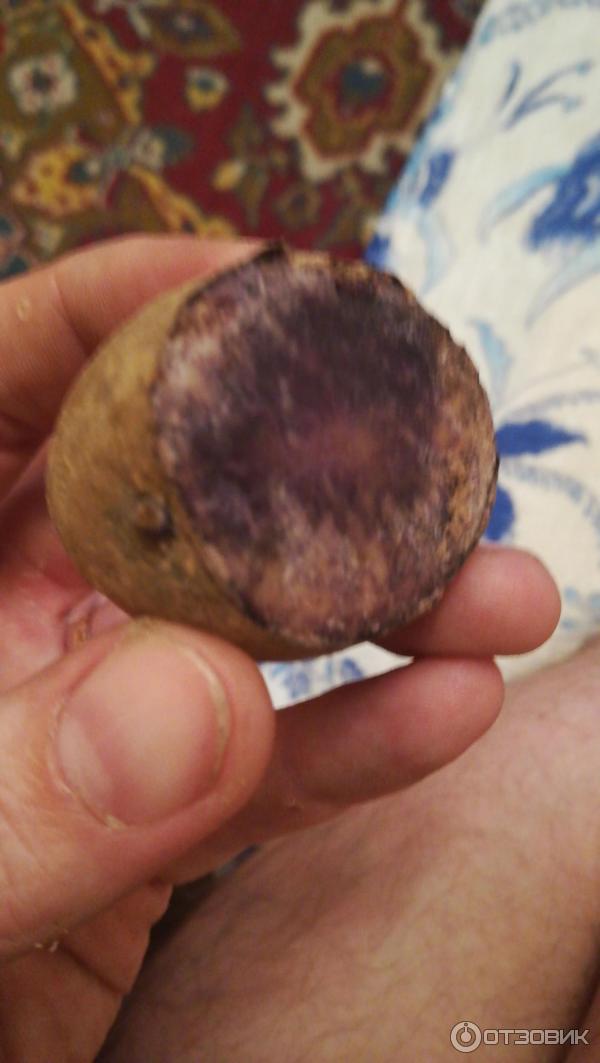
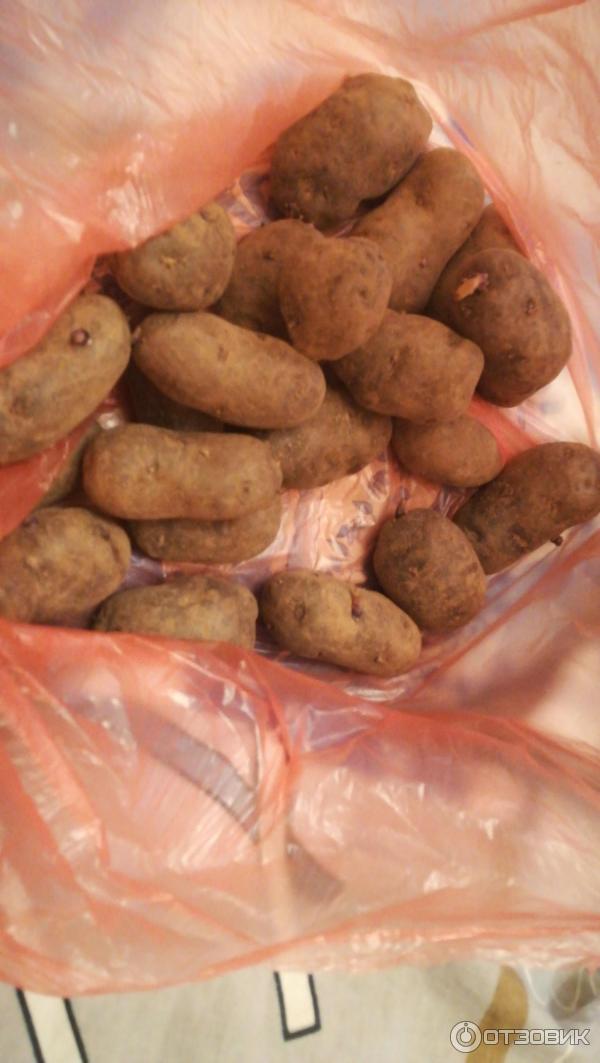
The harvest time has finally arrived. Potatoes are very difficult to dig, especially if the soil is wet; they're barely visible in the ground; dirty potatoes have a dark purple or black color. The yield is quite modest: 3-4 medium-sized potatoes per bush. There are almost no large potatoes, but there's plenty of the so-called "peas."
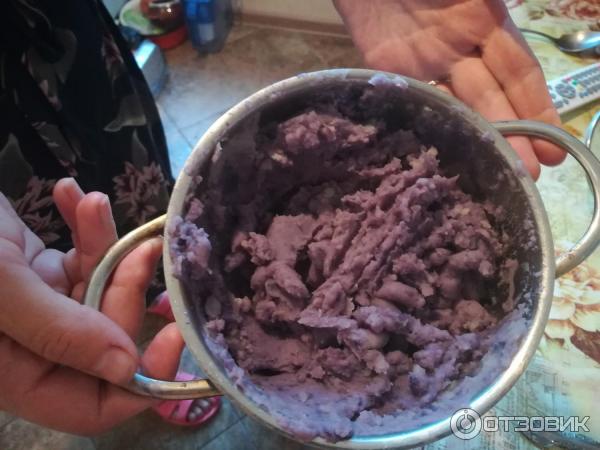
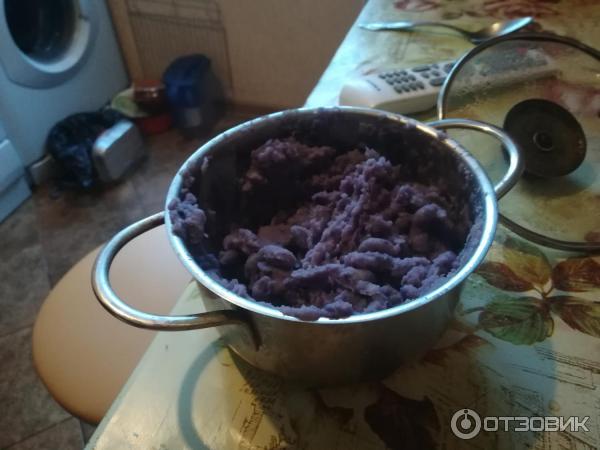
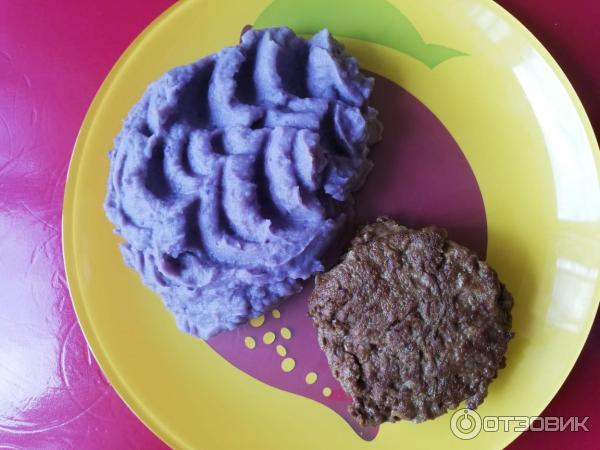
Potatoes have a distinctive flavor, a bit sweet, similar to instant potatoes. I wouldn't say they're bad, but they're definitely an acquired taste. They say they're very healthy, but I don't know if that's the case.
All the same dishes were made from it as from regular potatoes; it peels well and does not boil over.
To sum it up, you can try it for the sake of exoticism, but nothing more. Potatoes are expensive and the yield is small, and as I've already mentioned, the taste is peculiar.
What to do if blue spots appear on regular potatoes
Sometimes blue spots appear on potatoes with no visible damage. This happens after peeling, leaving homeowners perplexed. After all, the potato itself was smooth, whole, and healthy. Where did these spots come from, and what should you do with the potato now?
In fact, blue spots on the flesh are similar to bruises. They occur due to impacts during transportation, which leads to cell destruction and oxidation of polyphenols, causing the potato to turn gray in spots. However, they may not appear immediately after impact, but even after prolonged storage. These spots are most common on crumbly potato varieties.
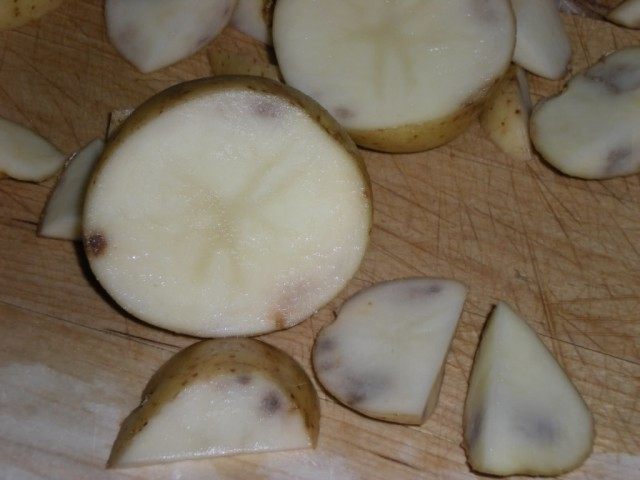
Sometimes, blue spots appear during the cooking process. A creamy or golden potato may go into the pot, only to have its entire surface covered in bruises upon exiting. This reaction is considered normal, as it's caused by the release of chlorogenic acid, which reacts with iron when heated. However, if you want to preserve the potato's original color, add a few drops of citric acid during cooking.
The taste of the potatoes will change, they will become less crumbly, but these potatoes are perfect for a salad.
Potatoes with blue spots are perfectly safe to eat, as long as they haven't started to rot or have an unpleasant odor. They won't pose any health risks.