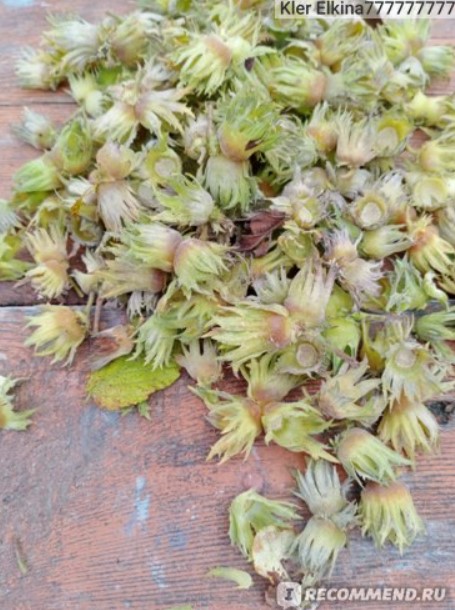
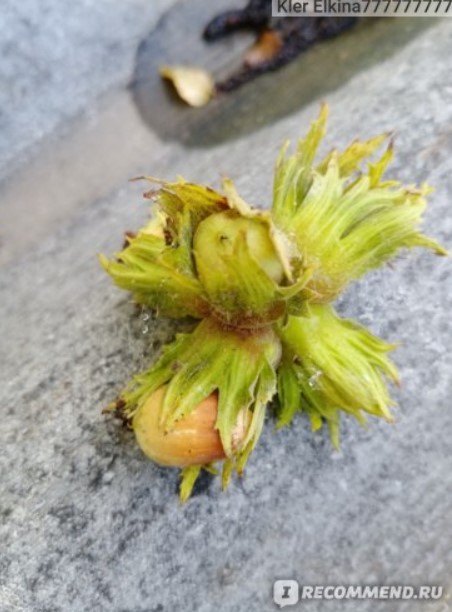
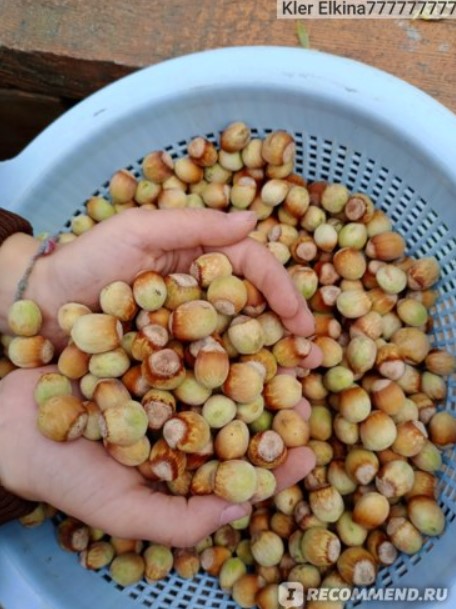
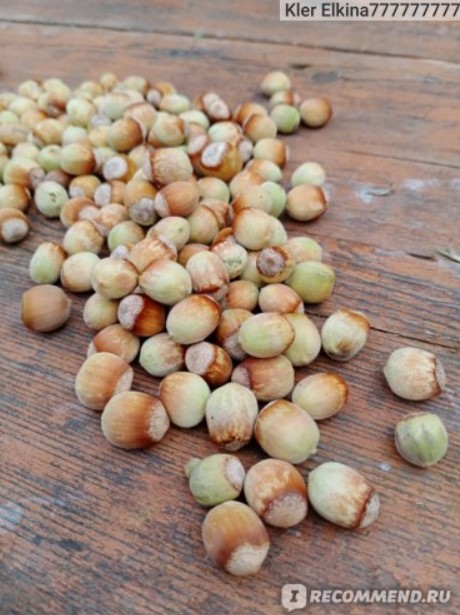
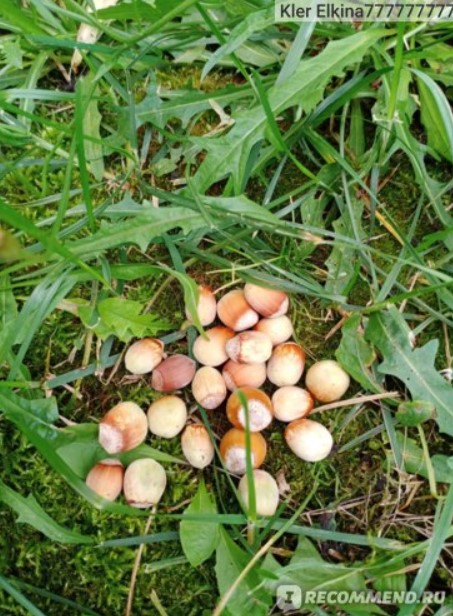
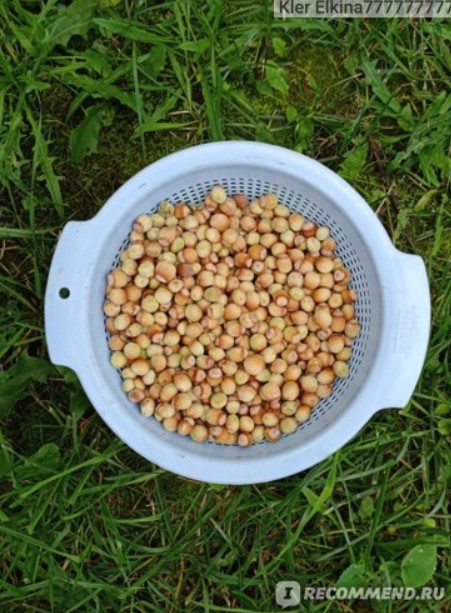
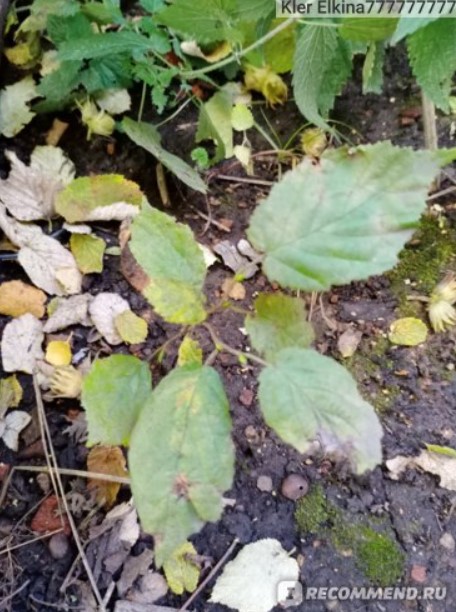
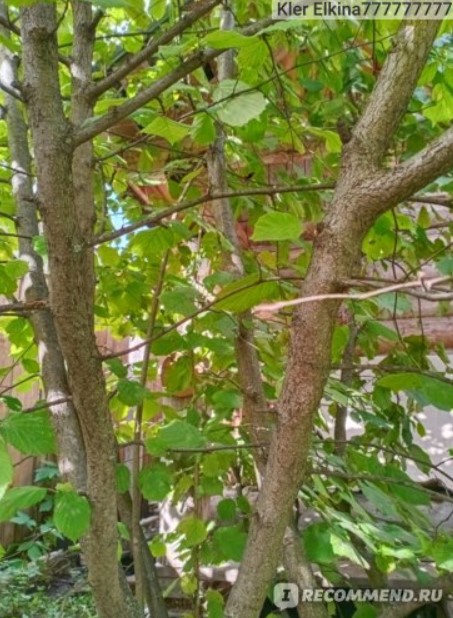
The genus Corylus, commonly known as hazel or filbert, belongs to the Betulaceae family and includes approximately 20 species of deciduous trees and shrubs. These plants are native to North America and Eurasia. The most well-known among gardeners is the common filbert. It has been cultivated in Europe for several centuries. The first hazelnuts were brought to Russia in 1773 through trade. The word "hazelnut" comes from the word "leshka," meaning "hazelnut."
Content
- 1 Description of hazel or filbert
- 2 Types and varieties
- 3 Planting hazelnuts in the garden
- 4 Caring for hazelnuts
- 5 Wintering hazelnuts
- 6 Shaping and pruning hazelnuts
- 7 Diseases and pests of hazel
- 8 Planting and caring for hazelnuts in different regions: features and varieties
- 9 Pollination
- 10 Fruiting of hazel
- 11 Hazelnut harvesting
- 12 Drying
- 13 Reproduction of hazel
- 14 Propagation of hazel by grafting
- 15 Is growing hazelnuts worth it as a business?
- 16 Reviews of growing hazelnuts from gardeners
Description of hazel or filbert
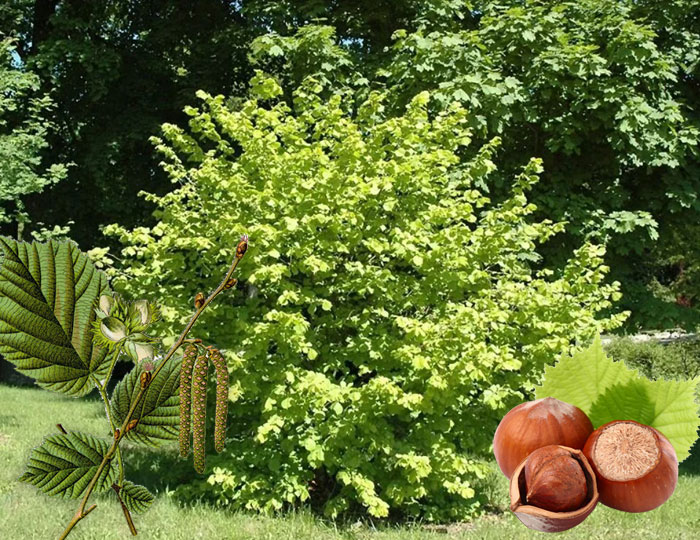
Hazelnuts grow as shrubs or trees. They reach 7 m in height, with an ovoid or spherical crown and serrated, round or broadly oval leaves.
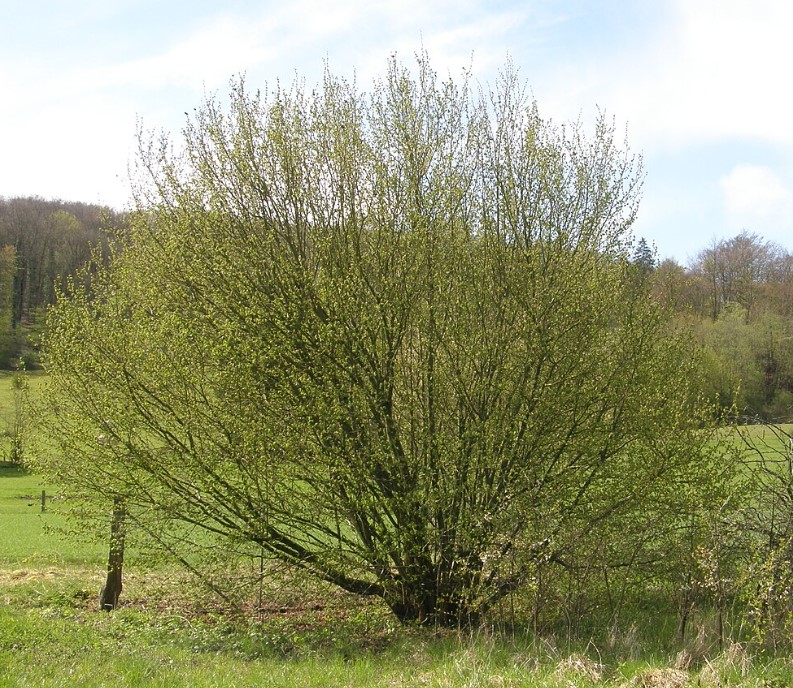
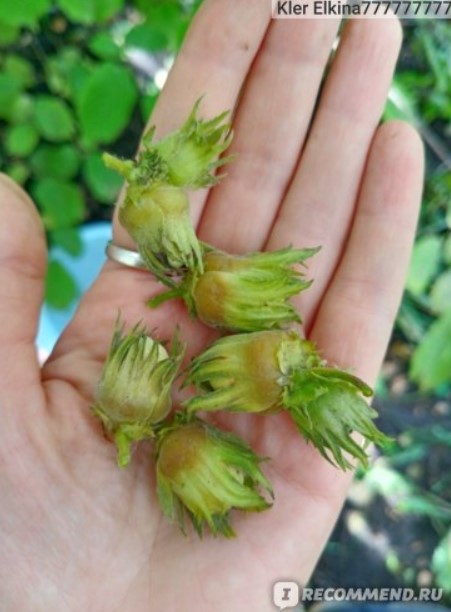
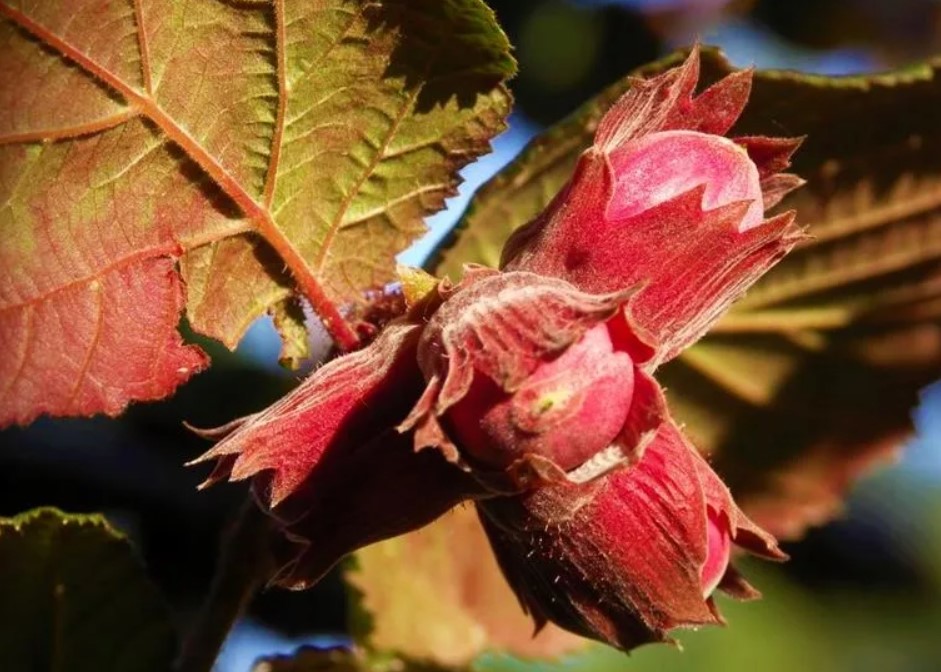
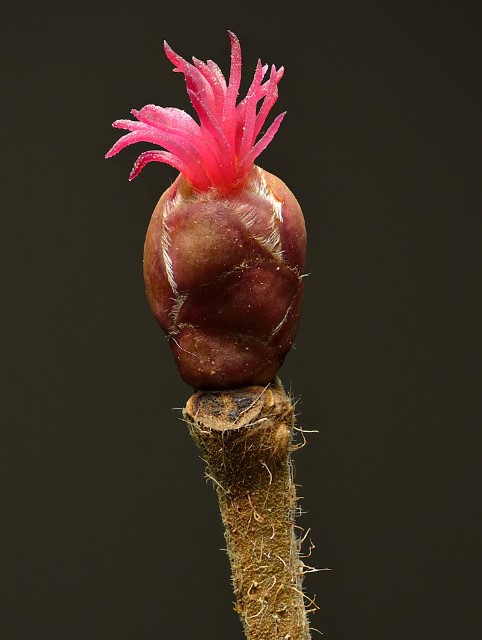
It blooms with unisexual flowers, with the male flowers appearing in the fall and forming fluffy cylindrical catkins on short branches. The inflorescences open before the leaf blades emerge in the spring. The plant blooms in late March to early April and provides a source of pollen for bees after the long winter. The flowers and catkins are golden in color, making the plant quite attractive at this time. The fruit is a single-seeded, brownish-yellow nut, round, and about 20 mm in diameter. It is surrounded by a gill and a woody pericarp. The fruits ripen in late summer or early fall.
Types and varieties
Let's look at the most common varieties cultivated in our country.
Common hazel
A shrub with a crown circumference of 5-6 m. Typically, it grows to 2-5 m, but can reach 7 m. In tree form, it can reach up to 30 m.
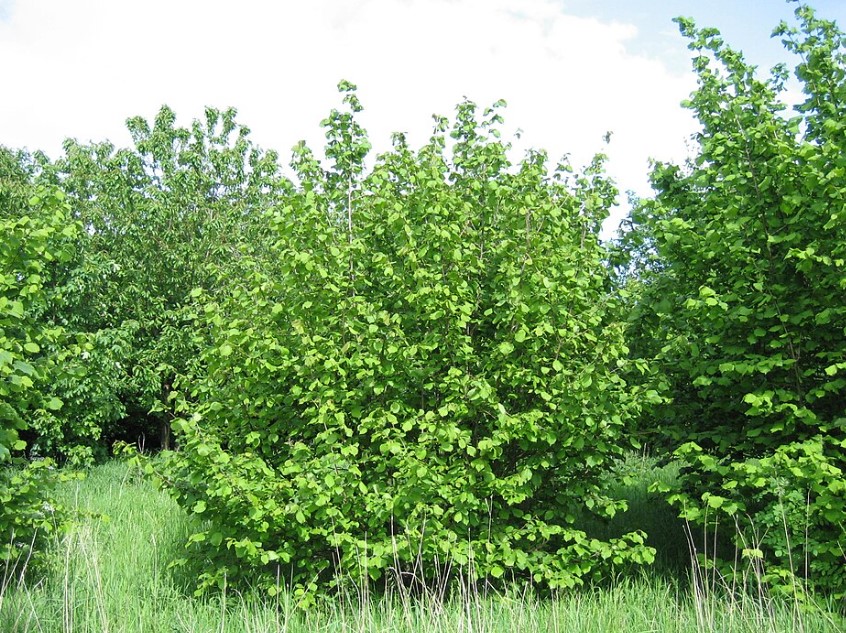
The bark is smooth, grayish-brown, with clearly visible transverse lines. The shoots are grayish-brown and have a slightly glandular-hairy surface. The roots are strong and not very deep.
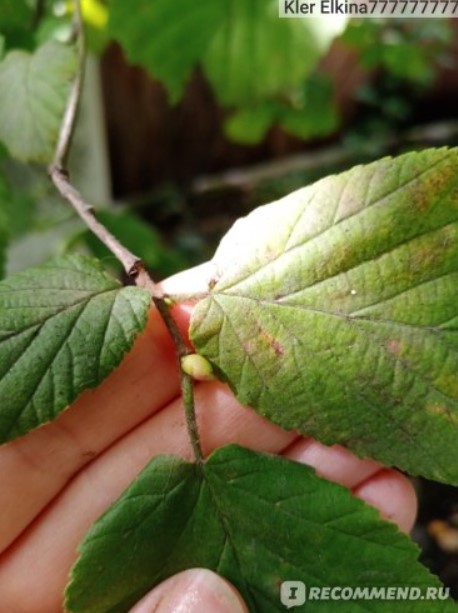
Large, obovate, rounded leaves are arranged alternately. They have a matte, velvety texture. They range from 6-12 cm in length and 5-9 cm in width. The tips are pointed, the margins are notched, with twice-truncated teeth below and larger, lobed teeth above. They sit on glandular, bristly petioles 0.7-1.7 cm long. The inflorescence is a catkin.
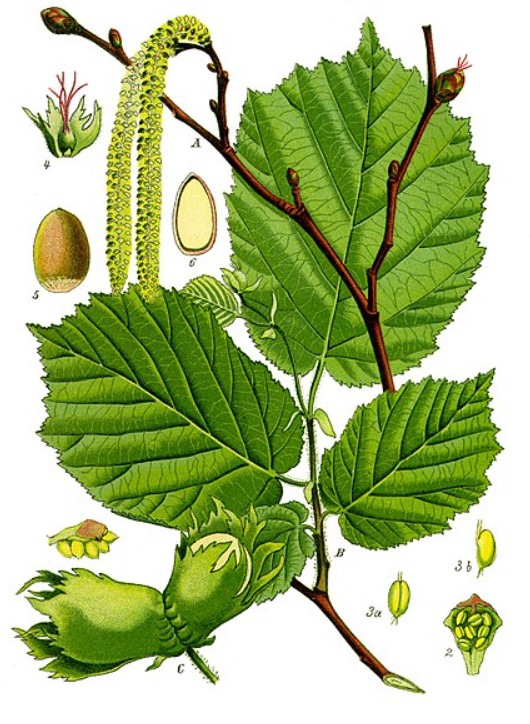
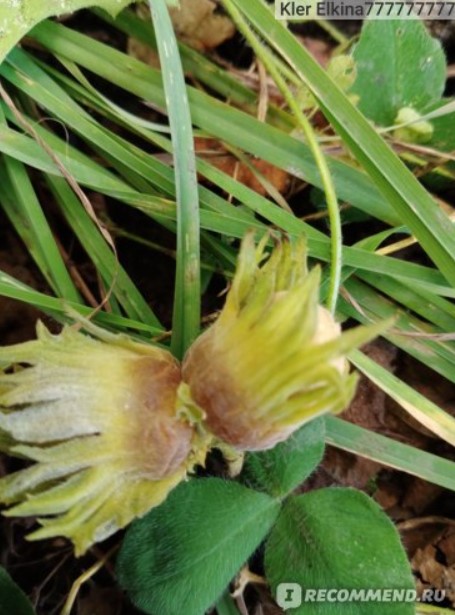
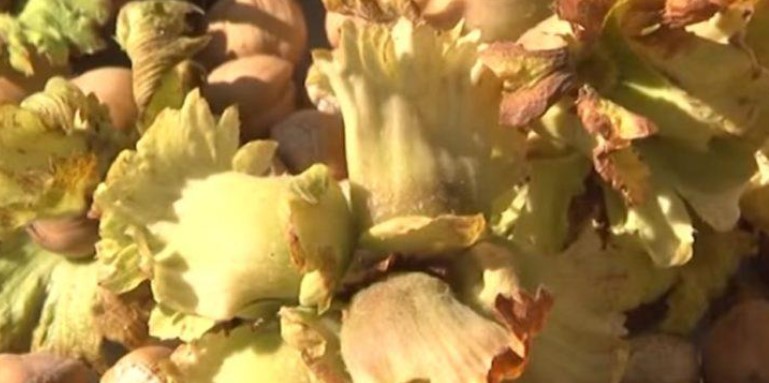
The fruits are arranged in clusters of 2-5 nuts each. The shell is thin but dense. The nuts are surrounded by a light green, velvety, glassy or bell-shaped train of enlarged bracts. The fruits are 1.8 cm long and 1.3 to 1.5 cm in diameter, light or dark brown in color. One hectare of hazelnuts can yield approximately 900 kg of fruit, with approximately 900 nuts per kilogram.
The common hazel tolerates temperatures as low as -40°C and lives 60-100 years.
| Characteristics | Description |
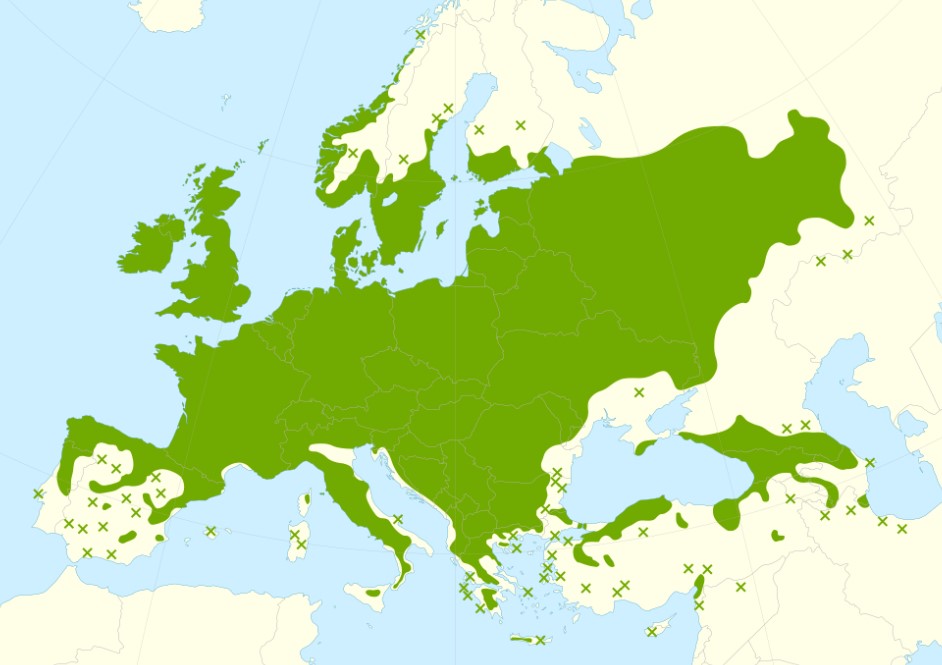
| Distribution area | Europe, Caucasus, Middle East. |
| Flowering and fruiting time |
Flowering: February-April. Fruiting: August-September. |
| Varieties | Caucasus, Masterpiece, Northern 42, Isaevsky, Barcelona and others. |
| Economic use |
|
Reviews of common hazel
The common hazel, or hazelnut, or forest nut (Latin: Corylus avellána) is a species of deciduous woody shrubs and trees of the genus Corylus in the birch family Betulaceae. It is the type species of the genus.
This year, hazel seedlings are bearing fruit for the first time.
Varying ages, from 6 years and older. Some of them bloomed in previous years, but did not set fruit. This year, we've had a mild winter and a warm, dry spring, creating favorable conditions.The problem is that pollen can withstand temperatures as low as 35 degrees Celsius. Therefore, some branches with "catkins" have to be bent down to overwinter under a blanket of snow.
And in the spring, if it's rainy, pollination doesn't occur because hazel is a wind-pollinated plant. If it's wet, it doesn't produce pollination, so it won't be pollinated? Something like that?
Hazelnuts bear fruit on their own, without pollinators. They have an abundance of pollen! But only if it survives! To prevent freezing in winter, some of the branches with catkins need to be bent down for the winter. And the whole problem is solved!
Catkins form in the fall. They're 3-4 times smaller than during spring flowering. Branches with catkins should be bent down so they can overwinter under the snow. And then lift them up in early spring…And if there are no earrings since autumn, then there is no point in bending them down!?
Large hazelnut (Lombard nut)
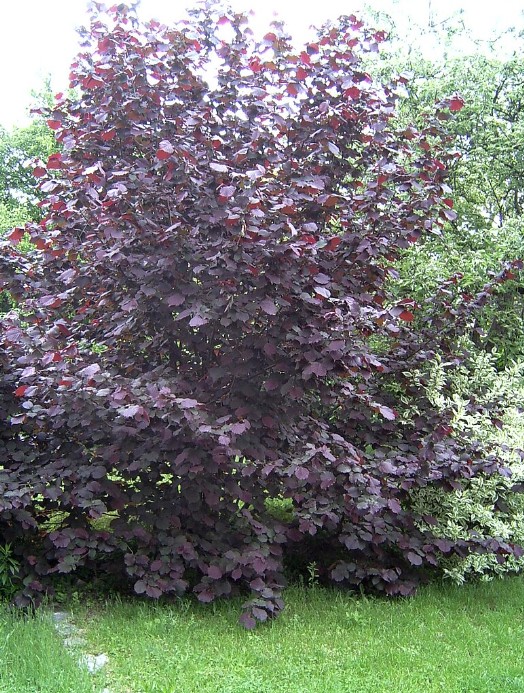
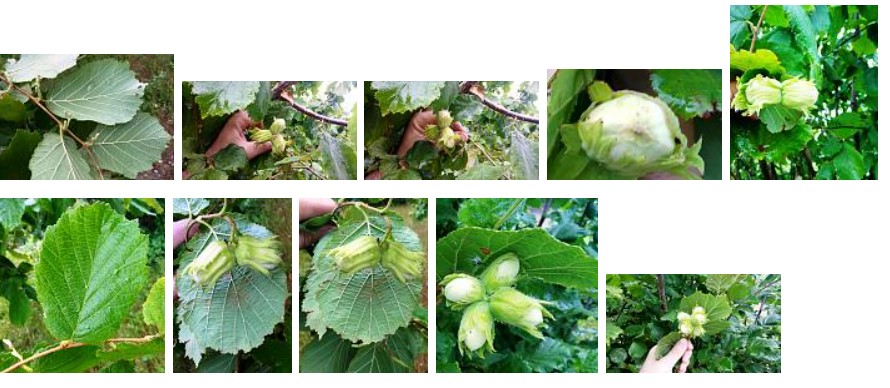
A large shrub or tree, reaching 3-10 m. The bark on the trunk and large branches is ash-gray, while young shoots are reddish-green and covered with dense hairs. The leaves are round, heart-shaped, or broadly oval, 7-12 cm long and 6-10 cm wide. They are green or sometimes dark red above. The underside is paler, with hairs along the veins.
The buds are obovate, light brown, and the flower buds are larger than the leaf buds. The stamens can reach 10 cm in length and 1 cm in diameter.
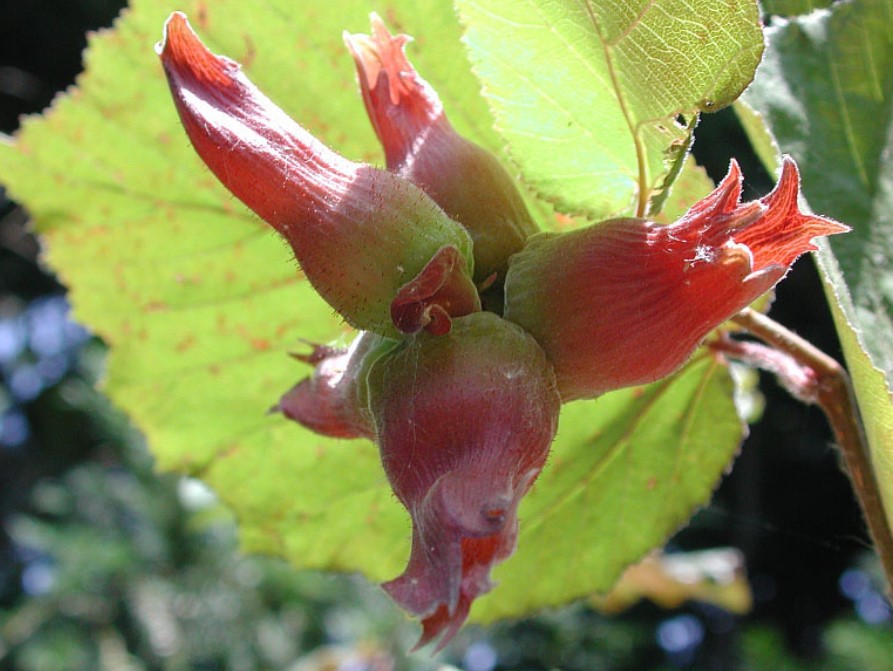
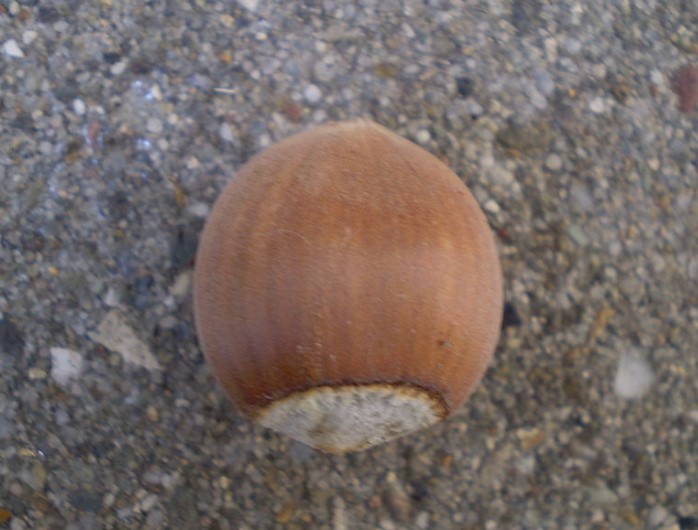
The fruits grow in clusters of 3-6 (sometimes up to  The nut kernels are up to 3 cm long and have a fleshy outer shell, approximately twice the length of the nut itself, with wide, serrated lobes and a velvety or glandular-hairy texture. The nut itself is oblong-ovoid or nearly cylindrical, 2-2.5 cm long and about 1.5 cm in diameter.
| Characteristics | Description |
| Distribution area | China, Japan, Korea, Far East. |
| Flowering and fruiting time | Flowering: early spring. Fruiting: early autumn. |
| Varieties | Isaevsky, Masha, Rimsky, Pushkinsky red, Pervenets and others. |
| Economic use |
|
Review of Lombard walnut
Lombardy white
It seems like he is.
The impressions are contradictory - the nut is prominent, but the yield is 2-3 dozen nuts per bush against a background of 5-8 cubic meters of "firewood" and 4-6 square meters of occupied land
Hazelnut or bear nut
A unique species of hazel with a tree-like form. In the wild, it can grow up to 30 meters, but in Russia it typically reaches a maximum height of 8 meters. It lives up to 200 years.
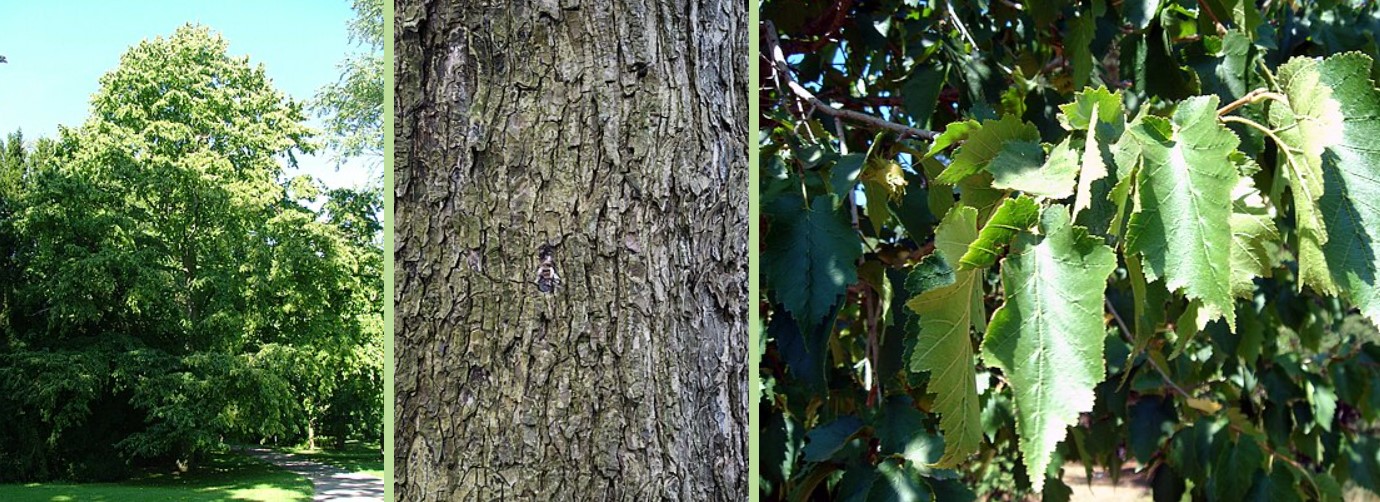
The bear's nut has a symmetrical, dense, and pyramidal crown. The trunk is covered with deeply fissured bark with a light-brown bloom. Young shoots are gray and drooping. The leaves are large, dark green, and broadly ovate, 12-13 cm long and 8 cm wide. The base is cordate with serrated edges, and the petiole is 3-5 cm long. The buds are oblong, covered with reddish hairs and small scales. The leaves remain green until late autumn. The tree's deep, taproot system allows it to firmly anchor itself in the ground. This makes it popular for creating shelterbelts.
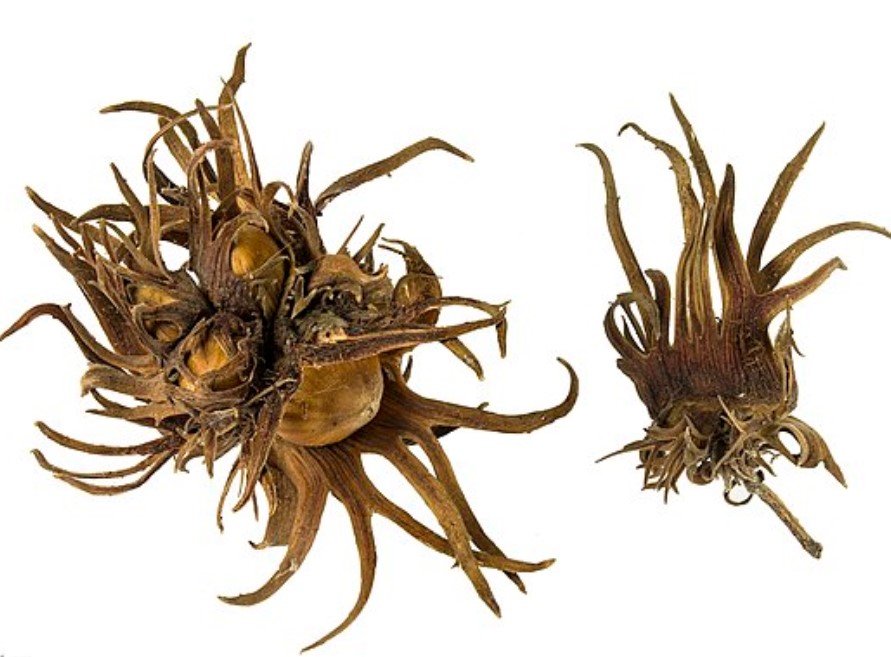
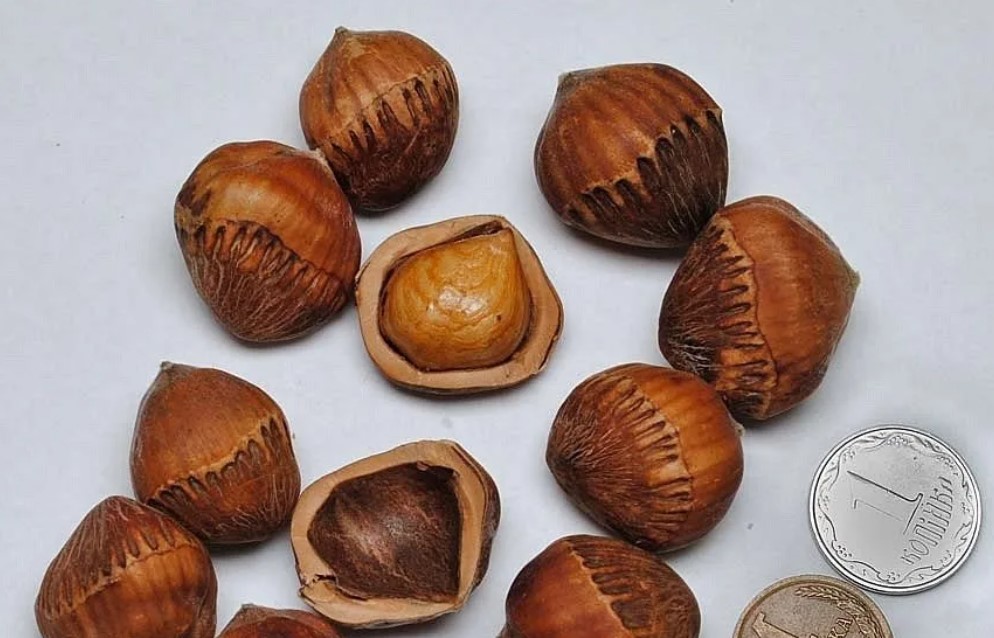
The male flowers are elongated, gathered in clusters up to 12 cm long. They are light yellow. The female flowers are hidden within the buds. The fruits are small, hard, and oblong with flattened sides. The nuts average 2 cm in size and have a hard, thick shell. Inside the fruit is a seed, and at the top of the nut is a velvety, wide-open cup. Each inflorescence contains approximately 48 nuts.
| Characteristics | Description |
| Distribution area | Northwest Caucasus, Transcaucasia, Azerbaijan, Georgia, Armenia, northern Iran, the Balkan Peninsula, Asia Minor and Western Asia. |
| Flowering and fruiting time | Flowering: first half of spring. Fruiting: August-September. |
| Economic use |
|
Reviews of hazelnuts
The tree hazel, or bear's nut (Corylus colurna), is a common hazel. Unlike other hazel species, it grows as a tree reaching 20 and even 30 meters in height. It tolerates temperatures down to -30°C and below, and can live for over 200 years. Its leaves are large and beautifully shaped, and its bark is also interesting, with peeling sections. The tree's wood is also valuable, with a beautiful grain and pink hue. Therefore, the tree hazel population in Russia is low. Because of its beautiful and durable wood, the species was heavily harvested and survived only in hard-to-reach mountain gorges. It is found in the northwestern Caucasus and Transcaucasia (Krasnodar Krai, Adygea, Karachay-Cherkessia, North Ossetia, and Dagestan). The species is listed in the Red Book of Russia. In this grove not far from us, over a hundred trees have lived for 100 years, most of them in excellent condition.
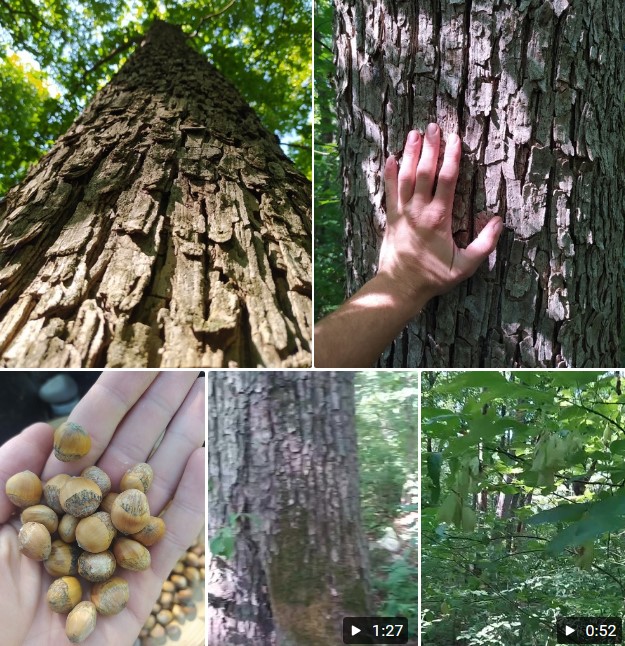
Even if the bear nut takes root, it's more of an ornamental tree than a fruit tree: all the growth goes into the growth. And its nuts have long, small, and thick-skinned lobes, worse than those of the hazel. In my opinion, its most attractive feature is its growth habit: a wide, pyramidal form, without a single pruning.
Manchurian hazel
A low-growing shrub, growing to 3-3.5 m. It has multiple trunks and thick branches, which can reach 15 cm in diameter. Young shoots are covered with soft down. The bark of the trunk is grayish-brown with small fissures.
The leaves are small, oblong-ovate, with serrated edges. They are soft to the touch. They are about 5 cm long and 3 cm wide. The leaves are emerald with a rusty, orange, or burgundy spot in the center. In the fall, their color changes to dark orange.
In spring, male inflorescences, also called catkins, form on the shoots. These are clusters of five flowers on a single stem, which can reach 14 cm in length. The inflorescences are covered with light beige, sharp scales.
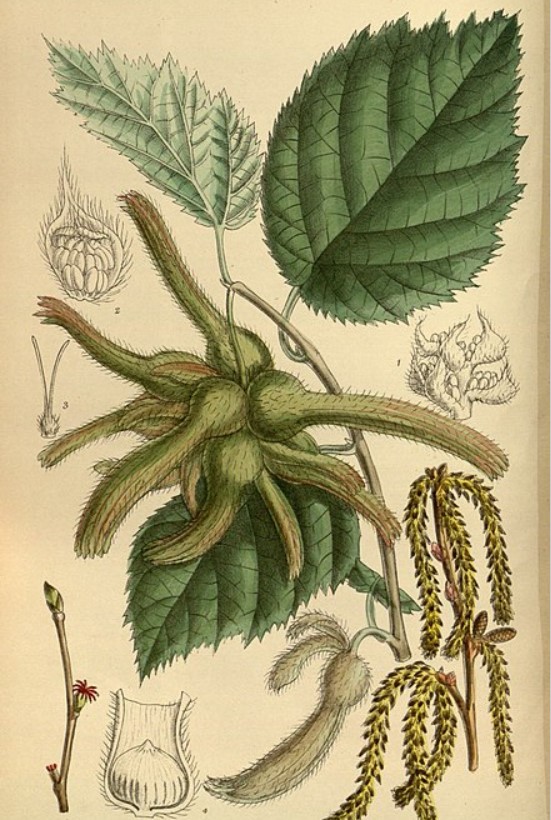
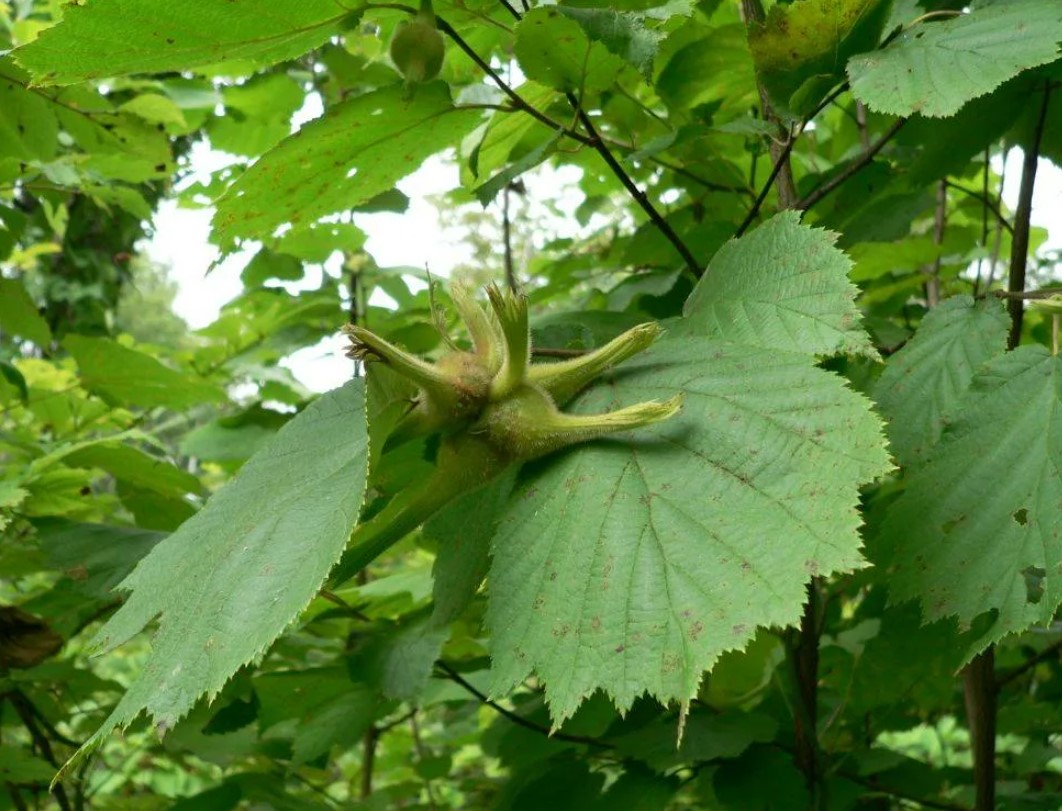
Each stem can bear 2-4 nuts. What makes these fruits unique is that they are hidden within a bristly green cup, forming a tubular structure. The nuts are oval and round, 1.5-2 cm long. The shell is thin and brittle, and the fruits themselves have a delicious nutty flavor.
| Characteristics | Description |
| Distribution area | Russian Far East, Korea, China. |
| Flowering and fruiting time | Flowering: May. Fruiting: September. |
| Economic use |
|
Hazelnut (Corylus heterophylla)
It is medium-sized and resembles a hazelnut in appearance. A mature bush typically reaches 4-5 m. A young bush has many branches, but the crown thins out with age. The oval leaves can reach 11 cm in length and have a pointed tip. The outer surface of the leaf blades is dark green, while the inner surface is slightly lighter.
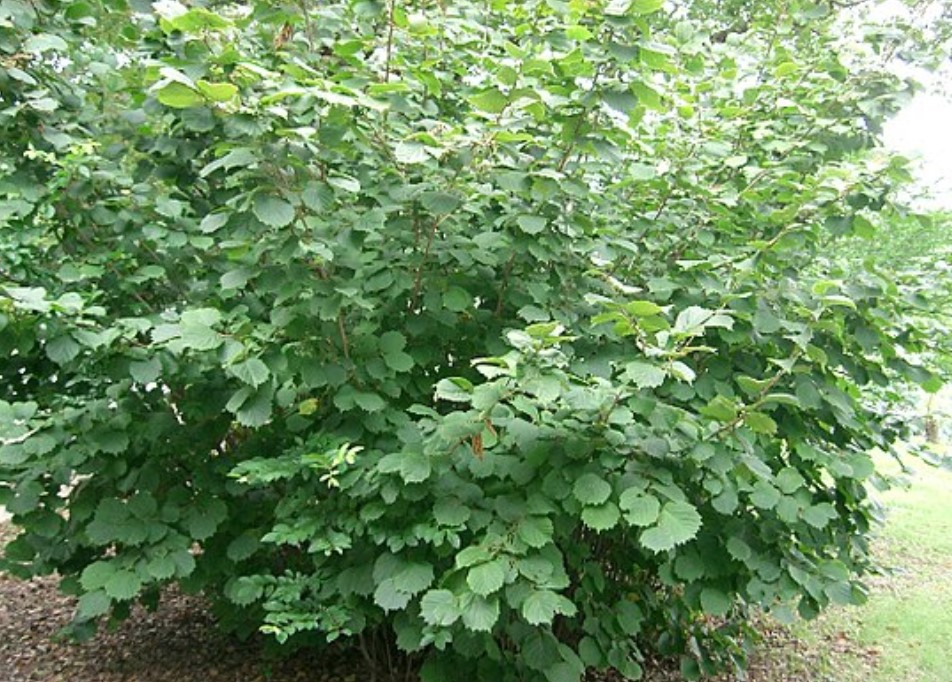
It is highly resistant to low temperatures and can easily withstand temperatures as low as -40°C. If a return frost occurs during the flowering period, the flower buds can withstand temperatures as low as -8°C without harm. However, if the shrub is planted in an unsuitable location, the tops of the branches may freeze.
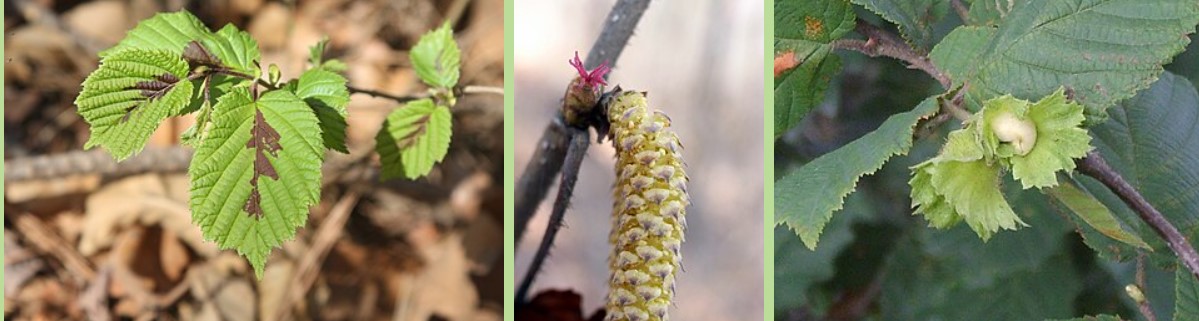
The shrub begins bearing fruit at an early age, but yields a small harvest for up to three years. It lives up to 80 years. Its nuts are small, up to 1.5 cm in diameter. Initially, they are covered with green, bell-shaped leaves. As they ripen, the nuts turn dark brown. The shell is strong, preventing the nuts from cracking on the branches, and they fall easily when ripe.
|
Characteristics |
Description |
| Distribution area |
Eastern Siberia, Russian Far East, Mongolia, China, Korea and Japan. |
|
Flowering and fruiting time |
Flowering: from the second half of March to the end of April.
Fruiting: early autumn. |
| Economic use |
|
Review of Hazelnut
So, the hazelnut is a low-growing shrub up to two meters tall. It's early-bearing, meaning it begins bearing fruit three to four years after sowing. The germination rate is higher for fresh nuts, meaning they're harvested and sown the same year, preferably directly into a permanent location. If stratified, the germination time is up to four to five months, with a preliminary soaking of two to three days.
The kernel of this hazelnut is well formed, the taste is good, but the shell is thick.
This species is very frost-resistant down to -45 degrees, and drought-resistant.
The fruits ripen in early September.
Red-leaved hazel
A tall, heat-loving shrub growing up to 5 meters. It is found in deciduous forests and steppes. The plant prefers fertile, well-drained soils. It can have up to nine trunks with dense, smooth, ash-gray bark, which turns dark red on young shoots.
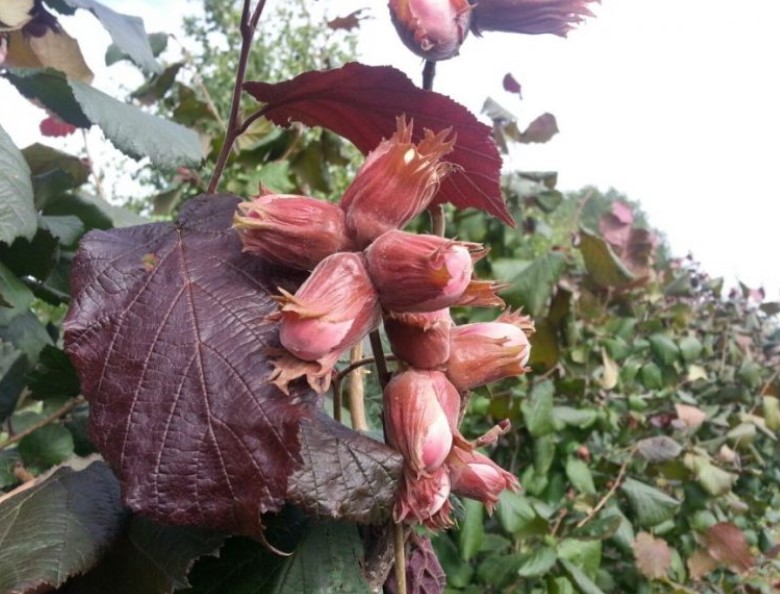
In the wild, the shrub has a spreading, spherical crown up to 6 m in circumference. In landscapes, it is trained as a low tree.
The leaves are large and oblong, reminiscent of a freshwater fish called bream, hence the shrub's name. They grow up to 10 cm long and up to 8 cm wide. They are dark brown with a green tint in spring, turning burgundy in summer, and yellow-orange in autumn. The undersides of the leaves are lighter than the tops, and the veins may be slightly fuzzy.
The same plant can bear both male and female flowers. The former resemble pink birch catkins, while the latter resemble buds in clusters.
The fruits are oblong, with a tough, gray-brown shell; a single stem typically produces 6-8. The kernels are round, dark beige, nutritious, high-calorie, and pleasant to the taste. Hazelnuts begin bearing fruit in the fourth year after planting. During the fruiting period, the bush's growth slows.
|
Characteristics |
Description |
| Distribution area |
Central region and south of Russia. |
|
Flowering and fruiting time |
Flowering: late winter – early spring.
Fruiting: late summer – early autumn. |
|
Varieties |
Lambert, Contorta, Varshavsky, Sirena, Red Majestic |
| Economic use |
This variety is actively used in landscape design. |
Reviews of red-leaved hazel
A couple of years ago, I purchased two red-leaved hybrid hazelnut trees from the Ivanteevsky nursery (Yaroslavskoe shosse, 20 km from the Moscow Ring Road). These were seedlings from open-pollination of varietal specimens (they used to breed hazelnuts). The bushes are 2-3 canes, about 2 meters tall. This year, they were all covered with nuts, so much so that one skeletal branch even broke off under the weight of the harvest. I picked them about 15 days ago. The nuts are clustered in groups of 2-5, elongated, thin-skinned, 2-2.5 cm long (I just ate one). In spring, the foliage is burgundy, quickly turning green by summer. Now they are all covered in dense, small burgundy catkins, preparing to bloom next spring. I also purchased the Academician Yablokov variety there. It's about 30 cm tall and growing poorly (the growth over two years was 20 cm).
Hazel Pontic
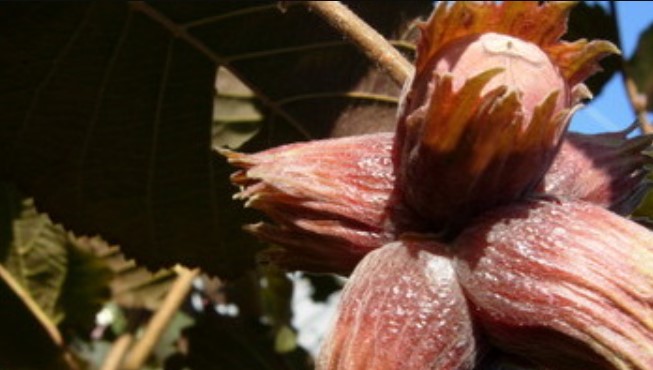
This species, native to warm climates, is considered the progenitor of many Turkish, Caucasian, and southeastern European hazelnut species. It has rounded leaves and produces large, flattened nuts, usually clustered in 2-3 clusters and surrounded by open ivy. It can reach a height of 6 m.
| Characteristics | Description |
| Distribution area | Transcaucasia, Asia Minor. |
| Flowering and fruiting time | Flowering: April-May. Fruiting: September. |
| Economic use | Used in landscape design for landscaping various objects. |
Planting hazelnuts in the garden
Growing this plant has its own peculiarities.
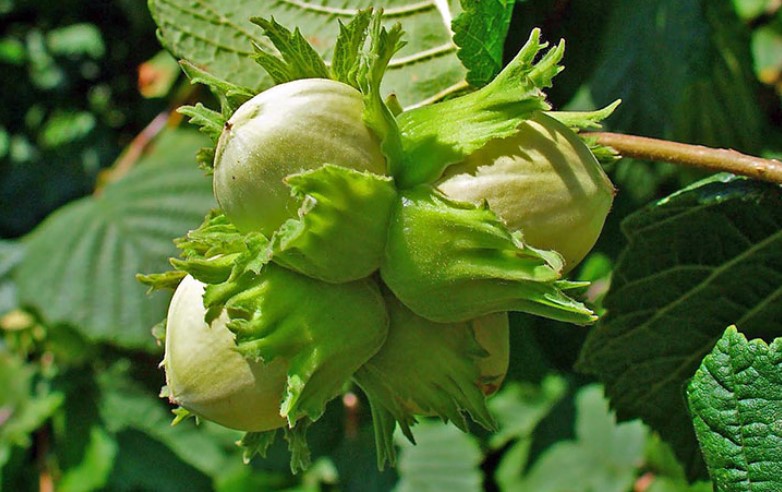
Planting dates
Planting can be done in spring or fall. In spring, it should be done before the sap begins to flow, and in fall, 15-20 days before the onset of frost. The second planting option is preferable.
Location
The planting site should be protected from drafts and have moderate light levels. Groundwater should be no deeper than 1.5 meters. A south- or west-facing area next to a building is ideal.
Places where water collects during snowmelt are unsuitable. Also, when choosing a location, keep in mind that there should be at least 4-5 meters between a large tree and the hazel.
Preparing the soil for planting
The substrate shouldn't be heavy, poor, loamy, or waterlogged. The best option is airy, light soil with a high humus content and low or neutral pH. When planting several plants at once, it's advisable to dig the area.
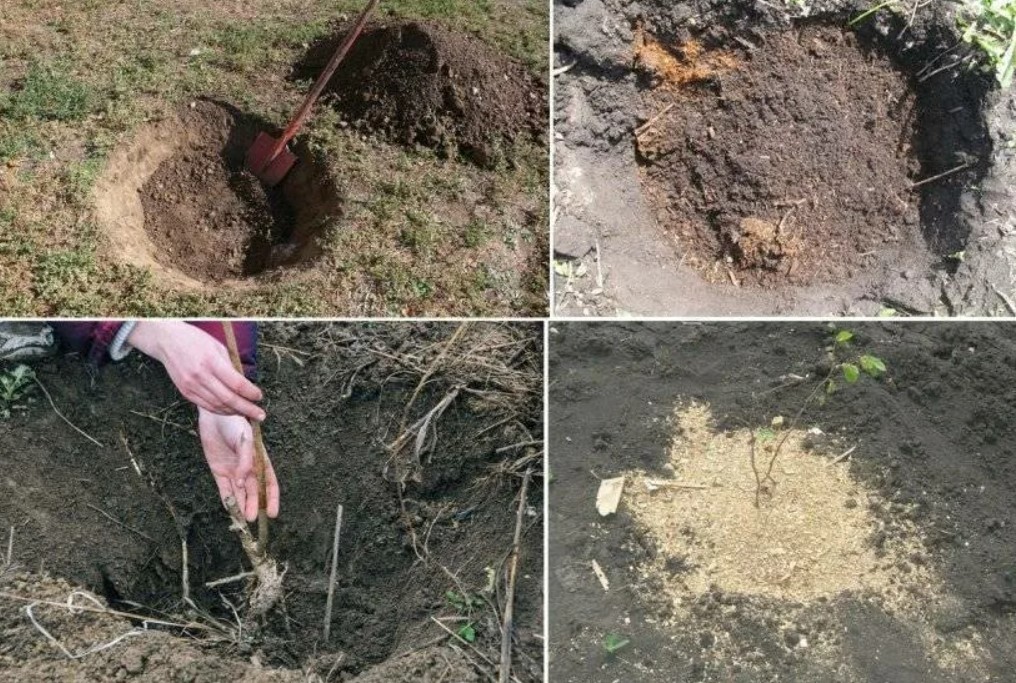
Planting holes should be prepared 4 weeks before planting. This will allow the soil to settle and compact properly. If the soil is fertile, the hole should be 0.5 m deep. If the soil is poor, 0.8 m should be used. Before planting, fill the hole with a nutritious soil mixture, which can be prepared by mixing soil from the topsoil with 2 tablespoons of wood ash or 200 g of superphosphate, and 15 kg of rotted manure. For best results, add a few handfuls of soil from wild hazelnuts.
Selecting and preparing hazelnut seedlings
When choosing a seedling, make sure it has no leaves. Look for plants with three to four strong stems at least 10-15 mm in diameter. Check to see if the root system is well developed. The roots should be at least half a meter long, but they should be trimmed to 0.25 m before planting.
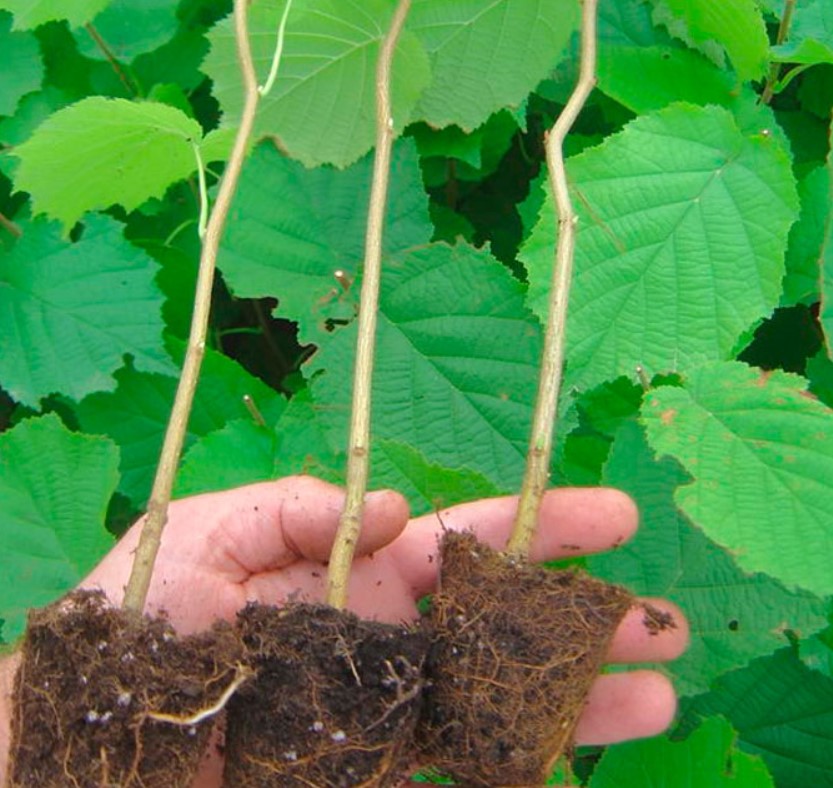
Hazelnut planting instructions
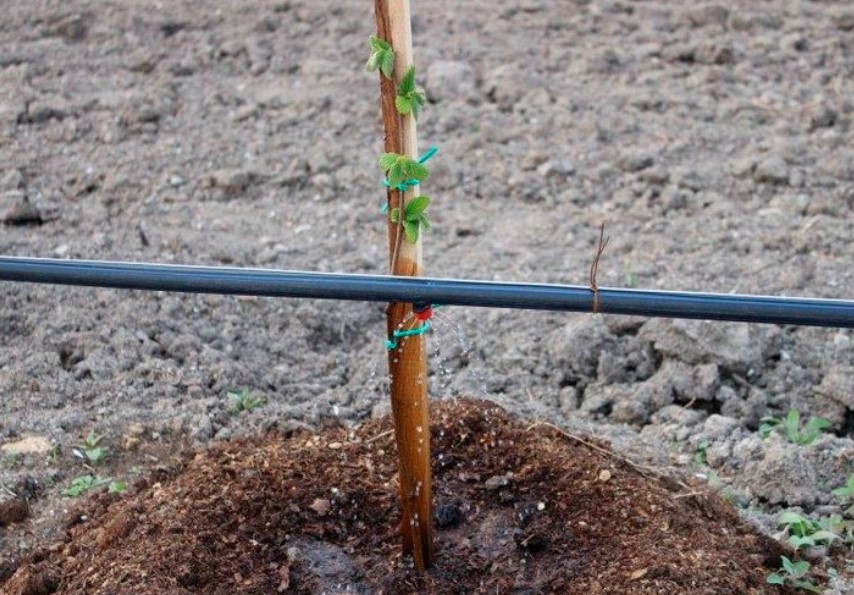
Step-by-step actions for autumn planting:
- Before planting, be sure to coat the hazel root system with a mixture of clay and water.
- In the center of the hole, it is necessary to make a mound on which the seedling will be planted.
- After planting, leave the root collar of the plant at a height of 50 mm from the ground.
- Fill the hole and compact the soil tightly around the plant.
- To support the seedling, drive a stake nearby and tie the young plant to it.
- Water a newly planted tree generously (30-40 liters of water per bush, even if the soil is already wet).
- Cover the soil surface around the bush with a layer of mulch (humus, sawdust, peat) 30-50 mm.
- During the first days after planting, protect young plants from sunlight.
The principle for spring planting is the same. The only difference is that the site must be prepared in the fall.
Hazelnut planting scheme
Recommended planting scheme:
- 5 m between rows and 4 m between adjacent specimens in one row (on fertile soils:
- 5 m and 3 m respectively on soft soils.
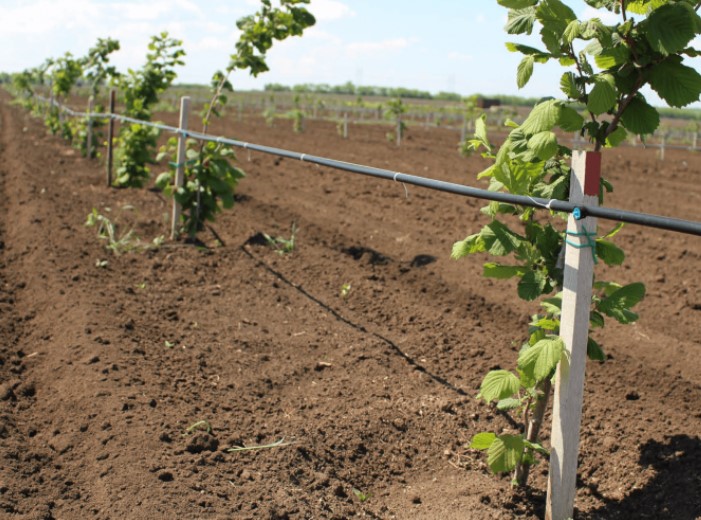
Double-row plantings with patterns of 3.5 x 1.5 x 1.75 or 3.5 x 1.75 x 2.0 m are also possible, but in this case it should be taken into account that after a few years, every second seedling will have to be removed, and later - one of the rows.
Caring for hazelnuts
Caring for hazelnuts is extremely simple. You just need to follow a few basic rules.
Watering
Young plants require constant watering. Watering should begin a week after planting. Insufficient watering can negatively impact flower bud formation and fruit ripening. Overall, the plant requires only 5-6 waterings during the growing season, with each watering applying 60-80 liters of water around the base of the tree. During dry summer periods, more frequent watering may be necessary, as the plant thrives in humid conditions. However, if the summer has been rainy, watering may not be necessary.
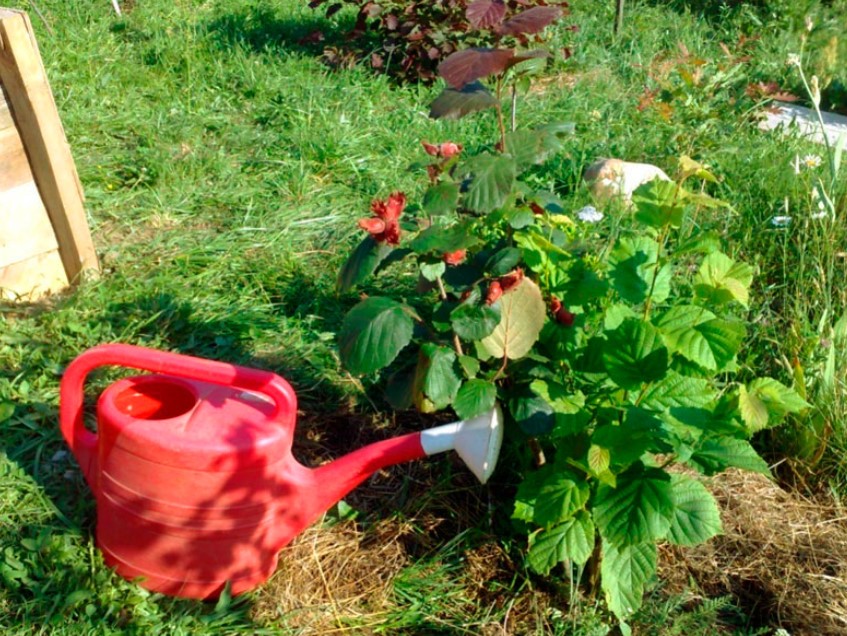
On average, watering should be done every four weeks. It's important to apply water sparingly around the tree so it has time to soak in and not form puddles. Overwatering is not beneficial for the hazel tree. After watering or rain, it's recommended to loosen the top layer of soil several times.
Top dressing
Fertilizers are selected depending on the time of year:
- In the fall, phosphorus and potassium are needed. Therefore, 20-30 g of potassium salt, 3-4 kg of manure, and 50 g of superphosphate are added once every 2-3 years.
- Nitrogen is essential in spring. After buds swell, apply 20-30 g of urea or ammonium nitrate.
- In summer (July), the plant also requires nitrogen. It promotes the simultaneous ripening of the nuts. It's best to use well-rotted manure or compost during this period. This feeding is done once every 2-3 years. One tree requires 10 kg of organic fertilizer.
Wintering hazelnuts
During the first 2-3 years after planting, young plants should be insulated for the winter with covering material or spruce branches. Mature specimens do not require insulation.
Shaping and pruning hazelnuts
Pruning can be done in winter, but it's preferable to do it in spring during the late flowering stages. This will cause the shrub to shake, which will promote pollination.
Hazelnuts can be grown as standard trees, reaching 0.35-0.4 m in height, but training them as shrubs will make them easier to care for. Step-by-step instructions:
- A week after planting, shorten the plant to 0.25-0.3 m.
- New shoots will appear throughout the summer. These should not be removed, as fruiting occurs on one-year-old branches.
- Begin shaping in the spring. Leave only the 10 strongest shoots on the plant and remove the rest. Make sure the remaining branches point in different directions from the center and are spaced approximately equally apart. Prune off any broken, diseased, or weak shoots. The bush should not be overloaded.
- By the fourth year, the seedling will begin to bear fruit. At this time, thinning and pruning are necessary.
- Once a tree reaches 18-20 years of age, its productivity may begin to decline. To prevent this, rejuvenation pruning is necessary. This involves cutting back 2-3 old trunks to the ground each year and replacing them with new basal shoots located closer to the center of the bush. Young branches should be lightly pruned to encourage the development of lateral branches.
If the hazel is grown as a tree, 7 days after planting, only the trunk should be left. As new shoots grow, prune those growing underneath. Form 4-5 skeletal branches at the top. It's important to regularly remove all root suckers.
Diseases and pests of hazel
| Disease/pest | Description | Defeat | Control measures |
| Kidney mite | It reaches 0.3 mm in length. It hides in buds and lays eggs there. | The buds are affected. They are easy to identify if the pest is present—they swell and become pea-shaped. When they open, they dry out and fall off. | Step by step actions:
|
| Aphid | A sucking insect that is a carrier of infectious agents. | It sucks out the plant's cellular sap through tiny punctures. This causes leaves to curl, buds and stems to become deformed, and fruits to fail to ripen fully. | |
| Nut weevil | A centimeter-long brown beetle. The caterpillar's body is milky yellow, and its head is brownish-red. | The female lays eggs in nuts, and the larvae eat out their pulp. | |
| Nut barbel | A one and a half centimeter black beetle with yellow legs. | The larvae chew out the center of the stems, causing them to dry out. The upper leaf blades turn yellow and curl. | |
| Nut leaf beetle | The beetle is 0.6-0.7 cm long and can be identified by its purple elytra. The larvae are colored to match the foliage, making them difficult to spot. | Damages leaves, causing them to dry out and fall off. | |
| Powdery mildew | An infectious disease. It can be identified by the appearance of a white, powdery coating. Over time, the individual spots merge and turn brown. | Affected areas stop developing, die, and collapse. Inflorescences fail to produce fruit, and the plant loses its frost resistance. | Treat with copper-based fungicides. Follow proper agricultural practices to prevent infection. |
| Rust | A fungal disease. Rusty spots appear on the outer surface of the leaves, and round or oval pustules appear on the inner surface. | The leaves turn yellow and fall off. | |
| White rot | It can develop as a peripheral lesion or mixed rot of branches. | The plant is dying. |
Planting and caring for hazelnuts in different regions: features and varieties
Hazelnuts are easiest to grow in warm climates. However, some varieties can also be planted in northern regions.
In the Moscow region
For this region, the plant must be frost-resistant, resistant to recurrent spring frosts and drought, and also have an early ripening period.
The most suitable varieties:
- Firstborn. Resistant to cold, heat, and infections. Ripens in early September. Characterized by slow growth and long fruiting.
- Circassian and Tambovsky Early. They are pollinators, so they are planted alongside other hazelnut varieties.
- Academician Yablokov, Sadovy, and Isaevsky. Ripen in early autumn and are frost-resistant. Green leaves and a broad crown.
- Moscow Ruby. Tall and productive. Large, thin-shelled fruits. Pollinates neighboring plants well.
- Moscow early. With a compact crown.
- A masterpiece. Reaches 4 m in height. With few shoots, this variety requires no pruning. Inflorescences and ovaries are not damaged by subsequent frosts.
- Sugar. The foliage is green, and the fruits are red. Height up to 3 m.
- Sugary. Burgundy foliage. The nuts are very tasty.
- Masha, Ekaterina, Pushkinsky. They will decorate any area.
- Common Siren, Chocolate. They are distinguished by their consistently high annual yield.
In St. Petersburg and throughout the Northwest
Hazelnuts can be propagated in a variety of ways, but seedlings are best for the northwestern region. Mature nuts germinate well, and the shoots grow quickly. Planting is recommended in the fall, at the end of September. Seedlings will emerge the following year in late May or mid-June. From late July to mid-August, they can be transplanted to their permanent location.
Recommended varieties:
- Ivanteevka;
- Academician Yablokov;
- Sugar;
- Tambov early;
- Ivanteevsky red;
- Kudrayv;
- Purple;
- Michurinsky.
In the Urals
In winter, male flowers—catkins—can freeze. This causes them to stop producing pollen. Therefore, frost-resistant varieties should be chosen for planting in the Urals. For example:
- Barcelona - gives a bountiful harvest;
- Warsaw Red - fruits ripen in mid-September;
- Trapezund – produces a bountiful harvest and tolerates frosty winters well, with temperatures dropping to -30 °C;
- Academician Yablokov;
- Ivanteevsky Red;
- Kudraif;
- Moscow Early;
- Moscow Rubin;
- Firstborn;
- Purple;
- Sugar;
- Tambov Early.
But even here, you need to be on the safe side and protect the male flowers as much as possible. To do this, the branches they are on are bent to the ground and secured, for example, with a stone or staples. Snow will cover the catkins, and they will easily survive the winter without freezing. In the spring, simply remove the weight. The branch will return to its original position. Of course, there is a risk that the catkins will rot, but fruiting doesn't require many male flowers. Some will survive.
Only young shoots should be bent to the ground. Older shoots may break.
In Siberia
Planting common hazel in Siberia doesn't make sense, as it doesn't grow naturally there and is therefore unsuited to the region's climate. The Manchurian and Heterodescens varieties are best. The best varieties are:
- Alida;
- Lentina;
- Biysk Greenleaf;
- Biysk Krasnolistny;
- Biysk Sharova.
Plants should be planted near buildings and fences, in areas with heavy snowfall for protection. The problem with growing hazelnuts in Siberia is similar to the Urals: the catkins can freeze in winter. They can be saved by burying them in the ground.
Pollination
Hazelnut vegetation begins with the flowering phase, which occurs before the leaves unfurl and when temperatures reach 12°C. The flowers elongate, the anthers burst, and the yellow pollen is carried by the wind to fertilize the female flowers.
Temperatures as low as -6°C during flowering do not cause any harm. However, after fertilization, temperatures as low as -2°C to -3°C can be detrimental to fruit development.
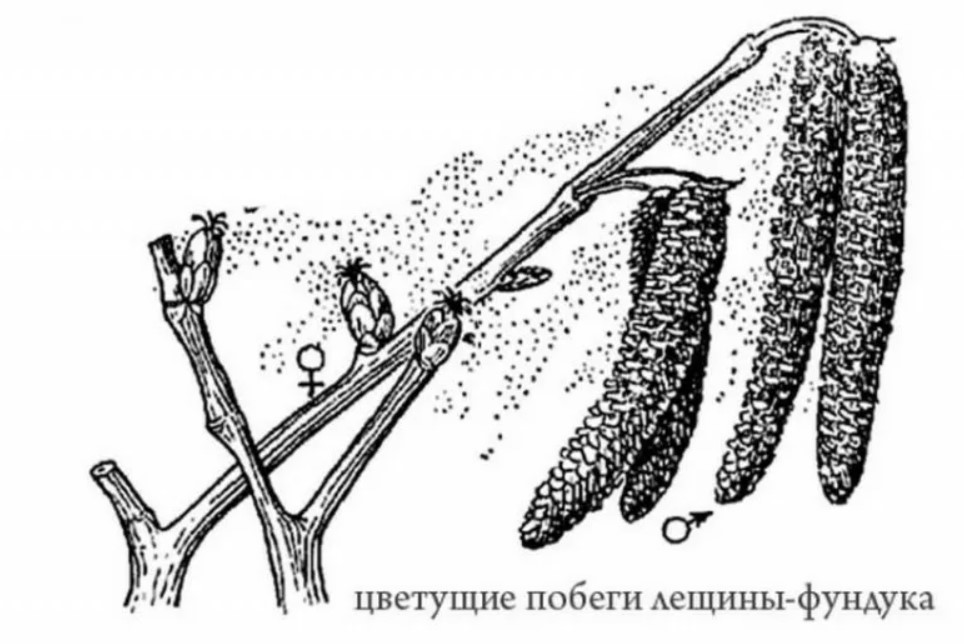
Trees should be pollinated by other hazelnut varieties. Even in private gardens, it's recommended to have three to four different varieties, as male and female flowers of the same variety may not open at the same time. This can interfere with pollination.
In regions with temperate or cold climates, it's useful to have a common hazel bush in the garden, as it can effectively pollinate hazelnut varieties. In smaller gardens, this species can be grafted onto a single branch.
Pollination can also be done by hand, collecting pollen from male flowers at temperatures close to 0°C and transferring it to female flowers with a soft brush. Shaking the branches can also aid pollination when there is no wind.
Fruiting of hazel
Vegetatively propagated trees begin bearing fruit in 3-4 years, while those grown from seed begin bearing fruit in 6-7 years. Full fruiting occurs in 8-10 years. The tree's main branches typically remain for 2-2.5 decades before dying or being pruned.
Hazelnut harvesting
The plant should bear fruit every year. In southern Russia, this is usually the case, but high-yielding seasons alternate with periods when only a few nuts are harvested. In colder regions, the situation is different. Abundant fruiting occurs once every 6-7 years.
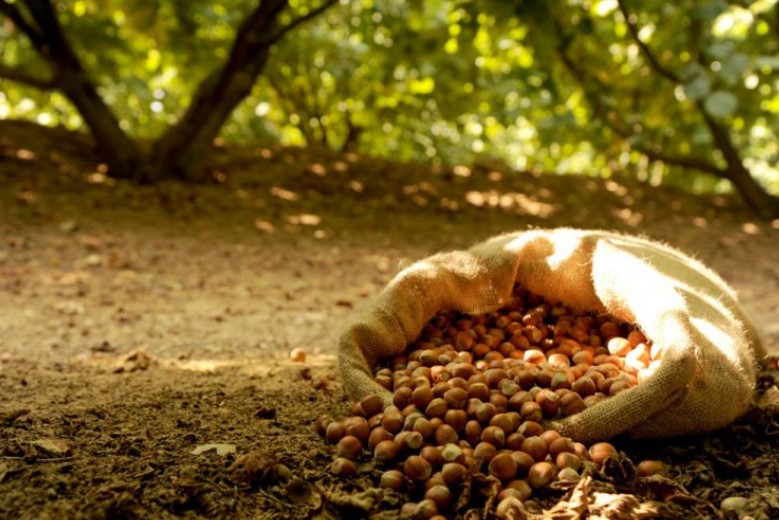
Ripe fruits
Hazelnuts are considered fully ripe when the shells turn yellow and the nuts fall from the tree. Harvesting them too early can result in unripe nuts, which don't store well and lack essential nutrients. Furthermore, such nuts are likely to be small and tasteless. Harvesting them too late can result in the nuts being eaten by birds, rodents, or other animals, or they can begin to rot.
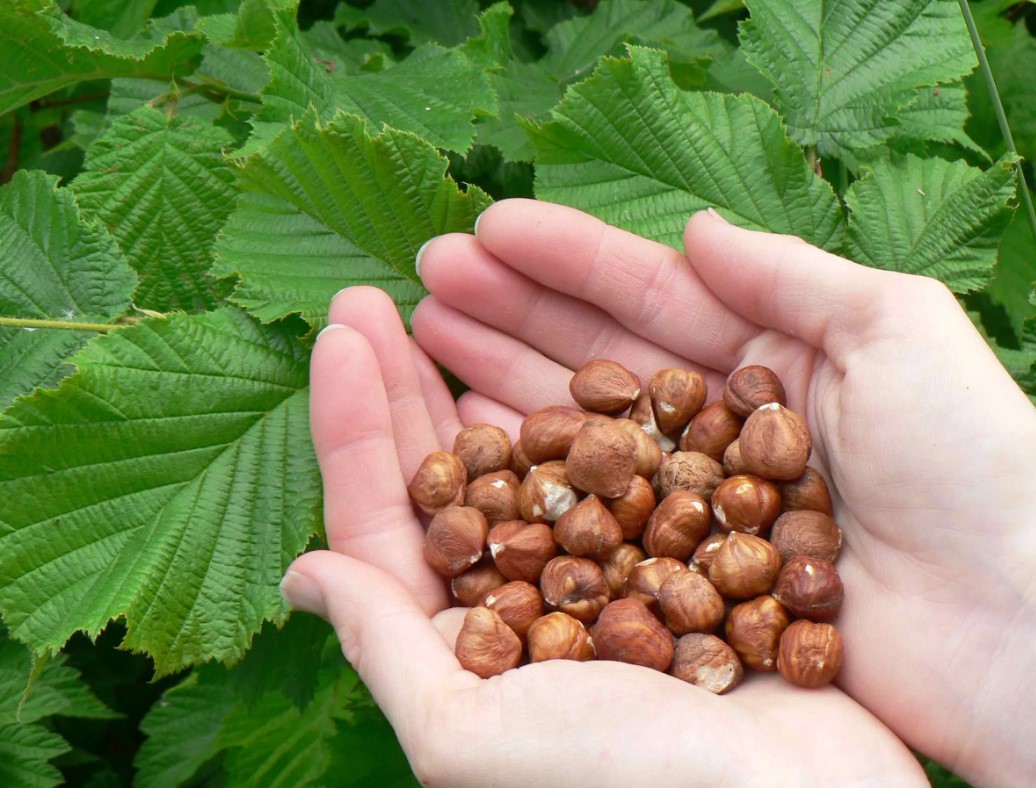
To facilitate harvesting, clear the area under the tree of plant debris. A tarp can also be spread on the ground to collect fallen nuts.
Fruits of technical maturity
Hazelnuts can be harvested by hand when they are technically ripe. Their outer shell turns brown, and the nut itself takes on a light brown or yellow color. It's important to harvest the fruit before it begins to crumble. The harvesting process involves several stages, including breaking off the fruit and its shell.
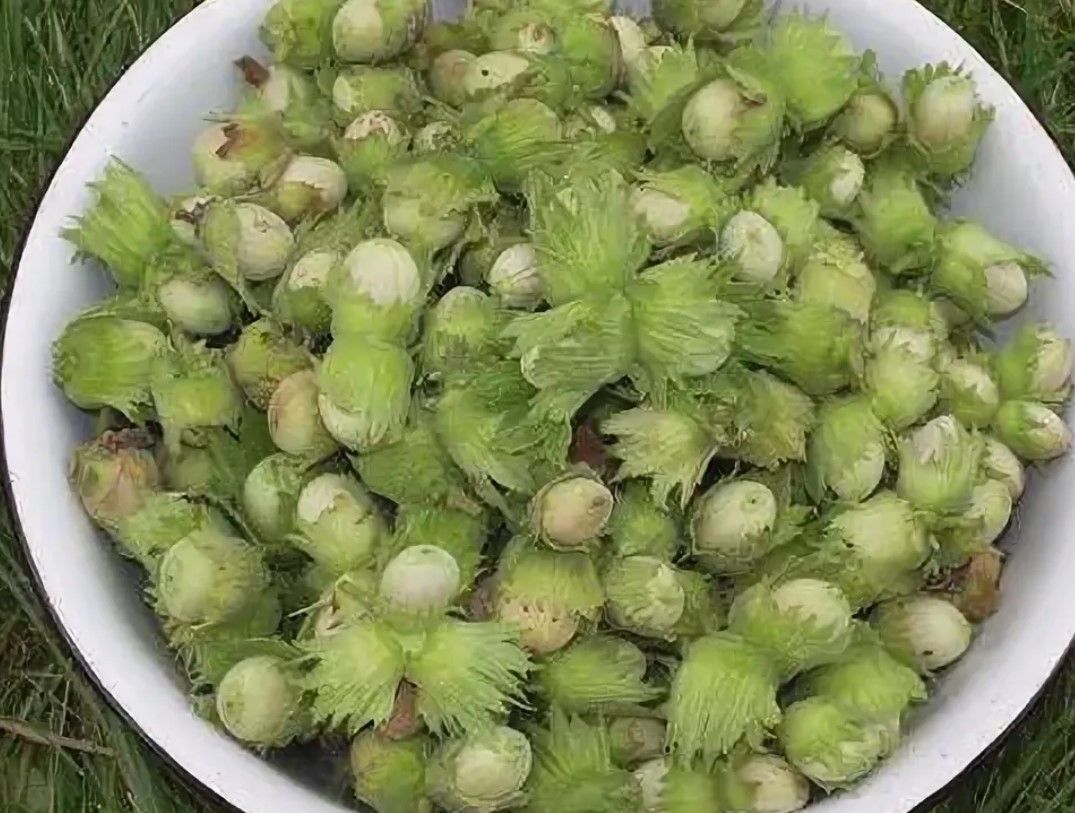
The soft outer shell of hazelnuts is not removed. Instead, the nuts are stacked in piles to ripen and ferment. During this process, tannins contained in the shell oxidize it, imparting the dark brown color and characteristic flavor to the kernels.
Drying
Hazelnuts are dried in a well-ventilated area for 1-2 weeks, spread out in a thin layer. They can be placed outdoors in a shaded area during the day, but should be returned indoors at night to prevent moisture accumulation.
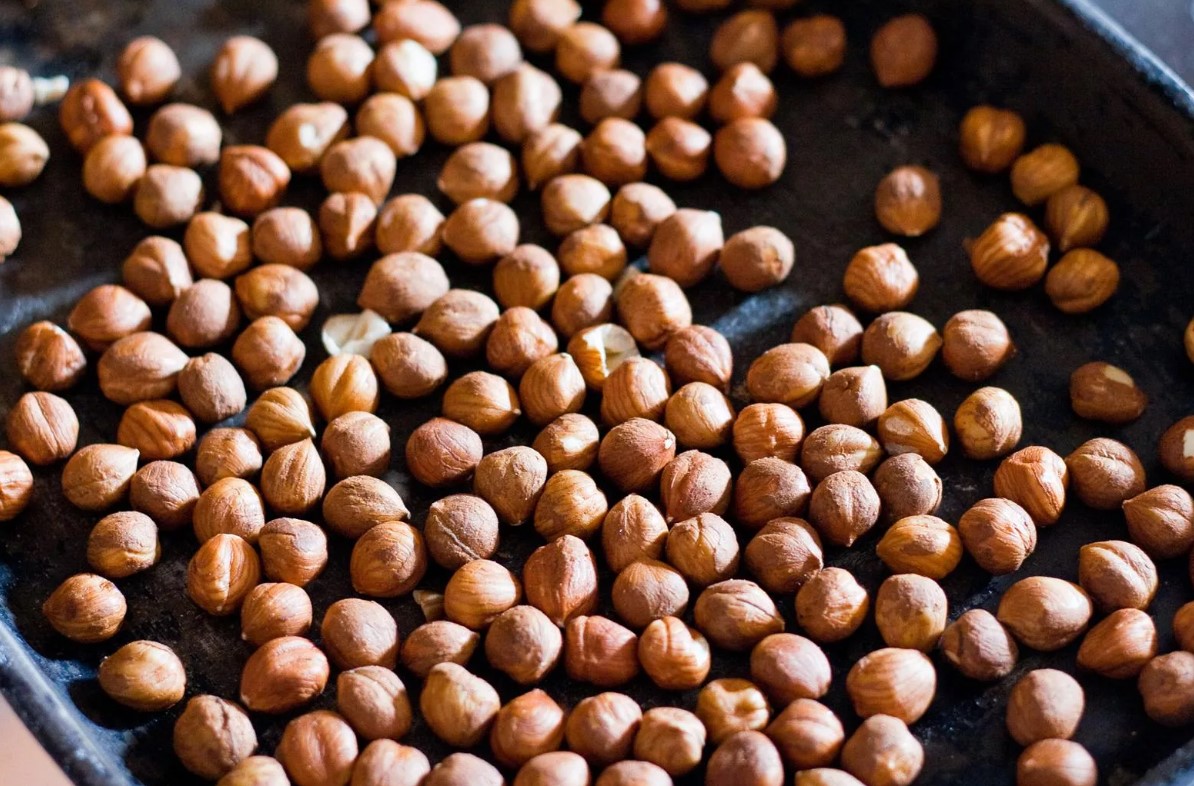
Hazelnuts are considered ready for storage if their moisture content is between 12-14%. This can be determined by shaking a handful of hazelnuts and listening for a rattling sound. If this occurs, the product is ready for packaging. When stored in a dry place at a temperature of +3 to +12°C, they can be stored for up to a year. At a temperature of 0 to +3°C, the shelf life can be extended to 3-4 years.
Harder nuts can be dried in the oven at 110°C.
Reproduction of hazel
Hazelnuts can be propagated in various ways:
- layering;
- shoots and growth;
- by dividing the mother bush;
- by cuttings.
Seed propagation is also possible. However, it is used primarily by breeders to develop new varieties. This method is impractical for planting on your own plot, as the tree begins bearing fruit slowly. Furthermore, only one seedling in a thousand will exhibit the varietal characteristics of the parent plant.
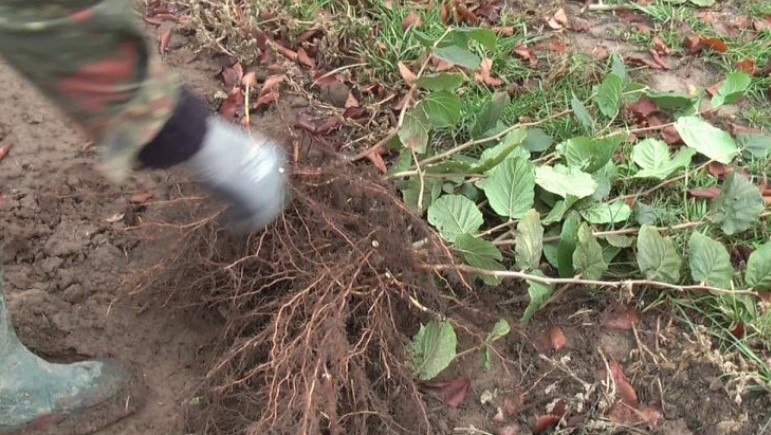
Layers
This method allows for the full preservation of varietal characteristics. Horizontal layering is used. One-year-old, low-growing branches are selected and placed in furrows 10-15 cm deep. The upper portion is left above ground, secured, and slightly shortened. The furrows are not filled with soil. Vertical shoots develop from the buds on the branches. Leaf blades are removed from the lower portions of the shoots, and they are hilled up several times to the middle. The newly grown shoots develop their own roots, which can be transplanted to a new location after 1-2 years of further cultivation.
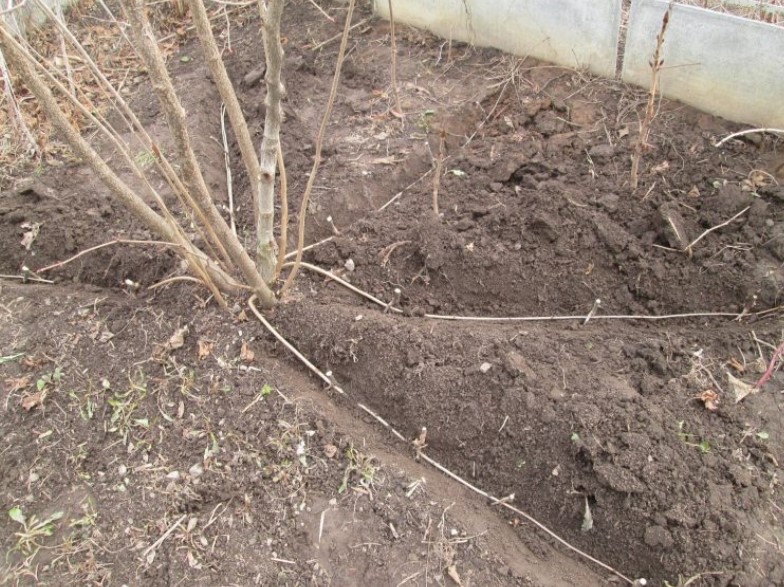
Hazel can also be propagated by layering. In the spring, selected branches are bent down to the ground, and the bark is cut where they touch the ground. The branch is secured in a hole 0.2-0.3 m deep, then filled with soil until the top is above the ground. Staking is required. In the fall, the layers are cut from the mother tree, dug up, and replanted in another location for further growth. Transplantation to a permanent location occurs after 1-2 years.
Using the same principle, hazel can be propagated by vertical layering. During spring rejuvenation pruning, the stumps of relatively large branches are tightly covered with plastic at a height of 0.5 meters. This stimulates the awakening of dormant buds and the beginning of growth.
- When young shoots reach 15 cm, they are hilled up with humus to a depth of 4-5 cm. The lower leaf blades are torn off beforehand.
- After the shoots reach 0.2-0.25 m, they are hilled again by 8-12 cm.
- When they reach 0.3-0.35 m in length, they are hilled up to a depth of 20 cm and the surface is covered with mulch. The film is removed after the third hilling.
During the summer, the bush should be watered and weeded regularly. In the fall, the shoot is carefully dug up to avoid damaging the roots. Layers with a developed root system are broken off at the constriction point. Shoots with a small amount of roots are not separated.
Offspring, shoots
The shoots can extend up to 100 cm from the trunk. The first suckers form 1-2 years after planting. They grow from buds previously dormant on the root system and emerge from the ground a short distance from the parent plant.
Dividing the bush
For this propagation method, the mother plant is dug out of the ground and divided into several pieces with a shovel, each with 15-20 cm long roots. The cut areas are sprinkled with charcoal. The daughter plants are then transplanted to a new location.
cuttings
This method is rarely used because it is too unreliable and doesn't guarantee good survival. It involves cutting the top and middle portions of green cuttings into 10-15 cm pieces. The lower foliage is removed. The planting material is treated with a growth stimulant and planted in a cold frame.
Propagation of hazel by grafting
A wild hazel sapling can be used as grafting material, but bear's hazel is recommended, as it does not produce basal shoots. Cuttings should be taken from the middle or upper part of the stem and harvested during the winter. To preserve them until spring, they can be stored in a snowdrift or in the refrigerator.
Growing rootstock
Grafting hazelnut trees onto other hazelnut varieties produces highly valuable varieties, but does not improve the frost resistance of southern varieties. Even with a healthy root system, buds can freeze in winter, which hinders the spread of this crop in northern regions.
The most suitable rootstock for hazelnut varieties is the hazelnut tree, as it produces few shoots, making it easier to care for. However, this species does not grow in colder climates. Therefore, grafting hazelnuts is only practical in warmer southern regions.
In the European part of Russia and hot regions of Asia, common hazel is a suitable scion. In the northern and Ural regions, due to climate conditions, it is preferable (but not necessary) to graft hazel onto hazel.
If there are no wild trees at hand, grafting can be done on unproductive or excess hazelnut seedlings.
You should not graft a newly transplanted hazel tree, as it may not have enough strength to simultaneously root and fuse with the scion.
Methods of grafting
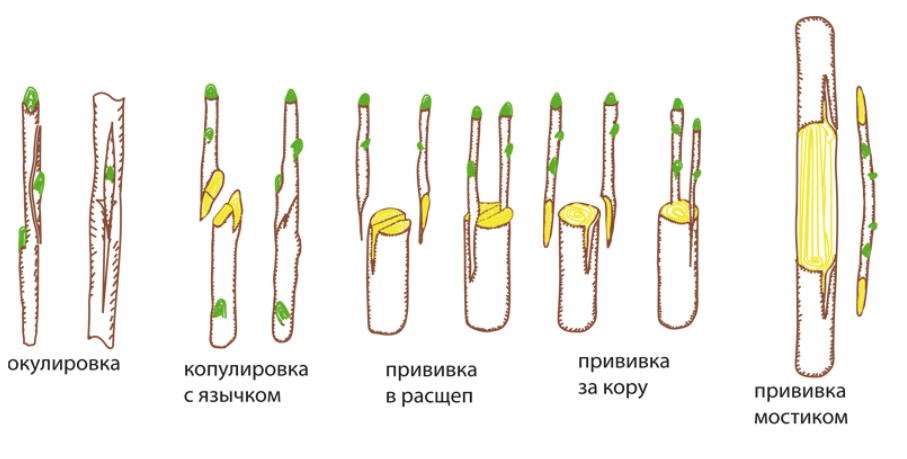
Grafting can be done in the summer using a bud graft or in the spring using cuttings in the bud, behind the bark or in a cleft.
Is growing hazelnuts worth it as a business?
Growing hazelnuts as a business is unpopular. This is due to the long maturation and payback periods, as well as the uncertainty regarding potential yield. There are many factors that can only be confirmed through practical experience. After reviewing the business plan, it becomes clear that this venture can generate a modest income during the season, but it requires significant labor and the ownership of a 30-acre plot of land. If you have an interest in nuts, perhaps this is worth pursuing. After all, every business has a right to exist.
Reviews of growing hazelnuts from gardeners
Do you have a plot of land but no hazelnuts? My advice: plant some! We brought some straight from the forest! I'm sharing my grandmother's recipe for delicious and healthy nut butter.
Good afternoon, dear readers!
Today I want to write about one of my favorite plants – hazelnuts.
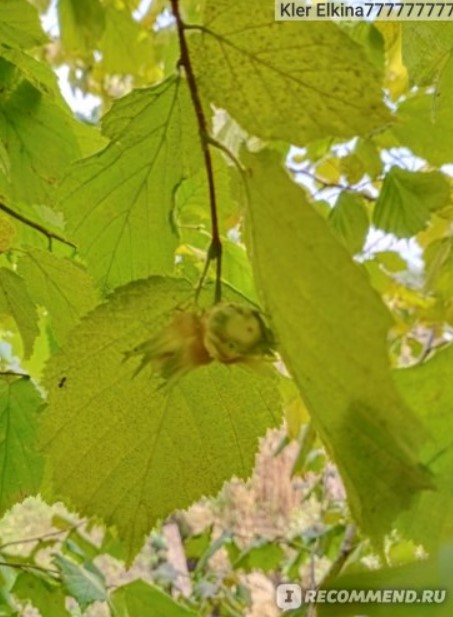
Nuts on a tree
What kind of animal is this?Wikipedia says the following:
Hazel, or hazelnut (Latin: Córylus) is a genus of shrubs (less often trees) of the Birch family.
There are approximately 20 species in Eurasia and North America; they form understory in coniferous-broadleaf forests. The most widespread and economically important is the common hazel (hazelnut).
Many species of the genus are used and cultivated as nut-bearing plants. Large-fruited hazelnuts, primarily the common hazel, large hazel, and Pontic hazel, are also called filberts.
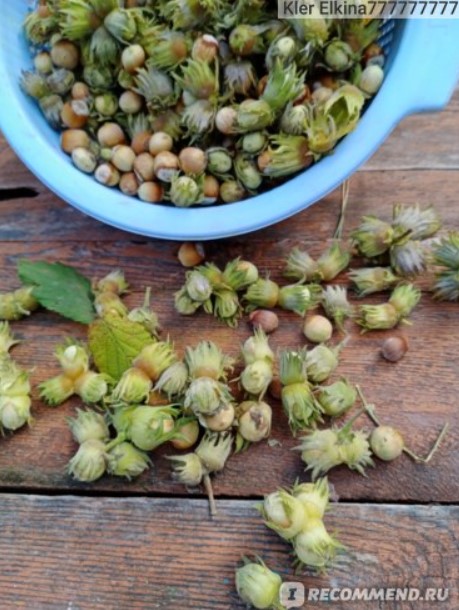
Nuts
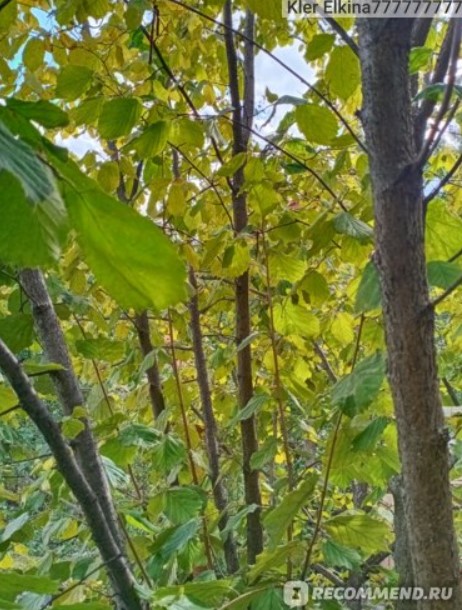
And yes, these two green friends have been delighting us for many years now.
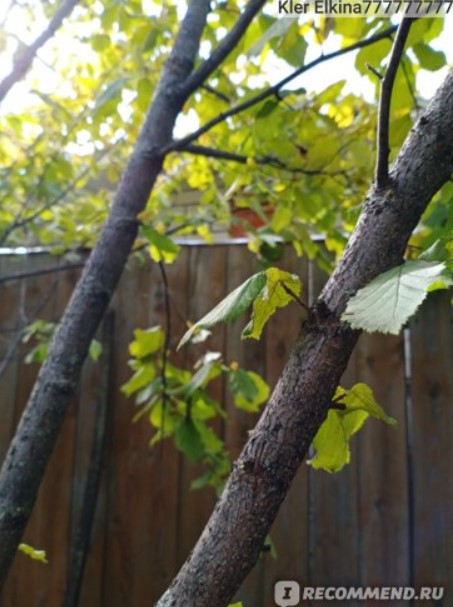
Plant
More than 10 years ago, my husband and I brought two small seedlings from my village, located on the border with the Republic of Belarus, which stood with us in a stuffy traffic jam when we were driving through the Moscow region.
Nut
I was very worried that the plants wouldn't survive or thrive. Because the soil and climate in the Smolensk and Ryazan regions are different. Moreover, these plants weren't adapted to a regular garden, but were taken straight from the forest.But, surprisingly, our friends took root and delight us with a harvest every year.
NutsWhy did we bring these trees to Ryazan? What's so good about them?
I remember how, as a child, my grandmother and I went to the Nut Shop at the end of August.
They took cloth bags, hooks made from straight hazel branches, and went hunting.
In the forest they found thickets of hazelnuts, bent the flexible and strong branches with hooks, and only then collected the fruits, which were still in their green houses.
Nut in the house
When there was nowhere left to put the loot, they went home and emptied the contents of the bags onto the stove, having first spread out a newspaper.After a few days, you can separate the nuts from their green husks, store them (on the same stove) and prepare a delicious paste.
Nuts
I always remember those carefree times with warmth. And how wonderful that we planted walnut trees too! They delight us with their harvests and give us wonderful memories of childhood and my grandmother.Benefits of hazelnuts
One of the main properties of hazelnuts – renewing the body and strengthening blood vessels – is determined by its high content of vitamin E.
Just 70 grams of hazelnuts provide the daily requirement for tocopherol. The rest of the vitamin content is also not meager: the nut contains vitamins B1, B2, PP, as well as trace amounts of vitamins A and C. The minerals, in turn, are balanced so that their content focuses on supporting the cardiovascular system.
This is provided by a significant amount of potassium (445 mg per 100 g) and magnesium (160 mg per 100 g).
Hazelnuts are also an excellent source of iron, providing double the recommended daily intake (36 mg). This makes them an indispensable food for those with blood problems. They also contain phosphorus and calcium, but other minerals are present in low amounts.
Nuts
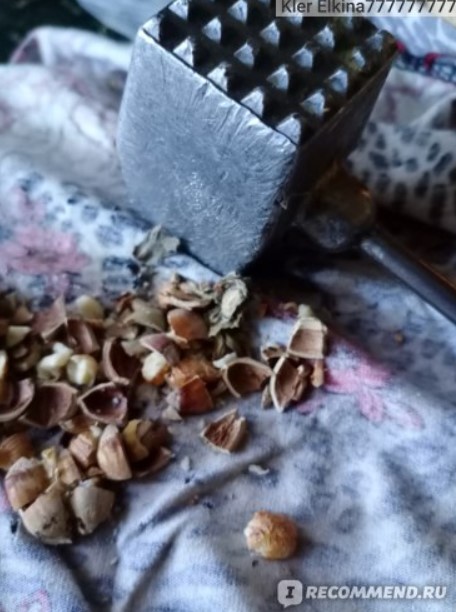
In the fall, I crack nuts almost every day and give them to the kids. Our nutcracker broke last year, so I take a thick board, lay an apron on it, lay out a few nuts, cover them with the other half of the apron, and crack them with a hammer. This keeps the shells from flying.
Extraction of cores
This, as you understand, is very healthy food.But my grandmother was always busy and loved variety. So she sometimes made a delicious and nutritious treat: nut butter.
Nuts in the house
Did I promise a recipe? I'm keeping it.Grandma's nut butter
Crack the nuts, put them through a coffee grinder, then mix with butter and powdered sugar. All ingredients are adjusted to taste.
Of course, my grandmother's butter turned out much tastier, since the butter came from our cow, churned by us.
Nut picking
Now let's talk about how trees grow in our Ryazan region.In general, we have been growing such good nuts for more than 10 years.
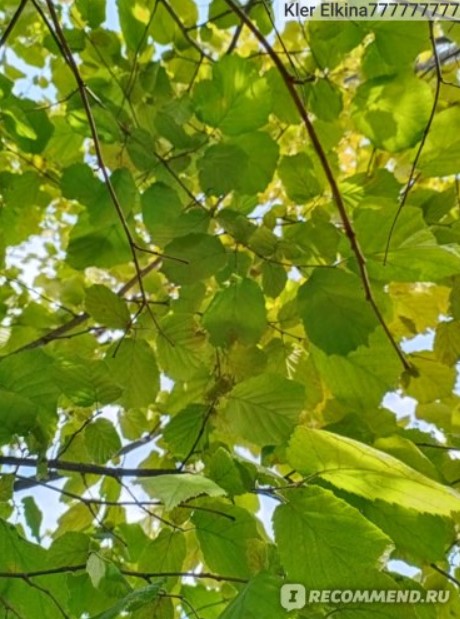
Leaves
One of them lives almost in the shade, and the second one lives in a more illuminated area.In the shade there are fewer fruits, but they are larger.
Nuts
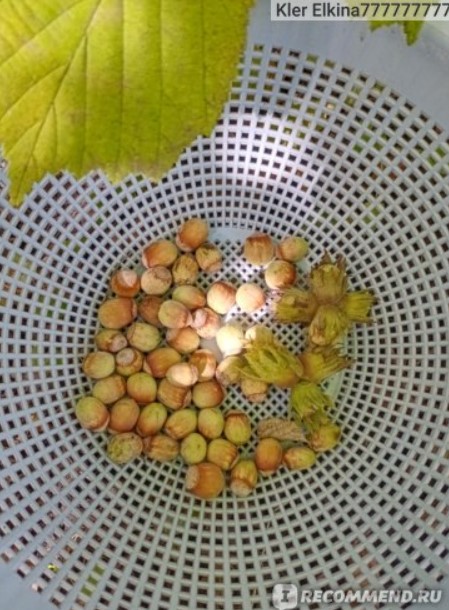
On the other one there are a lot of nuts, but smaller ones.We harvest in September. In our village (in the Smolensk region), we used to collect nuts. And only from the tree. But here, I also collect fallen nuts from the ground. My eldest son helped this year.
This year (2022), I've found virtually no diseased or worm-infested nuts. Maybe 1 percent out of 100.
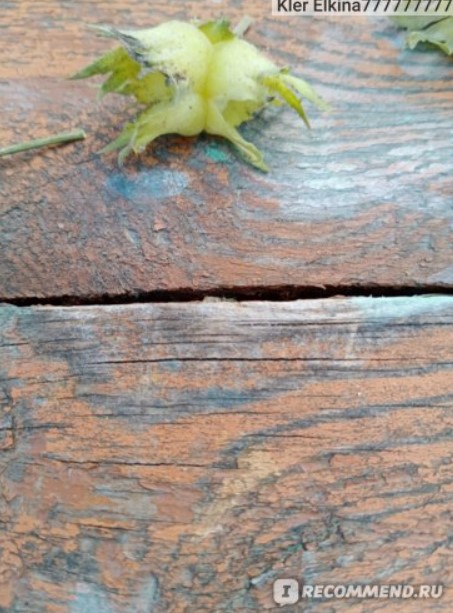
Nuts without houses
Excellent results, effortless.How I care for hazelnuts
To be honest, almost nothing.
I don’t treat them with chemicals or fertilize them.
I remember one time I added humus. We also did some pruning once.
But in dry weather I try to water my friends.
And that's all.
By the way, here's another friend that has grown up on its own, a very small one:
Young walnutWhat else can hazelnuts be used for?
Common hazel is used to make durable knife and hammer handles. Thin, flexible branches are used to weave baskets, while thicker branches are suitable for fencing and fishing rods.
Plant
In our village, long straight sticks with a hook at the end were used to bend the branches of the walnut tree during the "Nut Hunt."
Plant
YES and grandparents used them as staffs.Result
This is an absolutely unpretentious plant that produces beautiful and healthy fruits, improving mood and health.
Leaves
How can we not put him in jail?Of course, we need to plant it!
Nuts in the house
It is with great pleasure that I give it 5 stars!I recommend it.
Advantages
They give a good mood
You can dig it up right in the forest and transplant it into the garden.
Easy to care for
Nutritious
Healthy and tasty
Claire Elkina777777777
recommends