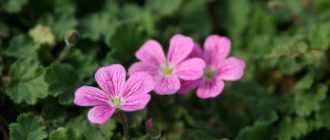
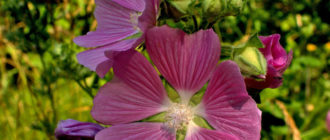
This flower is native to South and Central America. It belongs to the loosestrife family. It is considered evergreen and blooms during the warm summer months. Its unusual flowers earned it the name "cigarette tree." Translated from Greek, it means "crooked."
It is a bushy or trailing plant with curved, narrow leaves. It can reach a height of 1 m. Flowers come in a variety of sizes and colors. Large-flowered ones fade quickly, while smaller ones bloom longer and more extensively.
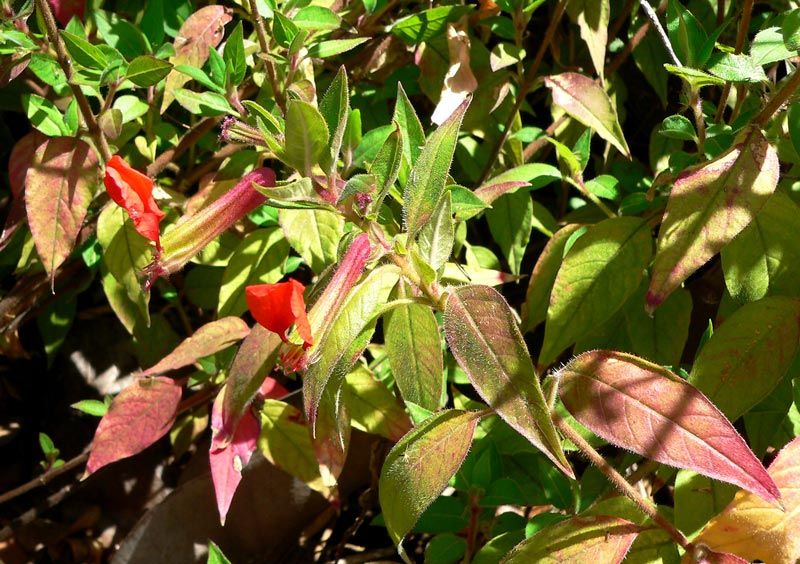
Cuphea hyssophyllos, fiery red and other species
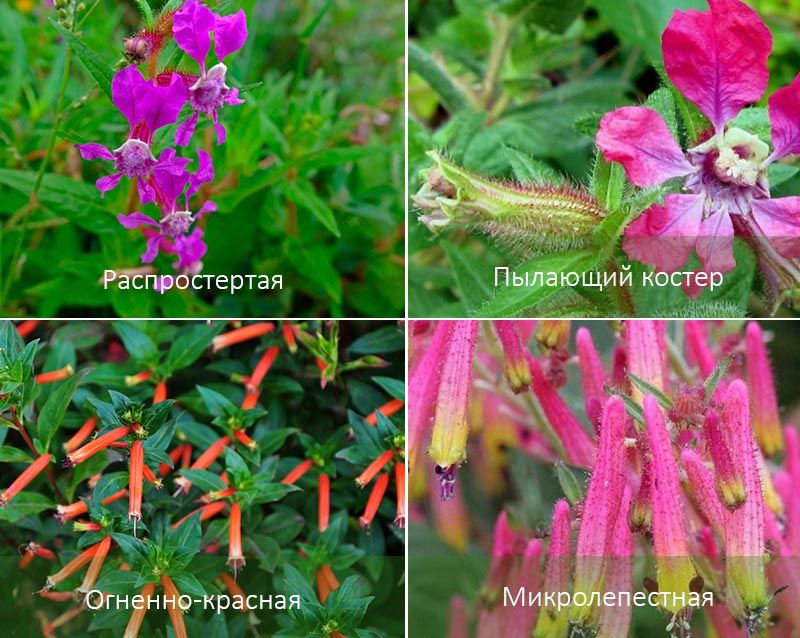
In the wild, there are more than 200-250 species of the flower, some of which have been bred by breeders.
| View | Leaves | Flowers |
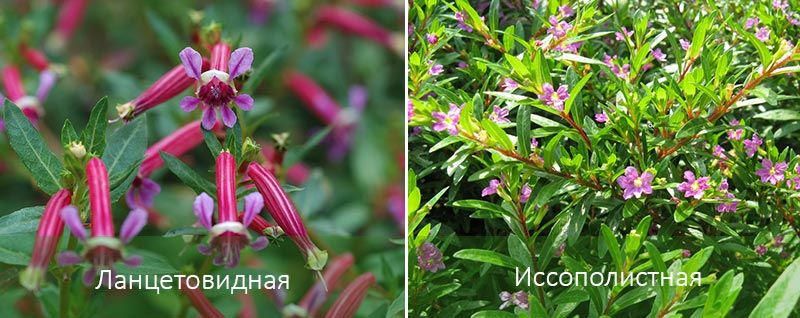
| Issopolystnaya. | Thick, elongated, bright green. | Numerous small ones, white, pink, scarlet, lilac. |
| Fiery red. | Small, light green. | Deep red, with a dark burgundy gradient at the end, in the shape of a tube. |
| Micropetalous. | Small, long, light. | Tubular, red-yellow. |
| Outstretched. | Thick light. | White, lilac. |
| Blazing Fire. Selective variety. | Dark. | Bright scarlet. |
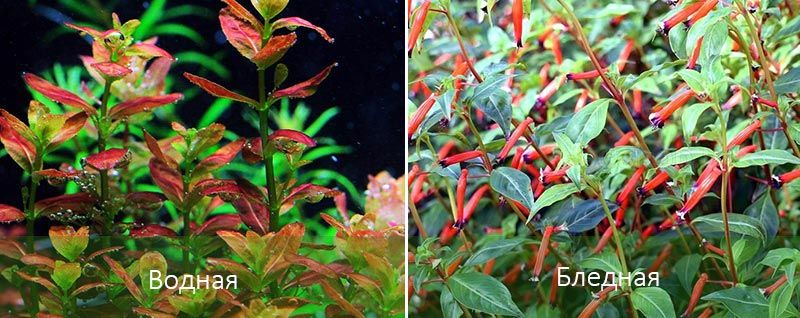
| Pale. | Dark, thick. | Small, dark cherry. |
| Cinnabar red. | Small, rare, light. | Lilac-white, large, with few petals. |
| Lanceolate. | Light green. | In the form of a tube, scarlet in color with lilac and white petals. |
| Water. | Small, opposite each other, the leaves are rounded, the top is red with a hint of green, and the bottom is green. As the plant matures and transitions from aquatic to aerial environments, the leaves change shape. The scarlet color disappears, and the shape becomes elongated. | In favorable conditions, it releases an arrow with a white flower. |
Caring for a kufeya at home
Cuphea thrives indoors and can be grown as a shrub or as a hanging plant.
The following recommendations must be followed:
| Factor | Summer period | Winter period |
| Location/lighting. | Good lighting with protection from direct sunlight and drafts. East or west exposure. | |
| Temperature. | +20…+25 ºC. | +15…+18 ºC. |
| Humidity. | Warm shower. | Rare spraying in dry air. |
| Watering. | Water generously and regularly. Drain the water from the tray again after about half an hour. The soil in the pot should dry out slightly during this time. Avoid standing water; ensure good drainage. | Moderate, when the soil dries out. |
| Top dressing. | Use fertilizer for ornamental plants twice a month during the growth period. | Not required. |
Top.tomathouse.com recommends: open-ground growing
They can be grown outdoors in warm climates or in pots or planters. Choose a location with good lighting, though some shade is acceptable. Avoid dark, waterlogged planting sites.
Use a breathable, loose substrate. Plant care includes regular watering, weeding, pinching, and pruning.
Reproduction
Cuphea is propagated in two ways.
For cuttings, select semi-woody roots larger than 7 cm. Process and plant in prepared soil made from peat, turf, humus, leaf mold, and sand (1:1:1:1:0.5).
It is carried out in spring, when the air temperature rises above +15…+18 ºC.
When planting, create greenhouse conditions, water regularly, and provide ventilation. To ensure a beautiful flower, join several cuttings together. After the third pair of leaves emerges, pinch off the top.
The second method is propagation by seed. The planting conditions are the same as for cuttings. The seeds are not covered with soil. Once the small seedlings are pricked out, they are transplanted into small cups.
Pests, diseases, possible problems
Cuphea is rarely susceptible to diseases and pests. However, if they do occur, measures must be taken to eliminate the damage they cause.
| Disease / pest | Manifestation | Elimination |
| Spider mite. | The leaves are covered with a white web. | Wash the plant with a warm, soapy solution. Treat with insecticides (Actellic, Fitoverm). |
| Aphid. | The flower dries up. | Prepare one of the infusions (soap or garlic), wash the flower, and apply products containing the active ingredient permethrin. |
| Scale insect. | The appearance of raised brown spots. | Remove insects manually and treat with insectoacaricides (Iskra, Actellik). |
| Gray mold (Botrytis fungus). | The appearance of dark, gray spots. Root and stem rot. | Trim off affected areas. Spray with fungicides. |
| Chlorosis is a lack of iron. | The leaves turn yellow but do not dry out. | When watering or spraying, use fertilizer containing iron. |
| Decay. | The plant turns black and rots. Leaves fall off, and brown spots appear. | Reduce watering and add lighting (using grow lights is recommended). Keep away from drafts. |