Clematis is a perennial vine that has adapted well to our country's climate. It is widely used for landscaping, balconies, house walls, and more.
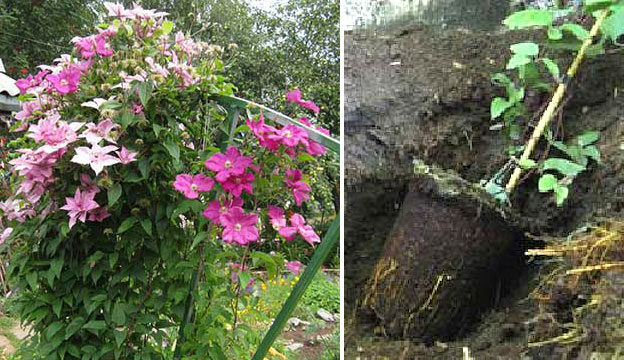
There are several hundred species of this plant. They differ in appearance, size, and flowering time. However, the planting time is the same for all. Choosing the right time determines whether the vine will thrive in your garden. In this article, we'll explain when to plant clematis outdoors in the fall.
Content
When to plant clematis in autumn
If you plant clematis too early, it will begin to develop before it has time to go dormant for the winter, and will die. If you plant it too late, the root system will fail to establish and will freeze during frosts.
Some novice gardeners doubt whether it's possible to plant clematis in the fall, lest it develop too little time to thrive. This won't happen if you choose the right time based on the climate in your region and the lunar calendar.
Clematis autumn planting dates by region
By regions of Russia
- south - 1st half of October;
- middle zone, including Moscow region - 1st ten days of September;
- North, Urals, Siberia – late summer-early autumn.
Please note! When deciding whether to plant clematis outdoors in the north—fall or spring—it's best to choose the latter. However, if necessary, this can be done as early as early September or even in late summer.
According to the lunar calendar for 2022
The lunar calendar is a good help in choosing the planting day.
Clematis planting dates for 2022:
| Month | Favorable and possible numbers | Unfavorable and prohibited dates |
| August | 1, 2, 3, 4, 6, 7, 8, 19, 20, 21, 28, 29, 30, 31 | 10, 11, 12, 26, 27. |
| September | 3, 4, 15, 16, 17, 18,23, 24, 27, 30 | 7, 8, 9, 10, 11, 25, 26. |
| October | 1, 2, 13, 14, 15, 20, 21, 22, 23, 27, 28, 29 | 4, 5, 6, 9, 10, 24, 25, 26,31 |
For your information! The most unfavorable dates for planting perennials are the Full Moon and New Moon, as well as those during the sign of Aquarius.
Read the articles:
- Lunar calendar for sowing seeds for seedlings in 2022 in a table (planting seedlings)
- Lunar calendar for the gardener for 2022.
- Lunar calendar for the gardener for August 2022
Choosing the Right Clematis Seedling
When choosing cuttings, choose varieties suitable for a specific region. Purchase planting material only from reputable nurseries and garden centers. You can read reviews online. If you buy seedlings from someone or at a market, you risk purchasing a low-quality product contaminated with various infections.
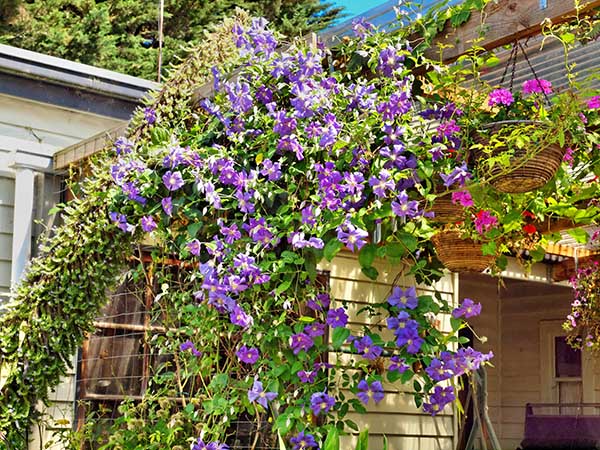
Read more about clematis varieties in the article Clematis: photo, planting and care in open ground.
There are two types of cuttings available for sale:
- One-year-old closed-root plants (CRS). They are sold in planting containers filled with soil.
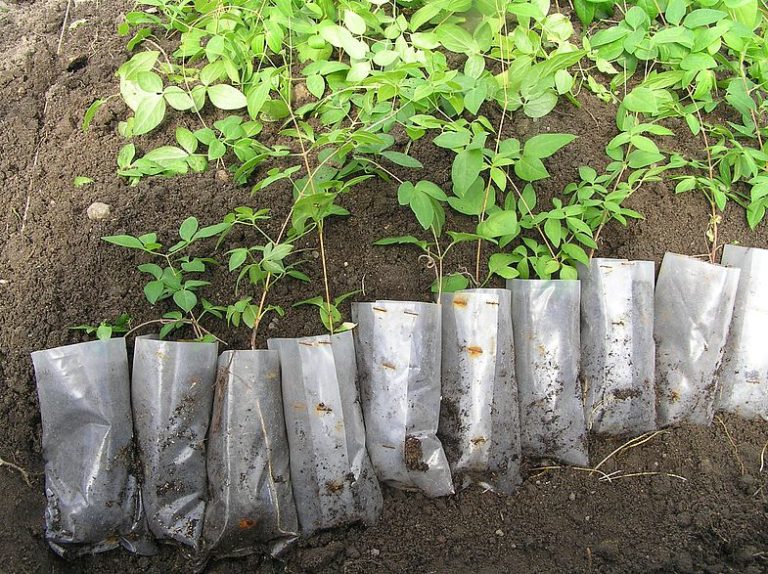
- One-year-old open-root seedlings. These seedlings are rooted and sold in a bag with peat soil.
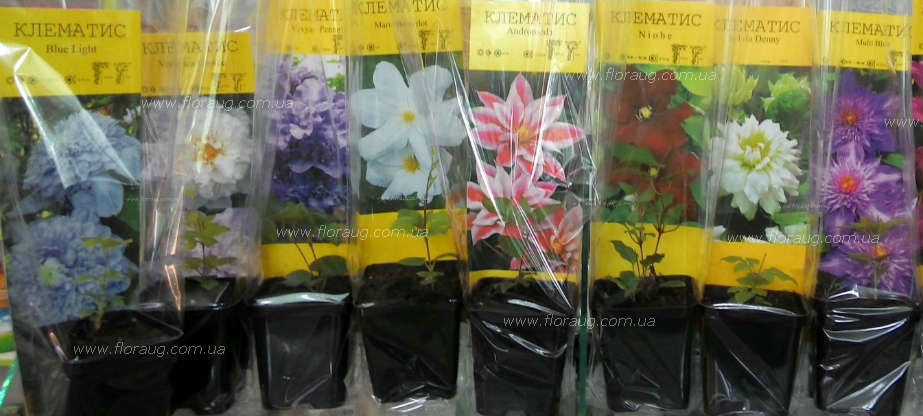
The first option is preferable for the following reasons:
- They are best stored until planting time;
- take root and adapt to a new location in the garden faster and more successfully;
- They are easy to plant (there is no need to straighten the root shoots or ensure that they are evenly placed in the hole).
Contained root system cuttings have one drawback. They are somewhat more expensive than open root system cuttings, but this is due to their advantages.
How to plant clematis in autumn
To ensure a healthy and strong plant, it's important not only to choose the right timing and cuttings, but also to plant according to all the rules.
Location
The following points must be taken into account:
- Diffused light is required, partial shade is required. The vine must be protected from direct UV rays. This is especially true for varieties with brightly colored flowers, as they will simply fade in the sun.
- The vine needs to be protected from drafts and cold winds. A partition, such as a wall, on the north side is ideal. It's important to remember that the plant needs fresh air, and its circulation must be unimpeded.
- Avoid low-lying areas, marshy areas, or those with close groundwater levels. These areas will cause water stagnation, which will cause the root system to rot, ultimately killing the clematis. It's better to choose a site on a hill or in a raised bed. This will ensure the vine is protected from excessive soil moisture.
- Avoid planting near fences and other metal structures. They become very hot in the sun and begin to emit heat, which is not good for the plant.
- The distance from clematis to any other plants, buildings and fences should be at least half a meter.
- If you plan to place the plant near a house, avoid planting it near a gutter. During heavy rain, water will run down the gutter, causing stagnant water that will damage the roots.
- Plant clematis in a location where it can be supported. This is a vine that definitely requires support.
- The plant requires light, nutritious, and loose soil with a neutral pH. Loam is an excellent option. Heavy, clayey soil with high acidity should be avoided.
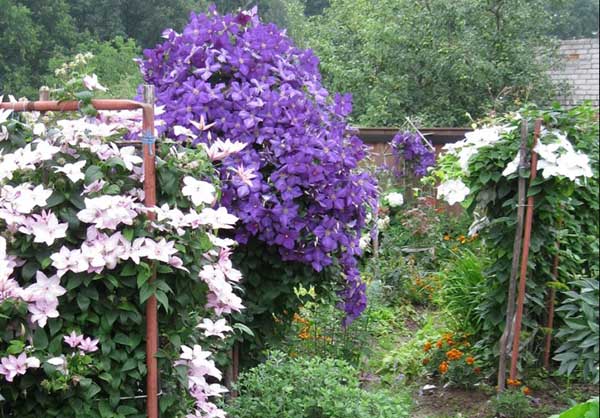
Helpful information! The best place to grow this plant is near a wooden fence, arch, or gazebo. In this case, the vine will look stunning and will enhance the landscape.
Planting holes
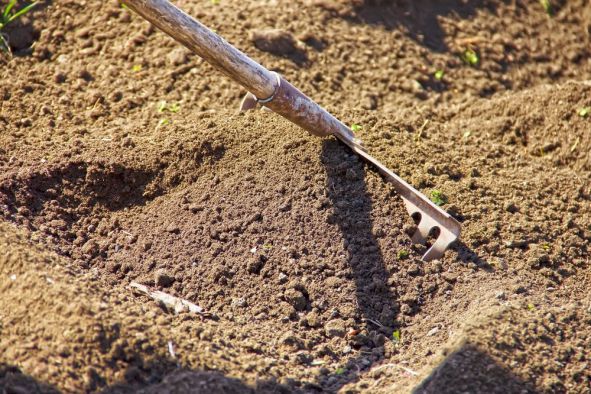
Dig over the nutrient-rich area 3-4 weeks before the planned planting date. Loosen the soil and rake it to evenly distribute the fertilizer. Water the area afterward.
Step-by-step preparation of pits:
- Dig a hole 60 cm deep, slightly larger in diameter than the circumference of the seedling's pot. Don't throw away the topsoil; store it nearby. You'll need it later.
- Place a 15 cm thick layer of broken brick inside for drainage.
- Prepare a mixture of topsoil (previously dug out), compost, peat, and sand. Add the ingredients in equal proportions. Fill the hole two-thirds full. Save the remainder; you'll need it.
- If you didn't add nutrient mixtures when preparing the plot, do so now. Add 30 g of superphosphate and 15 g of potassium sulfate to each hole. If you already added these substances, add only a glass of wood ash.
- Mix the contents of the hole thoroughly and water.
If the water table is too high, fill the hole completely with substrate. This way, the plant will be at an elevated position when planting.
Preparing the seedling
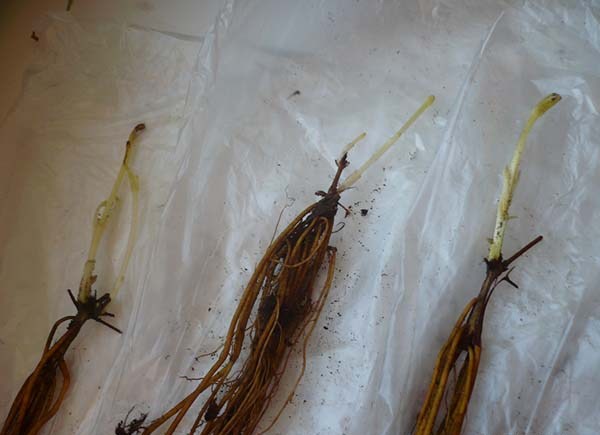
How to prepare a seedling with open root system:
- Shorten long roots by a third.
- If there are signs of rot or mold on the roots, trim these areas off. Soak the seedling in a fungicide.
- Before planting, soak the cutting in a growth stimulant. If there is any greenery above the root collar, remove it.
A seedling in a closed root system doesn't require any preliminary preparation. A little loosening of the soil is sufficient.
Step-by-step planting instructions
How to plant clematis in autumn (closed root system):
- In the center of the hole, make a depression the size of the diameter of the pot.
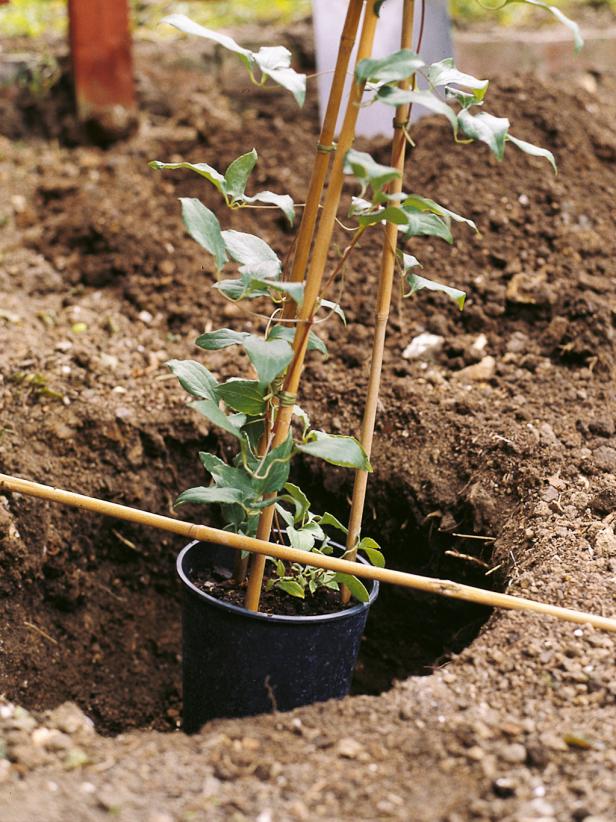
- Water the seedling in the container and remove it together with the root ball.
- Place it in the hole, fill it with the remaining soil, and compact it.
- It's recommended to plant the root collar 3-5 cm deep. This provides protection from winter freezing and summer overheating. Furthermore, this deep planting will encourage more shoots to emerge from dormant buds.
- Water generously.
- When all the liquid has been absorbed and the soil has settled, add a little dry substrate and mulch the plant with peat or sawdust.
- Trim the shoots, leaving stems 20-30 cm long.
If the seedlings have an open root system, make a small mound in the center of the hole. Place the clematis on it, and spread out the roots. Otherwise, the steps are the same.
Rules for caring for clematis after planting in autumn
Care includes the following:
- Provide ample watering for 1.5-2 weeks, but avoid overwatering the vine. This can lead to root rot and fungal growth. After this time, if the autumn is rainy, you can stop watering. Rainwater will be sufficient.
- If the root collar becomes exposed after watering, add dry soil onto it.
- Fertilizing before winter dormancy is unnecessary. This can cause the vine to begin growing and then die in winter. Fertilizer should be applied for the first time in the spring. At least five applications are required during the growing season: in April, every 7-10 days, after two weeks, during budding, and after flowering and pruning.
- If hot and sunny weather persists, provide shade to the plant. To do this, install arches and place spunbond on them.
- Mulch the plant with sawdust, straw, or compost. The layer should be 50-70 mm thick. Leave 10-15 cm between the mulch and the trunk. Cover the top with spruce branches or non-woven fabric. This will protect against hypothermia and moisture evaporation.
With the right planting timing and proper care, clematis will become a beautiful addition to your garden. It's worth noting that the plant can be grown not only from cuttings, but also from layering, seeds, and division.
Every gardener can find the best method for themselves and grow a beautiful vine on their property, adding a touch of exoticism to their landscape design.