Clematis is a member of the buttercup family, which is quite common in temperate climates. Various species of herbaceous perennials and their hybrid varieties are planted in gardens.
These highly ornamental climbing vines come in a variety of colors. It's worth noting that they are related to the inconspicuous buttercup. Each variety is registered with the Royal Horticultural Society.
Content
Description
Plants in the last category are not recommended for repotting. This could lead to their death. The appearance of the leaves varies depending on the variety. Simple leaves consist of a single blade, while compound leaves usually have more than three.
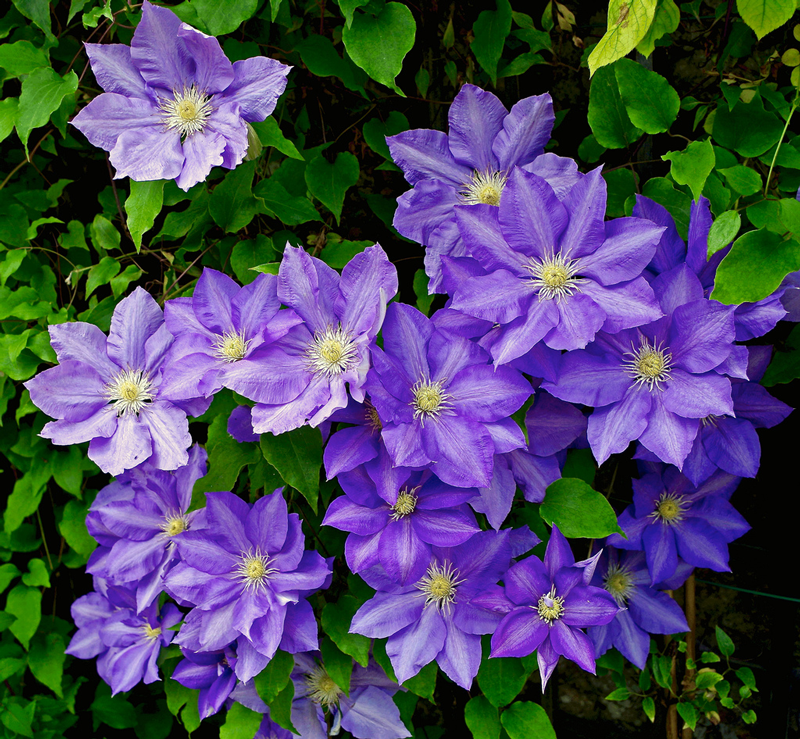
Clematis come in a wide range of shades, including pale pink, yellow, purple-red, white, sky blue, and velvety blue. The list is not limited to these colors.
Their size can range from 1 to 20 cm. Clematis's scent is reminiscent of almond, primrose, and jasmine. The plant produces achenes, which are also decorative. The silvery heads decorate the garden until late autumn.
These plants grow in forests, shrub thickets, steppes, and cliffs. Wild clematis (another name for clematis) can be found on riverbanks and in saline soils. Their wide range is explained by their undemanding nature.
Clematis are resistant to low temperatures and drought.
When planting outdoors, gardeners should pay attention to the soil conditions. Vines are often climbing or twining, and their length typically does not exceed 5 meters.
Classification of clematis
Types of clematis are divided based on:
| Flowering time. | There are three groups in total. The first includes plants that bloom in spring and early summer. The second consists of vines that produce corollas twice a summer. The appearance of the inflorescences varies in these groups. The third contains varieties that delight with their vibrant corollas in July and August. |
| The shape, splendor and size of the flowers. | Clematis varies in hue (from pale to deep) and coloring (two-tone, solid). The corollas can resemble bells, saucers, and stars. Gardeners plant both single-flowered and double-flowered clematis in their gardens. |
| Need for pruning. | Timely removal of unnecessary parts leads to abundant flowering, branching and the formation of new shoots. |
Clematis can have large or small flowers.
Species clematis
The plant doesn't take up much space. Additional gardening tools are used for support. Their configuration may vary.
Obelisks, walls, stairs, trellises, and arches are made of wood and metal. Nets divided into square cells are used for growing.
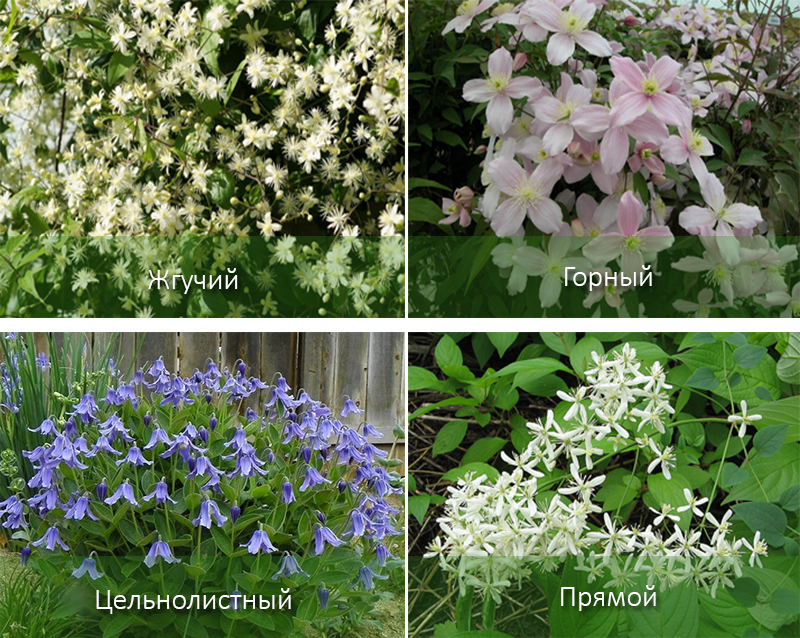
The most common varieties are:
| View | Description | Flowers/varieties |
| Direct | Height – up to 1.5 m, upright stems, decorate the garden from May to June. Self-seeding, requires support. | Small white corollas with a diameter of 1 to 1.5 cm. |
| Whole-leaf | Height: 0.6 to 1 m, silvery fruits are spherical. Straight stems must be tied to low supports. Blooms in early summer. |
Single purple, petals turned outward.
|
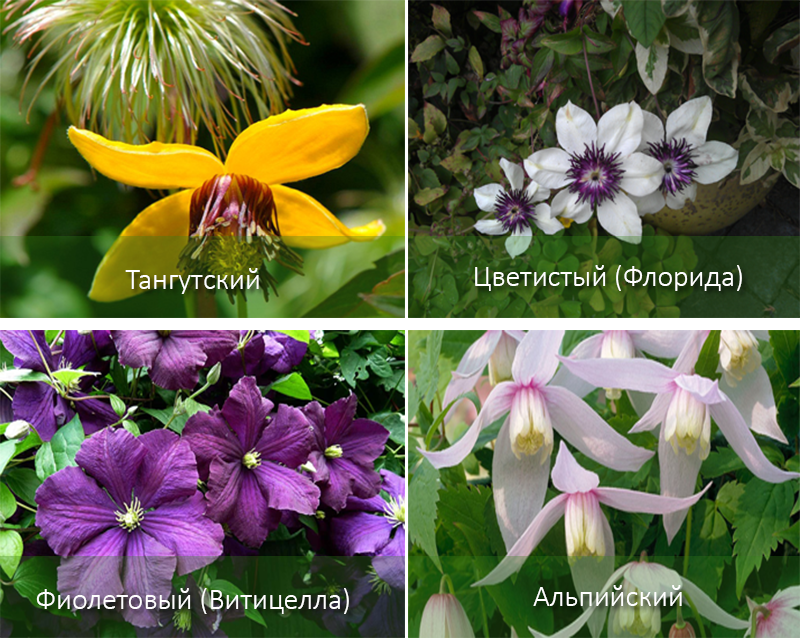
| Tangut | Vines (length no more than 4 m), fruits are decorative, support is required. | Yellow, broadly bell-shaped. |
| Alpine | Height – 3 m, large leaves with a leathery covering. Flowering begins in August. |
|
| Floridian (Florida) | Can reach over 3 m in height, with an impressive fragrance. Compact flowers. Frost-resistant and sun-tolerant. |
|
| Mountain (Montana) | Height – 9 m, sharp and small leaves, collected in bunches. Delicate aroma. |
|
| Violet (Viticella) | The corollas are simple, the shoots are 3.5 m long. The flowering period is from June to September. The leaves are compound. |
|
| Burning | They are characterized by rapid growth, with shoots no longer than 5 m. The compound leaves are dark green. They bloom in midsummer. | Small white corollas are collected in inflorescences. |
Hybrid clematis
The vines cling to the ground via stems and leaves. Small, single corollas form inflorescences.
Ornamental clematis produce pubescent, rounded fruits. The leaf blades are juicy and interestingly shaped.
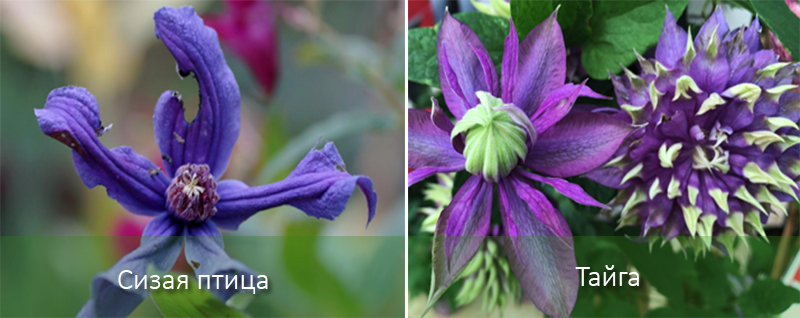
These plants require sturdy supports due to the impressive weight of mature clematis. To achieve maximum decorative effect, they are planted in areas protected from the wind.
Hybrid clematis varieties with photos and descriptions
The most decorative varieties are:
| Varieties | Description |
| Bluebird | Blue-purple, downward-facing flowers. The flowering period lasts for three months. |
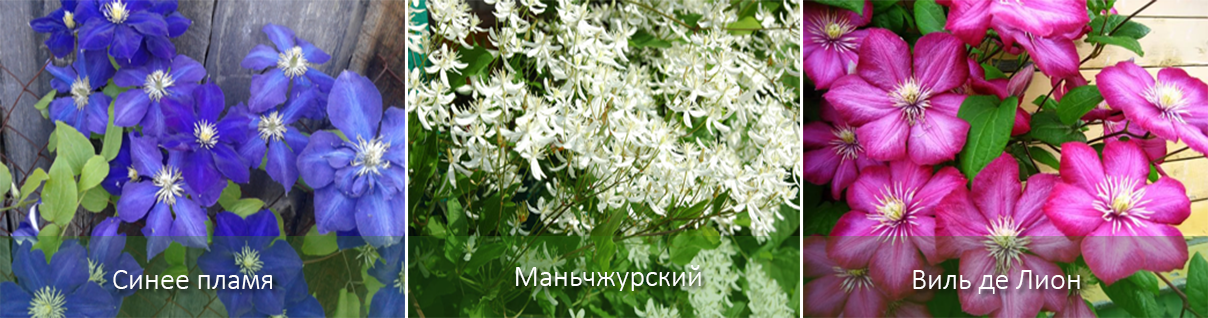
| Ville de Lyon | The shoots are dark brown, the buds are carmine red, and the anthers are bright yellow. The flowers range from 9 to 12 cm in diameter. The blooming period depends on when pruning occurs. |
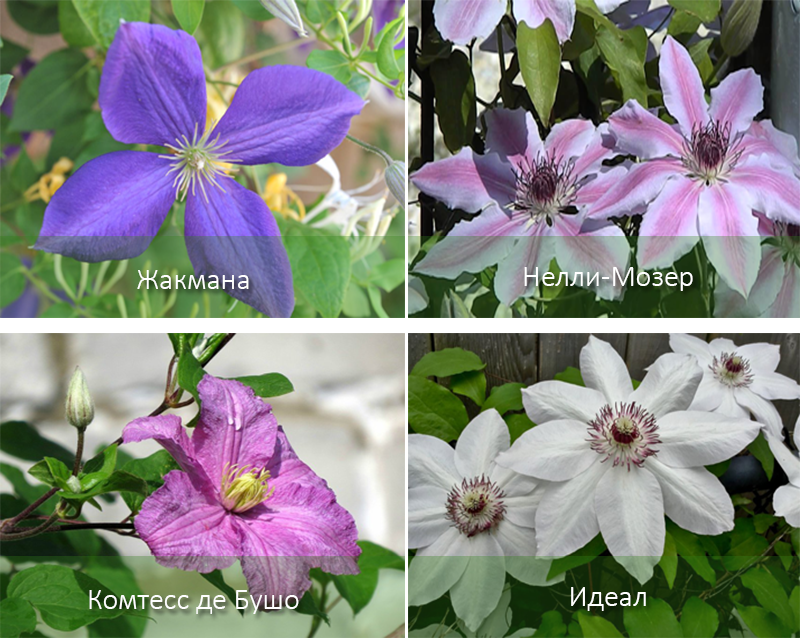
| Nelly Moser | Light pink flowers with burgundy-trimmed petals. The star-shaped corollas can reach 16 cm in diameter. |
| Ideal | White flowers, the diameter of which ranges from 16 to 20 cm. The anthers are distinguished by their black color. |
| Jacqueman | Yellow anthers, purple sepals. |
| Blue Flame | Open flowers, distinguished by their two-tone coloring, decorate the garden until mid-autumn. Diameter does not exceed 15 cm. |
| Comtesse de Bouchaud | Large, bright pink corollas. Six petals with wavy edges. Yellow anthers. |
| Taiga | Double lemon-purple flowers. Can be single or compound. |
| Manchurian | Height – 3 m. Leaf blades are opposite. White flowers consist of 3-7 petals. |
Sowing seeds
They come in large, medium, and small sizes. The variety of seeds has given experienced gardeners the opportunity to create new hybrid varieties.
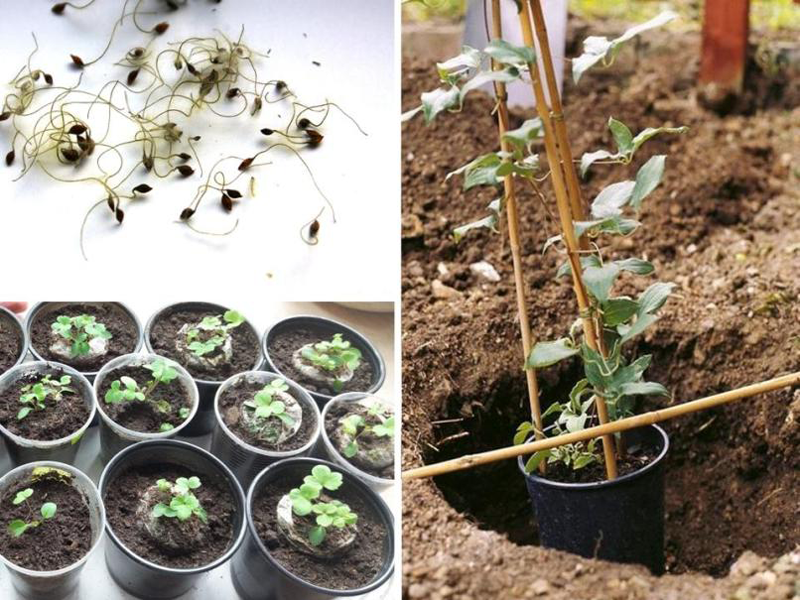
Sowing time depends directly on the size. Smaller seeds are planted in prepared soil in the spring (March-April). Larger seeds are planted in late fall or during the first months of winter.
The remaining seeds are planted in January. To speed up germination, the seeds are pre-soaked for 10 days.
When preparing the substrate, use peat, soil, and sand. All ingredients are used in equal proportions. The resulting mixture is moistened.
The next step is to spread the seeds. The layer should be thin and even. They are then covered with sand, which is then lightly compacted. Finally, cover the container with glass.
Caring for seedlings
The emerging seedlings require light, but should be protected from direct sunlight. Clematis are pricked out after the first pair of leaves appears.
The distance between plants should be 15 cm. Timely pinching will help the root mass grow quickly.
During the fall, seedlings need to be covered. Transplanting is done in the spring, with the prepared trench being 5-7 cm deep.
Planting clematis in open ground
To grow clematis, you need to decide where to plant it. A mound is best.
Compliance with this condition will prevent rotting of the root system due to the close location of groundwater.
Clematis should never be planted near walls. Otherwise, excessive soil moisture cannot be avoided.
What time to plant?
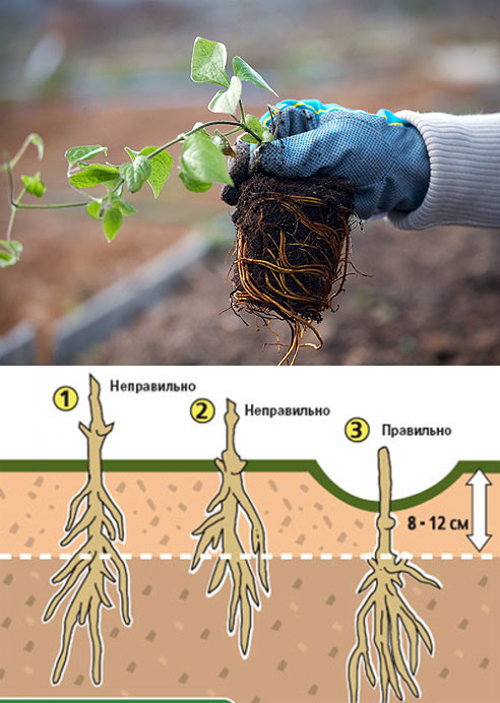
The optimal time for planting is late August and September. The soil warms up well, giving the seedlings time to take root. Overwintering is usually hassle-free.
If the plant is planted outdoors, it will bloom the following summer. When planning the gardening schedule, the gardener should consider the overall condition of the clematis seedlings.
Spring planting
The prepared seedling must have at least one shoot.
The bed is prepared as follows:
- digging a hole;
- a drainage mixture is placed at its bottom;
- Prepare the soil if it is not particularly fertile. This should be done a year before planting;
- install supports, the height of which is no more than 2.5 m;
- prepared soil is poured into the hole;
- plant clematis;
- water the plant;
- mulch the excavation with a peat mixture.
There should be at least one meter between planted clematis.
Autumn planting
When planting, observe the following rules:
- the procedure is carried out at the beginning of September;
- it is necessary to prevent over-watering and excessive dryness of the soil;
- the soil mixture can be prepared from humus, chalk, coarse sand, ash and peat;
- If the soil in the chosen area is highly acidic, it will need to be neutralized. Neutral and alkaline soils should be used for planting;
- The cutting must have a woody stem. The presence of shoots is essential.
Otherwise, planting should be carried out according to the algorithm specified in the previous paragraph.
Caring for clematis in the garden
Clematis is a plant that requires regular watering, loosening, and mulching of the soil. This reduces weeds, retains moisture, and accelerates plant growth.
Clematis, which belong to tall (long) varieties, must be tied up.
Otherwise, the flexible shoots become tangled, which can damage the blossoming buds. Before winter, clematis bushes should be covered. This can be done using an "air" structure.
Top dressing
To ensure abundant flowering, fertilizers are applied according to a specific schedule. They should have a liquid consistency. Small, one-time doses are poured onto the mounds immediately after watering.
Boric acid, potassium permanganate solution, urea, mullein, ammonium nitrate, and chicken manure are often used to prepare the mixture. Organic matter is combined with mineral mixtures.
The first feeding is done after the green mass appears, the second – at the beginning of flowering, the third – after it ends.
In spring, plants are treated with lime milk. Micronutrients are added during the growing season. Overdosing on phosphates causes signs of chlorosis.
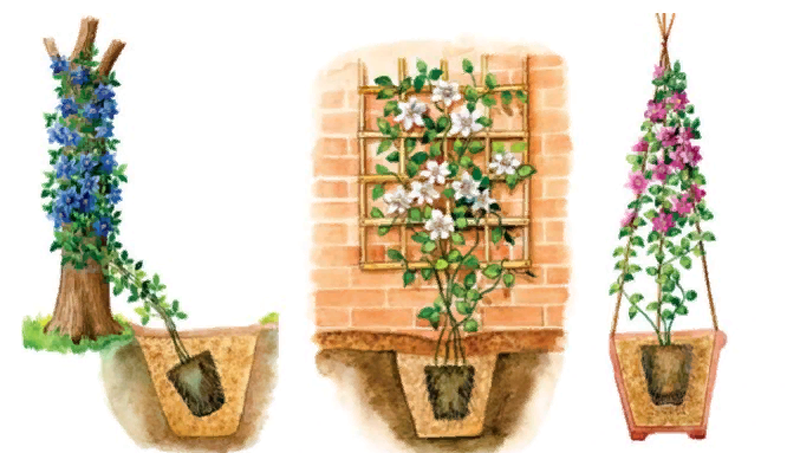
Supports for clematis
Special supports are used for clematis. Regardless of the type of support, the diameter of the part intended for support is 1.2 cm.
As clematis grows, it gains weight, especially after rain. Therefore, when choosing a structure, gardeners should pay attention to its strength.
Pruning clematis
This stage is essential for shaping any species. Three prunings are required: the first before planting, the second in July, and the third in the fall.
During the procedure, a portion of the shoot is removed. The pattern is adjusted based on the clematis variety, growing location, and number of buds.
Clematis after flowering
When preparing the plant for winter, remove the leaf blades and treat the neck with a solution containing copper sulfate.
Another mandatory step is hilling up the clematis.
The list can be supplemented with a shelter made of dry leaves, a wooden box, or roofing felt. The latter should be weighed down with stones, otherwise it will shift.
Propagation of clematis
New clematis plants are produced through seeds, cuttings, layering, and young shoots. Seeds are most often used for breeding purposes.
When purchasing seedlings, it is recommended to pay attention to:
- mechanical damage;
- root condition;
- developed shoots with buds;
- time of purchase.
Cultivated varieties of clematis are propagated by grafting onto winter-hardy varieties.
Dividing the bush
This procedure is performed if the clematis is no more than 6 years old. Otherwise, problems caused by the overgrown root system cannot be avoided.
The procedure is quite simple:
- dig up the liana;
- free her from the earth;
- cut the part of the plant that has basal buds.
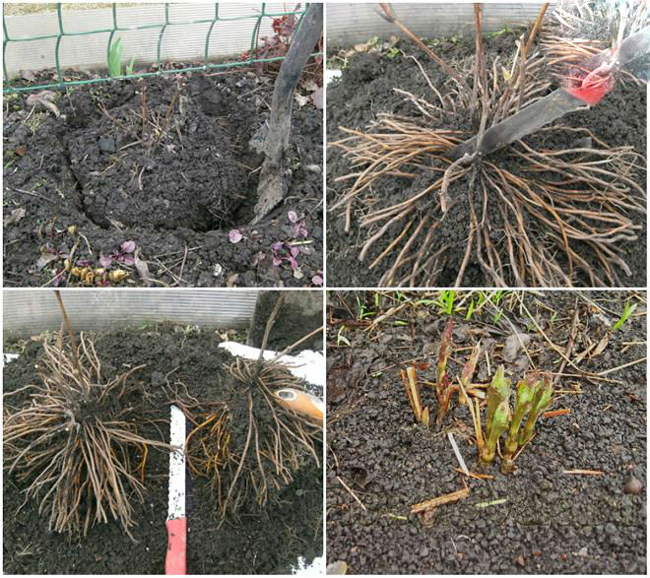
Division should be done in the fall or spring. If the bush is very large, it may be sufficient to separate only part of the plant.
Layers
The process of separating and replanting them is not difficult. This method can produce no more than 10 seedlings.
This method is used in the fall. It accelerates the formation and strengthening of clematis.
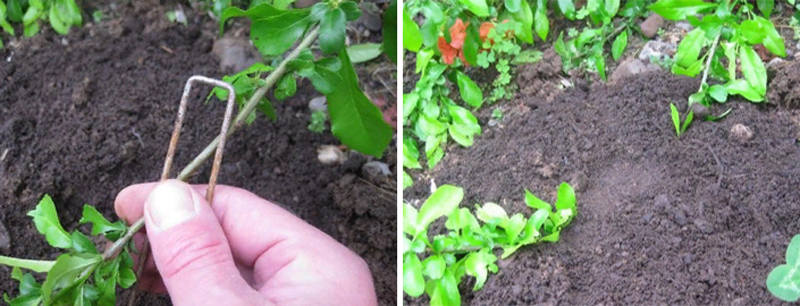
The gardener must follow the algorithm:
- grooves are made around the plant, the depth of which is 10 cm;
- select shoots;
- remove leaves;
- fix the internodes;
- Cover the plant parts with fertile soil.
The result of the work is a bed in which the tops of the cuttings are visible by 20 cm.
Cuttings
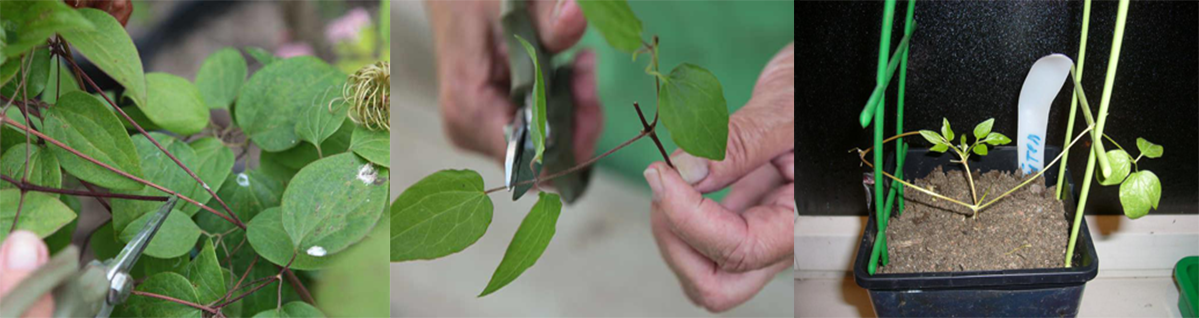
The procedure is carried out during budding. Biostimulants accumulate in clematis shoots. To increase the likelihood of root formation, short lateral shoots are used.
After they've been completely cut, they're divided into shoots, each of which should have one node. Particular attention should be paid to the direction of the cut: the top one should be straight, the bottom one at an angle.
Diseases and pests
Pathological changes should be prevented. Possible ailments:
| Reasons | Symptoms | Elimination measures |
| Powdery mildew | White coating on various parts of the plant. | Spraying the affected bush with Fundazol and Azocene. |
| Gray mold | Dry grey-brown spots on the stems. | |
| Wilt | Rapid fading. | Cutting off affected parts. Treatment with potassium permanganate solution, foundation, and copper-soap emulsion. |
| Yellow mosaic | Yellowing of leaves. | Complete destruction of plants. |
| Fusarium | Discoloration and curling of leaves. | Prevention: fungicide. There is no cure; complete eradication is recommended. |
| Rust | Orange pads on leaf blades, deformation of damaged parts of the plant. | Spraying with copper oxychloride. |
| Ascotychiasis | Necrotic spots. | Copper sulfate. |
Clematis are often included in landscape design. Preference is given to cultivars. They don't require shelter. Planting and caring for them outdoors are also not difficult.
Clematis can be planted either separately or alongside other garden plants. In temperate climates, these plants are often planted in the same flowerbed with climbing roses, morning glories, and cobeas.