Gardeners often use ornamental shrubs to decorate their gardens. They are abundant, easy to grow, considered versatile, and not restricted to a single region. They can be found in both Siberia and the Urals. There are sun-loving, shade-tolerant, wild-growing, and tall varieties. Finding suitable shrubs with the right type and color is usually straightforward.
When planting ornamental shrubs, gardeners pursue several goals: first, to create a unique landscape; second, to protect low-growing plants from wind, dust, and the hot sun. When planning the design, it's essential to consider the shrubs' need for "personal" space.
They require more space than other garden plants.
Content
- 1 Types of ornamental shrubs
- 2 Ornamental shrubs for the Moscow region
- 3 Winter-hardy ornamental shrubs
- 4 Evergreen shrubs for the garden
- 5 Variegated shrubs for the garden
- 6 Exotic shrubs for the garden
- 7 Fruit bushes for the garden that can be used as ornamental
- 8 Top.tomathouse.com: Basic tips for planting shrubs
- 9 How to choose ornamental and fruit-bearing shrubs
Types of ornamental shrubs
The classification is based on the characteristic features of ornamental shrubs. These include light requirements, color, crown shape and density, appearance, and height. The latter is especially important when creating a hedge. Moreover, shrubs can have not only flowers but also thorns.
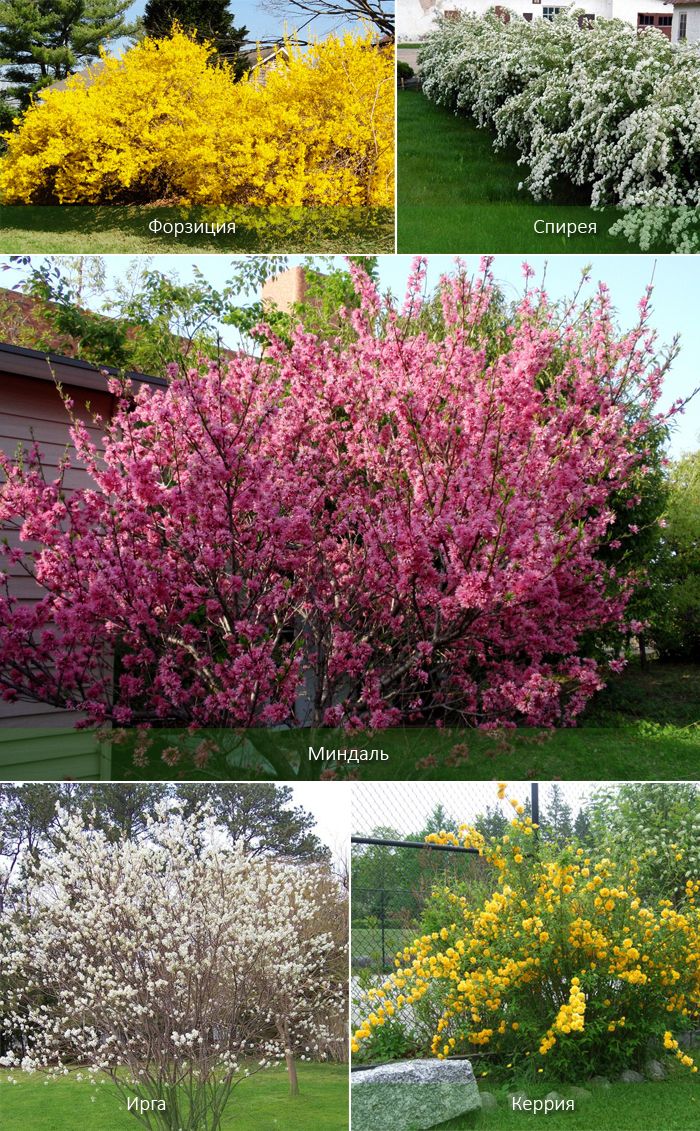
Based on these factors, shrubs are classified as flowering, fruiting, low-growing, and frost-resistant. They are also classified by season. Gardeners who prefer spring varieties can plant forsythia, almond, spirea, serviceberry, and kerria.
Jasmine, barberry, hydrangea, and rose are highly decorative in summer. In autumn, abelia, viburnum, rowan, and hawthorn can be used to decorate the garden.
A winter garden will gain charm with rose hips, holly, and yew. In areas with mild climates, plants such as Japanese maple, camellia, azalea, magnolia, and witch hazel are quite popular.
Ornamental shrubs for the Moscow region
In the Moscow region, winter lasts for five months. Only the most frost-hardy ornamental shrubs can survive such prolonged exposure to low temperatures. It's best to choose low-maintenance shrubs, which we'll cover in the next section.
Additional requirements include adaptability to air pollution and the fact that the plant is an annual. Growing in summer is usually straightforward. In areas with a temperate continental climate, the average air temperature is no lower than 21°C.
Winter-hardy ornamental shrubs
This category includes shrubs and subshrubs that retain their decorative qualities year-round. They are characterized by their resistance to strong winds and cold winters.
Lilac
It is distinguished by its rich aroma, vibrant foliage, and unique coloring. There are many varieties. During flowering, they decorate garden plots with lilac, white, and pink clusters. Lilac, with its mixed-hued flowers, is especially popular.
Mock orange
It's often called jasmine. Its advantages include bright white corollas, an alluring scent, abundant blooms, low maintenance, and hardiness. The 'Snowstorm' variety is often planted in gardens and parks. Its main characteristic is its double corollas.
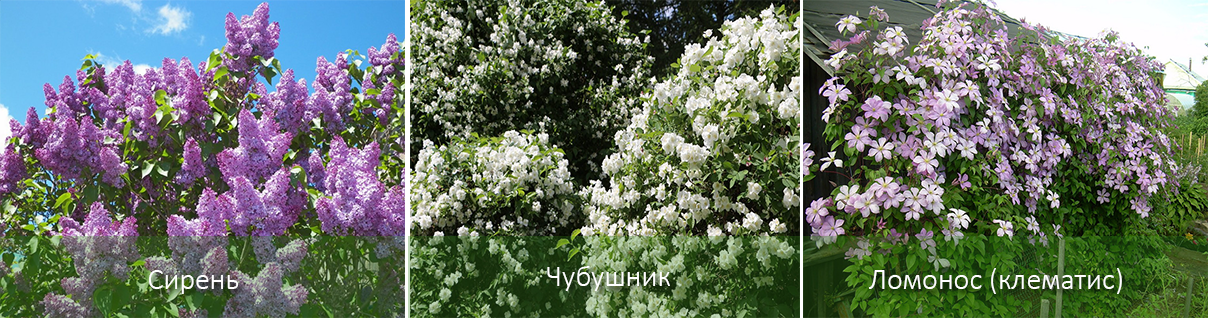
Clematis
Ornamental vines with flowers in a variety of colors, including purple, pink, blue, lilac, crimson, burgundy, and white. They are used to decorate rock gardens and hedges. The corollas range in diameter from 8 to 20 cm. Their shape also varies: double, star-shaped, and bell-shaped.
Spirea
The plant blooms profusely, becoming covered in pink and white corollas. Different varieties often look completely different. The large, compact inflorescences become the centerpiece of the spring garden. They can grow in both partial shade and full sun.
Hydrangea
Only winter-hardy varieties can be grown in temperate climates. These beauties, native to southern regions, are unable to survive in the harsh continental climate. Distinguishing features include highly decorative qualities, impressive inflorescences, and lush foliage. The spreading, spherical bushes are adorned with red, white, and blue corollas.
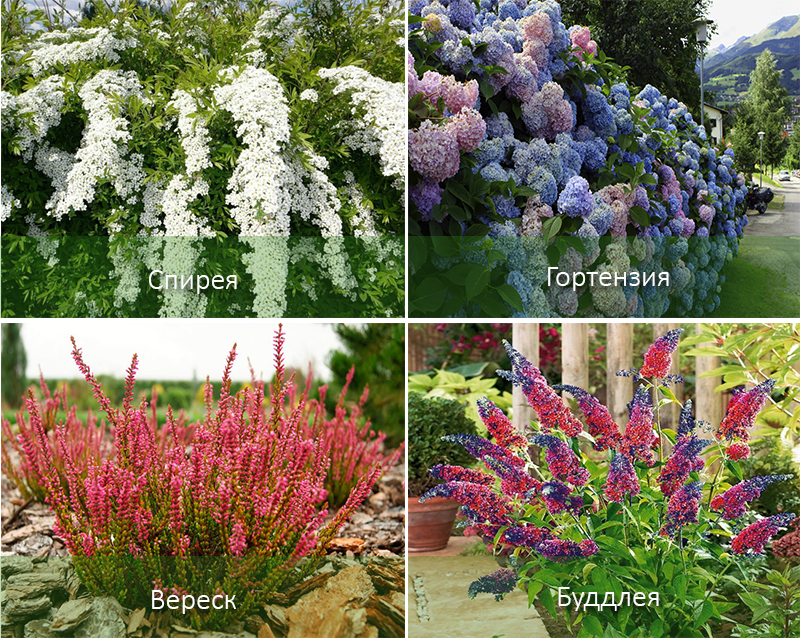
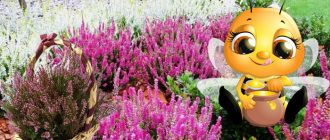
Heather
It is a shrub distinguished by its numerous branches and triangular leaves. The latter can be gray, green, brown, orange, or burgundy. Each inflorescence consists of goblet-shaped flowers in shades of lilac, bluish-white, or soft pink. They delight from July to November.
Buddleia
A perennial with vibrant colors. It resembles double lilac in appearance. The flower clusters often reach 45 cm in length. The bush grows to a height of approximately 3 m. Its wide range of colors makes it a much more striking addition to a landscape.
Evergreen shrubs for the garden
Among the most popular species that remain green in winter are:
- Aucuba is a beautiful poisonous shrub that grows up to 2 m in height;
- Strawberry tree - after the appearance of pink and white corollas, fruits are formed that taste like wild berries;
- Boxwood - there are both tall and miniature varieties;
- Callistemon – long leaf blades, dark pink or lemon-yellow inflorescences;
- Choisy - round crown shape, enticing aroma;
- Rockrose is characterized by its fleeting flowering and bright foliage.
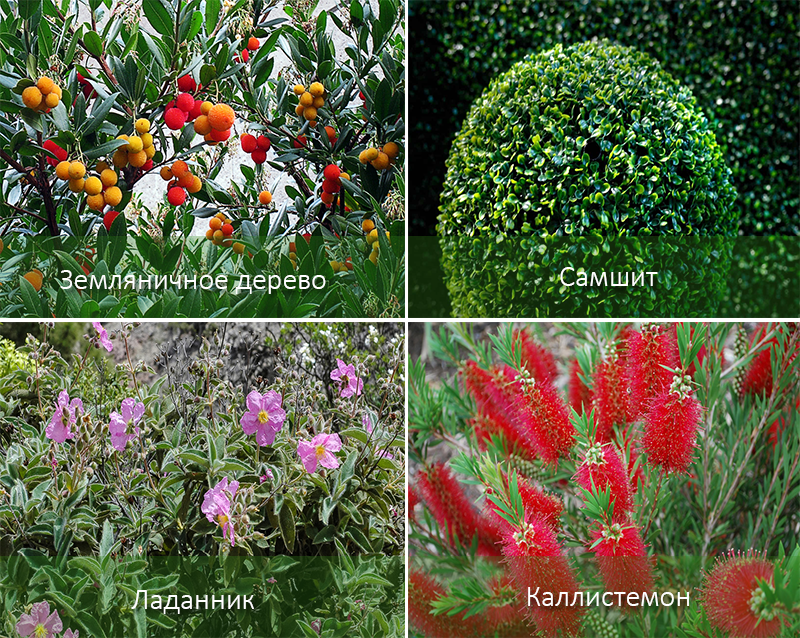
Evergreen shrubs are recommended for planting in the spring. They transform the garden into a relaxing area. In large garden plots, plants in this category act as a link between low-growing crops and trees.
Variegated shrubs for the garden
Variegated plants are garden plants distinguished by unusual coloring. They are used to add variety to monochromatic arrangements, thereby enhancing their decorative appeal.
Derain
An evergreen shrub distinguished by white flowers and vibrant foliage. In autumn, blue drupes appear. The plant retains its decorative qualities even in winter. Its shoots, tinged with green, burgundy, yellow, and bright red, add a picturesque touch to the garden. Dogwood is easy to grow and frost-hardy.
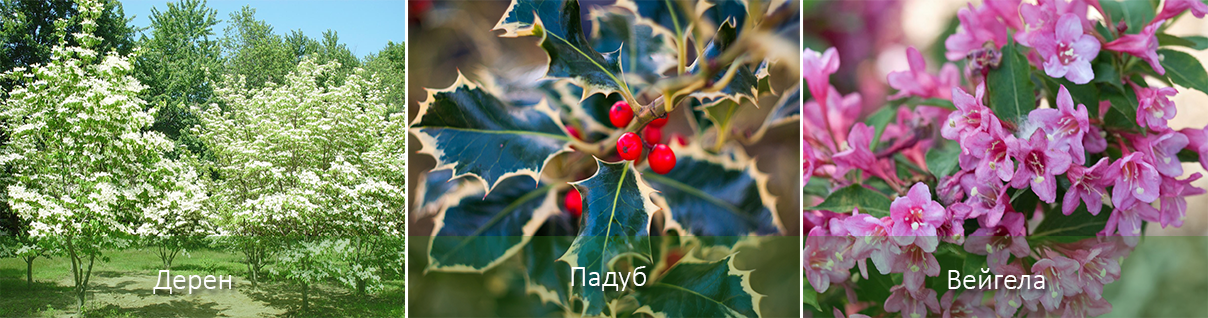
Holly
A deciduous plant adorned with berry-like fruits and axillary inflorescences. The shrub thrives in moisture and tolerates shade well. It does not adapt well to transplanting. Pruning is performed to achieve the desired crown shape.
Weigela
Belongs to the Honeysuckle family. Ten varieties are grown for ornamental purposes. They are deciduous shrubs that are easy to care for. Characteristic features include bell-shaped and funnel-shaped flowers, petiolate leaves, and an upright stem.
Hazelnut
The bush grows to 7 m tall. The crown is ovoid or spherical. Large leaves have serrated edges. After flowering, dark brown nuts form. They ripen by late summer.
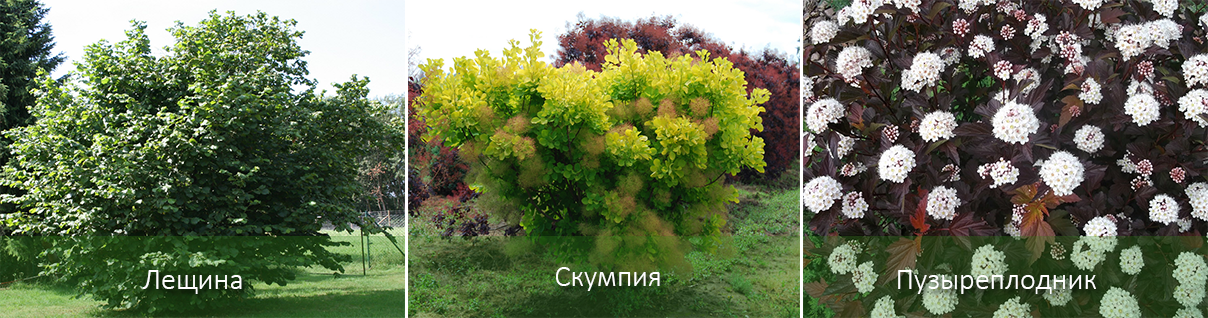
Cotinus
It is distinguished by its fluffy inflorescences and vibrantly colored leaves. They can be burgundy, yellow, red, orange, and even scarlet. The latter are especially striking in the autumn. Cotinus is classified in the sumac family. Both species are highly ornamental.
Physocarpus senna
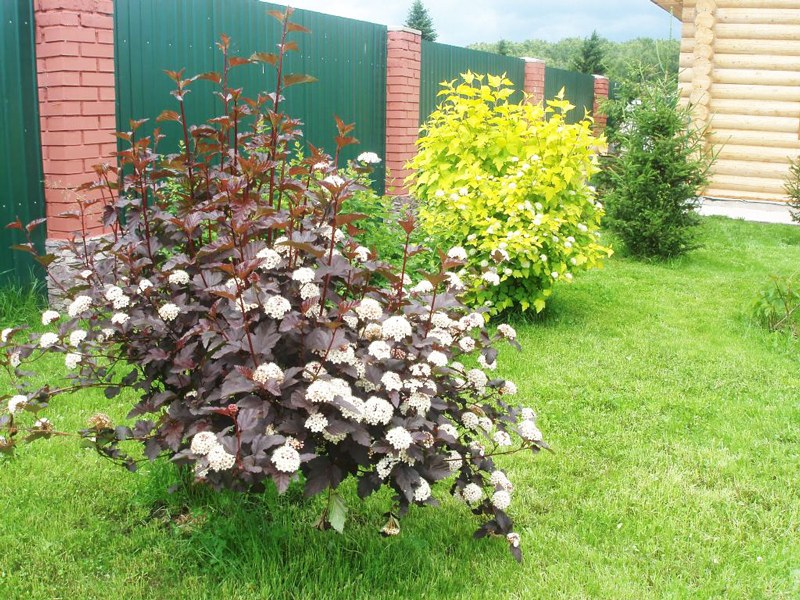
This ornamental shrub will enhance any garden. Its spherical crown consists of spreading branches adorned with large leaf blades. Caring for this plant is quick and easy. It is undemanding in terms of soil and air quality. It can be planted near roads without affecting its appearance.
Exotic shrubs for the garden
Every garden plot can be made unique. To create an unusual landscape design, you need to plant exotic plants that match the gardener's preferences. The list is quite extensive.
Tree peony
It belongs to the same genus as the herbaceous perennial peony. The bush grows no more than 1.5 m tall. The flowers that adorn the bushes come in pink, burgundy, and yellow. The corolla diameter is 30 cm.
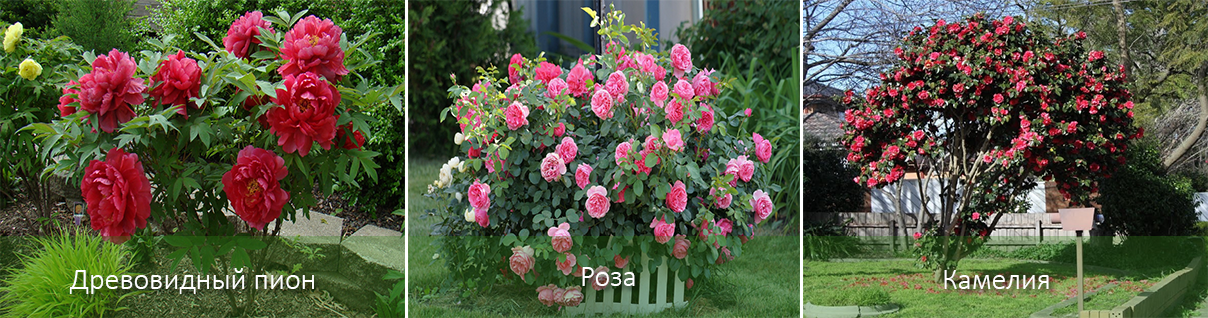
Rose
Double flowers vary in color. The number of shoots on a single plant ranges from 3 to 5. Bushes can reach 2 meters in width. Distinguishing features include an enchanting aroma, low maintenance, and resistance to adverse weather conditions.
Camellia
The flowers of this plant are composed of dense petals. The spectrum includes all shades of red and cream. Camellias with mixed colors resemble gardenias. The oval leaf blades have a leathery surface.
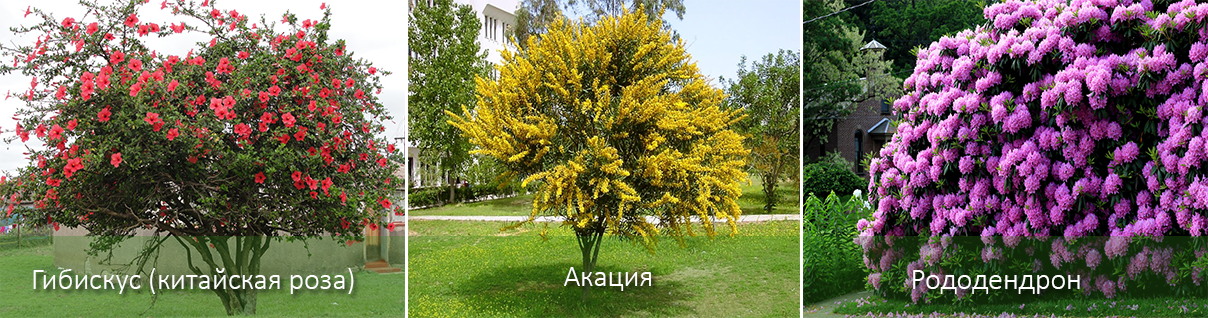
Hibiscus (Chinese rose)
Specialty stores offer both annual and perennial varieties. The former are flowering plants, while the latter are shrubs. During flowering, the bushes are covered with large, brightly colored corollas.
Acacia
This plant, which attracts bees with its unusual aroma, belongs to the legume family. It grows up to 30 meters tall. Its distinctive features include white flowers and thorns on the branches.
Rhododendron
It's quite demanding. It requires an acidic environment, moisture, and fertilizer. Frost-resistant varieties and their hybrids are suitable for growing in the Moscow region.
Fruit bushes for the garden that can be used as ornamental
They can be found in every garden plot. By planting them, gardeners get not only an interesting landscape design element but also delicious, healthy berries. This versatility is both an advantage and a disadvantage. This is due to the more complex care required. If agricultural requirements are not met, the harvest is unlikely to be abundant. Fruit bushes should be planted in the fall. The best time for planting is immediately after leaf fall.
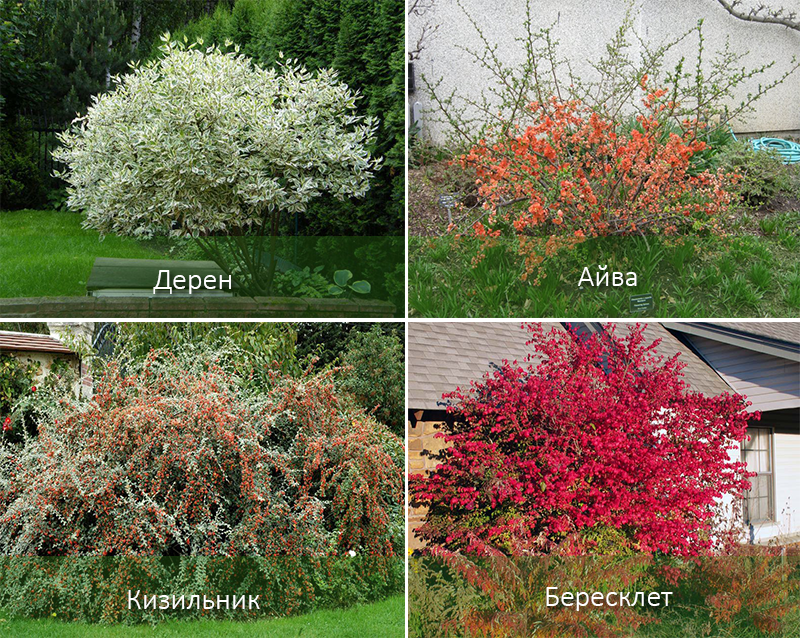
Derain
A plant from the Cornaceae family, characterized by winter hardiness and undemanding nature. Silky, blood-red, and white dogwoods are all suitable for gardens. This ornamental shrub grows to a height of no more than 3 meters.
Thanks to its compact form and abundant blooms, dogwood can grace even a small garden. The ripe fruit doesn't have a pleasant flavor.
Euonymus
It is considered an evergreen plant. Its characteristic features include elongated leaves, racemose inflorescences, and fiery fruits. Even after the leaves have fallen, it retains its decorative appeal.
Quince
A shrub with powerful medicinal properties. Popular varieties include Yukigoten, Fascination, Nicoline, Pinklady, and Zubutlinskaya. It requires fertile soil, full sun, and adequate moisture.
Cotoneaster
It's used to create hedges in gardens and parks. After abundant flowering, a profusion of brightly colored berries appears.
Barberry
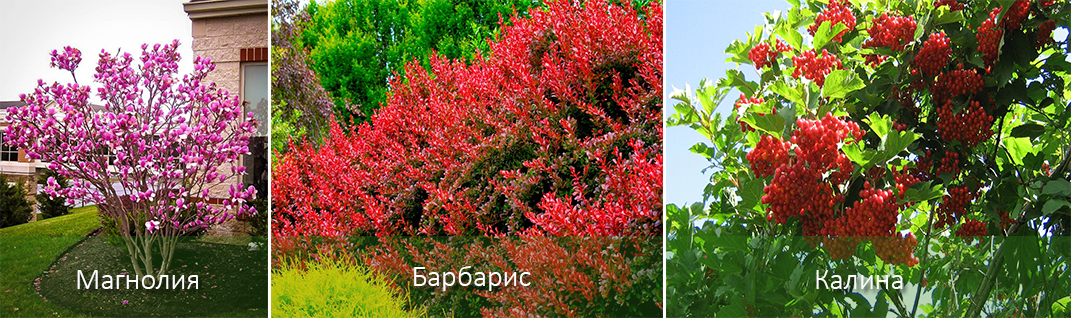
It has a spreading crown formed by long, reddish branches. It reaches a height of 1.5 m. The corollas adorn it for quite a long period. The fruits are brightly colored and large.
Magnolia
An evergreen plant belonging to the Magnoliaceae family, it includes about 80 species. Flowers appear in early spring and come in yellow, pink, and white. Other distinctive features include a rich fragrance and brown or ash-gray bark.
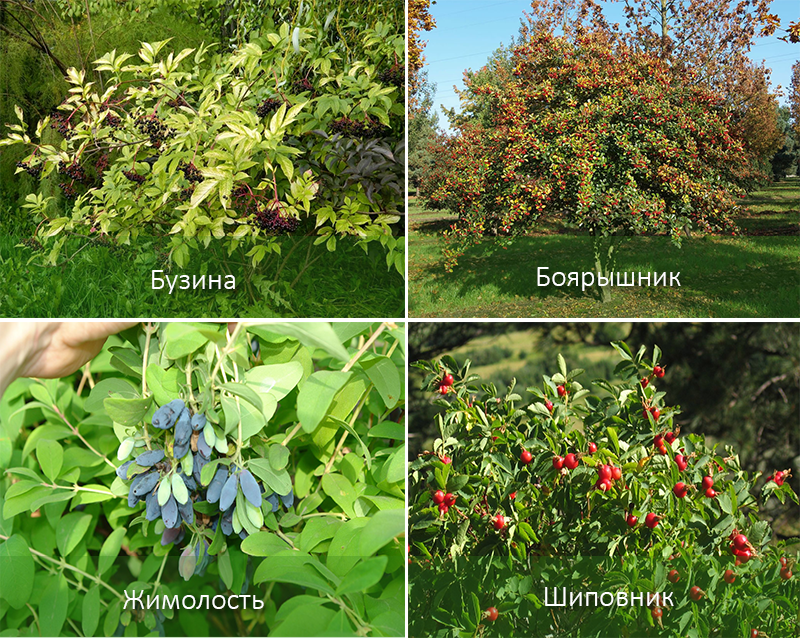
Rose hip
A beautiful, low-maintenance shrub, the wild rose is often planted as a thorny hedge. It is distinguished by its arching branches, sharp, sickle-shaped thorns, and greenish-red shoots.
Hawthorn
Similar in appearance to the previous plant, its decorative value can be enhanced by pruning. The berries, which ripen at the end of the season, are often used for medicinal purposes.
Honeysuckle
A beautiful perennial that produces fruit with a distinctive flavor. The berries are used to make jam and compotes. Climbing varieties are grown using arches.
Elder
It has a rich aroma and medicinal properties. It grows to a height of approximately 10 m. Proper pruning allows the bush to be shaped to its desired form.
Viburnum
It is distinguished by abundant flowering, powerful healing properties, and high ornamental value. It belongs to the Honeysuckle family. Among the most popular varieties are Bul-de-Nezh, Uralskaya Sladkaya, and Altaiskaya. The latter two produce large fruits with excellent flavor.
Top.tomathouse.com: Basic tips for planting shrubs
Before planting, you need to choose a location for the new arrangement. At this stage, you should consider the local agricultural requirements. Seedlings of variegated varieties require plenty of sunlight.
Plants with uniform coloring are generally shade-loving. They can be planted individually or in groups. A composition of three ornamental shrubs is considered ideal.
Planting is carried out as follows:
- Prepare the soil (digging, removing stones and debris, adding fertilizer).
- They make holes for the seedlings.
- Garden plants are planted.
The distance between shrubs depends on how large the bush grows. The remaining space can be filled with rhizomatous and bulbous plants. If these recommendations are ignored, they will interfere with each other.
Shrubs are planted near fences and outbuildings. In flowerbeds, they can be placed either in the center or in the back row. Each option is unique in its own way. An exclusive ensemble of garden plants of varying heights will become the highlight of your garden.
How to choose ornamental and fruit-bearing shrubs
The range of crops planted to decorate a garden is quite extensive. Among the determining factors are:
- personal preferences of the summer resident;
- area of the garden plot;
- estimated location of the bushes;
- difficulty of care;
- soil and climatic conditions;
- lifespan of the shrub (annual and perennial);
- compatibility with other garden crops to avoid dissonance between colors, aromas and forms;
- decorative features.
Lush, spreading shrubs are ideal for creating a landscape park. However, these are unlikely to be suitable for those with a small plot. In this case, minimalist compositions are preferred, choosing varieties that can take on any shape. Their distinguishing feature is the ease of pruning.