Fittonia is a herbaceous perennial plant from the Acanthaceae family, native to South America. There are four species. Three of them have creeping, spreading stems, while the fourth is erect. The name comes from the Fitton sisters, Englishwomen who published the first biology textbook.
The flower grows in marshy areas and shady forests in Bolivia, Peru, and Ecuador, where the climate is warm and humid. Flower shops offer selectively bred hybrids adapted to indoor conditions, with prices ranging from 100 to 500 rubles.
Content
Description
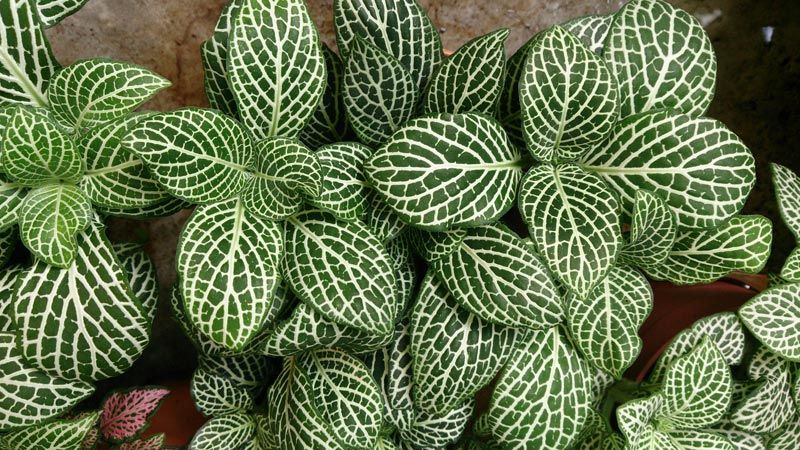
Fittonia is a round-leaved flower with creeping, slender shoots up to 10 cm long. The leaves are green and olive with scarlet, red, yellow, pink, and silvery-blue veins reminiscent of a web, connected to the stem by a small petiole. Their unusual color scheme is the main attraction of Fittonia.
The flowering plant produces spikelets once in the summer. The small yellow flowers are unattractive and are recommended to be pinched off. The plant is fussy and can be grown in terrariums and glass containers. Photos of the flower look very impressive; it is grown as a trailing plant or groundcover.
Types of Fittonia for indoor growing
Fittonia verschaffeltii or white-veined fittonia is about 25 cm tall with branching stems, creeping shoots, and large leaves.
There are different varieties:
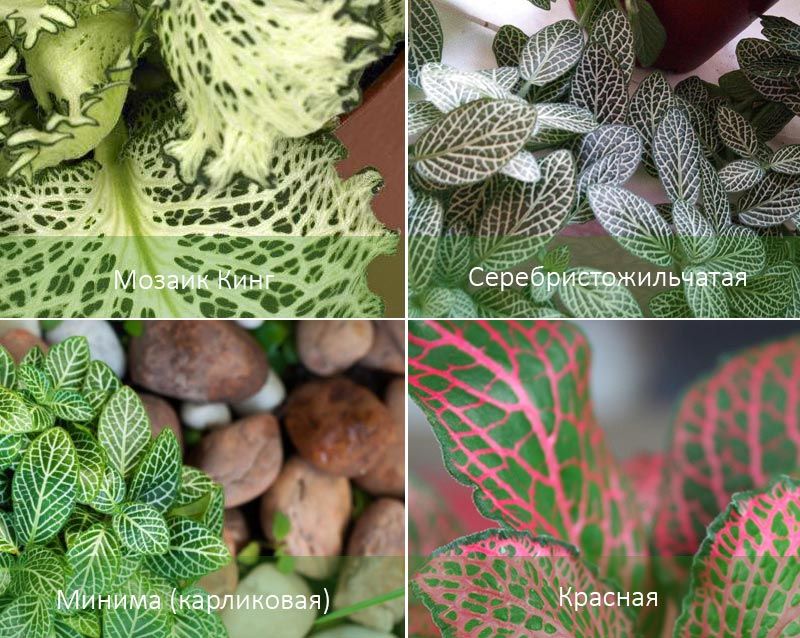
- Silver-veined – with a bright silver mesh, smooth, oval leaf surface, up to 20 cm in height, 10 cm in length.
- Red – with veins of pink, red, purple.
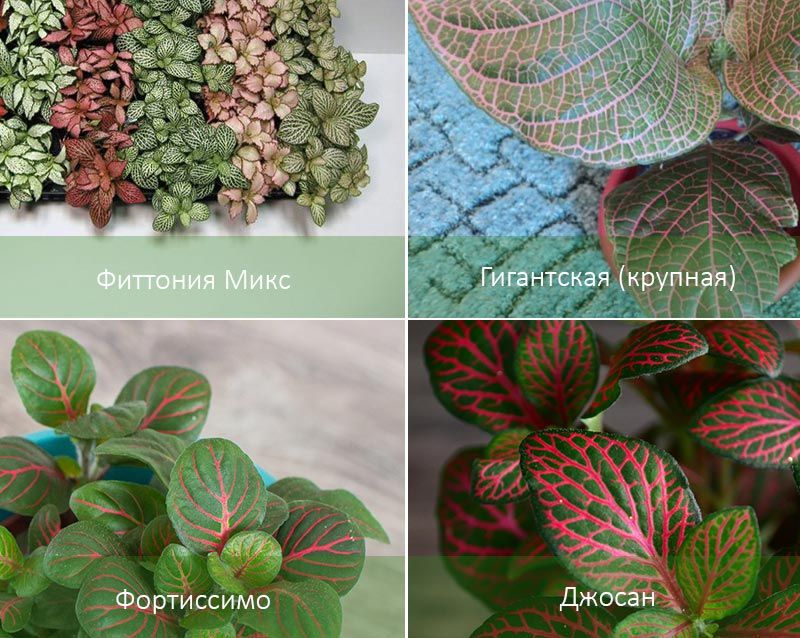
- Josan – wavy, green leaves with a coral mesh and dark edging along the edges.
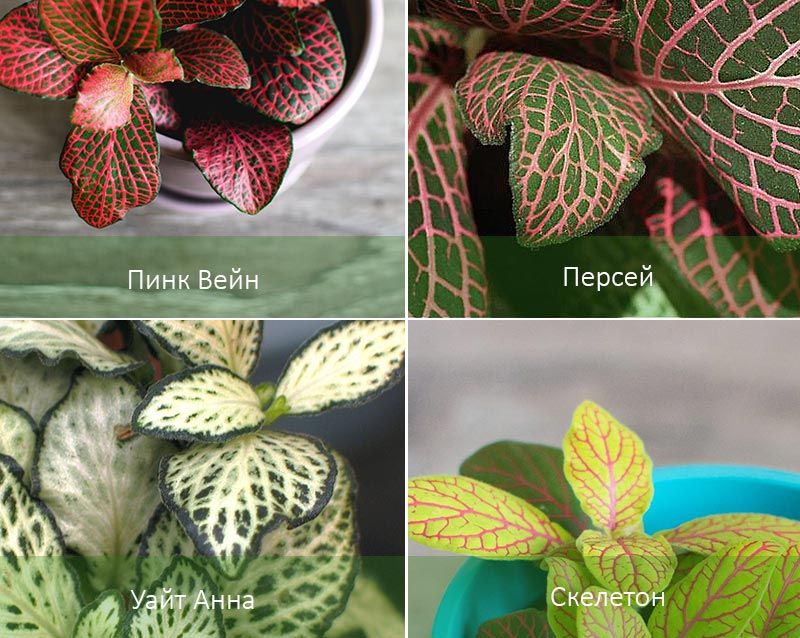
- Perseus - light olive background and pastel colored web.
- White Anna – white-veined, darker shade with a beautifully bordered stripe.
- Skeleton - small matte velvety olive leaves, dense mesh of burgundy hue.
- Mosaic King Cross is another variety that resembles sea foam or lace, with a green border that frames almost the entire white corrugated sheet.
- Pink Vane is a rich emerald shade with white-pink veins.
- Fortissimo – small oval leaves with bright fuchsia-colored nets.
- Fittonia Mix – several varieties growing together, a decorative composition with many bright veins and different shades of leaves.
- Minima, a dwarf variety, is perfect for bottle gardens and terrariums. It has miniature shoots with tiny leaves up to 2 cm long. There are also varieties called Tiger and Red Angel.
- A giant, large variety distinguished by its straight shoots, reaching 60 cm in height. Leaves are up to 16 cm long and up to 10 cm wide, with short petioles. The glossy leaf blade is dark green with pink hues. Rarely grown indoors.
- Hypoestes is a Fittonia-like flower from the Acanthaceae family. When compared, the differences are easy to spot: its leaves are larger, soft to the touch, have bright spots all over, and its stem is upright.
Caring for Fittonia at Home
Fittonia requires special care.
It is important to regularly drain the water from the tray, ensuring that it does not become too dry or too wet.
Care requirements depend on the time of year:
| Parameter | Spring, summer | Autumn, winter |
| Location, lighting. | Bright, wide, protected from the sun, east or west facing, away from air conditioning. | Provide additional artificial light for 2-3 hours per day. Avoid placing the plant too close to radiators; south-facing windows are preferable. |
| Temperature | +24…+27 °C, do not expose to the outdoors. | Not below +18 °C, avoid sudden drops and fluctuations. |
| Humidity | 80-90%, spray 2 times a day with warm filtered water, place a container with wet expanded clay, pebbles, or special devices for humidification nearby. | |
| Watering | 3-4 times a week, immediately after the soil dries. | Water twice a week, every other day after the soil dries out. |
| Top dressing | From April to September, use mineral fertilizers once every 14 days, and liquid fertilizers on the leaves. | Fertilizing with minerals is necessary once a month. |
Features of planting and transplanting
Due to its rapid growth, the plant requires repotting in the spring. It should first acclimate to its new environment for 2-3 days, then repot.
For planting, it's best to use a shallow, wide container with holes and neutral, lightweight soil. Experts recommend buying ready-made potting mixes for violets or geraniums.
You can make your own substrate. The composition is two parts coniferous or sod soil, one part peat moss, one part sphagnum moss, and one part coarse sand.
Step by step actions:
- Lay a drainage layer of 2/3: small expanded clay, brick chips, crushed stone, pieces of foam.
- Sprinkle a special mixture for decorative foliage crops on top.
- Remove the plant and shake it off without touching the roots.
- Transfer to a disinfected container. For this, use a solution of potassium permanganate, vinegar essence, or chlorhexidine.
- Add the remaining substrate.
- Water and place in a bright, warm place, after draining the water from the tray.
Older, longer shoots should be pruned or pinched back by two-thirds in the spring to allow new growth to emerge. The plant should be mature, at least three years old.
Reproduction
Cuttings: When the plant has three or five leaves, cut the cutting with a sharp tool and leave it in a glass of water or aqua-soil until roots form. Then plant it in a mini-greenhouse at a temperature of 25–28°C. Cover with transparent film or glass, uncovering it during the day. Once rooted, repot it in a separate pot.
Most indoor flowers are propagated in this way: petunia, ficus, geranium, crossandra.
Division – divide the bush into parts, plant each in a separate pot, being careful not to damage the fragile roots.
To propagate by layering, first remove the leaves and cover the long stems with moist soil. After a few weeks, when roots appear, separate them and plant them in prepared pots.
Propagation by seed is not very popular and should only be done if the seed is of very high quality. In the spring, sow in pre-treated, moist soil, cover with plastic wrap, and place in a sunny location with a temperature of 25°C. After the sprouts emerge, remove the plastic wrap and transplant after 3-5 leaves appear.
Methods of keeping fittonia
There are several ways to grow fittonia: flower pot, terrarium, aquarium.
Pot
A suitable growing container is shallow, up to 7 cm, with drainage and soil at the bottom. Lighting, watering, and humidity are essential. The downside of this method is that you'll need to constantly monitor humidity and temperature levels.
Florarium
For this method, it's preferable to use aqua-soil or hydrogel. Instead of a pot, use a bottle, aquarium, or glass. Coconut fiber and expanded clay are used for the soil; the plant should not touch the sides.
Pros:
- There is no need to monitor humidity.
- It is enough to water once a month.
- You can plant other flowers there for contrast, but repotting and pruning should be done more frequently.
Aquarium
It requires a special container and equipment to maintain optimal conditions. Disadvantages: slow growth, risk of root rot.
Diseases and pests
If poorly cared for, the flower is susceptible to pests and diseases.
| Damage | Cause | Methods of elimination |
| The plant stops growing, withers, the roots soften, and the flower dies. | Root rot. | Treat with preparations: Discor, Trichodermin, Baikal-M, according to the instructions, replant. |
| There are green insects on the plant, the leaves are sticky, withering, and deformed. | Aphid. | Spray with a liquid soap solution, avoiding contact with the ground. For every liter of hot water, you'll need 50 grams of laundry soap. Crush it, dissolve it in the water, and let it cool. |
| White coating on the surface. | Mealybug. | First, treat the area with an alcohol-soap solution. Dissolve 20 grams of soap in a liter of boiling water, cool, and add 10 ml of alcohol. In severe cases, use medications such as Aktara, Fosfamide, and Calypsa. |
| There are brown scales on the shoots, the leaves dry out and fall off. | Scale insect. | Place separately from other flowers, use Actellic. |
| Small insects that drink the juice, parts of the leaf dry out, and holes appear in their place. | Thrips. | Immediately repot the plant in new soil, wash the pot with laundry soap, and soak it in a potassium permanganate solution. Treat the plant with Actellic, Karbofos, and Fitoverm. |
| Holes appear in the leaves, and light spots and webs are visible on top. The leaves curl and dry out. | Spider mite. | Isolate the plant and disinfect the tray, windowsill, and pot. Products such as Omite, Actofit, and Actellic will help. |
Mistakes in Fittonia Care
Fittonia owners often make mistakes.
| Damage | Cause | Recommendations |
| The plant withers, dries up, and the leaves fall off. |
|
|
| The leaves are curled and have spots on them. | Lack of moisture. | Increase watering. |
| The lower part of the stem is exposed. | The flower is getting old. | Trim in spring. |
| Leaves dry out, turn brown or yellow. | The air is too dry. Not enough fertilizer. | Spray, install a humidifier. Feed with mineral fertilizer for indoor plants. |
| The plant stretches out and the color fades. | Lack of light. | Keep in a brighter place or use an artificial lamp. |
| The edges of the flower are drying out. | Over- or under-feeding. | Adjust the frequency of fertilization. |
Fittonia – a sleeping pill for the home
In Chinese Feng Shui, Fittonia is a symbol of the metal element, helping to achieve goals and get rid of indecision and depression, removing negativity, and improving mood.
The plant has many benefits: it purifies the air of germs and adds moisture. It can be kept in the bedroom for a peaceful rest. The flower is calming, promotes relaxation, and helps you fall asleep quickly.
Fittonia is said to attract money. This belief stems from the coin-like appearance of its leaves. The plant does not contain toxic sap and is safe for home use.