Hypoestes is an ornamental shrub in the Acanthaceae family. This evergreen plant is native to South America, India, and Madagascar.
Content
Description
The bush is medium-sized (45-50 cm), has good branching.
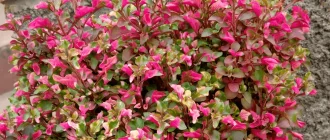
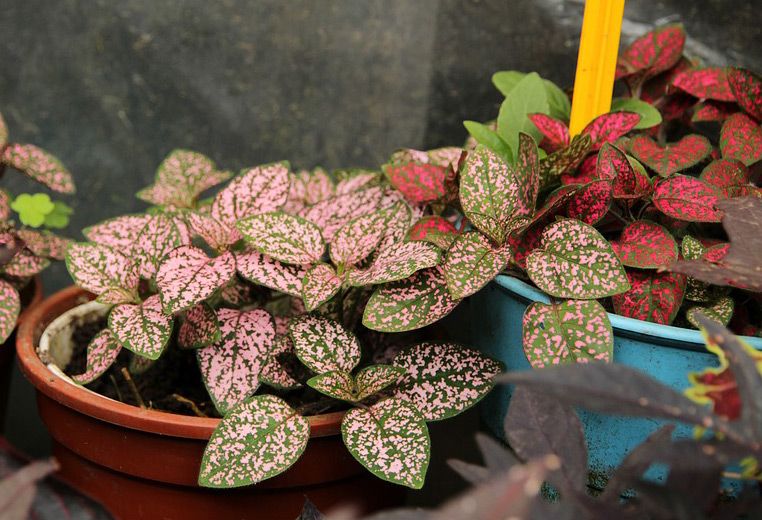
The ovate leaves, with smooth and serrated edges, are rich green or purple-lilac in color and arranged oppositely. The foliage is randomly spotted in shades of pink, white, deep chocolate, and burgundy.
The inflorescence is complex—an umbel or capitula. The perianth forms a tall shield containing up to three flowers.
Species and varieties for indoor cultivation
Acanthaceae includes more than 150 species of perennial evergreen shrubs, and only two of them are considered the ancestors of indoor varieties of Hypoestes:
- Blood-red – native to Madagascar. A dense shrub with ovoid foliage, wavy edges, and a dark green color. The leaves have rich red, bright pink, or scarlet veins. The flowers are small, pink, and have a white throat in the center.
- Leaf-spikelet. It resembles the previous Hypoestes species in appearance, but the foliage here is a mix of purple shades. The flowers are solitary, lavender or pale lilac.
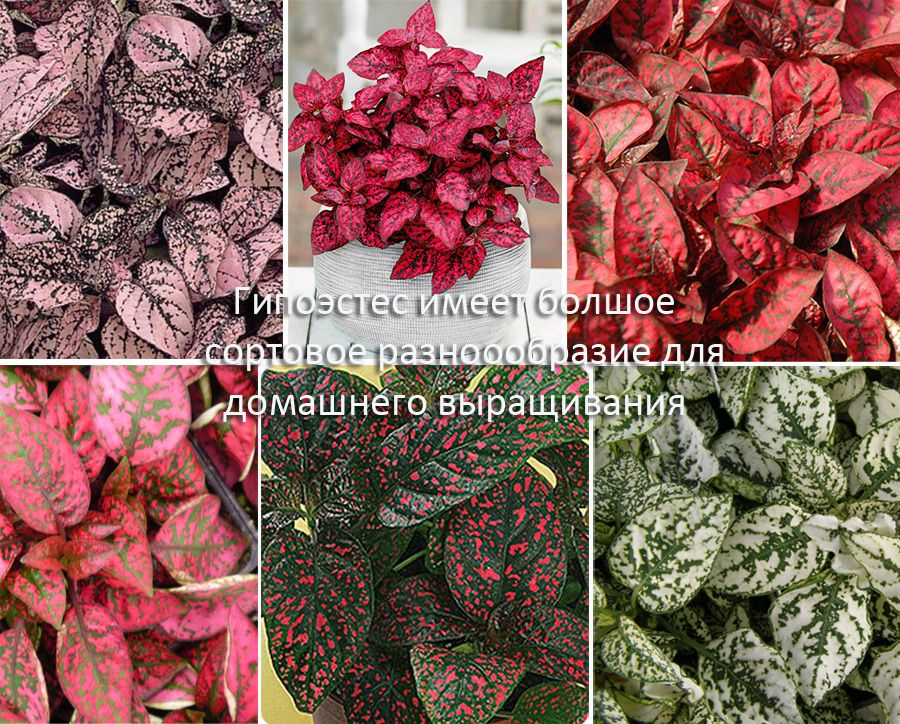
From these species, many different varieties of hypoestes have been bred, the height of which does not exceed 25 cm:
| Variety | Leaves |
| Pink (Confetti Pink) | Pale pink with green edges and veins. |
| White | Dark green, with large whitish spots. |
| Red | Raspberry red with green streaks. |
| Crimson | Burgundy-green with small, soft pink spots. |
| Red wine | Bright green, with a burgundy tint, with fine spotting. |
| Pink (Pink Splash) | Red, decorated with pink splashes. |
Caring for a plant at home
Home care for the plant varies depending on the time of year:
| Season | Light | Humidity level | Temperature |
| Spring/Summer | Bright, filtered light is required, and direct sunlight can be enjoyed for a few hours a day, which promotes more vibrant coloration. It is recommended to place the plant in partial shade. | Up to 70%, requiring daily foliar spraying. It's best to place the plant on a tray with moistened moss or pebbles. You should place a humidifier next to it. |
The ideal temperature for growing Hypoestes is between 20 and 25 degrees Celsius. Protect from extreme temperature fluctuations and drafts. |
| Autumn/Winter | Bright, diffused light is required, with at least twelve hours of daily light, otherwise the foliage will lose its variegated color. Artificial lighting should be provided. | The comfortable temperature for Hypoestes is 18-20°C. Temperatures below 17°C will kill the plant. It is recommended to keep it away from heating equipment and cold windows. Maintain a consistent, unwavering climate. |
Repotting: Choosing a Pot, Soil, Step-by-Step Guide
Hypoestes is repotted every spring to rejuvenate the flower and give the leaves a brighter color.
The soil for this plant should be neutral, light, but fertile. Suitable soil compositions include:
- universal soil for plants grown indoors can be combined with soil for orchids;
- leaf soil, humus, peat and river sand in a ratio of 2:1:1:1.
The repotting pot should be two to three centimeters larger than the old one. Wide, shallow containers are preferred. The plant's roots are located near the soil surface, so a deep pot is not necessary.
Hypoesthesia transplantation is performed as follows:
- The pot is sterilized, the soil and drainage layer (foam and brick chips, small crushed stone, gravel, expanded clay) are prepared.
- The container for growing hypoestes is filled with drainage, the height is two to three centimeters.
- Hypoestes is carefully removed from the old pot (divided into parts and planted in different containers).
- The root system is examined and damaged areas are removed.
- Place the root ball in the center of the new container. Carefully fill it with soil, compacting it, and gently shake the pot. This ensures that the entire container is filled, leaving no empty spaces.
- The plant is watered, misted, and placed in a comfortable location. Humid air will help the Hypoestes root more quickly.
Watering, fertilizing
The plant requires regular watering. However, avoid allowing the soil to dry out or allowing water to stagnate, otherwise the Hypoestes will shed its leaves. The top layer of soil is used as an indicator of watering frequency.
- In the spring and summer, the plant needs to be watered approximately every other day, with the same volume of water.
- In autumn and winter, the soil is moistened twice a week.
To keep the Hypoestes foliage vibrant, feed the plant with a general-purpose fertilizer with a high calcium content. Feeding should be done once a month.
Pruning, flowering
Hypoestes can be pinched frequently, as this gives the plant a beautiful, lush shape. In spring, it is recommended to leave the stems at a height of up to 3 cm. After this pruning, you will need to temporarily reduce watering.
The plant blooms with light pink bell-shaped flowers that quickly fall off. Afterward, the foliage diminishes in size, and the shoots begin to grow rapidly upward.
In most cases, before flowering begins, the shoots are trimmed.
Reproduction
The flower is propagated by seeds and cuttings.
Seeds
To grow hypoestes from seeds, follow these steps:
- A wide container is filled with a mixture of river sand and peat.
- The seeds are planted in a water-sprayed substrate and covered with sand. Hypoestes seeds are small, so there's no need to plant them deeply into the soil.
- The container is covered with glass and placed in a room with a temperature above +22 degrees.
- The seeds will germinate in about a week, after which the glass should be removed immediately. Check the substrate's moisture level daily and spray it if necessary.
- The grown seedlings are planted in different pots.
cuttings
To propagate a plant by cuttings you need:
- In the spring, prepare several cuttings up to ten centimeters long. The cut should be at an angle.
- The cuttings are placed in a container, filled with water and left like this for 24 hours.
- After the specified time, they are placed horizontally in opaque jars. A plastic bag is placed over the container to create a greenhouse effect. It's important to ensure that the foliage doesn't touch the bag.
- After the roots have formed, the cuttings are planted in separate pots.
Care errors and how to fix them
When growing hypoestes at home, certain mistakes may occur:
| Error | Cause | Correction |
| Drying of leaf edges. | Very dry air. | Spraying the plant and humidifying the air in all possible ways. |
| Fall of leaves. | Insufficient watering, temperature fluctuations. | Avoid allowing the soil to dry out, especially in summer. Protect the plant from drafts and avoid temperatures below 17 degrees Celsius. |
| Yellowing of leaves and loss of elasticity. | Excessive soil moisture. | The frequency of watering needs to be adjusted. It is recommended to wait until the top layer of soil dries out. |
| The foliage turns pale, the variegation disappears. The stems become elongated. | Insufficient lighting. | The plant should be moved to a well-lit location. Artificial lighting is provided during the fall and winter. |
| Brown spots appear on the leaves. | Burn due to exposure to direct sunlight. | At midday, hypoestes should be moved to partial shade. |
| Yellowing of leaves, blanching of spots. | Excessive nitrogen content in fertilizer. | Change your fertilizer. It's best to use fertilizers with a higher potassium content. |
Diseases, pests
| Diseases | Pests |
| The plant is fairly disease-resistant and suffers only from root rot, which weakens the roots, produces a distinctive odor, and ultimately kills the plant. Fungicides are used to treat the disease. | Aphids – the tips of the leaves curl and become sticky to the touch. To get rid of the pests, trim the leaf tips, wash the plant with soapy water, and spray it with a tobacco infusion. |
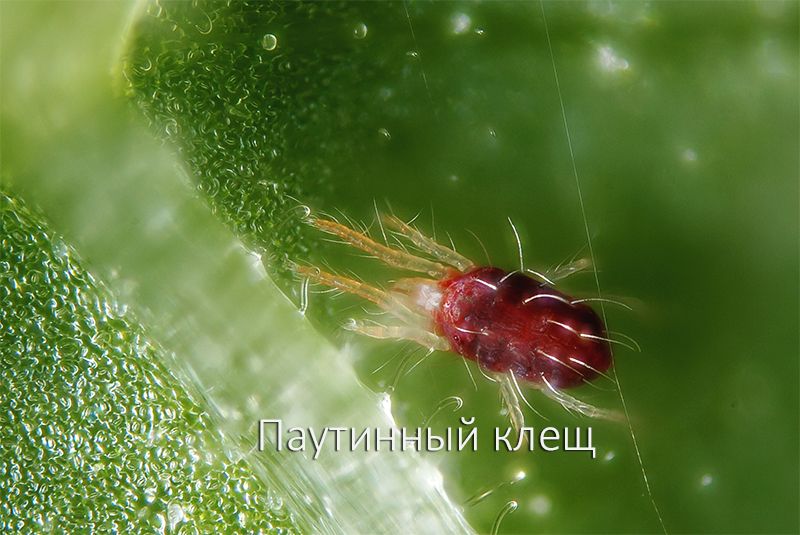
| Spider mites – small yellow spots form on the leaves, which become limp and fall off. To combat these pests, trim off affected foliage and shoots, and spray the plant with Derris. | |
| Scale insects – brown plaques appear on the leaves, and the plant is withering. The insects are removed mechanically, and the Hypoestes is sprayed with an insecticide. |
Top.tomathouse.com recommends: Hypoestes – the inspirer of poetic and creative impulses
It is believed that when grown indoors, Hypoestes improves mood and psychological well-being. The plant promotes the development of artistic talents and unleashes creativity.
Due to its mystical properties, hypoestes does not encourage rest, so placing the plant in bedrooms is not recommended.