Goosefoot, often called the yellow snowdrop, belongs to the Liliaceae family. Its beautiful, large flowers are often seen in gardens. This perennial plant's popularity stems from its low maintenance.
Due to its lack of strict soil requirements, yellow snowdrops can grow among shrubs, in parks, forests, rocky areas, and ravines. Their distribution range includes Central Asia, the Caucasus, the Far East, and Siberia.
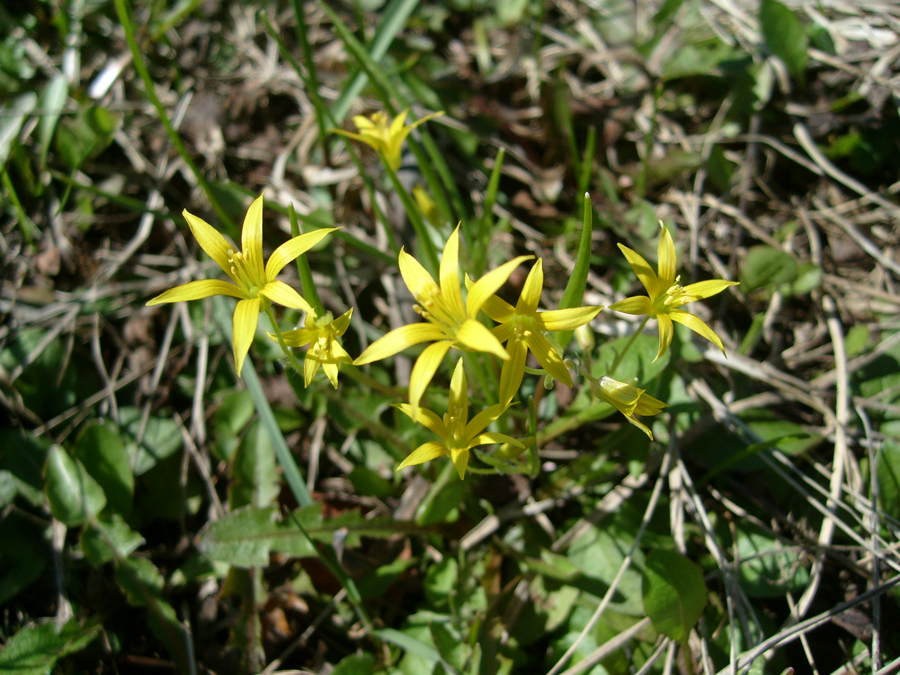
Description of goose onions
The culture is distinguished by the following features:
- short stature – from 3 to 35 cm;
- inflorescence – umbrella;
- corollas are stellate;
- lanceolate leaves – length about 18 mm, greenish color;
- The fruit is a spherical capsule.
The flowering period begins in April. Fruit appears in May-June. The inflorescence consists of 16 corollas. The upper side of the flower is yellow, the lower side is green. The perianth is surrounded by pointed leaflets, each 1.5 cm long.
The goose onion is considered an ephemeral. The elongated bulblet is a modified shoot. The scales that cover it formed from the stem and leaves. Daughter tubers germinate only in the third season after emergence.
The ability to reproduce vegetatively disappears after the sixth year. Subsequently, to obtain new plants, you will have to use seeds.
The widespread distribution of this herbaceous plant is explained by its migratory activity. Bulbs that grow from seeds travel considerable distances during floods. The daughter heads anchor themselves in deep water. This method propagates the yellow snowdrop within a limited area.
Pollination occurs through insects. The plant attracts them with nectar produced between the leaves and stamens.
Types of goose onions
There are many varieties of this bulbous herbaceous plant. The yellow variety is considered the most popular. It is considered a primrose. It thrives in warmth and sunlight, so the flowers do not open in cloudy weather.
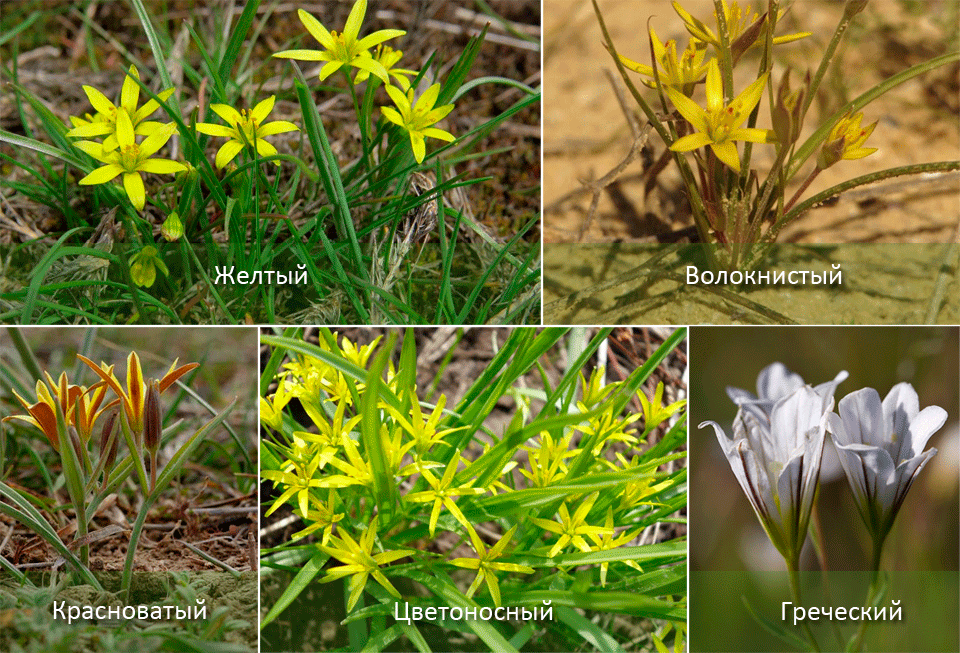
The list includes approximately 90 varieties. They grow in North Africa and Eurasia. The species was named after the botanist T. Gage.
| Variety | Description |
| Yellow | The height does not exceed 25 cm. The solitary head has no small bulblets. The upper part of the basal leaf resembles a cap. The outer side of the blades located near the perianth is green. |
| Greek | The lanceolate leaves range from 4 to 12 cm in length. The inflorescences consist of five white corollas, adorned with purple veins. Due to its low winter hardiness, it is grown in greenhouses. |
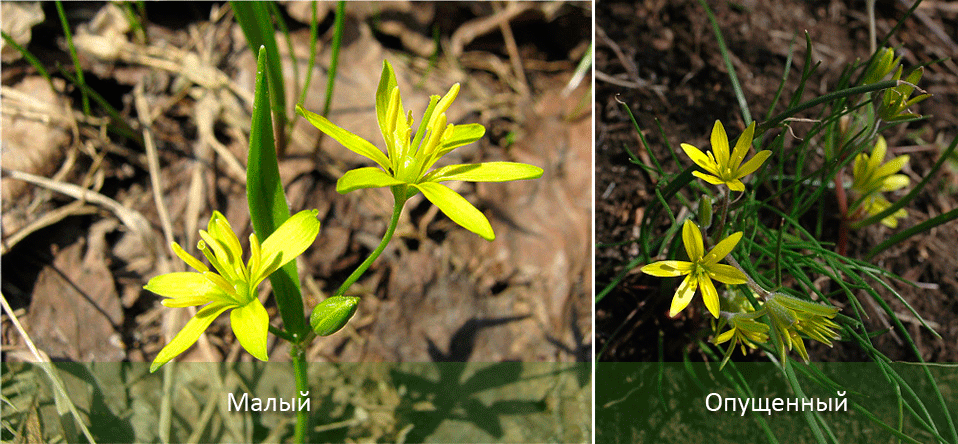
| Small | Reaches 15 cm. Reproduction occurs through small bulbs that mature at the base. |
| Fibrous | The umbels are formed from erect corollas. The perianth is yellow on the inside and green on the outside. |
| Reddish | Height: 15 cm. Small bulblets are absent. Leaves are tinged with red. |
| Pubescent | Each stem-arrow bears no more than 15 star-shaped flowers. |
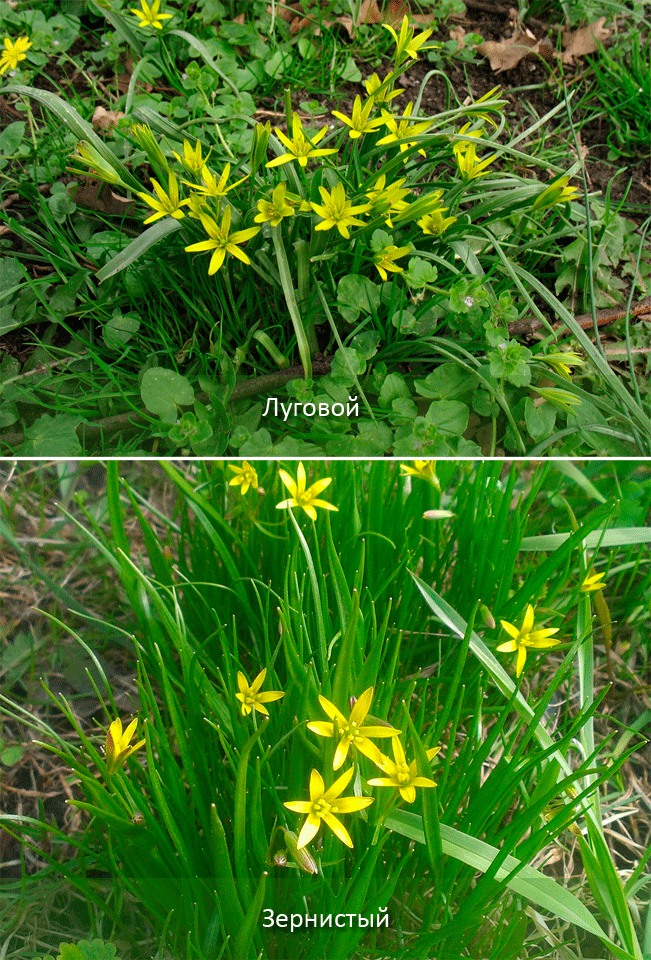
| Grainy | The umbel-shaped inflorescence consists of five corollas. The fruit is a capsule, the petals of which are 1.5 cm long. The stem is leafless. |
| Meadow | Up to 20 cm. Bright star-shaped flowers can be seen under hedges. |
| Sheltered | Bright corollas bloom only in sunny weather. |
| Bulbous | Height no more than 15 cm. Characteristic features include pubescent peduncles and numerous small heads at the base of the bulb. |
| Floriferous | The inflorescence contains only 7 yellow corollas. The leaf blades range from 6 to 30 cm in length. |
Growing requirements
First, you need to decide on a planting location. Bulbs and seeds are planted in moist, loose, and fertilized soil. A sandy-clay mixture is preferable. If necessary, add calcium and nitrogen fertilizers to the soil. The soil should be moderately acidic.
Goose onions are most often planted in borders and pits. Good lighting is a key requirement.
Yellow snowdrops are propagated by seeds and bulbs. The latter should be divided only after the foliage has faded. Before planting, the bulbs should be soaked in a potassium permanganate solution. They are then dried.
Prepared bulbs are stored in a cool, dark place. Planting is carried out between June and September, following a specific pattern. Until then, the seeds should be stored in special containers. Leave at least 10-15 cm between bulbs. They are planted 2-3 cm deep.
Despite its low maintenance, goose onions require moderate watering. Overwatering will cause the flowers to rot. Watering should be stopped once the foliage begins to wilt. Repotting is usually straightforward. This procedure can be carried out at any time. Beforehand, you'll need to trim off the inflorescences. This speeds up the establishment process.
If planted too densely in open ground, yellow snowdrops turn from a garden crop into a weed. The same thing will happen if planting guidelines are not followed.
Overwintering occurs naturally. Goose onions can tolerate low temperatures. To prevent freezing, the plant should be covered with dry leaves, spruce branches, peat, and compost. Mulch should be applied before covering.
Yellow snowdrops fit well into flower arrangements. To create a vibrant "carpet" of star-shaped blooms, plant the bulbs on a lawn. Many gardeners place the bulbs in rock crevices. These provide ample soil for the flowers to thrive. These gardens create a unique appearance.
Yellow snowdrops are resistant to pests and diseases. Difficulties may arise if the gardener fails to find a suitable location. Signs of illness include poor flowering and bulb rot. It is recommended to plant snowdrops in groups; otherwise, the desired decorative effect is unlikely.
Wear gloves when performing agricultural work. This will prevent allergic reactions.
Top.tomathouse.com recommends: the medicinal properties of goose onions and their diverse uses
Goose onions contain numerous beneficial substances. These include saponins, phenolic acids, glycosides, coumarins, and flavonoids. Essential oils, vitamins, tannins, and alkaloids can also be added to the list.
Thanks to its unique composition, yellow snowdrop has antipyretic, antibacterial, diuretic, antiviral, expectorant, healing and diaphoretic properties.
Flowers, bulbs, and leaf blades can be used to prepare medicinal mixtures. For example, to create a tincture for gastrointestinal problems, you'll need dried herbs and alcohol. The ingredients are mixed in a 1:5 ratio. The resulting mixture is left to steep for a week. Strain the finished solution and add honey.
A decoction made from fresh bulbs can help with bronchial asthma, swelling, and hepatitis. First, the bulbs are finely chopped, then poured with one cup of boiling water. The resulting mixture is simmered over low heat for 5-10 minutes. The remedy should be kept in the refrigerator. The beneficial properties last for 14 days.
An ointment made from onion pulp, fish oil, and butter helps prevent bacterial and fungal infections. Yellow snowdrop is a powerful remedy, so using it without experience and proper knowledge is strictly prohibited. Consult your doctor before beginning treatment.
A compelling reason for using medicines made from goose onions is for conditions of the respiratory, urinary, musculoskeletal, and digestive systems. Skin conditions can also be added to the list.
For medicinal purposes, bulbs harvested before flowering are used. The yellow snowdrop is also considered an edible plant. Both the leaves and bulbs are eaten. The latter are baked and boiled.
This vibrant primrose is often used to decorate various flower arrangements. Because it's easy to grow, the primrose can be combined with grains, herbs, and foliage. Just be sure to avoid neighboring plants that shade the yellow snowdrop. Otherwise, its growth will be significantly slowed. The same will happen if nearby garden crops require abundant watering.