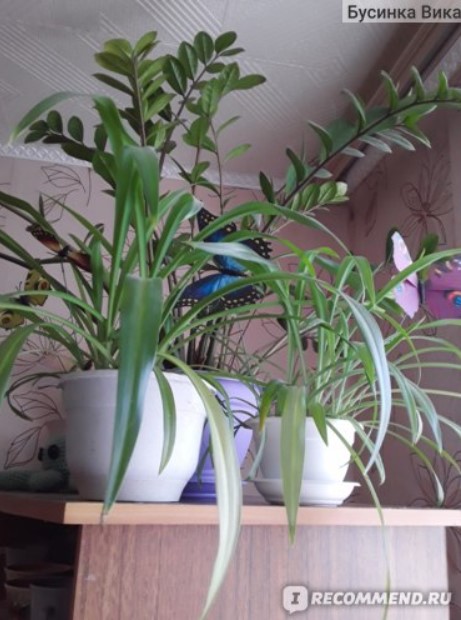
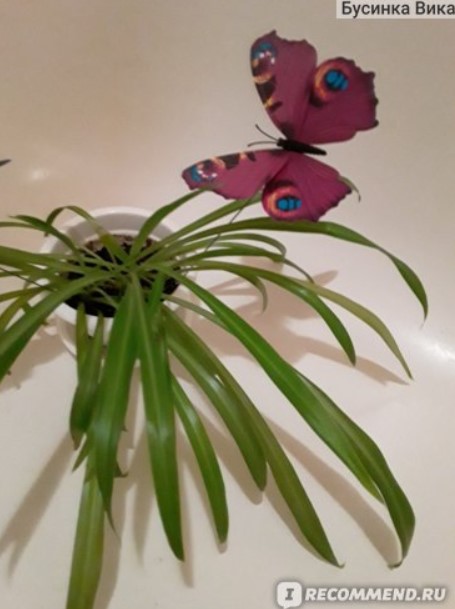
Chlorophytum is an unpretentious perennial herbaceous houseplant. Its specific family is hotly debated. Some experts classify it as a member of the Asparagus family, while others place it in the Agavaceae family. This flower is very common in apartments. It is loved for its unusual appearance and surprisingly low maintenance. Chlorophytum has many other names: Flying Dutchman, Champagne Splash, and Green Fountain.
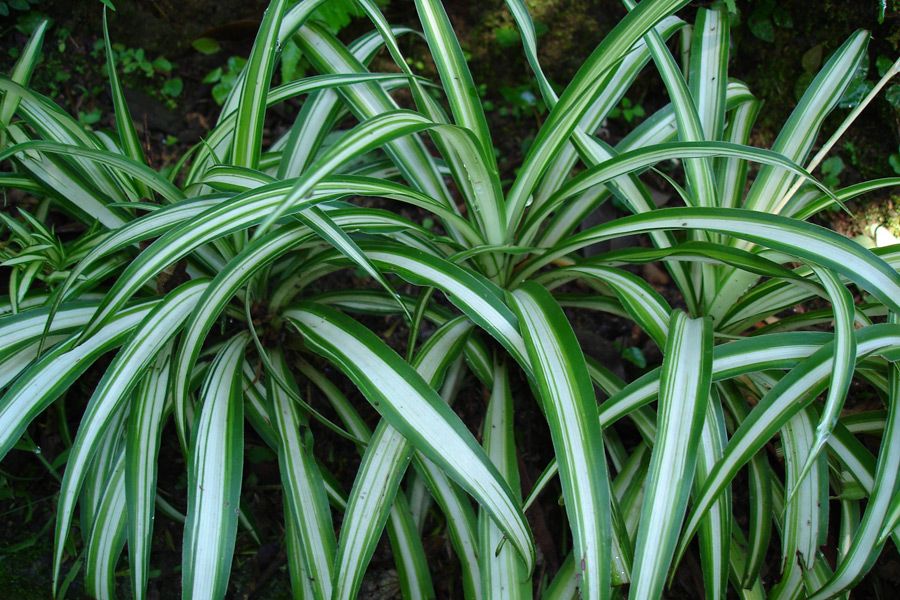
It was brought to Europe in the 19th century from South America, where representatives of this species are still found in tropical forests. Chlorophytum also grows wild in Asia, Australia, Madagascar, and Africa. The genus is large, comprising 250 species.
Content
- 1 Description of Chlorophytum
- 2 Types and varieties of chlorophytum
- 3 Chlorophytum care by season in the table
- 4 Transplanting Chlorophytum
- 5 Alternative methods of maintenance
- 6 Reproduction
- 7 Mistakes in caring for chlorophytum, diseases and pests, methods of elimination
- 8 Top.tomathouse.com recommends: Chlorophytum – a home cleaner and a favorite for cats
- 9 Reviews of Chlorophytum plants from gardeners
Description of Chlorophytum
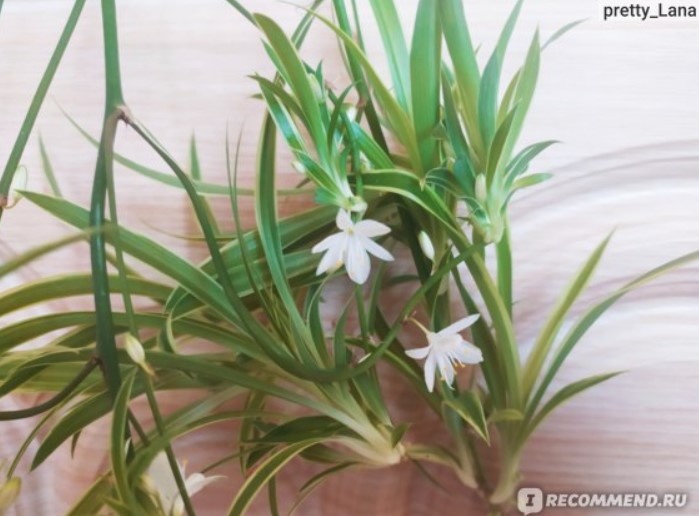
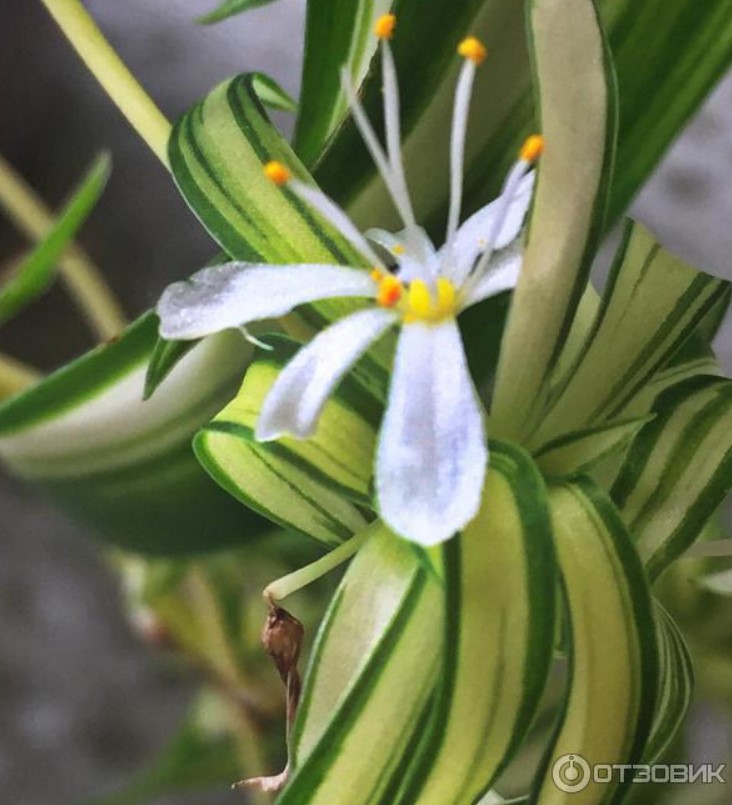
A herbaceous perennial with long, narrow leaves that form lush tufts. It periodically produces a tendril, which, after flowering, produces a daughter stem with aerial roots. Several such stems may form. Flowering occurs in summer. The flowers are white, sometimes with a purple tint, and small.
Grown as an ornamental foliage plant. Often used as a trailing plant.
Types and varieties of chlorophytum
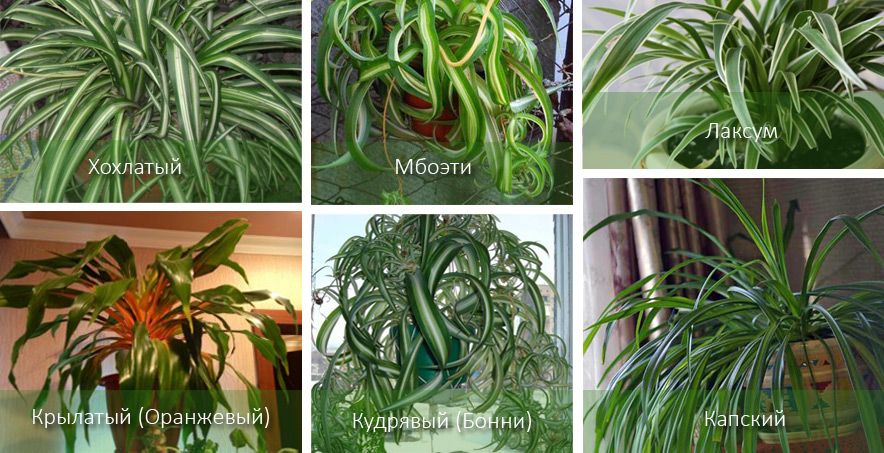
Only a few species of Chlorophytum are grown for ornamental purposes. However, breeders have developed many hybrid varieties based on these, differing in leaf color and shape.
| View | Description |
|
Crested
|
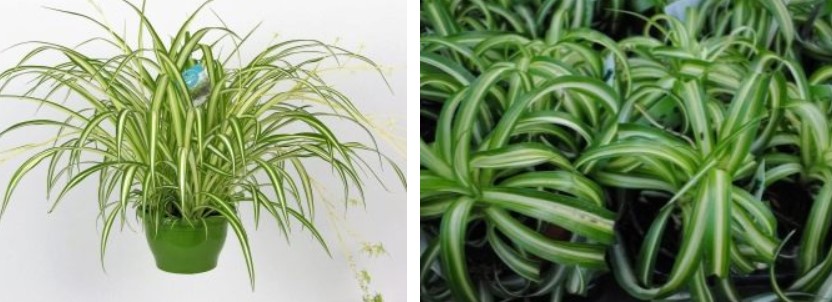
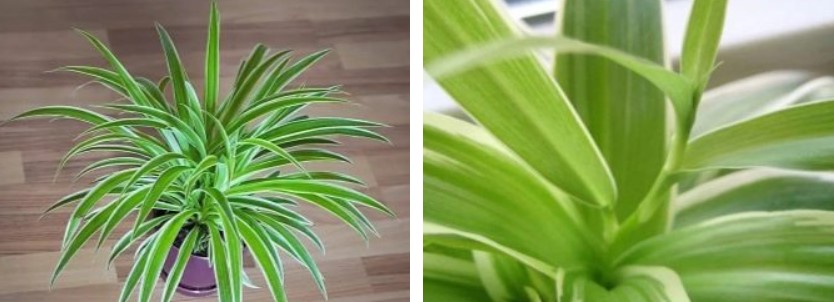
Long, narrow, pointed leaves, up to 50 cm long, with longitudinal lines running along their length. The leaves form a voluminous, lush cap. Numerous shoots with offshoots emerge from the center of the leaf cluster, giving the flower a cascading appearance. It is grown as a trailing plant. Popular varieties:
|
|
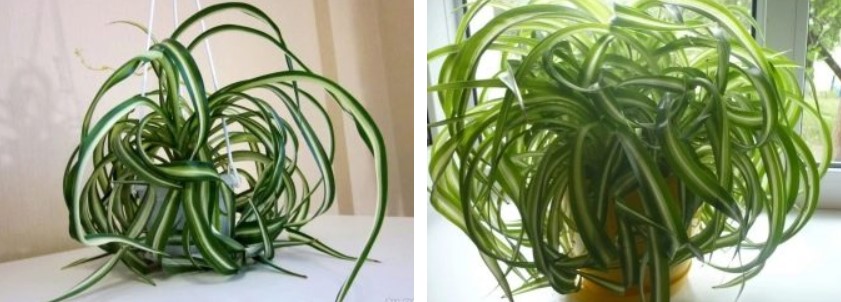
Curly (Bonnie)
|
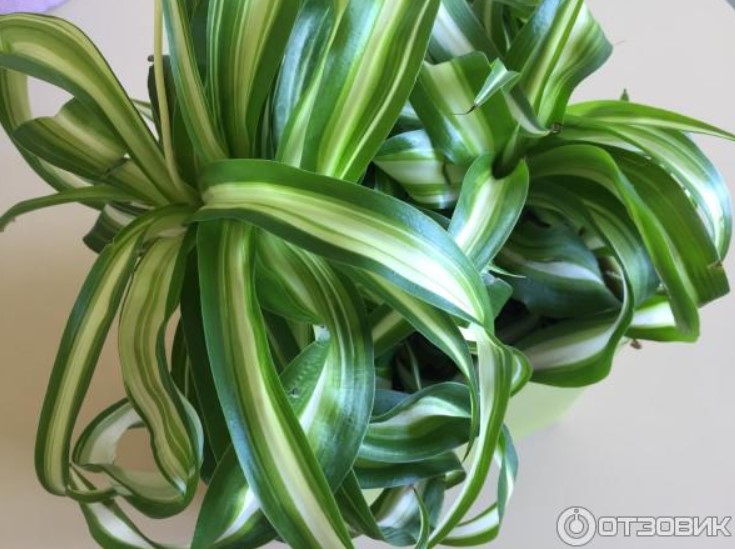
It's similar in appearance to the crested lily, but the leaves curl into rings. The rosettes are more compact. |
Cape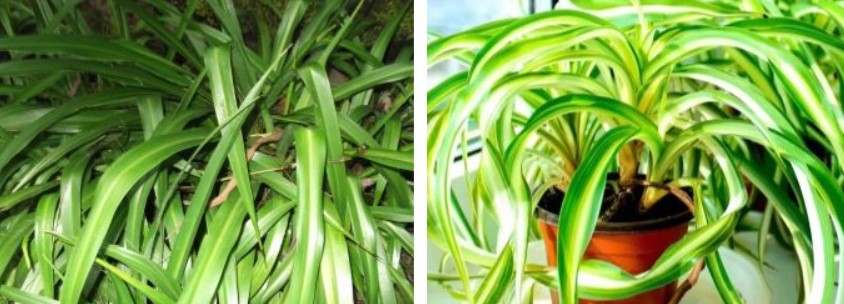 |
Leaves are up to half a meter long, 3-4 cm wide, and stripeless. Unlike other species, it does not produce runners or form offshoots. Less popular. |
| Winged (Orange)
|
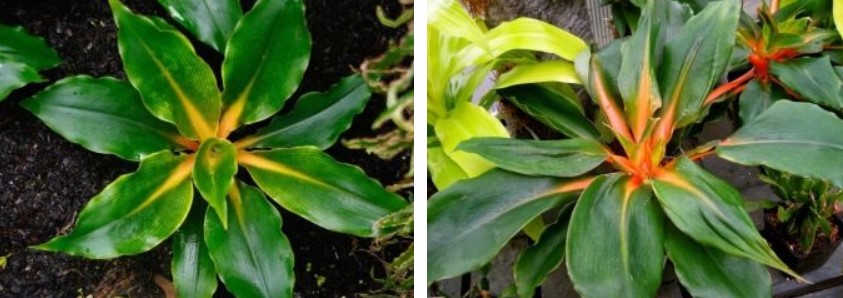
The broad, tapering leaves are arranged on petioles. They are uniformly green. Petioles can be pink or orange, sometimes red, depending on the variety. Varieties:
|
| Laxum
|
Thin, long leaves with white stripes along the leaf margins. No daughter plants are formed. |
Chlorophytum care by season in the table
Chlorophytum is a wonderful houseplant for inexperienced gardeners. It's easy to care for indoors and yet extremely hardy.
| Parameters | Spring-Summer | Autumn-Winter |
| Temperature | Easily adapts to any temperature. Ideally, temperatures range from 20°C to 23°C, but not below 10°C. In summer, it can be moved outside or onto a balcony, providing protection from direct sunlight and precipitation. It can tolerate temperatures below 10°C if watering is avoided. | |
| Lighting | It loves full sun but also thrives in partial shade (in this case, the leaves lose their stripes and become uniformly green). If provided with artificial lighting, it can thrive in dark corners and hallways. Variegated varieties require more light than solid-colored ones. | |
| Humidity | Additional spraying is only necessary in the summer, during hot periods. During normal periods, wiping the leaves with a damp cloth and occasionally showering is sufficient. If water gets into the leaf rosette, carefully remove the moisture. | When planted near heating appliances, occasionally humidify the air around the pot. Misting is not necessary; occasionally wiping the leaves to remove accumulated dust is sufficient. |
| Watering | Abundant watering | Water only when the top layer of soil dries out. |
| Thanks to the water-retentive nodules on its roots, the chlorophytum can go for a month without watering. It quickly regains its decorative appearance when water is added. | ||
| Fertilizer | Twice a month, with liquid mineral fertilizers. | Doesn't need it. |
| Trimming | To improve the decorative qualities, it is recommended to periodically trim away dry, damaged leaves. If the mother plant is weak, it is better to prune off shoots containing offspring, as they rob the main plant of many nutrients, thereby weakening it. | |
Transplanting Chlorophytum
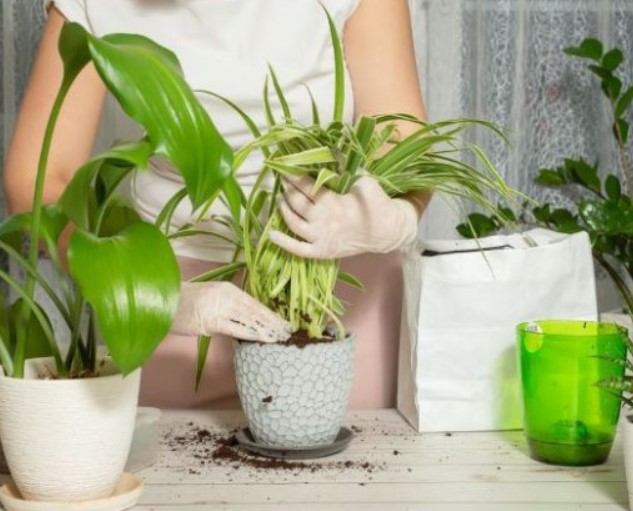
Chlorophytum has a powerful root system that grows quickly. Therefore, it's recommended to repot it every spring during its first few years. Adult plants should be repotted every 3-4 years, when the roots become crowded. This can be determined by slower growth, a prolonged absence of flowering, or roots growing through the drainage holes.
Choosing a pot
It grows well in hydroponics, in hanging pots. The container must meet the following requirements:
- Chlorophytum roots grow in width, so the pot should be 4-5 cm wider than the previous one.
- The presence of drainage holes is essential (the plant does not like stagnant water in the roots).
- Ceramic is the preferred material. Strong roots often destroy thin plastic pots.
Soil
Chlorophytum has no special requirements. It grows well in a commercial soil mix for deciduous plants. The main requirement is loose, well-drained soil.
You can prepare the soil yourself: mix sand, peat, turf and leaf soil, and humus in equal parts.
Transplantation step by step
Let's look at the process of replanting chlorophytum step by step:
- Before replanting, the soil prepared independently must be disinfected.
- Remove the plant from the old pot.
- Shake the soil off the roots, carefully separate them, straightening them out if possible.
- Place the flower in a new pot, having first placed a drainage layer and a small layer of soil in it.
- Fill the voids with soil without compacting it.
- Water generously, after a while drain excess water from the pan.
- Move the chlorophytum to partial shade for a few days.
Alternative methods of maintenance
In addition to traditional soil planting, chlorophytum is often planted in hydrogel or terrariums. It is also frequently used to decorate aquariums.
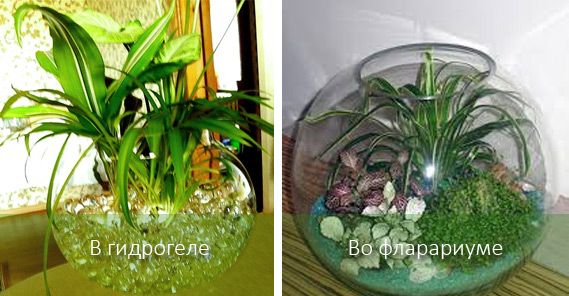
Hydrogel
The plant grows well in hydrogel if a number of requirements are met:
- For planting in hydrogel, it is best to choose a young plant; it adapts more easily to new conditions.
- Before planting, thoroughly shake off the soil from the roots and wash them.
- Rare watering is required.
- When growing in hydrogel, it is better to place the plant in darker places.
- To prevent unpleasant odors, the hydrogel should be washed periodically.
Florarium and aquarium
You can keep the plant in a terrarium, but larger containers are preferable. It will quickly become cramped in a miniature one.
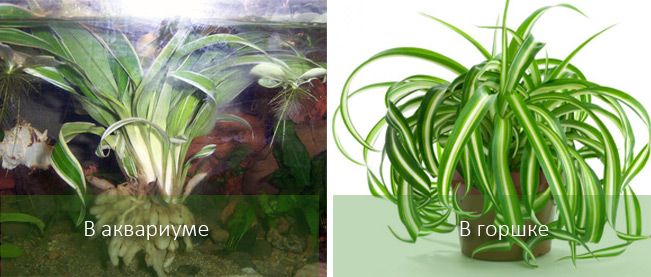
With this method of maintenance, it is necessary to regularly ventilate the terrarium, otherwise the chlorophytum may die.
It cannot be kept in an aquarium for a long time; eventually it will need to be planted in soil.
Reproduction
Method of propagation of chlorophytum: rooting of shoots, division of the bush, planting of basal shoots, seeds (some varieties).
Rooting of babies (basal and aerial)
Some varieties that don't produce runners are propagated by transplanting root shoots. To do this, the rosette is carefully separated from the mother plant and transplanted into a separate container. It takes root very quickly and doesn't require any special conditions after planting.
There are three ways to transplant air babies:
- Separate the cutting and place it in water to root. Once the roots grow, transplant it into a pot.
- You can plant it in a separate container immediately after separating it from the tendril. Cover the pot with plastic to encourage rooting.
- Without cutting off the stem, plant it in a pot. Once the plant has taken root, separate it from the mother plant.
Dividing the bush
When replanting, the root system is divided into sections with a sharp knife. The cut areas should be treated with charcoal. The rest of the process is the same as for a regular plant transplant.
Seeds
This method only uses seeds purchased from specialist stores. Here's how:
- pour water over the seeds;
- spread over the soil surface;
- moisturize it;
- cover with glass or film;
- place in a warm, bright place;
- maintain humidity;
- ventilate every day;
When 3-4 leaves are formed, transplant and replant later.
Mistakes in caring for chlorophytum, diseases and pests, methods of elimination
| External sign | Cause | Solution |
| It turns yellow | Poor soil. | Make some fertilizer. |
| Dry air. | Spray. | |
| High temperature. | Ventilate the room regularly and spray the plant. | |
| Leaf damage. | Trim. | |
| The roots are cramped in the old pot. | Transplant. | |
| Not enough moisture. | Water. | |
| Brown spots, tips turn black. | Excess water. | Change the irrigation system. |
| Loss of color and streaks. | Lack of light. | Change location. |
| Rotting of the socket. | Stagnant water. | Remove the damaged part along with the root system and replant. |
| Lethargic. | Low temperatures | Rearrange. |
| The ends are dry. | Lack of moisture. | Change the watering schedule. |
| Poor soil. | Fertilize. | |
| Web. | Mite. | Treat with insecticide. |
| Drying of leaves. | Aphid. | |
| Sticky coating. | Scale insect. |
Top.tomathouse.com recommends: Chlorophytum – a home cleaner and a favorite for cats
Chlorophytum is known for its air purifying properties. The substances produced by its leaves have been proven to kill up to 80% of bacteria in the immediate vicinity of the pot. Besides purifying, it also provides excellent humidification.
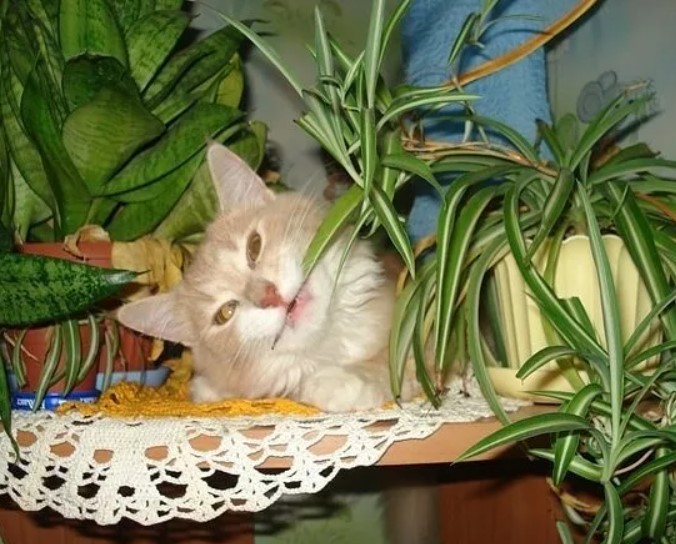
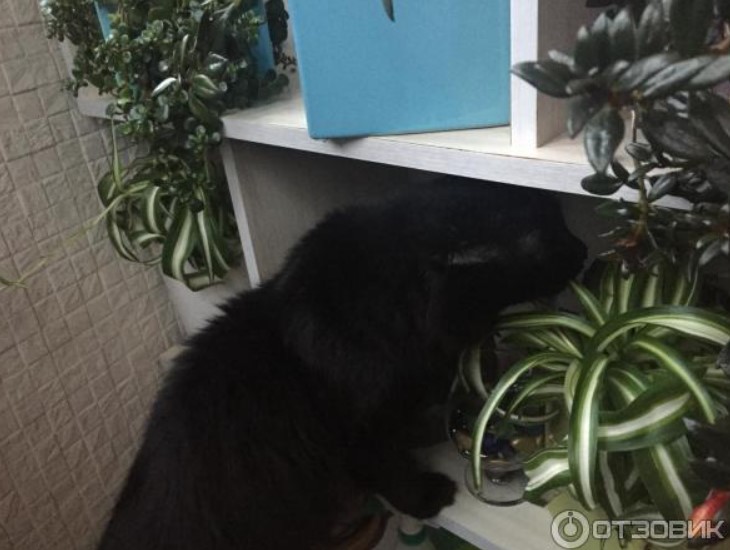
Cats love to chew on this plant, which helps them clear out their stomachs. It will become a real decoration for your home, requiring virtually no effort.
Reviews of Chlorophytum plants from gardeners
Chlorophytum: a plant with truly amazing properties... It literally works miracles!
Good day everyone!
There is probably no person who does not know Chlorophytum - a familiar inhabitant of almost every house, apartment, school, kindergarten, store, hospital, office, library, etc. For years, Chlorophytum has been used to decorate everything.
Many houseplants, such as aloe, kalanchoe, geranium, jade plant, and golden mustache, possess healing powers. But perhaps the champion in terms of beneficial effects on humans is the spider plant!
This action stems from the plant's phenomenal ability to purify the air. Like a vacuum cleaner, it clears the air of pathogenic bacteria, harmful substances, and various impurities, releasing oxygen in the process.
It's a known fact that a green air purifier absorbs carbon monoxide, acetone, ammonia, benzene, nitrogen, and formaldehyde, releasing phytoncides instead, which kill up to 80% of pathogenic microbes. And the effective radius of one adult plant, mind you, is a whopping 2 square meters!
I grow Chlorophytum comosum at home. This flower resembles a cascading fountain.
Chlorophytum
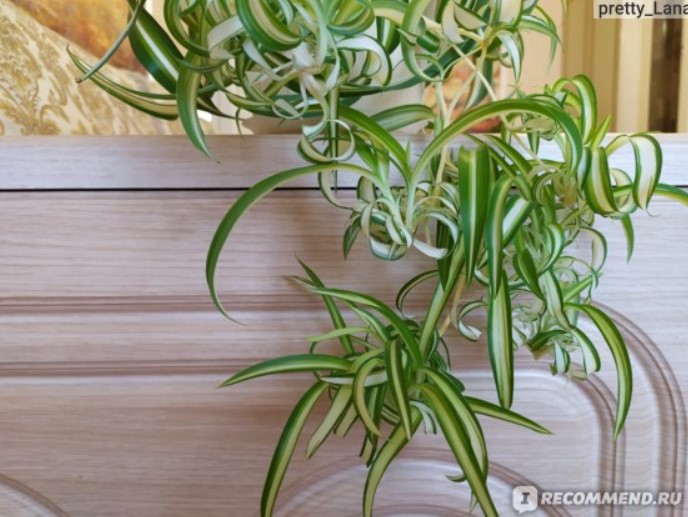
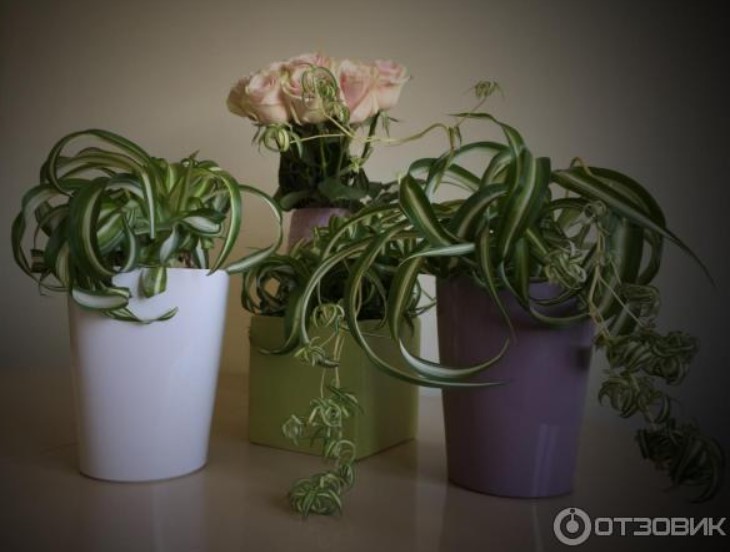
And the Chlorophytum comosum Bonnie. These curly, striped specimens decorate a room just as well as flowering plants.
Chlorophytum
I have one plant in my kitchen, where harmful microorganisms often accumulate. Scientists have discovered that spider mites are complex plants that feed on harmful chemicals. And the more of these chemicals in the air, the more luxuriant the plant becomes. Frankly, I don't believe it.))) But my plants are growing wonderfully. I think it's all about proper care and lighting.
Chlorophytum
Another plant stands in a child's room with south-facing windows. Chlorophytum is believed to be beneficial in homes for people with allergies and lung diseases, as well as in children's rooms and bedrooms.Chlorophytum is also able to neutralize nicotine, so it is also suitable for smokers.
Homeland of Chlorophytum
The plant's native land is the tropics and subtropics of Australia, southern Asia, and Africa. In the wild, the flower grows on tree bark in tropical forests. In the 19th century, Chlorophytum became known in Europe. Since then, it can be found in almost every gardener's home.
What does chlorophytum look like?
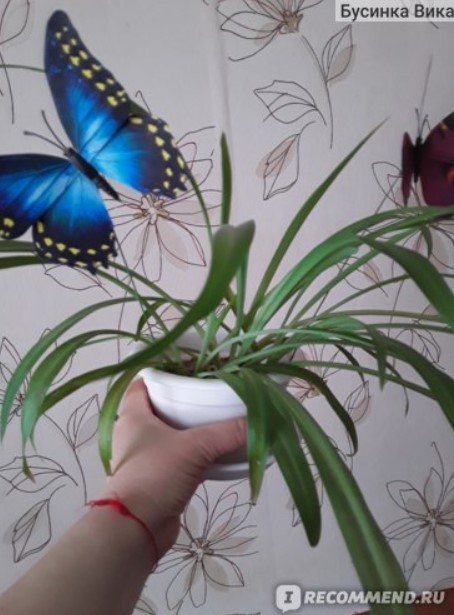
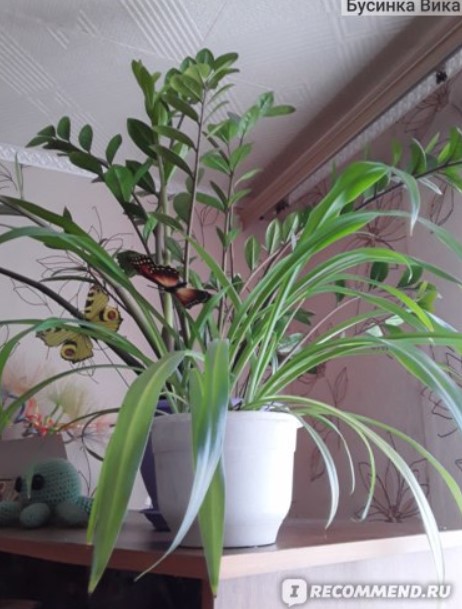
Long, lanceolate leaves hang freely downwards, and the stems are thin and curved. The plant constantly produces offsets, at the ends of which are miniature copies of the mother flower.
Chlorophytum
The flowers are small, white, and gathered in loose clusters of five or six. It's believed that the blooming of Chlorophytum is of no ornamental interest. But to me, any flower is beautiful. Blooming is a sign of a healthy, well-cared-for plant.
Chlorophytum
Chlorophytum
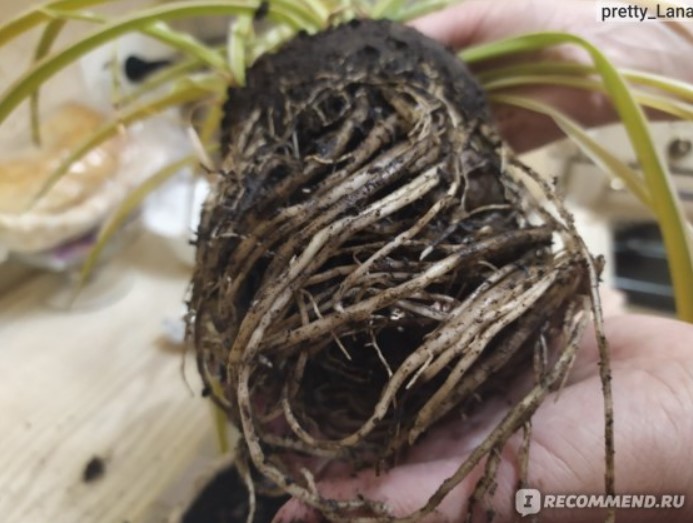
The roots are thick and fleshy, with root tubers. These accumulate moisture, a feature that helps the plant survive periods of drought.
Chlorophytum
When you take a mature plant out of its pot, you'll often see no soil at all, just roots, as if the plant has eaten all the soil. This isn't surprising, as the plant naturally grows on tree bark, meaning it practically doesn't need any soil.
Popular varietiesThe genus includes more than 200 plant species.
Chlorophytum comosum is perhaps the most well-known and cultivated species. Narrowly lanceolate, long, bright green leaves grow in clusters from a short stem. Long shoots with small white flowers emerge from the center of the rosette. A new rosette with roots emerges in the place of the faded flower.
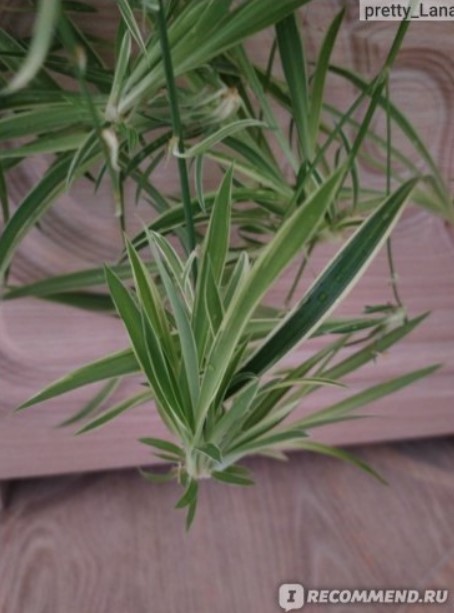
Chlorophytum Variegatum is a variety of the crested chlorophytum. The edges of its smooth leaves are decorated with white or light cream stripes.
Chlorophytum Mboetii Its slightly curved green leaves have wavy edges.
Chlorophytum wingata has glossy, broadly oval, lanceolate leaves gathered in a rosette. The petioles can range in color from pink to reddish-orange.
Chlorophytum capensis (Chlorophytum comosum) has linear, narrowly lanceolate leaves, gathered in a rosette, growing up to 60 cm long. They are light green. The flowers are small and white. Flower stalks, gathered in loose racemes, arise from the leaf axils. It is very similar to Chlorophytum comosum, but differs in that it does not form daughter rosettes on the stems.
Chlorophytum Green Orange is a variety of Chlorophytum wingata. Unlike its parent, however, it has rich dark green leaves with orange petioles. The midrib is a vibrant orange.
Chlorophytum Bonnie is a cultivar with unusual leaves. They don't droop, but curl into a wide spiral. The leaf blade is green, with a white central vein standing out against it. The plant is small in size.
Methods of propagation of chlorophytum
The easiest method of all. I choose a cutting that's grown to 6 or 7 cm. Often, such rosettes already have a root system.
Chlorophytum
Chlorophytum
I root the cutting in water. It takes root quickly. After it has taken root, I plant the young plant in a small pot. No need to build any hotbeds or greenhouses. I care for it as I would an adult plant.
Chlorophytum
You can also root the rosette directly in soil. But I always play it safe by rooting it in water first.Another method is dividing the bush, which is also easy. This produces larger chlorophytum bushes that root very easily. I use a sharp knife to divide a very large plant into two or more parts. It's important that each division has healthy roots and shoots. I plant the parts in prepared pots. Water them and place them out of direct sunlight.
In both cases, young plants take root easily and begin to grow almost immediately.
Watering Chlorophytum
This plant loves a humid environment and drinks a lot. If it doesn't get enough water, its leaves droop and turn pale, while the tips dry out and turn brown. In the summer, especially when temperatures in our area rise above 30°C, I water it every day. In winter, I reduce watering, of course. I don't water it until the top layer of water dries out. It's not at all picky about water quality; it can drink any kind, including tap water.
Like all flowers, it enjoys water treatments: misting and a light shower, which I sometimes substitute by wiping the leaves with a cloth. There's a groove in the center of the leaf where a lot of dust collects.Lighting
It's generally accepted that this plant is shade-tolerant, but in my experience, Chlorophytum thrives in adequate light. Insufficient light affects the color of the variegated Chlorophytum, making the stripes fade, almost invisible. Chlorophytums also dislike direct sunlight. The leaves become less green in the sun and lose their color. However, they don't burn and quickly recover if the plant is moved away from the sun. The plant thrives under artificial lighting. It will also grow in the shade, but it loses its decorative appearance, the color deteriorates, and there is no flowering or rooting.
Temperature
The ideal temperature for the flower is 18–30°C. Chlorophytum won't die in unfavorable temperatures, but it will definitely affect its appearance. Cold drafts or keeping it near an uninsulated window are harmful to the plant.
Transfer
Before repotting my spider plant, I reduce watering—the soil in the pot should be slightly damp, making it easy to remove from the container but not crumbling in your hands. Spider plants are fast-growing. The roots fill the entire pot, making it too crowded. This causes the spider plant to stop growing, sending out shoots, and blooming. I haven't been able to go more than two years without repotting it. The roots are coming out of the drainage holes, and the pot can even crack near the bottom due to the powerful roots.
How to transplant a chlorophytum at home
I'm looking for a suitable, spacious container for planting.
I place at least 2 cm of drainage on the bottom, on top of which I pour the prepared substrate.
I grasp the plant's crown with my hands and carefully lift it out of its old pot. To speed up the process, I don't pull vertically, but rock it left and right.
The old soil should be lightly shaken off the roots of the extracted plant.
Then I place the chlorophytum in the center of the new pot and add fresh soil, filling the remaining voids.
After planting, I water the plant generously and remove the accumulated water from the tray.
FertilizerIn summer, I fertilize every week. I alternate fertilizers.
Once Fertikoy (formerly Kemira) - pink crystalline fertilizer, one third of a teaspoon per 1.5 liters of water.
Another time with potassium permanganate, the solution should be pale pink.
I make banana peel fertilizer by soaking the banana peels in water for a week. Then I add it to my flower water.
Plants also love fertilizers based on chicken manure.
Sometimes I feed them with sugar, a teaspoon per 1.5 liters of water.
I use water from the aquarium for watering.
In general, I alternate organic fertilizers with mineral ones. The main thing is not to overdo it and burn the plant's roots.In winter I feed the plants once a month.
Diseases and pests of chlorophytum
1. If the leaves initially fade, they will turn pale green. They will then take on a light yellow hue.
There could be three reasons:The flower does not have enough light, this is especially true during the winter period with short daylight hours;
The plant has grown too large and lacks the required amount of nutrients.
Natural aging.
In the first case, place the pot near a window. In the second, the chlorophytum needs to be repotted immediately into a larger pot. In the third, this is a natural process that requires no treatment. Simply remove any dead foliage.2. The lower leaves turn yellow along their entire length, acquiring a bright yellow hue.
Reason: excessive waterlogging of the soil led to rotting of the root system.Replant the plant in fresh soil, trimming any black roots first. Maintain a regular watering schedule, avoiding stagnant water.
3. The tips of many leaves dry out.
Reason: insufficient watering, the plant being in a room with very dry air.Increase watering, avoid letting the soil dry out, and mist the plant frequently. A warm shower will also be beneficial.
This flower is rarely attacked by pests. The only insects I've had to deal with are ground flies.
Feng Shui and Chlorophytum
It's said that the chlorophytum not only replenishes the lack of clean air but also eliminates negative energy in the home. This flower is given to workaholics to encourage them to focus on aspects of life beyond work. The plant helps harmonize the lives of people who don't pay enough attention to comfort and coziness. It's also believed that with the appearance of the chlorophytum, domestic quarrels and disputes subside. IT SEEMS THAT THIS FLOWER HELPS MY FAMILY.
Chlorophytum is a fairly easy-to-grow flower that any housewife can grow. Thank you all for reading my review. I hope it will be useful and inspire you to grow your own houseplants.
You can read about my experience with vertical gardening on a balcony here.
Read about my collection of tropical beauties, Aglaonema, here.
Innovative fulvic acid-based fertilizer for plants.
Good luck and success in growing chlorophytums!
Advantages
It grows quickly
Easy to propagate
Easy to care for
Purifies indoor air
pretty_Lana
recommends
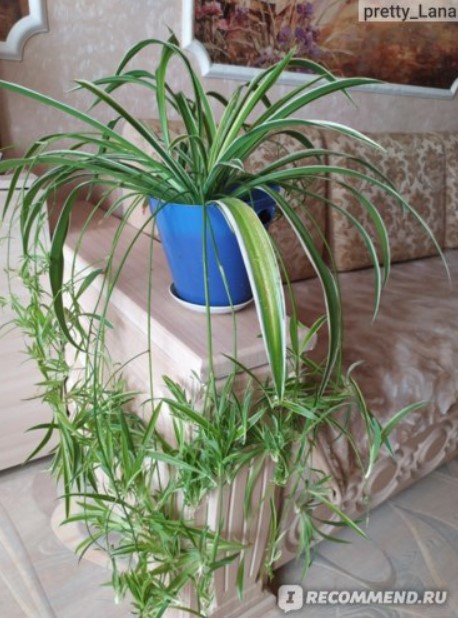
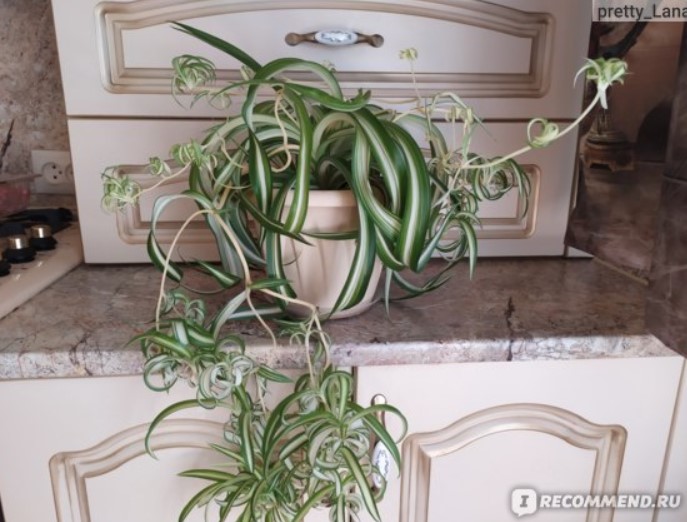
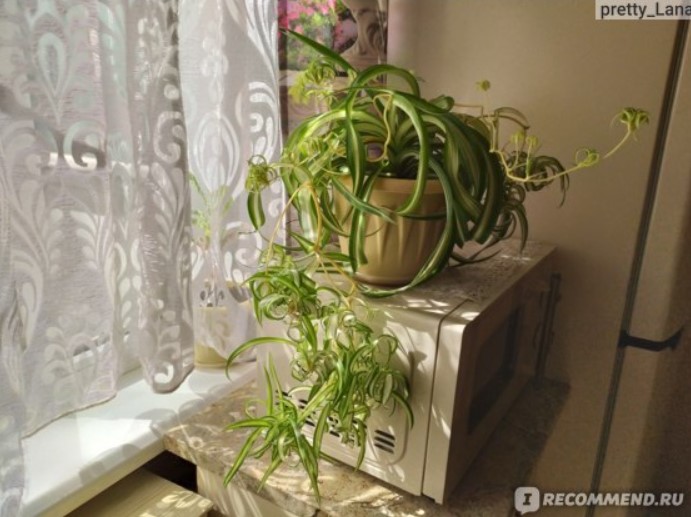
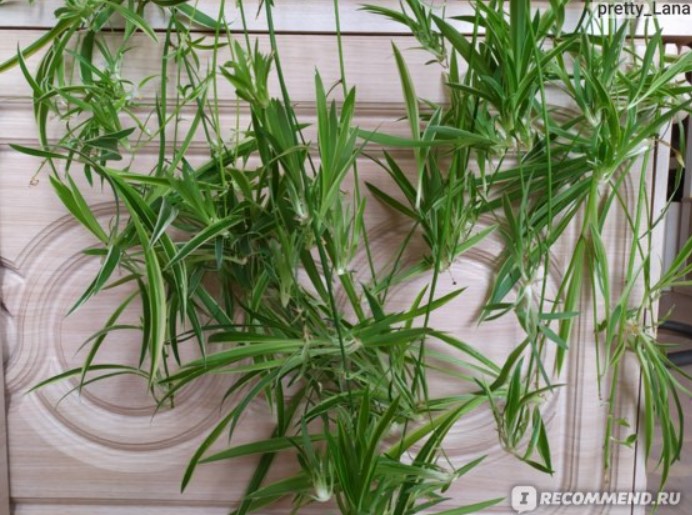
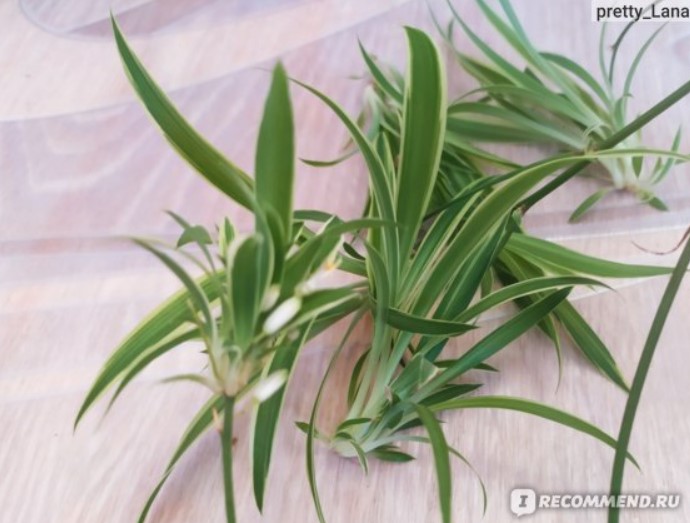
Review: Chlorophytum comosum Houseplant – Fight bacteria and viruses with natural remedies! No internal use or side effects.
ADVANTAGES:
1. Beauty in simplicity 2. Absolutely unpretentious in care! 3. Has bactericidal properties 4. Safe for pets
FLAWS:
No
What a pest, that damned villain—the coronavirus—isn't giving up! And it looks like it's not going to give up anytime soon. And we'll nip it in the bud right now... with natural remedies. Easy and simple. Cheap and cheerful. No risk to your own health, only benefits for your immune system, whose strength is inevitably weakened by uncertainty and lifestyle changes... stress is not the immune system's friend, but its insidious enemy. This hypoallergenic, versatile natural remedy is non-addictive, safe for pets, and simply downright delightful! It brings a reflexive, daily smile, just what we all desperately need right now...Ta-da, I am pleased to introduce the indoor plant Chlorophytum. Yes, yes, it is the very one, a long-known, proven fighter against bacteria, dust, and all the harmful nastiness of city life.
I'm doomed to smile:) Every day I smile widely at the flower - incredibly cheerful, resilient... a hooligan!
It'll go one way, then the other, it'll fluff up, then it'll gather itself together... yesterday it was like this, today it'll be different, and tomorrow it'll surprise me again - it'll change its "hairstyle" ten times a week:)
Believe it or not, try it yourself… I'm sure the flower smiles back at me! In the morning, I smile at the flower with a kind word, and by midday, I receive a smile in return, a tender, gentle flower.
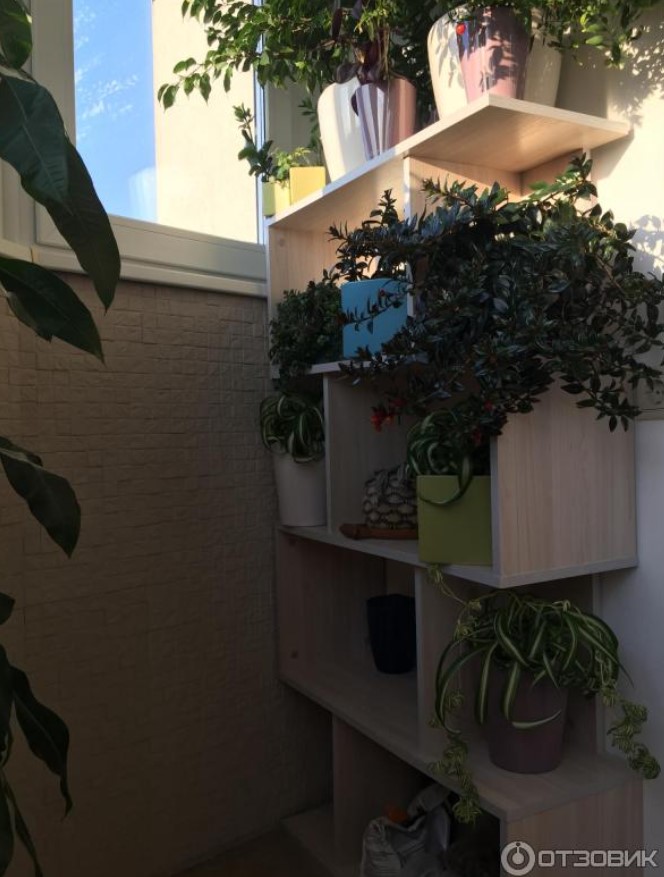
A phenomenally grateful green friend, sustained by nothing more than a kind word. They banished it to the bathroom, to a far corner, no problem, it's smiling. They sent it to the kitchen, to the refrigerator... smiling. They cut off the light, forgot to water it, planted it who knows where... not a hint of dissatisfaction with its withered stem; the flower patiently waits, grows, and... smiles! :) And when, during the spring self-isolation, I had the idea, predictable due to external circumstances, to complete my botanical garden, I immediately thought of the chlorophytum. This flower will definitely endure all hardships and deprivations, proven by experience, and the lower shelves of a shelving unit without sunlight are a piece of cake for the chlorophytum, a trifle.
Oh! I've known the chlorophytum for a thousand years! The difficult fate of Soviet assignments brought me to work in a bacteriology lab. And all the beneficial properties of this flower were tested by me in the combat conditions of a bacteriology lab. Poverty, moldy plaster peeling off the walls, a windowless room… the chlorophytum is unfazed. In my youth, eager for experiments, I once slipped the chlorophytum a Petri dish of Staphylococcus aureus. The Staphylococcus aureus died that same day, but the chlorophytum didn't even care.
And then I talked a friend into an experiment. She was an important friend, she was in charge of the sterility department. :) We dragged about ten chlorophytums from all over the hospital into our bacteria-ridden work area, left them there for a day, took samples for sterility... oops, the room was as sterile as an operating room.
More than just a decorative floral delight, the chlorophytum is a multi-tasker day and night. It can replace a humidifier, vacuum cleaner, germicidal lamp… it does everything needed for a healthy home microclimate: it saturates the air with moisture and oxygen, collects dust and toxins, and disinfects the room—three or four mature flowers will make 10 square meters practically sterile. Be careful not to overdo it! We need bacteria too :)
Another experiment, albeit a random one. :) I started planting, but miscalculated the amount of soil. One plant got an expensive, premium substrate, another got regular soil, and the third… succulent soil. And no offense!
I don't know of another green friend so unpretentious and patient; chlorophytum is a favorite among houseplants for endurance and a gift for the novice gardener.
He was adopted as a kitten recently, and quickly became... a king. A kind king, enslaving us with his kindness. A cat king, naturally, is allowed everything. Even tyranny. So what if he wants to devour flowers? No one will say a word of reproach.
I had to urgently review the composition of my houseplants to ensure they were safe for the Tsar:) Chlorophytum is the Tsar's favorite delicacy and is absolutely safe for the furry-tailed ones!
Oh, I wish I could get the coronavirus off my chest! It's exhausting to wear this crown, so many hypotheses have come up, and so far there's barely a sliver of evidence. Horror hypotheses, obvious hypotheses, and only one hypothesis really resonates with me. From Polish doctors and Danish scientists. It's been a while, and it's a shame so few people have noticed. A mild course of the disease is guaranteed with... long-term and consistent contact with pets. It's simple! Positive emotions strengthen the nervous system, and then the immune system. Constant contact with bacteria and viruses from animals trains the human immune system. So, just like that, I suggest you overcome the infection. Or at least try. It certainly won't do any harm :)
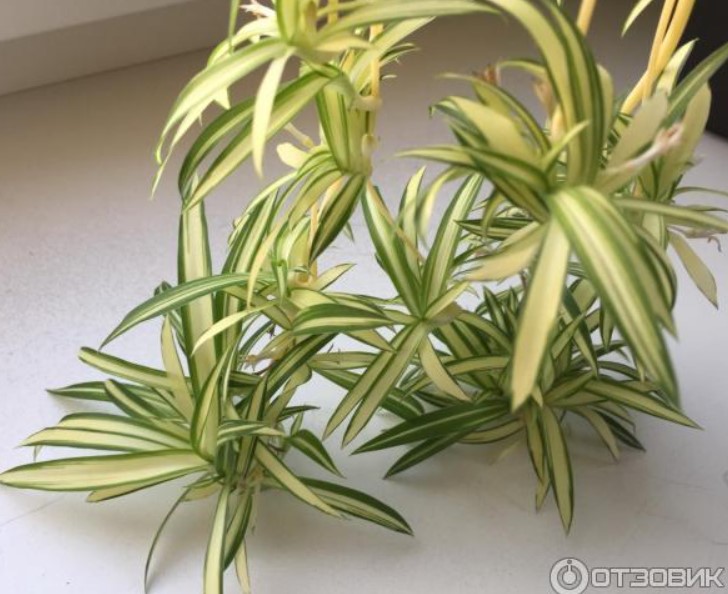
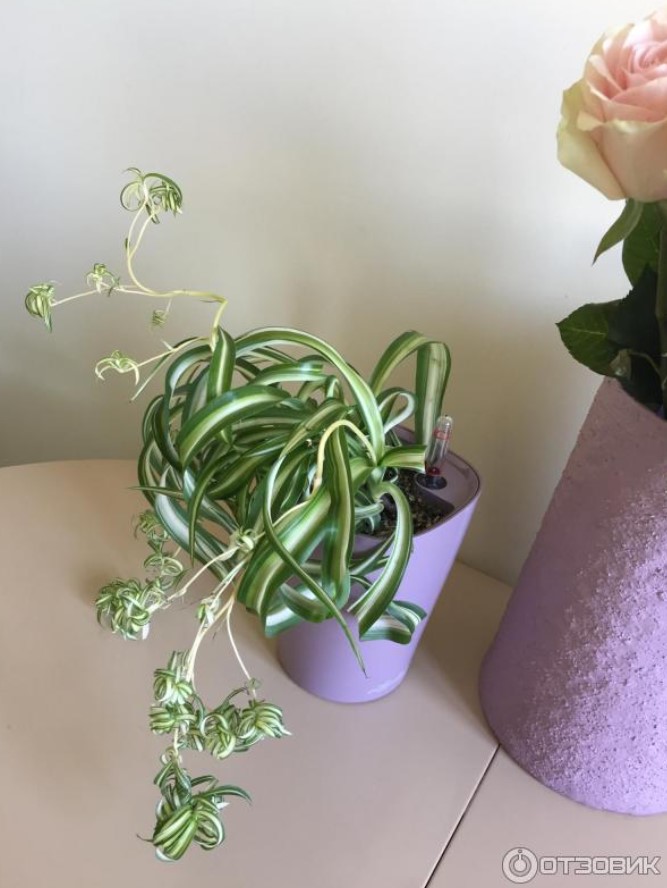
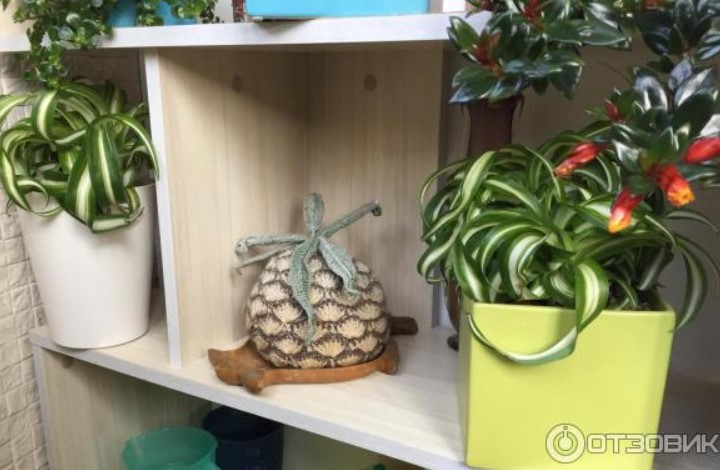
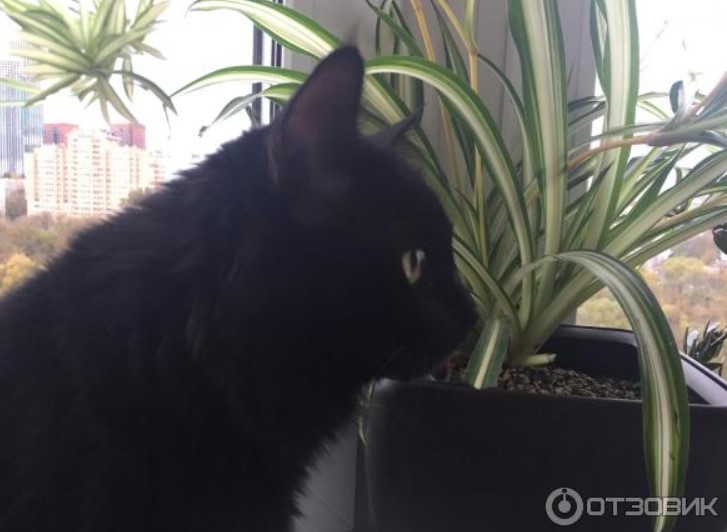
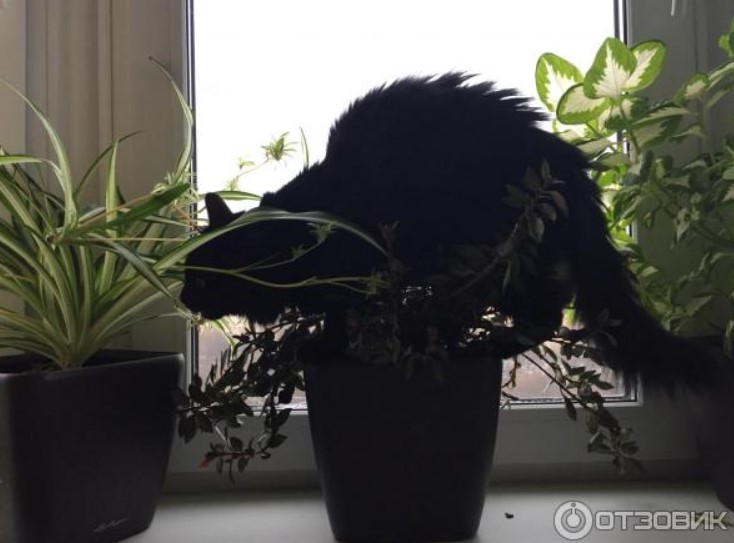
A flower that is simply essential for those who have recovered from Covid-19.
Cost: 10 rubles.
Hello.Houseplants are a staple in almost every home and apartment. Some consider them relics of the past, but most of us have at least one, even the most humble, flower. Many grow trendy exotic plants, fortunately, this isn't a problem these days; you can buy anything, it's just a matter of price.
But I believe there are some very simple and undeservedly forgotten houseplants that, with proper care, look no less impressive. And there are also some that require minimal care.
This is exactly the kind of flower that Chlorophytum is.
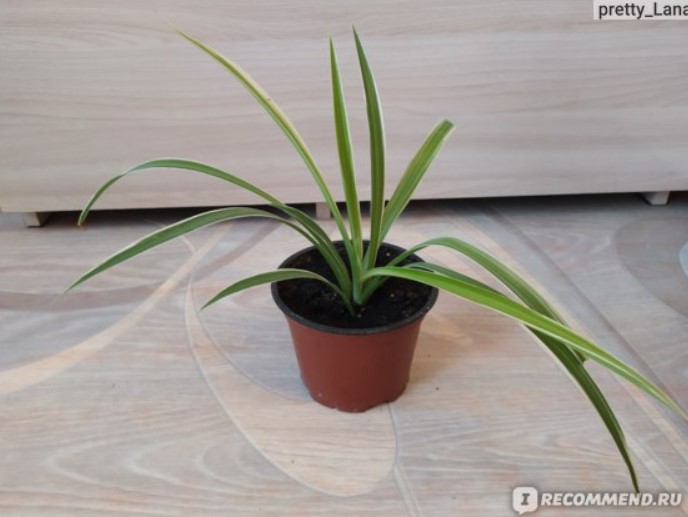
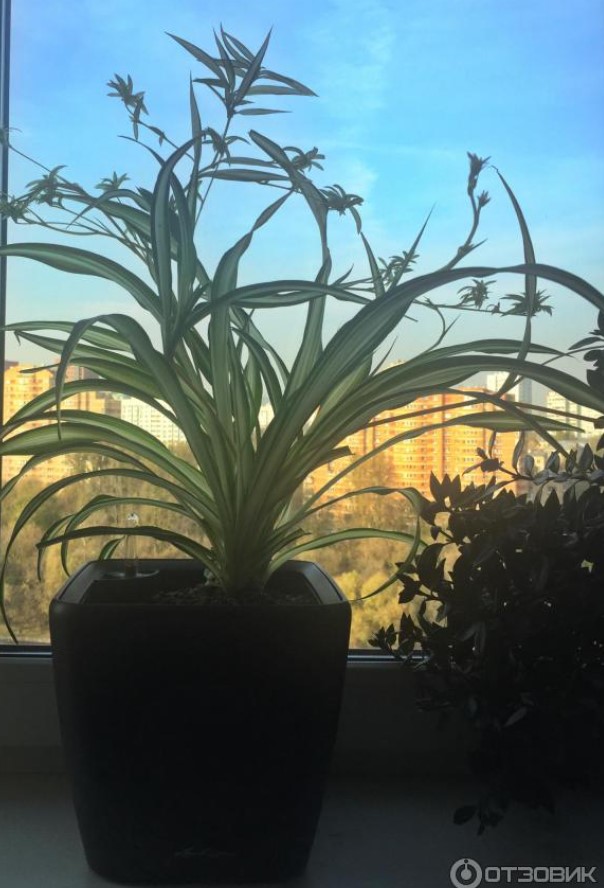
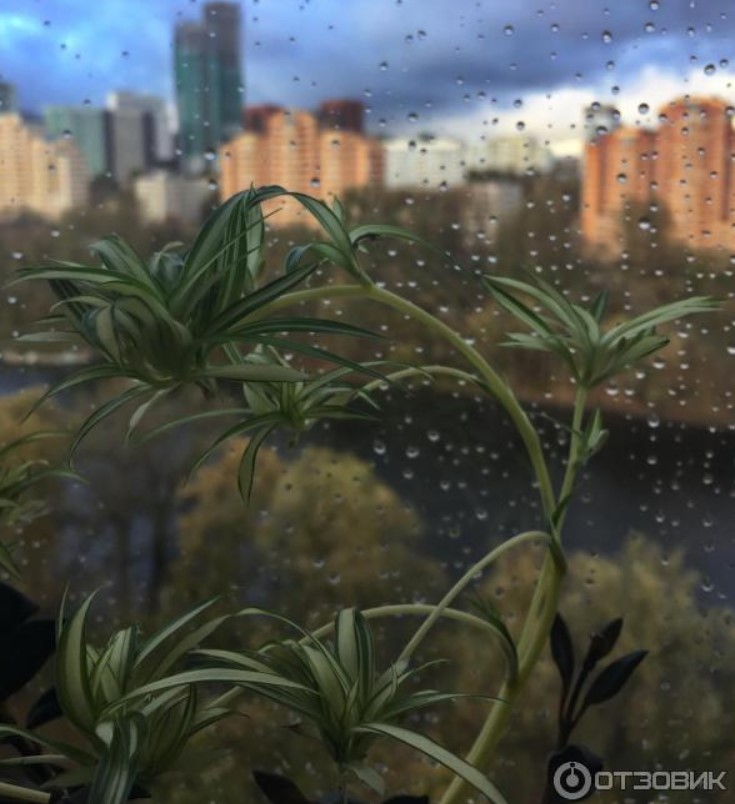
Chlorophytum is a perennial herbaceous bush with green or white-green narrow leaves, with hanging aerial tendrils with small bushes of new plants on them.
This is exactly what I want to talk about today.
Probably everyone who loves growing indoor plants has had this flower at some point.
Personally, it has been growing for me for many years.
It is so unpretentious that you can plant it in any soil (even dig it up outside under a birch tree) and it will still take root and grow, more or less.
Reasons to have a chlorophytum at home:
Perhaps the most important reason is that this plant acts as a filter, purifying the air. It absorbs carbon monoxide, toxins, allergens, acetone, and other pollutants;
Easy to care for. Grows at temperatures no lower than 16 degrees Celsius (minimum 8 to 10 degrees Celsius). In summer, it tolerates any heat;
Safe for animals;
Easy to propagate;
It's a fast-growing plant. With proper care, it can increase in size several times within a year;
Looks great in any interior.
General information:Kingdom - plants
Family: Asparagus
Genus - Chlorophytum
Chlorophytum is believed to be native to Africa, where it grows in the shade, directly on tree bark. It was brought to Europe in the 19th century.The lifespan of one plant can reach more than 10 years.
For example, this one is one year old.
Another interesting fact is that this flower is popularly known as "Family Happiness." It is believed that a home where this flower grows will be spared any misfortune and will be filled with peace and harmony.Advantages of Chrolophytum:
Useful plant
Easy to care for
Just reproduce
Clean the air
Can grow indoors where there is insufficient light
Disadvantages of Chlorophyrum:No
Appearance:Long, narrow leaves emerge from the center of the plant. The leaves are usually green, but may have a white stripe along the edge or center. What makes this plant particularly attractive are the long flower stalks with flowers gathered in racemes, which later develop into rosettes.
Care:
It is advisable to place the plant near a window, although it can grow in different conditions.
Watering is necessary 2 or 3 times a week in summer and 1 time a week in winter.
In summer, it is necessary to spray the plant daily.
In spring and summer, it is necessary to feed the chlorophytum once a month with fertilizer for indoor plants.
This plant prefers a clay soil mixture as the roots need firm soil.
But even if you don’t follow all these simple rules, the plant will still grow and develop, just not very quickly.
Reproduction:Prepare a small pot with a drainage hole and fill it with potting mix. Cut off the daughter rosette, plant it in a mound of soil, and firm the soil around the rosette. Water thoroughly.
For better survival, you can first place the rosette in water for about a week.
Diseases:
Although chlorophytum rarely gets sick, the following may occasionally occur:
🔸️leaves lose their variegated color (it’s too dark, move the plant to a bright place);
🔸️the edges of the leaves are eaten away (aphids, spray the plant with a special solution);
🔸️the plant has drooped and turned pale (needs fertilizing);
🔸️the center of the plant has rotted (the soil is too waterlogged, dry it out);
🔸️leaf tips turn brown (too dry).
Personal experience:
I really love nature in all its manifestations.
Besides houseplants, I also grow garden flowers. For example, I really love peonies (you can read about them HERE).
And I think I've always had chlorophytum.
In the summer, I place pots with these plants in baskets and hang them on the balcony, and they gain strength and look simply gorgeous.
In winter, since I have so many flowers and not enough space, they sit on the top shelves of the closet. Naturally, they don't get enough light, and they don't look so fabulous anymore.
Result:
In conclusion, I'd like to note that this plant is more relevant now than ever. It's probably no secret that, for well-known reasons, the incidence of bronchopulmonary diseases has sharply increased.
After all, several pots of chlorophytum in a room can completely purify the air of all harmful substances.
If watered more frequently, chlorophyll can even humidify the air. Therefore, it is indispensable for people with bronchial and pulmonary problems.
That's why it is essential for people who have recovered from the COVID-19 coronavirus infection.
So, feel free to get this plant and you won’t regret it.
Bye everyone.
Advantages
Natural air filter
Easy to propagate
Easy to care for
I like the look
Very unpretentious
Purifies indoor air
Suitable for rooms with insufficient lighting
Useful plant
Flaws
No
Vika the Businka
recommends