Temperature and humidity are the main factors in determining how long vegetables can be stored. At home, they can last from 2 to 7 months. Under optimal conditions, carrots and beets can be stored for up to a year without losing their nutritional or chemical value.
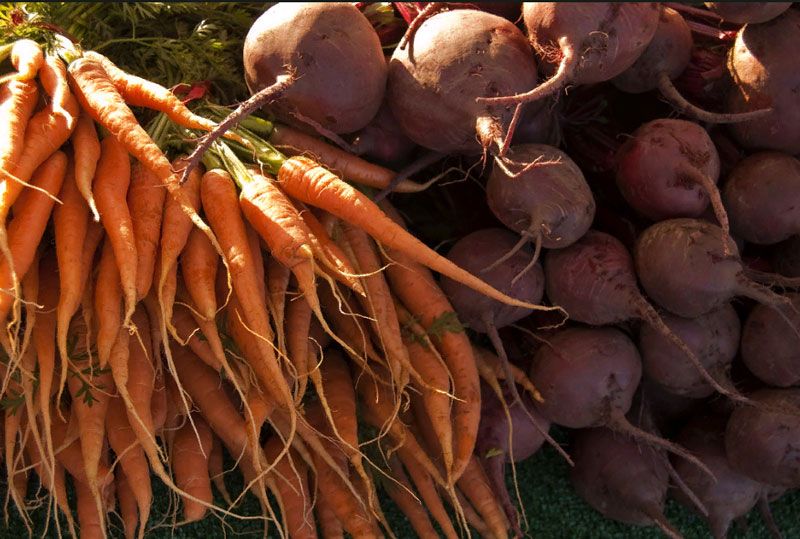
Content
General rules for storing root vegetables
Optimal conditions for long-term storage of root vegetables vary depending on the type. However, there are some general guidelines:
| Purity | Before storing vegetables, disinfect the room and containers where the root vegetables will be stored. Whitewash, coat with lime, or treat the walls of the vegetable storage area with a sulfur candle. |
| Constant temperature | In vegetable storage, eliminate temperature fluctuations by using additional thermal insulation. The optimal temperature range is 0–2°C. Any deviation in either direction will result in spoilage. |
| Preparing root vegetables | Before storing, all vegetables need to be prepared: sorted, tops cut off, dried. |
| Regular monitoring | Vegetables must be monitored throughout their entire shelf life. Any root vegetables showing signs of spoilage should be removed. Root rot from one root vegetable will spread to all nearby roots. |
Proper storage of carrots at home
Preserving carrots in winter means preserving their appearance, taste, and nutritional properties.
Carrots can be stored for quite a long time:
| In a plastic bag | From 3 to 4 months |
| In a box without filler | 7 months |
| In a box with wet sand | 9 months |
| In a box with sawdust, chalk, clay | 12 months |
This period is possible if the basic storage rules are followed:
- Late-ripening carrot varieties such as Queen of Autumn, Flaccoro, Vita Longa, and Karlena have a long shelf life. Their ripening period is 120–140 days. Some mid-season varieties also store well.
- Dig up carrots in late September – early October. By this time, they will be well-ripened and ready for winter storage.
- Before storing, dry the root vegetables in the shade, avoiding heating.
- Remove the greens immediately after digging. Otherwise, the tops will begin to draw nutrients from the carrot root. Trim with a knife 2 mm above the carrot head. Dust the cut area with chalk to protect against fungus.
- Large root vegetables with no skin defects and no signs of disease are selected for storage.
- Carrots should be stored between 0 and 2°C. If the temperature drops below this level, the root will freeze and become soft, cracked, and inedible after thawing. If the temperature rises, there is a risk of rot and mold.
- Humidity in the storage facility is maintained at close to 97%. This level helps preserve carrots' freshness for a long time.
In the cellar
There are various ways to store carrots in a pre-prepared cellar. Some are simpler, others more complex.
In a plastic bag
The easiest way to store carrots is in a bag. A polypropylene bag without a liner, available at a hardware store, works best. If you don't have one, you can use a regular plastic bag.
It is important that it is not tightly closed.
Polypropylene bags are made of interwoven fibers, making them breathable. The plastic bag will need to be pierced in several places.
In the ridge
This method involves simulating a garden bed on a shelf in the cellar. To do this, lay out a plastic sheet. A layer of sand mixed with fallen leaves and sawdust is poured onto it. Next, the carrots are laid out, leaving a small space between each root. They are then pressed slightly inward. This ensures that the roots are completely submerged in the substrate, but not touching the plastic sheet. The "bed" is covered with plastic sheeting and secured with staples or clothespins.
In an enamel bucket
An enamel bucket is used for storing carrots in a cellar with high humidity.
To do this you need:
| Prepare a container | It should be clean, roomy enough, have a lid, and be covered with enamel. |
| Prepare root vegetables | Trim the tops, dry them, clean off any dirt, and select those without cuts or other wounds. |
| Place the carrots. | Place it vertically in a bucket, cover with several layers of paper towels, close the lid, and store in the cellar. |
In a box without filler
You can store carrots in the cellar during the winter in a plastic or wooden box.
The advantage of plastic is that it's resistant to rot and fungal growth, durable, and disinfectable. After cleaning, the plastic box can be reused.
Wooden containers are environmentally friendly, don't transmit unpleasant odors to their contents, and control humidity within a limited range. However, unlike plastic containers, wooden ones are best not reused for storing vegetables.
Root vegetables are placed in a box in rows of 2 or 3 layers. In the basement, they should not be placed on the floor or close to a wall.
If you're not storing the carrots on a shelf, place an empty box on the floor, then stack the boxes of carrots on top of it, one after the other, until you have as many as will fit. Cover the top box with a lid.
In a box with filler
The following can be used as a filler for storing carrots:
- wet sand;
- sawdust;
- onion peel;
- chalk;
- salt;
- clay.
With the exception of the last option, vegetables are stored in layers: filler – root vegetables – filler. Two to three layers can be stored in a single box.
To prepare clay filler, it is necessary to saturate the clay with water for several days.
The resulting consistency should be similar to sour cream. Line the box with plastic wrap or parchment paper, place the carrots in a single layer, and cover with clay.
The solution should completely envelop the carrot. Once it hardens, add another layer on top and cover again. Carrots can be stored in this clay shell for up to a year.
In the basement
A cellar is a pit separated from residential buildings and equipped for storing food supplies.
In contrast, a basement is a floor of a residential or utility building buried more than halfway underground. It can be heated or unheated.
Long-term storage of carrots in a heated basement is impossible.
If the basement temperature doesn't drop below 0°C or rise above 2°C during freezing temperatures, carrots can be stored as they would in a cellar. Just keep in mind that sunlight may penetrate the cellar. Therefore, you'll need to double-check that the storage container is light-proof.
In the apartment
It is possible to store carrots in an apartment only in the refrigerator.
There are several ways:
| Entirely in the bottom drawer of the refrigerator | To do this, wash fresh carrots, cut off the tops, dry well, wrap in plastic or place in a vacuum bag. |
| Grated in the freezer | Peel fresh carrots, chop, place in bags and freeze. |
If your apartment has an insulated balcony, carrots can be stored there in the same way as in a cellar. However, due to temperature fluctuations and the inability to maintain the required humidity, leaving them there for long periods is not recommended.
How to store beets in winter?
The best way to store beets (otherwise known as beets) in the winter is in a cellar or in a pit.
In this case, the following conditions must be met:
- regular temperature regime from 0 to +2 °C;
- air humidity from 90 to 92%;
- natural ventilation.
The storage temperature should not drop below 0 degrees Celsius, as frozen beets will not keep. As the temperature warms, the beet tops will begin to sprout, causing the beetroot to wilt and lose some of its nutrients.
Preparing the root vegetable
Stages of root vegetable preparation:
| The first stage begins with the selection of the variety. | The most suitable for long-term storage are: Bordeaux, Cardinal, Crosby, Egyptian Flat, Mulatto, Tenderness, Smuglyanka. |
| The second stage of beet harvesting is harvesting. | Harvesting must be done promptly and correctly. Beets should be dug up before frost but after they are fully ripe. Growing seasons are indicated in the variety description. Pulling the beets out of the ground by the tops is not recommended. This method damages the skin and creates microcracks, which can lead to infection. Use a shovel or pitchfork for harvesting. Use the tool to dig under the beets and carefully pull them out by the tops. |
| The third stage is trimming the greenery and removing clods of earth. | The beet tops are cut off with a sharp knife at a height of 10 mm from the root. There's no need to wash the beets before storing them. Only large clumps of dirt should be removed by hand, without using sharp objects. A thin protective layer of soil should remain. |
| The fourth stage is drying. | Before storing, beets should be dried on the ground in clear, warm weather for several hours. If weather conditions are unfavorable, dry them in a well-ventilated area. You can also spread them out in a single layer on the floor of your home. In these conditions, the vegetables will dry for several days. |
| The fifth stage is selection. | Large, healthy root vegetables without damaged skin are suitable for storage. |
Methods for storing beets
There are different ways to store beets in winter:
| Pit/heap | At the dacha, a hole 1 meter deep is dug. The root vegetables are placed in it. They are covered with a layer of straw and sprinkled with soil. For better thermal insulation, another layer of straw and soil is added, creating a mound. In winter, additional snow is added. The beets are preserved well in a pile, but this method is inconvenient because removing the roots requires digging up and burying the vegetable storage area. |
| Cellar | Beets can be stored in a cellar in bulk, 15 cm above the floor, in boxes or bags. It's best to sprinkle them with damp sand, chalk, sawdust, salt, or wood ash. The key is maintaining the right temperature and humidity. |
| Fridge | Like carrots, beets can be stored whole in the bottom drawer of the refrigerator, wrapped in foil or parchment paper. They can also be shredded and stored in the freezer. |
Helpful tips
- It is useful to store beets with potatoes, which will give them excess moisture.
- When planting root vegetables, you can layer them with fern leaves. They release phytoncides, helping the vegetables fight fungi and rot.
- It's best to store small and large root vegetables separately. Use the former first, as the latter keep better.
- For storage in a garage or on a balcony, you can make a vegetable storage unit from a box, insulating its walls and lid with foam.
- If root vegetables are to be sprinkled with sand, it should first be disinfected at high temperatures in the oven or in the sun.