Cabbage is a valuable vegetable. Stores usually sell the Dutch variety, which has a thick leaf pattern and keeps for a long time. This cabbage is bitter, so I prefer to grow my own. I store it in the basement. The whole family enjoys it until mid-spring, when fresh cabbage appears on the shelves.
Selecting Cabbage Varieties for Best Storage
Unfortunately, not all varieties store equally well. First, a few words about shelf life:
- Early varieties quickly lose their marketable appearance, the leaves wither and turn into tasteless “rags”.
- Mid-season varieties can be stored in a cellar or refrigerator for up to 3 months.
- Mid-late varieties can be stored for more than six months.
- Late-ripening varieties are the most shelf-stable, remaining dense until mid-spring, and if planted late, even until summer.
Choose a list of varieties to suit your taste.
Stored for up to six months:
- Glory;
- Belarusian;
- Hannibal;
- Rusinovka;
- hybrid Kolobok.
Suitable for longer storage:
- Stone head;
- Blizzard;
- Extra;
- Present;
- Dobrovodskaya.
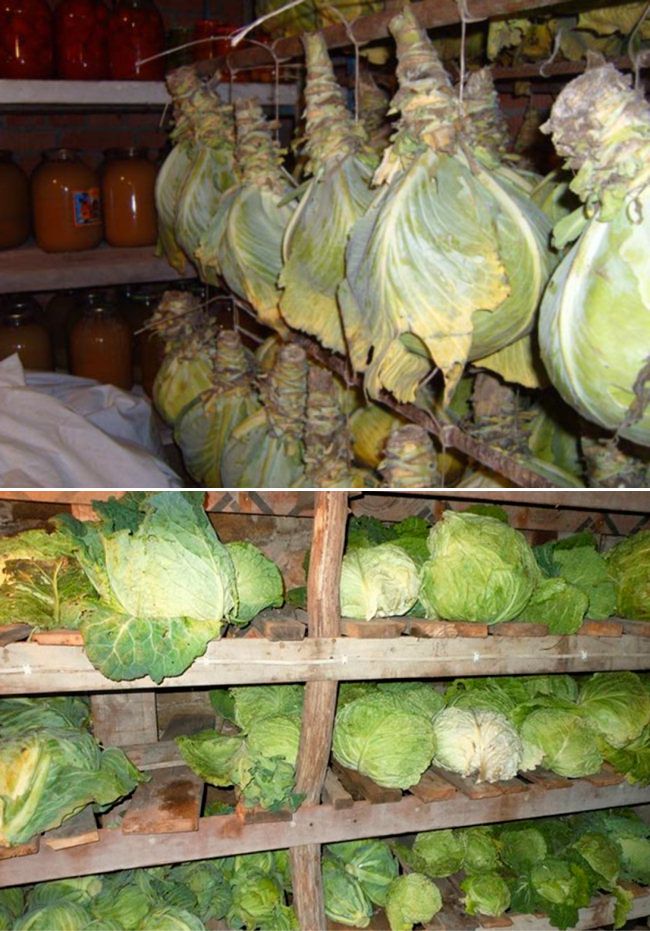
The best varieties for hanging by the root:
- Monarch;
- Sugarloaf (becomes more delicious in summer);
- Moscow late;
- Amager.
I've noticed that F1 hybrids are less susceptible to disease, but I don't like their bitterness. We prefer real white cabbage, which has a crunch to it rather than a gritty bite.
Proper harvesting
It is important to adhere to cleaning deadlines:
- When cabbage is harvested before the due date, the leaves quickly become cottony;
- Heads of cabbage that have been left on the roots for too long crack and begin to sprout.
Usually, two days before the scheduled harvest, I remove the smallest head of cabbage, root and all. I check the ripeness of the head by looking at the small roots. If they dry out and break off short, it's time to harvest the main crop.
Late varieties are best planted and harvested separately. It's convenient to plant seedlings in rows, alternating early and late varieties. By the time the autumn varieties have ripened, we can harvest the summer varieties. The cabbage now has ample space, and the soil underneath is well-ventilated.
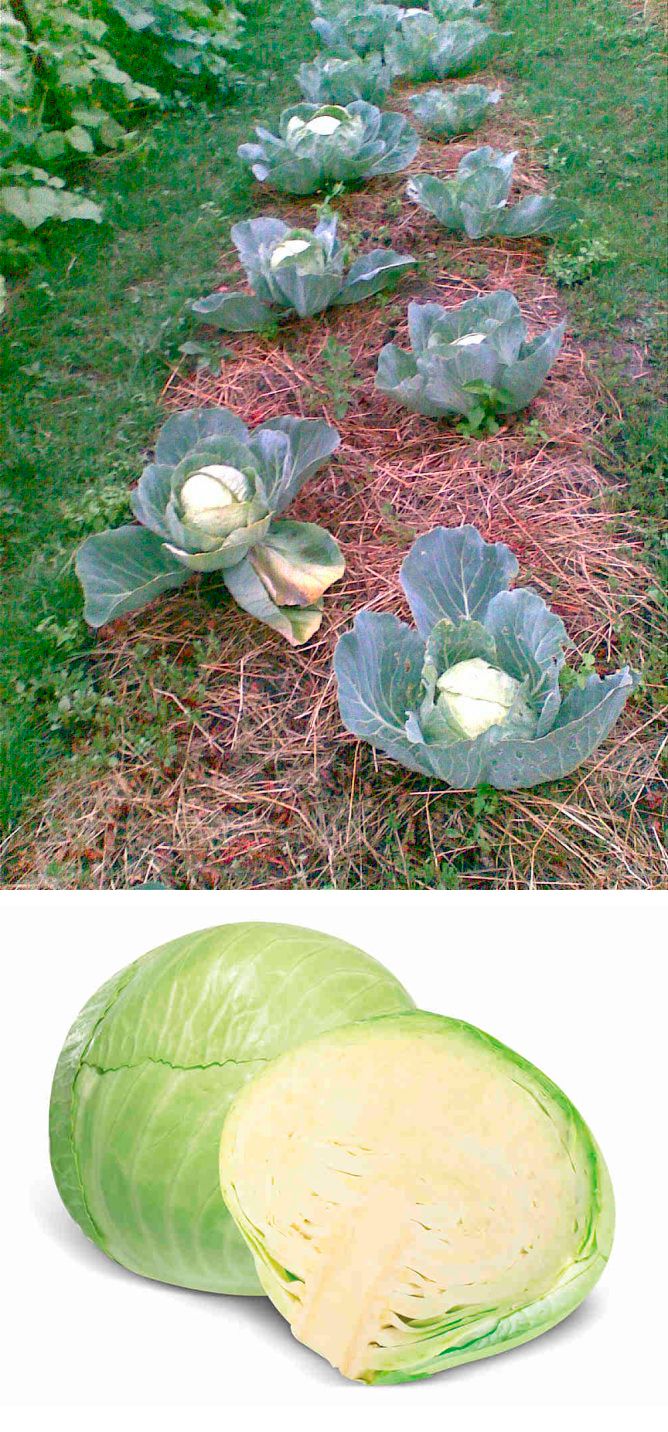
It's a myth that cabbage shouldn't be harvested in the rain. Moisture on the leaves isn't a problem; it dries quickly. The main thing is that the soil is dry. The benefits of dry soil:
- the root is pulled out more easily;
- you need to wait less for the cabbage to be ready for storage;
- When plants don't receive moisture for at least five days before harvesting, the heads of cabbage become less limp.
I put away the heads of cabbage that I'll be hanging last. I dig them up with a pitchfork, then shake them. I leave the leaves alone, even the lower burdocks. I read somewhere that this is a storage bin for cabbage in case of famine.
I chop the remaining heads of cabbage with a sharp chef's knife; it's more convenient than a hatchet. It's enough to leave 2-3 green bracts on the head of cabbage; they store better with these leaves. The standard size of a head of cabbage is no more than 3 cm. Anything longer is not necessary.
Selection of heads of cabbage for storage
I've noticed that medium-sized vegetables store best. I select even, firm heads of cabbage for storing. It's important to feel the tops, as their condition determines how long the heads will last. If they feel dented, I set them aside; they'll be used first. Large heads of cabbage without cracks keep well until New Year's. I try not to store them for long periods.
When sorting, the following are removed from the rejection list:
- under-goning - soft, crisp little heads of cabbage;
- cabbage with leaves damaged by insects (larvae may remain on the heads of cabbage, they will devour the plants until spring);
- cracked;
- frozen in the garden or during transportation (they will immediately begin to rot).
It is advisable to arrange the heads of cabbage according to size:
- It is better to store small ones on the balcony, where they can be easily laid out and covered.
- It is advisable to eat the largest ones first.
It's difficult to distinguish between mid-late and late cabbage, so we put them together and choose the heads that have started to dry out for eating.
Methods for storing cabbage
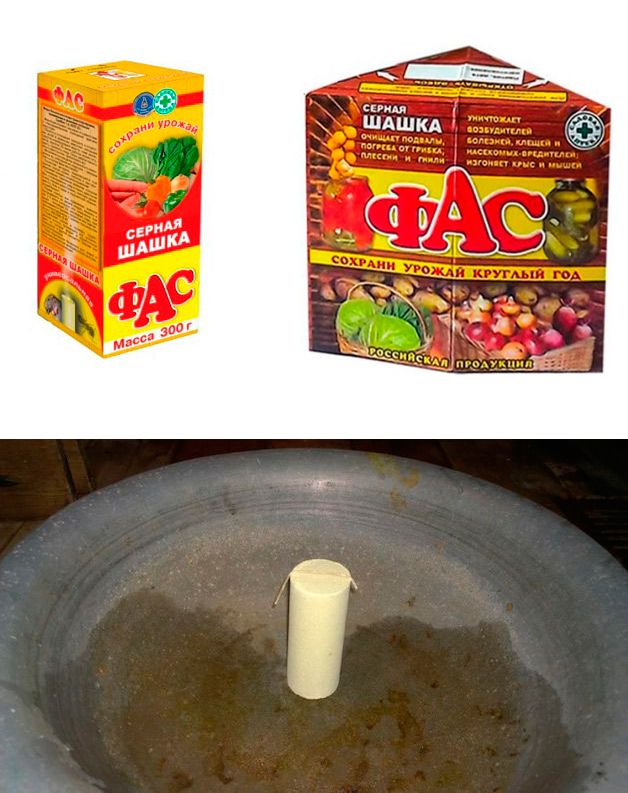
A few words about preparing the room. In the summer, we always find time to treat the basement with a sulfur candle. In August, we whitewash all the boards with a warm, thick solution of lime with copper sulfate added. The ceiling and walls need to be thoroughly dried. If you have an electric heater with a temperature controller, it's a good idea to place it in the basement for a few days. In recent years, my husband has started quartz-treating the walls before harvesting.
We store cabbage with other vegetables. We hang the heads of cabbage with their roots above the root vegetable bins. The rest of the cabbage is laid out on collapsible wooden racks.
How to store cabbage:
- The neatest forks are coated with a batter. Dilute the clay with water to the consistency of sour cream, then add 1/5 of sifted wood ash. Store the forks in this casing until summer.
- We place large cabbage on the top shelves, put old newspapers on top to protect from condensation or wrap each head of cabbage in them (change them as they become damp).
- Place the remaining forks in a more compact position to allow for more space. Wrap them securely in plastic wrap. They can be stored in the refrigerator in this form.
On the glassed-in balcony, the remaining harvest is stored comfortably in wooden boxes. We arrange them in groups of 10, with the top ones upside down and the bottom ones down. When the cold weather sets in, we cover the cabbage with an old blanket. I know some people store the heads of cabbage in sand, like carrots, sprinkled with chalk.
In large storage units, forks are stacked in groups in separate compartments. It's more convenient for us to store all our vegetables together. Cabbage sits comfortably alongside root vegetables; we don't have to go to the store for it.