Calathea crocata is a perennial evergreen plant characterized by its small stature. The photo shows the oval-shaped, curved, and ribbed leaves, which are quite large (about 30 cm) and a rich emerald hue. During flowering, the plant produces clusters of a pleasing red-orange color, hence its other name, Calathea crocata.
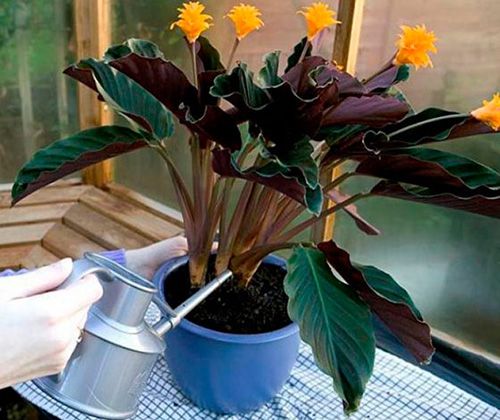
Top.tomathouse.com recommends: general care rules in the table
Caring for Calathea crocata indoors requires extensive gardening experience, as the plant is quite fussy and reacts adversely to even the slightest changes. Caring for this plant isn't easy, but with proper care, it will bring joy with rich greenery and long-lasting blooms.
| Lighting | Calathea crocata does not tolerate either too much or too little light. Partial shade is ideal. Direct sunlight can cause the leaves to dry out and become spotted. Excessive shade is also harmful to this plant. |
| Watering | Water regularly, ensuring neither excess nor dehydration. It's especially important to keep the top 2-3 cm of soil moist. Care should also be taken not to overwater the plant; during hot weather, water every 3-4 days. During colder periods, weekly watering is sufficient. Allow the water to settle; it should be at room temperature and have a soft chemical composition. |
| Humidity | Calathea's natural habitat is humid tropical forests, growing along the banks of bodies of water, so very high humidity is ideal. In addition to watering, it's important to frequently mist the plant and wipe the leaves with a damp cloth. Avoid directing the spray directly at the plant; mist the surrounding area to humidify the air. During warmer months, this should be done twice, or at least once a day. In winter, you can do this less frequently, once or twice a week. |
| Temperature | It should be kept fairly high and consistent, as the plant does not tolerate temperature fluctuations. The optimal temperature is considered to be between 20 and 25 degrees Celsius. The plant tolerates higher temperatures quite well in summer. |
Top dressing
Calathea crocata is not very demanding when it comes to fertilizers, but without them it can become ill, and its flowering will not last long.
Fertilize every two weeks during the warmer months; in winter, apply fertilizer every six weeks. Any general-purpose houseplant fertilizer will do. However, keep in mind that this plant does not tolerate excess calcium and nitrogen compounds in the soil.
Transplantation and propagation
Calathea crocata has an underdeveloped and shallow root system, so it doesn't need to be planted in a deep container. The main requirement for a pot is one wide enough to allow the rhizome to grow freely.

Young plants need to be repotted annually, usually in the spring. After 3-4 years, they are repotted as needed when the rhizome becomes crowded.
For the next repotting, choose a wider pot. Place a layer of drainage material on the bottom, and top with soil. You can use special soil for plants of the Marantaceae family or Saintpaulias.
You can make your own soil for saffron calathea by mixing 6 parts composted soil, 3 parts peat, and 2 parts river sand. If using soil for Saintpaulias, you should also add some sand. In the wild, Calathea crocata propagates by seed or vegetatively.
Ornamental plant varieties are most often propagated by root division. After dividing the root, treat the cut ends with activated charcoal to prevent rot or infection. Propagate the plant during the next repotting.
Diseases and pests
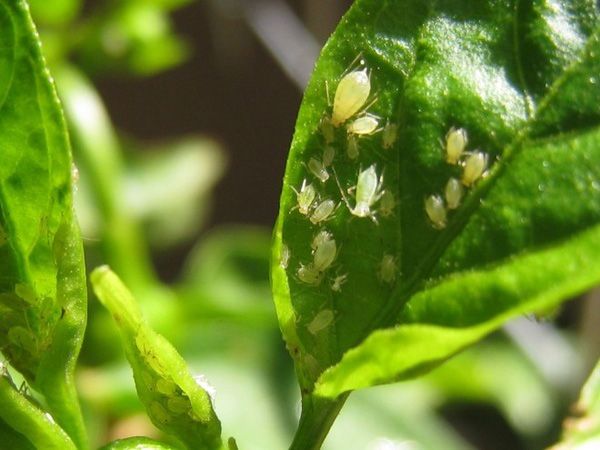
Common pests such as spider mites and scale insects can sometimes be found on the undersides of leaves and petioles. Any identified pest larvae should be removed from the leaves with a damp cloth, followed by spraying the plant with an insecticide or treating it with a soapy solution.
The following diseases can develop in saffron calathea:
- Drying and falling of leaves - can be caused by insufficiently humid air or excess calcium in the soil;
- Yellowing and rotting of leaves is usually caused by the plant being cold.
Benefits and harms
The main benefit of the saffron calathea is creating a pleasant and healthy atmosphere in the home. The plant's dense leaves filter the air, eliminating most household odors, cigarette smoke, and dust.
The plant actively absorbs carbon dioxide and releases oxygen into the surrounding space, while also promoting air humidification. The flower contains no toxic substances, so it won't harm anyone in the apartment, including children and pets.