Calathea sanderiana and other species of this plant belong to the Marantaceae family. It is a herbaceous perennial native to Central and Latin America.
Calathea has a long, creeping root that grows horizontally. The long petioles form a bush reaching 1.5 m in height and 0.6 m in width. Five to six new leaves appear each year.
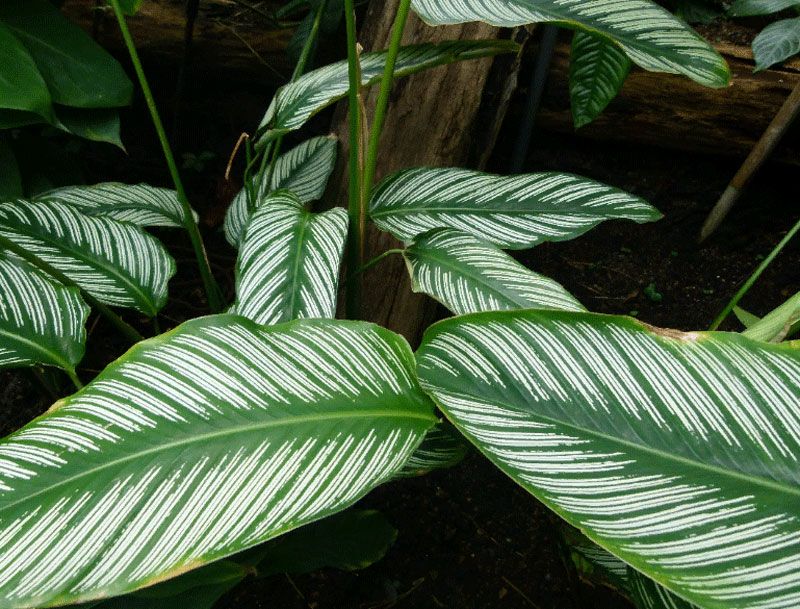
The foliage comes in a variety of colors (according to the description). The photo of the calathea shows that various patterns of dots, spots, and lines form on the leaves. Flowering begins in spring and summer.
Home care
Caring for a calathea at home requires following all the rules. Otherwise, it will die.
Landing and transplanting
Plant in a low, wide pot, as the roots are close to the surface. Repot when the rhizome grows rapidly.
Watering
Water the plant regularly to prevent the soil from drying out. Use soft, filtered water that's warmer than room temperature.
Temperature and humidity
In summer, the ideal temperature is 20-30 degrees Celsius. In winter, it's 18-23 degrees Celsius. Calathea is watered twice a day in summer and once a day in winter. The drops should be small.
Top dressing
Fertilizing is necessary every two weeks from April to August. You can buy specialized fertilizer at the store.
Reproduction
Calathea reproduces:
- seeds;
- cuttings;
- leaves.
According to reviews, all methods can be carried out at home, the main thing is to take care of the shoots.
Top.tomathouse.com warns: Diseases and parasites
Diseases and pests often attack the flower, causing it to dry out and die. Chemicals can be used to control them, but this isn't always possible.
In this case, folk remedies are used. For example, a soap solution can be helpful.