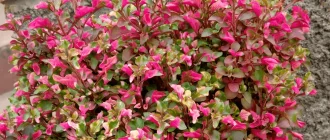
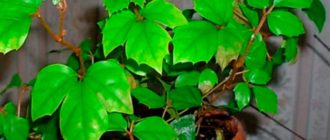
Clusia is a perennial tree and shrub of the Clusiaceae family. It grows in the tropics and subtropics of the Americas.
Content
Description
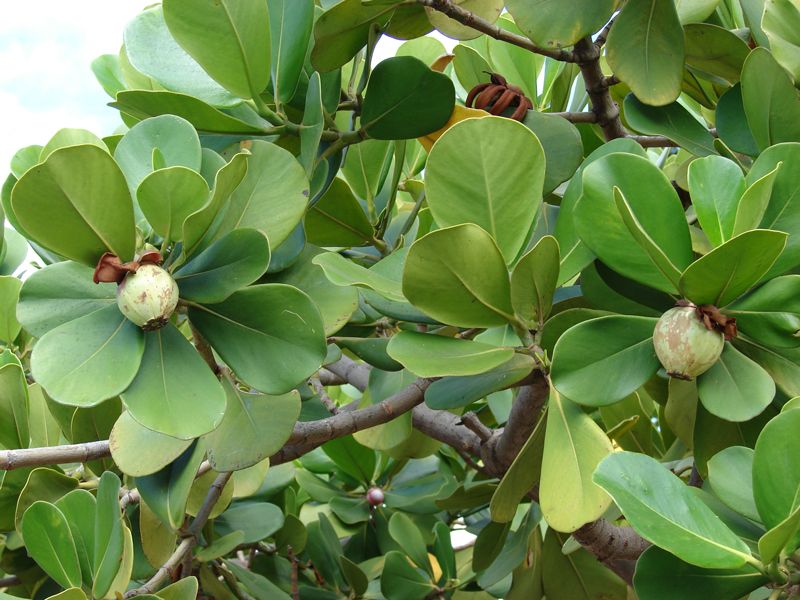
The stem is cylindrical and fleshy. The leaves are large and leathery, each pair rotated 90 degrees relative to the previous one. The flowers are 8 cm in diameter, with wide, rounded petals. Colors include white and pink.
In natural conditions, brown exotic fruits are formed, externally resembling a pomegranate.
Species for indoor growing
The Clusiaceae family has more than 150 varieties, but only a few can be grown indoors:
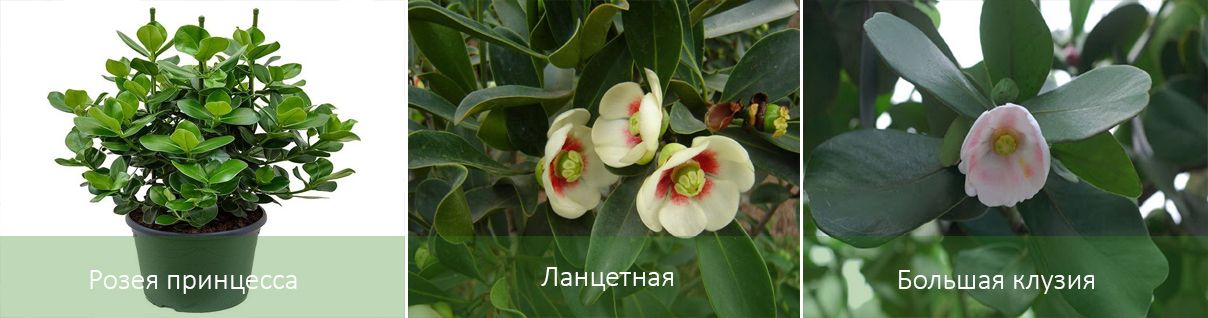
| View | Description |
| Rosea Princess | A shrub with firm, oval, and diamond-shaped foliage, short petioles, and strong shoots. It reaches 20 cm in length and width. Its color is dark green. The flowers are white and pink with a rich yellow center. The diameter of the flowers is 8 cm. |
| Lanceolate | The tree grows up to three meters tall. The foliage is 7-8 cm long. The petals are rounded, 5 cm in diameter. The center is burgundy, the edges are white. |
| Big | A bush reaching three meters in height. The foliage is oval or obovate, 8 to 18 cm long. The inflorescences are formed by 3 to 5 flowers. The color is white or cream, and the diameter is up to eight centimeters. |
Home care
When caring for Clusia at home, you should pay attention to a number of factors.
Container, soil, planting
For planting, choose light, fertile soil. A mixture of the following components is recommended:
- leafy and coniferous soil;
- sand;
- peat;
- vermiculite.
Since the plant has the form of a bush or tree, a deep and wide pot is required for its cultivation.
Location, lighting, temperature
The plant requires long, indirect daylight. It's best to place it near a window, either on the west or east side.
During the winter, additional lighting will be required. Optimal temperatures for growth are considered to be +20-+25 degrees Celsius.
Humidity, watering
It requires high humidity, so the plant needs to be sprayed occasionally or products to increase air humidity should be used.
Regardless of the season, Clusia requires moderate watering. Overwatering is not recommended, so good drainage is essential. Purified water at room temperature is recommended.
Top dressing
During the spring and fall, the plant can be fertilized every 2-3 weeks using a general-purpose fertilizer for ornamental foliage plants. It is recommended to apply half the recommended dose. Avoid fertilizing during the winter.
Pruning, replanting
In the spring season, it is recommended to prune dry branches and pinch the ends of shoots.
The plant is difficult to transplant, so it should be done as needed. The transshipment method is used.
Reproduction
Propagation occurs in spring and summer using apical cuttings. Rooting takes 3 to 4 weeks.
Problems in growing
Overwatering can cause a whitish fungal growth to form on the soil surface, which can spread to the root system. To eliminate this problem, the soil should be regularly dried and loosened.
In extremely hot weather, the plant may be attacked by spider mites, mealybugs, and scale insects. To control these pests, an insecticide is recommended.