Ctenanthe belongs to the Marantaceae family. This evergreen perennial plant is native to South America. There are 15 subspecies of this flower grown indoors.
Content
Description
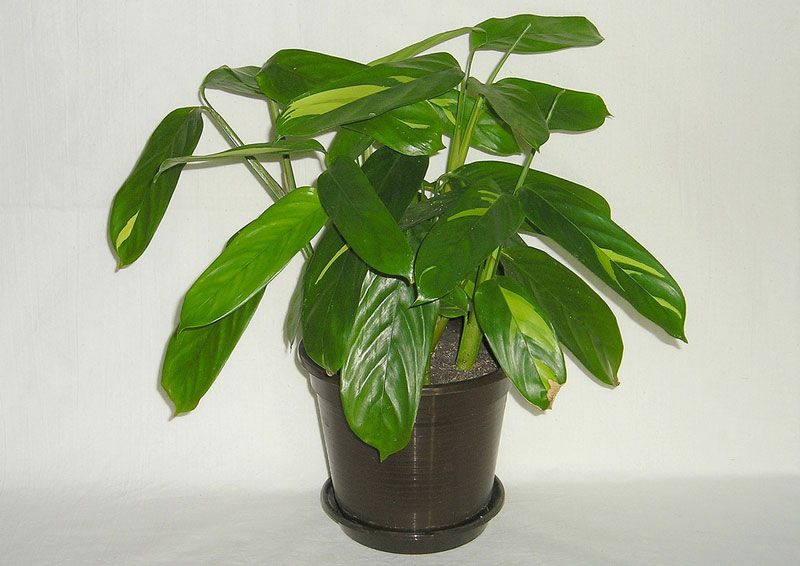
The plant is prized for the beauty of its leaves. The leaves are dark, dense, and responsive to sunlight. Depending on the variety, they can be covered with silvery, yellow, or light green stripes. The rays originate in the center of the leaf and radiate outward.
When cared for indoors, the plant reaches a height of 90 cm, while in the wild it reaches 100-150 cm. Flowering occurs rarely. The inflorescences are shaped like pale spikelets and do not attract the attention of gardeners and decorators.
Due to its similar appearance, this flower can be confused with other members of the Marantaceae family. It differs from Maranta and Stromanthe in its longer petioles and oval-shaped leaves, and from Calathea in its flower shape. However, this isn't particularly important, as their growing conditions are similar.
Types for home
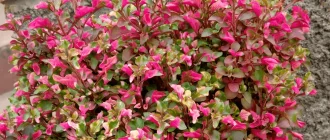
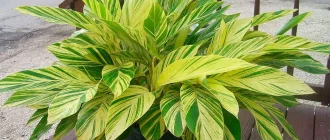
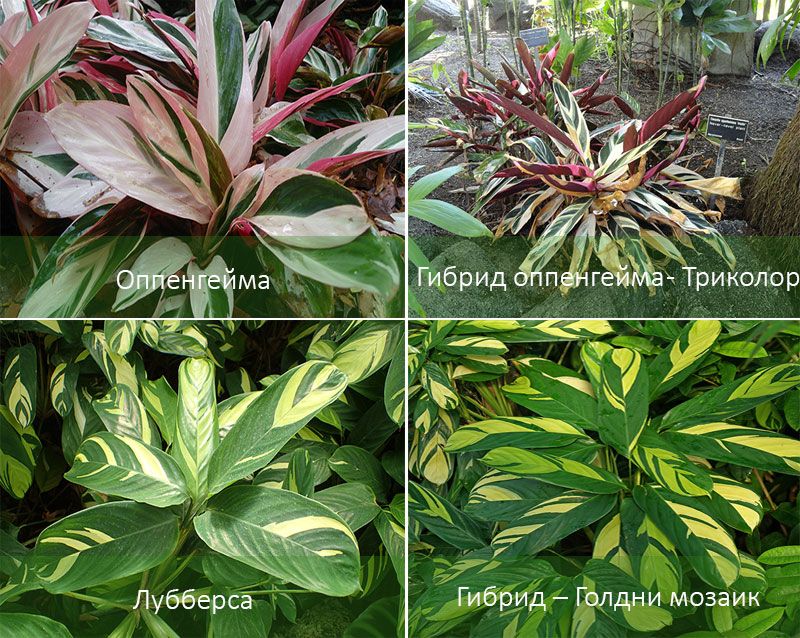
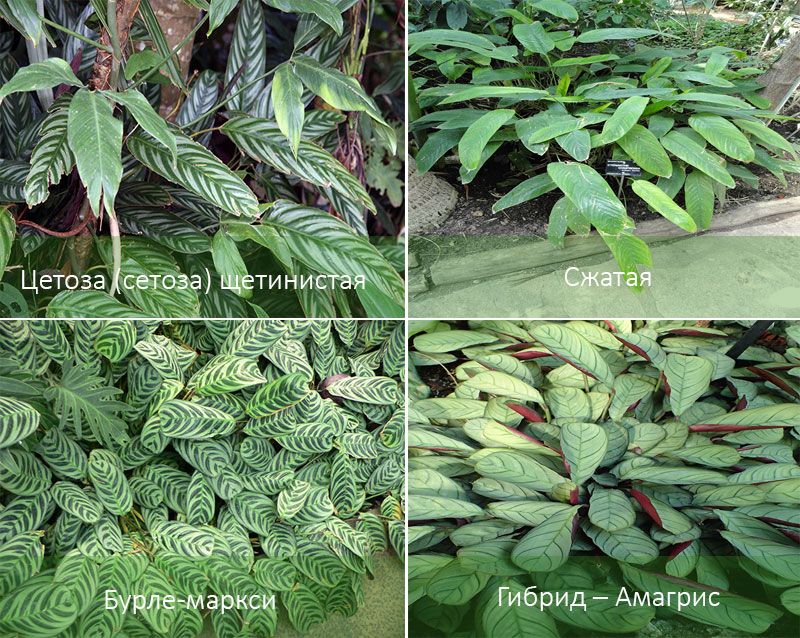
More than a dozen subspecies of ctenanta are available for purchase. The most striking varieties, as seen in the photos, are hybrids of the original cultivars.
| View | Description |
| Oppenheim | The most hardy variety. Its color is gray-green, the foliage is large and dense, and the stripes are uneven. A hybrid of this variety is Tricolor. The leaf blades have pale pink stripes. |
| Lubbers | Height up to 1.5 meters, rich emerald color. It retains its vibrant color even when grown in shaded areas. Hybrid – Goldni mosaic. It has dark foliage 20 cm long and 8 cm wide with yellow flecks. |
| Cetosa (setosa) bristly | The stem is 0.9-1 m tall, dark green with purple and silver flecks. It grows rapidly with ample watering. |
| Compressed | Large, pale green leaves with fine veins. Tolerates prolonged periods of UV and moisture deprivation. |
| Burle-Marxie (sometimes mistakenly called maxi) | The leaf blades are rectangular, thick, and strong, with a gray-green hue. The height does not exceed 40 cm. Hybrid: Amagris. The base color is silvery-gray, with light green veins. |
Caring for Ctenanthe at Home
Ctenanthe is native to the tropics, so it quickly wilts without sufficient moisture in the soil and air. Temperature control is also important, as the plant does not tolerate frost.
| Season | Temperature | Air humidity |
| Spring | +20…+22°C | 80-90%. It is necessary to spray the plant up to 2 times a day, arrange a shower. |
| Summer and autumn | +20…+26°C, do not allow overheating | 80-90%. A humidifier is essential in hot weather. If you don't have one, several large containers of water—a bucket or an aquarium—will do. |
| Winter | +18…+20°C, not lower than +15°C | 80-90%. Misting is necessary three times a week. Keep the plant away from radiators. |
Ctenanthe grows well alongside other tropical plants, such as crystal anthurium and calathea. It should be placed near a window, but with some shade.
Container, soil, planting
It's not recommended to immediately repot the plant after purchase. Allow it to acclimate for 2-4 weeks. If the plant was purchased in the fall or winter, you'll need to wait until February to repot.
Ctenanthe should be planted in wide, flattened pots, as the plant's root system is not well developed. Make your own potting mix using the following components: leaf mold, peat, and sand (2:1:1). A small amount of charcoal is recommended. Drainage is important: place a thick layer of expanded clay or broken brick at the bottom of the pot.
Watering
Constant watering is required, as soon as the top 1-2 cm of soil dries out. During winter, water every 2-3 days, and in the summer heat, water once or twice a day. Avoid allowing the soil to become too dry or too wet.
Allow the irrigation water to settle. It's best to filter it and boil it. The optimal water temperature for irrigation and spraying is 30°C. When watering, try to avoid large drops falling on the leaves.
Once a week, 1-2 drops of citric acid per 10 liters should be added to the liquid, as the plant requires slightly acidic soil.
Top dressing
In spring and summer, fertilize ctenanthe every two weeks, and from the onset of cold weather until the end of winter, every five to six weeks. Any fertilizer designed for ornamental foliage plants (prices start at 120 rubles) can be used. It should not contain excessive amounts of nitrogen and calcium, as these elements are toxic to the plant.
Transfer
The container should be changed annually if the plant is under five years old, and every three years if it's older. Repotting should be done in spring or summer.
The new pot should be 6 cm larger in diameter. Use azalea soil or the soil mixture described above as the soil. Additionally, add chopped sphagnum moss. It should make up 5% of the soil volume.
Reproduction of Ctenanta
The plant can only be propagated by cuttings or division, as flowering occurs rarely. This procedure is carried out in late spring or summer.
Cuttings
Cuttings 7 to 10 cm long should be taken from the flower. The desired stems are the apical ones, still in the process of growing. Each should have at least three leaves. Place the cut branches in water and cover with plastic wrap or a bag. After 5 to 7 days, once roots appear, transplant the cuttings.
Division
This is done when repotting an adult plant. The bush is cleared of soil and divided into several sections. The root system must not be damaged. Each section is placed in a separate container with peat and watered thoroughly. The bush must be covered with a moisture-proof bag to maintain greenhouse conditions. When new leaves appear on the plants, they can be repotted in standard soil.
Difficulties in caring for ctenanthe and how to overcome them
| Appearance | Problem | Solutions |
| Slow growth, drooping stems. | Increased air temperature. | Place the flower away from the radiator and ventilate the room regularly. |
| Fall of healthy leaves. | Draft or low humidity. | Set the humidifier to at least 80%. Remove the pot from the window. |
| Faded leaves, spots and stripes disappear. | Abundance of ultraviolet radiation. | Shade or move the pot from the south window to any other one. |
| Blackening of stems. | Rot associated with cool and high humidity. | Transplant into new soil, increase the air temperature. |
| Twisting of leaf blades. | Lack of water. | Spray and water more often. |
| Yellow-brown foliage color. | Lack of minerals in the soil. | Use fertilizer. |
Diseases and pests of ctenanta
Various pests can spread from other plants to ctenantha. This applies not only to houseplants but also to bouquets. To avoid infestation, all new plants should be separated from older ones, quarantining them for 3-4 weeks.
| Disease | How to determine | Solution |
| Aphid | These insects are light green or black in color. They attack the back of the leaves of young shoots. |
|
| Scale insect | Growths appear all over the plant. The flower turns yellow around the affected areas. |
|
| Mealybug | Spots appear that resemble flour stains. The foliage begins to turn yellow, and the affected areas dry out. |
|
| Whitefly | White flying pests that take flight when disturbed by brushing against a flower. |
|
| Spider mite | Cobwebs on stems, brown spots with a yellow halo on the back of the leaf blade. |
|
| Root rot | Development of mold in the soil, appearance of an unpleasant odor, spread of brown and black spots on the lower part of the stems. |
|
Top.tomathouse.com informs: Ctenanta is a family flower
There's a superstition that the ctenanthe brings happiness to the home and strengthens marital relationships. According to a popular belief, placing the flower in a couple's bedroom makes the marriage stronger and more lasting.
If a member of the Marantaceae family is grown in a child's room, even the most restless child will be relieved of insomnia and attention problems. The plant is also beneficial for the elderly, as it promotes health and relieves stress.