Corn cultivation is especially popular in the southern regions, which has given rise to the myth that it does not grow anywhere else, but this is far from true.
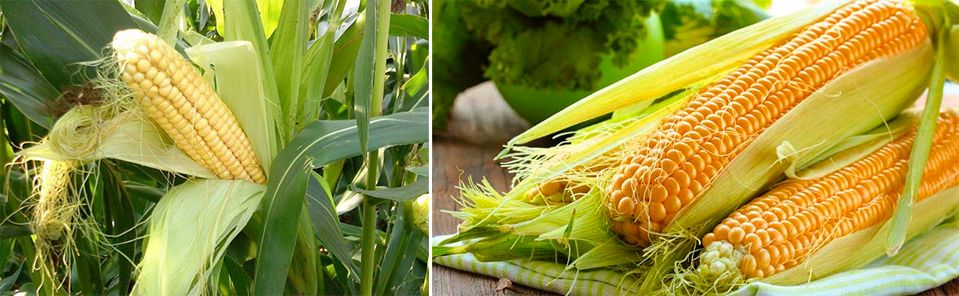
Naturally, in warmer climates it will be much easier to deal with this issue, but even in harsher climates you can grow the sugar vegetable that children love so much; the differences in care are not very big.
Content
- 1 Popular varieties of corn
- 2 Timing of sowing and planting corn seedlings in open ground for different regions
- 3 Preparing corn grains for sowing
- 4 Choosing a location for planting corn
- 5 Preparing the soil for corn
- 6 Seedling and non-seedling methods of growing corn
- 7 Features of corn care
- 8 Diseases and pests of corn
- 9 Top.tomathouse.com recommends: rules for harvesting and storing corn
Popular varieties of corn
The first step in planning a planting should be selecting suitable varieties. While a vast array of species are available, not all are suitable for a particular region. Among the extensive list, there are universal, proven options.
It is worth considering that the shorter the summer in the region where planting is planned, the earlier the varieties should be selected.
The best options for the middle zone:
- Dobrynya;
- Ice Nectar;
- Spirit;
- Jubilee;
- Sundance;
- Gourmet;
- Pioneer.
Let's take a closer look at the most common ones.
Dobrynya
Early maturing hybrid, up to 170 cm.
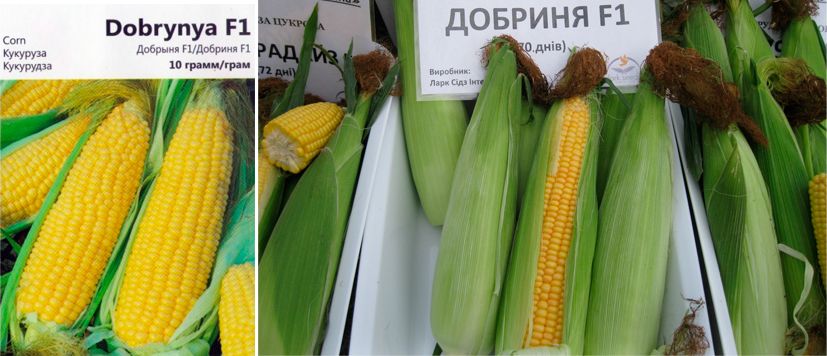
Any soil is suitable, it is highly resistant to diseases.
Lakomka 121
High yielding, very resistant to diseases.
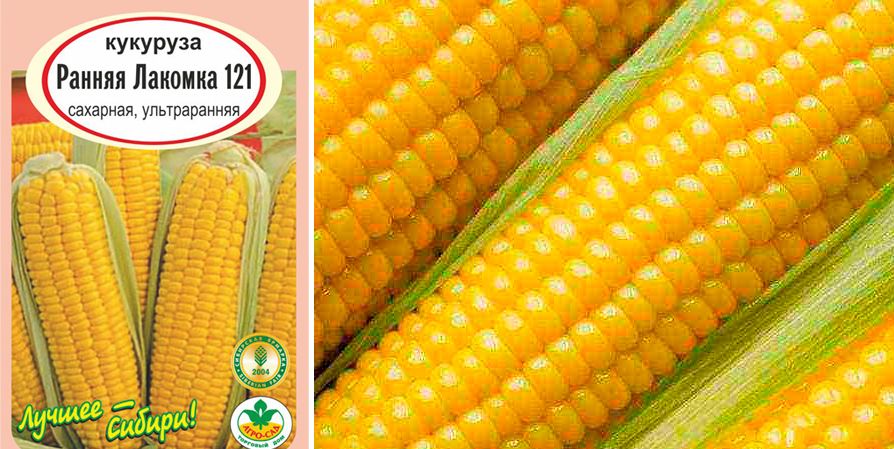
The growing season lasts up to 75 days. Height up to 150 cm.
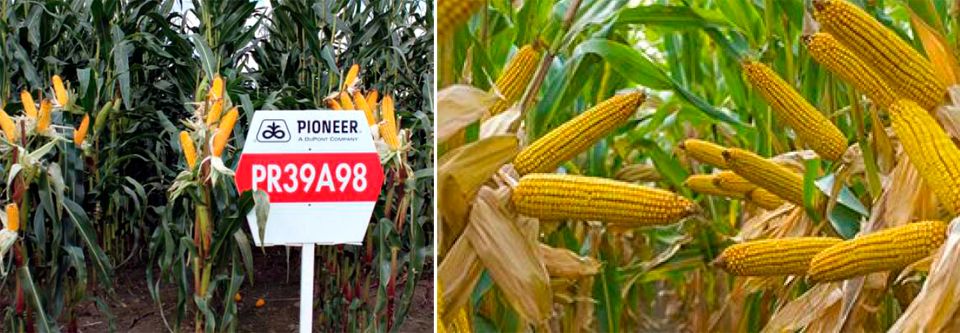
Pioneer
It has become famous for its good resistance to low temperatures and high yield, which is not affected by weather.
Timing of sowing and planting corn seedlings in open ground for different regions
As mentioned above, cultivation varies slightly across regions. The only difference is the timing of seed planting.
Let's look at the specifics of corn cultivation in different regions:
- In temperate climates, direct planting in open ground is acceptable. Planting should be done around mid-May, when the soil has warmed up well and frosts are not expected for the next three months. When choosing a variety, choose those that tolerate cold well. They can be planted even as early as early May, but in this case, you'll need to construct a special plastic cover.
- In the southern region, planting can begin as early as late April, as temperatures by this time are consistently above 10°C. There's no limit to the variety you choose; any will thrive.
- Siberia and the Urals are the most challenging regions for corn. Sowing in open ground is highly discouraged; instead, it is grown from seedlings, which can only be planted in mid-June, not earlier.
- In Ukraine, conditions are almost the same as in the southern region. In the steppe regions, planting can be done directly in the open ground in mid-April. The climate there is mild and warm. In the forest-steppe zone, planting is done in late April, and in the forest zone in mid-May. Seedlings are also a suitable option for this zone, as the climate there is harsher than in the steppe zone.
Preparing corn grains for sowing
Before planting the seeds, they must be prepared:
- First, a careful selection is made, preference should be given to the largest seeds, they should not have any damage.
- The next step is a germination test. Selected seeds are placed in a 5% salt solution for approximately 5 minutes. Some seeds will sink to the bottom; these are the most suitable.
- Next comes seed treatment. This is necessary to protect against diseases. A special solution is used for this: a powdered pesticide, hydrogen peroxide, or a weak solution of potassium permanganate. Afterwards, the seeds are disinfected by immersing them alternately in hot water (no more than 50°C), then in cold water. The process lasts no more than 20 minutes.
Choosing a location for planting corn
In general, corn can thrive in virtually any soil. However, it's important to keep in mind that it thrives in moisture. Therefore, it's best to have well-drained soil. Well-drained soil is best for growing seeds.
The area should be well warmed by the sun's rays, without drafts.
Crop rotation, predecessors and successors of corn
It is better to plant corn where root crops, cucumbers, tomatoes, cabbage, and melons previously grew.
After corn, it is good to plant dill, basil, sage, zucchini, and beets.
Preparing the soil for corn
The planting site should be prepared in the fall. The soil is dug to a depth of 30 cm, while manure, peat, and compost are added at a rate of 8 kg of fertilizer per square meter.
To improve plant resistance to drought, special micronutrients are added to the soil. They contain molybdenum and zinc.
Then, in the spring, immediately before planting, the soil should be treated with herbicides to prevent weeds from appearing. Afterward, the soil is dug again, adding potassium-based fertilizer at a rate of 20 g per square meter.
Seedling and non-seedling methods of growing corn
This crop is grown exclusively from seeds. Different methods are suitable for different regions.
Sowing for seedlings involves planting seeds in special trays with cells or in peat pots. The trays and pots are filled with sod soil and well-rotted compost.
Sowing is carried out around the beginning of May, but before this they need to be germinated in gauze or paper at a temperature not lower than room temperature.
Each peat pot holds up to four seeds, while each cell holds up to two. They are placed in the soil to a depth of no more than 3 cm, then the soil is moistened with a Fundazol solution at a rate of 4 g per 10 liters of water. After this, the pots and trays are placed in a sunny location.
Growing corn from seedlings
Seedlings tend to develop slowly. It's recommended to provide supplemental lighting when the shoots emerge. A grow light or fluorescent lamp is ideal for this purpose.
Once you need to fertilize with Polyfid (a fertilizer that is completely soluble in water and does not contain sodium or chlorine).
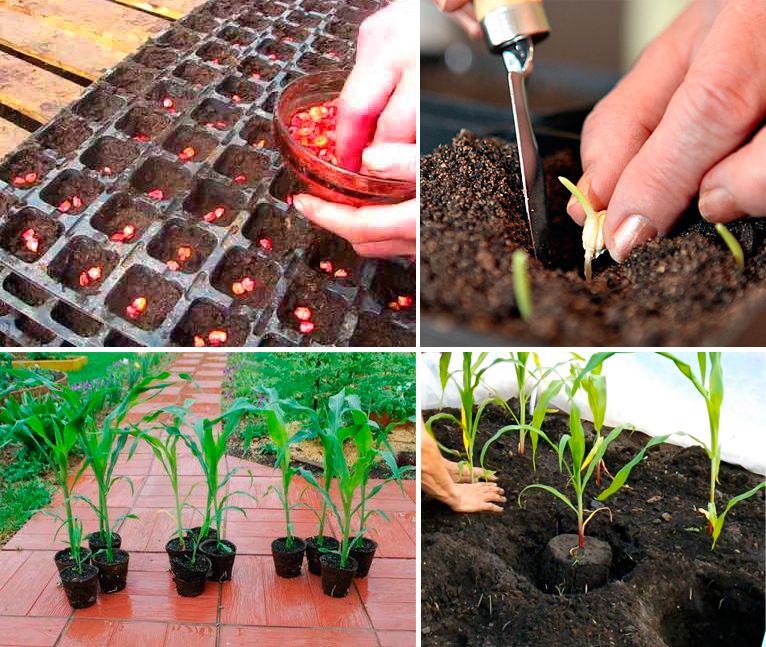
After a few leaves emerge, leave only one seedling per cell, the strongest one. In peat pots, reduce the number to two. Local acceleration is observed after leaf development.
When there's only a week left before planting outdoors, you need to begin hardening off the seedlings by moving them outdoors into the shade. Start with 10 minutes a day.
Planting corn seedlings in open ground
Planting takes place when the threat of frost has passed. This typically begins in mid-May, when the soil has already dried out and warmed up sufficiently.
It is worth considering that if the temperature drops to 0, this will lead to a complete cessation of seedling growth, and soon to their death.
Technology of sowing corn seeds directly into the soil
Seeds should be planted only in prepared soil that fully meets the requirements. It should be enriched with fertilizer and weed-free.
Next, special markings are made on the plot. These mark the future planting sites, where holes will be dug. The distance between them should be at least 70 cm, while the holes should be at least 9 cm deep. This is done to ensure that the root systems of the seedlings do not intertwine, thereby preventing each other from developing fully.
Features of corn care
Corn requires careful care, constant watering, weeding, fertilizing and processing.
Furthermore, neglecting care can damage not only the crop but also the soil, leading to its depletion. Let's examine these important aspects in more detail.
Watering
The plant thrives on moisture, but overwatering is also a bad idea. Waterlogged soil will cause the roots to die, leading to stunted growth and death. Humidity should be no more than 75%. Each plant should receive at least 1.5 liters of water.
If it is not possible to water systematically, it is necessary to regularly loosen the soil.
An easy solution to this problem is a drip irrigation system; it allows you to save water significantly, and the drops penetrate to the roots of the plants.
Top dressing
Fertilizers should be applied regularly throughout the growing season. It's best to use a general-purpose fertilizer.
However, if the soil lacks some elements, for example manganese, it is this that should be added.
Diseases and pests of corn
To prevent all kinds of diseases, it's recommended to carefully monitor the soil and conduct regular soil tests. Based on the results, apply fertilizer to stabilize the soil. Before planting, seeds must be treated according to all the rules outlined above.
The most common corn diseases are smut, fusarium wilt, and red rot. If signs of disease are detected (fouling on leaves, rot, or a strange odor), isolate the affected plant and destroy it. This is the most effective and least expensive method, and it also protects healthy plants from infection.
Top.tomathouse.com recommends: rules for harvesting and storing corn
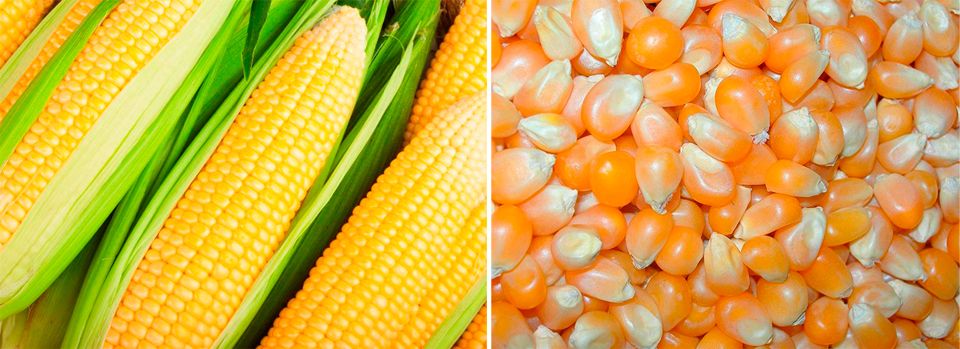
Corn maturity is divided into several stages: milky – the grains are soft, the leaves are difficult to separate, the tips of the panicles darken, biological ripening – the leaves turn yellow, the grains turn orange.
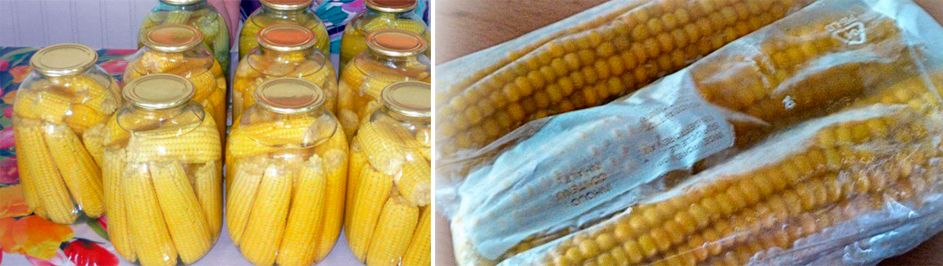
Harvesting should be done either during the milking stage or the biological stage. If fresh consumption is intended, harvesting should be done during the milking stage. For other uses, the plant's biological maturity is suitable.
Harvest the corn very carefully, breaking off the kernels at the base, and then the ones closest to the top. Store the corn in a dry, elevated location. Hanging mesh bags are recommended.