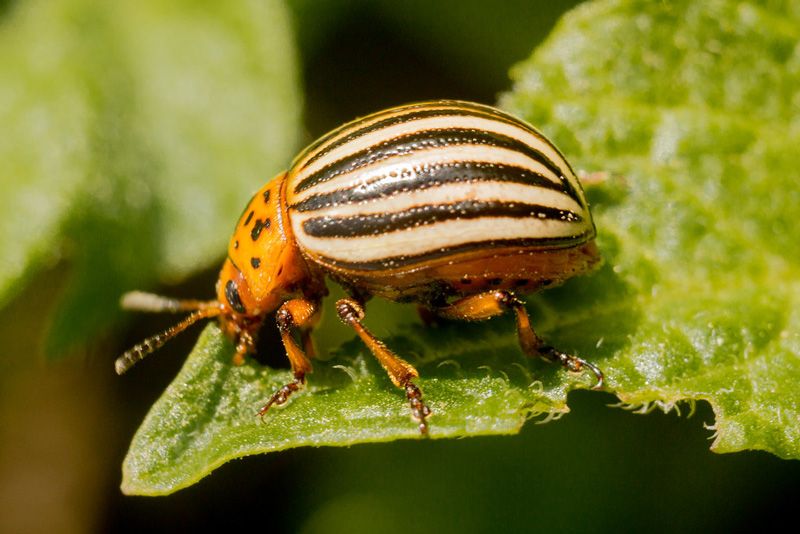
Many believe that Colorado potato beetles can only be eradicated with strong chemicals. However, this is a misconception. Once insects have established themselves in a plot, controlling them can take decades. They quickly adapt to the environment and develop immunity to various commercial pesticides. One option remains: the element of surprise. A combination of methods is necessary to eliminate the pests. In this case, traditional pest control methods, of which there are a vast number, are advisable.
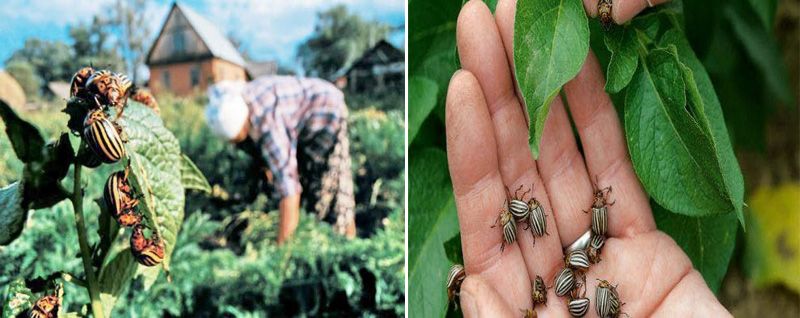
Hand-picking Colorado potato beetles
This method will work if the plot is small and you have plenty of time. To speed up the collection process and eliminate the beetles for at least a few days, consider the following recommendations:
- To prevent insects from escaping, collect them in a bucket of water with laundry soap, ammonia, baking soda, or salt added. Some people use kerosene for this purpose, but its fumes can cause poisoning.
- Avoid squashing the pest and its larvae between potato beds. They may survive and continue their life cycle.
- In warm weather, beetles are easy to collect from the tops of plants. However, don't forget to inspect the undersides as well.
- When collecting, it is always necessary to destroy the clutches so that new specimens do not hatch.
Top.tomathouse.com recommends: a device for easy collection of Colorado potato beetles
To make the task of manually collecting insect pests easier, a handy tool called a net is often used. You can make your own:
- Take a bag of granulated sugar.
- Make a cut on the side and stitch at the top (on the side from which the contents spilled out).
- Make loops along the cut, through which pull a thin (up to 4 mm) wire 2.5-3 m long.
- Bend the end and twist it to make a handle.
- Cover the bush with the trap and shake it well.
- After each row, empty the device into a bucket with soapy or salt solution.
Thanks to this device, there is no need to bend over each plant and carry a bucket.
Various methods of spraying against the Colorado potato beetle
Spraying with herbal infusions and decoctions can help. For them to be effective, follow these guidelines:
- Apply at dawn or after sunset to prevent the liquid from evaporating in the sun. If the weather is cloudy and cool (no more than 11–14°C), the potatoes can be treated during the day.
- Spraying should be done regularly, 1-2 times a week. The last time should be at least 20 days before digging up the tubers.
- Prepared infusions must be used fresh. If left unused for too long, they lose their effectiveness.
The most effective recipes:
| Main ingredients | Method of preparation |
| Garlic or wormwood |
|
| Mustard powder and table vinegar |
|
| Greens (dried) and walnut skins |
|
| Celandine |
|
| Wood ash | Dilute 200 g of powder in 10 liters of water. |

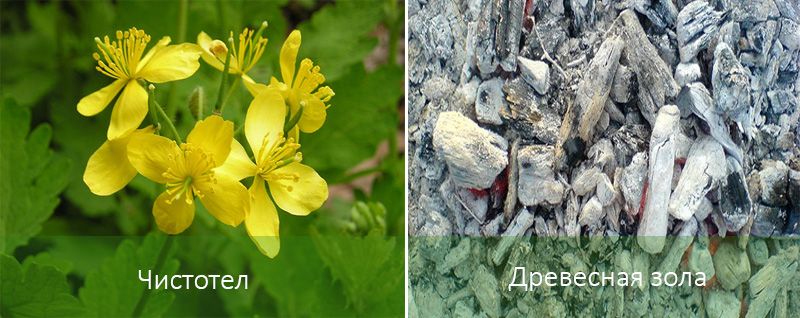
The listed products can also be poured into holes made in the ground near the plantings.
Dry methods of fighting the Colorado potato beetle
This involves pollinating the above-ground parts of the bushes and sprinkling the soil. "Dry" methods will only be effective with regular use and alternating different options:
| Methodology | Recommendations |
| Ash dusting | Any type of fertilizer will do, but sifted birch is the most effective. It's best applied at dawn or after rainfall. 10 kg is needed per 100 square meters. A single application kills many pests within a couple of days. Before flowering, the procedure should be performed once every two weeks. After flowering, once a month. |
| Corn flour processing | When it enters the stomach, it swells, killing the pests. The foliage should be kept moist during handling. |
| Dusting with cement or gypsum | Many experienced gardeners recommend this method. |
| Sprinkling with sawdust | Beetles hate the smell of fresh wood. Sprinkling pine or birch sawdust between rows will encourage pests to avoid the beds. This should be done every couple of weeks before flowering, and once a month after flowering. |

Neighbors that the "striped" one can't stand
There are some plants whose aroma Colorado potatoes can't stand. Therefore, they should be planted between potato beds to repel pests. List:
- marigolds;
- borage;
- marigold;
- cilantro;
- nasturtium;
- Matthiola bicornis (a colorful, fragrant and very low-maintenance flower);
- hemp;
- fragrant tobacco (the herb is poisonous to Colorado beetles, bushes located at a distance of 3-5 m from it will be definitely protected).
Potatoes can also be planted between rows, along the perimeter, or diagonally next to:
- Nightshade.
- Beans.
- Beans. It's recommended to plant them in beds with potatoes grown from seed. They will be small and won't shade the repellent plant.
- Onions.
- Horseradish.
They will not only repel the beetle but will also produce a harvest. The following plants, planted around the plot, will also create a barrier to visiting pests:
- tansy;
- catnip;
- White deadnettle.
Of course, this method doesn't guarantee the absence of any harmful insects. However, such a barrier will significantly reduce their population.
Birds, insects against the Colorado potato beetle
Unfortunately, not all birds and predators are natural enemies of this pest. Colorado beetles feed on potato tops, which contain solanine. They accumulate it in their bodies, becoming toxic.
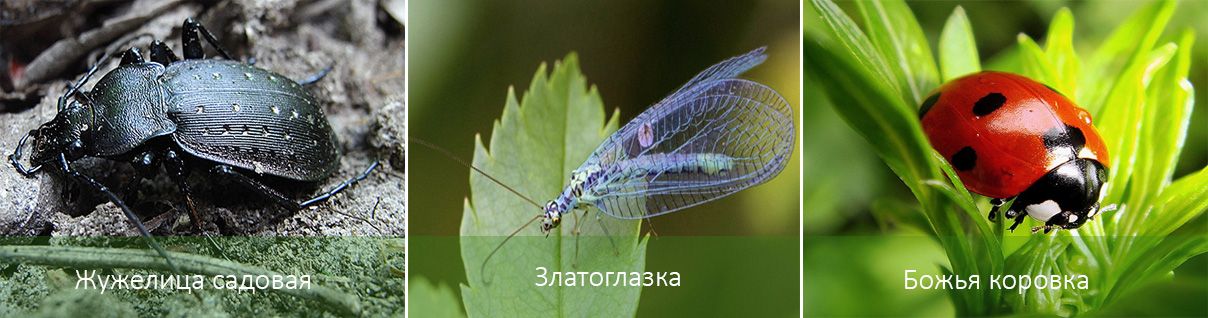
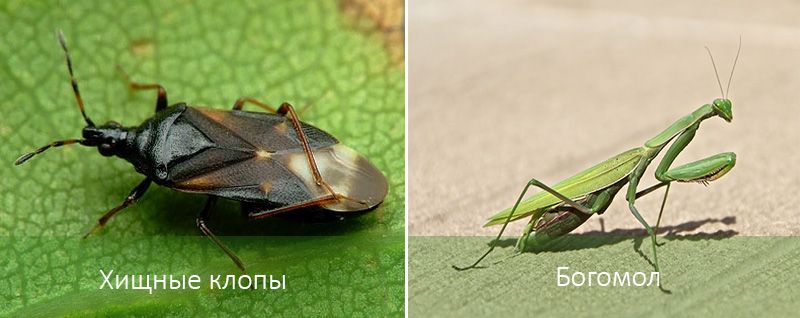
Among insects, beetles can be eaten by:
| Name | Description | How to attract |
| Garden ground beetle | This dark bronze, large (2-3 cm) beetle is an excellent companion for any gardener. It destroys not only Colorado potato beetles but also other pests. Its powerful jaws and well-developed legs allow it to scurry quickly through plants in search of food. During the day, the insect rests under rocks, fallen leaves, and tree bark, and emerges at night to hunt. |
|
| Lacewings | A light brown or green insect with long, mesh-like wings. They prefer to sit in the grass during the day and begin to destroy pests at night. In the evening, they often fly toward streetlights. |
|
| Ladybugs | Their larvae are especially dangerous to pests. They are more voracious, so if you see a nasty worm with spots on its back on your leaves, don't rush to destroy it. It will be a great help in the fight against harmful insects. |
|
| Predatory bugs | They destroy larvae, eggs, and adult Colorado beetles. When food is plentiful, they will actively consume it; when it runs out, they will leave the garden. Some species are bred specifically for release into crop plots to control pests. |
|
| Mantis | It's not often encountered in central Russia. The insect is sold in some large pet stores and can also be purchased online. It somewhat resembles a grasshopper. When lying in wait, it assumes a praying pose. | To prevent a neglected praying mantis from leaving the area, it is necessary to create comfortable living conditions for it: Peas should be planted in the area. They will be a good green manure, supplying nitrogen to the soil. The thickets of this plant are a breeding ground for predatory insects. |
Some birds, such as pheasants, starlings, and guinea fowl, also eat Colorado potato beetles. Turkeys and Faverolles can be trained to eat these harmful insects. Crushed Colorado beetles or rolled into bread balls should be added to the feed of young birds.
Striped beetles and their larvae cause many problems for gardeners. They eat not only potato tops but also tomatoes. While difficult to eradicate, it is possible. Expensive, toxic pesticides are not required. Furthermore, such pesticides are not recommended for edible crops (the plants may accumulate toxic substances).
You can get rid of the pest using traditional methods (harmless to humans and animals). For maximum results, use several of the methods presented simultaneously. If some of them help, don't give up. It's important to try other recipes, of which there are a huge number.