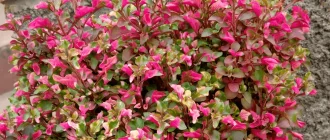
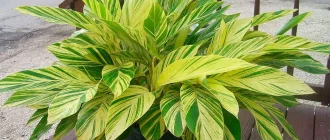
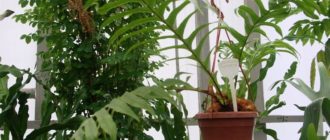
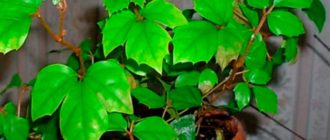
Pilea is a genus of tropical plants comprising several hundred species. Despite its exotic appearance, this perennial belongs to the well-known nettle family. In Latin, "pileus" means "felt cap." The plant received this name because the leaves of its perianth (the corolla encircling the base of the flower) resemble a hood or cap. Another name is "artillery tree" because the flowers, when opened, release a small cloud of pollen.
Its beautiful and varied appearance, as well as its ease of maintenance, make Pilea an excellent choice for the beginning gardener, and the large number of different varieties attracts collectors.
Description
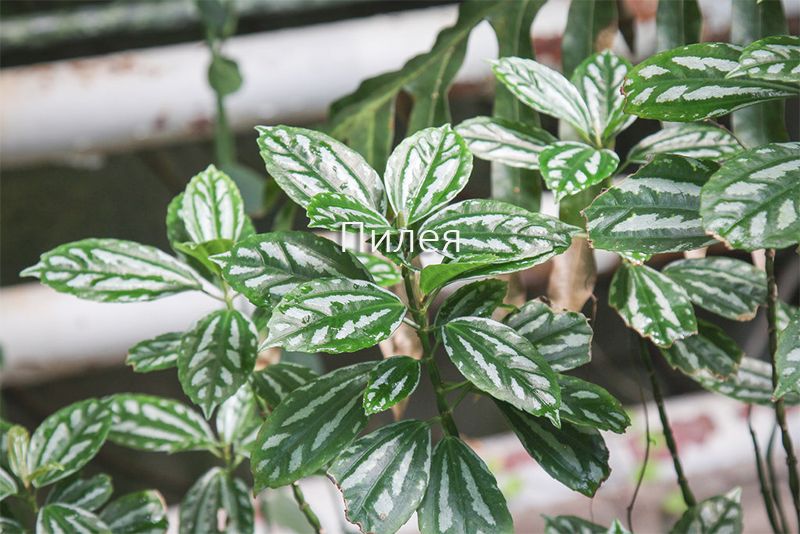
Pilea is a creeping herbaceous plant, and some varieties are subshrubs. All prefer the understory of tropical forests, typically growing in shaded or moist areas. Pilea grows to no more than forty centimeters in height. Its stems are succulent and thick, yet fragile, and its tiny flowers grow either singly or in umbels. Leaf shape can vary depending on the species.
A well-known characteristic of Pilea is the release of ripe pollen during flowering. The stamens are capable of ejecting their contents over distances of several dozen meters. Seeds are dispersed in a similar manner.
Types
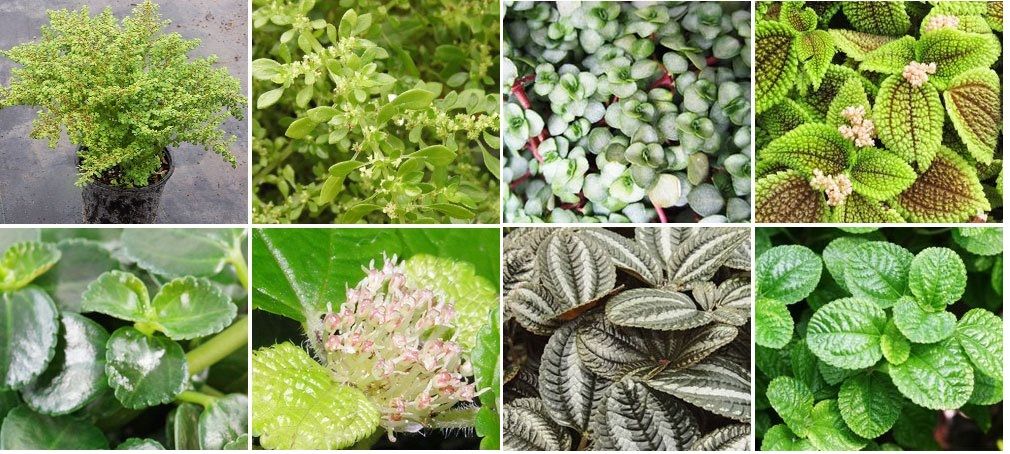
The list of Pilea species most popular for indoor cultivation is presented in the table below:
| Name, height | Stems | Leaves | Peculiarities |
| Cadiera, or pilea cadye, silver, cadya (up to forty centimeters) |
Young plants are erect; mature plants are prostrate, succulent, bare, and well-branched. With age, shoots become twining (or trailing), curving downward. | Oval in shape, with a pointed tip, 20 centimeters long and 5 centimeters wide. The leaf is bluish or bright green in color, with two light silver stripes running along the leaf. | The flowers are white. The inflorescences are raceme-shaped. |
| Coin-leaved
(up to fifty centimeters) |
Sprawling shoots. | Round, small, coin-like. Light green in color. | A large accumulation forms a mossy carpet on the soil. |
| Small-leaved
(up to fifteen centimeters) |
The shoots are branching, with dense foliage, capable of spreading along the ground and, upon contact with it, taking root. | Small (up to 5 millimeters), round or oval, glossy, bright green. | The inflorescences are corymbose, borne in the leaf axils. The flowers are small, and both bisexual and bisexual (male and female). The variegated type grows, forming a carpet of plants. |
| Wrapped
(up to thirty centimeters) |
Straight, vertical. | Oval, with a pointed tip, 7 centimeters long. The surface is tuberculate, light green, with brownish veins. | Used to produce hybrid types such as Pilea repens. |
| Wrapped, bronze grade (up to thirty centimeters) |
Oval, seven centimeters long, with a pointed tip, the surface is covered with folds and bumps, the veins are dark green, and the surface is silvery. Another type has dark green leaves with a silver stripe along the midrib. | ||
| Wrapped, variety 'Norfolk'
(up to thirty centimeters) |
The surface of the leaves is wrinkled, with fine fluffy hairs, green in color, and the veins are reddish-brown. | It is a hybrid. | |
| Spruce
(up to twenty centimeters) |
Well branched. | Round or obovate, pointed tip, sessile or short-petioled, with an uneven edge. Golden (bronze) color with silvery stripes. | Small (up to 2 mm) greenish flowers. |
| Spruce, variety 'Silver Tree'
(up to twenty centimeters) |
Oval, with a serrated edge. Golden-green in color, with a silvery stripe along the central vein and light spots along the edges. The surface is velvety, with white and reddish fur. | It is a hybrid. | |
| Peperomia-like
(up to thirty centimeters) |
The stem is straight, weakly branching, and becomes covered with bark at the base with age. | Round, glossy, bright green. The petioles are long and stiff. As the plant reaches maturity, they gradually fall off. | One of the most resistant to cold and dry air varieties. The flowers are reddish. |
| Creeping
(up to twenty-five centimeters) |
Creeping stem. | Round, with a wavy edge, 2–2.5 centimeters long. Dark green, with a coppery sheen, glossy, with a purple underside. | Hybrid type. |
| Compressed, another name for this type is depression
(up to fifteen centimeters) |
Shoots creeping along the ground. | Very small, rounded, green leaves give the bushes a decorative, curly appearance. | As the bushes grow, they form a green carpet. |
| Thick-leaved
(up to thirty centimeters) |
Sprawling shoots. | The color is reddish-green, the surface is tuberculate, bordered by a light stripe. | Small flowers collected in small inflorescences. |
| Blue-gray, also known as Lebanese or glauca
(up to thirty centimeters) |
A creeping plant, the shoots have a red tint. | Bluish-greenish, with a silvery tint. | They are kept in wall and hanging pots. |
| Pinocchio
(up to twenty centimeters) |
Flexible creeping shoots. | Small, bright green. | Hybrid variety. |
| Moon Valley
(from twenty to thirty centimeters) |
A creeping plant. | The color is green with brown veins, the surface is folded and corrugated. | It is a hybrid. |
All of the listed species and varieties are available in flower shops. The table above provides a brief description of each type, which will help you choose the most suitable variety. The price of a single Pilea plant ranges from 100 to 2,000-3,000 rubles.
Home care by season
Caring for Pilea at home is simple and requires little attention. Simply follow the lighting schedule outlined below and maintain the required temperature and humidity.
|
Season |
Autumn/Winter |
Spring/summer |
| Humidity | During the heating season, a humidifier should be installed in the room. During the rest of the year, additional humidity is not required. Watering should be done less frequently than during the warmer season. | It should be high. Avoid misting the plant, as the hairs on the leaves are sensitive to moisture. You can place a container of water or a humidifier near the plant, or place the pot in a tray filled with wet soil (expanded clay or sand), ensuring the hole in the bottom does not touch the surface of the tray. Water after the soil has dried, preferably little and often. Overwatering is dangerous: if the soil is too wet, the plant may become diseased. Pour out any water that has accumulated in the potting container promptly. |
| Temperature | +16-20 degrees Celsius. Lower temperatures (not below 10 degrees Celsius) are acceptable for short periods. Avoid drafts. | Around 25 degrees. The plant can be kept indoors or on the balcony, provided it is away from drafts and direct sunlight. |
| Illumination | It is necessary to move the pilea to a sunny place, or use additional artificial lighting. | The light should be bright but diffused. It's best to keep the plant in light partial shade. Direct sunlight should be avoided, as it can burn the foliage. An east- or west-facing window is ideal. |
Planting, replanting, pruning, propagation
Pilea needs to be repotted annually, as it grows constantly and requires a larger container. This plant has very thin, delicate roots that are easily damaged, and they spread wider than they deep. Therefore, the pot should be shallow (seven to eight centimeters) and wide, with drainage holes in the bottom. Any material is suitable, including plastic and ceramic.
To grow Pilea, use well-drained, light, and not too compact soil—the looser the soil, the better. The easiest way is to buy a ready-made potting mix. You can also make your own at home by mixing equal parts of coarse sand, peat moss, turf, and humus. Before use, this mixture should be baked (in the oven or stove) or frozen.
Place a fine drainage layer (about 2 cm thick) at the bottom of the pot, and add a few centimeters of soil on top of it. Then, carefully dig around the plant and transfer the roots to a new container, being careful not to damage them. The remaining soil is poured around the root system, forming an even layer.
It is strictly forbidden to plant the plant at a great depth, pressing it strongly to the bottom, or to compact the soil - it should not be dense.
Because Pilea grows rapidly, it needs to be pruned frequently, otherwise the crown will look unsightly, and the long shoots will shed foliage. To make the plant bushier, you can pinch off the tips of the branches. If you prune more radically, you'll be left with cuttings, which are best saved for propagation.
Pilea can be propagated in two ways:
- Cuttings – cuttings from the upper shoots with two or three leaf nodes are suitable for this. The cuttings are about ten centimeters long. They can be placed in a jar of water, planted several at a time in sand, or in small pots with soil. The new seedlings quickly take root and can then be grown like regular Pilea bushes, after being kept in a moderately cool place for a couple of weeks.
- Growing from seeds is not suitable for all varieties. Seeds are purchased from a store and planted in a thin layer of soil (no more than a centimeter thick), covered with glass or plastic wrap. Watering should be moderate, just enough to moisten the soil. The seeds should germinate within a month, then the covering material is removed and the young plants are transplanted into individual containers.
The simplest method of propagation is the first one, if only because the cuttings can be taken from shoots cut from the bush, and this does not require additional financial costs.
Top dressing
When growing a Pilea indoors, it's essential to feed it regularly; otherwise, it will grow poorly and the leaves will become small. During the warmer months, feed it every six weeks, and once a month in the fall and winter. It's best to use mineral or liquid fertilizers, which are available in stores.
Possible difficulties and how to overcome them
Although Pilea care is very simple, it's easy to make mistakes that can lead to the plant becoming ill and losing its beauty. Below is a list of the most common problems and steps to take to address them:
| What's happening to the leaves? | Cause | How to treat |
| They dry out and crumble. | The room is too hot, too cold, or the soil is too dry. | Maintain normal temperature (not higher than +25 and not lower than +10-15 degrees), water on time. |
| They become pale and flabby. | The plant is constantly exposed to light. | Shade – direct sunlight is not needed, partial shade would be ideal. |
| They turn pale, become small, and the shoots become too long. | Lack of light. | Move to a sunnier place, or add artificial lighting (optionally, a phytolamp). |
| Yellowish dry spots appear on the leaves. | Sunburn. | Protect from direct sunlight, create partial shade (for example, cover with a curtain). |
| They turn black, wither and fall from the branches. | Excess moisture in the soil. | Water only after the soil has dried out. |
| They droop, become soft and flabby. | Dried soil layer. | Water more often, depending on the temperature and humidity. |
| The lower leaves fall off, while young shoots and foliage grow regularly. | A sign of plant growth. | Trim if necessary. |
Pests, diseases, control measures
Both pests and diseases attack Pilea when it's weakened, which happens due to poor maintenance. To prevent the plant from becoming ill, it's important to properly care for it and regularly inspect the leaves for pests.
| Pests and diseases | Reasons | Symptoms | Treatment | Preventive measures |
| Rotting of the stem and root system. | Excessive soil moisture combined with low air temperatures leads to fungal infection of the roots and stems. | A drooping, flabby plant with falling leaves. The stem near the roots is abnormally soft and swollen, and the root system is rotting. | Transplantation into new soil and parallel treatment with Topaz. | Observe temperature standards and an optimal watering schedule for the plant. |
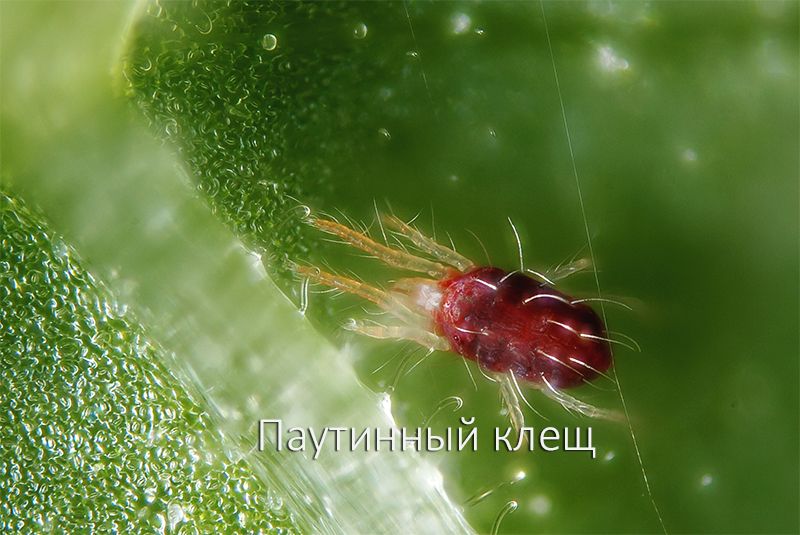
| Spider mite. | The most suitable conditions for damage to Pilea by insects are heat, dry soil and insufficient air humidity. | Wilting, flabby, and falling leaves are dotted with spots (marks of spider mite bites, through which the plant sap is sucked). Webbing can be seen on the undersides of the leaves and stems. | Use of medications such as Fufanon, Decis or Actara. | Maintain normal temperature and humidity. As an additional method of spider mite control, spray the Pilea with water, then shake off the moisture from the leaves and let them dry. |
| Mealybug | The plant weakens, stops growing, and shoots and leaves become covered with a sticky whitish substance. | Use the drug Aktara. | ||
| Thrips | Spots of dead tissue on leaves, curled, dried-out shoots, and, in severe infestations, a light-colored coating covering the foliage. All these signs indicate the presence of thrips larvae, which suck the sap from the leaves. | Apply Fitoverm at a concentration of 2 ml per 200 mg of water. After application, wrap the area in a plastic bag and let it sit for 24 hours. Another option is to use Actellic (dissolve one ampoule in a liter of water and ventilate the room—the product has a distinctive odor). | Treat with celandine tincture, remove the top layer of soil and replace it with fresh soil, set sticky traps for insects. | |
| Scale insect | Dried, twisted, deformed leaves covered with brownish-orange bumps (scale insect shells). | Two (seven days apart) treatment sessions with medicinal products such as Fitoverm or Actellic. | Wipe the leaves with a cloth soaked in soapy water to remove the shells, and check the plant again after six to seven days. |