Daffodils are among the most popular flowers in gardens. This is not surprising, as they look beautiful in flowerbeds and exude an unforgettable honey-like aroma during bloom. They are also undemanding in terms of soil, moisture, and light. They tolerate low temperatures well and are resistant to many dangerous pests. However, some growing guidelines should still be followed. This article explains when and how to plant daffodils in the fall.
Care and planting of narcissus in open ground are the same for all varieties. This perennial flower can grow in the same location for about six years without replanting.
Description
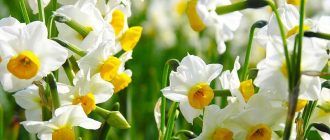
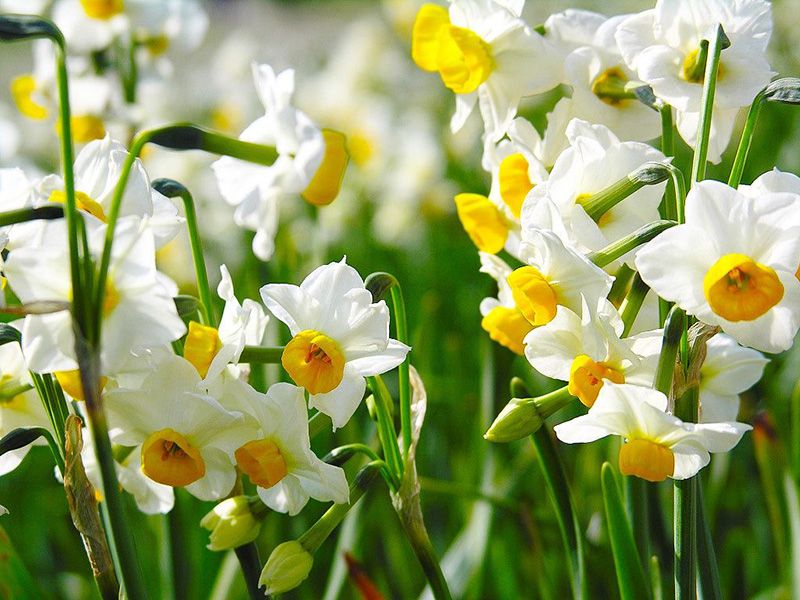
Narcissus belongs to the amaryllis family. Its flowers are mostly white and yellow, emitting a delicate honey-like scent. They grow approximately 20-45 cm long. The bloom period lasts only two weeks, from late March to late May. It requires little care and thrives in any soil. Its leaves are reliably protected from rodents due to the toxic substances they contain.
Planting in open ground
At the initial stage, planting daffodils in open ground begins with preparation, which includes several steps:
- selection of seed material;
- location;
- priming.
Selection and preparation of seed material
It's important to purchase high-quality, high-quality planting material, which can be purchased at a specialty store. In temperate climates, where autumn begins early and winter sets in quickly, this typically occurs in August and September, while in southern regions, you can purchase tubers for planting earlier.
If possible, it's best to dig up the bulbs from your own garden plot after the buds have finished blooming. It's a good idea to inspect the seed for integrity and any rotted parts right there. It should be large, at least 4-5 cm in diameter, and firm to the touch. Smaller bulbs will need to germinate for a few more days or even weeks.
Before planting, be sure to treat them with a weak fungicide or potassium permanganate solution to protect the future plant from diseases and pests. Tubers from the garden should be stored in air-permeable containers or baskets. The room should be well-ventilated and maintain a temperature of 24 degrees Celsius.
It is not recommended to purchase daffodil bulbs:
- in the spring;
- dug up immediately after flowering or with roots and stems;
- multi-apex, that is, with many small children on the tuber;
- with sprouts;
- after the ground freezes and frost sets in.
Planting dates
Daffodils are planted at roughly the same time of year. In temperate climates, the best time is considered to be late summer and early September. The temperature for planting outdoors should be around 9-10 degrees Celsius and remain at this level for about two weeks.
The tubers should take root before the soil freezes. There's some debate about spring planting; while it's possible, the daffodils will grow slowly and bloom much later. If you're choosing a time for planting, the best month is April, or at the very least, late March. You should wait until the snow has completely melted and the temperature has warmed to 7-8 degrees Celsius.
Location
The growing site should be level and well-protected from wind and drafts, with full sunlight reaching the flowers. If the garden site meets these requirements, daffodils will bloom longer. They can be planted near deciduous trees; the plant begins blooming before the leaves emerge, ensuring adequate sunlight.
Avoid planting daffodils under shrubs with dense, crowded crowns. Also, avoid planting in very wet soil, especially if it's exposed to groundwater, as the tubers will quickly rot and become infested with fungal pests. The groundwater level should be no higher than 55-60 centimeters.
Soil
The flower can easily grow in any soil, from sandy to clayey. The only important conditions for daffodil growth are adequate drainage and ample, timely watering, preventing waterlogging at the roots. The plant should not be planted in areas previously occupied by tulips, crocuses, irises, hyacinths, and other bulbous varieties, as well as phlox and chrysanthemums. Suitable areas are those previously occupied by tomatoes, cucumbers, various herbs, and cereal crops.
The soil needs to be well-fertilized. If the garden soil is sandy, add humus, and if it's clayey, add sand. It's important to avoid adding fresh manure to the soil, as it can only be mixed in a year before planting, at a rate of approximately 20 kilograms per square meter. This fertilizer won't be enough for the plant anyway, so in June, prepare the soil for planting: dig it over and loosen it, adding potassium salt or superphosphate per square meter. If you have humus, that's also ideal.
Planting technology, features
Daffodils should be planted 2-3 months after being dug out of the ground in mid-August, as the tubers do not store well. They have unprotected, delicate scales, similar to tulip bulbs. Therefore, moisture evaporates quickly, and they dry out.
The distance between holes for large tubers is 20 cm, and for baby tubers, 8 cm. The planting depth should be equal to three times the height of the large bulb, starting from the base; this is approximately 16-20 cm from the seed to the soil surface. Such planting material is called "extra" due to its size; it is usually planted for flowering. If the tuber is small or a baby tuber, the height is 8-15 cm; such bulbs are suitable for propagating daffodils, especially if it is a valuable variety.
The material is always planted bottom down. If, by accident or ignorance, you planted an inverted bulb, it will still sprout, but it will spend a lot of strength and energy and, most likely, will be more susceptible to diseases than other seedlings and will definitely grow and bloom more slowly.
Planting occurs in late summer and early September. If the weather is dry and hot during this period, be sure to water the plant generously; it thrives in moist soil. In cold weather, be sure to cover it with leaves, compost, or peat.
If daffodils are being planted for early germination and abundant blooms, they are planted at a slightly shallower depth than usual. However, for a later germination and slower growth of the bulblets, they are planted at a greater depth, with a generous amount of drainage at the bottom of the hole.
Top.tomathouse.com recommends: Narcissus - a rodent protector
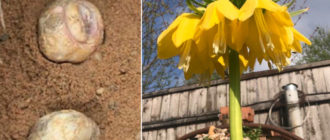
Narcissus is one of the few plants that mice and other rodents don't eat due to the toxic substances found in its tubers and leaves. Therefore, most gardeners plant them as a barrier when planting other flowers, such as tulips, lilies, and fritillaries.