Pasque flower is a perennial herbaceous evergreen plant grown worldwide for ornamental and medicinal purposes. Once planted, its beauty will last for years to come, provided it receives optimal care and maintenance. This flower will begin to delight with spring colors as early as March or April. Moreover, its decorative qualities extend beyond the blossoms, to the uniquely shaped fruits that form in their place.
Content
- 1 Description of the lumbago
- 2 Characteristics of the shot
- 3 Types and varieties of pasqueflower (2 tables)
- 4 Growing pasqueflower from seeds
- 5 Caring for pasque flowers in open ground
- 6 Methods of propagation of pasqueflower
- 7 Pests and diseases of pasqueflower
- 8 Pulsatilla in landscape design
- 9 Tips for growing pasqueflower
Description of the lumbago
Pulsatilla was once considered a genus belonging to the Ranunculaceae family. However, according to recent data, it belongs to the genus Anemone, and its scientific name is Anemone sect. Pulsatilla. Most sources indicate that there are 30 species. In the wild, they primarily grow in the mountainous regions of Europe and Asia. All are perennial herbaceous plants.
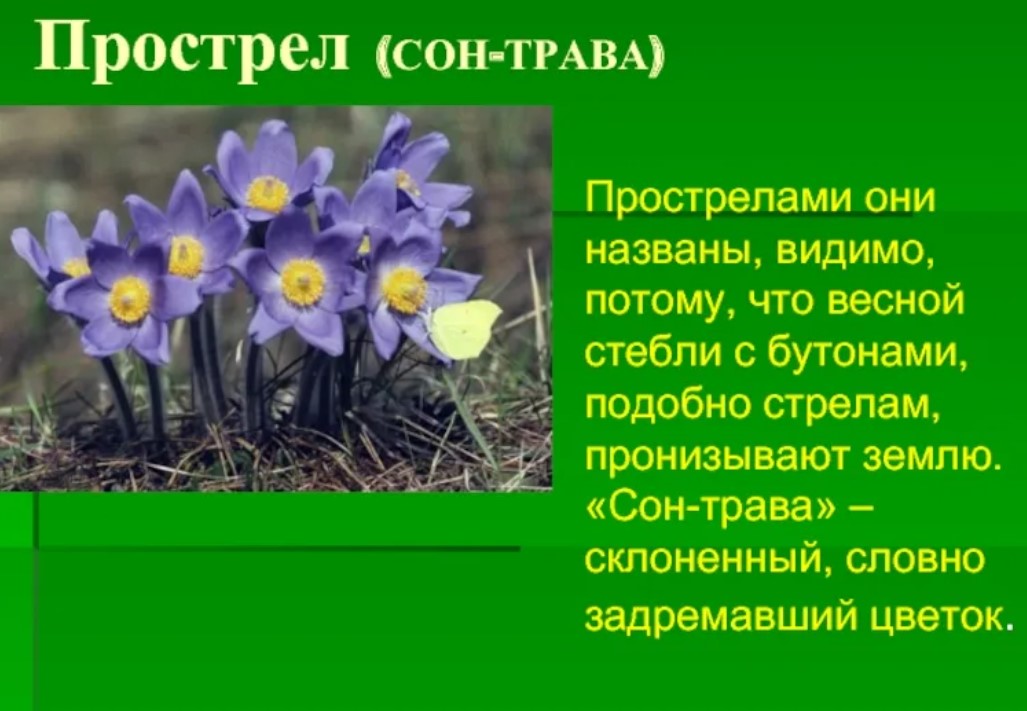
For reference! People call pasqueflower “sleep-grass” and “urguy”.
The plant's name comes from the Latin word "pulsare," meaning "to strike" or "to ring." This stems from the bell-shaped nature of the plant's flower.
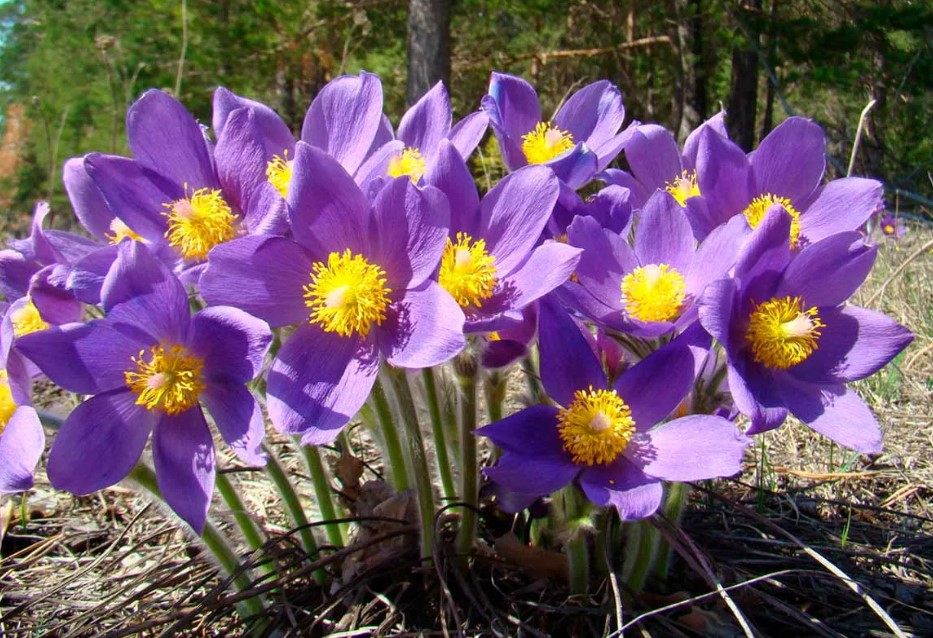
Pasque flowers prefer sunny mountain slopes, pine and birch forests, and meadows. However, in their natural habitat, the populations of many species have declined significantly. This is why the plant is listed as endangered in many regions.
Characteristics of the shot
Please note that all parts of the plant contain poisonous substances.
They can cause excessive agitation, nausea, intoxication, and nervous system paralysis. Therefore, medicinal use of the herb should be carried out under the supervision of a specialist.
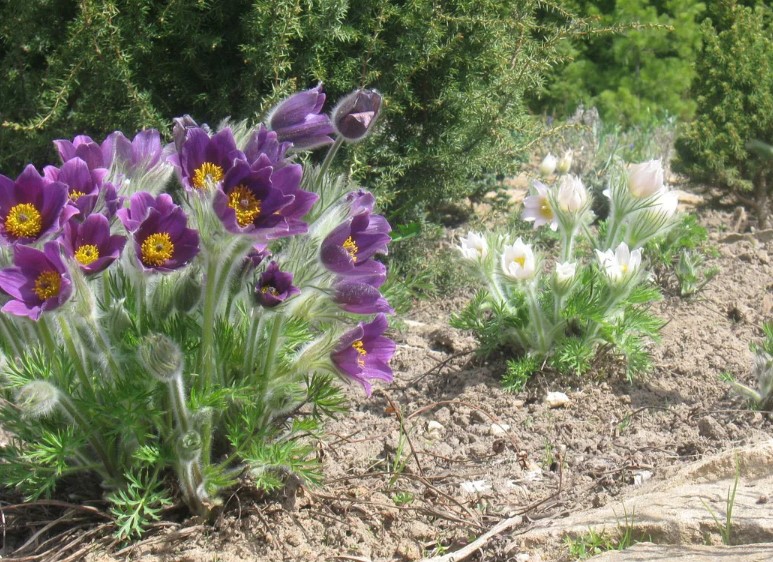
Stems
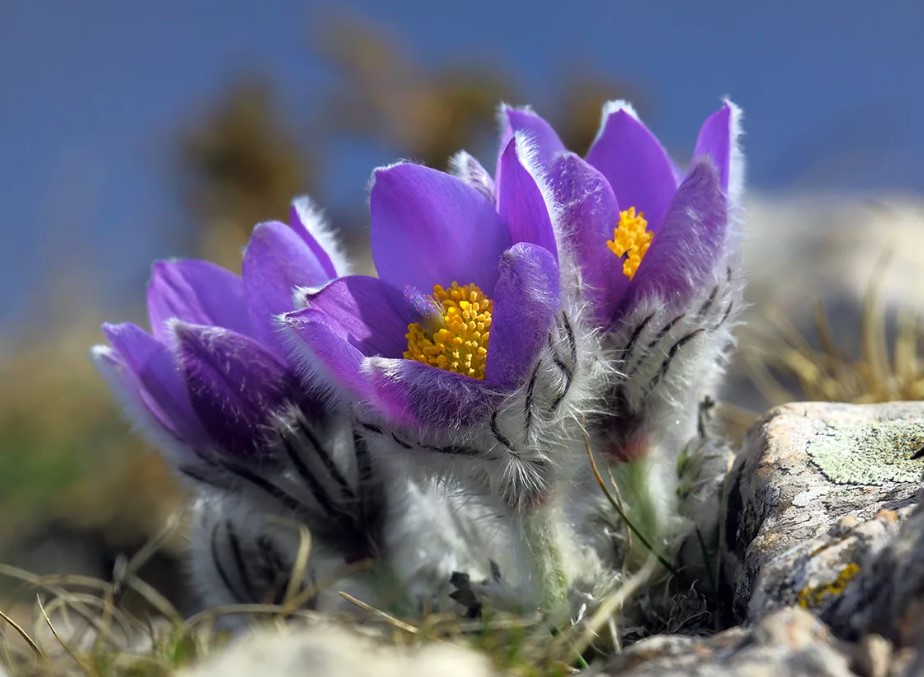
Depending on the species, they reach 5-40 cm in height. The shoots are leafless, pubescent, and covered with long, erect hairs. They grow directly from extensive rhizomes.
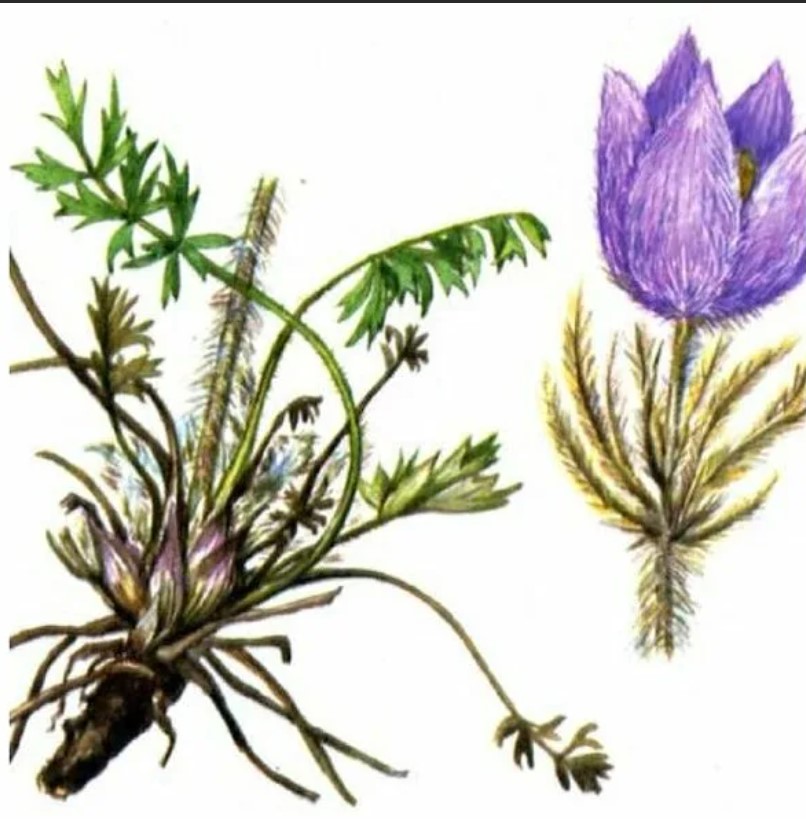
Leaves
The leaf blades are covered with soft hairs. They can reach a height of 30-40 cm. They begin growing close to the ground. Depending on the species, they may appear before or after flowering.
Flowers
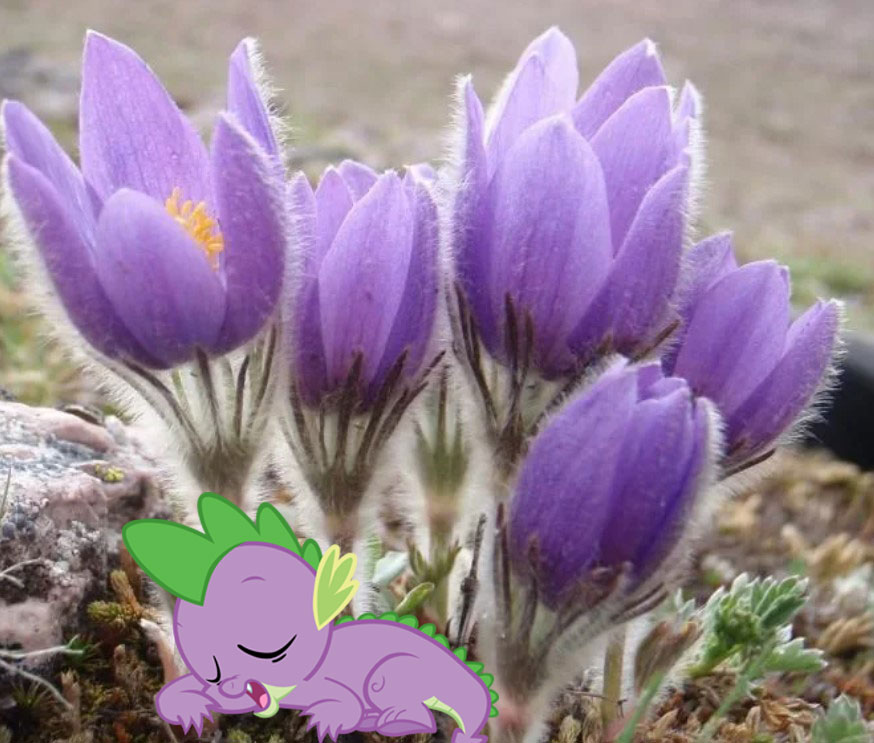
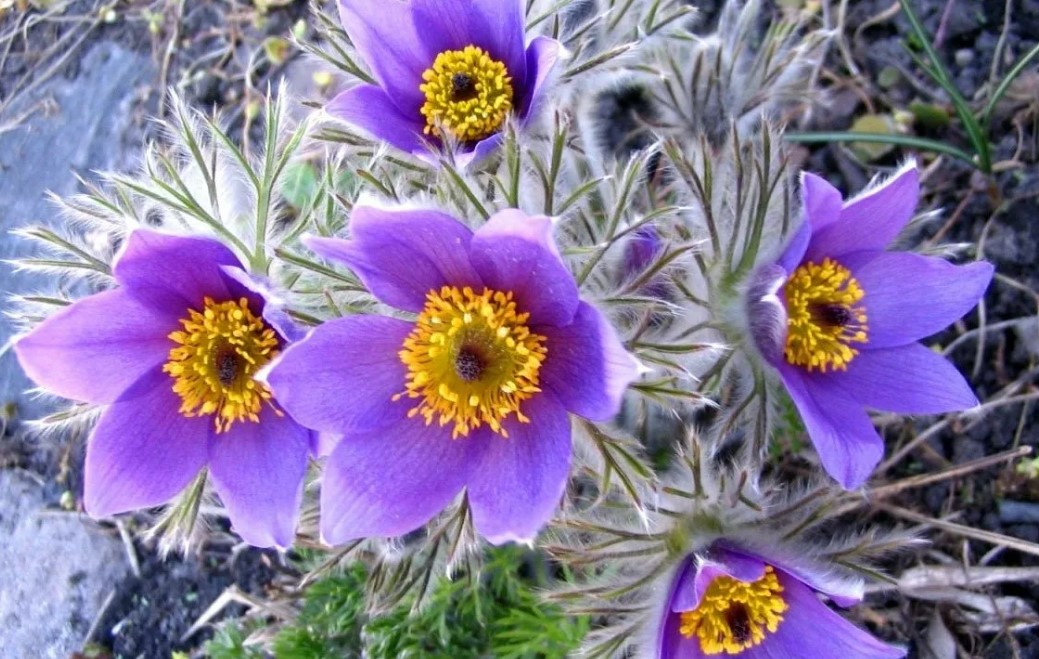
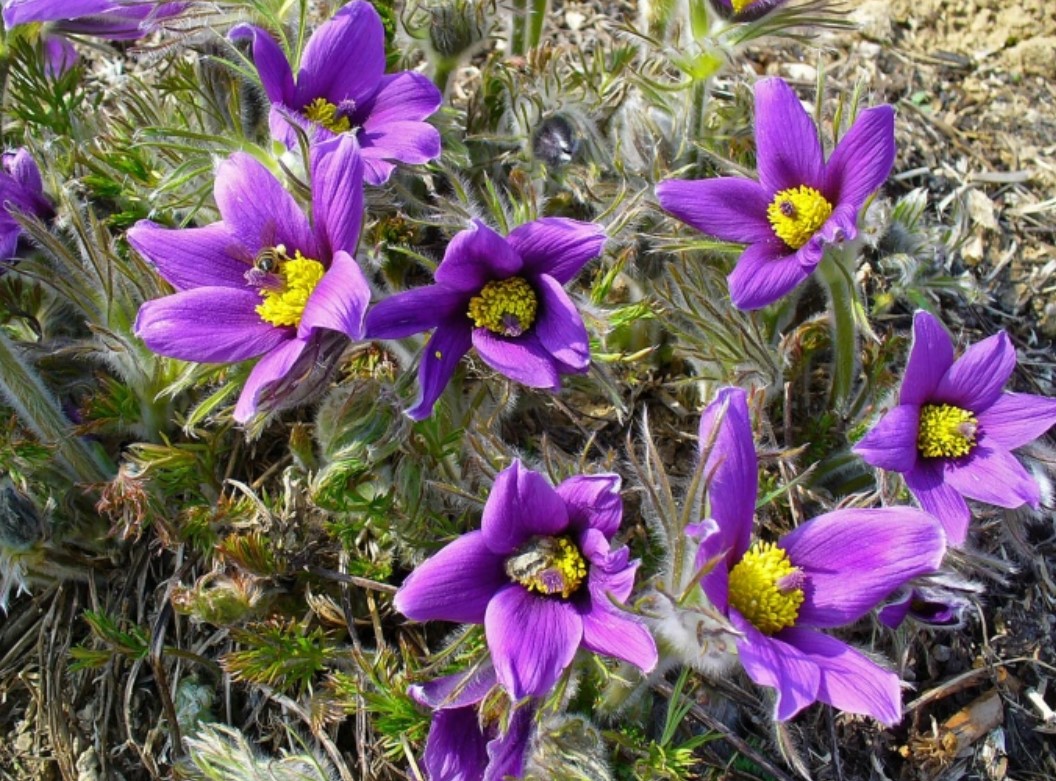
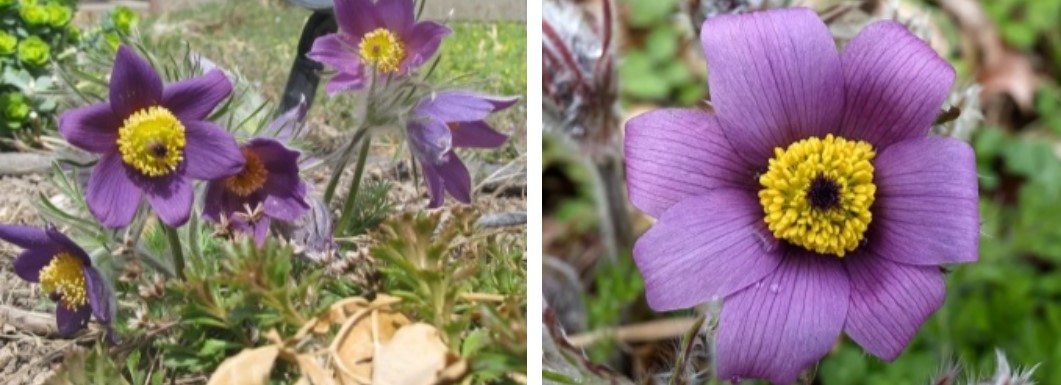
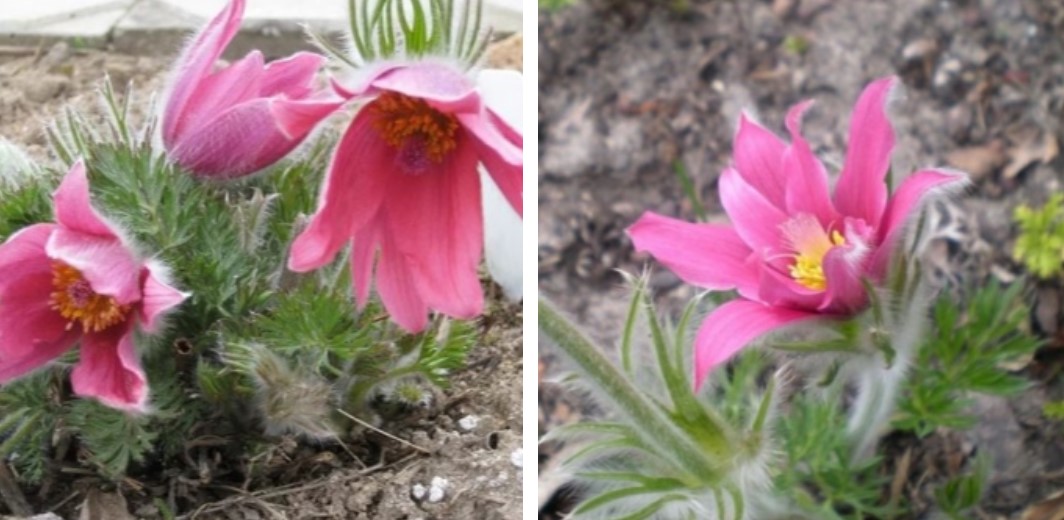
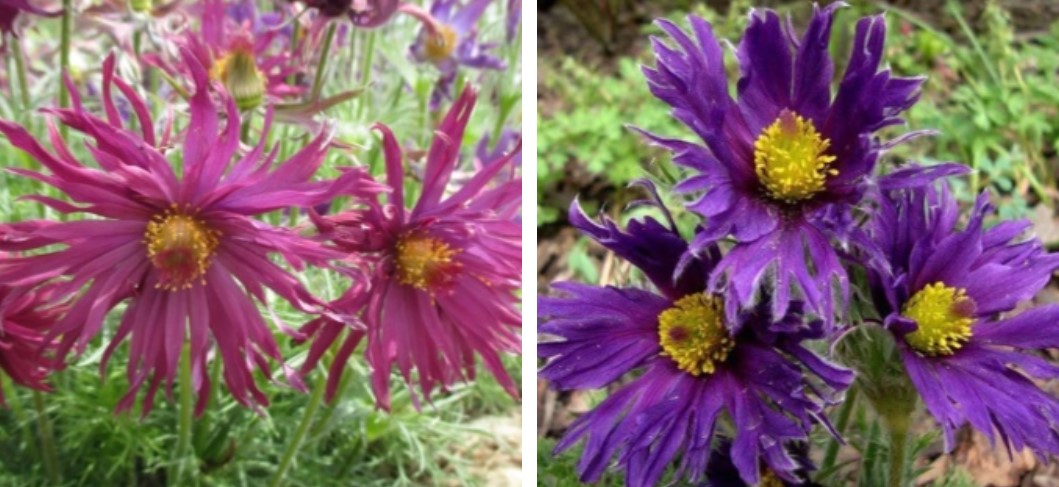
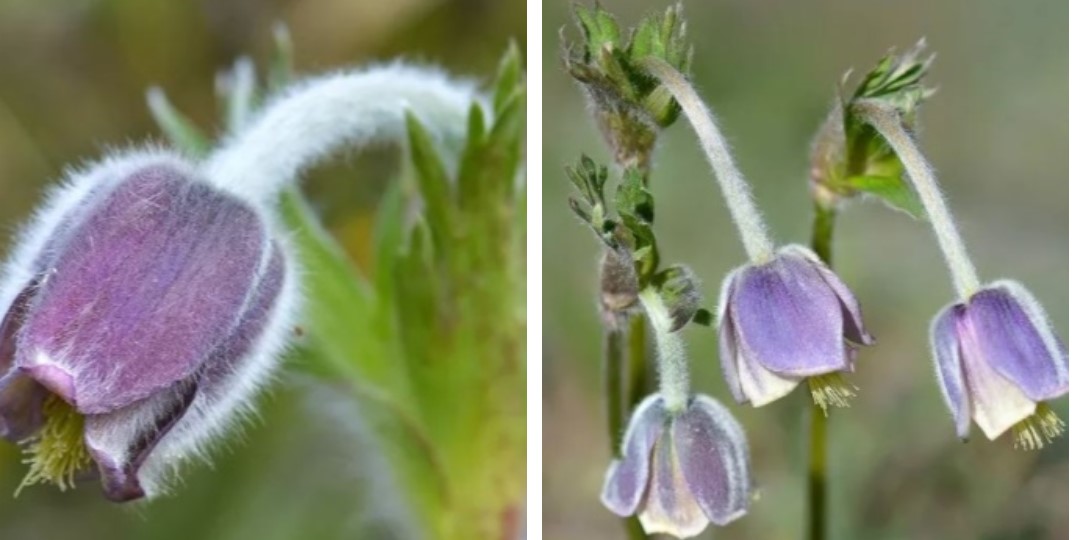
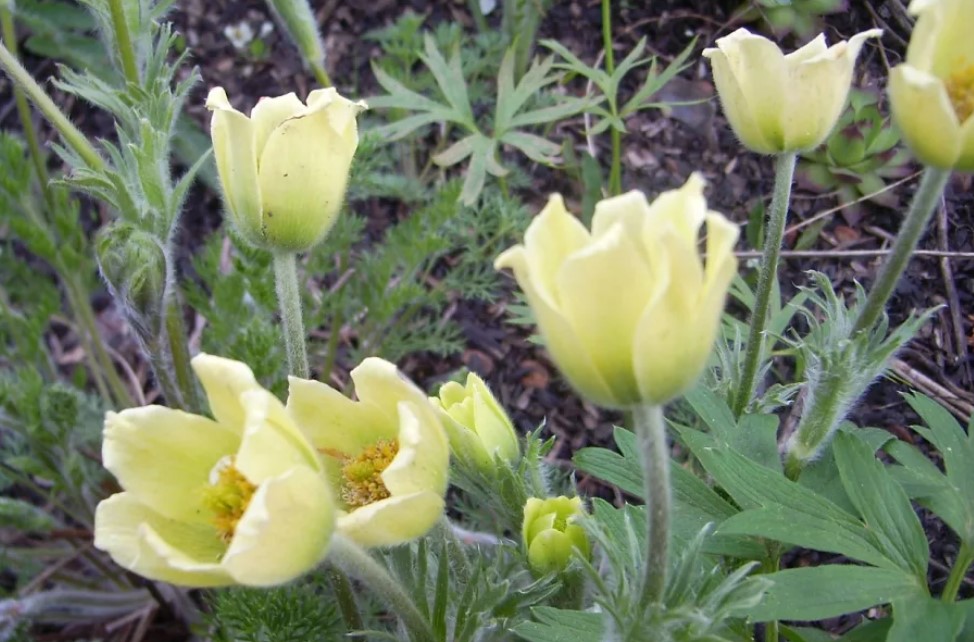
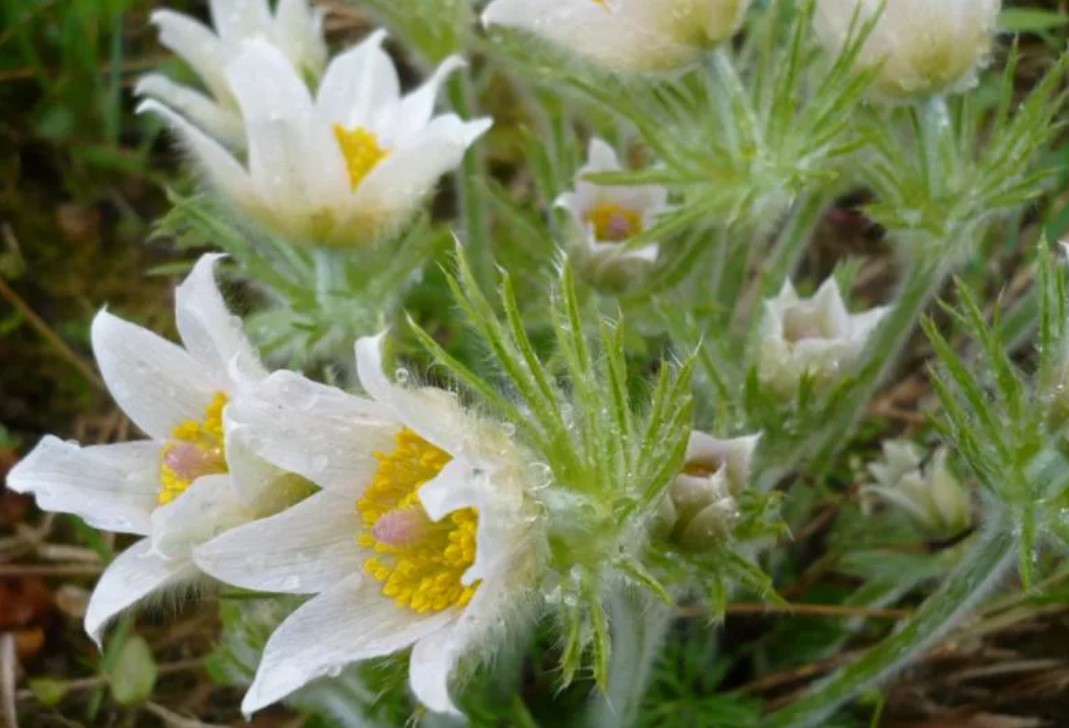
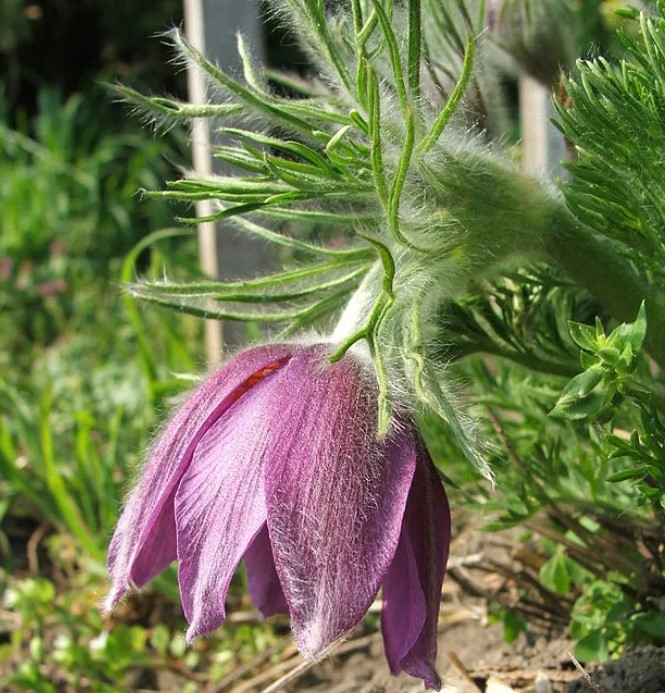
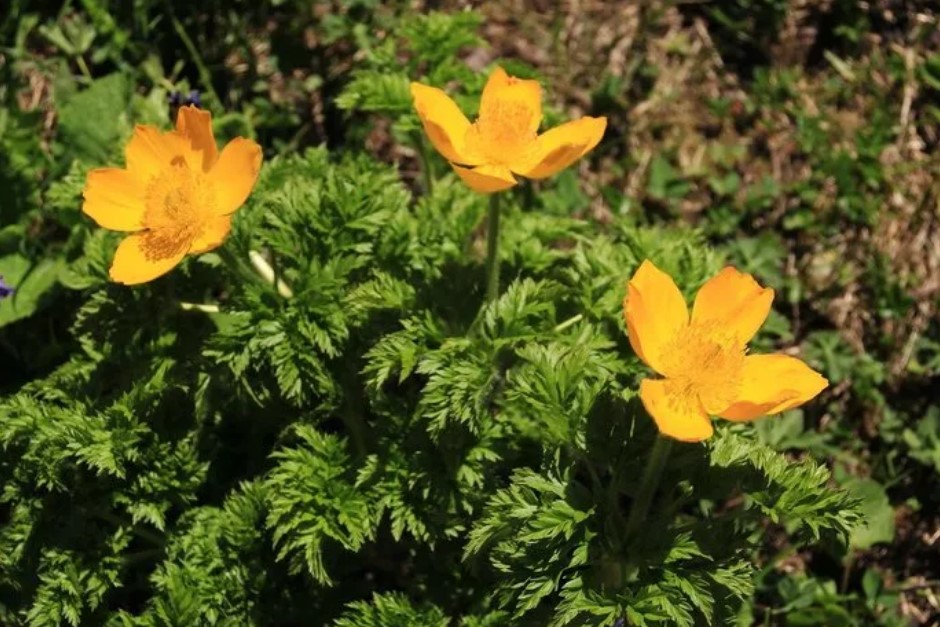
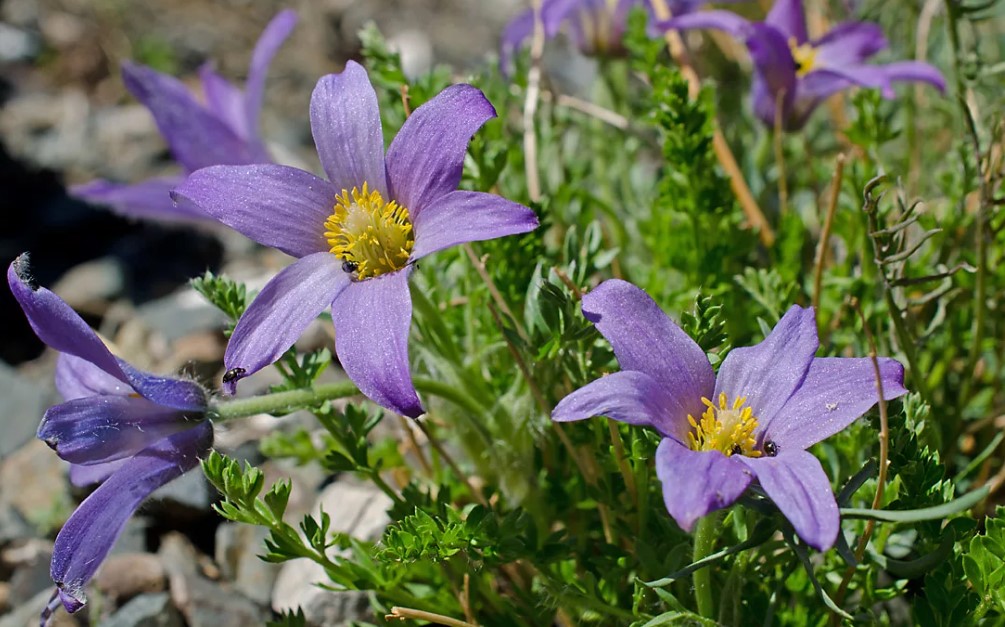
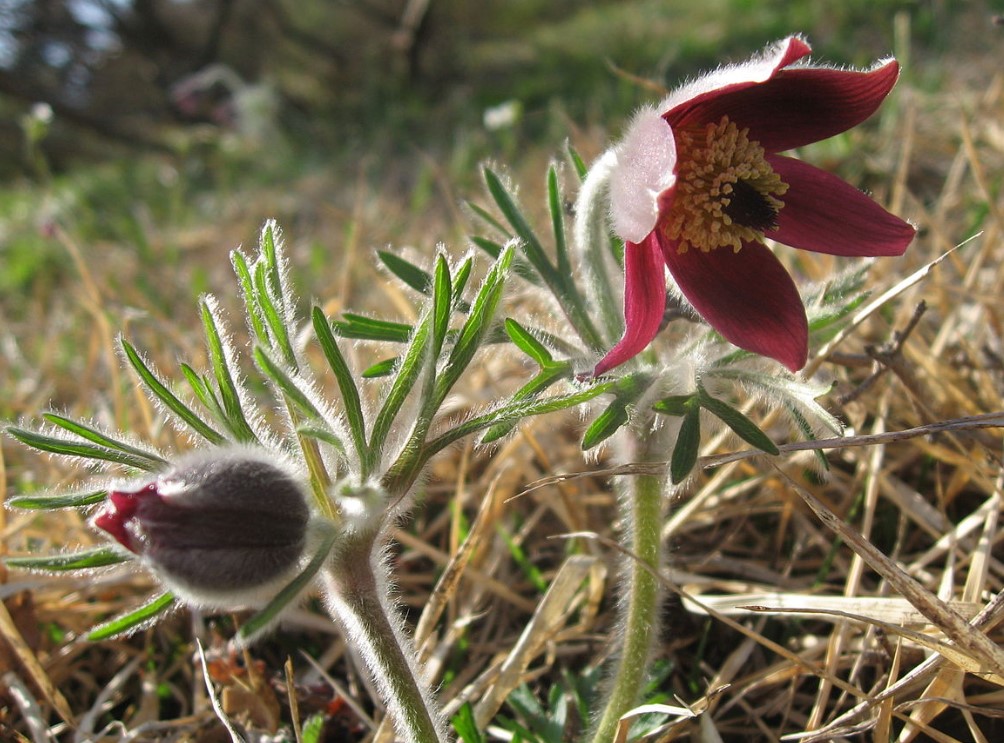
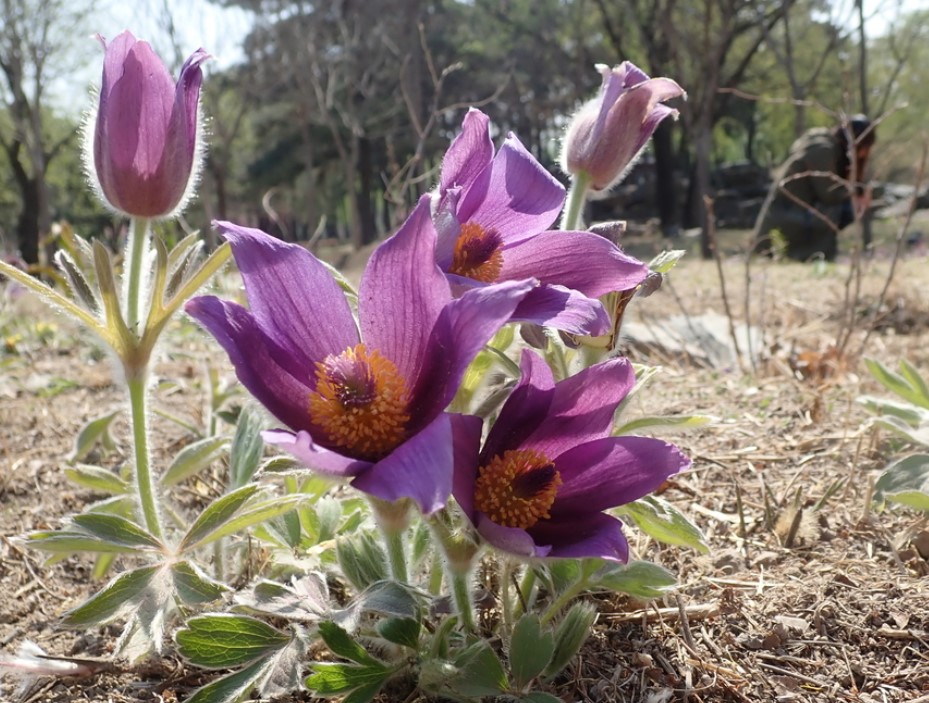
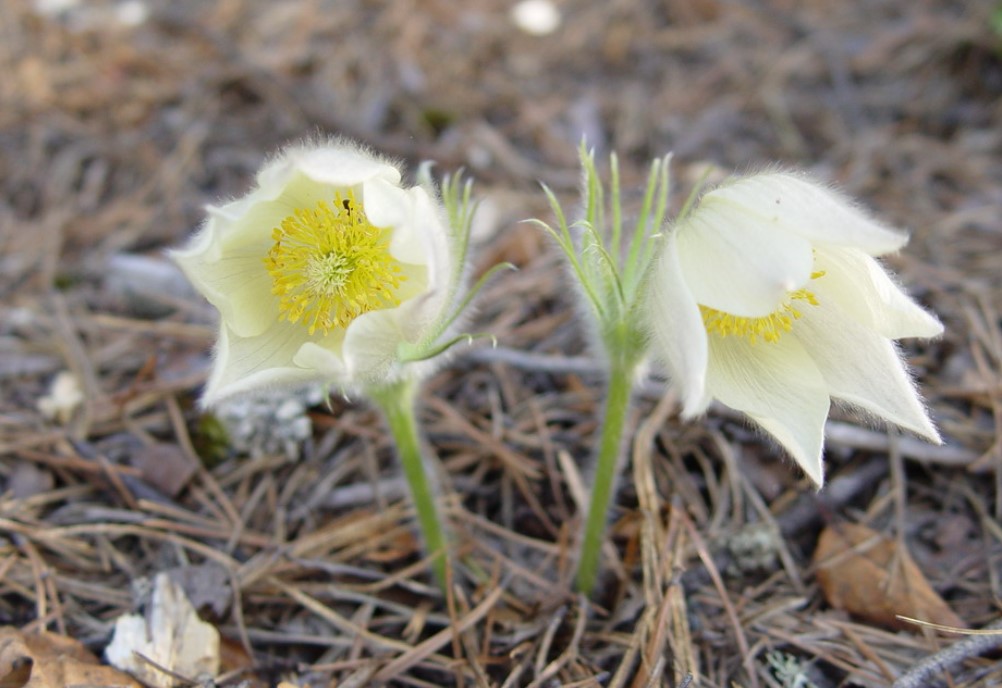
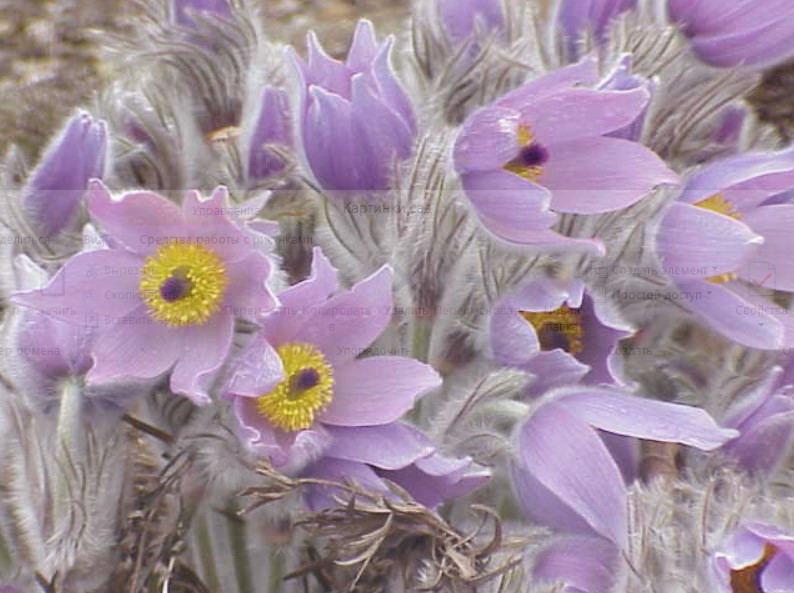
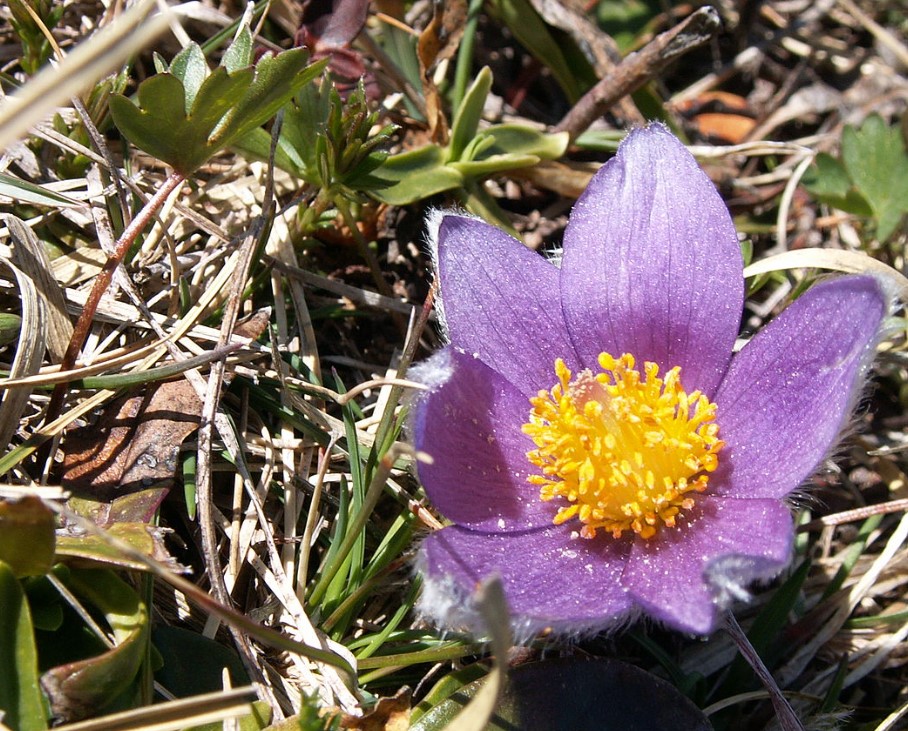
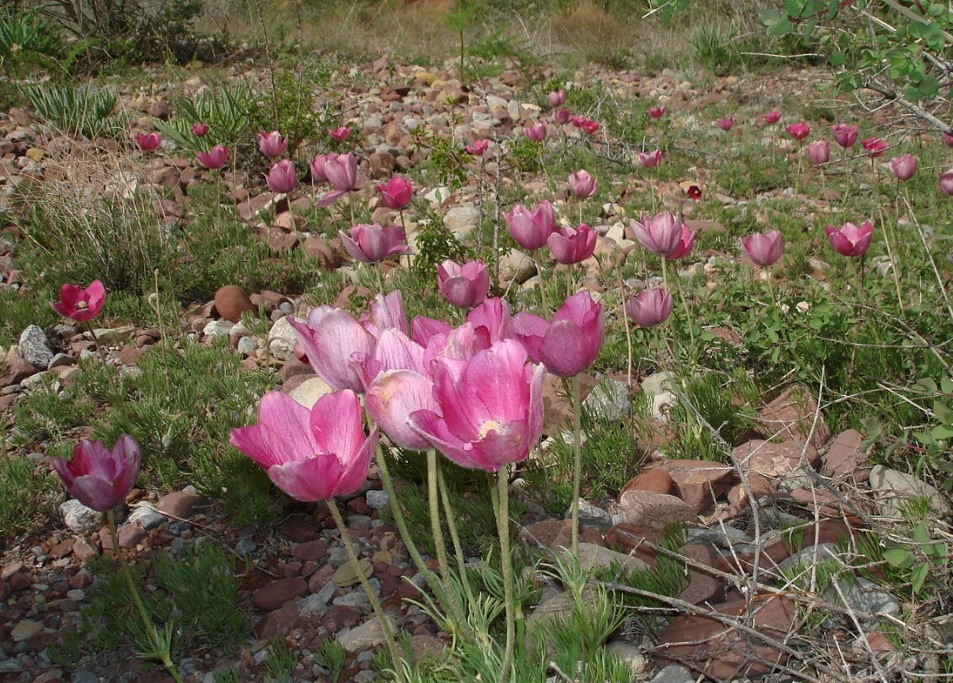
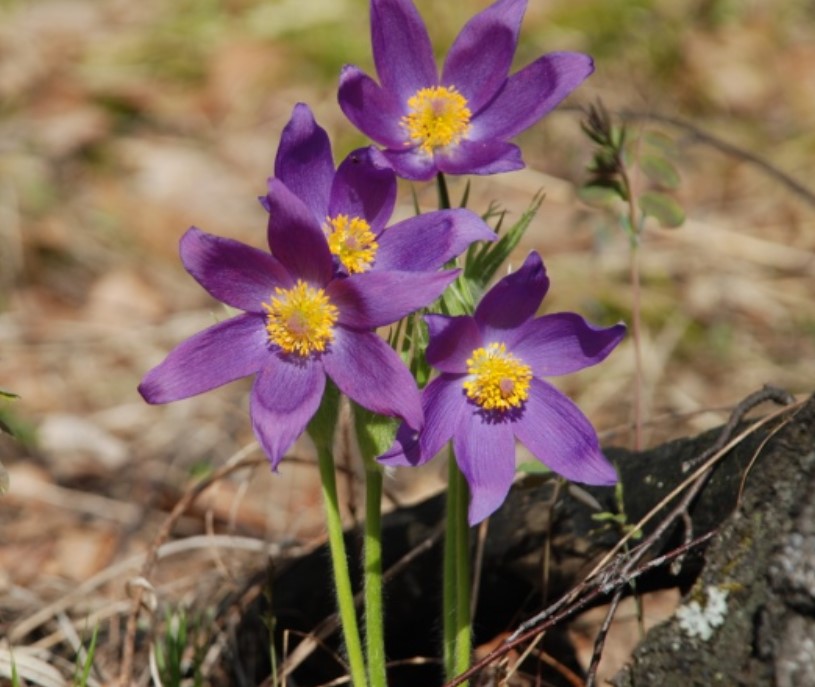
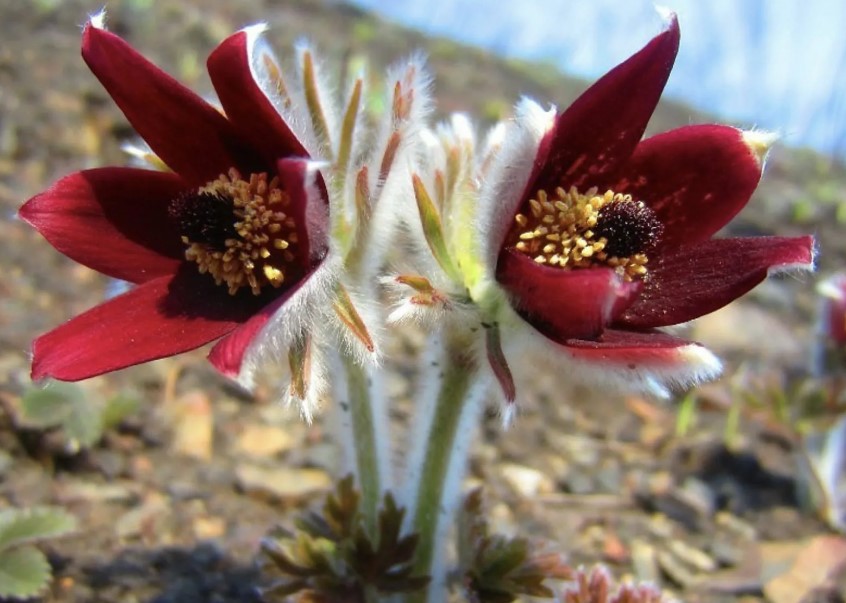
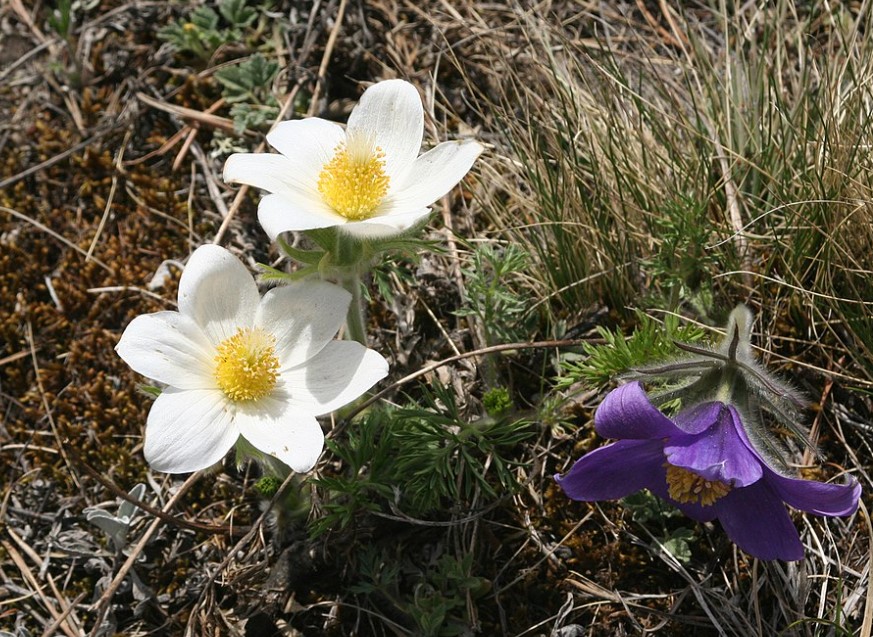
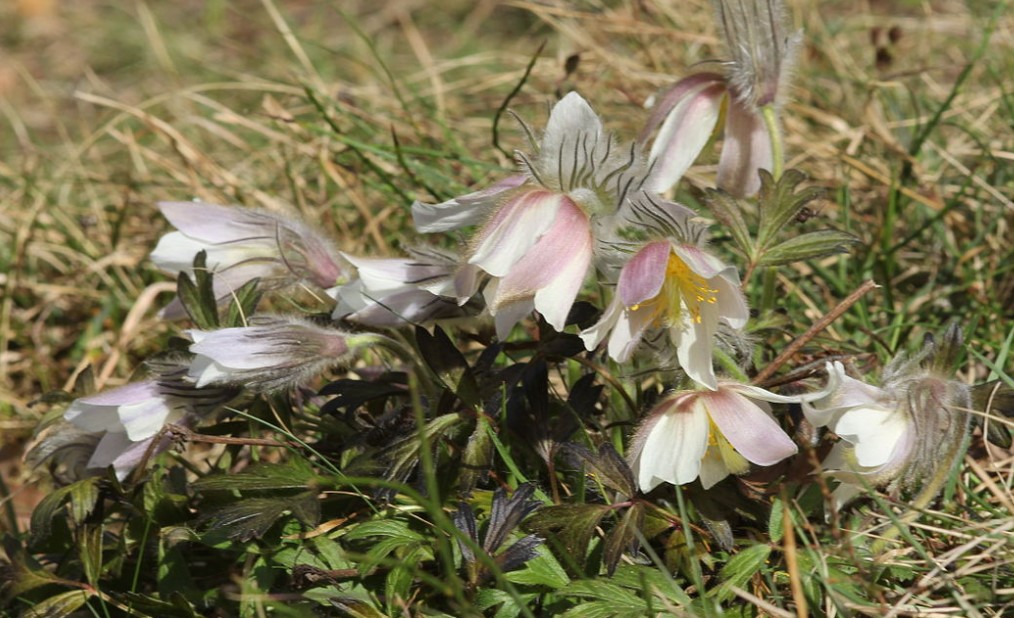
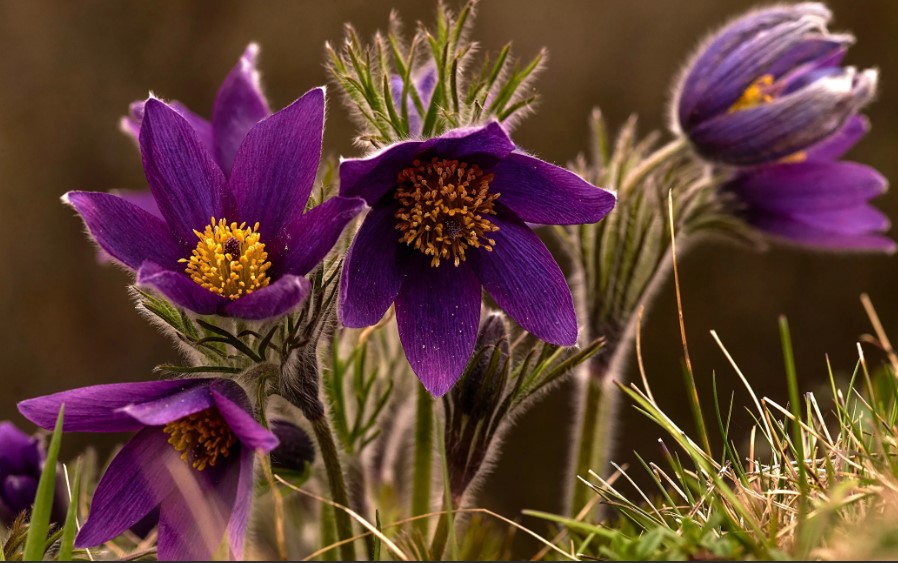
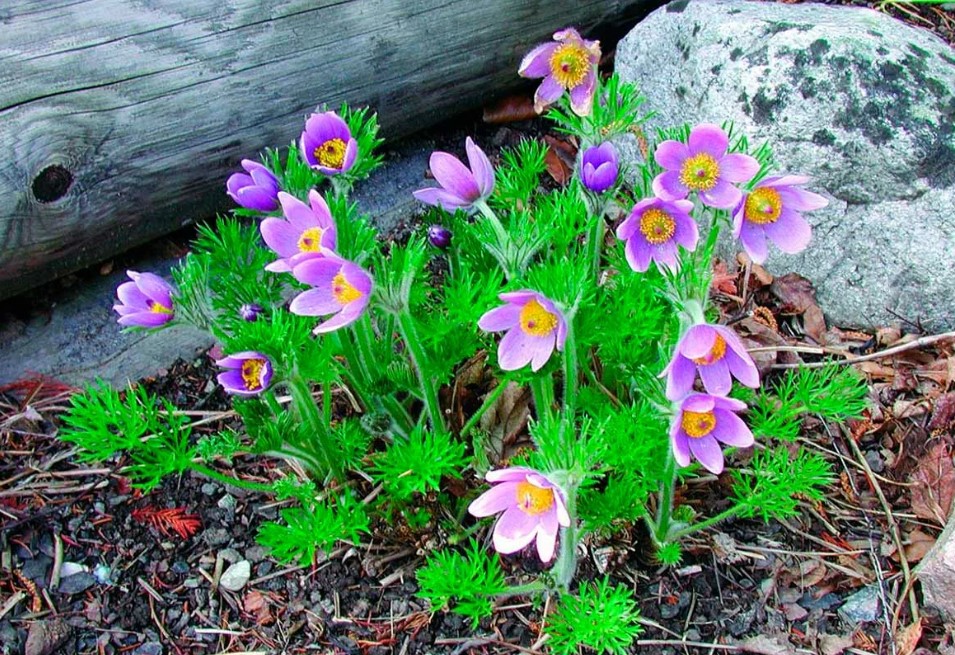
They form at the top of the flower stalks. They are solitary, quite large, and can come in a variety of colors: purple, snow-white, red, and various shades of these colors. They consist of several petals, pubescent on the outer surface. Initially, they are bell-shaped, then open to reveal yellow stamens.
Fruit
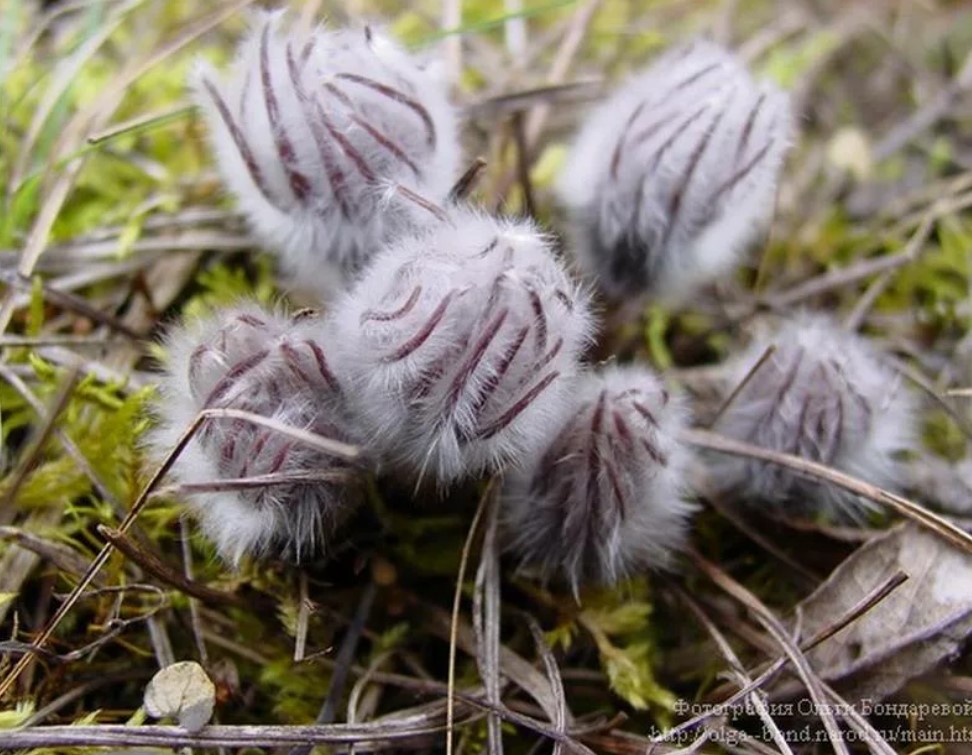
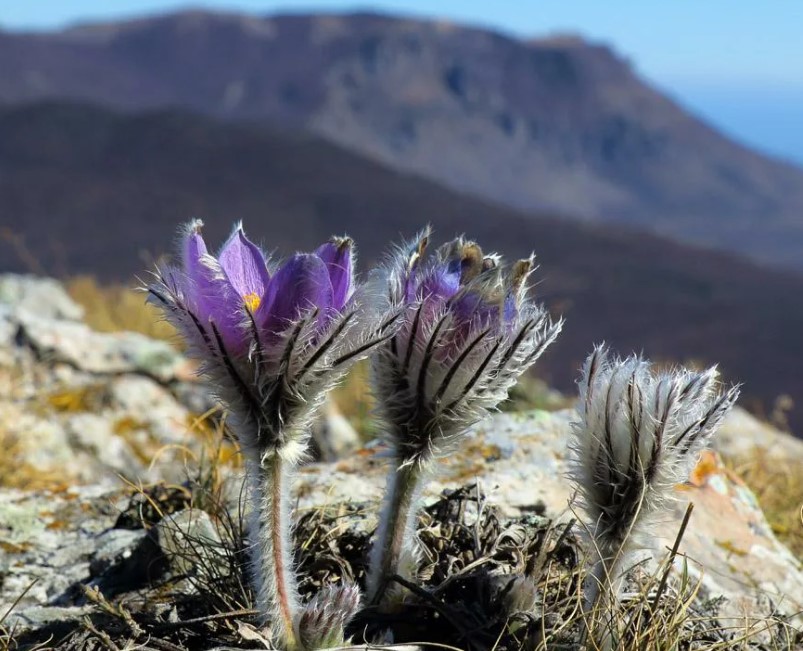
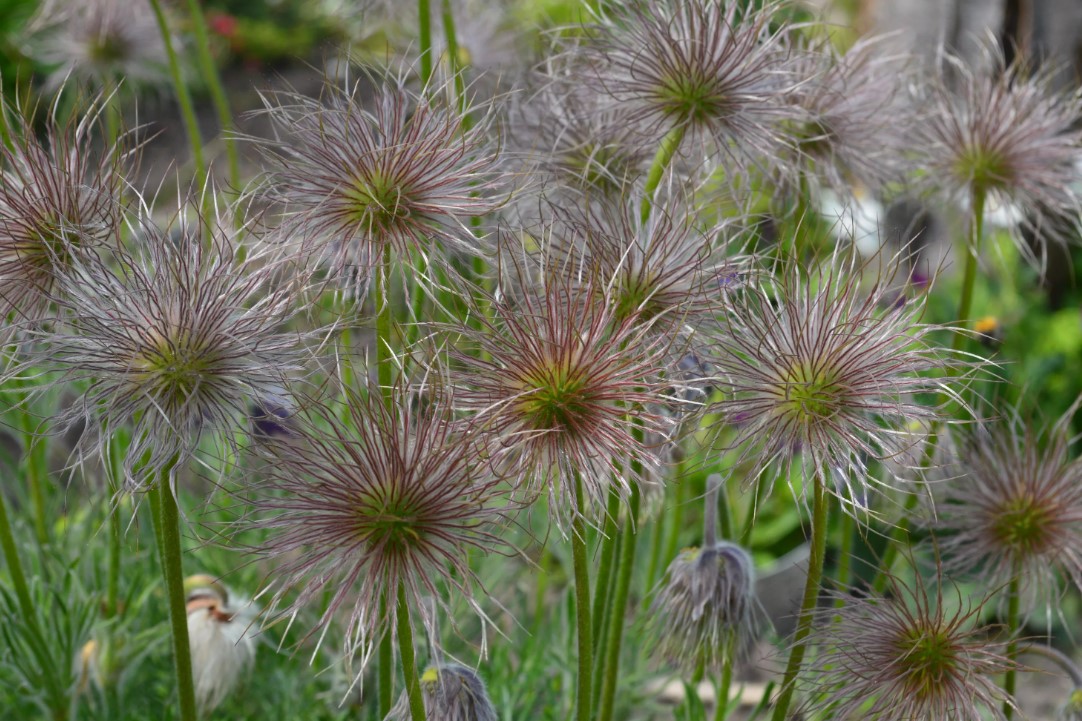
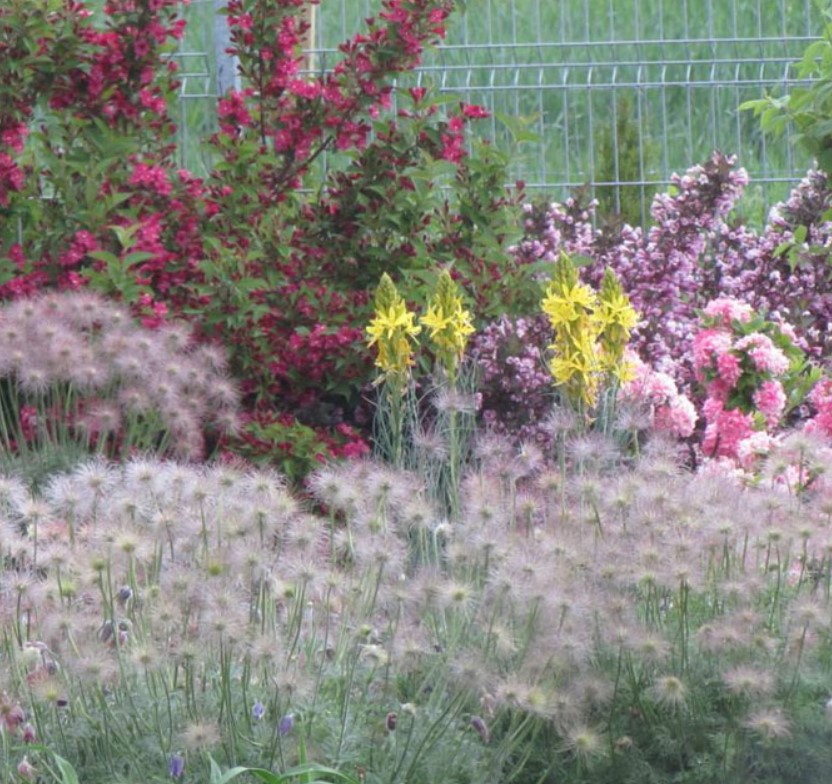
They have a unique shape—a ball covered in long hairs. During fruiting, the seeds are usually dispersed by the wind. Therefore, if you want to propagate the plant, you need to collect the seeds in a timely manner.
Root
It is a powerful rhizome with numerous branches, each of which produces a flower.
Types and varieties of pasqueflower (2 tables)
There are many species of this plant, most of which are listed in the Red Book. There are approximately 40 varieties, but only 15 are popular among gardeners. Of those species that are actively cultivated, numerous cultivars have been developed.
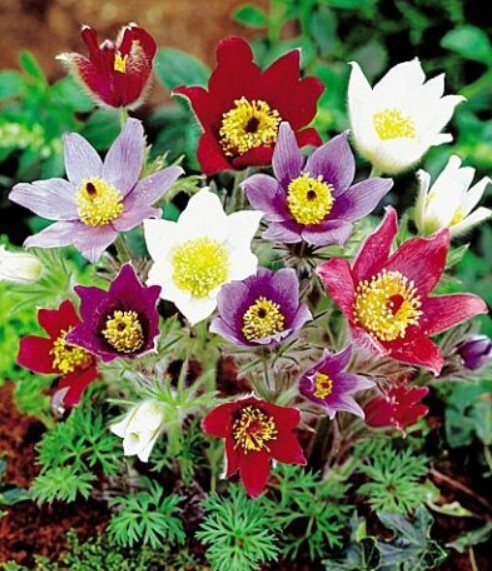
Below in the table we give their description.
| View | Description | Varieties | Where it grows |
Application |
| Ordinary
|
The shoots are erect, wavy, and solitary, 5-30 cm tall. The flowers resemble bells. The stems bear a spathe of three leaves, fused at the base and dissected into narrow lobes. The basal leaf blades are pinnately dissected or palmately dissected, hairy, petiolate, and arranged in a rosette. |
|
Found in Northern, Central and Southern Europe. |
|
| Ayansky
|
A perennial with an upright rhizome. Height: 5-15 cm, reaching up to 20 cm when fruiting. Basal leaves are thin, on nearly naked petioles. They develop after flowering. Peduncles are shortened, heavily hairy. Inflorescences are erect or deflected, semi-open, bell-shaped. |
|
Buryat region, Irkutsk region, Transbaikalia, Sakha. | Listed in the Red Book. |
| Meadow
|
It reaches 7-30 cm in height. The rhizome is vertical and robust. The shoots are erect and covered in dense, soft pubescence. The flower stalks are curved and lengthen during fruiting. Flowering continues from April to June. |
|
Northern, Central, Southern Europe, countries of the former USSR (Belarus, Estonia, Latvia, Lithuania, Ukraine, European part of the Russian Federation). | The plant's leaves contain a large amount of vitamin C. The extract has fungicidal and bactericidal properties. However, it is toxic, as demonstrated in laboratory tests on rabbits.
Used in alternative medicine and homeopathy. For medicinal purposes, the plant is harvested and prepared during the flowering period. Herbal remedies have diuretic, expectorant, antibacterial, sedative, and analgesic properties. They also stimulate liver function. Important! Any remedies made from this plant should only be taken after consulting a specialist to avoid possible toxicity. |
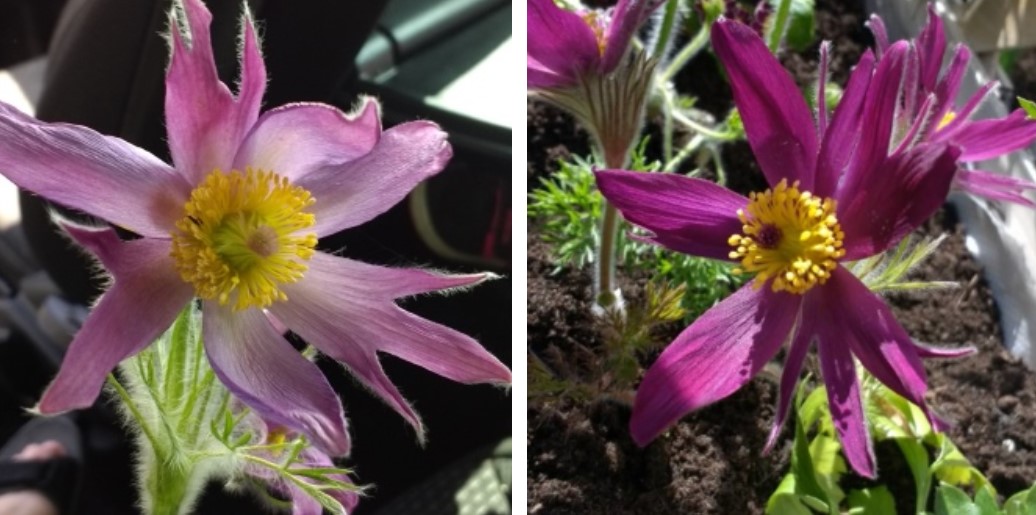
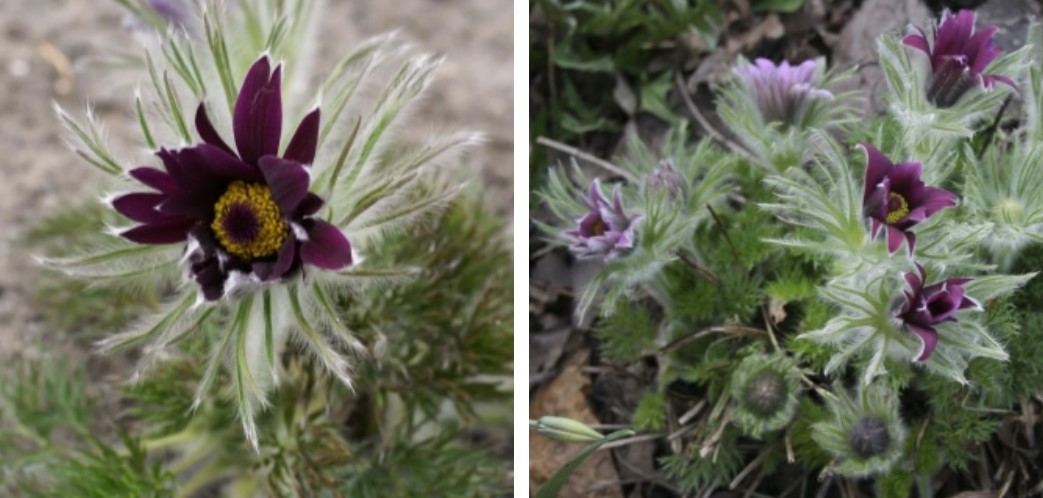
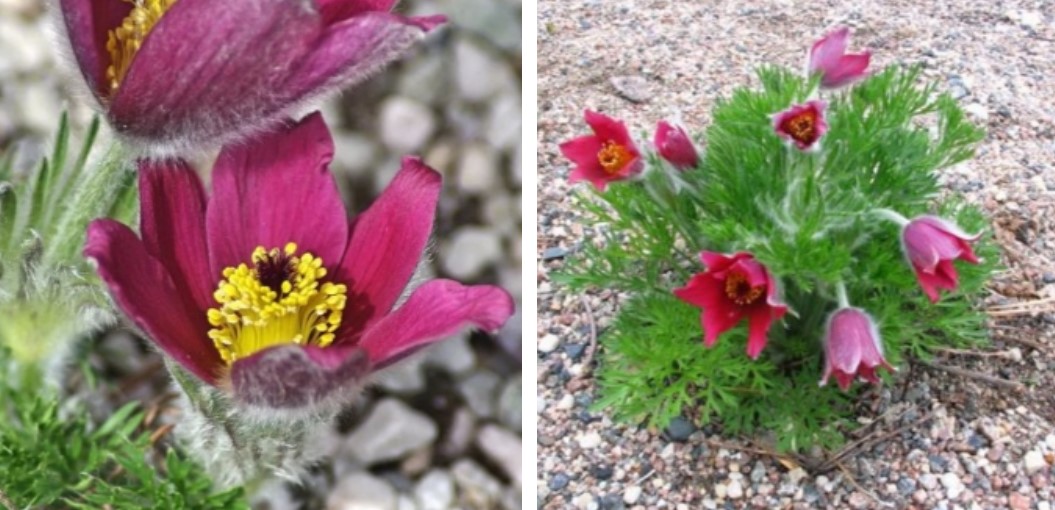
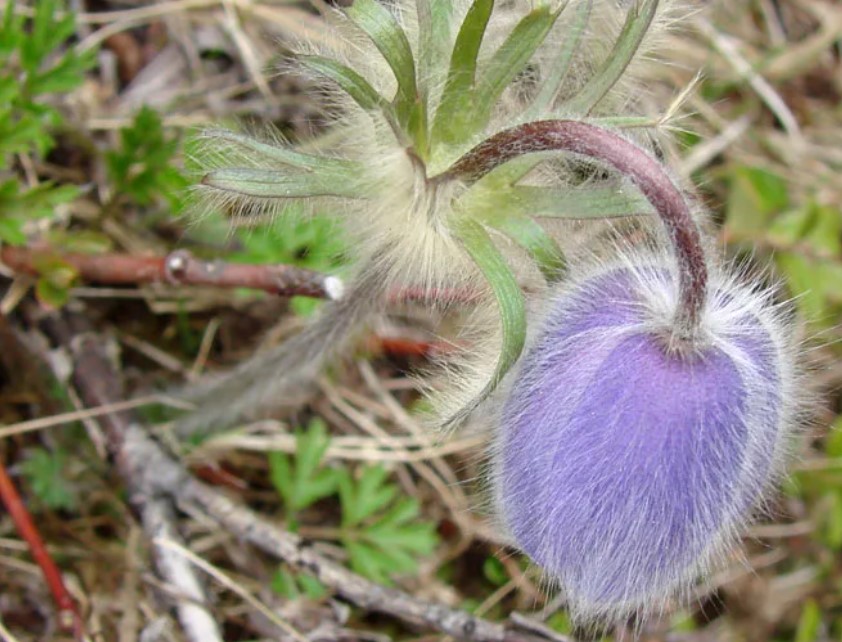
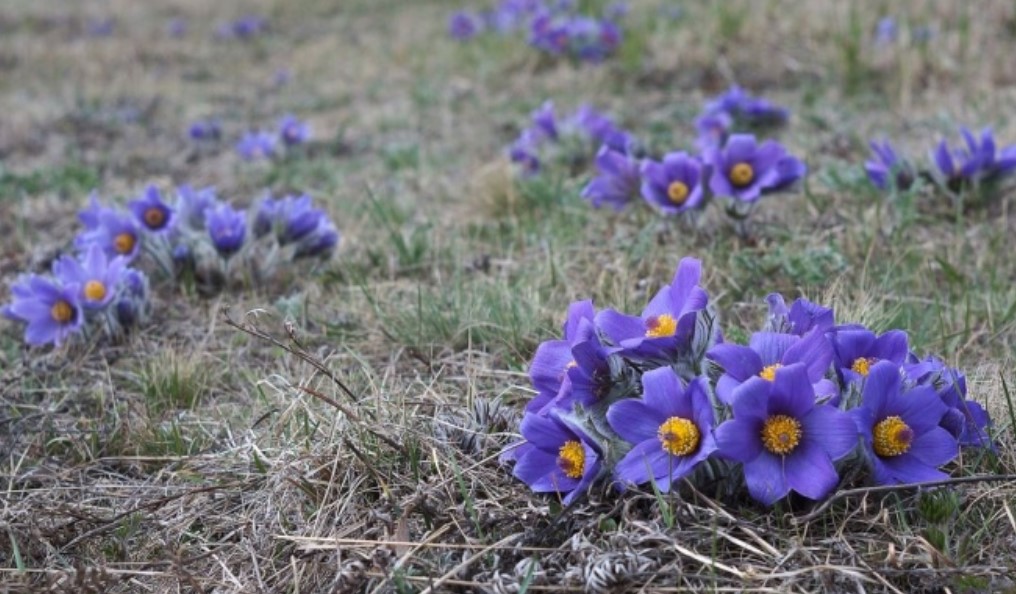
The table below shows the types of pasqueflower that are not divided into varieties.
|
View |
Description | Spreading |
Application |
| Albanian
|
A fairly low-growing species, it doesn't grow taller than 18 cm. The leaf spathe is 1.5-3 cm long. The flowers are bell-shaped, tapering at the base, tilted, or drooping. Flowering occurs from May to July. | Azerbaijan, Dagestan, Ciscaucasia, Iran. | Used in alternative medicine. |
| Alpine
|
A perennial hemicryptophyte. The flowering stem grows 10-30 cm. The basal leaf blades are pubescent and borne on elongated petioles. The peduncle bears a single erect flower, yellow or white, 4-6 cm in circumference. | Central and Southern Europe. | It is used as an ornamental plant for landscape design. It is primarily grown in rock gardens, hence its name. |
| Armenian
|
It reaches 5-10 cm in height, but doubles in length during fruiting. The bell-shaped flowers, erect or tilted, are quite large. The leaves and outer petals are pubescent. | Transcaucasia (south), Turkish Armenia, Cappadocia. | For decorative purposes and in folk medicine. |
| Golden
|
A variegated species, reaching 35 cm in height. The leaves are deeply dissected, densely pubescent, and borne on short petioles. The flowers are fully open, yellowish-golden, and up to 6 cm in circumference. | Caucasian endemic. | Ornamental and medicinal plant. |
| Bunge
|
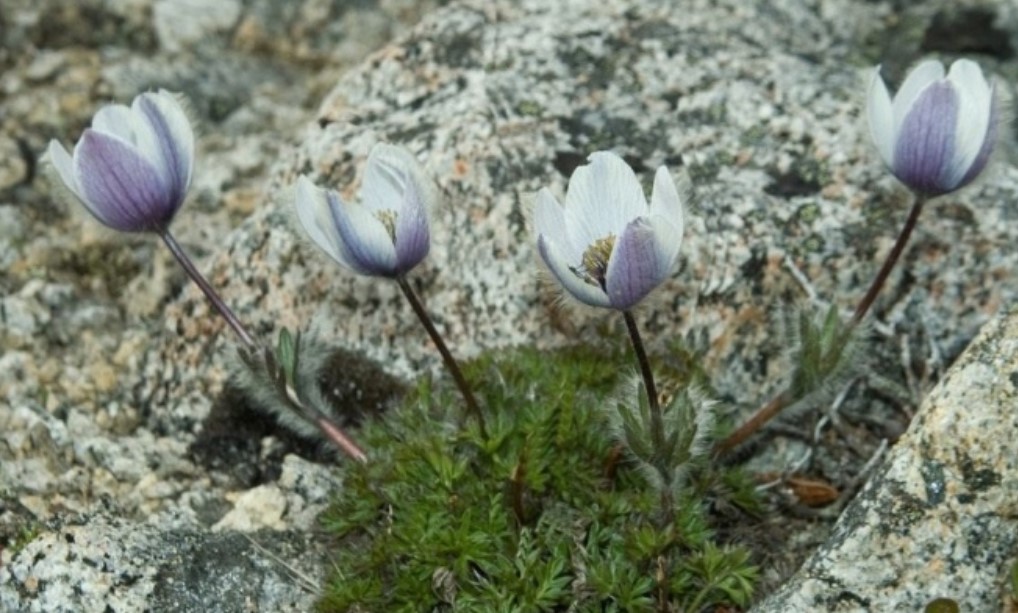
A very miniature species, reaching 5 cm in height. The rhizome is thick, upright, and multi-headed. The flowers are small, mostly erect, semi-open, and broadly bell-shaped. | Southern part of Krasnoyarsk Krai, Altai, Mongolia. |
It is grown in gardens as an ornamental flowering plant. In Mongolian alternative medicine, the flowers are used to boost energy levels during periods of general fatigue. The herb is considered an effective energizer. It is also used to treat various injuries, wounds, superficial putrefactive infections, and as an antidote for snake bites. The flowers of the plant are included in the mixture "O-tsava-sum" together with caustic buttercup and Siberian arctic rhododendron. |
| Drooping
|
Height: 4-20 cm. The rhizome is elongated, often multi-headed, and vigorous, with most of its length vertical. The shoots are straight. The peduncles are hairy. The flowers are unopened or half-opened, bright reddish-purple or brownish-dark purple. | Amur region, Primorye, northern Mongolia, China, some regions of Japan, Korea. | As an ornamental and medicinal plant. |
| Chinese
|
A perennial herbaceous plant up to 25 cm tall. The rhizome is upright, producing 1-2 erect shoots. The flowers are semi-open, bell-shaped, bluish-purple or violet. | Amur Oblast, Primorye, Jewish Autonomous Oblast, China. | As an ornamental and medicinal plant. |
| Yellowing
|
It can reach a height of 45 cm. Leaves appear only after the flower stalks have formed. The inflorescences have a yellow center and are up to 6 cm in circumference. | Volga region (Kama district), some areas of Western and Eastern Siberia. | Listed in the Red Book. |
| Big
|
A perennial plant growing up to 40 cm tall. The leaves are glaucous-green and coarse. They appear after flowering. The flowers are large and yellow. | Eastern Austria, Czech Republic (Moravia), Hungary, Southern Bavaria, Ukraine, Olkhon Island (Russian Federation). |
As a medicinal and ornamental plant. It is also a symbol of the city of Trnava (Czech Republic) and is depicted on its coat of arms. |
| Haller
|
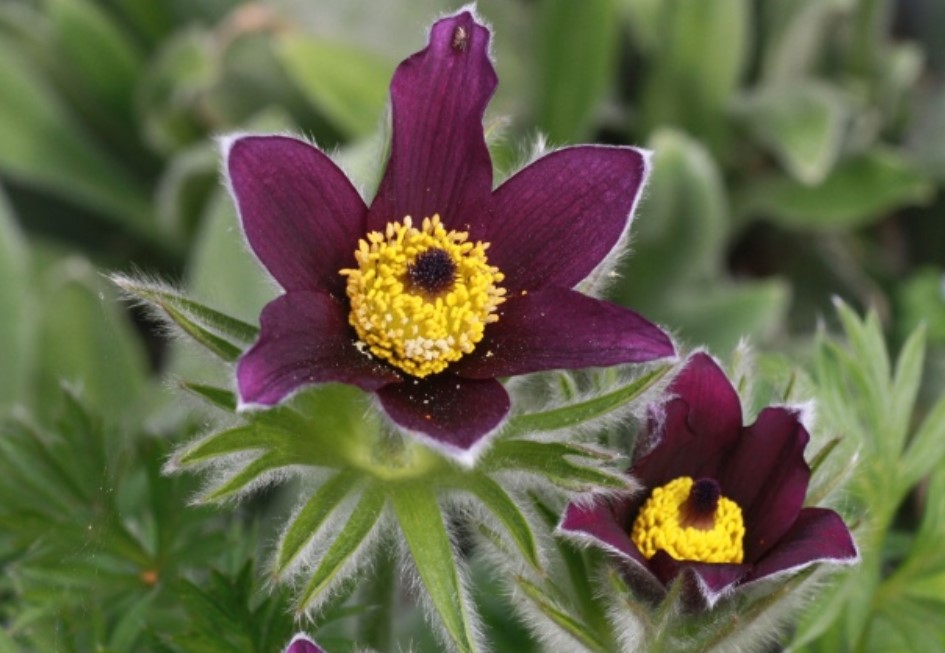
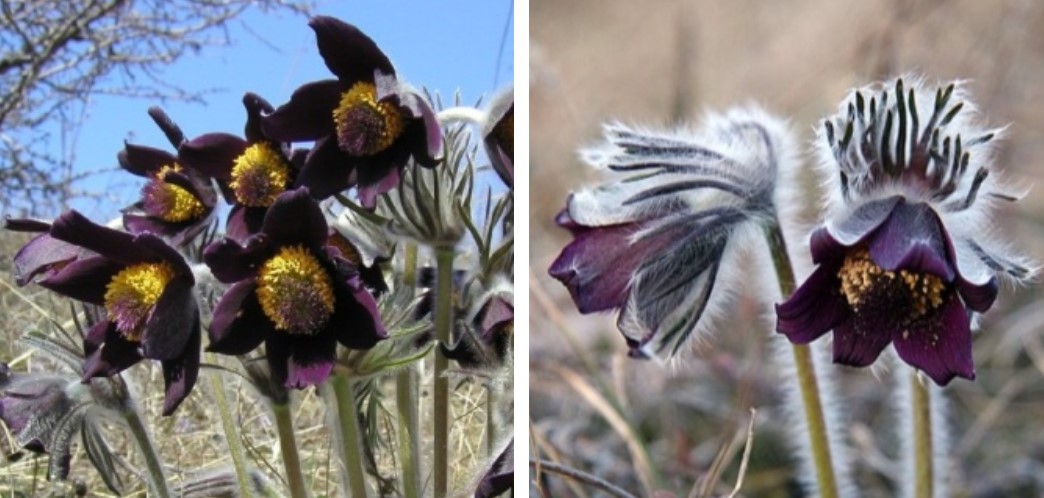
Height: 9-25 cm. The rhizome is robust and multi-headed. The shoot is straight, densely pubescent. The flowers are erect, pubescent on the outer surface, and dark purple. Flowering occurs in the second half of spring. | Eastern Austria, southwestern Poland, Slovakia, western Switzerland, northern Albania, Bulgaria, northwestern Italy, southeastern France, Crimea. | Ornamental and medicinal purposes. |
| Kostycheva
|
Grows up to 12-20 cm. During fruiting, it increases to 32 cm. The flowers are large, 5.5-6 cm in circumference. They are pink in color, and hairy on the outside. | Endemic to Central Asia. | |
| Mountain
|
Height: 7-20 cm. The rhizome is dark, upright, and vigorous. The flower stalks are straight or slightly curved. The flowers are dark purple, hairy, initially straight, then begin to diverge in a star-shaped pattern. | Central and Southern Europe, southwestern Ukraine. | For decorating gardens and for preparing traditional medicine. |
| Disclosed
|
It grows to 7-15 cm. The rhizome is multi-headed, robust, dark, and vertically positioned. The stems are erect with dense but soft hairs. The perianth has blue-violet, rarely white or yellow, leaflets. Flowering begins in April and ends in late spring. | Northern and Central Europe, countries of the former USSR, Asia, North America. |
Valued for its ornamental qualities, it is grown in flower beds, combined with other pasqueflower species. The plant is used to prepare preparations that are taken as a sedative and sleeping pill. In alternative medicine, the herb is used to treat many ailments. The aqueous extract has powerful bactericidal and fungicidal properties. It is applied topically to wounds, dermatological problems, and other skin lesions. Herbal infusions are taken internally for coughs and gynecological conditions. An alcohol tincture of the plant is used as a rub for rheumatism. Fresh herbs are also boiled without water and used to treat burns. |
| Red
|
A perennial herbaceous plant, a hemicryptophyte. It grows to 20-30 cm. The flower is located on an erect stem. The inside is dark purple-reddish, while the outside is black-red or brown-red. | Endemic to Southwestern Europe. | For decorative purposes. |
| Crimean
|
A herbaceous perennial. The rhizome is long and can be either single- or multi-headed. The flower is single and erect. Petals are 4-5 cm long and 1-2 cm wide. | Endemic to Southern Crimea. | Included in the Red Book. |
| Turchynova
|
5-35 cm in height. The rhizome is erect, up to 11 m in diameter. The flower is erect, half-open, bluish-purple. | It grows in the steppes, less often on the outskirts of pine forests. | Ornamental and medicinal purposes. |
| Spring
|
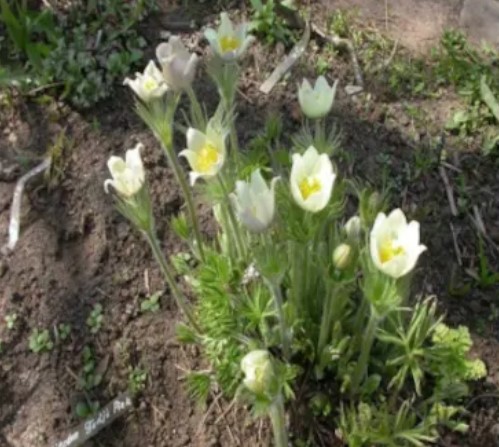
Height: 5-20 cm. The rhizome is robust, almost black, oblique, and multi-headed. The stems are predominantly ascending, straight or slightly curved, and pubescent. The flowers are erect, bell-shaped, white inside and light purple, pinkish, or bluish outside. | Central, Atlantic, Northern Europe, the Balkans, Asia Minor, the European part of Russia. |
Decorative purposes. This species of pasque flower is also the official floral emblem of the province of Härjedalen (Sweden). |
| Violet
|
Grows 5-18 cm. During the fruiting period, it stretches up to 30 cm. The flowers are bell-shaped, drooping or almost straight, purple, lilac, and rarely snow-white. | Territory of the former Soviet Union. | As a flowering ornamental plant. |
Growing pasqueflower from seeds
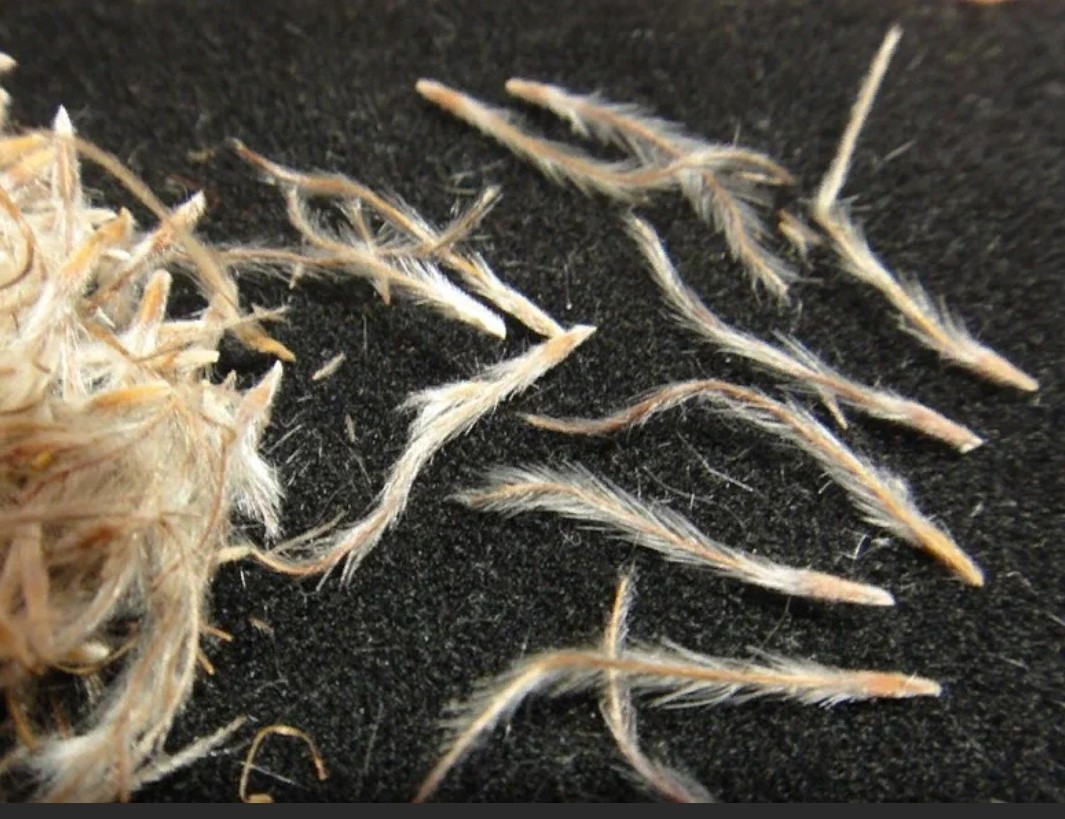
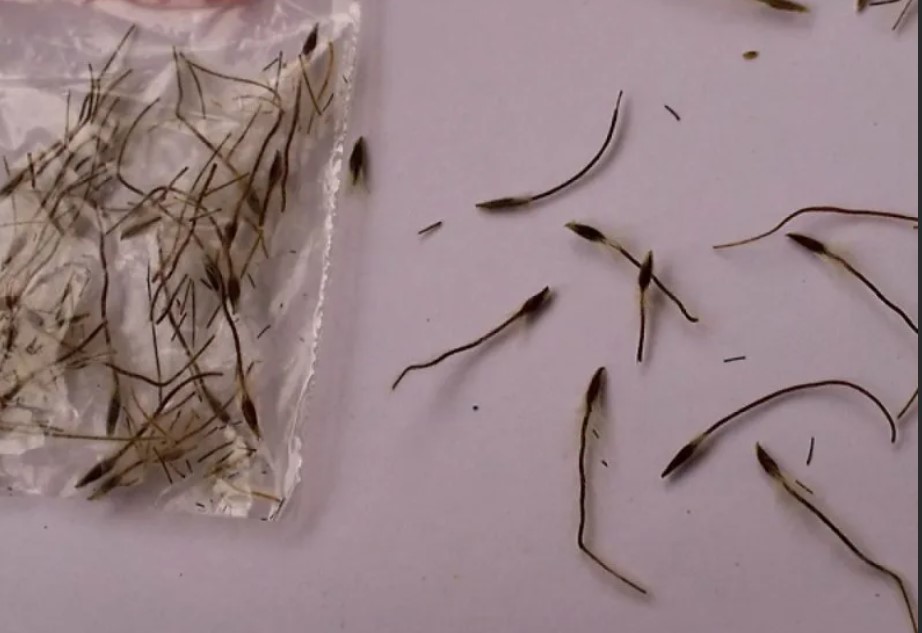
The plant produces seeds after flowering, inside the rounded capsules of the fruit. The elongated seeds are encased in a dense seed coat with pubescent hairy awns that help them disperse in the wind. When self-seeding, after they fall to the ground, they undergo natural stratification, becoming wet and dry several times. The awn "screws" into the soil, drawing the seed along with it. The seed coat gradually softens, allowing the sprout to emerge.
To be successful in propagating pasqueflower from seeds, consider the following points:
- Only fully ripened seeds should be harvested, but this must be done before they disperse. Seeds typically ripen in late June or July. They will easily separate from the plant.
- Seeds remain viable for 2-3 years. If they were collected this season, no additional treatment is required when sowing. If the seed is more than one year old, stratification or soaking in a growth stimulant is required. The exception is mountain pasqueflower seeds. They always require cold treatment, regardless of their age.
- If you plant different types of pasqueflower next to each other, interesting hybrids can be produced through cross-pollination.
- Plants grown from seed do not always retain the colors of the mother plant.
Sowing directly into open ground
Seeds can be sown from spring after the snow melts until fall. The most important thing is to avoid extremely hot weather. To sow the seeds, dig a shallow but wide trench. Add a layer of compost to the bottom to improve the soil structure. Sow in a 20 x 20 cm pattern. No more than 10 plants per square meter can be planted.
Please note! Even if you sow the seeds in the spring, they won't bloom this season anyway. You'll have to wait until next year.
Sowing and caring for seedlings
Sowing seeds for seedlings is done from mid-February to the end of March. Before sowing, it's necessary to stratify the seeds and prepare the containers and soil in advance.
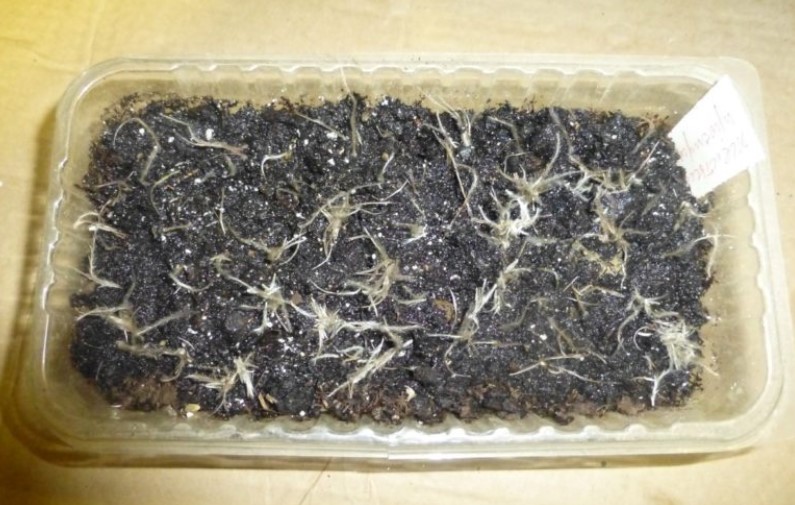
Shallow boxes or containers are best for planting seeds. They must have drainage holes. The substrate should be light and loose. To achieve the desired properties, you can mix leaf mold or store-bought potting soil with a small amount of sand. Moisten the soil 24 hours before sowing. Also, set aside a small amount of sand for planting—it will be needed to cover the seeds.
Stratification is important for seed material, as it helps it awaken and transition from a dormant state to the growth phase.

Cold treatment is carried out as follows:
- The seed material is mixed with a mixture of sand, peat or sawdust in a ratio of 1 to 3.
- The mixture is placed in a plastic bag and placed in the refrigerator on the vegetable shelf for 1-2 months.
After the specified time (immediately before sowing), soak the seeds in a germination stimulant for 2 hours. This will improve their germination. If you don't have a germination stimulant on hand, you can soak the seeds in clean water at room temperature the day before planting.
Sowing occurs as follows:
- Spread the seeds evenly over the soil surface. It's easiest to carefully space them 2 cm apart using tweezers.
- The seeds are pressed lightly, but not buried too deep. It's a good idea to sprinkle a small amount of sand on top.
- The seed material is sprayed with warm water from a spray bottle.
- The crops are covered with glass or plastic film to create greenhouse conditions and placed in a bright place.
With proper care, sprouts will appear in as little as 2 weeks. If proper care is not taken, this process can take up to 6 weeks.
To speed up germination, after sowing, keep the seedlings in a warm, bright place at a temperature of 22 to 25°C. Be sure to protect them from drafts. If natural light is insufficient, provide supplemental lighting with a phytolamp.
Watering should be moderate, using warm, settled water. It's best to use a spray bottle to prevent overwatering and soil erosion. Don't let the soil dry out. Water immediately after the top layer of soil has dried out.
Remove the film or glass covering daily for a few minutes to allow air to ventilate and remove condensation from the interior surface. Once the seedlings emerge, remove the covering for a longer period, and then remove it completely after a few days.
Helpful advice! If seedlings don't appear within 3 weeks, you can take a break from watering for 7-10 days. Then resume.
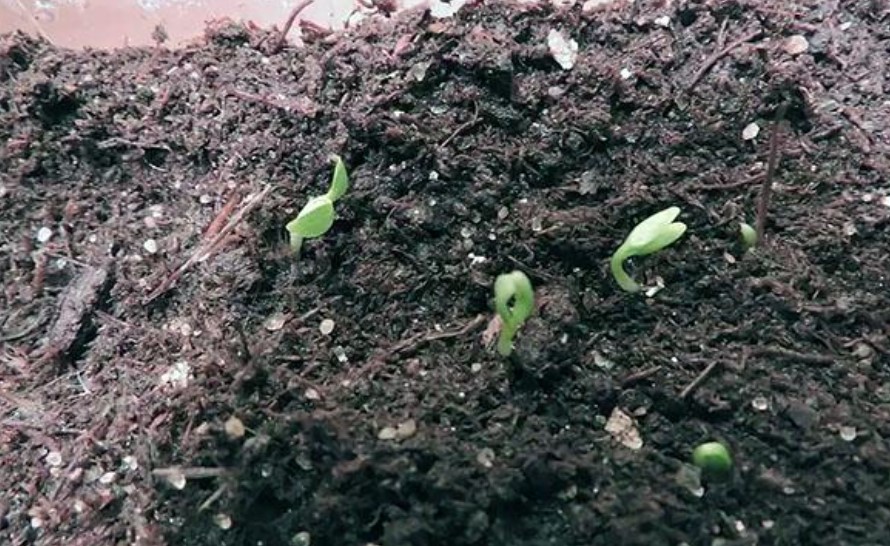
Once the seedlings emerge, it's important to ensure they shed their seed coats. If some are unable to do this on their own, they need assistance. To do this, spray the seed coats with warm water several times a day to soften them.
To ensure better rooting, make a hole near the sprout and insert a thin root into it, then sprinkle some soil over it. This is most easily done with a toothpick.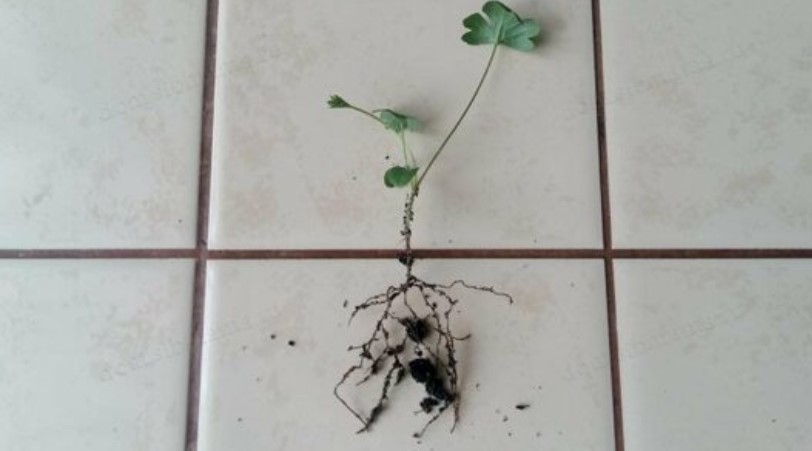
After 2-3 true leaves appear, transplant the plants into separate containers. Shallow pots or cups with a diameter of 60-80 cm are best for this. Use the same soil as for sowing the seeds.
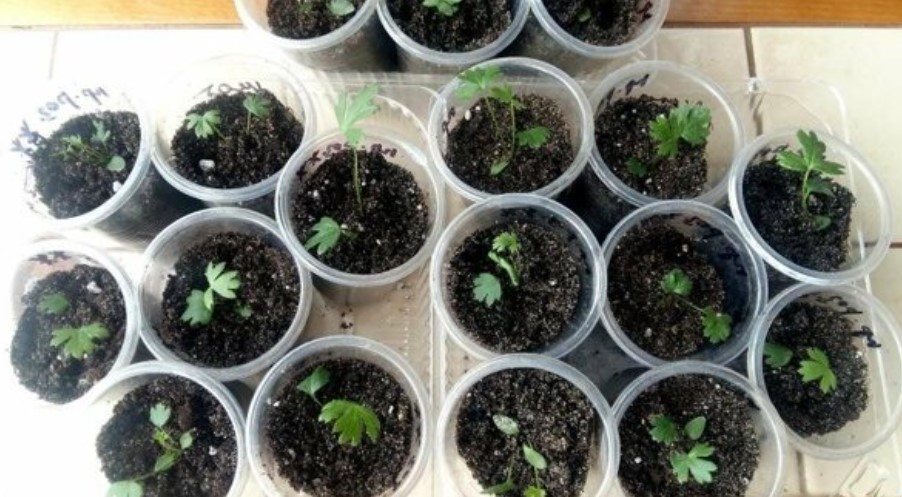
The picking is carried out as follows:
- Make holes in the planting containers. They should be large enough to accommodate and spread the roots comfortably.
- Carefully move the seedling.
- Carefully move the seedling without covering the root collar.
- Lightly compact the surface and water.
Further care includes the following:
- systematic watering, not allowing it to dry out;>
- long daylight hours;
- top dressing using complex mineral fertilizer (diluted according to the instructions and applied once every 2 weeks until planting in the garden).
Planting seedlings in open ground
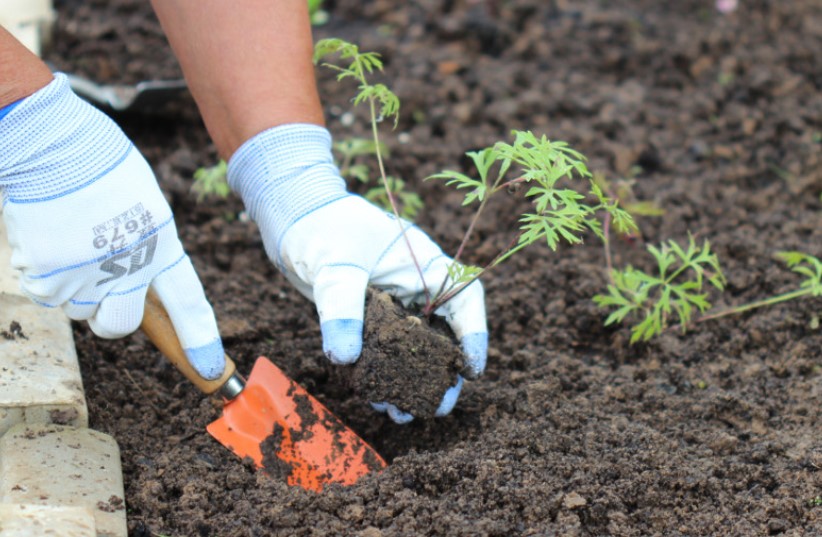
Transplant outdoors in August or early September. Plant seedlings 20-30 cm apart. Do not bury the root collar.
Caring for pasque flowers in open ground
Pasque flower care is not difficult. However, certain conditions must be met to ensure they are as close to their natural habitat as possible.
Location
In its natural habitat, pasqueflower grows in dry meadows, pine and birch forests, and sunny slopes. It is a heliophyte, meaning it thrives in warm, sunny conditions. It is best planted at a slight elevation to prevent waterlogging in the root system.
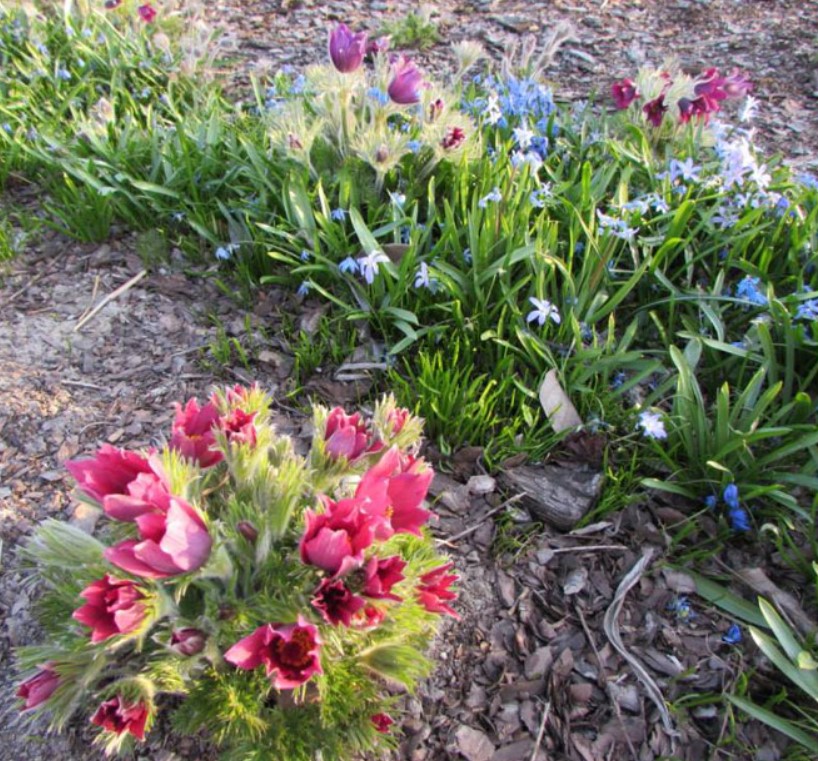
It is desirable that the soil have the following characteristics:
- sandy-humus, light, not very fertile;
- with slight humidity;
- with a pH of 5.5-5.6.
For your information! In principle, pasqueflowers can grow in fertile soil, as long as it contains plenty of sand and isn't fertilized.
The choice of planting location must be approached carefully, as the grass will grow there for many years.
Please note that it is important to avoid moisture stagnation.
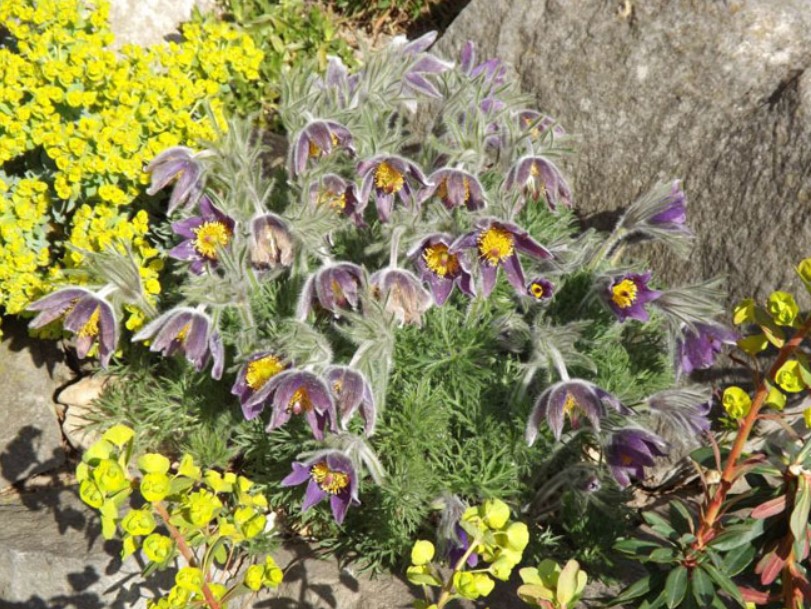
Good drainage will help with this. The plant grows well even on rocks and in rock gardens.
Watering
The plant does not tolerate excessive moisture well and does not require frequent watering. It is usually watered only during dry periods. The rest of the year, natural precipitation is sufficient.
Please note! Plants grown in containers require more frequent watering than those planted directly in the ground.
Top dressing
If pasqueflower is grown in poor soil, it will require fertilizer to ensure flowering and bud development. Organic matter is applied during planting and also as mulch in the fall.
Mineral fertilizers are applied in the summer, 2-3 times, every month. These can be phosphorus fertilizers or nitrogen-free potassium preparations.
Trimming
This is done in early spring, shortly before flowers appear. This helps the plant enter the growing season. During pruning, old leaves and shoots are trimmed back low.
Wintering
Only young plants need to be prepared for winter. Before the onset of frost in the fall, they are covered with fallen leaves or spruce branches. In the second year of planting, winter preparation is only necessary if the winter is expected to be snowy. Mature plants can easily survive the winter without cover.
Methods of propagation of pasqueflower
The plant is propagated by seeds and division. Let's look at each method in more detail.
Seed propagation
Seeds can be purchased at a store or collected from your own plot after flowering, before the seeds have time to disperse with the wind. They can be sown directly into open ground in the fall to allow them to undergo natural stratification over the winter.
You can also plant seeds in containers or boxes with low sides and refrigerate them for a couple of months. However, keep in mind that artificially created cold conditions don't always produce the desired results.
We described the features of sowing seeds above.
Dividing the bush
When propagating by seed, there's no guarantee that varietal traits will be passed on to the seedlings. When dividing, all characteristics are inherited from the mother plant.
However, it's important to remember that pasqueflowers can only be divided after several years of cultivation in the garden. Even then, care must be taken, as the plant has a long, hard rhizome that is difficult to divide without damaging it.
To propagate, the mother plant is dug up in mid-August. It is placed on the ground and divided into several equal parts, ensuring each has a well-developed root system. The divisions are then immediately planted in the ground. For the winter, they should be covered with spruce branches or fallen leaves. They will bloom the following spring.
Pests and diseases of pasqueflower
Pulsatilla shows good resistance to all infections and pests. Moreover, the bushes are not affected by them even if there is a mistake in agricultural practices.
Pulsatilla in landscape design
The plant is often used in landscape design. It is often planted in rock gardens, as it thrives even in such conditions.
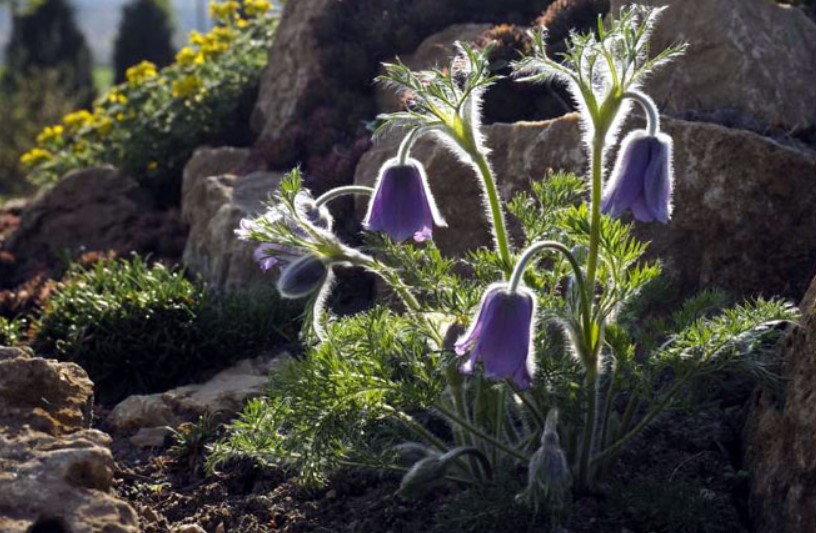
Pasque flower looks great in combination with other plants in an alpine garden. It can also be planted in special mixed borders, on terraces, slopes, and retaining walls. It looks equally attractive against the backdrop of a neat, manicured lawn.
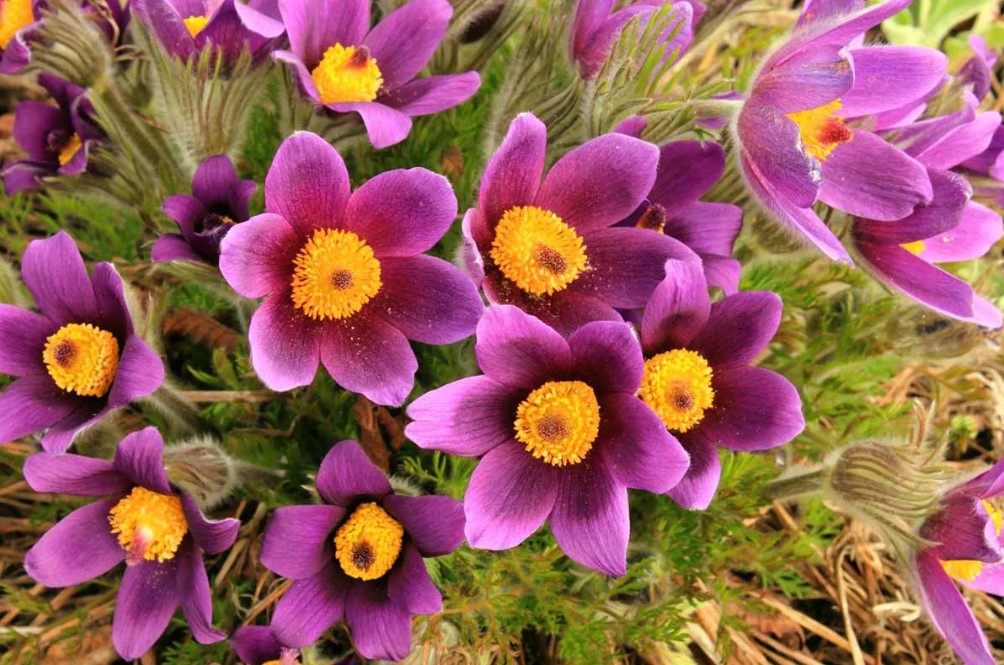
Please note! Pasque flower can be planted next to plants that thrive in neutral and fairly dry soil.
Pasque flowers look great both as single plants and in groups. You can plant varieties of the same color or different colors. The latter option will create a colorful and interesting cluster.
Tips for growing pasqueflower
Finally, we will give some useful recommendations for growing pasqueflower in the garden:
- You shouldn't pick or cut pasqueflowers growing in the wild, as they may be listed as endangered. Furthermore, digging them up to plant them in your own garden is also pointless; they won't survive.
- The plant thrives in both sun and partial shade. When planting on a slope, a south- or east-facing site is best.
- Avoid overwatering the plant, as this will inevitably lead to root rot and the death of the plant. However, if the pasque flower is grown in a container, including a peat container, regular watering is essential.
- When propagating from seed, don't be surprised if the plants look very different from the mother plant. This is quite common.
I would also like to remind you once again that pasqueflower is a poisonous plant.
When using it for medicinal purposes, extreme caution is required. Do not take anything without first consulting a doctor.