Rheo is a plant from the Commelinaceae family, native to the African and American tropics. Some botanists include it in the genus "Tradescantia." Common people call it "Moses' boat."
Description
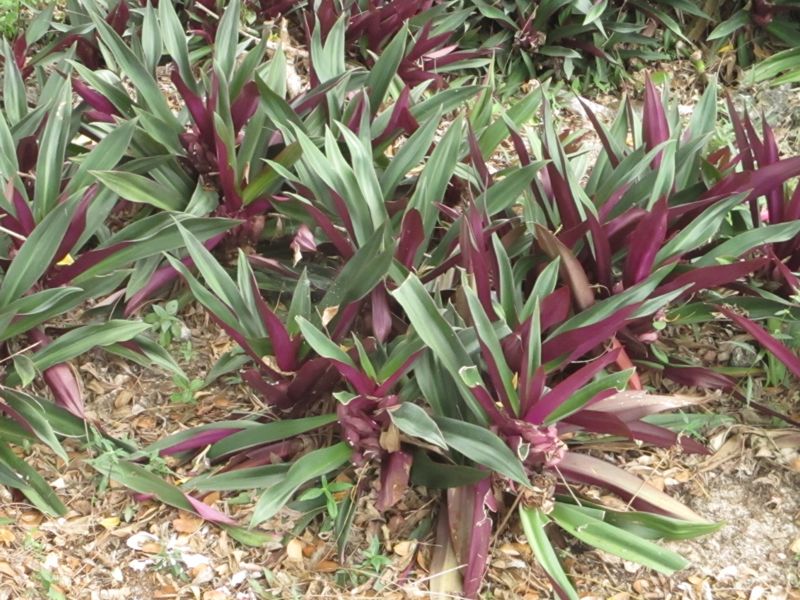
Rheo is a perennial plant with long foliage (about 30 centimeters) that comes in a variety of colors. The tops of the leaves are green, while the undersides range from green to purple. Depending on the variety, the leaf blades may have longitudinal stripes of varying colors, from purple to burgundy.
The stem is dense and erect, the root system is well developed.
The flowers are small and white. A distinctive feature of Reo is that they begin to bloom at the base of the leaves and are covered by two or three bracts.
Species for indoor cultivation
Indoor types of reo include:
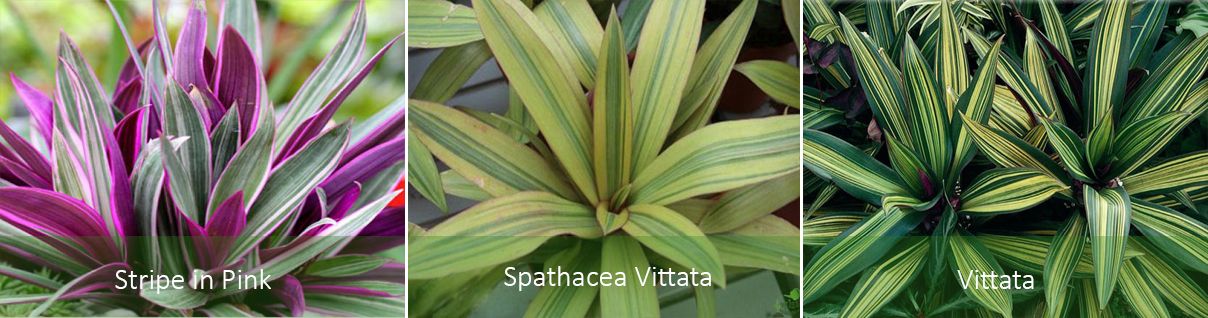
- Stripe in Pink (simply "pink" in Russian) is an ornamental flower with light pink stripes on its foliage. The intensity of the stripes depends directly on the quality of light.
- Spathacea Vittata – the outer side of the foliage is sandy, the inner side is pinkish.
- Vittata is a compact flower with purple undersides and rich yellow stripes on a green background on the upper side.
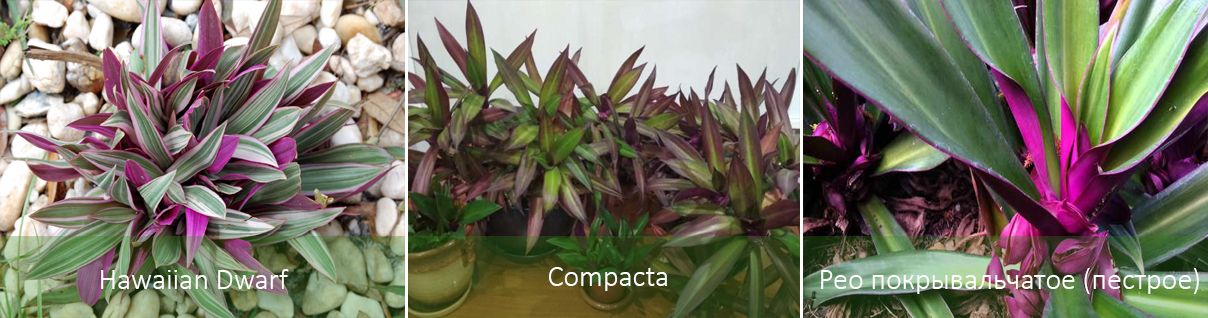
- Hawaiian Dwarf – has multi-colored leaves (three colors are combined: green, white or pink).
- Compacta – purple-green foliage, high bushiness.
- Rheo sphaeroides (variegated) - boat-shaped foliage with purple stripes.
Home care
Home care for reo depends on the season:
| Parameter | Spring-summer | Autumn-Winter |
| Location and lighting | It's best to place it in a bright room, but out of direct sunlight. East- and west-facing windows are considered suitable locations. | |
| Temperature | +22-+24 degrees. | +14-+17 degrees. |
| Humidity | Moderate humidity is suitable. The plant should be misted. This should be avoided during the flowering period. Humidity should be moderate. Do not mist. | |
| Watering | Intensive watering is required (every two to three days), but avoid allowing the soil to become waterlogged. Water with soft water, allowing it to steep for several days before use. | Watering is done once every 7 days. |
| Top dressing | Fertilize twice a month. Use any complex mineral fertilizer designed for indoor plants. | No fertilizers are applied. |
Repotting: Pot, Soil, Step-by-Step Description
The plant isn't picky about soil; a general-purpose soil for ornamental foliage plants is typically used. If desired, you can create your own substrate by combining turf, leaf mold, humus, fine sand, and peat in varying proportions.
Reo is repotted annually in the spring. The pot should be larger in diameter, wider, and deeper. It is recommended to transfer the plant from the old to the new container by transshipping, being careful not to damage the root ball.
Adult plants need to be repotted 2-3 times a year.
For proper transplantation, it is recommended to follow the step-by-step instructions:
- A 2-3 cm thick drainage layer is placed at the bottom of the new pot, using expanded clay, crushed red brick, and river pebbles. A small amount of potting mix is added on top.
- The shrub is carefully removed from the old pot and placed in the center of the new one. To prevent soil from shedding from the roots, it is recommended to water the plant a few hours before repotting.
- Fill the spaces between the pot and the root ball with fresh soil, compacting it lightly by hand. Avoid pressing the soil too hard, as this can impair its moisture and air permeability.
Reproduction
When growing reo in artificial conditions, it can be propagated in the following ways:
- Cuttings. The cutting is taken from the main plant and then placed in a moist substrate of fine sand and peat. Once the cutting develops roots, it is transplanted into regular soil. The cutting can also be grown in water, which leaves only foliage that is not exposed to water.
- Division. Take a mature plant, remove it from the pot, gently shake it out, and divide it into several pieces. All pieces should be approximately the same size, and the root system should be sufficiently developed.
- Seeds. Take fresh seeds and place them in a mixture of sand and peat, watering frequently. Once the seedlings emerge, they are planted in regular soil.
Care errors and how to fix them
| Symptom | Cause | Elimination |
| The lower leaves dry out and fall off. | This is normal for mature plants, as the lower part of the shoots becomes exposed with age. | No action is required. |
| Young leaves are falling. | Excessive soil moisture. | Reduce the frequency of watering. In severe cases, replace the soil in the pot. |
| The tips of the leaves dry out and turn brown. | Insufficient humidity and dry air in the room. | The frequency of watering is adjusted. Occasionally, the plant requires spraying. |
| Pallor. | Watering with a liquid containing large amounts of calcium and chlorine. Poor lighting. | Boiled or purified water should be used for watering. The plant is moved to a brighter location. |
Diseases, pests
Scale insects are the most dangerous pests for Rheo. If these insects are found on the leaves, the plant is treated with a soapy solution. Adult insects are removed by hand beforehand. If the infestation is severe, damaged foliage is removed and the plant is sprayed with insecticides such as Fitoverm and Aktara.
If watered frequently, the plant may suffer from root or stem rot. In this case, remove the bush from the pot, inspect the root system, and remove any diseased areas.
Top.tomathouse.com recommends: Reo – a home healer
According to folk beliefs and superstitions, rheo is a medicinal plant. Its use is recommended for the following conditions:
- rheumatism (in the form of compresses);
- skin wounds (the leaf is crushed, placed on the injured area and bandaged);
- intestinal diseases (drink as a decoction, which is prepared for 20 minutes).
Among the mystical properties of the flower, its ability to imbue people with creative energy and protect the home is highlighted.