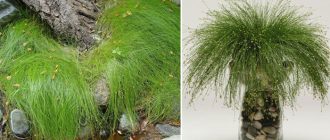
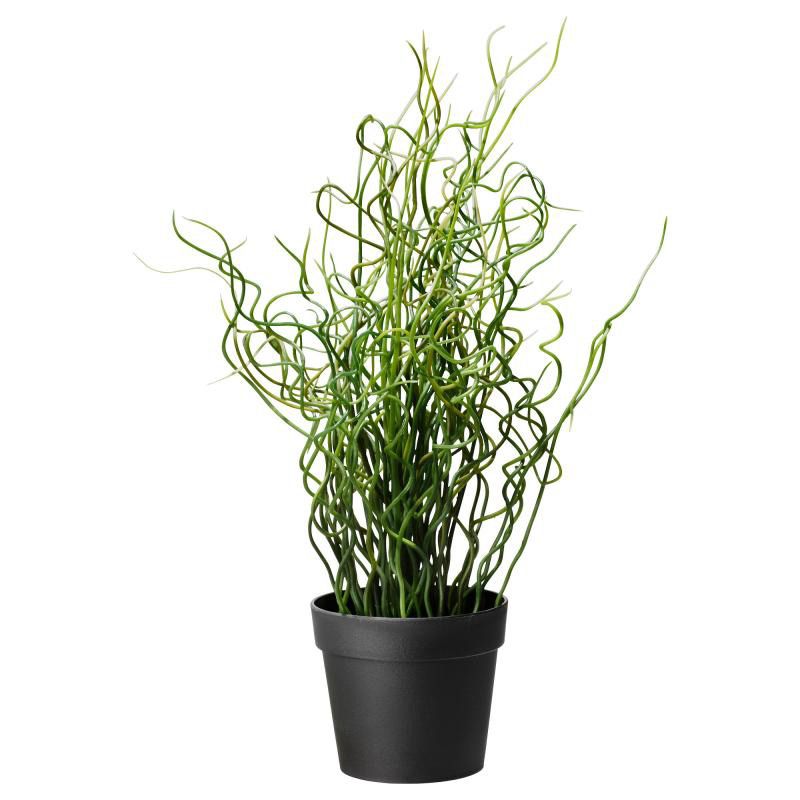
Houseplants are often prized for their vibrant, unusual blooms, but there's always an exception to every rule. Juncus sedge (or juncus) is such an exception. This beauty is impossible to miss in a room or at a flower shop. Its unusually shaped, spiraling stems appear artificial at first glance. Juncus sedge doesn't need bright flowers to attract admiring glances.
Rush grass has only recently been cultivated as an ornamental plant, although it is mentioned in texts dating back to ancient Rome and China. At that time, it had a purely practical use: it was used to weave baskets, mats, and much more. This is where the plant's name comes from: in Latin, "ungere" means "to bind, to weave."
Generally, rush is a member of a fairly large family. Experts currently count approximately 400 species within this genus. Its distribution range is quite wide, from Siberia to America and Australia. One thing remains constant: this plant's love of water.
Content
Botanical description
Members of this genus are both perennial and annual, rhizomatous. A common feature is open, unclosed leaf sheaths, often without auricles. They reproduce by both seeds and rhizomes, but the indoor species can only be propagated by rhizome division.
Types and varieties for home cultivation
Several species are grown for decorative purposes:
| View | Description |
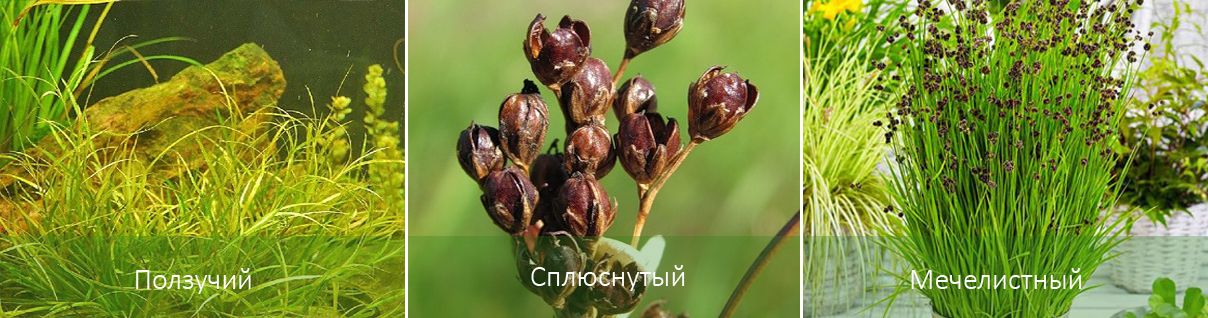
| Creeping | Used for decorating aquariums and ponds. It can be grown completely submerged; when grown underwater, the leaves curl into rings. It is low-maintenance and requires no additional fertilizing. It looks impressive against larger-leaved plants. |
| Filiform | It is also grown for pond decoration. A perennial, it tends to self-seed, so careful monitoring of germination is required. It tolerates winter well. |
| Flattened | A perennial also used for coastal landscaping. It tolerates winter well. |
| Sword-leaved | Native to America, it was relatively recently brought to Russia. It is a winter-hardy, spreading perennial plant growing approximately 40 cm tall. |
| Toad | They are considered a weed species, but can also be used to decorate low-lying and damp areas. |
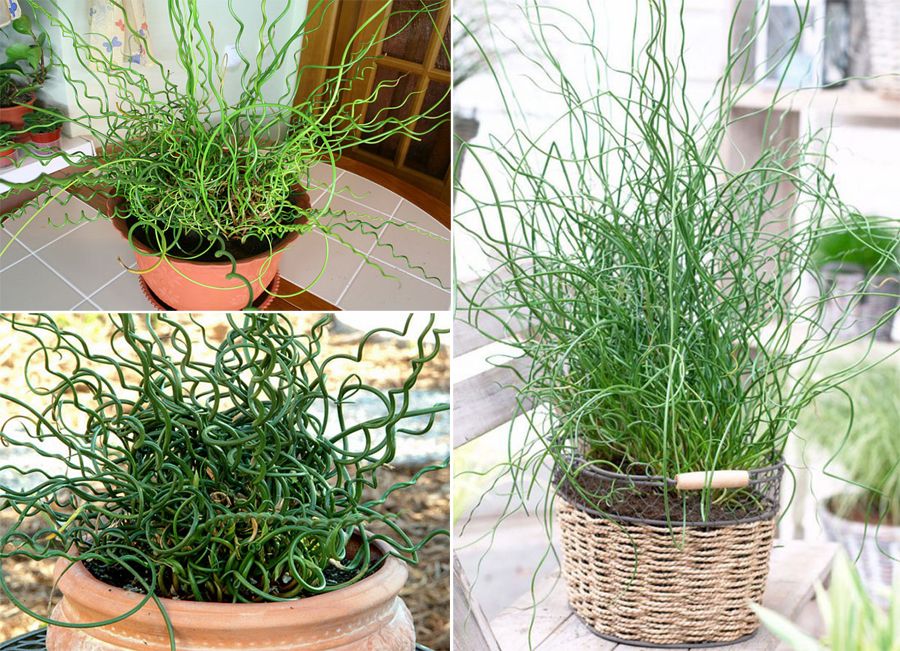
| Spreading | A distinctive feature are its spirally twisted stems, completely devoid of leaves. Perhaps the most beloved member of the family among designers and gardeners, this perennial has stems approximately 5 mm in diameter. Four ornamental forms of this species are common:
|
Difficulties of home care
Despite the eucalyptus's extravagance, it's quite undemanding. Although it will certainly require some attention, the most important thing when growing eucalyptus indoors is to remember that this family of plants originates from banks and marshes, and therefore prefers marshy soil and moisture.
Location, lighting
Lighting is important, but direct sunlight is harmful and generally poorly tolerated. Therefore, when choosing a pot location, it's advisable to choose a west or north exposure. Since the plant doesn't tolerate any wind, a windowsill is also unsuitable.
When growing Spiralis (as rush is often called), many experts initially train the plant to tolerate partial shade; in this case, it will thrive even in the center of a room. This is often used by interior decorators to effectively zone a space. This information can be clarified beforehand at the flower shop.
Temperature conditions
Although most members of the genus tolerate frost well, indoors, spiral juncus requires a constant air temperature of 16 to 24 degrees Celsius. When temperatures drop below 15 degrees Celsius, the plant enters dormancy, its growth stops, and the stems begin to dry out. In some cases, especially older plants, experts recommend allowing the plant to undergo such dormant periods. However, young juncus do not require dormancy.
Watering, humidity
The main challenge in caring for juncus is creating optimal air and soil humidity. This plant thrives in hydroponics, and automatic watering is also acceptable.
Does not tolerate soil drying out; the water level in the tray should always be constant.
When watering, it's best to use well-settled water at room temperature. Experienced gardeners often recommend creating a personal "swamp" on forums, although this has a number of practical drawbacks. In addition to the substrate's moisture level, air humidity is equally important. If the room humidity is below 50%, rush should be watered, but not directly on the plant, but slightly to the side, creating a mist.
Fertilizer
Fertilizing is only required during the active growth period (spring, early summer). Juncus prefers general-purpose and organic fertilizers, but not too frequently—a couple of times a month is sufficient.
During the dormant period, rush does not need any supplements; watering should also be limited.
Trimming
As a rule, this plant doesn't require pruning. The only exceptions are straight stems (like Spiralis) and single-colored stems (like Gold Strike). In these cases, if pruning is delayed, the plant's decorative appeal is at risk of being lost, as subsequent stems are likely to grow in the same manner.
Repotting: choosing a pot and soil
Roughly once a year, before the active growth phase, rushes need repotting. To be sure this is truly necessary, it's worth examining the pot's drainage holes: if the rhizome has sprouted a dense, branched brush, it's time to select a larger pot and repot.
Since this is a marshy plant, it will do well in both paludariums and regular pots with large containers for liquid, or double ones.
The diameter of the new pot should be approximately 5 cm larger than the previous one. Before repotting, carefully assess the condition of the rush: as with any other plant, repotting is not necessary if it is flowering.
When removing rushes from an old pot, carefully inspect their root system. If rot is suspected, remove the damaged area. Hydroponics is ideal for this plant, but any light, acidic soil can be used.
Reproduction
The time of transplantation is the most favorable for propagation. Since this species reproduces only vegetatively, dividing the root system is sufficient, provided there is sufficient volume of rhizome and above-ground portion.
Usually, rush tolerates this process very easily and within 7-10 days begins to actively grow again.
Negative consequences of improper care
| Symptoms | Reasons |
| The stems appear pale. | Insufficient lighting. |
| The shoots are drying up. | Insufficient air humidity or low room temperature (in this case, the plant is preparing for a period of dormancy). |
| The shoots are drying out (at normal humidity and temperature). | Root rot is possible. This usually occurs due to untimely repotting. In this case, carefully inspect the rhizome, remove any damaged parts, and repot, replacing the soil completely. |
| Whitening of leaves. | Juncus lacks air and nutrition; this usually occurs when the substrate has become compacted and the root system cannot fully nourish the plant. |
Diseases, pests
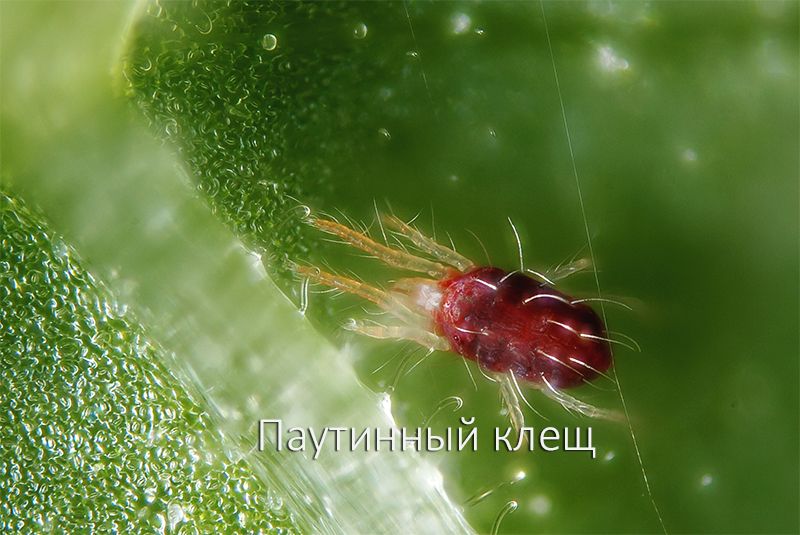
Rush is resistant to most diseases. Pests include spider mites, scale insects, and aphids. Infestations are fairly easy to detect.
- If infested with spider mites, the stems become covered with a light, sticky web.
- Scale insects can be identified by the appearance of dark plaques and plaque on the plant.
- Aphids reproduce very quickly, so they are very noticeable on shoots: they are small green bugs.
Both folk remedies like soap solution and professional insecticides are suitable for treatment. Typically, one treatment is sufficient.
Top.tomathouse.com informs: Rushnik according to Feng Shui, signs and superstitions, benefits and harms
In ancient China, it was believed that sprigs of rush, given to newlyweds in a new home, would guarantee a lifelong marriage and strengthen family ties. Scientifically, rush has a very beneficial effect on the indoor microclimate.
This plant not only loves humidity itself, but also humidifies and purifies the air in the room in which it is located.
But the most obvious thing is that it's impossible not to admire this beauty! So, positive emotions are guaranteed for Juncus owners.