Honey mushrooms are most often used for pickling, but they can be used to prepare a variety of delicious dishes. To preserve their freshness for a long time, freezing is recommended, but it must be done correctly. Learn how in this article.
Content
- 1 6 ways to freeze honey mushrooms
- 2 Preparing honey mushrooms for freezing at varying degrees of readiness
- 3 Method 1: Can raw honey mushrooms be frozen?
- 4 Method 2: Freezing blanched honey mushrooms
- 5 Method 3: How to boil honey mushrooms before freezing
- 6 Method 4: How to Freeze Fried Honey Mushrooms
- 7 Method 5: How to Freeze Stewed Honey Mushrooms
- 8 Method 6: Freezing honey mushroom caviar
- 9 How to defrost honey mushrooms before cooking
- 10 What can be made from frozen honey mushrooms?
- 11 How long can frozen honey mushrooms be stored?
- 12 Tips for freezing honey mushrooms from Top.tomathouse.com
- 13 User tips for freezing honey mushrooms
6 ways to freeze honey mushrooms
Freezing helps to preserve not only the freshness of honey mushrooms for a long time, but also the nutrients in their composition.
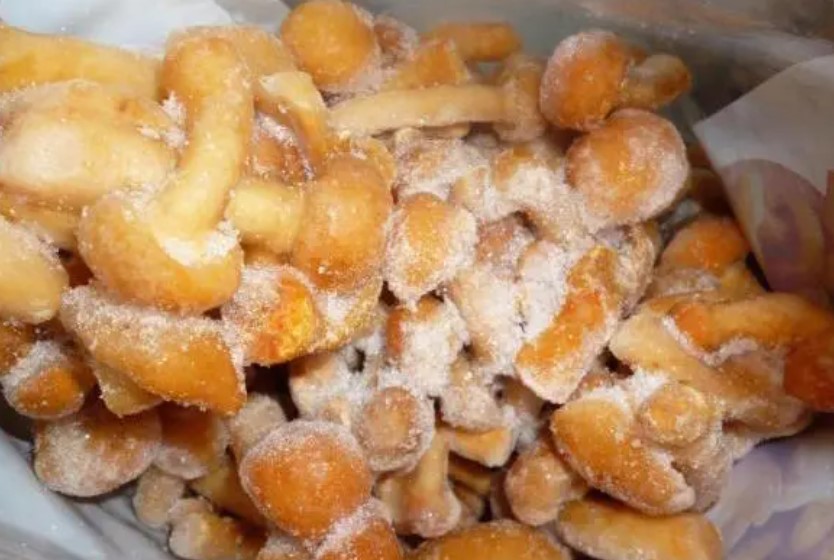
There are several ways to freeze honey mushrooms at different stages of readiness:
- Fresh.
- Boiled.
- Blanched.
- Fried.
- Stewed.
- In the form of caviar.
The method you choose will depend on the intended use of the mushrooms. We'll examine each method in detail below.
How freeze chanterelles or porcini mushrooms Read on our website Top.tomathouse.com.
Preparing honey mushrooms for freezing at varying degrees of readiness
Preparing honey mushrooms for freezing is very simple, but the method chosen must be taken into account. First, remove any dirt and debris from the surface of the mushrooms.
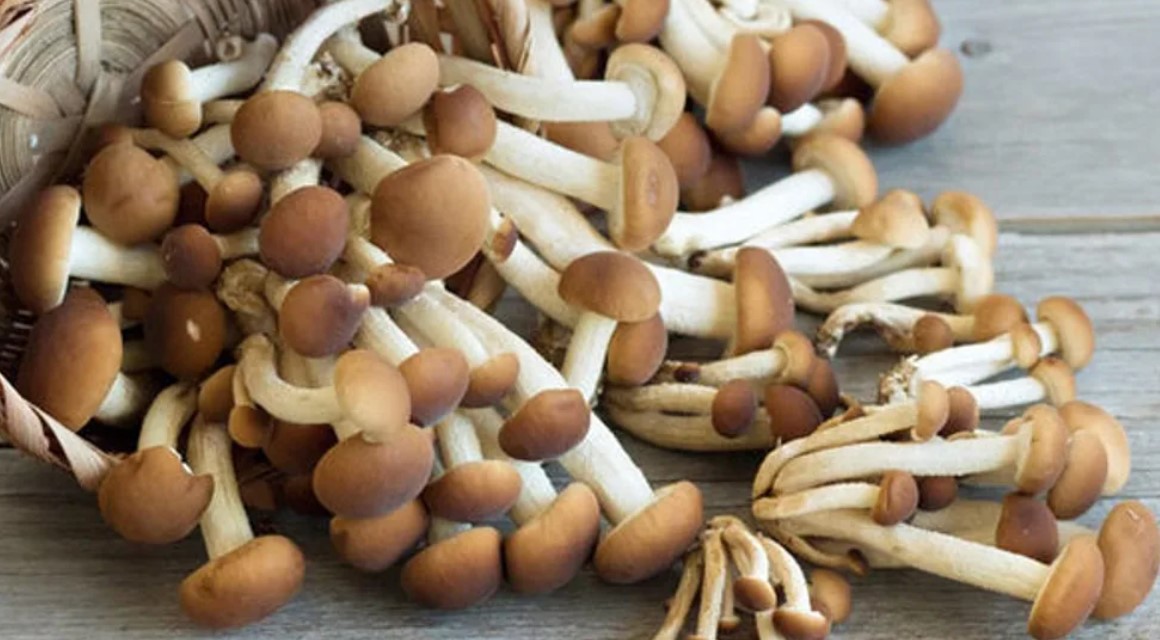
The next step is rinsing, but this is not always done:
- When freezing fresh honey mushrooms, it's best not to wash them; simply clean them with a cloth. If the area of dirt is quite large, you can quickly rinse the mushrooms and dry them thoroughly.
- Honey mushrooms that will be boiled or fried can be soaked for several hours in cold water to remove all debris, and then rinsed.
For freezing fresh, it's best to use uniform, small-sized mushrooms so you don't have to cut them. When boiling or frying, you can cut the mushrooms into appropriately sized pieces.
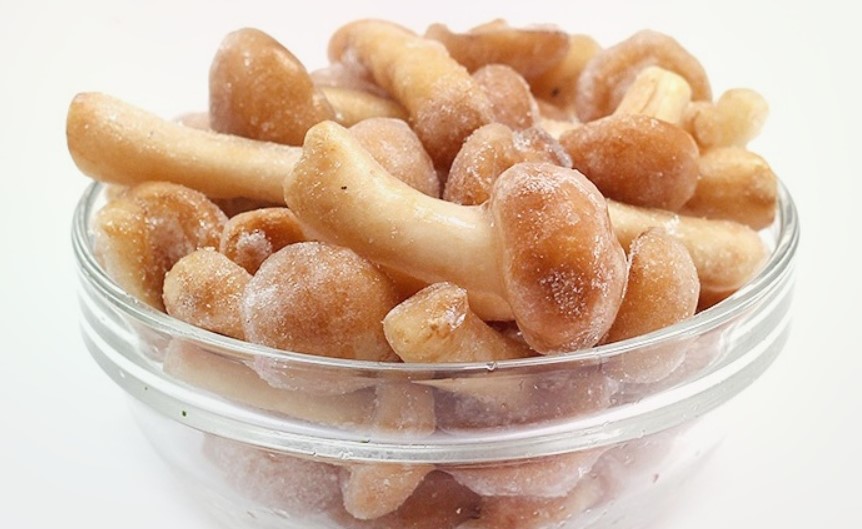
If you are an inexperienced mushroom picker and have doubts about the edibility of the mushrooms you have collected, you should first read the article about types of honey mushrooms, how are they distinguish from false, and it is also better to boil mushrooms before freezing using methods that will help solve this issue.
Method 1: Can raw honey mushrooms be frozen?
Freezing raw honey mushrooms allows them to retain the maximum amount of nutrients.
Do you know that? It is healthy to eat raw champignons And They are very good in diets for weight loss..
In addition, they do not lose color, shape and aroma.
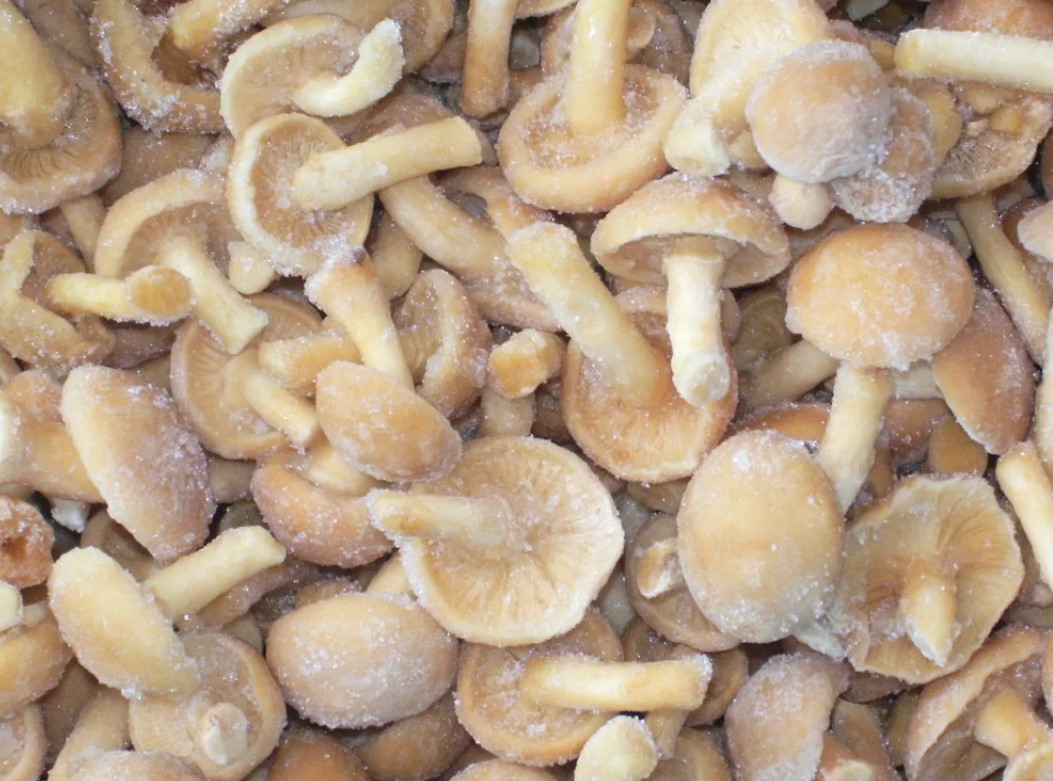
Freezing is carried out as follows:
- Remove all forest debris from the mushrooms with a soft cloth. It's not recommended to wash them, as this will prevent the flesh from absorbing excess water.
- Place the honey mushrooms on a tray in one layer and place in the freezer for 12 hours.
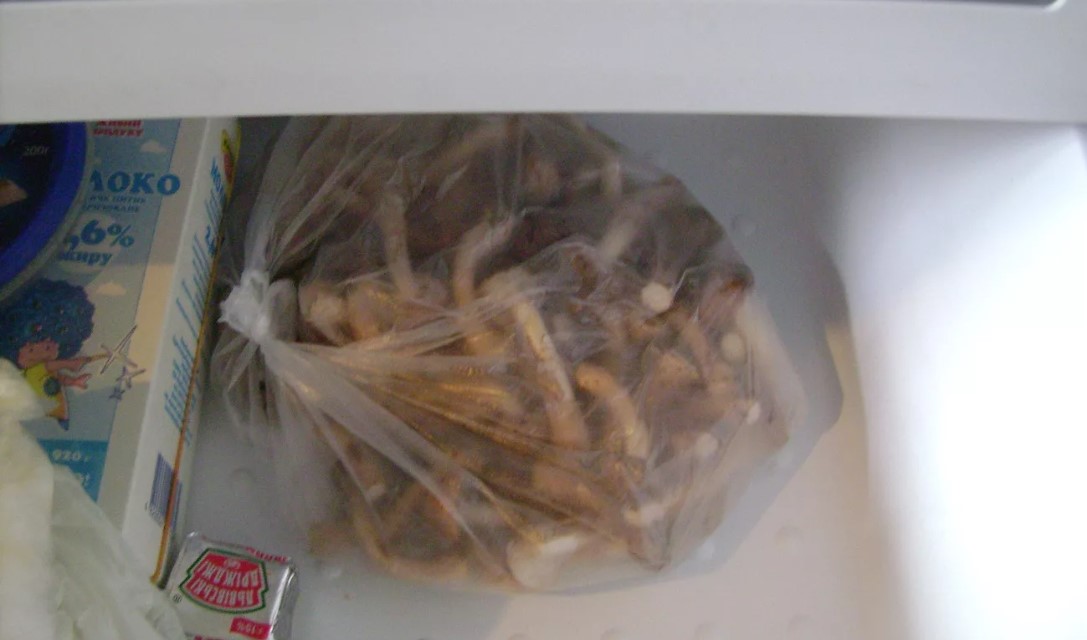
- After freezing, place the mushrooms in containers or bags and return them to the freezer. Store at -18 degrees Celsius.
Method 2: Freezing blanched honey mushrooms
Blanching involves shock-treating the mushrooms with hot water. To blanch honey mushrooms, you'll need a colander or two pans—one with cold water and one with boiling water.
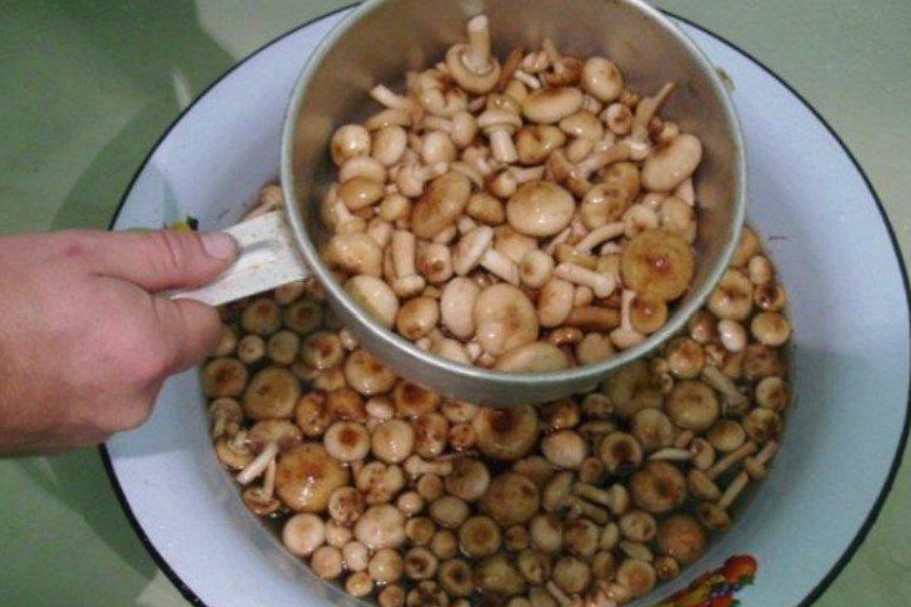
Blanching can be done in two ways:
- Place the honey mushrooms in a colander and pour boiling water over them, let the liquid drain and freeze in bags.
- Place the honey mushrooms in boiling water, cook for 3 minutes, then transfer them to a pan of cold water. Cool, dry, and freeze.
Method 3: How to boil honey mushrooms before freezing
Boiled honey mushrooms reduce cooking time, as they don't need to be defrosted and can be added directly to the pot or pan. Boiling also saves freezer space, as the mushrooms shrink significantly after cooking.
- Before boiling, the honey mushrooms are washed, and if necessary, they can be soaked in cold water for 2 hours.
- It's best to cook the mushrooms in salted water for 1-2 hours. Place the mushrooms in salted boiling water, skim off the foam after boiling, and change the water.
- Large honey mushrooms can be cut into smaller pieces.
The mushrooms are ready when they all settle to the bottom of the pan. Place the mushrooms in a colander and let the water drain. Then transfer them to bags or containers and freeze.
It is important to remember that mushrooms cannot be defrosted again, so it is better to arrange the honey mushrooms in portions.
Method 4: How to Freeze Fried Honey Mushrooms
Frozen fried honey mushrooms can be used to make stews, added to cereals, or served with potatoes.
Honey mushrooms are fried as follows:
- Rinse the mushrooms and dry thoroughly. Large mushrooms can be cut into 2-3 pieces.
- The frying pan is heated, the honey mushrooms are placed in it and a little vegetable oil is added.
- The mushrooms are fried until golden brown.
The fried mushrooms are placed in a colander to remove excess oil and liquid, and then distributed into portioned bags.
Method 5: How to Freeze Stewed Honey Mushrooms
Stewed honey mushrooms differ from fried ones in the absence of oil and the addition of a small amount of water.
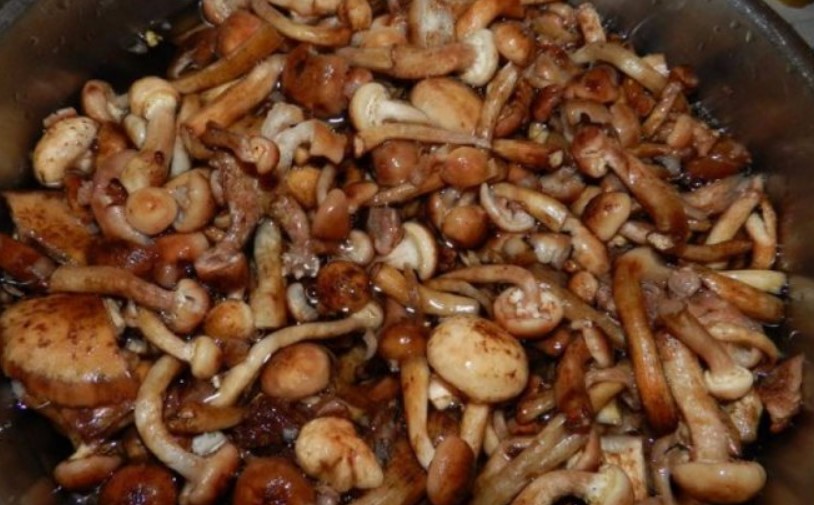
- The mushrooms are placed on a heated frying pan and salted.
- Next, add 2-3 tablespoons of water and cover the pan with a lid.
- After boiling, reduce heat and cook the mushrooms for 25 minutes.
- After finishing, the honey mushrooms are placed in a colander for 1 hour, and then laid out in containers.
Method 6: Freezing honey mushroom caviar
Prepared mushroom caviar can be easily frozen, which will increase its shelf life.
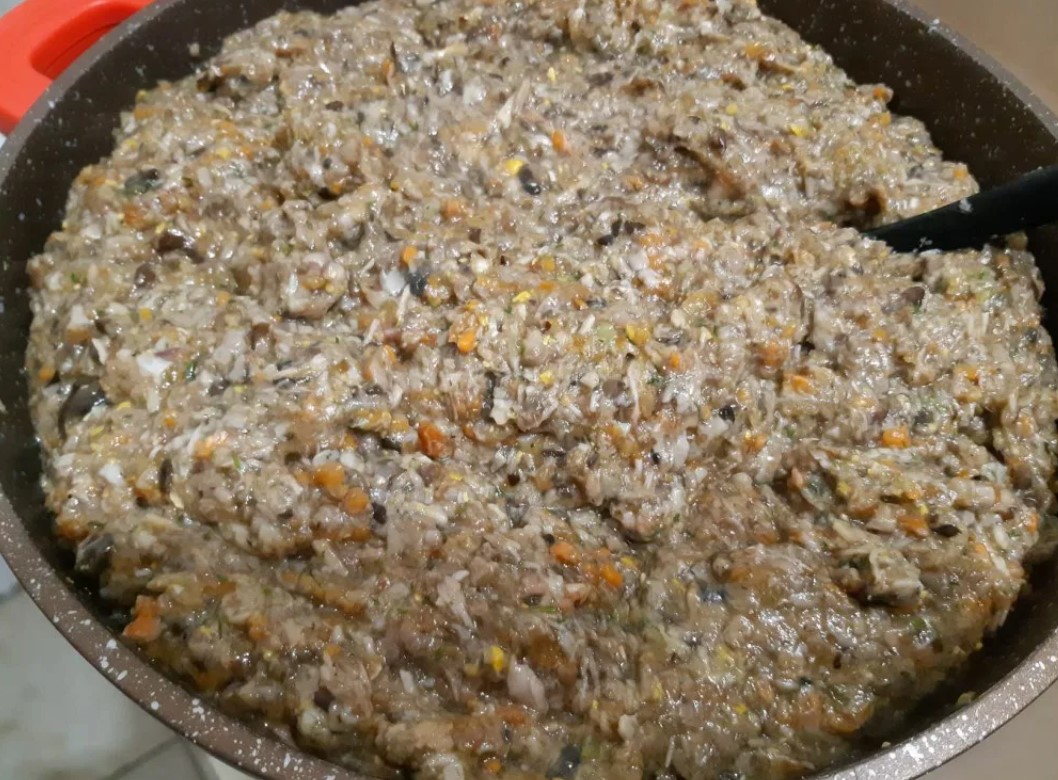
The preparation steps are as follows:
- Soak the honey mushrooms in lightly salted water, then rinse and clean.
- Boil until done for 1.5-2 hours.
- Place in a colander and let excess liquid drain.
- Grind the mushrooms using a meat grinder or blender.
- Place the finished caviar into containers and put in the freezer.
There's no need to defrost these mushrooms before using them. Simply place the caviar in a preheated frying pan and add 150 ml of water. Once the liquid has evaporated, you can add the spices and onions.
How to defrost honey mushrooms before cooking
It's not recommended to thaw mushrooms too quickly, such as by placing them in water. It's best to remove them from the freezer 10-12 hours before cooking, place them in a bowl, and store them on the bottom shelf of the refrigerator.
Sometimes mushrooms don't need to be defrosted at all, especially if they were frozen boiled or fried.
What can be made from frozen honey mushrooms?
Frozen honey mushrooms can be used in a wide variety of dishes. They can be added to potatoes, vegetable stews, baked as a julienne with chicken, added to salads, added to soups, or used as a pie filling.
Below are very simple and delicious recipes for preparing dishes from frozen honey mushrooms.
Soup
Honey mushroom soup is prepared quickly and does not require any special preparation.
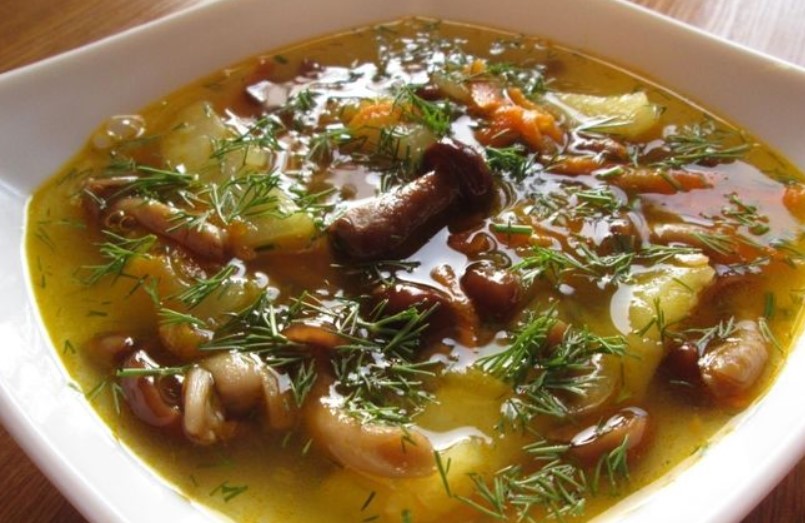
Ingredients:
- Frozen honey mushrooms – 400 g.
- Water – 2 l.
- Onions – 2 pcs.
- Potatoes – 4 pcs.
- Carrots – 1 pc.
- Bay leaf – 2 leaves.
- Vegetable oil – 40 ml.
- Pepper, salt – to taste.
Cooking steps:
- Place frozen honey mushrooms in water, add bay leaves, cook for 20 minutes, add salt.
- Grate the carrots, chop the onion, fry the vegetables in a frying pan for 5 minutes.
- Cut the potatoes into cubes, add to the mushrooms and cook for another 15 minutes.
- Add the sautéed vegetables, remove the bay leaf from the soup, and cook for another 5 minutes.
- Add salt, pepper, and herbs if desired before serving.
Fried with potatoes
It's best to use fresh frozen honey mushrooms for this dish. To prepare, you'll need:
- Frozen honey mushrooms – 500 gr.
- Potatoes – 6 pcs.
- Onions – 2 pcs.
- Ghee butter – 60 g.
- Pepper, salt, herbs – to taste.
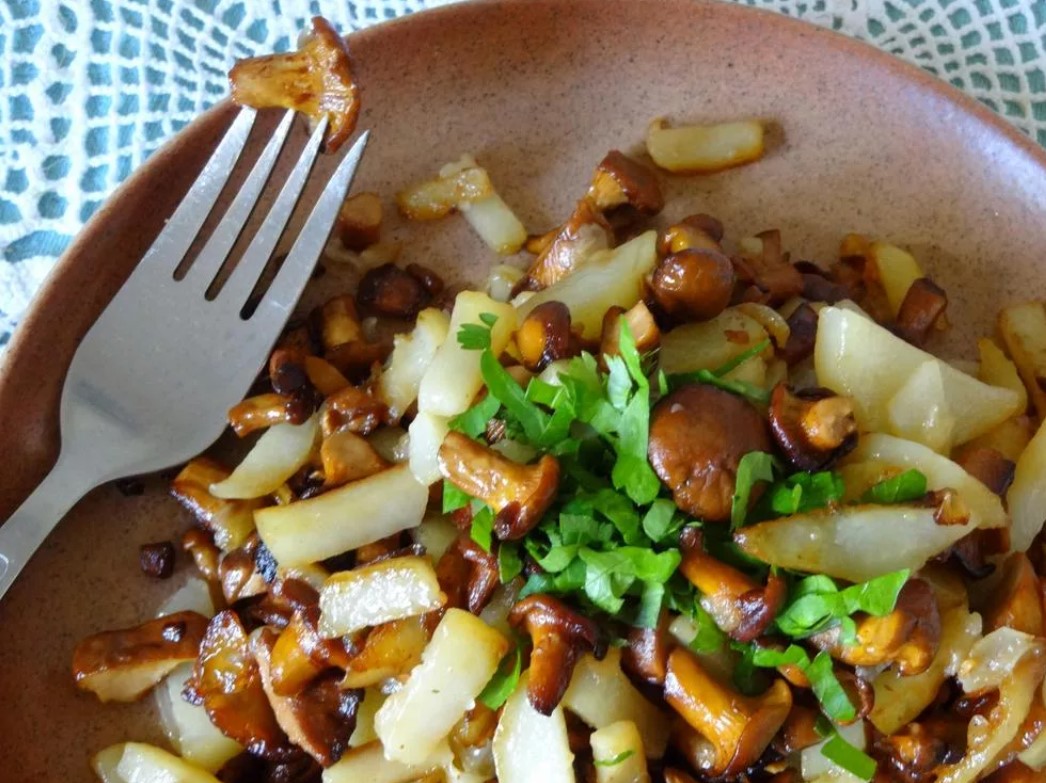
Method of preparation:
- Defrost the mushrooms and dry them on paper towels; raw honey mushrooms must be boiled first.
- Wash the potatoes, peel and cut into cubes.
- Cut the onion into half rings.
- Melt butter in a frying pan and fry potatoes until half cooked.
- Add mushrooms and onions, salt, spices and herbs, fry for another 15 minutes.
Vegetable and honey mushroom stew
Any frozen honey mushrooms are suitable for making this stew. Ingredients:
- Honey mushrooms – 400 gr.
- Potatoes – 3 pcs.
- Carrots – 2 pcs.
- Onions – 2 pcs.
- Tomato juice – 2 tbsp.
- Garlic cloves – 3 pcs.
- Olive oil – 100 ml.
- Turmeric – 0.5 tsp.
- Pepper, salt, dill – to taste.
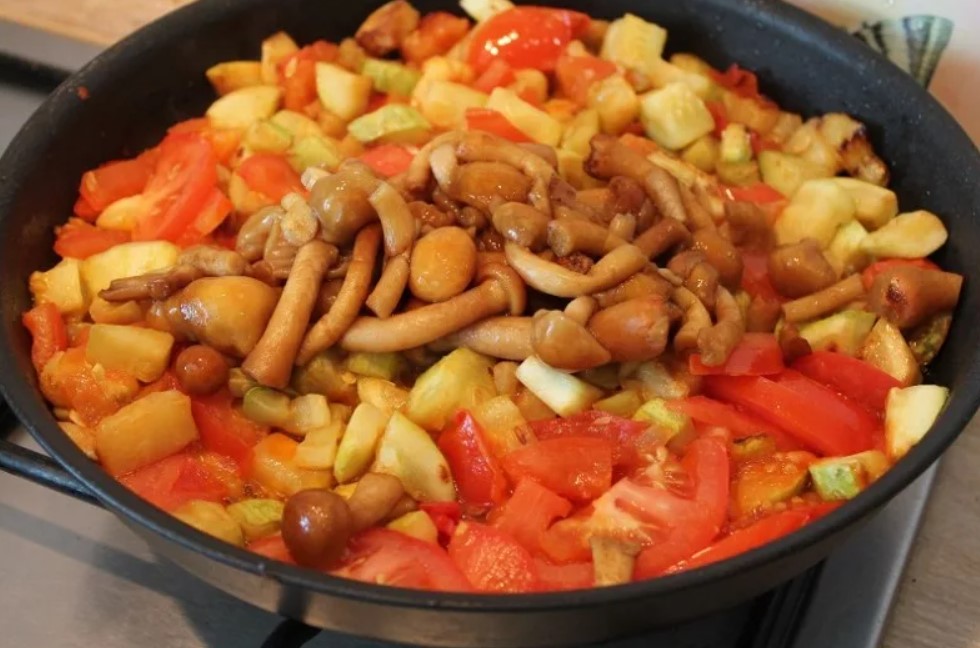
Method of preparation:
- Boil or defrost the mushrooms and dry them.
- Peel the vegetables and cut into cubes.
- Place carrots, onions and garlic in a frying pan heated with olive oil and fry for 5-10 minutes.
- Fry the potatoes in a separate frying pan.
- Transfer the potatoes to the vegetables, add mushrooms, tomato juice, herbs, spices and salt, simmer for 30 minutes under a closed lid.
Stuffed chicken
Chicken stuffed with honey mushrooms makes a wonderful addition to your holiday table. To prepare, you'll need:
- Chicken carcass – 2 kg.
- Frozen honey mushrooms – 600 gr.
- Sweet pepper – 1 pc.
- Onions – 2 pcs.
- Garlic – 2 cloves.
- Dill, salt, pepper – to taste.
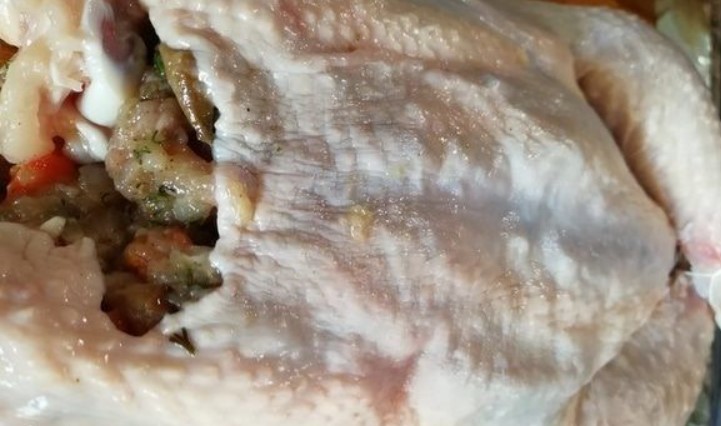
To coat the chicken, prepare a separate sauce:
- Mayonnaise – 2 tbsp.
- Curry – 0.5 tsp.
- Olive oil – 1 tbsp.
- Balsamic sauce – 1 tsp.
- Pepper, salt – to taste.
Cooking steps:
- Wash the chicken and cut it up with a sharp knife, removing the meat and bones from the breast and thighs. The skin, drumsticks, and wings should be left intact.
- Separate the meat from the bones and grind it using a food processor.
- Wash the vegetables and cut into small cubes.
- Boil the mushrooms and chop.
- Heat a little oil in a frying pan and fry the onions and mushrooms until the liquid has completely evaporated.
- Add pepper, garlic, spices and fry for another 5 minutes.
- Mix vegetables, minced meat and herbs.
- Sew up the bottom of the carcass with culinary thread and stuff the top with a mixture of meat, mushrooms and vegetables.
- Tie the wings and thighs together and give the carcass its shape.
- Coat the chicken with sauce.
- Place in an oven preheated to 200 degrees and bake for 50 minutes, periodically removing and pouring with the released juice.
How long can frozen honey mushrooms be stored?
Honey mushrooms can be stored in the freezer for a long time, but the exact shelf life depends on the freezing method:
- Cooked – 12 months.
- Roasted – 12 months.
- Raw – 6 months.
- In the form of mushroom caviar – 6 months.
Mushrooms will last the longest at a temperature of -18 to -24 degrees; at a temperature of -12 degrees, the shelf life will be halved.
It is very important not to allow mushrooms to freeze again.
Tips for freezing honey mushrooms from Top.tomathouse.com
- For freezing, you should only use fresh and good mushrooms, without damage or darkening.
- You can't freeze mushrooms twice.
- It is essential to dry honey mushrooms before freezing.
- The freezing date is indicated on containers and packages to prevent expiration of the shelf life.
- After freezing, honey mushrooms may continue to release juice for some time, so do not pack the bag or container tightly.
User tips for freezing honey mushrooms
Help me out. My husband picked a whole bunch of honey mushrooms. We'll pickle them, usually a big bucket. What should we do with the rest? I once tried freezing boiled honey mushrooms, but after defrosting they didn't turn out quite right, and they lost their marketable appearance and weren't tasty. Maybe I froze them wrong? I boiled them and put them in a bag.
Maybe I could fry the mushrooms, put them in jars, and freeze them? I'm craving some tasty mushrooms this winter.
Thanks in advance)
Well, maybe because I froze big ones, that’s why it didn’t work out.
Preparing honey mushrooms for the winter by freezing is, in my opinion, the best way.
After all, neither vinegar nor salt is added to this type of preservation.
Moreover, such mushrooms take up much less space.
How to prepare honey mushrooms for freezing: I always wash them under the tap, then, to be on the safe side, place them in a bowl of water to allow any remaining soil and dirt particles to settle.
I put the mushrooms into boiling water and let them boil for 10-15 minutes.
Next, I drain the water, add more water that I previously boiled in a kettle so that the new portion of water boils quickly, reduce the heat and cook for another couple of hours.
I take these mushrooms out of the water. I let them cool and dry slightly. I place them on small plastic trays lined with cling film, freeze them, and then put them in lidded containers for long-term storage. This will help the mushrooms retain their shape.
You can chop them after freezing if you plan to use them for making mushroom puree soup or for filling pies and pastries.
We always boil honey mushrooms before freezing; it tastes better and takes up less space.
It is better to boil honey mushrooms before freezing.
You can freeze them raw, but they'll take up too much space in the freezer, and after defrosting, they'll be harder to peel, and it'll take longer to deal with them. I've tried both.
Best:
Clear away soil and leaves,
Wash
Cut large mushrooms
Place in cold water (you can even add some salt)
Cook for no more than 5 minutes after boiling (if you want to preserve the mushroom aroma)
Drain in a colander
Place into individual portioned bags
Cool, place in the freezer
Before freezing wild mushrooms, I used to boil them first, then drain them through a colander, letting the water drain completely, and then portion them into bags, using a flat pan, and then put them in the freezer. In the winter, when needed, I'd take out a portion, defrost the mushrooms slightly, and cook them.
Now, following a friend's advice, I've decided to try freezing raw honey mushrooms instead of boiling them after harvesting. But it's important to first thoroughly process them, clean them, and rinse them to remove any debris or dirt, then dry them as thoroughly as possible, then place them in bags and freeze them. In winter, take them out before cooking and only open them; this way, the mushrooms are much more aromatic and delicious.
I always freeze them, only the tiny ones, not the big ones. They don't lose their flavor, so I put them in a bag and put them in the freezer.
I freeze the big ones (I marinate the tiny ones—they look prettier). First, I boil them, cool them, and then bag them. Then, when needed, without defrosting, I put them in a frying pan and fry them with onions, then with sour cream—it's finger-licking good.
It depends on what you're going to do with them and the size of the mushrooms. I marinate the small ones (whole), and make mushroom caviar or mushroom solyanka with the larger ones (I don't throw away the stems). Boil for about 20 minutes, skimming off any foam.
User: Kisyulechk@ **K**, 08/31 20:28
If you want to bake the caps with cheese, you don't need the stems, of course. I do it this way: first, I sort the mushrooms, small and large. I don't cut the small ones, but medium ones can be chopped, or if the stem is long, I cut off part of it, but the cap always remains with the stem, even with the small ones. I cut the large ones into quarters. I rinse them in two waters, boil them in salted water for 20 minutes, rinse them again with cold water. Drain and put them in freezer bags. Or I fry them with onions and sour cream: first I fry the onions, add the mushrooms and sour cream, and simmer for 10 minutes. And if you want julienne, then arrange these cooked mushrooms in cocotte dishes with sour cream (only when stewing with sour cream, add a little flour), sprinkle with grated cheese on top, and bake in the oven until the cheese is golden brown. Delicious.
User: nerpa *, 01.09 00:48
If I freeze them, I sort them, then boil them in a saucepan for a couple of minutes, drain them, rinse them (this makes it easier to wash off all the leaves and other forest dirt), then cook them for another 30 minutes, let them cool in bags, and when I take them out of the freezer, all that's left to do is fry them with onions.
You can also freeze mushrooms like this for soup or sauce. Rinse the mushrooms thoroughly and simmer for about 20 minutes. Afterward, don't drain the water, but lightly blend the mushrooms and water in a blender. Freeze them like this.
Use this base to make mushroom soup in winter.
And it’s convenient to freeze it in a plastic form, then when it’s all frozen, hold it under water for a little while and transfer this briquette into a bag.
When I freeze honey mushrooms, I soak them first, then sort and wash them, boil them for 20-30 minutes, rinse them with cold water (otherwise they will be runny when defrosted), let the water drain (3-4 hours), put them in portioned bags and put them in the freezer.
I fry the mushroom stems and put them in the freezer so I can add them straight to fried potatoes. I chop the caps finely and freeze them raw. I don't see the point in boiling them before freezing; all the flavor will go into the broth, which is thrown away, and what will remain in the mushrooms?
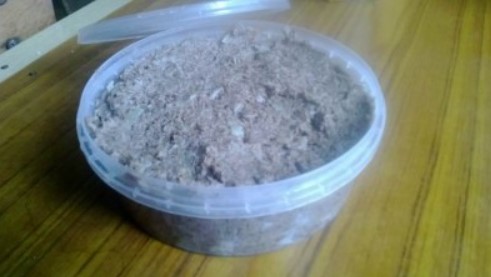
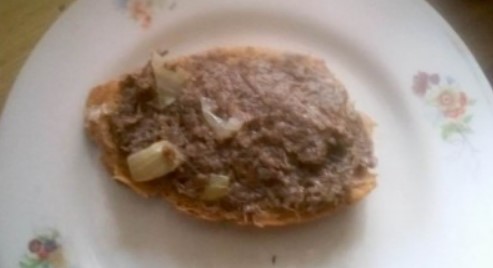
I make this pate from honey mushroom stems.
When I sort through the fish, I immediately cut off the stem and set it aside. I marinate the caps, and the stems are used for caviar.
I boil the prepared drumsticks with salt and without water. A lot of juice is released. I cook for 30-40 minutes.
I drain the juice-broth. I strain and squeeze the legs well.
I strain the remaining broth (what if I missed a blade of grass?), pour it into bags, and freeze it. In winter, I can make nyam2 mushroom soup with it—it's simply delicious. Incidentally, the broth from boiled mushroom caps also goes in the freezer. This time, I got about 4 liters of broth from a bucket of honey mushrooms. Again: don't add water to the mushrooms.
And I grind the legs in a blender.
I take a large onion, chop it finely, and sauté it with vegetable oil until it begins to brown slightly. Don't overcook it! The onion should remain soft and translucent, with only the edges of a few pieces slightly golden. I add the onion and oil to the ground mushroom stems. Stir and taste for salt. If needed, add a little oil and salt. Then I blend everything again. This step is actually optional.
Heat it briefly over the heat, stirring constantly. That's it. The pâté is ready. You can eat it right away, for example, spread it on bread.
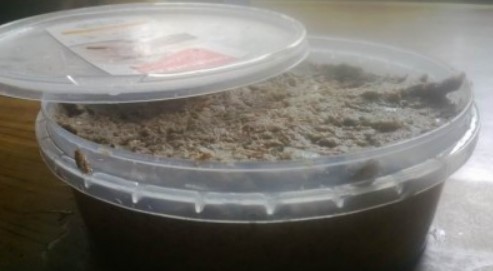
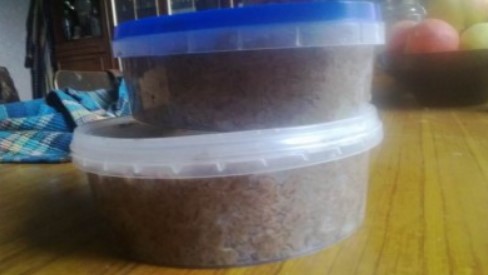
Or you can put them in bags or plastic containers and put them in the freezer.
And when we feel like it, we take out the jar, defrost it and eat it with pleasure or make filling for pies.
I use fish preserves jars for freezing. They're roomy enough and don't take up much space.
From a bucket of honey mushrooms, I got 4 liters of broth, 3 liters of marinated mushrooms, and 2 jars of pâté
Bon appetit!