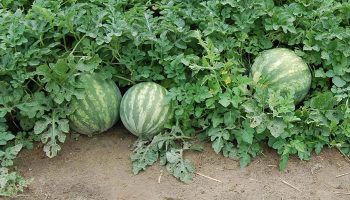
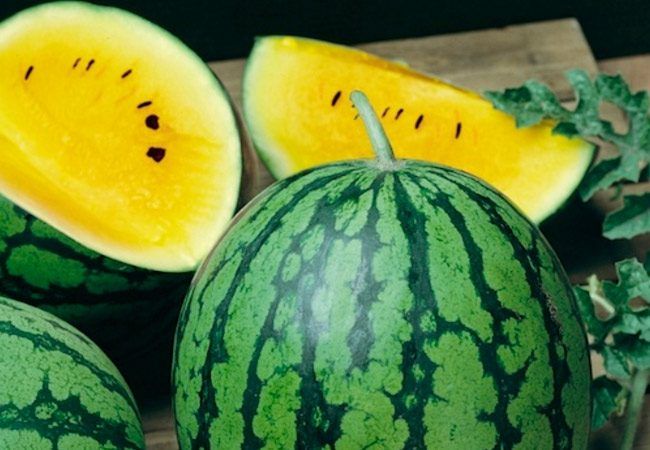
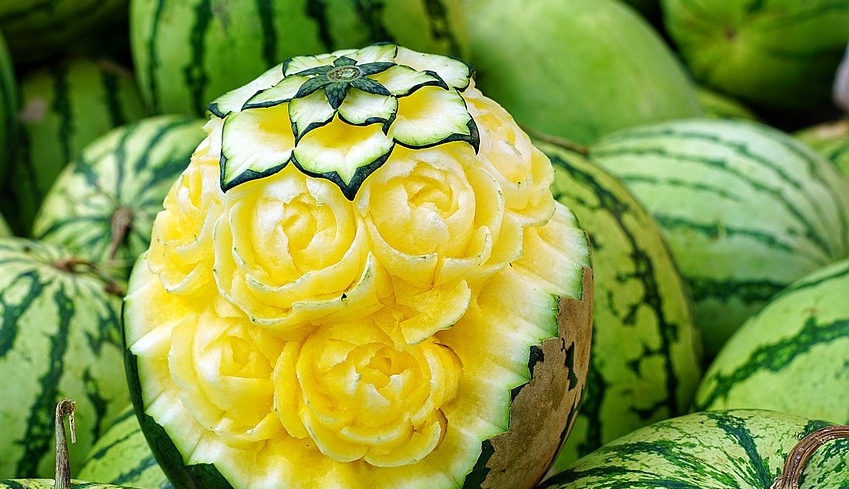
Yellow watermelons are similar to red ones in rind color, size and shape, but they differ in the color of their flesh, aromatic properties and taste.
Content
- 1 The emergence of yellow-fruited varieties
- 2 Differences between yellow and red watermelons
- 3 Characteristics of yellow watermelons
- 4 Rating of the best varieties of yellow-fleshed watermelons
- 5 Rules for choosing a yellow watermelon
- 6 Peculiarities of growing yellow watermelon seedlings
- 7 Transplanting yellow watermelon seedlings into open ground
- 8 Caring for plantings in open ground
- 9 Harvesting
- 10 Growing yellow watermelons in a greenhouse
- 11 Growing yellow watermelons in the open ground in the middle zone (varieties)
- 12 Beneficial properties
- 13 Harm and contraindications
The emergence of yellow-fruited varieties
The yellow berry is the result of a successful experiment by Mediterranean breeders who managed to cross-breed a wild and cultivated plant species.
Differences between yellow and red watermelons
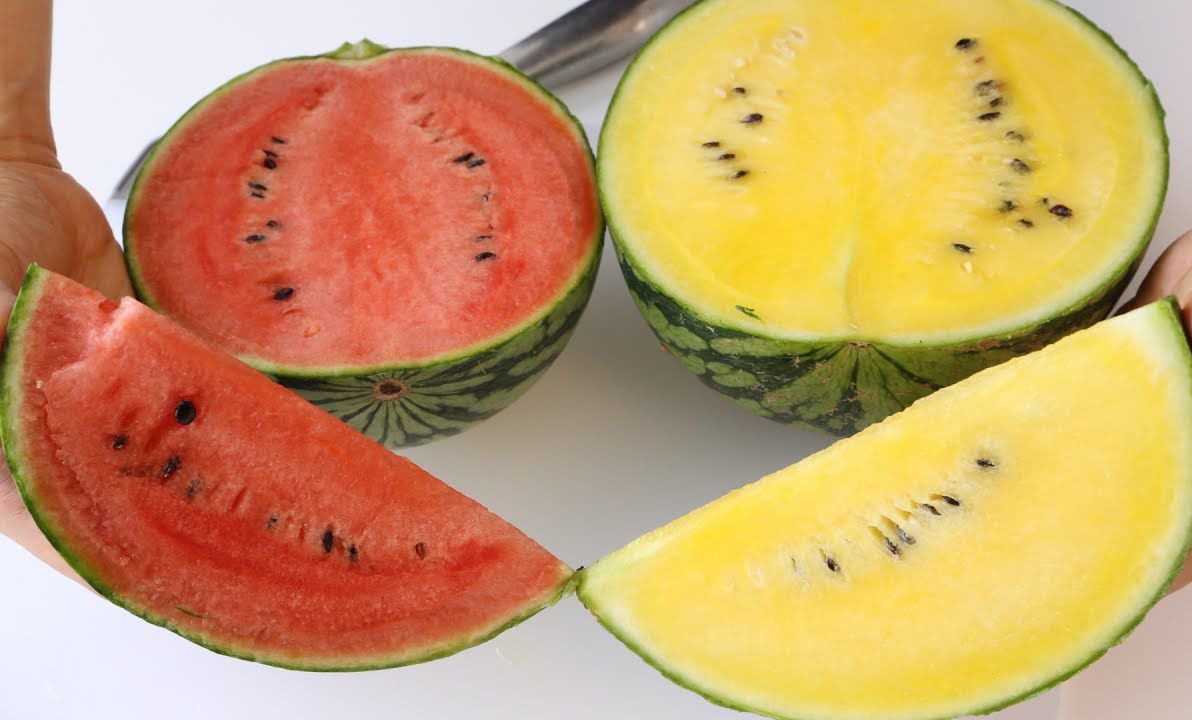
The distinctive features of yellow and red berries are shown in the table below.
| Types of watermelons | Red | Yellow |
| Pulp color | ||
| Crust thickness | Relatively thick | Thin and dry |
| Type of bones | Thick and dense | Thin and soft |
| Number of seeds | Many | Few |
| Carbohydrate content | ||
| Amount of free juice | ||
| Aftertaste | Short-term | Long-term |
| Ripening time | Early, middle or late | Early |
Characteristics of yellow watermelons
Watermelons are heat-loving, so the weight of fruits in the southern regions can reach 10 kg, while in the northern latitudes this figure is 3-5 kg.
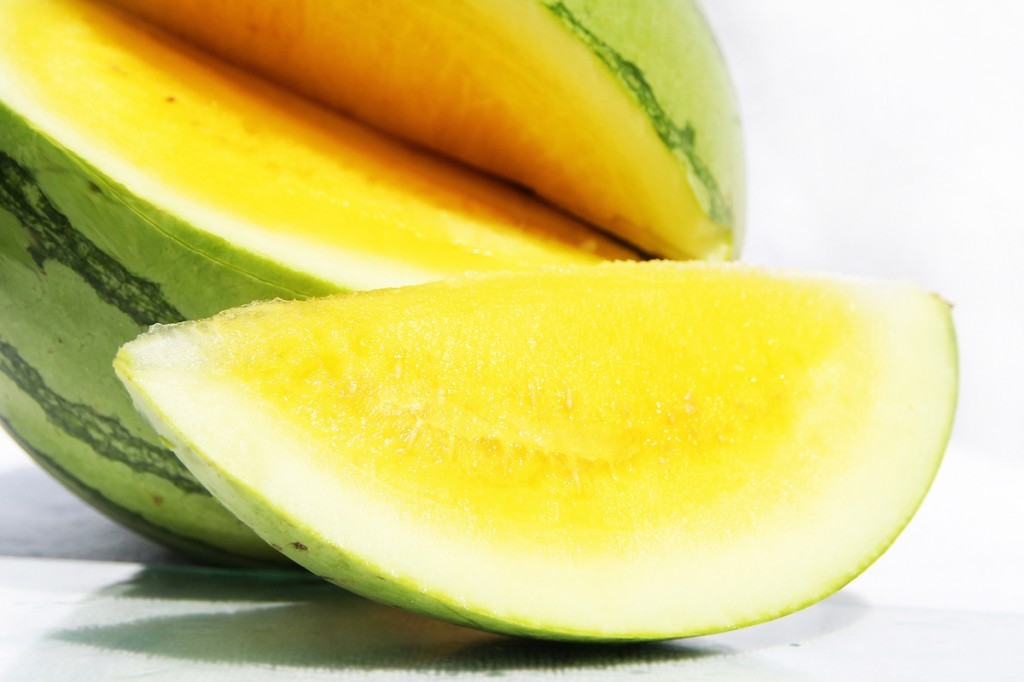
On average, 150 g of berry pulp contains: 6.2 g of carbohydrates (glucose and fructose); 1 g of fiber; 0.6 g of protein; 0.1 g of fat; and the energy value is 38 kcal. Among the micro- and macroelements are Ca, K, Mg, Fe, Na and P.
It has been established that consuming one slice provides 17% of the daily value of retinol and 21% of ascorbic acid. The minimal amount of lipids and the complete absence of cholesterol make yellow watermelon suitable for weight-loss diets, as well as for those with excess weight and atherosclerosis. It should be noted that the flavor of the berries can vary and resemble citrus, mango, or pumpkin.
The beneficial properties of the fruits are as follows:
- strengthening the immune system due to the presence of vitamin C;
- diuretic effect (the effect can be used in the treatment of patients with renal pathologies);
- stimulation of intestinal peristalsis due to the presence of fiber;
- improved vision due to the presence of vitamin A;
- strengthening of nail plates, hair and bones due to increased concentration of Ca;
beneficial effect on the heart, blood vessels and hematopoiesis due to the increased content of Fe, Mg, and K; - activation of metabolic processes due to the presence of carotenoids in the pulp.
The combination of micro- and macroelements, as well as vitamins, allows the fruit to be used in the treatment of certain endocrine diseases.
Rating of the best varieties of yellow-fleshed watermelons
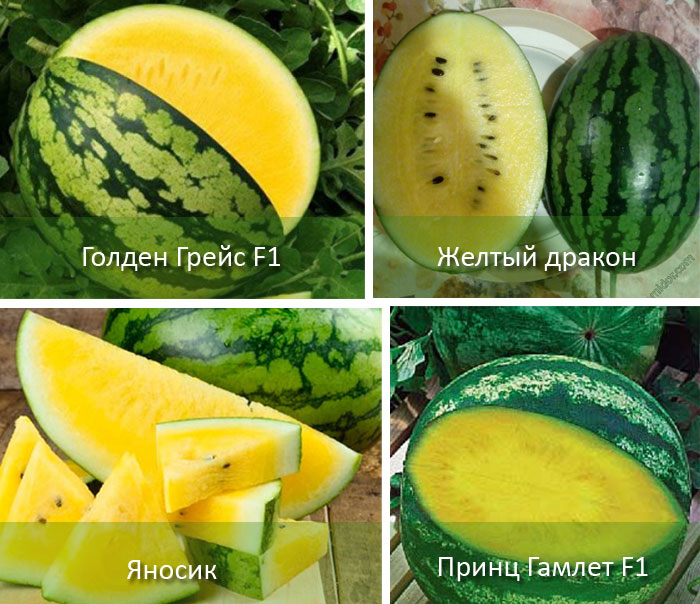
The most recognized varieties are presented below.
| Name of the variety | Growing season, weeks | Origin | Description |
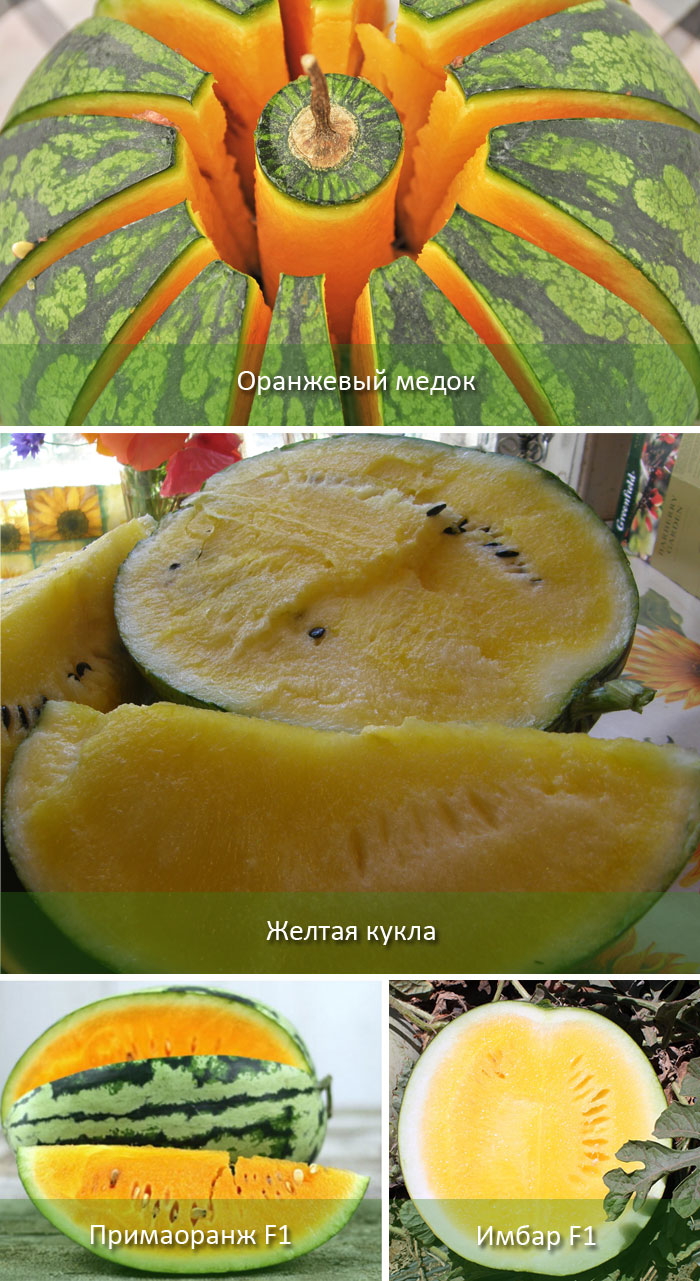
| Lunar | 10-13 | Developed at the All-Russian Research Institute of Crops and Vegetables in Astrakhan. A hybrid of Astrakhan watermelon and a wild species. | Cold-resistant. Average yield is 1.6 kg per square meter. The fruit is elongated and weighs 3-4 kg. The watermelon is ovoid. The rind has bright stripes. The flesh is bright lemon-colored with a mango flavor. |
| Golden Grace F1 | 10-11 | The Netherlands. Marketed by Hazera. | Cold-resistant. It can grow in various soil types. The berries are ovoid and average weight—6-8 kg. The rind is light green with dark stripes. The seeds are thin and translucent. The flesh is bright yellow. |
| Yellow dragon | 8.5-9 | Thailand | The fruit is round with slightly elongated ends, weighing 4-6 kg. The rind is thin and dark. The flesh is canary-colored and very sweet. |
| Yanosik | 11-12 | Poland | Heat-loving and disease-resistant, it is grown in greenhouses and open ground. The fruits are round or ovoid, weighing 3-6 kg. The rind is light and thin, with subtle stripes. The flesh is yellow and has few seeds. |
| Prince Hamlet F1 | 10-12 | The United States and Russia | The average yield is 4-6 kg per square meter, with berries weighing 1-2 kg. The watermelon is round, with a thin, dark green rind and lemon-colored flesh, richly sweet, and seedless. |
| Imbar F1 | 8.5-9.5 | Israel (Hazera Genetics) | The fruit weighs 4-6 kg. The rind is glossy, uniform, and dark green. The flesh is orange or dark yellow, crisp, dense, and seedless. |
| Orange honey | 8.5-9.5 | Russia | Adapted for cultivation in temperate climates. The fruits are round, weighing 2-2.5 kg. The rind is striped. The flesh is orange-yellow, sweet with a honey-like flavor (carbohydrate content reaches 13%). |
| Yellow doll | 10 | USA | The ovoid fruits weigh 2-3 kg. The rind is thin, light green, and covered with black stripes. The pulp is dense, lemon-colored, and sweet, with a honey aroma. |
| Primo Orange F1 | 8.5-9 | Czech Republic | Can be grown outdoors. The fruits are round, weighing 3-4 kg. The rind is thin, green, and streaked with green. The flesh is juicy, bright orange, and sweet (carbohydrate content reaches 11-12%). The seeds are few and located in the center of the berry. |
Rules for choosing a yellow watermelon
Experience shows that it's best to select watermelons weighing 5-7 kg. The fruits can be elongated or flattened.
Flattened fruits have sweeter flesh and smaller seeds. A watermelon's ripeness is indicated by a dried, yellow stem and a ringing sound when tapped on the rind. Unripe fruits have a dull sound and a green stem.
Sometimes a "window" is cut in the watermelon rind to reveal the flesh. It's best to avoid such fruits for hygiene reasons. The presence of whitish-yellowish veins is a sign of elevated nitrate levels.
Read the article about How to grow a watermelon.
Peculiarities of growing yellow watermelon seedlings
Sowing seeds for cultivating seedlings is done at the end of March – first days of April, if transplanting into open ground is planned for mid-May.
The initial stage includes preparation:
- peat pots or other disposable containers (or cassettes) with a capacity of 0.25-0.3 liters, equipped with drainage holes;
- soil, which should include equal parts of river sand, humus and peat (suitable soil for planting can be purchased at a garden store);
- seeds, which are soaked for 1-2 hours at a temperature of +50 °C, after which they are placed in a KMnO4 solution for 1-1.5 hours; after completing the preparatory procedures, the seeds are washed and dried.
To begin sowing, fill the pot 2/3 full with prepared soil, then water it and add 2 seeds, covering the soil to a depth of 2 cm and moistening it again. It is recommended to add 1 seed to each seed tray. The container is then placed in a warm, bright room and covered with plastic wrap until germination occurs.
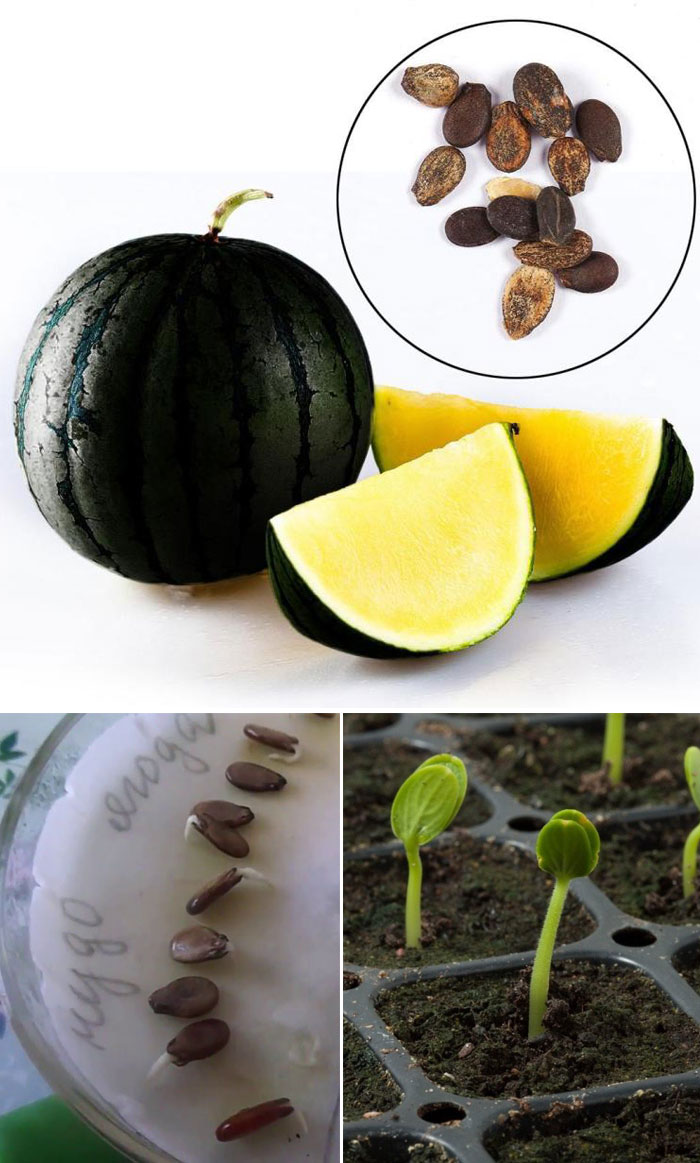
Once the sprouts emerge, water the plants with small amounts of water every other day around the edges of the container. If a crust forms in the substrate, it is recommended to gently loosen it.
Since watermelon is a sun-loving plant, artificial lighting is essential. The daily light duration should be at least 12 hours. The optimal temperature range for seedlings is 18–22°C, and it is recommended to maintain this range. Once the seedling develops its third leaf, you can begin fertilizing, focusing on manure and mineral fertilizers.
Many gardeners pay close attention to the hardening-off procedure, which they perform 2-3 days before planting seedlings. This involves slightly lowering the temperature, reducing the frequency of watering, and increasing the frequency of ventilation. Hardening-off is believed to increase the plant's resistance to drought and cold temperatures, and also stimulate root growth.
Transplanting yellow watermelon seedlings into open ground
Seedlings can be transplanted after 3.5-4 weeks, once they have developed 2-3 leaves. The best soil for melons is sandy or sandy loam, and suitable sites should be well-lit. The soil should be loosened and moistened the day before planting. It is recommended to transplant with a root ball to avoid possible root damage.
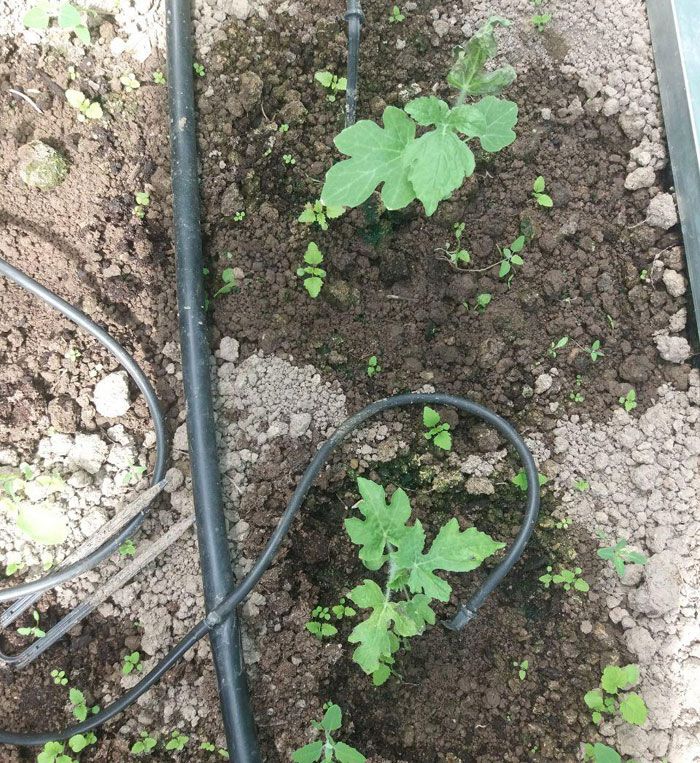
The distance between plants should be approximately 80 cm. After transplanting, the seedlings need to be watered. It takes approximately 1 week for the plant to adapt to the new conditions.
Caring for plantings in open ground
Growing yellow watermelons requires following simple recommendations:
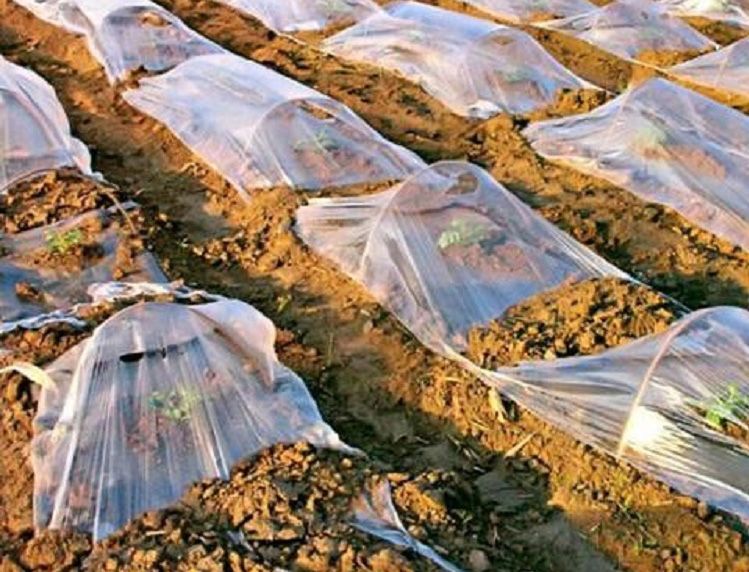
The first few nights of outdoor storage require covering the plants with plastic at night.
Watering should be done every other day during the first few days, then twice a week. The volume of water per square meter should vary between 30-35 liters.
Approximately 10 days after planting, the plants need to be fertilized. Per square meter, you'll need 10-15 kg of compost and 20-25 kg of phosphorus-potassium fertilizer (other fertilizing options are also available). Once the ovaries begin to set, it's recommended to pay particular attention to phosphorus and potassium.
Excess nitrogen is harmful to yellow watermelons.
To improve gas exchange, the soil should be loosened, especially before flowering.
Experience shows that the berries reach their maximum size if you save 2-3 emerging watermelons, pinching the vine 3 leaves behind them.
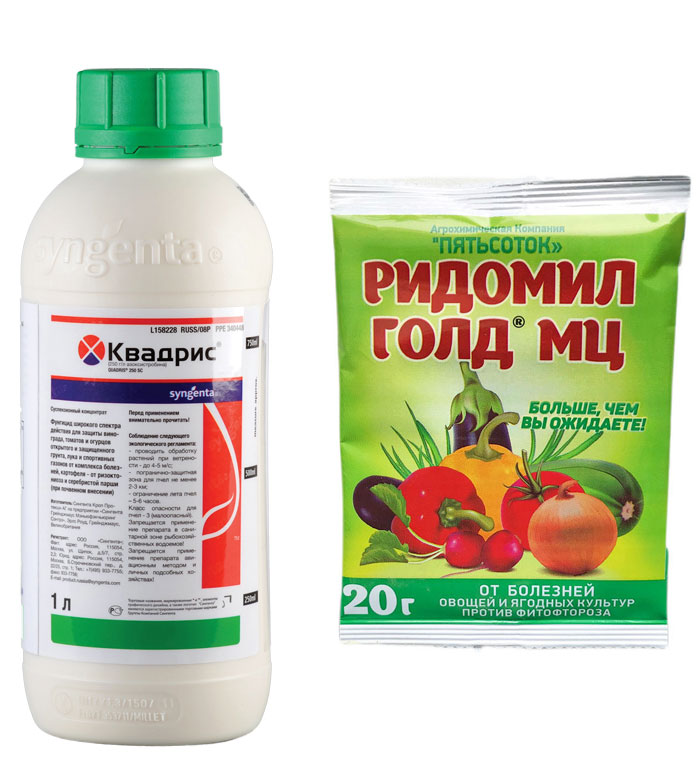
For preventive purposes, it is recommended to use fungicides (Ridomil Gold or Quadris).
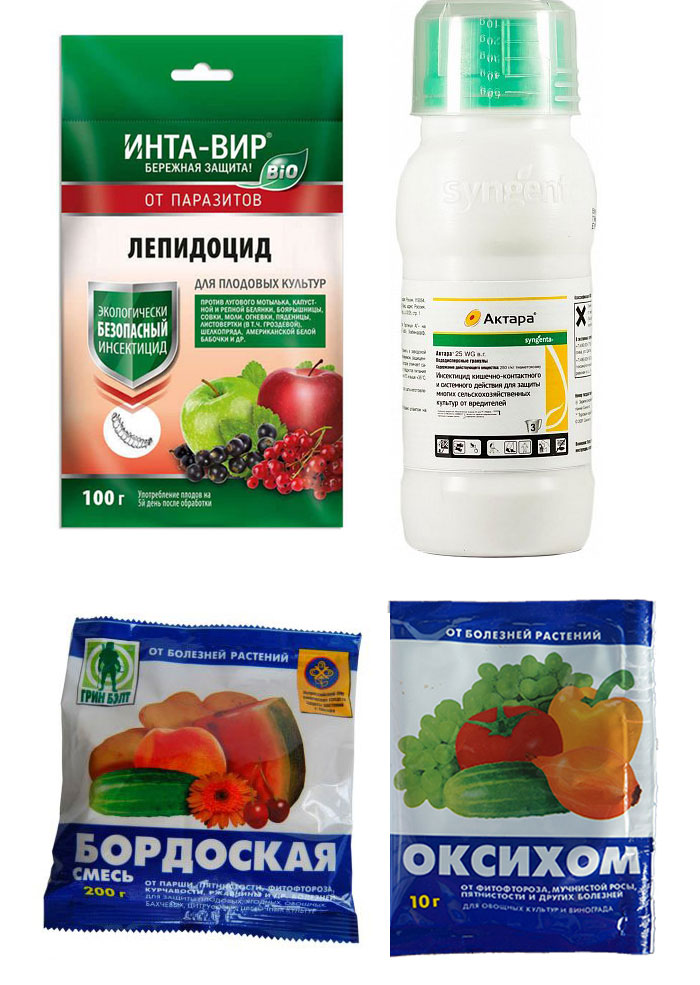
Plants can also be affected by downy mildew, anthracnose, and melon aphids. In these cases, the following products can help gardeners: Oxychom, Bordeaux mixture, bleach suspension, Inta-Vir, and Aktara.
Harvesting
Preparing for fruit harvesting involves monitoring their ripening and taking a series of measures to preserve them. To prevent rot, place a piece of plywood under each growing berry and reduce the frequency of watering. Two weeks after the watermelons stop gaining weight, you can begin harvesting.
Indirect signs of maturity are:
- white or white-yellow crust in places where the fruit touches the ground;
- dry tail and glossy crust color;
- ringing sound when tapped.
These signs need to be given due attention, since a watermelon cannot ripen completely after being cut.
The collected fruits are placed upside down and stored at +10…+15 °C with a relative air humidity of 85-90%.
Growing yellow watermelons in a greenhouse
Melons should be tied vertically, placing the fruit in nets. Maintain single-stem growth by removing side shoots at the first six internodes and pinching out any remaining leaves after the fourth. After 3-4 small watermelons have formed, pinch out the main shoot, leaving 4-5 leaves after the last fruit and removing all non-fruiting shoots. Remember to regularly ventilate the greenhouse, monitoring the indoor temperature and humidity.
The "Gift of the Sun" variety, developed specifically for greenhouses, has proven itself well. It's suitable for both spreading and trellis cultivation. It has a compact, early-ripening habit with elegant, serrated leaves with yellow petioles and veins. A single plant produces 2-3 berries weighing 2.5-3.5 kg. However, this isn't a yellow watermelon; it has a bright yellow skin, like a melon, and the flesh is red, juicy, and sweet, with a few seeds. From pollination to ripeness, it takes no more than 4 weeks.
Growing yellow watermelons in the open ground in the middle zone (varieties)
The most popular varieties for cultivation in the temperate climate zone are Chudo Byagoda, Korol Deshtini, Lunny, and Oranzhevy Medok. The fruits themselves are not very large—2–3 kg—but they have a wonderful flavor. Furthermore, they are moderately susceptible to powdery mildew and relatively resistant to anthracnose.
When growing watermelons, the main shoots should be trained to prevent them from intertwining. Side shoots should be pinched after 4-5 leaves. After flowering, and in the absence of insects, it is recommended to pollinate the female flowers artificially. Once fruit begins to form, place planks under the young watermelons to prevent rot.
Beneficial properties
Watermelons have a diuretic effect, increase metabolic rate, have a positive effect on the visual analyzer, help reduce blood cholesterol levels, and have a beneficial effect on blood vessels and the heart. Furthermore, their low calorie content—38 kcal/100 g—makes them suitable for weight loss diets.
Harm and contraindications
This berry may pose a risk to individuals with carbohydrate metabolism disorders, kidney stones, and kidney disease. As with any food, yellow watermelon should be avoided if you have an individual intolerance or experience any allergic symptoms. Nursing mothers and young children should exercise caution when consuming this fruit.