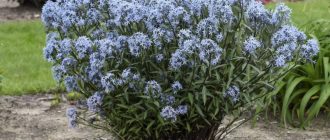
Aconitum is an ornamental flowering perennial ideal for partial shade. Its flowers resemble delphiniums – often a rich blue, less commonly a snow-white or light yellow. The flowers are helmet-shaped, giving it the nickname "skullcap." Some varieties boast a very long flowering period – from June to late October. Moreover, the plant is relatively easy to care for and is resilient to adverse environmental conditions. It thrives in both group plantings and mixed borders.
Content
- 1 A little history of aconite
- 2 Description of aconite with photos
- 3 10 species and 15 varieties of aconite with descriptions and photos
- 3.1 Aconitum napellus
- 3.2 Variegated (Aconitum variegatum)
- 3.3 Oak grove (Aconitum anthora)
- 3.4 Northern (Aconitum septentrionale)
- 3.5 Altai (Aconitum altaicum)
- 3.6 Aconitum fischeri
- 3.7 Carmichaelii (Aconitum carmichaelii)
- 3.8 Garden (Aconitum cammarum)
- 3.9 Wolfsbane (Aconitum leucostomum)
- 3.10 Climbing (Aconitum volubile)
- 4 Planting a wrestler in open ground
- 5 Caring for aconite
- 6 Reproduction of aconite
- 7 Flowering of different species of aconite in the garden, use in landscape
- 8 Signs of aconite poisoning
- 9 Treatment with aconite roots
- 10 Recipes from aconite roots and flowers
- 11 Contraindications for the use of aconite
- 12 Reviews and tips for growing aconite from gardeners
A little history of aconite
According to an ancient Greek myth, the plant grew from the saliva of the three-headed Cerberus, who guarded the gates to the world of the dead.
This plant's second name, "wrestler," was mentioned in Norse mythology. According to one myth, it grew at the death site of the thunder god Thor, who defeated a poisonous serpent but died in the process.
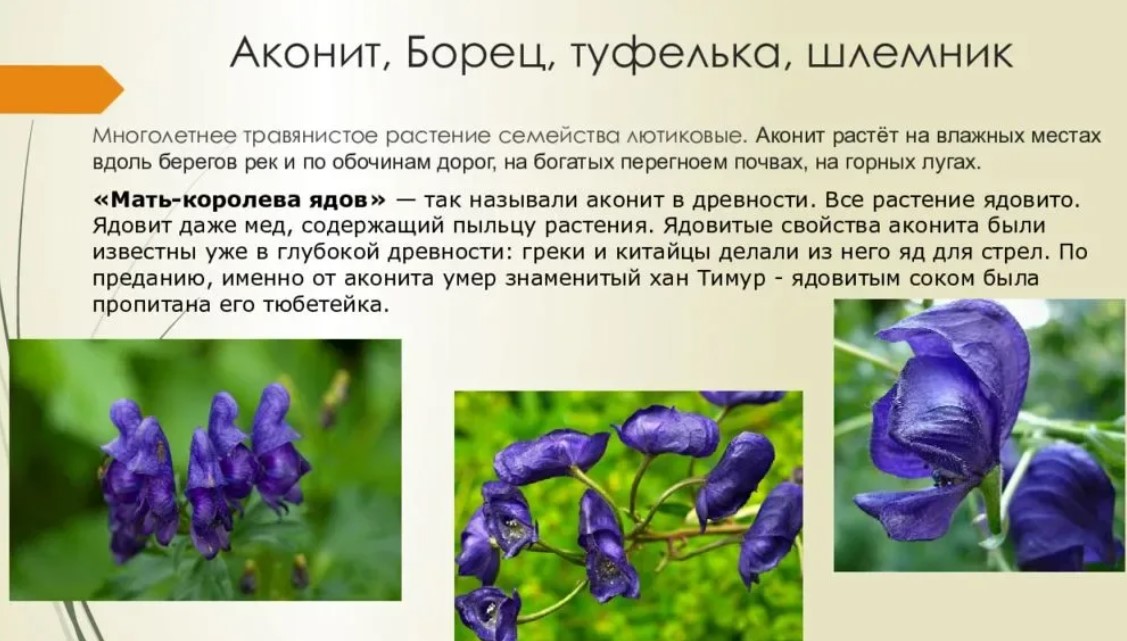
Aconite is a poisonous plant. This has been known since ancient times. The Greeks and Chinese used its sap to make poisoned arrows. In Nepal, it was added to animal bait and water to poison enemies.
The ancient Greek writer and Roman-era philosopher Plutarch wrote that Mark Antony's soldiers, poisoned by aconite juice, lost their memory and developed bile. According to one ancient legend, Timur Khan died from this poison—his headdress was soaked in the extract.
Description of aconite with photos
The aconite belongs to the buttercup family and is found in almost every corner of the globe.
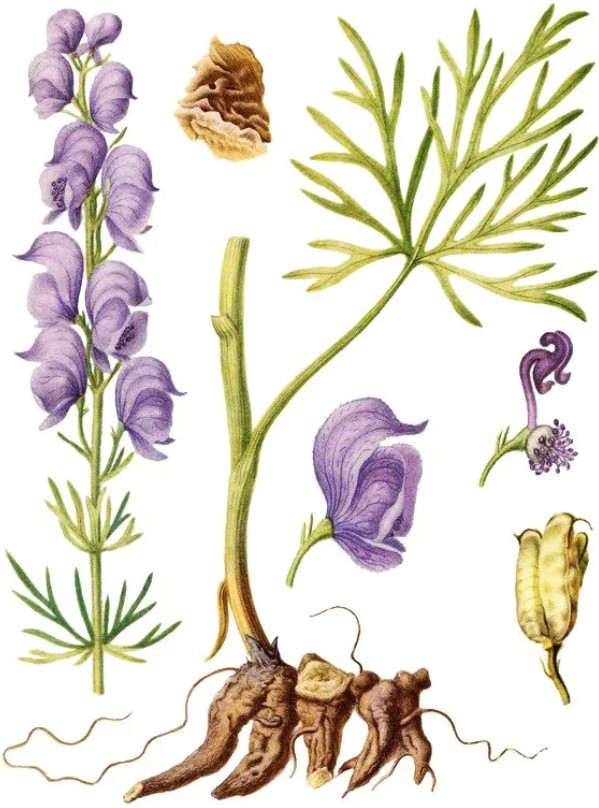
Stem
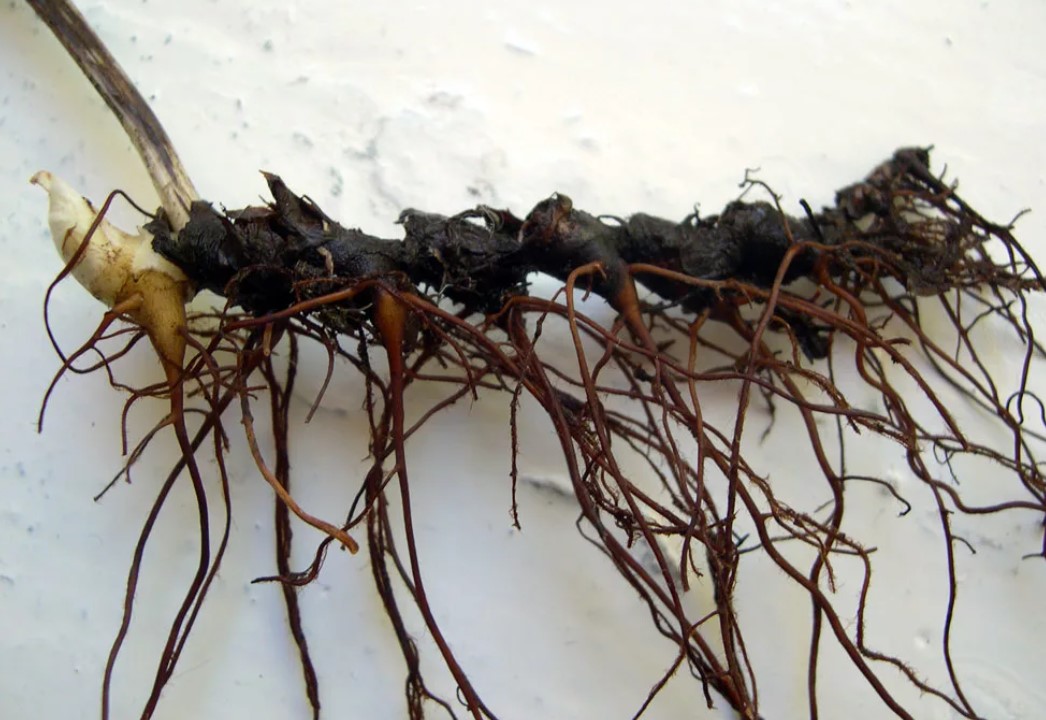
Since aconite is a perennial, it takes 2-3 years to become fully established. After this, it forms a fleshy, tuberous, black root, from which, in the spring, a lush tuft of erect, slightly hairy stems emerges. Sometimes these stems can be woody at the base. They reach a height of 30-50 cm. During flowering, they extend to 50-150 cm.
Flowers
Blooming is profuse, making the plant a striking addition to any garden. Flowering begins in late May or June and continues until frost.
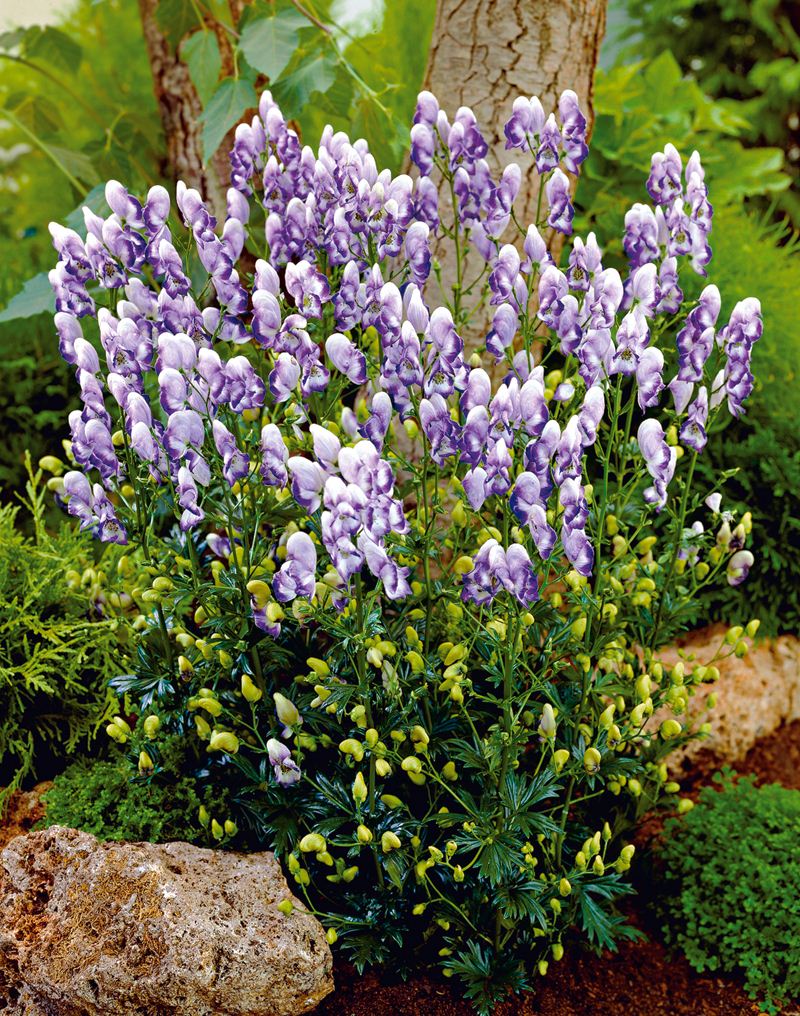
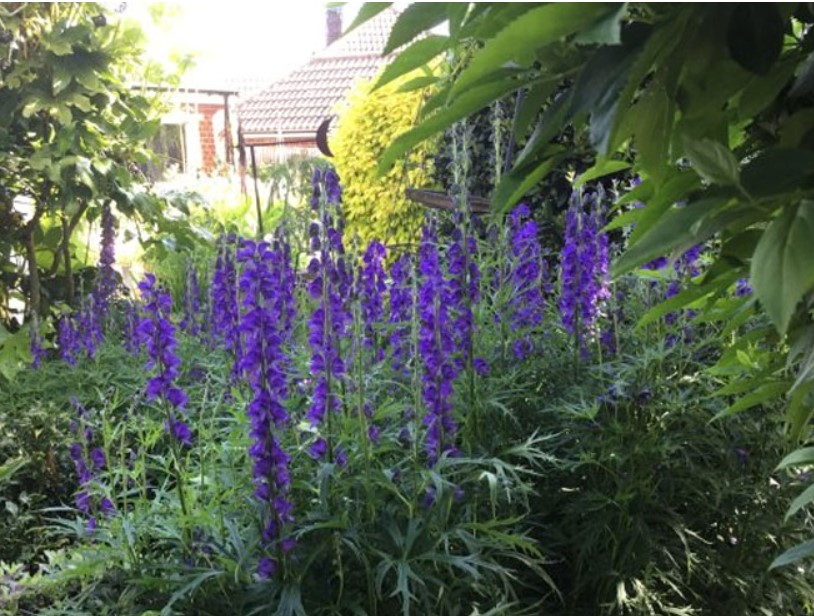
During flowering, inflorescences with numerous flowers appear on erect stems. The flowers reach 3-5 cm in length and are collected in terminal racemes 30-60 cm high.
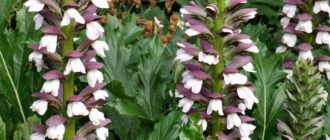
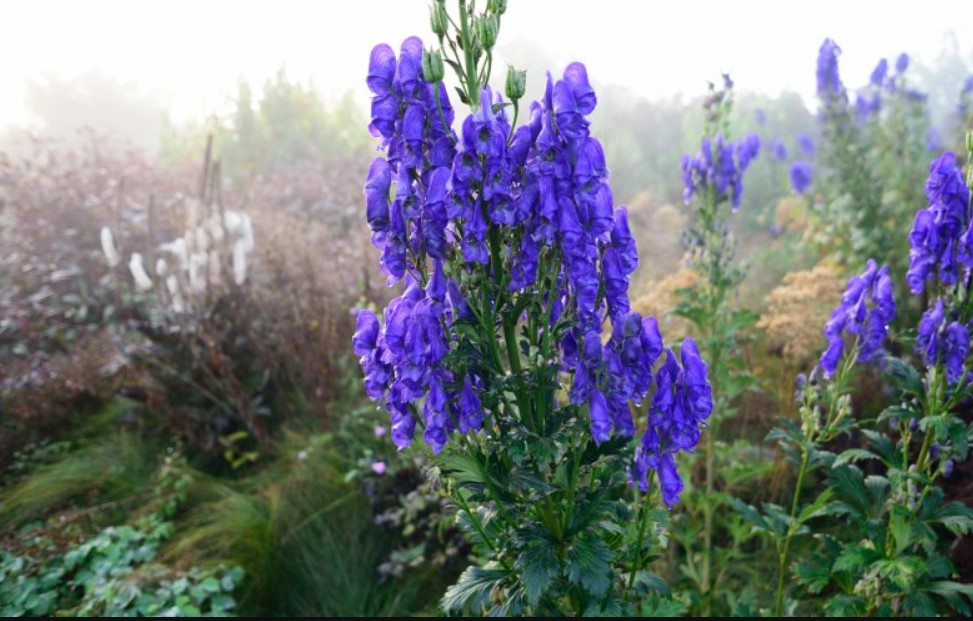
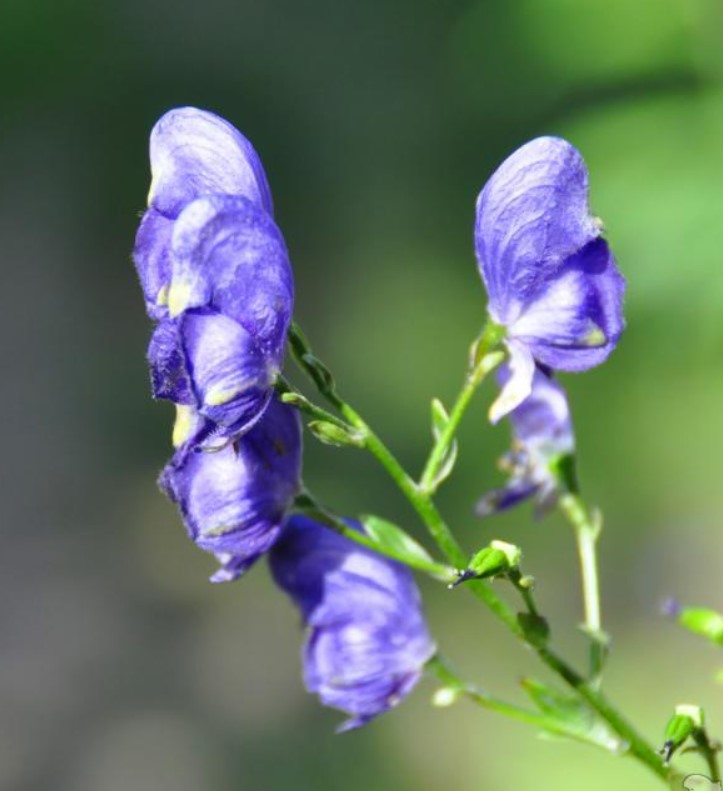
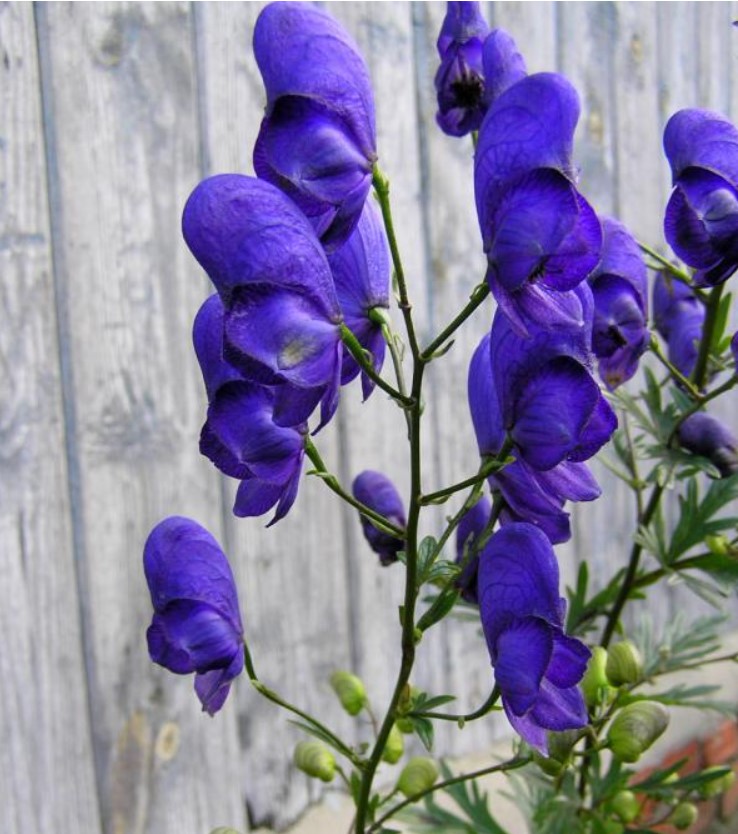
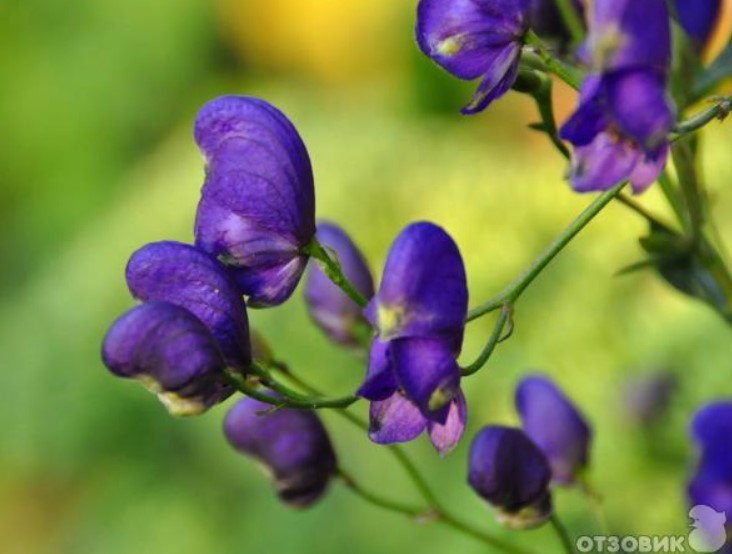
The flowers consist of five sepals, slightly raised at the edges, and numerous stamens of a contrasting hue. Their shape resembles the helmets of ancient warriors.
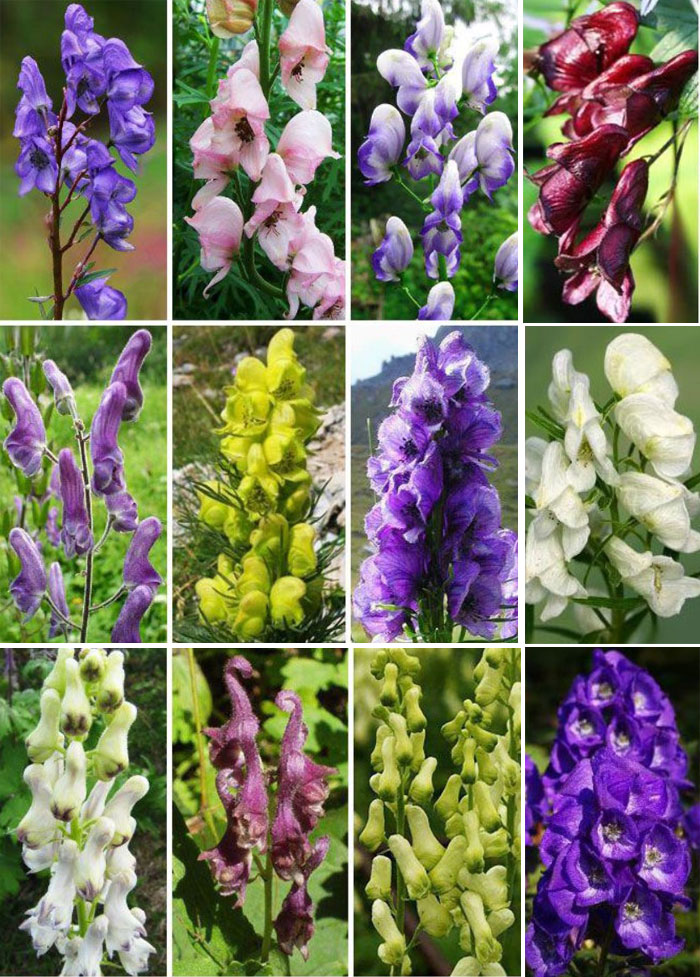
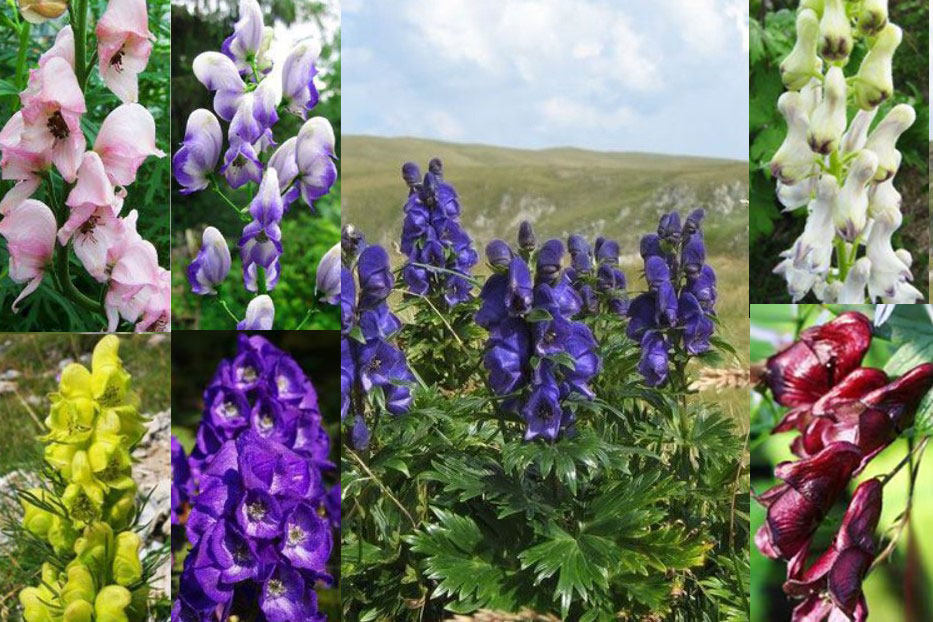
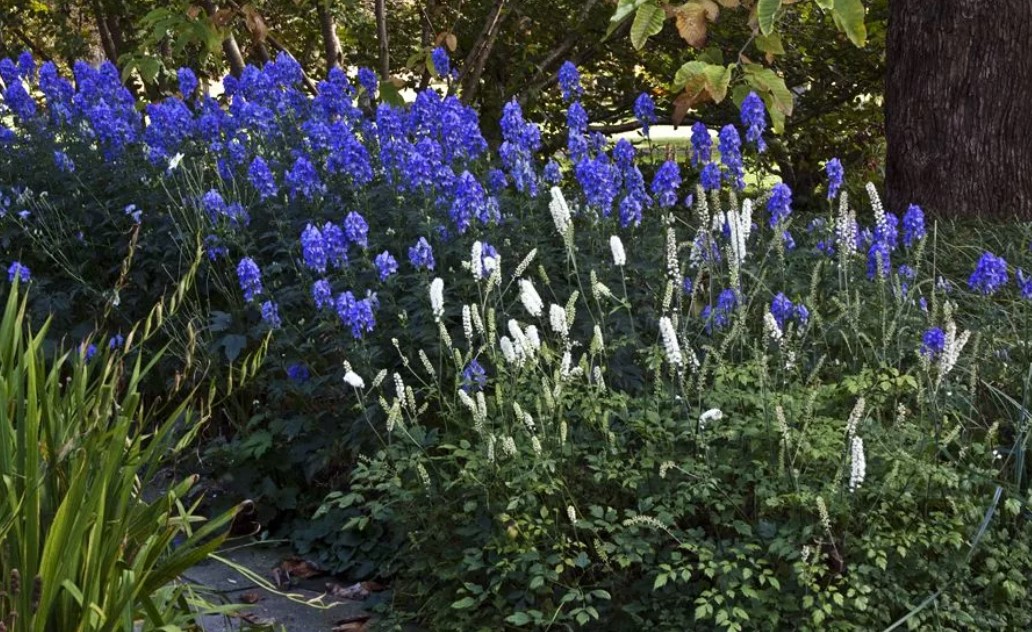
Flowers come in a variety of colors: deep blue, bluish-purple, steel blue with ultramarine veins, lavender, and indigo. Some hybrids range from pure white to violet. There are also bicolor varieties, which display both white and purple-blue blooms. Less common are varieties with pale yellow, cream, and pinkish flowers.
Leaves
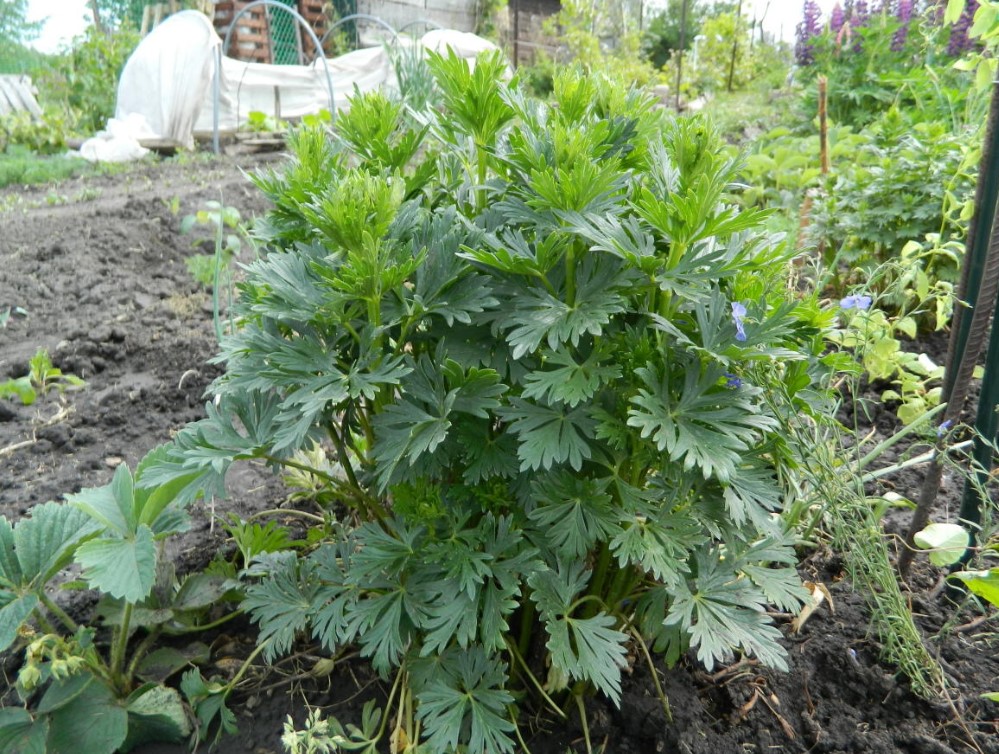
The leaf blades are dark emerald in color, glossy on the outer surface and pubescent on the underside.
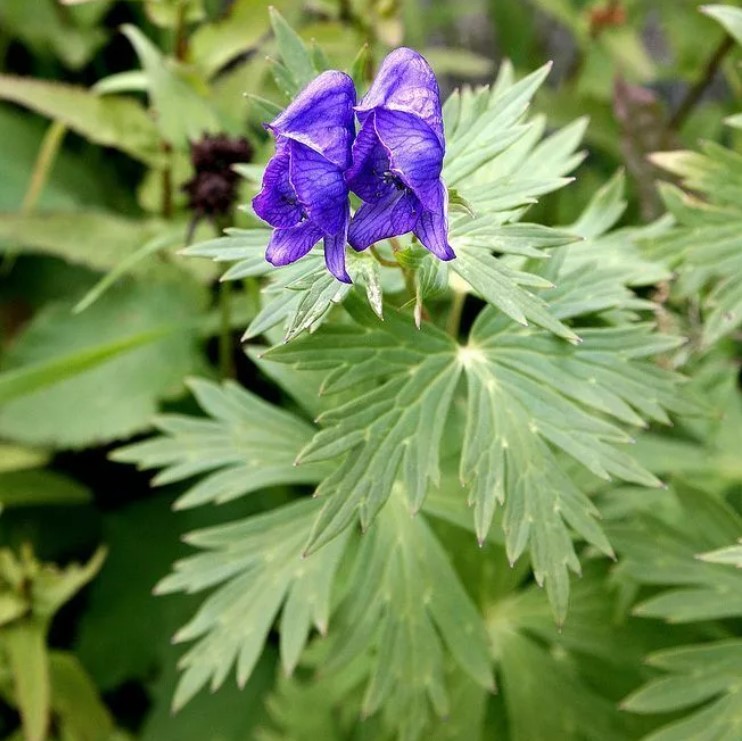
They reach 5-10 cm in length. They are round or oval in shape, deeply dissected into several parts. Visually, they resemble delphinium leaves.
10 species and 15 varieties of aconite with descriptions and photos
The genus comprises 330 species, but only 75 of them are found in Russia. Let's look at the most common ones.
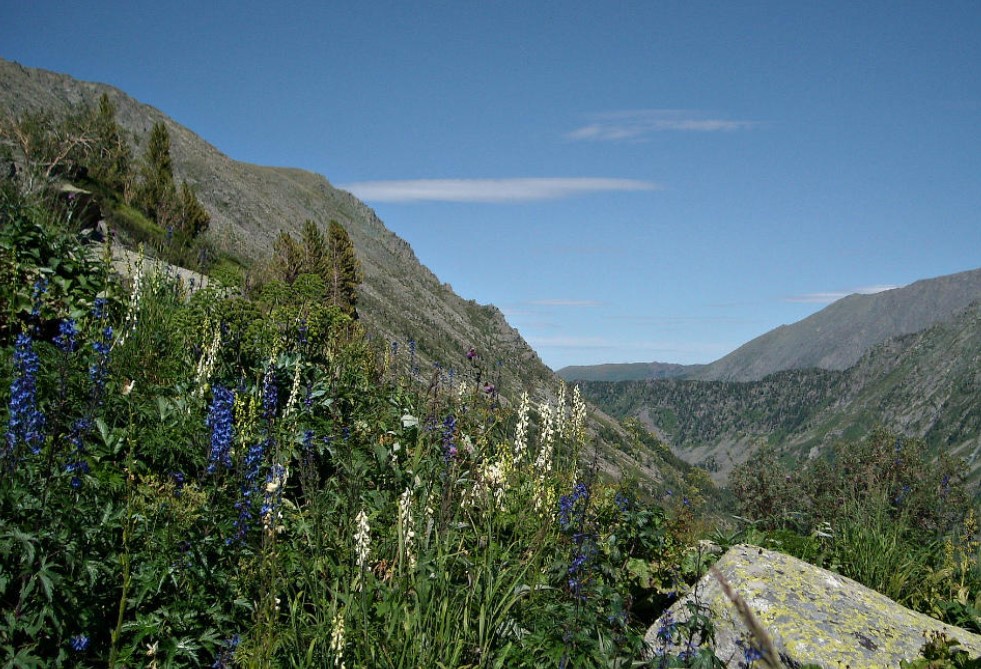
Aconitum napellus
This species is native to Eurasia. It is currently considered the most common in Russian gardens.
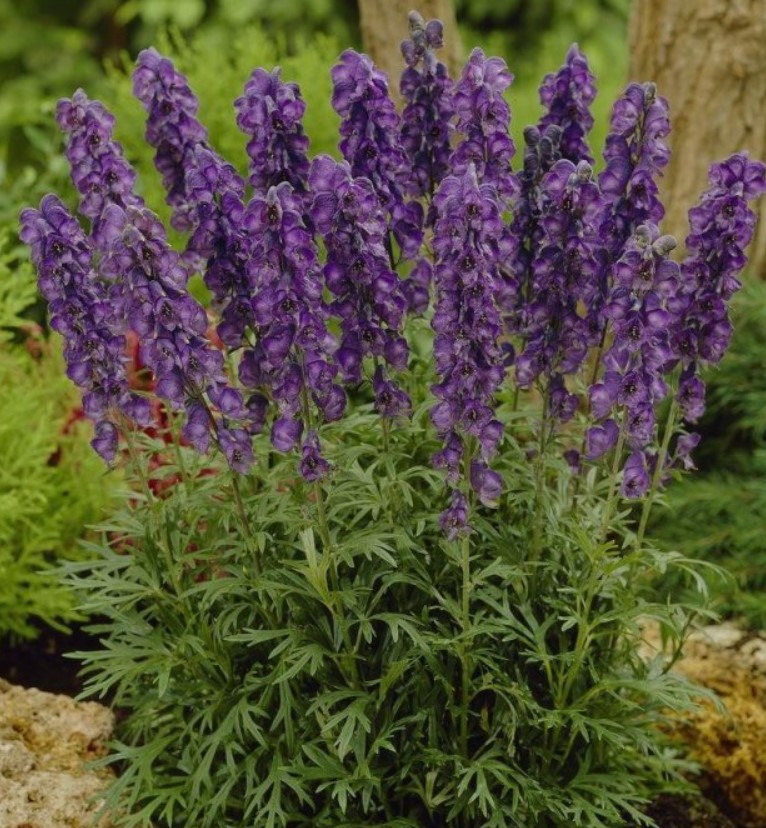
The bushes reach 200 cm. The inflorescences are dark purple, almost black. The stems are strong, so they don't need staking. The central part of the shoots blooms first. After this part has finished blooming, the lateral branches bloom.
This species has several subspecies:
- Compact. No more than 100 cm. Inflorescences are grayish-lilac or dirty white. Flowering begins in early July.
- Lobeliaceae. Reaches 120-150 cm. Flowers are blue or sky-blue. However, there are also subspecies with snow-white flowers. Inflorescences appear at the beginning of the second month of summer.
- Pyramidal. Grows up to 100-150 cm. The inflorescences are bluish-purple and very large. This species is considered to have the most beautiful varieties. It blooms from July to August.
- Tavrika. A low-growing subspecies, growing only up to 60 cm. Its homeland is considered to be Salzburg and Tyrol.
The most popular varieties:
- Album - milky white flowers;
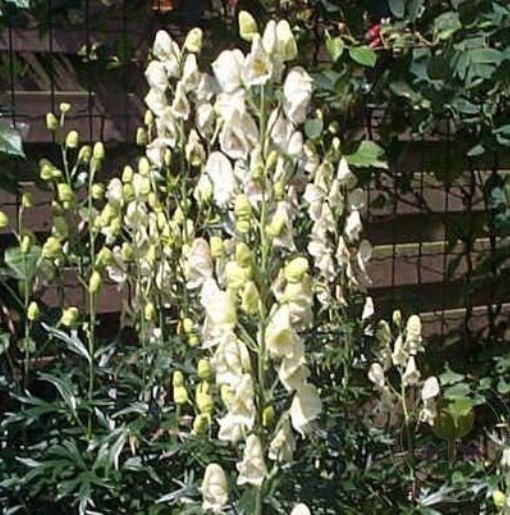
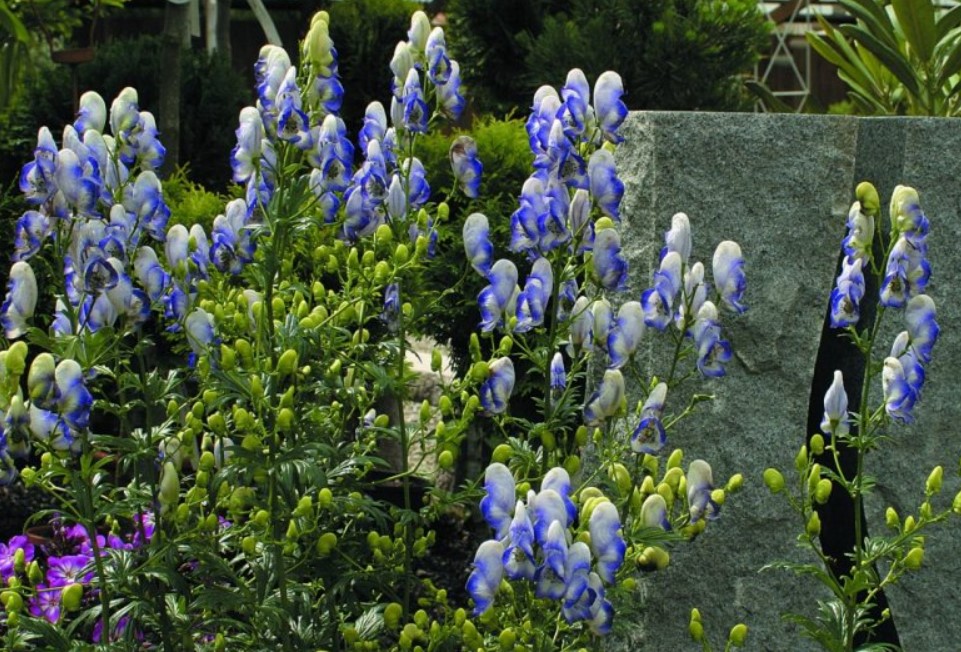
- Blue Scepter - white flowers with a blue border;
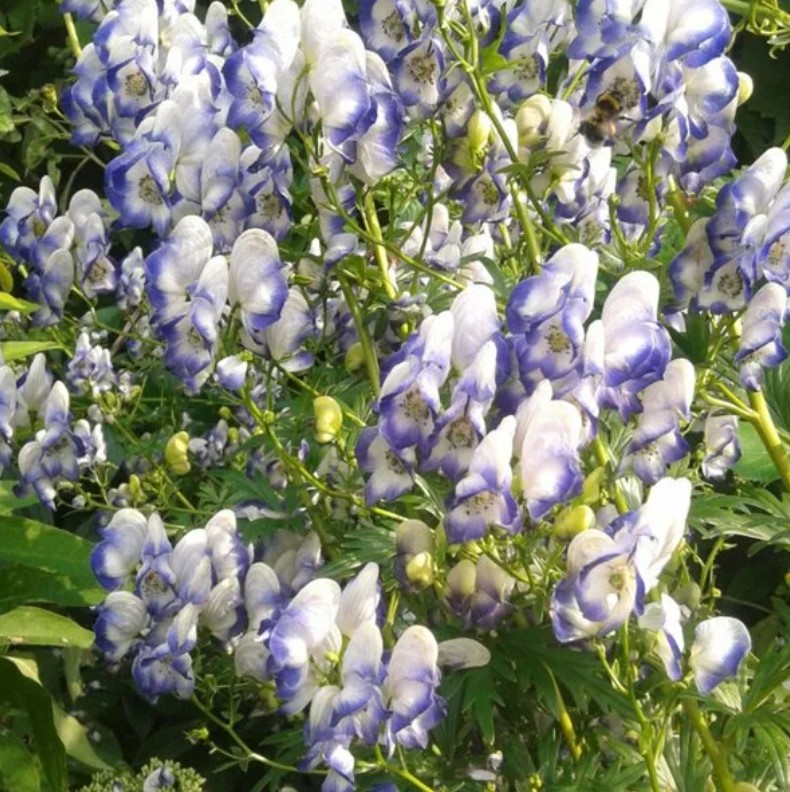
- Bressingham Spire - inky veining on a deep blue base, flowers in September.
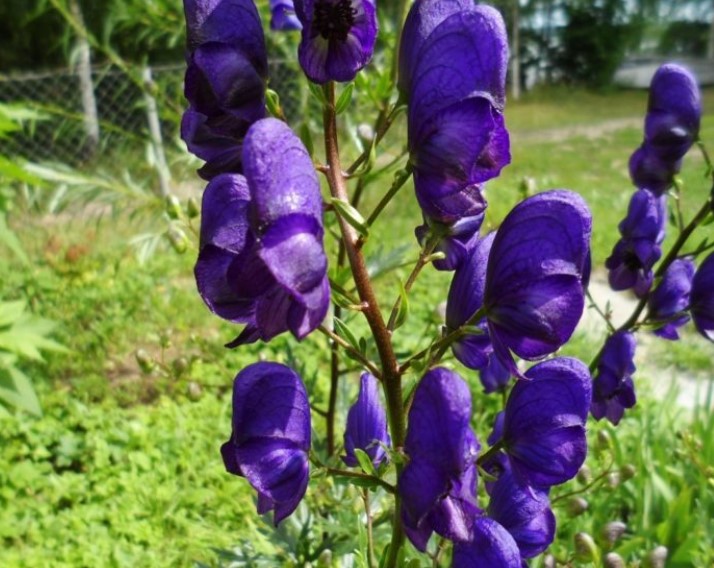
Variegated (Aconitum variegatum)
Native to the foothills of Central Europe, it grows in forest clearings overgrown with a variety of grasses. The bushes grow up to 200 cm.
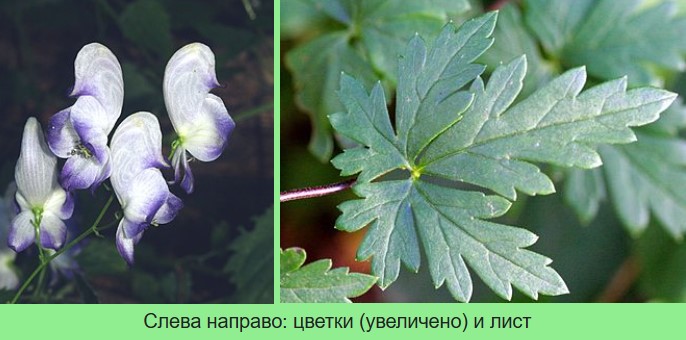
The leaf blades are deeply dissected. The large inflorescences are blue, white with a bluish edge, or pure white. It blooms from July to October.
There are several subspecies:
- Elegant. Up to 100 cm in height, very easy to care for.
- Judenburg. Grows over 200 cm. The stems are strong but not very stable, so they need to be supported.
Oak grove (Aconitum anthora)
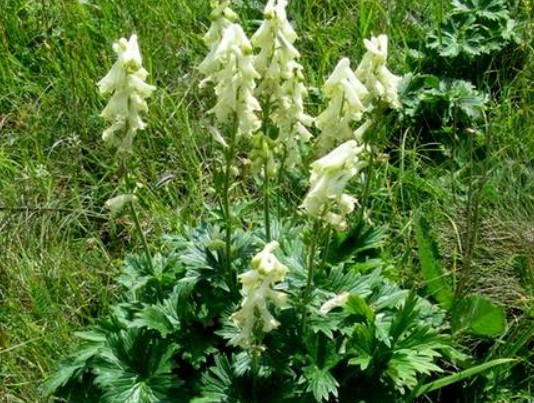
It reaches a height of about 1-1.5 meters. Its leaves have 3 to 7 lobes, with more distinct blades and sharply serrated edges. The flowers are yellow, about 2-3 centimeters in diameter, and are gathered in large, dense inflorescences at the top of the stem. Aconitum nemorosa typically blooms in July-August.
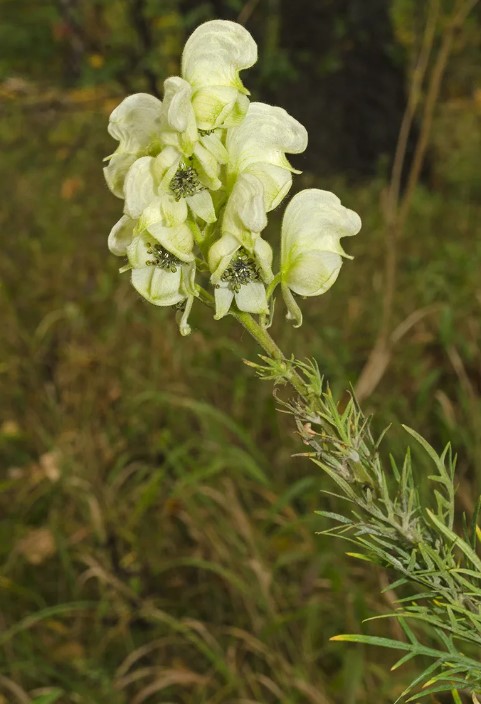
Northern (Aconitum septentrionale)
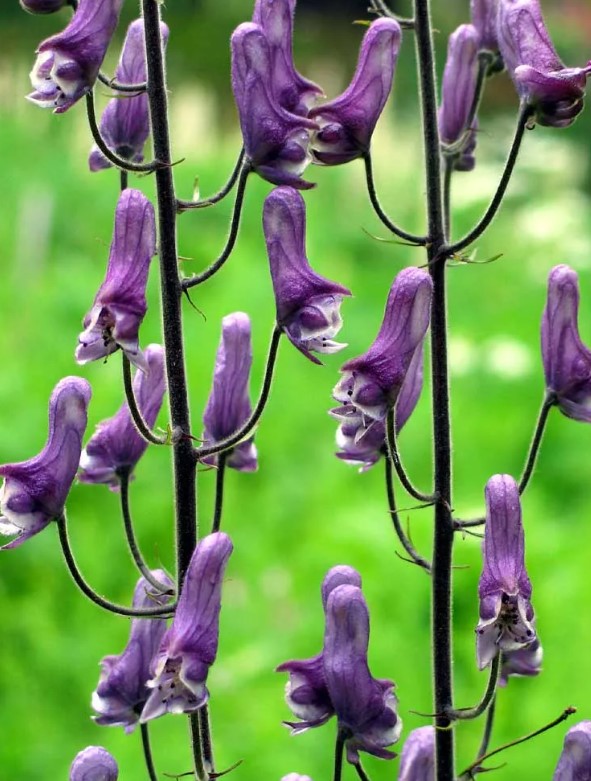
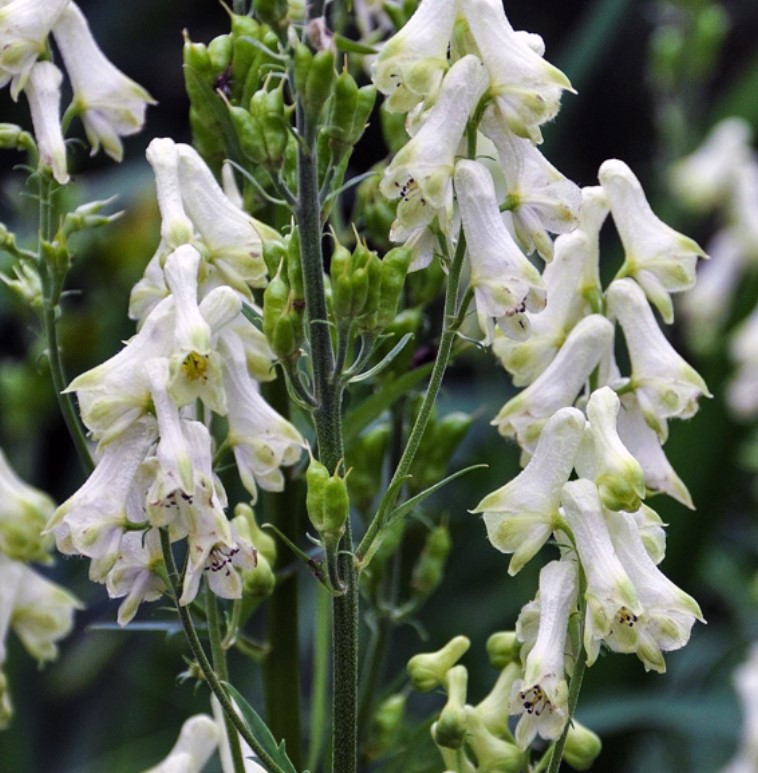
Native to Sweden, it closely resembles the Aconitum alba (monkshood), differing only in the color of its inflorescences. Its petals are a dirty lilac color. It is considered the earliest flowering species, beginning to bloom in June. The Ivorine variety is especially popular.
Altai (Aconitum altaicum)
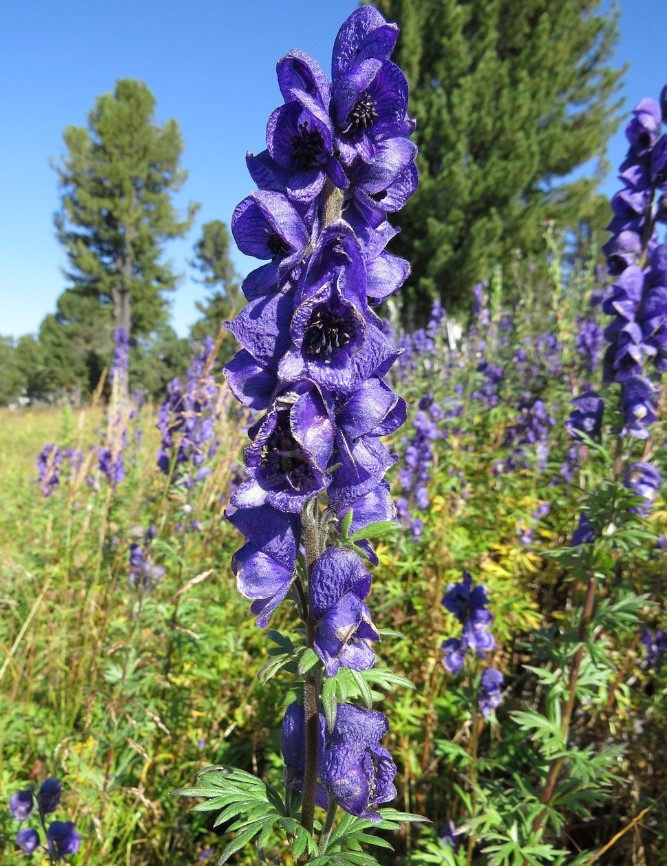
It has erect stems reaching a height of approximately 50-100 centimeters. The leaves are large, 5-7 lobed, dark green, and deeply cut into linear or oval segments. The edges can be serrated, adding to the plant's decorative appeal.
Aconitum fischeri
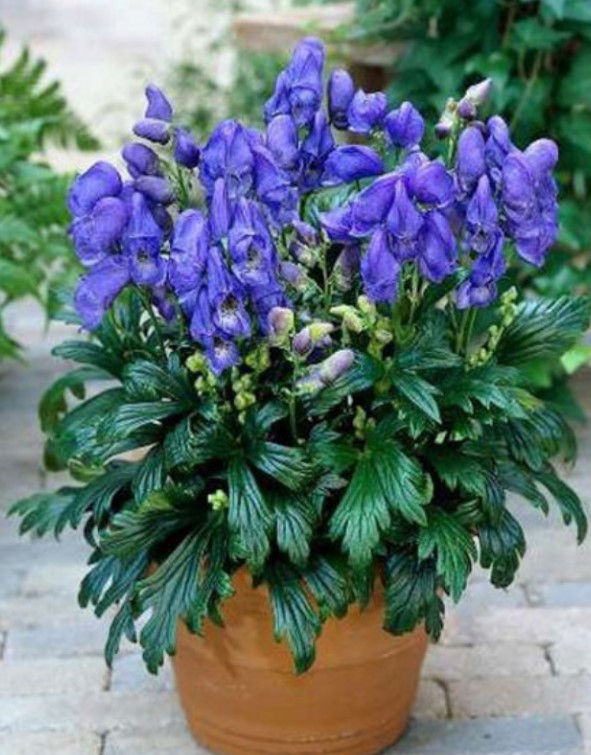
It has an attractive appearance, making it popular in garden design. The plant reaches a height of approximately 60-90 centimeters, with upright stems. The leaves of the Aconitum fischerii are bright green and deeply cut into lobes or segments, giving them a graceful and elegant appearance. The leaves often have pointed tips.
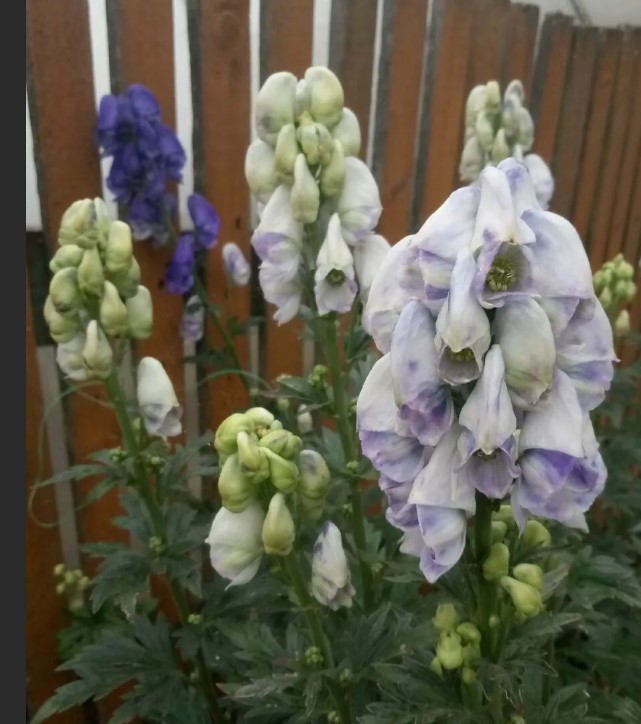
Flowers are gathered in panicles at the tops of stems. They come in a variety of shades, including purple, blue, pink, and white. Aconite flowers are bell-shaped or helmet-shaped, creating a vibrant color palette in the garden. Flowering typically occurs in late summer or early fall.
Carmichaelii (Aconitum carmichaelii)
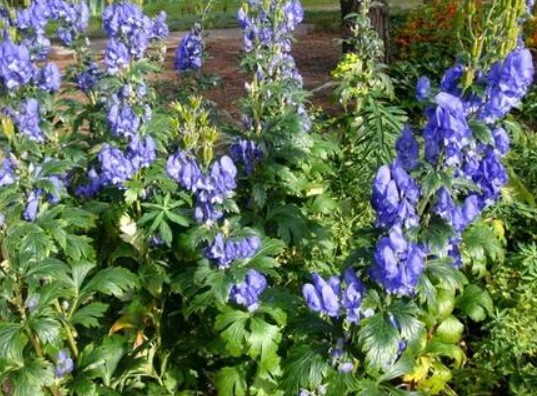
The species is native to the Far East and China. It has tall (up to 200 cm) and thick stems and large inflorescences. Flowering begins in late summer and early fall.
Please note that the plant will only produce buds when planted in a well-lit area.
Most subspecies have sky-blue petals. The most popular are:
- Arendsii - blue flowers;
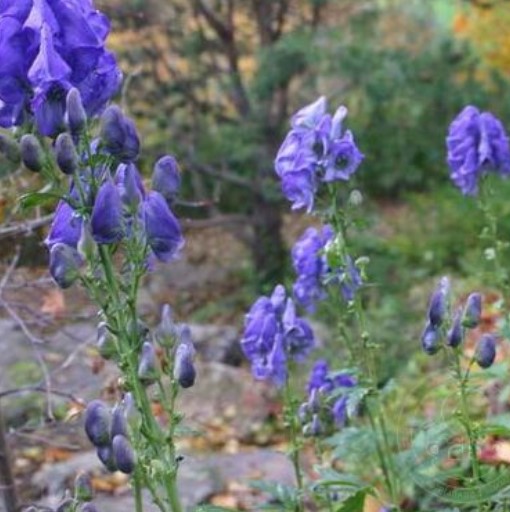
- Wilsonii - cornflower;
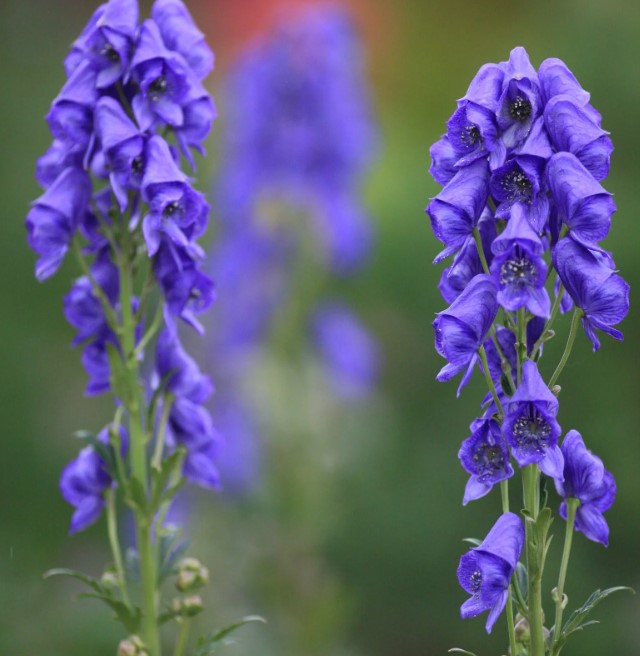
- Barkers Bar - blue;
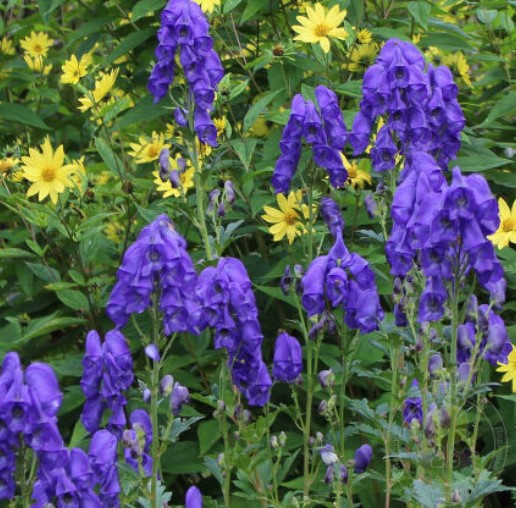
- Royal Flush - deep blue-violet.
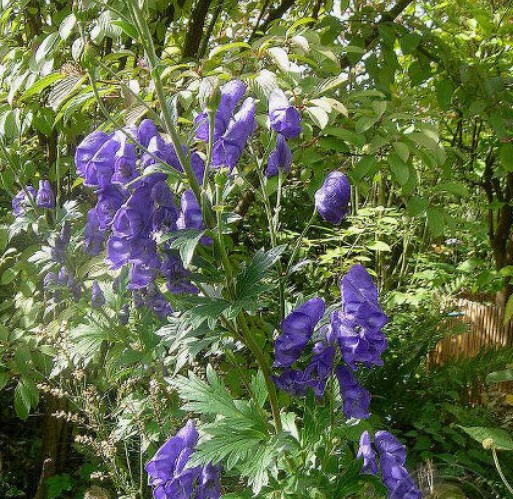
Garden (Aconitum cammarum)
A hybrid of variegated and cucullatous flowers. It grows up to 1.5 m. It has large, densely green leaves that are highly decorative. The flowers come in a variety of shades, including blue, purple, white, and pink. Flowering occurs in July-August and can last for several weeks.
Popular varieties:
- Blue Lagoon;
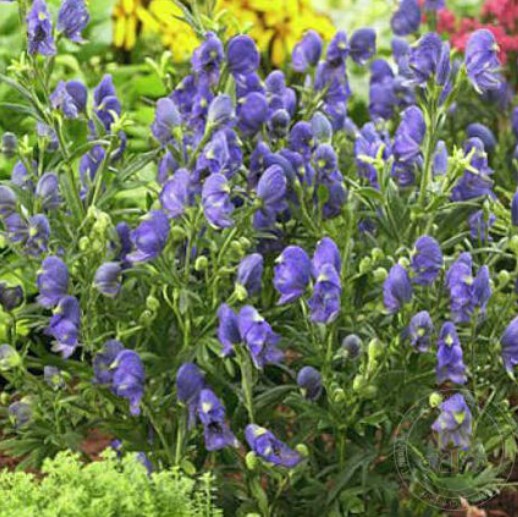
- Rubellum;
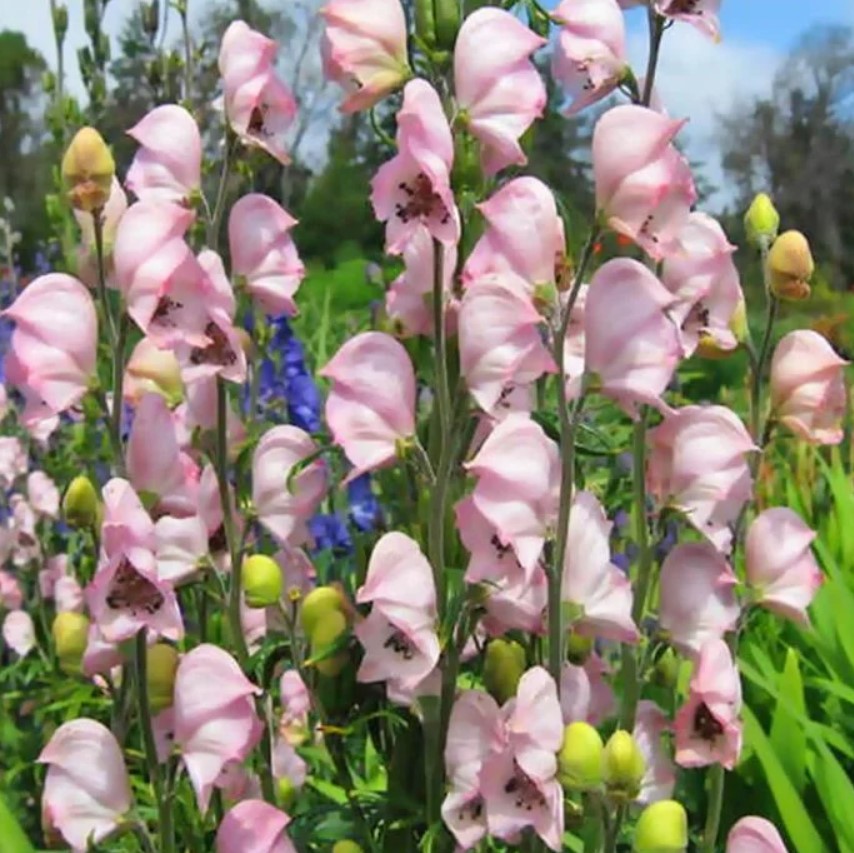
- Stainless steel (Stainless Steel) - bluish steel;
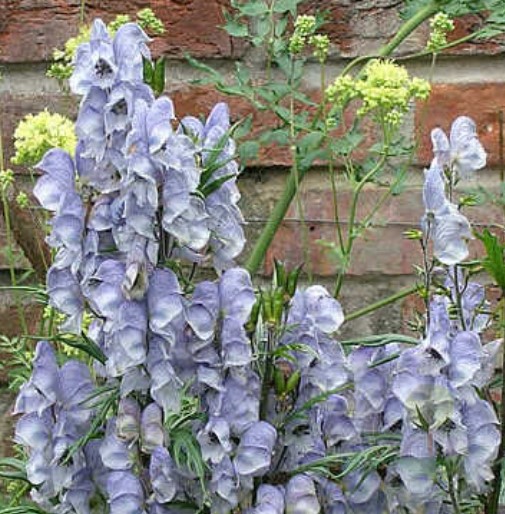
- Eleonora - white with a small purple border;
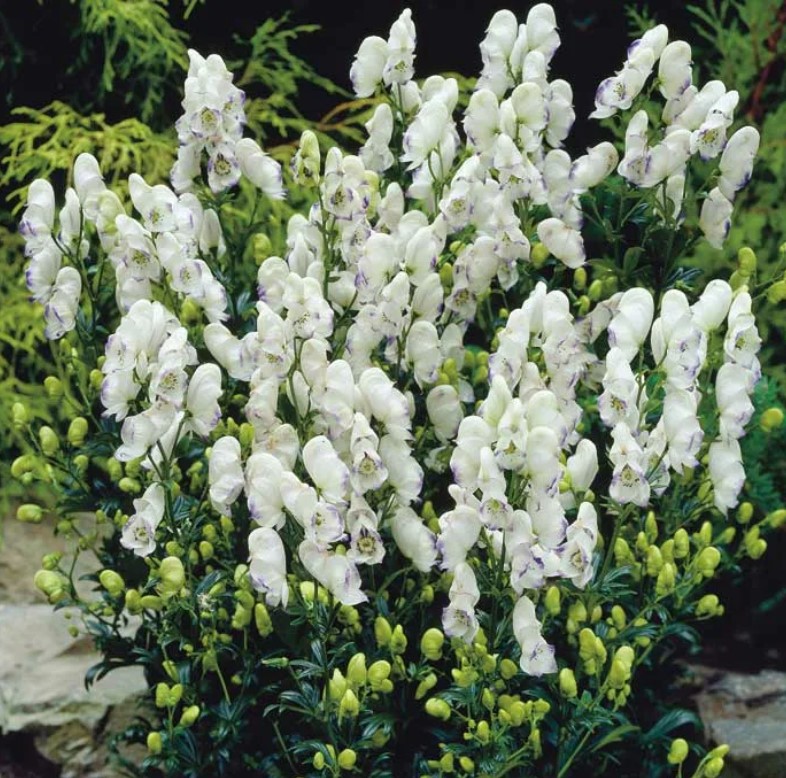
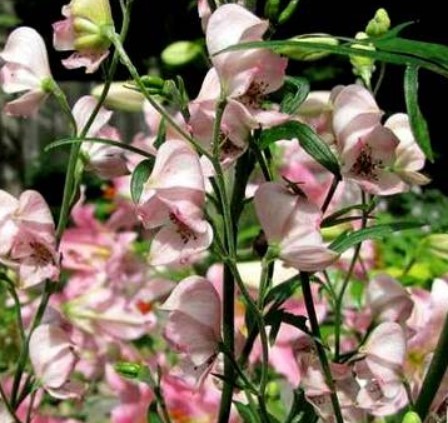
- Pink Sensation - pink;
- Nachthimmel;
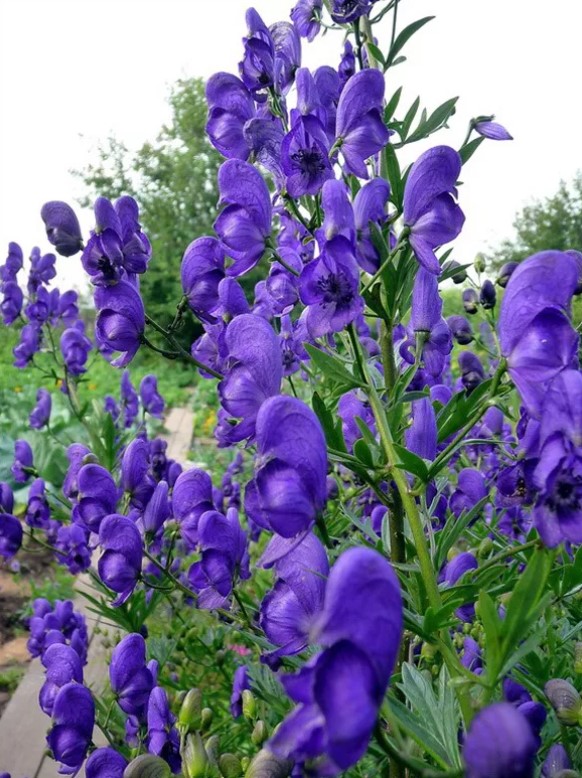
- Franz Marc;
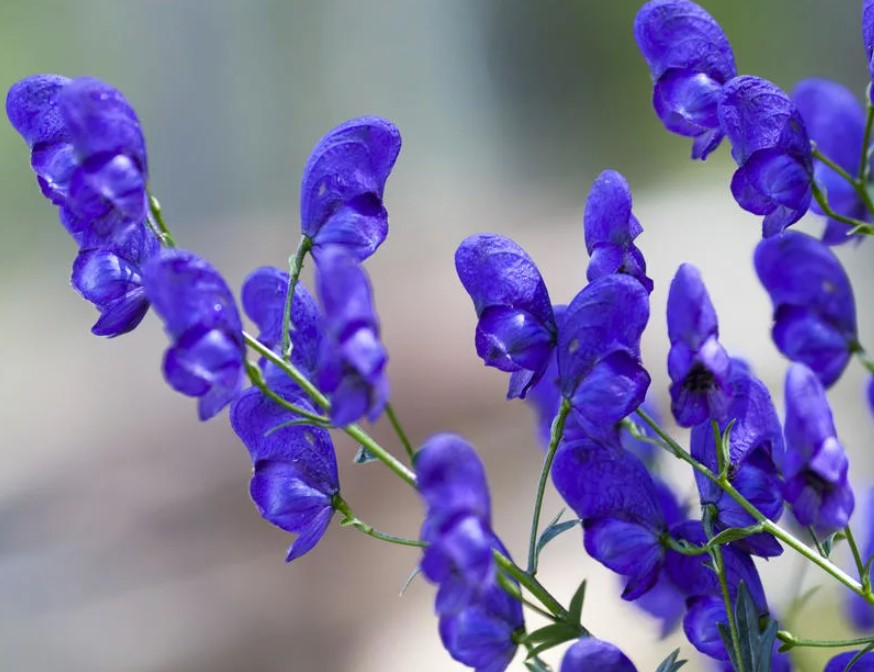
- Caeruleum.
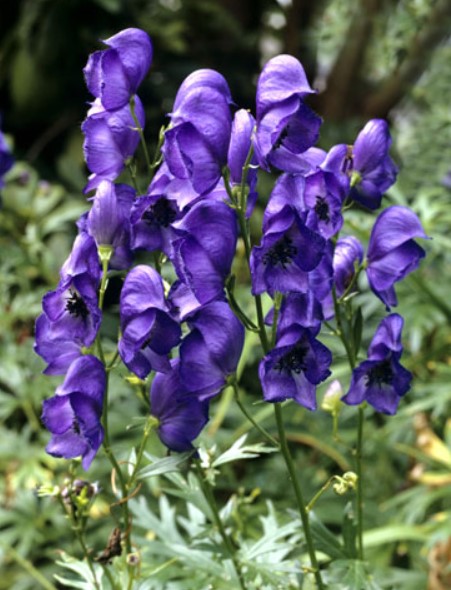
Wolfsbane (Aconitum leucostomum)
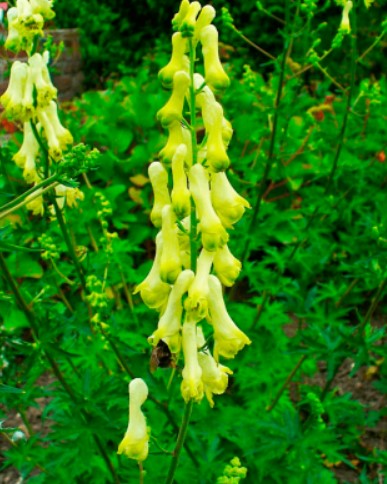
It grows up to 1.5 meters and has strong stems and leaves. Its flowers are gathered in dense, spike-shaped inflorescences, creating a bright and impressive accent in the garden. Flowering occurs in July-August and lasts for several weeks.
Climbing (Aconitum volubile)
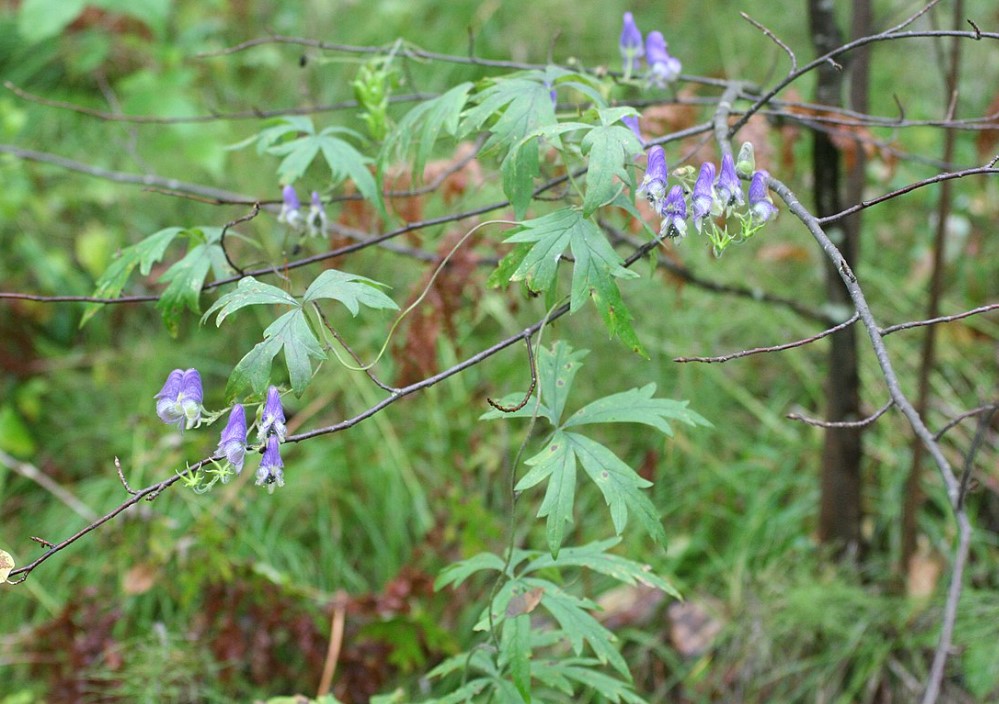
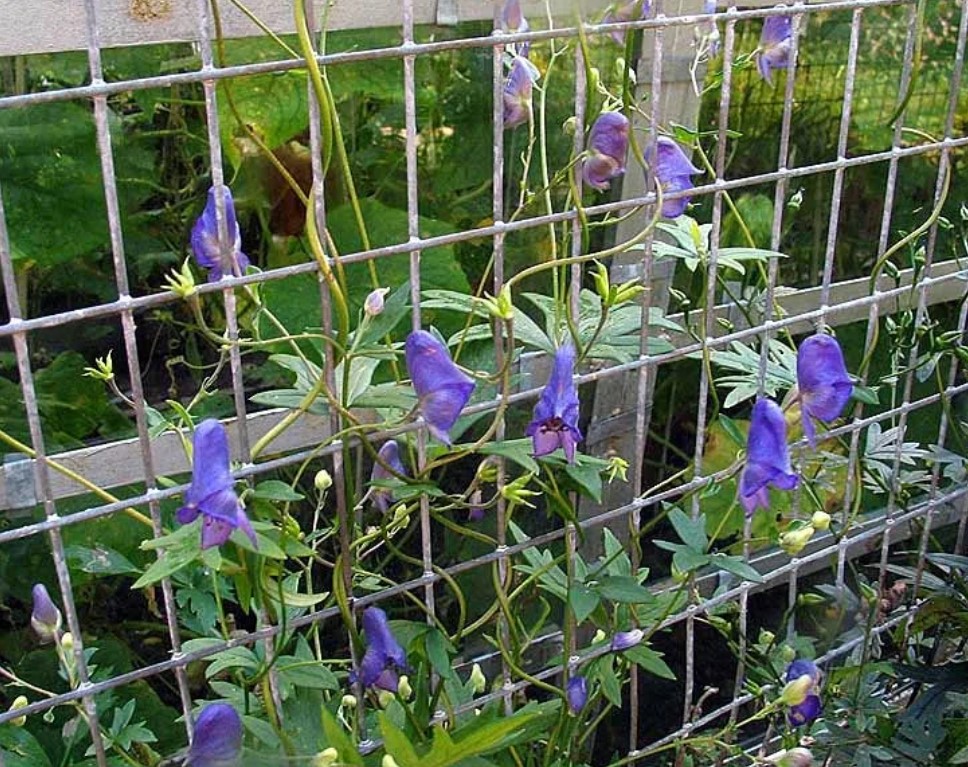
The flexible and long (up to 2 m) stems of this species tightly twine around supports. It is native to Korea and Siberia. The leaf blades are serrated, making them decorative. Dark purple flowers are gathered in loose clusters and hang gracefully from supports. A variety with pure white blooms also exists. It is suitable for growing in partial shade.
Planting a wrestler in open ground
Please note that aconite is a poisonous plant. Therefore, when planting, it is essential to wear protective equipment. Wear gloves when performing any work.
Deadlines
Planting is best done in the spring, from March to May. In the south, it can be done in the fall, in September.
Location
Aconitum thrives in any climate. The exception is windy areas, where strong winds can damage the tall stems. In a location protected from drafts, this plant will reach its full potential.
In the wild, acropolis grows in mountainous regions, so it's not afraid of low temperatures. It easily tolerates temperatures down to -20 degrees Celsius. However, it's important to note that the plant doesn't like winter humidity.
Most species and varieties prefer shady locations, especially in hot climates. However, they will also grow in sunny areas, provided the soil is sufficiently moist.
The only things the wrestler fears are prolonged drought and very poor soil. It's advisable to select soil that meets the following requirements:
- is nutritious and rich in humus;
- fairly moist, but not waterlogged;
- has good drainage;
- never dries out completely.
For your information! Aconite can grow even in heavy, clayey, moist soil.
If desired, you can grow the wrestler in a pot. However, keep in mind that this is a labor-intensive task, as you need to constantly monitor the soil moisture level.
Step-by-step instructions
Step by step actions:
- Dig a planting hole with a diameter that is 2 times larger than the size of the seedling’s root system.
- Add peat and compost to the soil to improve fertility.
- Place the seedling in the middle of the hole so that the upper part of the root system is level with the ground surface.
- After planting, ensure ample watering, especially while the bush is establishing itself or while the weather is too hot.
- To retain moisture in the soil longer, it is recommended to mulch the bushes.
It's recommended to plant no more than 5-6 bushes per square meter, spaced 30-50 cm apart. This planting is essential to ensure the bushes can develop normally without interfering with each other.
Caring for aconite
As mentioned earlier, only very poorly nutrient-rich soil and prolonged drought can harm aconite. However, this doesn't mean the plant doesn't require any care. Care is still necessary to ensure the plant thrives and blooms beautifully.
Watering
During the summer, the plant requires regular watering. However, in winter, it's important to prevent waterlogging. Therefore, the bushes should be watered frequently but moderately to avoid stagnation. To prevent moisture evaporation, mulching can be used. Mulch also helps prevent weed growth.
Top dressing
Aconitum doesn't require frequent fertilizing. Simply add compost during spring tilling to enrich the soil.
Trimming
It is recommended to remove faded inflorescences immediately, or give them some time to ripen and spread seeds by self-seeding.
In spring, at the beginning of the growing season, faded flower stems should be trimmed back to ground level. Failure to do so will allow moisture to penetrate the hollow stems, causing rot.
Also, if necessary, tall varieties should be tied up in the spring. For this, you can use wooden stakes firmly driven into the ground.
It's recommended to periodically divide older bushes to ensure good flowering. This should be done every 5-7 years, as soon as it becomes noticeably less blooming.
Diseases and pests
The plant is pest-resistant and completely unattractive to slugs.
The only damage that can occur is excessive moisture, which causes white mold to develop. This causes the root system to rot. To prevent this disease, avoid waterlogging. Avoid planting seedlings too deeply. Following proper agricultural practices will always help avoid unnecessary problems.
Reproduction of aconite
The wrestler is propagated in several ways.
Seeds
It's important to note that this propagation method is quite time-consuming. The seedlings won't bloom until the following season.
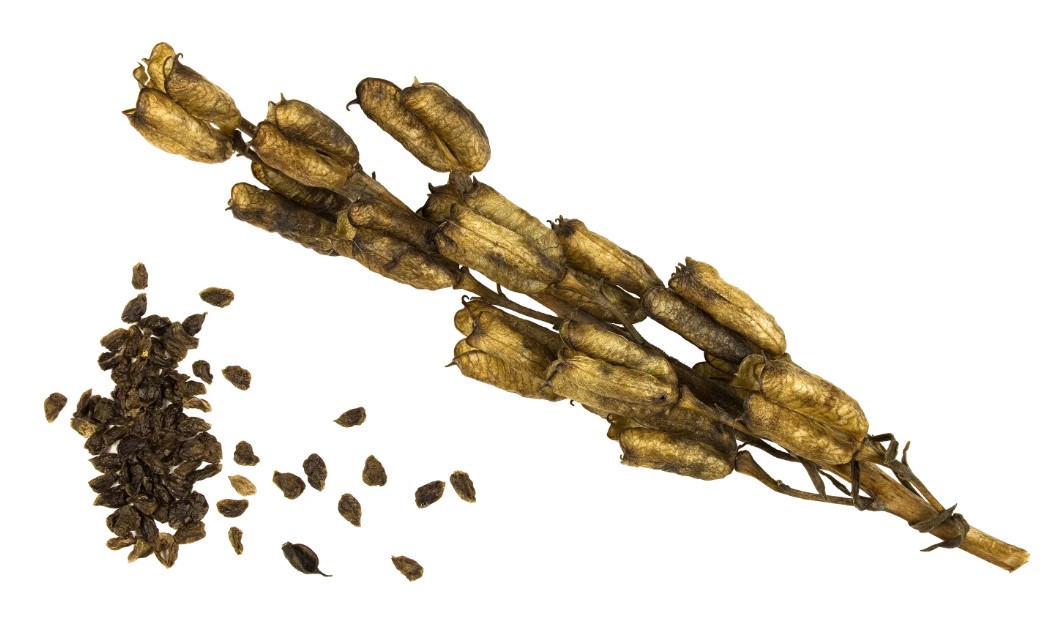
Stratification is required for seed germination. However, if the seeds are collected from your own plot and planted in the fall, this procedure is not necessary—cold stimulation will occur naturally over the winter. Seedlings will emerge the following spring.
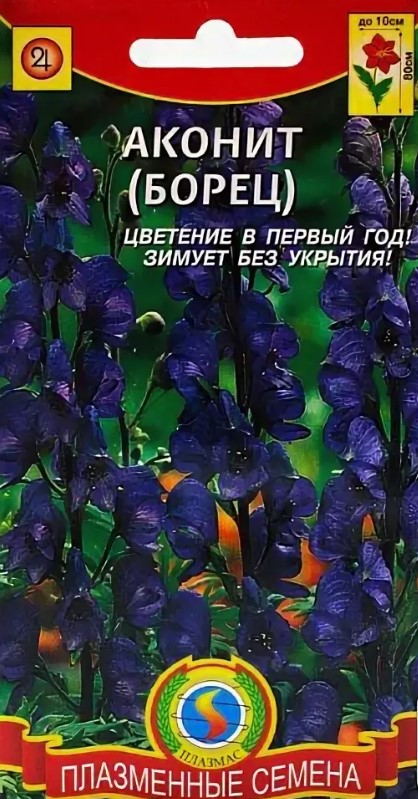
To force stratification, seeds can be placed in the refrigerator until spring. In the spring, plant them in a cold frame.
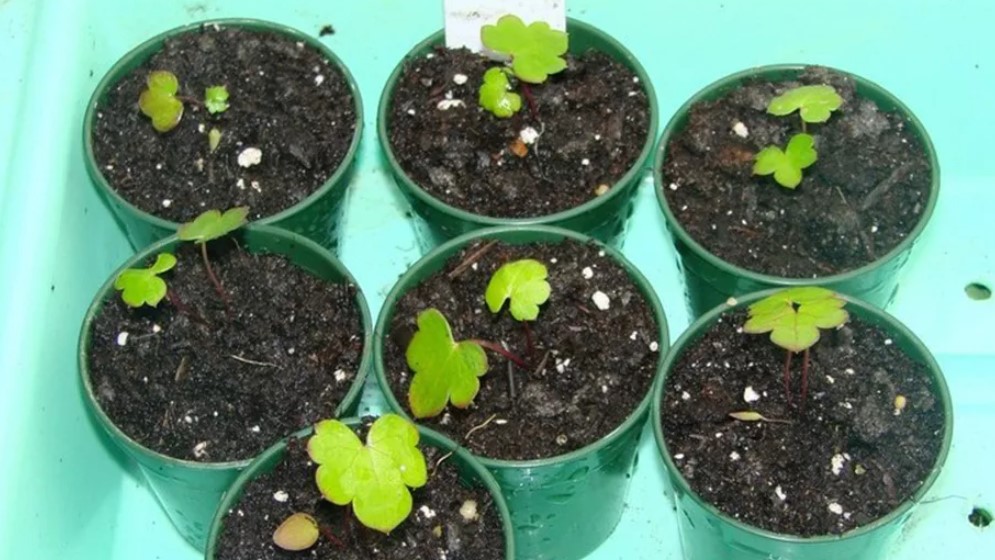
You should also be prepared for slow seedling growth. The seeds take several months to germinate. Once the seedlings have established themselves, they will need to be transplanted from the main container into individual containers.
Dividing the bush
As bushes age, they lose their strength and beauty. Therefore, dividing them can only be beneficial. To rejuvenate them, divide them once every 5-7 years in the fall or early spring.
To do this, dig them up with a shovel and divide them into several pieces using a cutting. Each piece should have strong roots and shoots. The cuttings should be planted immediately. To ensure good survival, they need to be kept thoroughly and regularly moistened.
Cuttings
Tuberous species can be propagated by cuttings from young shoots. They should be no more than 12 cm long. Cuttings are taken in the spring. The cuttings root in a cutting bed.
Flowering of different species of aconite in the garden, use in landscape
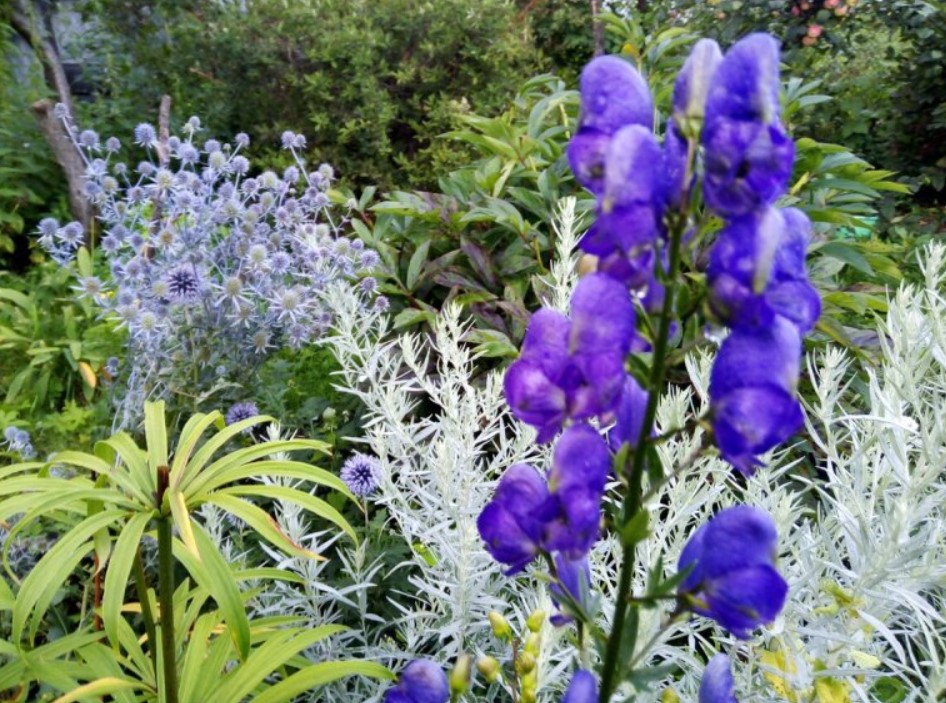
The wrestler fits perfectly into any landscape design. It can be combined with other low-maintenance species.
Aconitum is ideal for creating contrast in the garden. It's well-suited for borders, flowerbeds, and individual and group plantings.
Since the wrestler prefers partial shade, it can be planted under the canopy of trees.
Climbing varieties of aconite are excellent for vertical gardening. They can be used to decorate verandas and gazebos.
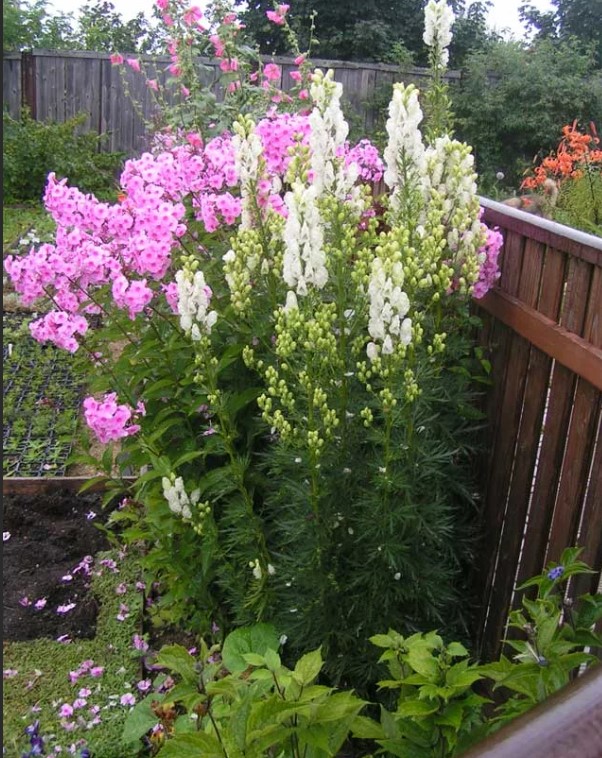
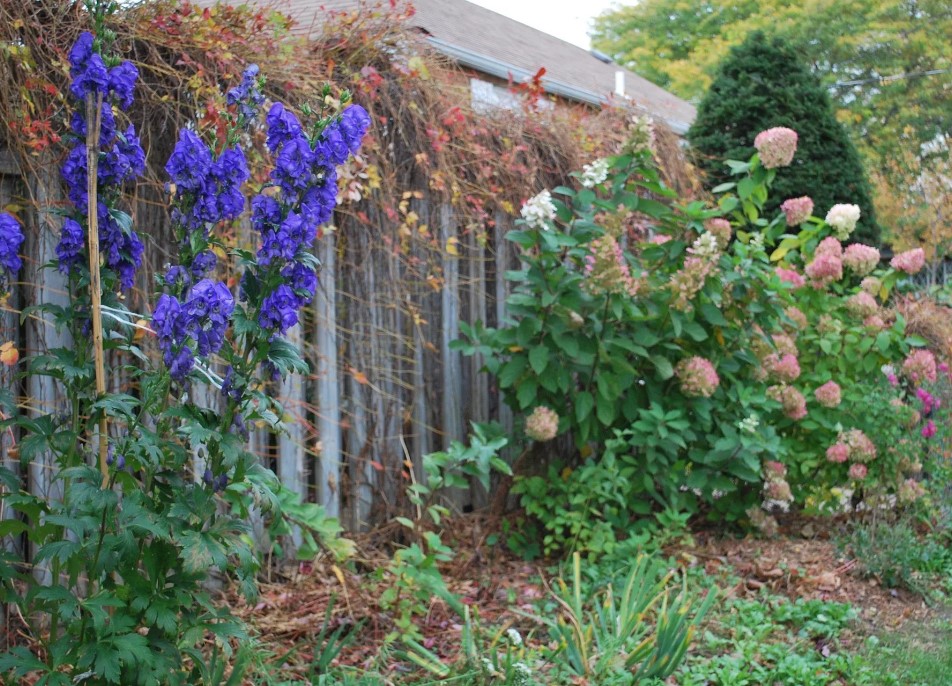
Photo gallery of monkshood in the landscape
Signs of aconite poisoning
When growing astragalus in your garden, you should remember that it is poisonous.
Its juice should not be allowed to enter the body.
If poisoning does occur, the first signs usually appear within a few minutes:
- tingling and burning in the mouth and throat;
- profuse salivation;
- abdominal pain;
- vomit;
- diarrhea;
- tingling and numbness in various parts of the body (lips, tongue, skin);
- burning and pain in the chest;
- coldness throughout the body;
- dizziness;
- darkening of the eyes;
- pallor of the skin;
- dilation of pupils;
- general weakness;
- hearing and vision impairments;
- motor and mental overexcitation;
- loss of coordination of movements;
- convulsions;
- high temperature;
- dyspnea;
- disrupted pulsation.
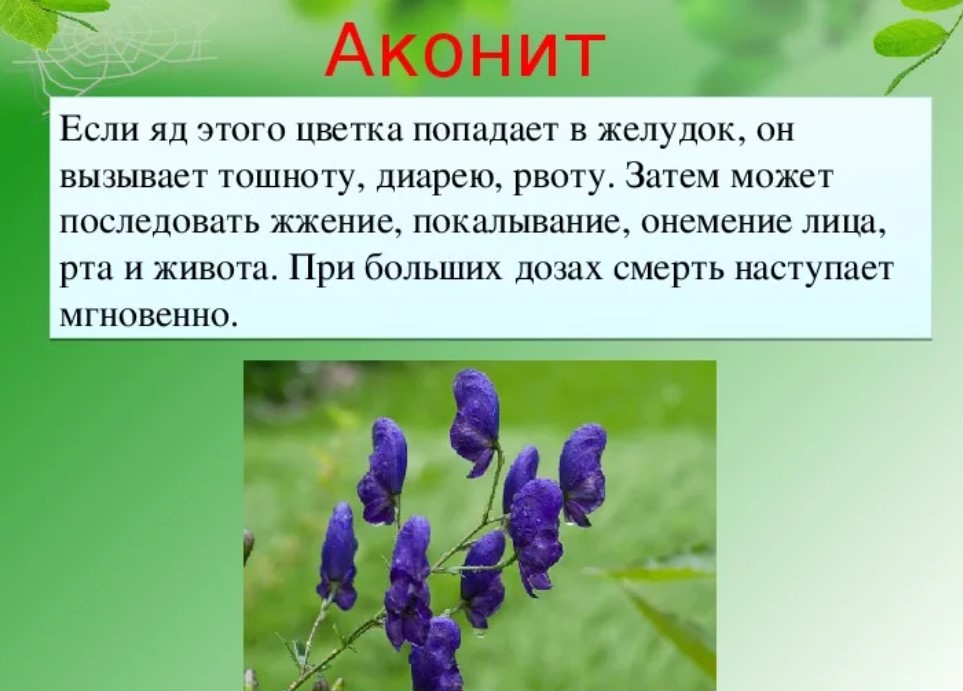
This condition is very dangerous and can be fatal. Therefore, the victim must receive immediate first aid and call an ambulance.
Treatment with aconite roots
In small doses, decoctions and infusions of aconite roots are used to lower blood pressure, against tumors, for problems with the musculoskeletal system, for tuberculosis, and for asthma.
Aconite roots are included in medicines for the following diseases:
- nervous disorders;
- cancerous tumors;
- genitourinary system;
- vessels.
Ointments are used in the treatment of skin diseases: psoriasis, furunculosis, neurodermatitis and others.
Recipes from aconite roots and flowers
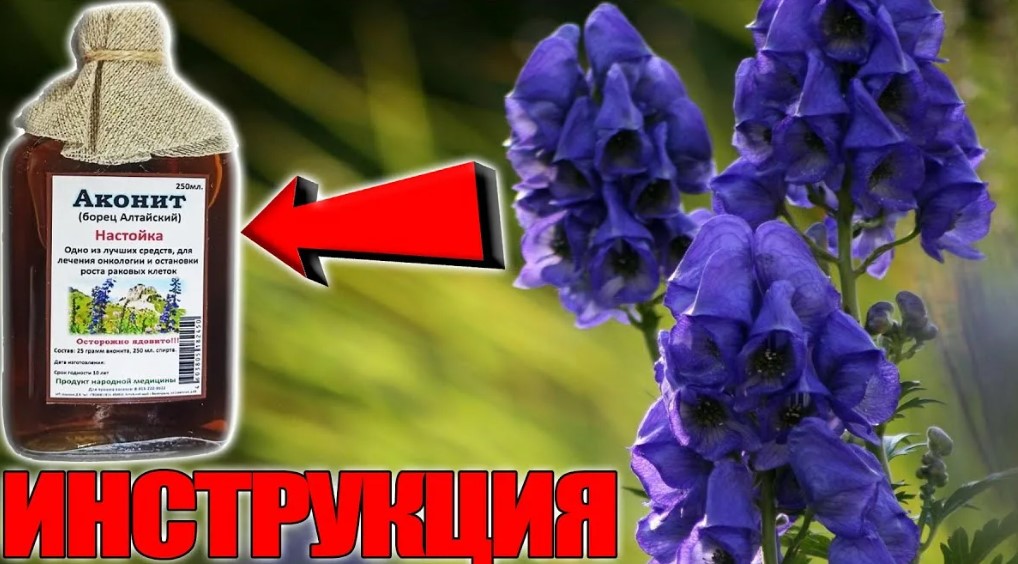
Let's look at how to prepare decoctions, infusions and ointments from aconite roots.
Decoction
Ingredients: 200 ml of water, 20 g of root.
Preparation: Place the ingredients over medium heat and simmer for 20 minutes.
Application: for wounds, ulcers, boils, apply to the affected areas several times a day.
Tincture
Ingredients: 1 liter of vodka, 10 g of root.
Preparation: Let it steep for 3 days, then strain. The medicine is ready for use.
Directions: Take 2 drops 3 times daily, 24 hours before meals, with a glass of water. For headaches, toothaches, multiple sclerosis, nervousness, and oral and joint diseases.
1 tablespoon a day before meals for stomach ulcers.
Externally: skin diseases.
Ointments from roots and flowers
Ingredients: Chopped root - 5 g, olive oil - 200 g.
Preparation: Place the ingredients in a double boiler until the mixture has reduced by a third.
Application: Apply to sore joint areas.
Ingredients: aconite flowers (at the beginning of flowering), rendered lard.
Preparation: Pour melted lard over the crushed flowers and simmer over low heat for 15 minutes, stirring constantly. Then place in a warm oven for 12 hours. Store in the refrigerator.
Application: For joint pain, apply 2-3 times daily for a week. After a week's break, continue treatment.
Contraindications for the use of aconite
Aconite is poisonous, so it should be used with caution. Contraindicated:
- children under 16 years of age;
- people with low blood pressure:
- nursing and pregnant women;
- in case of individual intolerance.
Use medicine containing aconite only after consulting a doctor.
Reviews and tips for growing aconite from gardeners
Review: Garden plant Aconitum napellus - Unpretentious, beautiful, tall Aconitum. Flowers look like Smurfs.
ADVANTAGES:
Unpretentious, flowers have a cool shape
FLAWS:
poisonous
Monkshood (Aconite napellus) gets its name from the shape of its flower. Medieval monks called their hats "hood," like those worn by gnomes or Smurfs. Monkshood flowers are exactly the same shape, identical to each other. The flowers are scentless.
The plant owes its name “wrestler” to Scandinavian mythology: the wrestler grew on the site of the death of the god Thor, who defeated a poisonous snake and died from its bite.I don't even remember how this plant appeared on my patch of land; it feels like it's been growing there forever.
My aconite is in a shady spot with poor soil. It's planted in rows. It doesn't receive any care, just grows on its own, like a weed. And nothing! It blooms and fruits…Aconitum napellus:
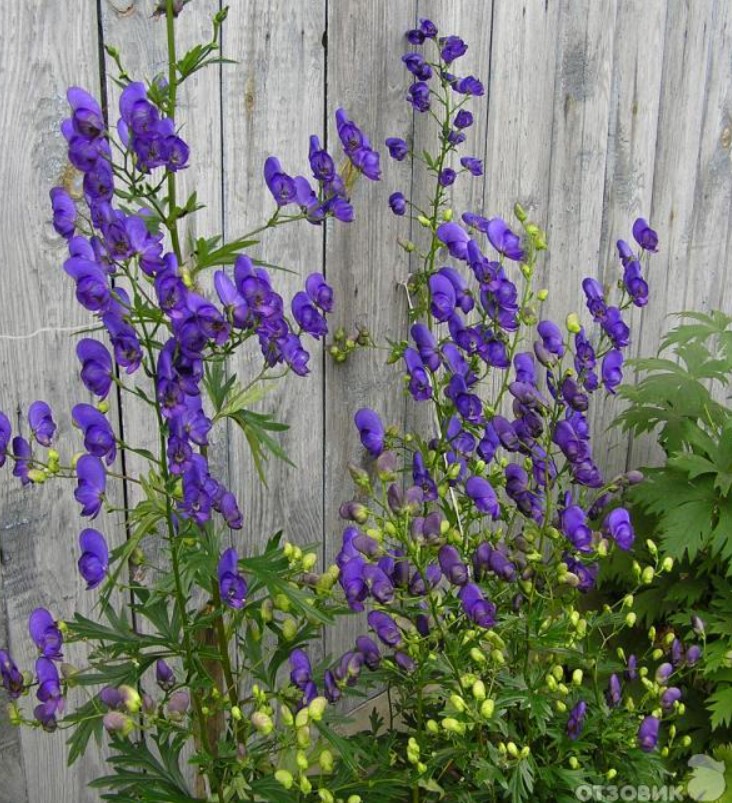
— A perennial herbaceous plant (the shape of the bush is similar to delphinium), up to 2 m in height.
— Flowers range from light blue to dark blue (I have light blue and dark blue, as pictured).
"It's not picky about soil. I don't fertilize it. I can add a handful of compost once every five years."
— Winter-hardy (we are not talking about the Far North, but about the central zone), does not require winter shelter.
— Very easy to care for. (I just clear away last year's dead wood in the spring, tie it up to prevent breakage, and prune the bush after flowering.)
— It blooms profusely, in large “brushes” (up to 50 cm), for about a month and a half.
— Propagated vegetatively, by division (in the spring). Seeds are also possible, but I don't want to waste time on that.
— Can grow in one place for many years without dividing or replanting. It's not aggressive (it doesn't spread like goutweed).Aconitum napellus is a poisonous plant!!! Even though it is medicinal.
It's best not to use any homemade tinctures at home; even a teaspoon of tincture can cause poisoning, and death can occur from a drop in blood pressure and respiratory paralysis.
It is used in small doses for flu, mastitis, furunculosis, pleurisy, hypertension, angina, acute rheumatism, trigeminal neuralgia, insomnia, and inflammation of the appendages. It has a powerful analgesic effect. It should be used only in homeopathic preparations, and only under a doctor's prescription.
grows quietly in a shady spot near the shed.

Review: Garden plant Aconitum napellus – Tamerlane's killer
ADVANTAGES:
Unpretentious and beautiful
FLAWS:
Poisonous!
My friends and readers!I've had aconite growing in my garden for about 30 years. It's a beautiful blue flower, reaching up to two meters. It's easy to care for and blooms for quite a long time, practically all of August.
However, there's a catch! Aconite contains the poison aconitine. This is the poison used to dispatch Tamerlane.
It's believed that the further north aconite grows, the less dangerous its poison. Supposedly, the poison is effective in southern countries, but not so much in northern ones... I honestly don't know who's tested this!
So, friends, be careful!
If you have small children, get rid of the monkshood! Children love to play and put things in their mouths, and they don't wash their hands! Besides, the aconite flowers are quite pretty!
I transplant aconite only with gloves!
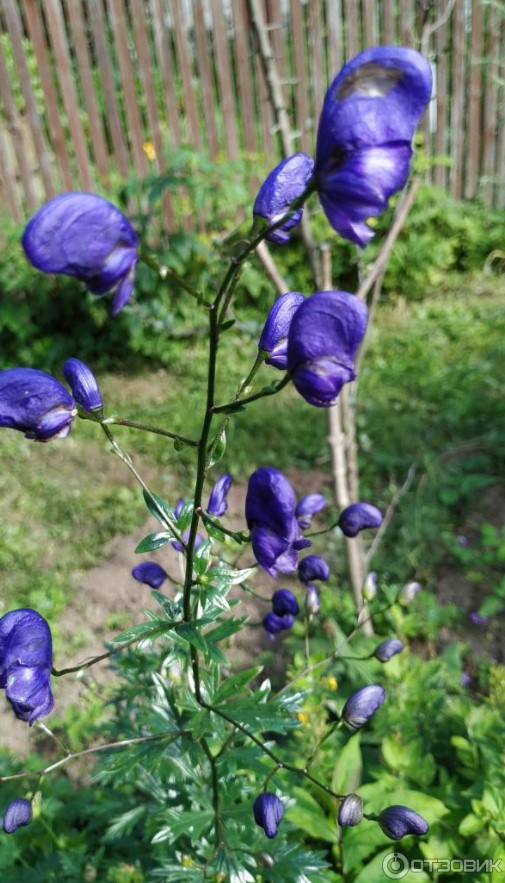
unpretentious beautiful perennial
Experience of use: one year or more
Almost every house in our village used to have aconites with dark purple flowers growing near them. They were often planted at the entrance to greenhouses to attract bees to pollinate the cucumbers. With the spread of self-pollinating cucumber hybrids, aconites gradually disappeared from gardens, and now they're rarely seen anywhere.One day, I saw a bicolor aconite in a catalog from the Chelyabinsk company "Garden and Vegetable Garden," as "Gardens of Russia" was then known. I liked its flowers, the blue and white "slippers," and I ordered a division along with other plants. The aconite survived the mailing perfectly. The division contained five individual roots. I planted them in a row along the fence, and they bloomed the following year.
These plants are completely unfussy in care. They only need occasional watering. They respond gratefully to fertilizing with flowering plant fertilizers, producing lush blooms. I have a tall variety of aconite; its blooms reach 170-180 cm in height, and I have to tie it up to prevent it from being blown over by the wind. It creates a beautiful blooming cascade.
Monkshood blooms for quite a long time, about a month. After flowering, I trim the flower stalks. In late fall, we mow it down, and it overwinters beautifully.
Aconitum is a poisonous plant, but I always handle it without gloves, simply washing my hands afterwards, and I've never had any signs of poisoning after working with it. It turns out its toxicity is lower in northern latitudes.
One more thing to keep in mind: like most members of the buttercup family, many aconites are highly poisonous. Pet poisoning is particularly common. Although aconite's toxicity depends on many factors, such as species, plant age, location (sunny or shady), latitude (high latitudes are less toxic), soil conditions, and the phenological stage of development, it's still best to follow basic safety precautions!
Another interesting feature of this flower: during its flowering period, it attracts a ton of bumblebees. I tried to capture them in a photo at the end of the blooming period, but not all of them wanted to be photographed.
It's so funny to watch bumblebees. After drinking the nectar of the Aconitum bicolor, they literally fall off and land on the wooden walkways along which these flowers grow. They lie there with their legs up for a bit, and then fly away.
I recommend this perennial for flower beds, provided that small children will not have access to it.
Advantages
Absolutely unpretentious in care
Decorative all season long
It blooms beautifully
Flaws
Poisonous
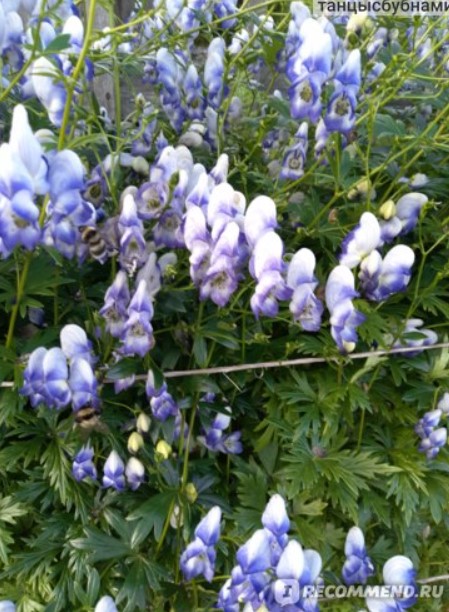
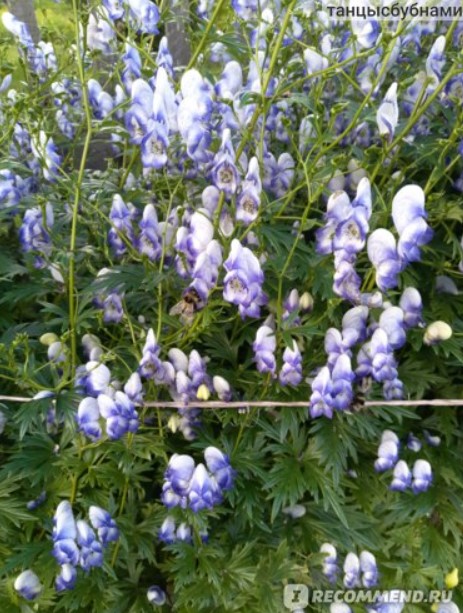
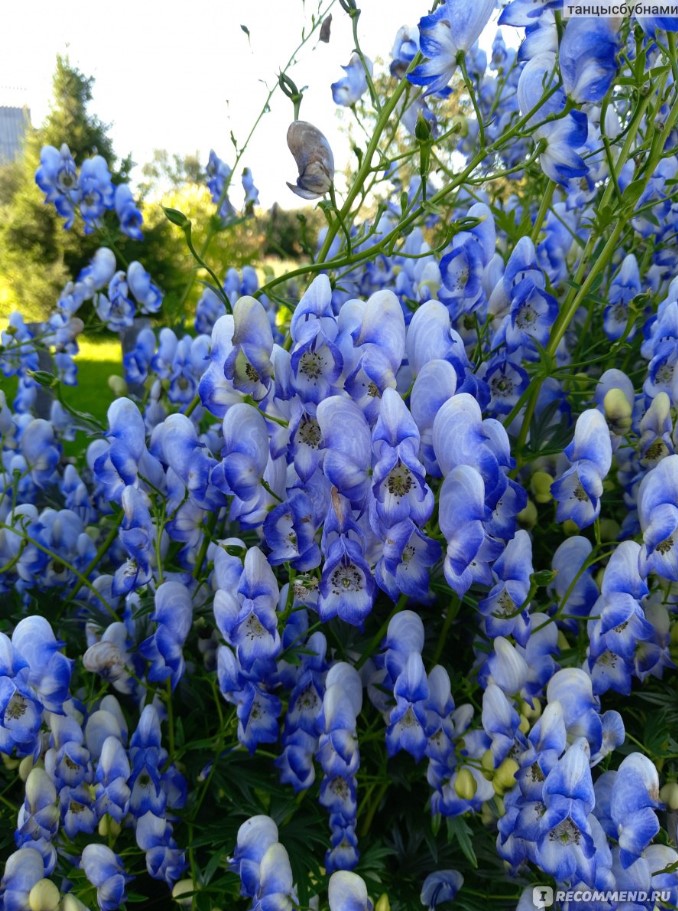
A few years ago, I bought this aconite in Timiryazevka, called Bicolor. (Photo from the Internet.) In my opinion, it blooms very late, almost in October. The leaves are hard, like plastic, and the caps are very large.
A couple of years ago I bought a white aconite at OBI, it blooms earlier than this one and is shorter.
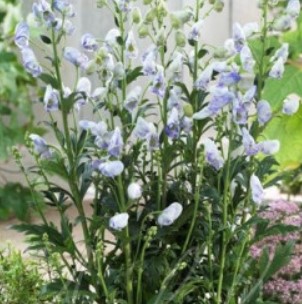
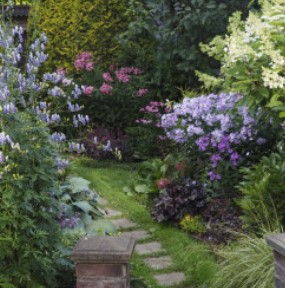
Has anyone tried growing aconite from seed? Please share your experience. The package says to sow before winter, but I searched online and it says it takes two winters to sprout. What's the easiest way to do this?
I sowed them once at the end of summer with fresh seeds. They sprouted in the spring.
Your seeds are dormant, so they'll sprout in the second spring. Sow them now, keep them warm for five days, and then plant them in the snow. Make sure the pot doesn't dry out in the summer; seedlings should emerge in the spring of 2011.
I sowed climbing aconites this year from forum seeds. I sowed them in a clear pot with a cookie lid and put it in the refrigerator until about New Year's. Last week I decided to check on them—they had sprouted and were growing. Now they're sitting on the windowsill with supplemental lighting.
I also want some cream-colored curly seeds.
IMHO, Aconitum carmicheliana is worth having. It blooms late, and the flowers are bright and large.
I had one, but it somehow disappeared unnoticed, as did other aconites. Only the climbing variety survives and reproduces.
Karmihelya has just now decided to find and renew it, but the rest – no, I’ll manage.
And one more thing.
Aconites are poisonous. You need to remember this when weeding or cutting. I once forgot and looked pale afterwards... I was weeding around with my bare hands, and I must have grabbed some aconite. So, there was sap. My head swam and I felt weak. Well, I couldn't attribute my condition, which I've remembered for many years, to anything else. Some kind of narcotic effect, in my humble opinion.Firstly, I may have had a scratch on my palms, and secondly, I have a stupid habit of grabbing a candy bar while working without observing “personal protection from infection” – i.e. without washing my hands.
Homeopathic aconite lowers blood pressure. My blood pressure spiked last year. I don't take blood pressure pills, so I drank a pea-sized amount, and after a while, it returned to normal. Apparently, Nina's blood pressure dropped sharply after coming into contact with aconite juice.
In some issue of the Flower Club, there was a photo of a dark lilac, almost purple, climbing aconite. I want one like that. The regular blue one is still growing, tucked behind the lilacs, barely surviving; we forget to water it. But I don't dare transplant it closer yet; my granddaughter is a terrible lover of picking, sniffing, and tasting everything…
It's interesting, when I was a child, these flowers grew in every garden, and not only them. I later read about many that were poisonous. We cut bouquets for our home, and no one warned us about it. Considering what we ate as children, how did we survive?
Tatra wrote: ↑10 Feb 2021, 19:48
In that case, can't stems and leaves be put into compost?In compost, all organic matter will decompose into simpler compounds, including aconite alkaloids.
Attention! According to modern evidence-based medicine, the effectiveness of homeopathic remedies does not exceed the placebo effect (self-hypnosis).
Review: Homeopathic remedy Pharmacy "Aconite" - Symptoms that begin suddenly
ADVANTAGES:
For all symptoms that begin suddenly
FLAWS:
Not always effective, you need to carefully select the symptoms
The homeopathic remedy "Aconite" (aconitum napellus, the name of the medicinal herb "wrestler") is widely used for many ailments and even neurological disorders. It's always in my medicine cabinet, though it mostly sits there; we rarely use it. I neglected it for a long time because I believed it wasn't suitable for my constitutional type.Homeopathic medicines can last a long time; in sugar granule form, they retain their properties for 5 years, but homeopaths themselves say even longer, and homeopathic poisons supposedly have virtually no shelf life:
In principle, I don’t use Aconite very often, but in some cases it can provide invaluable service.
For example, I've started actively using it for all sudden-onset symptoms, whether it's a cold, inflammation, or heart pain. That is, of course, if my heart suddenly starts throbbing, not just once or twice, but rather signals for help, I first take homeopathic cardiac remedies. And I also take aconite.
The ideal time to use aconite is a sudden (within 24 hours) illness with a high fever and dry heat. Even if it's pneumonia, that's even better (not for you, of course, but for the aconite).
However, if the dry fever progresses to sweating, I immediately eliminate aconite and move on to, for example, belladonna or homeopathic poisons. If the chills persist, I always add yellow jasmine poison (gelsemine). For decades, I used the mercury preparation Mercurius solubilis, but I've since abandoned it; there's no need for such "killer drugs." However, I still use arsenic (Arsenicum album).
Regarding aconite, my child's pediatrician advised giving it to him at night to prevent restlessness and to help him sleep peacefully. Unfortunately, this remedy didn't work, although I know it helps some people fall asleep peacefully. Incidentally, it doesn't work for me either. However, homeopathic arsenic works very well for both my son and me. The doctor simply advised against giving such a strong remedy to a small child, but he didn't sleep with another remedy, while Arsenicum album simply knocked him out. I should note some similarities between Aconite (a wrestler) and Arsenicum (arsenic). In both cases, the symptoms worsen around midnight. This suggests that the fairy tale "Cinderella" (remember when her carriage turns into a pumpkin just after midnight?) has symptoms of both Aconitum napellus and Arsenicum album (a homeopathic joke).
Well, seriously, if you can't fall asleep because of restlessness (either your arm or your leg can't find the right position), you can safely experiment with homeopathic poisons -
Lycopodium, Gelsemium sempervirens. However, Arsenicum album may be the most suitable. It must be said that restlessness comes in different forms. It's one thing if your arms or legs, or both, are bothering you, as in infants. It's another if your pillow feels hard and your blanket is "biting." I remember that wonderful Soviet cartoon, "How Masha Quarreled with Her Pillow." So, for the homeopathic method, there's a big difference between Masha's symptoms and Cinderella's. In Masha's case, as well as yours, if you can't seem to "come to an agreement" with your pillow, your remedy is Arnica Montana. Not to mention that the patient's constitution and characteristics must also be taken into account—an essential part of homeopathy. There's no single "analgin" for everyone. That's why even I, who rarely use medications, am sometimes tempted to simply take analgin.If you can't sleep because your mind is racing or you're overstimulated or physically overexcited, other remedies are more effective. There are quite a few such remedies, but they're difficult to find (I personally haven't been able to find one yet). Homeopathic coffee is a prime example (honestly, it never works for me).
If you're overwhelmed by fear or even panic, Aconite, which we've dedicated our discussion to today, will come to your aid, and it's absolutely spot-on. Just don't confuse the nuances: it's fear, not anxiety. Homeopaths go even further and subdivide "fear" into many different definitions: fear of heights, fear of exams, fear of going to the dentist, fear of looking ridiculous, and so on. For every "fear," there's a homeopathic remedy. "How wonderful!" might say patients in mental health clinics, who are treated with one or two remedies for everything. And yet, admittedly, they're more likely to suffer.
Homeopathic remedies can help with extreme conditions that interfere with a person's life and depress them. These include severe mental symptoms such as doom, depression, prostration, and stupor. Once, a single dose of a precisely chosen homeopathic remedy brought me out of such a state. I felt a surge of strength and the determination to make the right decision, which saved the life of a loved one.
Experienced homeopaths primarily give this remedy to those who need to change their perspective on current events. How often in life do we need to turn a situation around and move on, and how often are we unable to do so? And homeopathy offers the chance to do so easily and painlessly. I've almost forgotten the name of this homeopathic remedy, as I've only used it once in my life. But what a moment!
What I could not get from my family, friends, or enlist their strength and support, was given to me by one single homeopathic medicine.
It gave me strength and clarity of thought instead of weakness, confusion, and panic. Although, as I recall, it wasn't the only medication. There was another one, so I could eat normally and function normally. Because all the food I ate at that moment felt like a brick: it wouldn't go down my throat and wasn't digested, even though I was perfectly healthy at the time. How much depression and mental depression affect a person's physical condition.
P.S. Yes, one more little practical tip for those who fall asleep normally but wake up in the morning and can't fall back asleep. I'm writing this because it helps everyone I've given it to.
This only applies to those who wake up between 3:00 and 4:00 AM and can't fall back asleep. The cause doesn't matter (except for those who wake up naturally from severe pain). There's one "magic cure." It's called "nux vomica." Take it a couple of times at night. This usually lasts a long time.
I wish everyone good health and hope they can get by without medication.
P.S. Honestly, aconite is the most elusive remedy for me in terms of its effects. I admit I simply don't know how to use it. However, this doesn't diminish its healing properties in the least. Perhaps I'll find a use for it, who knows? I'd give it only "excellent" marks.