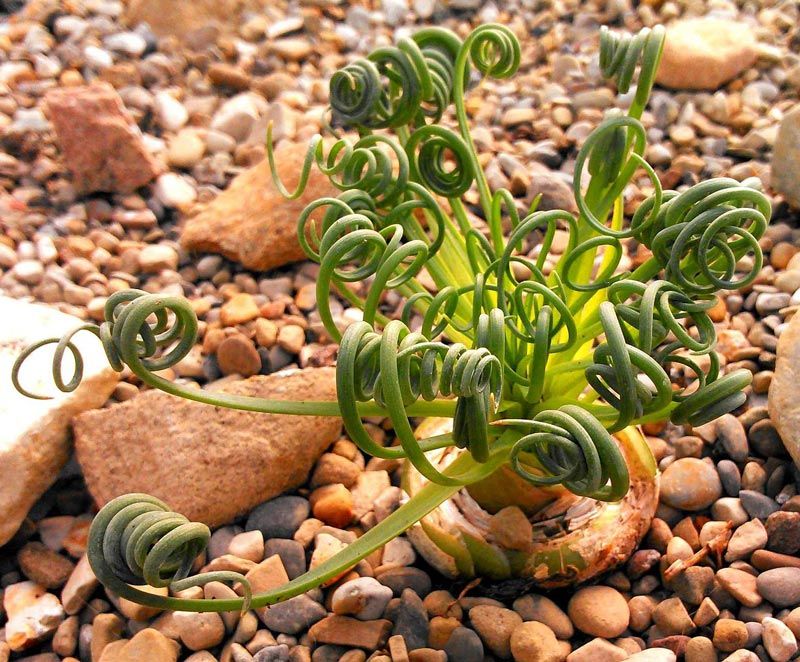
Albuca, or "African curls," is a herbaceous plant native to South Africa. Its Latin name translates to "shooting white" due to the stem on which the white flowers appear. There are approximately 160 species.
Content
Description
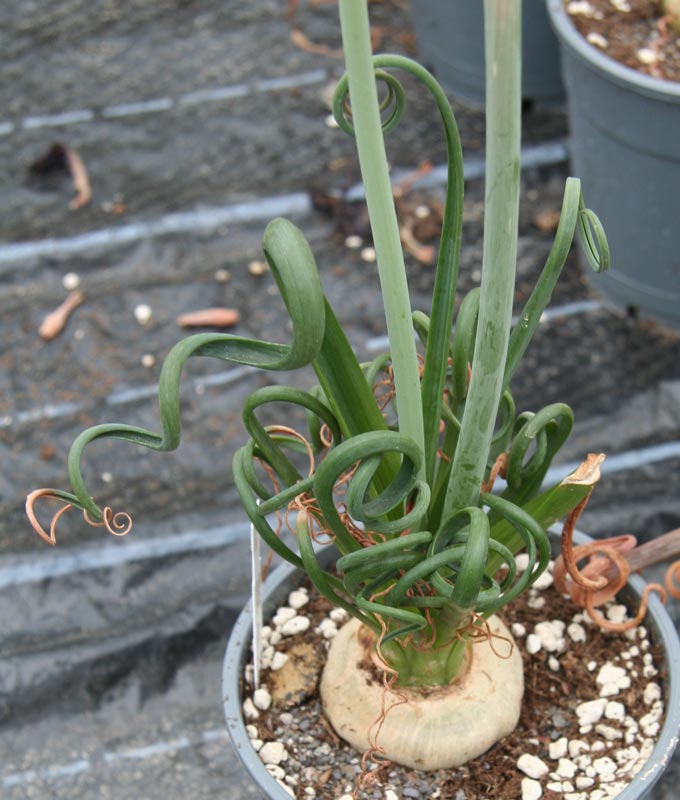
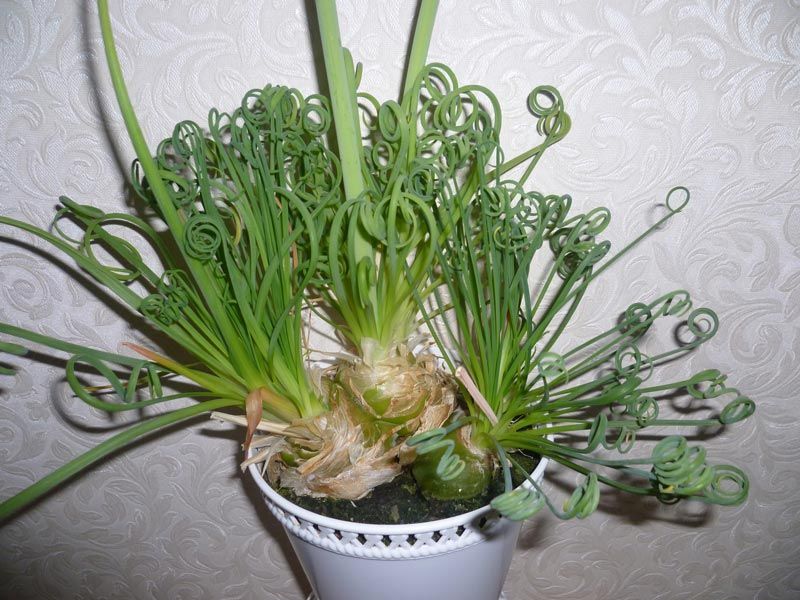
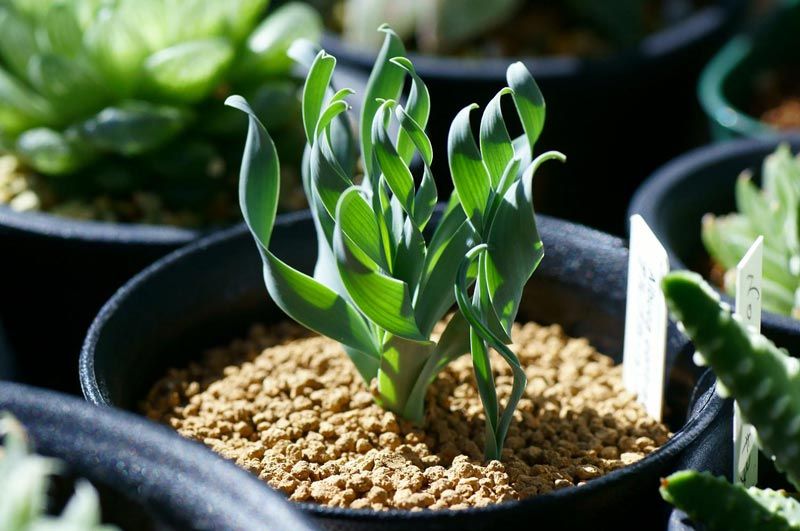
Albuca spiralis is a perennial succulent from the Asparagus family (formerly classified as a lily or hyacinth). Its main distinguishing feature is the unique shape of its green-gray leaves, which resemble spirals, curls, or corkscrews. They reach a length of no more than 35 cm when erect.
In extreme heat, the leaves (about 20 per plant) curl even more tightly into a serpentine shape, secreting a sticky sap. This leaf shape helps the plant stay cool and retain moisture. The bulb is round, light-colored, and 5 cm in diameter. The root system consists of white fibers that grow back in winter.
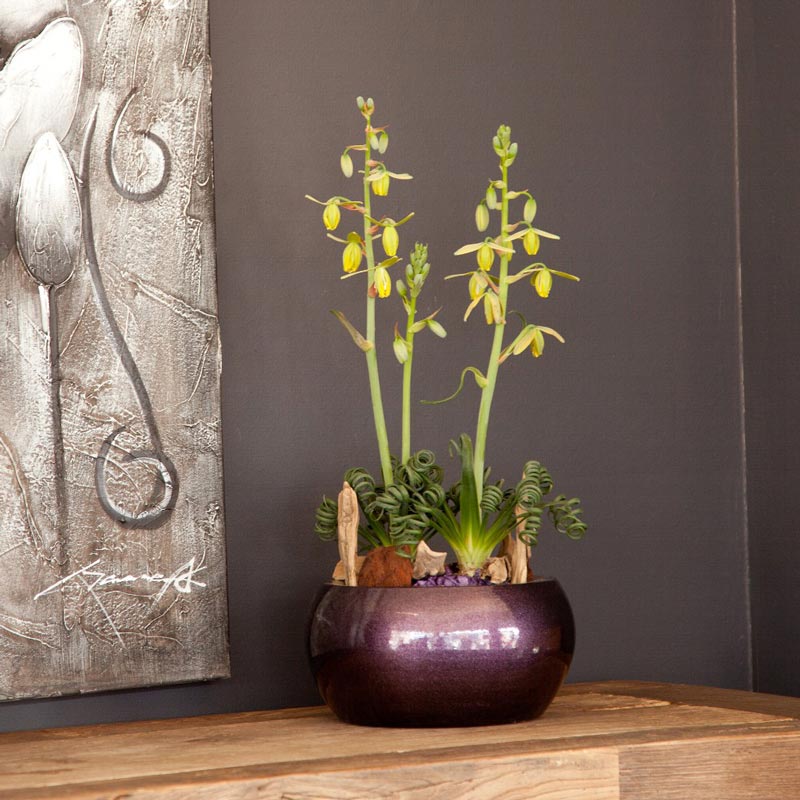
The flower stalk grows up to 60 cm, with flowers clustered in spike-shaped inflorescences arising from bulbs. The bell-shaped petals exude a vanilla scent at night. They come in yellow, white, cream, and light green, with a green stripe down the middle. They bloom in spring.
The growing season for albuca is winter, and the dormant period is summer, when it sheds its leaves.
Albuca spiralis hybrids include Nelson, Canadian, and Bract. The Dutch cultivar "Hot Curl" is distinguished by its large bulb and smaller leaves and flower stalk, with more pronounced leaf curl. It is rarely found in flower shops.
Caring for Albuca Spiralis at Home
In warm climates, albuca is grown outdoors. To do this, the bulbs are planted shallowly in a sunny area with light, loose soil, spaced five centimeters apart. In the fall, the bulbs are dug up and moved to a cool room.
Caring for it at home is easy: just plant it in a suitable substrate and maintain a proper lighting, watering, and temperature regime. Avoid stagnant water. This spiral-shaped albuca will create a unique interior design.
Lighting
Albuca loves light and can be placed in west, east, or south-facing windows. It requires 12 hours of daylight.
In cloudy weather, the plant is illuminated with phytolamps.
Temperature conditions
The flower prefers temperatures between 25 and 28°C in summer and 10 and 15°C in winter. In late November and early December, the albuca is placed in a location with temperatures between 10 and 15°C during the day and between 6 and 10°C at night.
Watering
During active growth and flowering, albuca requires generous watering after the top layer of soil has dried out. Reduce watering before the dormant period, and then stop.
Soil
Albuca potting soil should be light and contain coarse sand; you can purchase a ready-made succulent substrate. Preparing your own soil is easy: you'll need soil, humus, and sand in a 1:1:2 ratio. The mixture is disinfected (pierced in the oven). Drainage is placed at the bottom of the container.
Top dressing
Fertilize the plant with a special mixture for succulents containing minerals, nitrogen, potassium, and phosphorus, following the instructions but reducing the dose by half. Apply the first fertilizer in the fall, then once every 10-15 days. After flowering, fertilize the plant again, then let it rest.
Features of the flowering of Albuca spiralis and the dormant period
Albuca requires a temperature difference between night and day to bloom. It blooms in the spring, in April and May, lasting almost 10 weeks.
When the plant finishes flowering, capsules containing seeds appear. After the leaves wither, stop watering and fertilizing, and a dormant period begins.
In the fall, at the end of the season, the bulb is repotted. New soil is used, watering is resumed, and the pot is moved to a sunny location.
Albuca propagation methods
Albuca is propagated by "pups." This is done in the fall, separating them from the mother bulb and planting them separately, not too deeply. Use a shallow pot, 5-7 cm in diameter. Care for the pups is the same as for a mature bulb.
Propagation by seed isn't common, but it's possible to observe the flower's growth. Select a fresh seed, sow it, and plant it slightly deeper. Cover with plastic wrap or clear glass. Place in a sunny spot. The soil temperature should be between 25° and 28°C. Avoid overwatering. Seedlings will appear in two weeks. The bulb will form within a year. Albuca will bloom in three years.
Diseases and pests
If not properly cared for, albuca is susceptible to diseases and pests.
- Bulb rot. Discard the plant. To avoid problems, water the soil regularly, but not too frequently. Avoid standing water; the cause of the problem is overwatering.
- Brown leaves are a sign of rust; they dry up and fall off. Remove affected plants and treat with fungicides (copper sulfate, Oxychom).
- The leaves do not curl due to stagnant water.
- Leaves are falling – the flower is in the shade, there are temperature changes, a draft or the soil is drying out, or overwatering is possible.
- Spider mites - leaves curl and fall off; if detected, treat with Fitoverm or Actellic.
- Root mites attack the bulbs; insectoacaricidal agents will help: Apollo, Kemidis, Rogor S.
For prevention, the soil is treated with colloidal sulfur, disinfected before planting (baked in the oven), the drainage layer should be kept in a solution of manganese, then dried.