Aloe is the name of a genus of perennial leafy herbaceous, shrubby, woody xerophytes, and succulents belonging to the Asphodelaceae family. Native to Africa, Madagascar, and the Arabian Peninsula.
Aloe (akhal) is mentioned in the Bible. In Russian, some species of this genus are called "century plant." This is because, when grown indoors, it rarely bloomed, hence the name—"blooming once every hundred years." However, today, with proper care, this exotic phenomenon can be observed annually.
Since ancient times, the plant has been considered a home healer, a symbol of health and longevity.
Content
Description of aloe
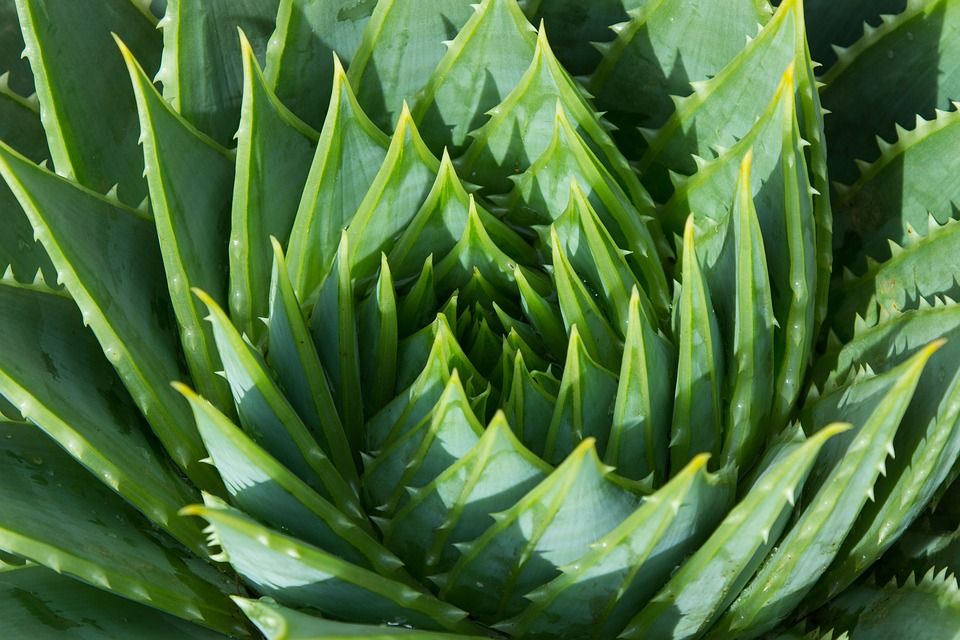
The plant consists of a stem with fleshy, slightly curved leaves that form a spiral rosette. They can be smooth, serrated (with sharp spines and soft cilia), elongated, lanceolate, sword-shaped, or deltoid. The color ranges from glaucous to dark green, sometimes with dark or light spots and streaks.
The leaves store water by closing their pores under adverse conditions, making the plant drought-resistant.
On a tall peduncle are funnel-shaped flowers of various shades from yellow to red.
Types of aloe
The genus aloe has approximately 300 species.
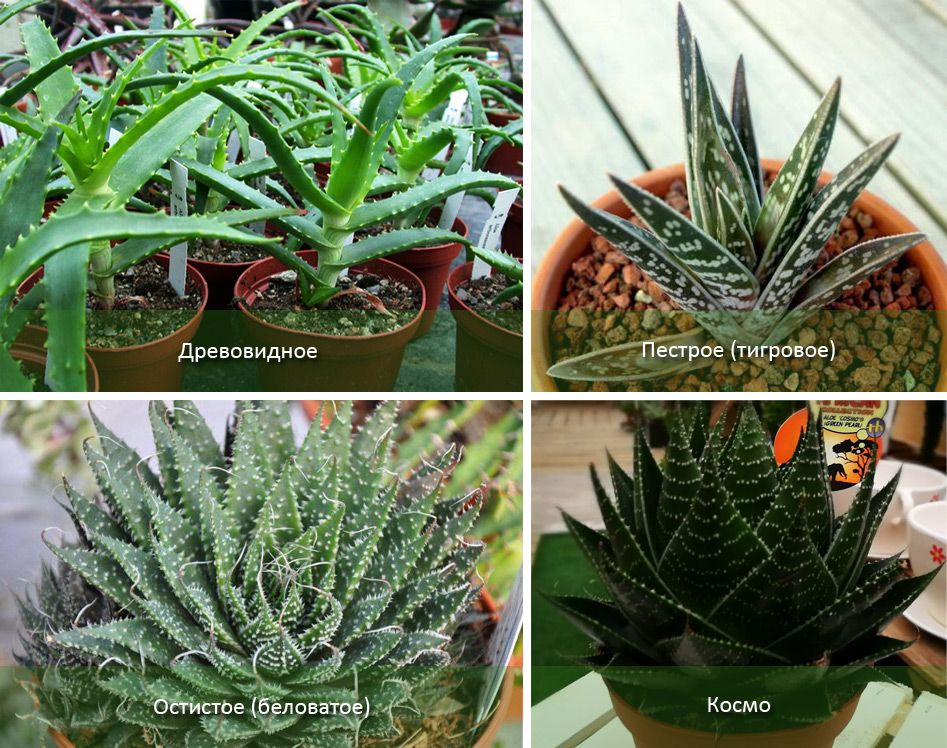
Arborescence (tree-like) is especially popular for indoor cultivation.
| View | Description, leaves | Flowers | |
| Brindle | Dark green, light transverse stripes. | Rare flowering. | Pink, yellow. |
| Tree-like | Long on a high stem. | Red, yellow, pink, scarlet. | |
| Present (faith) | Short stem. Long, fleshy, green, with spines on the sides. |
Orange, yellow-orange. | |
| Spinous (whitish) | Spherical rosette.
Bluish-green, with whitish spines and spots. |
Yellow, unattractive. | |
| Cosmo | A hybrid of the spinous variety, but larger in size. | ||
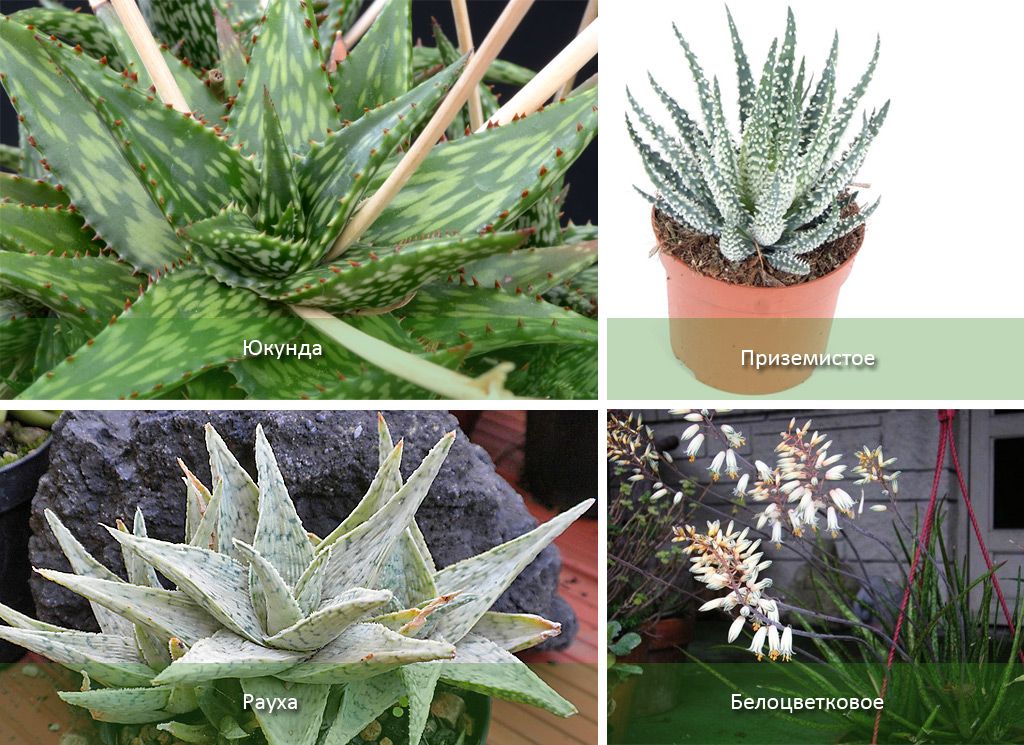
| Rauha | Blue-gray with white lines. | Bright orange, turning to yellow. | |
| Squat | Bluish-green, decorated with white nipple-shaped spots, with white spines along the edges. | Red, orange. | |
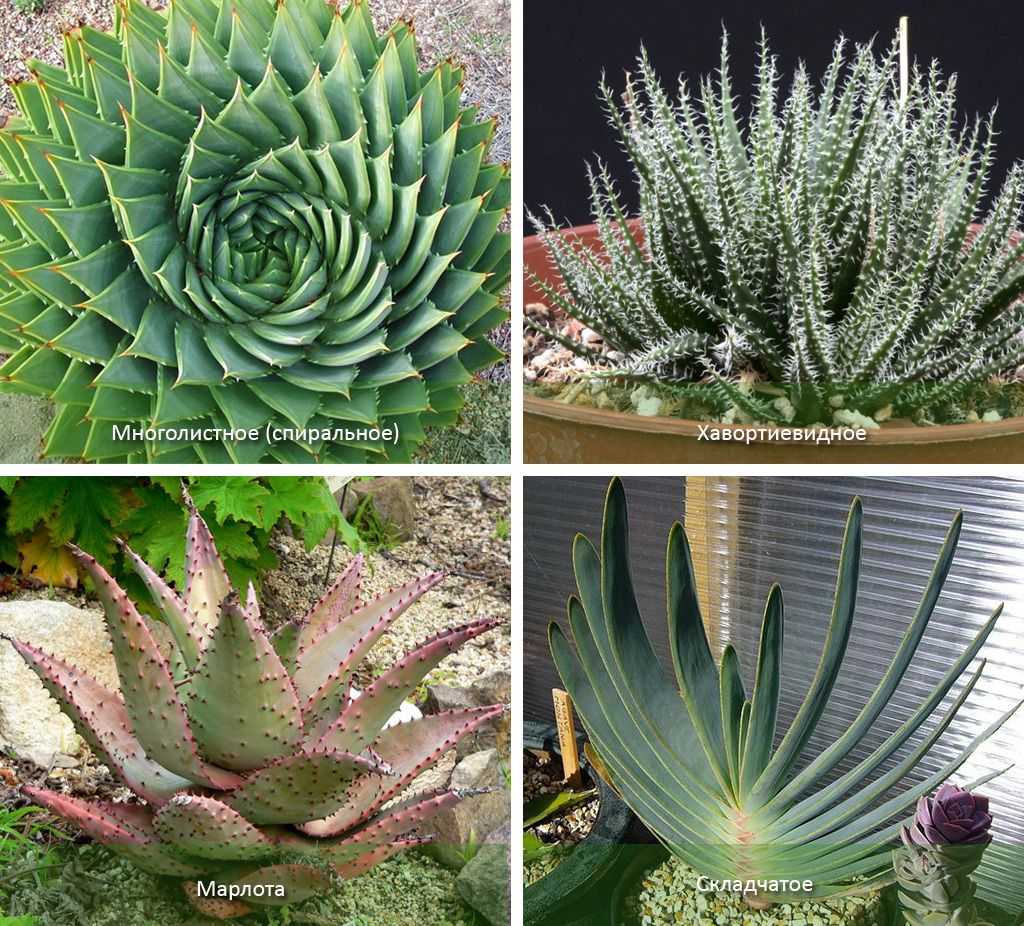
| Folded | Tall. Double stem.
Gray-green, ribbon-shaped, fan-shaped leaves with a smooth, sometimes slightly serrated edge. |
Bright red. | |
| Multi-leafed (spiral) | Triangular in shape, arranged in a spiral. Green, with small spines. | Scarlet. | |
| Jucunda | Bright green with white spots and reddish spines | Pink. | |
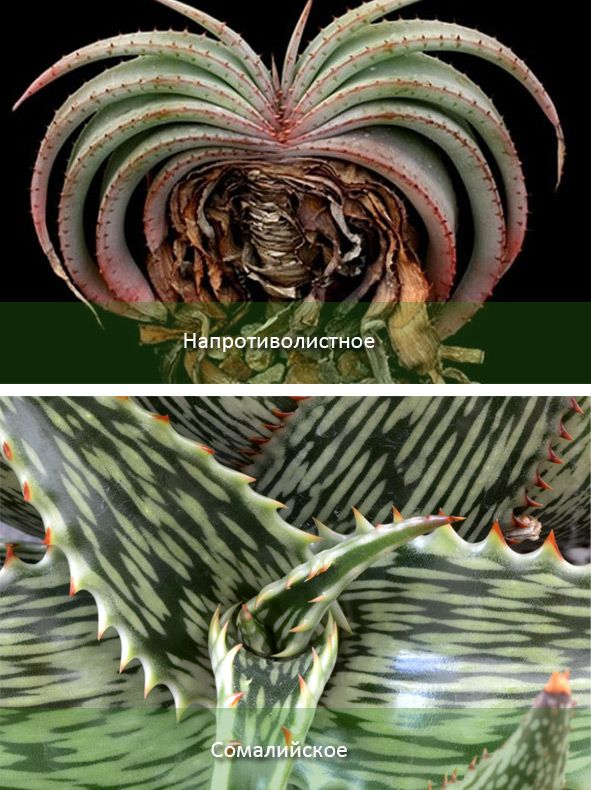
| Somali | Similar to Jucunda, but larger. | ||
| Haworthioideus | Thin green with long white eyelashes instead of thorns | ||
| Opposite | Blue-grey, located opposite each other, with small red spines on the sides. | ||
| Marlotta | Silver-blue with red-brown spines. | Orange. | |
| White-flowered | There is no stem.
Lanceolate, grey-violet with white specks and spines. |
White. | |
Aloe care at home
Since aloe is a succulent, caring for it involves the same steps as for all similar plants.
| Parameter | Spring/summer | Autumn/Winter |
| Location/lighting | Any window, preferably east or south. | |
| Shade in strong sun. It thrives outdoors, but protect from direct sunlight. | Do not disturb. | |
| Temperature | +22…+25 °C | +8…+10 °C |
| Humidity | In hot weather, spray, preventing water from accumulating in the rosette. | It doesn't matter. |
| Watering | Regular and abundant, but only when the top layer of soil dries out. (approximately once a week). Increase during flowering. |
Less common. At temperatures below 15°C, ensure the soil dries out completely before watering again. (once a month). |
| Top dressing | Once a month (mineral fertilizer for succulents). | Do not feed. |
Planting, replanting, soil, choosing a pot, pruning
After purchasing a plant, it needs to adapt for two weeks.
The pot is chosen depending on preferences.
- Clay pots allow the soil to breathe, allowing excess moisture to evaporate. However, when the sun heats up the pot's walls, plant roots begin to grow toward them, entangling themselves, and drying out in the process.
- Plastic ones allow you to water the plant less often, but there is a risk of overwatering it.
Soil composition: leaf and sod soil, coarse sand (2:1:1).
Young plants are repotted annually in the spring. Five-year-olds – every 2 years. Mature plants – every 3 years.
Water the aloe plant the day before repotting. Then, follow these steps:
- Prepare a new pot, lay 1/5 drainage (expanded clay, broken brick), add soil.
- The container with the plant is turned over, carefully removed, placed in a prepared pot, soil is added, and carefully compacted (using a blunt-ended stick with clockwise rotating movements).
- Water lightly, and if soil gets on the leaves, carefully remove it with a damp sponge, while trying not to allow moisture to get inside the rosette, as this can lead to rotting.
- Place the flower pot in a slightly shaded area and leave it without watering for three days.
- They try not to move the transplanted plant for about a month.
Reproduction
There are four methods of propagating aloe: by seeds, leaves, shoots and babies.
Seminal
This method only produces plants after a year. Obtaining and caring for seedlings requires a great deal of attention.
Sheet
It's a fairly simple method. The planting material can be easily obtained by pinching off a leaf from the mother plant; it's best to treat the cut with activated charcoal. Let it dry for about five days. Then plant it in a small pot with moist soil, pressing it down to a depth of 5 cm. Cover it with a glass container. It should root within two weeks.
Cuttings
Take a cutting with approximately 8 leaves. Dry for 5 days. Plant in moist soil, with the lower leaves touching the soil. Place on a sunny windowsill. Rooting occurs within a month.
Children
This involves separating shoots from the mother plant, growing from the root. These shoots may be rooted or not. In the latter case, the root system will develop some time after planting.
Problems with improper aloe care, diseases, pests
| Problem with leaves etc. | Cause | Treatment |
| Dry ends. | Overgrowth of the root system, lack of nutrition. | Transplant into a wider container. |
| Twisting. | Lack of care. | Wipe with a damp sponge. Remove dust and dirt. |
| Watery consistency, yellowing, softening. | Overwatering. | Reduce watering and ensure that the top layer of soil dries out before the procedure. |
| Thinning. | Lack of lighting and water. | Move the plant to a bright spot. Water it well; you can add water to the tray. |
| Brown spots. | Insufficient hydration. | Make sure that when watering, some water flows into the tray. |
| Soft dark green spots. | Fungal infection. | They are treated with antifungal agents Gliocladin and Trichodermin. |
| Redness. | Excess of sun. | They provide shade. |
| Falling down. | The irrigation water is too cold. | Water the plant only with settled water. |
| Drying of the stem, cessation of growth. | Root rot. | Remove from the pot, cut off the damaged parts, treat the cuts with charcoal, and replant in new soil. If the lower leaves are rotting, cut off the healthy top, and after it dries, replant it. Destroy all diseased parts. |
| Death of a plant without apparent cause. | Internal dry rot disease. | Avoid preventive spraying with the fungicide Fitosporin. |
| Sticky and shiny. | Scale insect. | Treat with a soapy solution. Clean off any insects. In severe infestations, spray with a product such as Aktara. |
| Web. | Spider mite. | Spray with Actellic, Aktara or Bone Forte. |
| The appearance of cotton wool pieces. | Mealybugs. | Wash away insects with garlic infusion. Treat with Aktara and Fitoverm. |
| Silvery streaks, insects are visible. | Thrips. | Spray with insecticides Fitoverm, Karate, Actellik. |
Top.tomathouse.com informs: Aloe is a home doctor
The healing properties of aloe have been known for several millennia. Medications made from it have anti-inflammatory, disinfectant, choleretic, burn-fighting, and wound-healing effects. They improve digestion and appetite, and treat gastritis and ulcers. Aloe is widely used for pharmaceutical and cosmetic purposes.
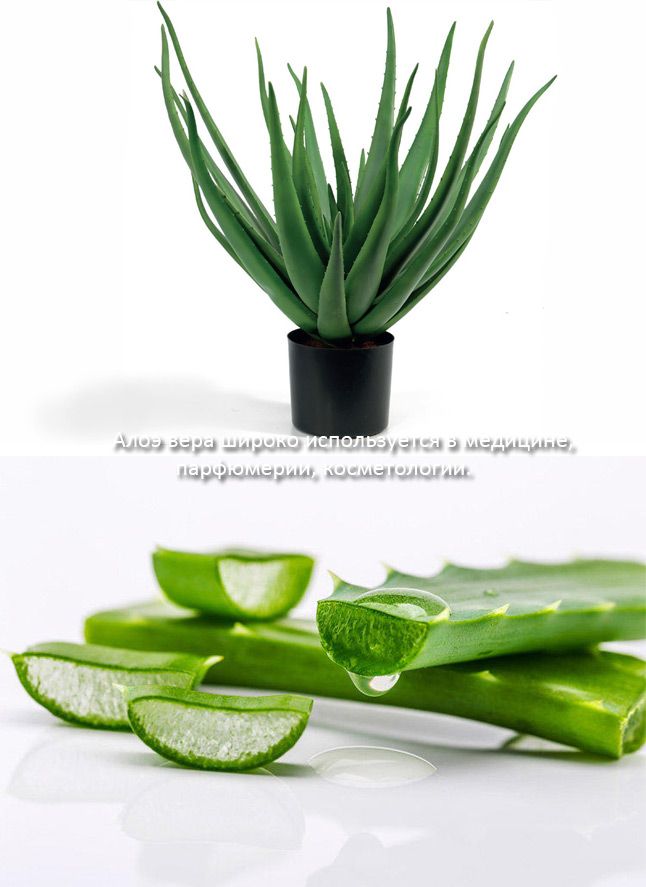
At home, it's used to treat a runny nose. In winter, take fairly large leaves (at least 15 cm), mince them, strain the juice, and boil for no more than 3 minutes. Place 5 drops in each nostril at 3-minute intervals (do not store, as the medicinal properties quickly disappear).
Evaporated aloe juice (sabur) is also used for constipation and to boost immunity. It is contraindicated for people with liver or gallbladder disease, hemorrhoids, cystitis, during the menstrual cycle, and for pregnant women.