The alpine violet is a perennial tuberous plant of the cyclamen genus. It prefers mountain climates, hence its exquisite name.
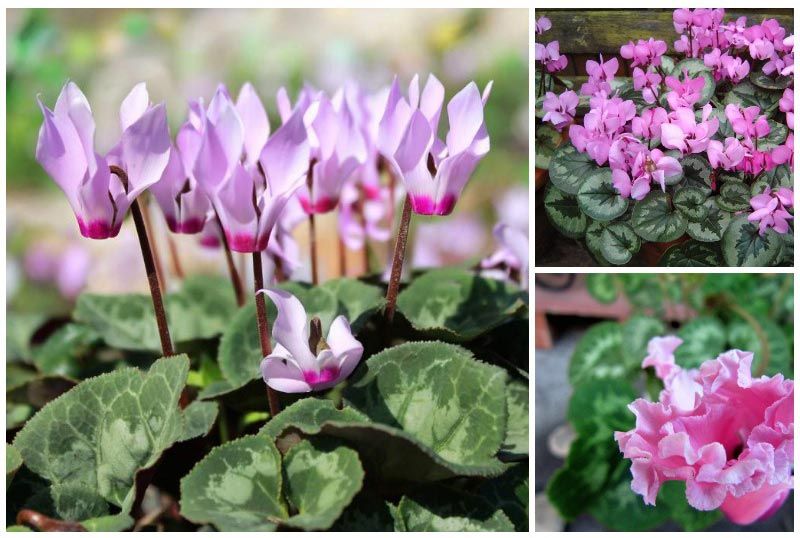
Description of the Alpine Violet
Another common name for this plant is the purple cyclamen (European cyclamen), and colloquially, the dryakva. This flower can be found along the entire Mediterranean coast and in the mountains of northeast Africa. The plant thrives in cool conditions and is completely intolerant of heat. Therefore, its life cycle is divided into two periods: dormancy and growth. In summer, the alpine violet sheds its leaves and "goes dormant," and in autumn, the growing season begins. It blooms throughout the winter, from October to March.
The buds of this plant have delicate, elongated petals in white, purple, and pink. The green leaves with silvery patterns are heart-shaped.
Types of alpine violet
There are over 20 species of alpine violet. However, due to the difficulty of caring for them, only two are grown indoors: the Persian violet and the purple violet.
|
View |
Description | Leaves |
Flowers |
| Persian cyclamen | A perennial plant, up to 30 cm in height, with a round, fleshy root system, 15 cm in diameter. It does not form daughter shoots. | Large, up to 14 cm in diameter, grow from a tuber, heart-shaped, dark green with a light pattern, petioles are red-brown. | They have five pointed, curved petals, up to 5 cm long. A rich range of colors: white, pink, burgundy, purple, dark red. |
| Cyclamen purpurea (European) | A low plant, 10-20 cm tall. Small tubers are entwined with root suckers. | Small—2-4 cm, rounded. The upper side of the leaf is green with a silvery marking, the lower side is dark red. | They consist of five drooping petals of pink, deep crimson, or purple. The flower stalks are cherry-colored. |
Alpine violet: home care
Unpretentious in nature, this flower requires special attention when grown indoors. Only with proper care will the cyclamen survive and bloom for months on end.
|
|
Flowering period |
Rest period |
| Location | During the winter months, plants are placed on well-lit western or eastern windowsills, or on shelves with additional lighting. | A shaded spot in the garden or on a balcony. Outdoors is best. Can be placed between window frames. |
| Temperature | The optimal temperature during this period is +17…+19°C. The flower will perceive an increase to +25°C as a signal to go into hibernation. | During this period, the plant doesn't react strongly to higher temperatures. The cool night air on a loggia or balcony has a beneficial effect on bud formation. |
| Watering | It doesn't like dampness, so water it generously, but not often, preferably through a tray - this way water doesn't get on the leaves and tubers. | Just lightly moisten the root ball with cold water, preventing the tubers from drying out or cracking. |
| Top dressing | Only adult plants, once every 2 weeks at a rate of 1 g/1 l. Any mineral potassium-phosphorus mixture with a reduced nitrogen content is suitable. | Not produced. |
Transplantation and soil
Alpine violets are repotted during their dormant period, closer to autumn, when the first leaf buds appear on the rooted bulb. The pot should be slightly larger than the diameter of the rooted bulb. Larger containers will prevent flowering.
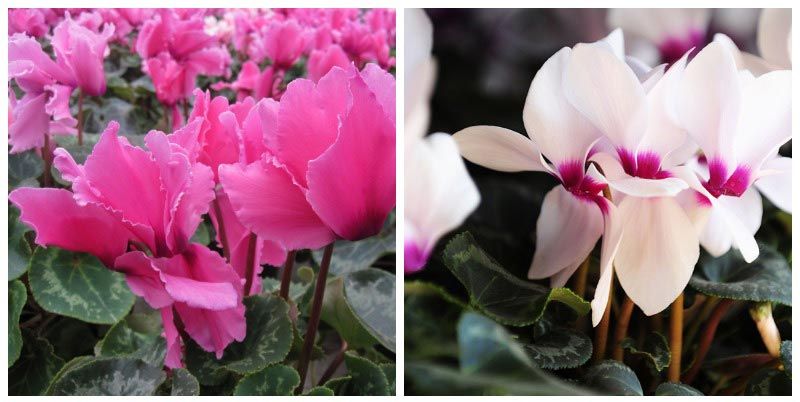
Place a drainage layer at the bottom, then add a soil mixture. For this, mix peat, sand, garden soil, and humus in equal proportions. Remove any dried or rotted roots from the surface of the rhizome and bury them in the soil. Persian cyclamen should be buried two-thirds deep, while European cyclamen can be completely covered with soil. If propagation is planned, cut the bulb beforehand, leaving buds and roots in each section. Treat the cut area with charcoal.
To accelerate growth, the tubers are sprayed with special solutions and allowed to dry in the sun, but not in direct sunlight. They are then rooted in soil. After repotting, the pot is placed in a cool, bright location. Water sparingly until the first leaves appear.
When propagating by seed, place the soil mixture in a shallow container, pressing each seed 1 cm deep and smoothing it out. Cover with light-proof film and moisten the soil regularly. Seedlings will begin to emerge in 30-50 days.
Alpine violet: garden care
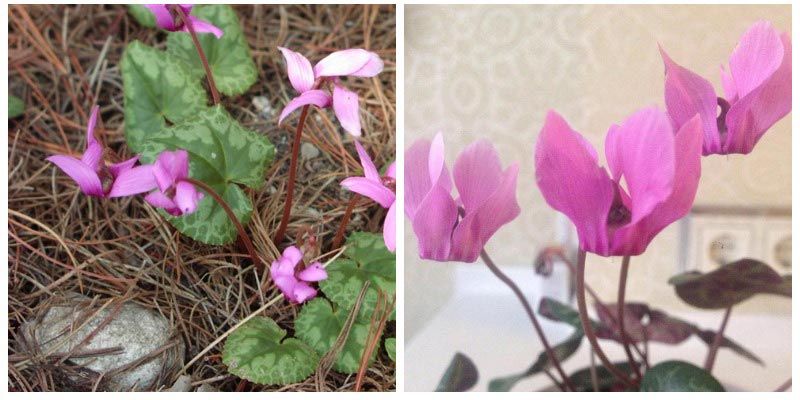
The ideal planting spot in the garden is the crown of any tree or the base of a shrub. This will protect the flower from excess moisture during rain and direct sunlight. Cyclamen prefers loose, permeable soil that doesn't retain water. For this, it's best to dig holes and fill them with a soil mixture of turf and leaf mold, along with some gravel for drainage. In the garden, plant the tubers 10 cm deep to prevent freezing during cold periods.
During flowering, alpine violets require frequent watering. Moisture getting into the rosette of leaves will cause the plant to rot. Remove dried buds and yellowed leaves.
Before winter, cyclamen is covered with a thick layer of foliage. This blanket will prevent the plant from freezing and retain moisture in the soil.
Diseases and pests
|
Symptoms |
Reasons |
Elimination |
| Leaves turn yellow during the growing season. | Dry air, high temperature, lack of watering. | Provide regular watering, spray the area above the flower with a spray bottle, and place in a light, cool place. |
| Leaves and flower stalks rot, brown spots appear. | Excessive watering, water getting into the rosette and on the tuber. | Remove affected plant parts, dry them, and sprinkle with charcoal. Replace the soil and ensure good soil aeration. |
| Flowering stops and the tips of the leaves turn yellow. | Fungal infection. | Replace the substrate. Treat the flower with Topsin-M. |
| White coating, dark spots on leaves. | Gray rot. | Replant the cyclamen into another pot, treat with a fungicide, and limit watering. |
| Flowers and leaves become deformed and covered with white streaks. | Thrips infestation. | The plant is isolated and disinfected with Spintor, Fitoverm, etc. |
| The leaves turn yellow, become covered with a grey coating, and growth and flowering stop. | Cyclamen or spider mite infestation. | Treat with insectoacaricides: Danitol, Mavrik, Sumiton, etc. |
Top.tomathouse.com recommends: Medicinal properties of alpine violet
The medicinal properties of cyclamen have been appreciated for centuries. Its tubers contain substances that help combat nasal polyps, sinusitis, and sinusitis. Baths with decoctions relieve arthritis pain. Alcohol tinctures made from alpine violet bulbs are used for rheumatism, gout, intestinal disorders, and migraines.
Sprays with an extract from the plant's rhizomes have antiseptic and antimicrobial properties. In folk medicine, to remove pus from the sinuses during acute inflammation, fresh juice is prepared from crushed tubers and 1-2 drops are applied to each nostril just once. This is enough to cause pus to drain within half an hour. Failure to follow the recommended dosage can cause an allergic reaction and poisoning, as cyclamen is a poisonous plant. To avoid this, all medications containing this plant should be used under the advice of a specialist.