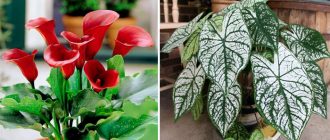
Alsobia, a shade-loving, delicately flowering herbaceous plant, belongs to the Gesneriad family. It is native to Mexico, Brazil, and Costa Rica.
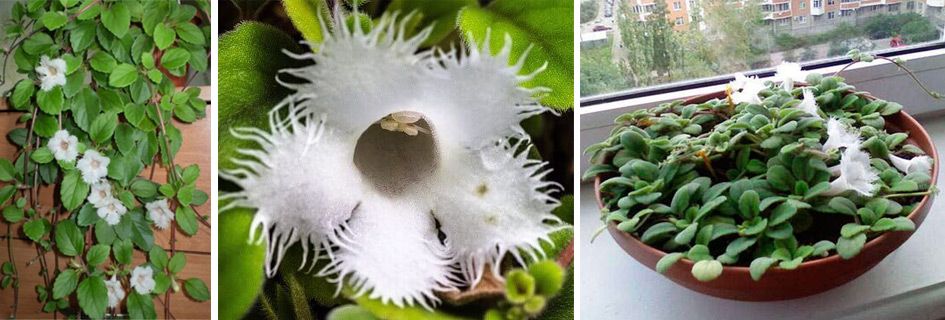
Description of Alsobia
The plant was previously classified in the genus Episcia, but in 1978 it was reclassified as a distinct plant. The leaves are velvety ovals of varying shades of green with prominent veins, gathered on a compact rosette no more than 15 cm tall. The flowers are tubular white with a delicate fringe, blooming from April to late August.
There are two types of shoots: thick, small ones and narrow, long ones (runners). This type of creeping stem produces a rosette capable of rooting.
Alsobia varieties
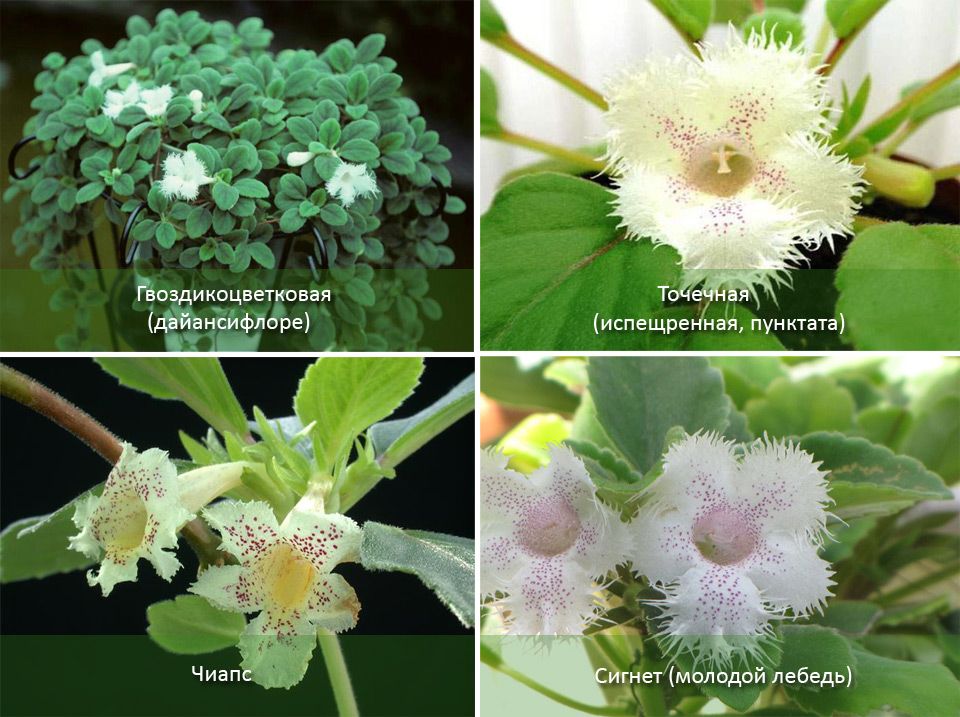
Two species are grown as houseplants: carnation-flowered and dotted, as well as hybrid varieties.
| Type, variety | Description | Leaves | Flowers |
| Dianthus annuus (Dyansiflora) | Small. Thickened, strong stems and shoots. | Oval-round dark. | Pure white with fringe. Looks like a carnation. |
| Dotted (speckled, punctate) | Characterized by slow growth. Rare. |
Elongated, the color of juicy grass. | Milky in color with lilac dots and a yellow throat, jagged at the ends. |
| Signet (young swan) | Obtained by crossing the carnation-flowered and the dotted variety. | Ovoid, large, hairy, serrated, light green. | Snow-white, with a strip of pink dots on each petal, corrugated at the edges. |
| Chiaps | Bush. A very rare variety. | Quite large, light green, elongated oval, pointed. | The color of baked milk with a lemon center and red speckles. |
Indoor care of a tropical beauty
In indoor cultivation, the plant is used as an ampelous one.
Home care, development and flowering can be ensured by following these rules:
| Factor | Year-round maintenance conditions | |
| Spring/summer | Autumn/Winter | |
| Location/lighting | East or southeast-facing windows. Provide additional lighting on other windows, otherwise the plant won't bloom. Protect from direct sunlight. | |
| Temperature | +19…+25 °C. Drafts and hot air from heating appliances are contraindicated. Do not allow soil temperatures to drop below +17 °C. | |
| Humidity | Increased. Do not spray. Place on a tray with wet pebbles or moss. | |
| Watering | Moderate, even distribution. After the top layer dries, the soil inside should remain moist. | |
| Transfer | As the roots grow, carefully leave the old soil on the tender roots, adding new soil. | |
| Pot | Wide, shallow. Drainage. | |
| Soil | Homemade: leaf mold, humus, peat soil, and coarse sand (2:1:1:1). Add a small amount of moss, coconut fiber, and charcoal. The finished soil is for Saintpaulias. | |
| Top dressing | Once every 2 weeks with fertilizer for flowering indoor plants (0.5 dose), violets (1 dose). | They don't contribute. |
| Trimming | Regularly pinch and trim long shoots. Regulate the number of new rosettes. | |
Reproduction
There are three methods for growing young plants: from daughter plants, cuttings, and seeds. Stems with daughter rosettes are rooted in a nearby pot of soil without being cut from the mother plant. Once roots appear, the pot is separated.
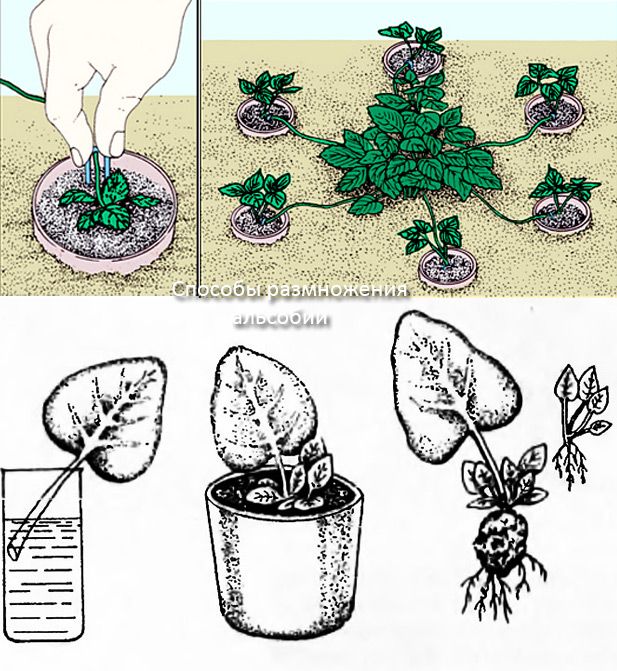
When propagating by cuttings, leaves and tops are used as planting material. They are cut off, and damaged areas are treated with charcoal. They are immediately planted in moist soil. The pot is covered with a glass jar. After roots have formed (about one month), they are replanted separately.
Seed propagation is not popular because it can lead to loss of varietal characteristics.
Sow in January or summer. Place on the surface of moist soil, not burying or covering with soil. Cover with plastic wrap. Keep at temperatures above 20°C. Transplant when the first leaves appear (2-3 weeks).
Diseases, pests
Alsobia is fairly resistant to diseases and insect infestations. Spider mites may appear if the air is too dry. Scale insects and nematodes may rarely attack. To control them, spray with insecticides (Actellic, Fitoverm).