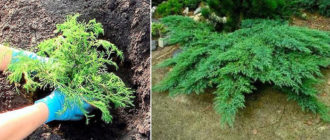
Ardisia belongs to the Myrsinaceae family. According to various sources, the genus contains 500-800 species. The plant is native to the tropics and subtropics. "Ardesia" means "arrow" in Greek. This name refers to the shape of the corolla. It is also popularly known as the "coral tree."
Description and characteristics of Ardisia
Ardisia is an evergreen plant with leathery, glossy, smooth, elliptical leaves arranged in a sequential pattern along the stem. The leaves have entire, oblique teeth along the perimeter, or serrated edges.
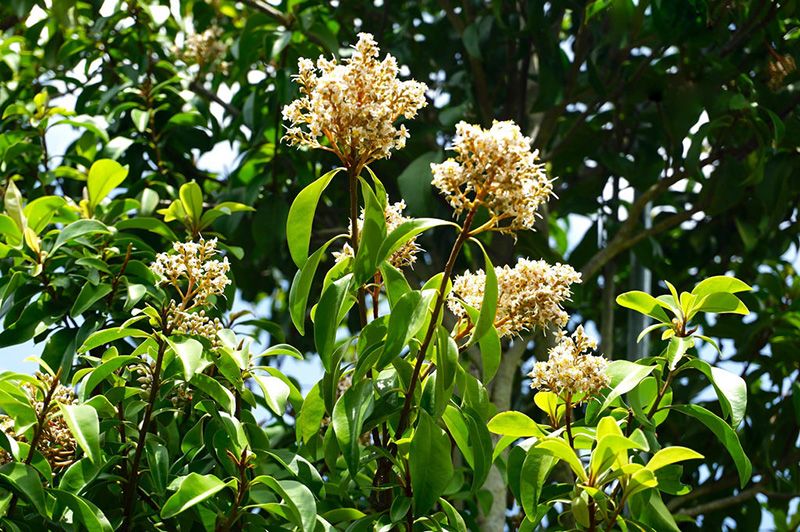
Small, bisexual flowers are gathered in paniculate or umbel-shaped inflorescences, usually pure white, less commonly pinkish or beige. Each bud has five petals and the same number of stamens.
In late winter, a single-seeded drupe begins to form in place of the flowers. It can be scarlet, yellowish, or pure white. Ripening occurs over several months. Fruiting can occur year-round.
A distinctive feature of ardisia is the swellings around the leaf perimeter, which novice gardeners sometimes mistake for disease. In reality, these swellings harbor nitrogen-fixing bacteria, which help the plant absorb nitrogen. These swellings should not be damaged, otherwise the plant will die. Microorganisms also inhabit the root system, so care must be taken not to damage them when repotting.
Varieties of Ardisia
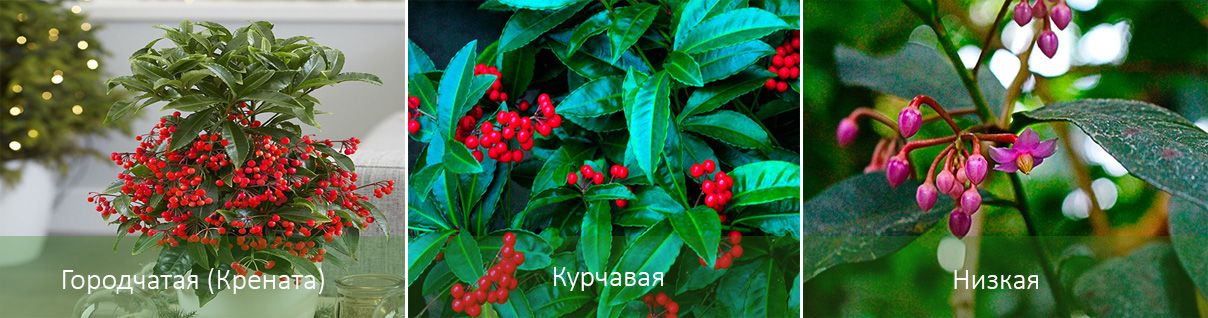
Flower varieties suitable for growing at home:
| View | Peculiarities | Leaves | Flowers/fruits |
| Gorodchataya (Crenata) | It grows slowly and reaches a height of 2 m. | Glossy, leathery, with wavy edges, dark green. |
Pinkish or snow-white, with a pleasant smell. Produces coral-red drupes. Fruiting can occur year-round. |
| Curly | Up to 0.6-0.8 m. |
White, in large quantities. Along with the flowers, the bush may also have last year's coral fruits. |
|
| Low | 0.3-0.4 m. |
Small, pink, collected in paniculate, drooping inflorescences. At first reddish-brown, turning black as they ripen. |
|
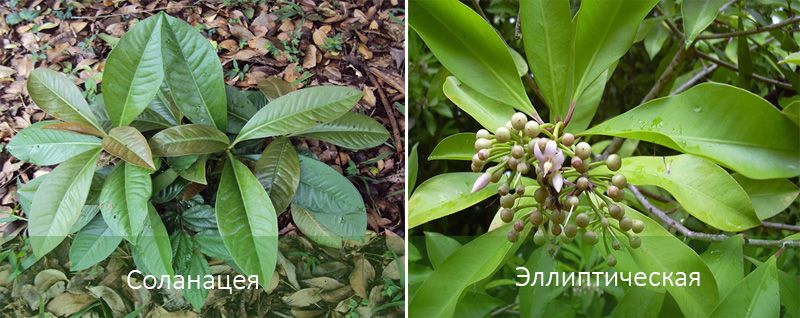
| Solanacea | A tree reaching 1.5-6 m, with a light red trunk. | Leathery, pale green, narrower than previous varieties. |
Pale purple or pinkish, unremarkable. Initially pale red, over time they darken and begin to shine. |
| Elliptical | In countries with warm climates, it is cultivated as a garden ornamental plant. It is used medicinally as an antimicrobial agent. | Long, rich green tone, elliptical shape. |
Pink. At first red, when ripe they turn purple. |
Caring for a coral tree
With proper care, the plant thrives in apartments. Seasonal care for ardisia at home:
| Factor | Spring/summer | Autumn/Winter |
| Location/lighting | A well-ventilated area. Southwest or southeast facing, away from ultraviolet rays. | |
| Bright, diffused. | Additional illumination with phytolamps or daylight devices. | |
| Temperature | +20…+22 °С. | +15…+18 °С. |
| Humidity | 50-60%. Mist with warm water daily. Stop watering after buds and fruit appear. To create a humid atmosphere, place a basin of wet expanded clay or moss next to the pot. | |
| Watering | Use settled water at room temperature. Melt or rainwater is best. | |
| Regular, abundant (once every 2-3 days). | If necessary, keep the soil slightly moist at all times. | |
| Top dressing | 2 times a month with a universal fertilizer for ornamental foliage plants. | No need. |
Transplantation, formation
Pruning is done every spring to maintain the bush's decorative appeal. Weak and diseased shoots are removed, and overly long branches are shortened.
Young plants (up to 3 years old) are repotted annually in the spring by transshipment. Subsequently, this is done only when necessary: if the root system is cramped in the pot or the soil is diseased. In other cases, annual soil changes are sufficient.
Flowering and fruiting
Flowers begin to form in late spring and early summer. During this time, the soil should be kept moist at all times. Dry soil, drafts, and low light levels can cause petals to fall off.
Since the flowers are bisexual, they can be pollinated artificially with a soft brush. From September to December, the drupes ripen on the bush. They are not edible, but they are not poisonous.
Propagation of Ardisia
The plant is propagated by seeds or cuttings. The first method is preferable:
- You can purchase seed material in a store or wait until the fruits on your existing bush ripen.
- At the beginning of the year, select large and ripe berries and remove the pits.
- Freshly harvested seeds don't need to be soaked. Store-bought seeds should be soaked in a heteroauxin solution for an hour (after filing off the hard seed coat).
- Plant in light, moderately moist substrate to a depth of 1 cm.
- Cover with polyethylene to create greenhouse conditions, keep at +20 °C.
- As it grows, transplant into larger pots with expanded clay drainage.
- It will take 2-3 years for the bush to form.
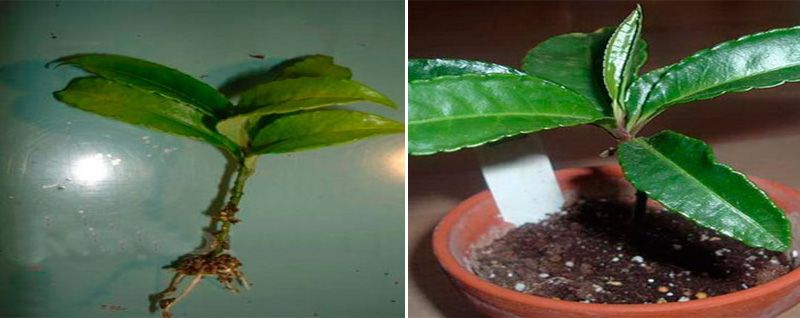
Step-by-step propagation by cuttings:
- Cut off the apical shoot. Treat the wound with crushed charcoal.
- Place the cuttings in a growth accelerator (for example, Kornevin) for 1-2 hours.
- Plant in separate small containers with loose peat substrate for indoor plants.
- Cover with film and place in a well-lit room with a temperature of +24…+28 °C.
Potential problems, diseases and pests of ardisia
If care is not provided correctly, the plant may become ill and lose its decorative appearance:
| Problem | Cause | Methods of elimination |
| Yellowing of greenery. |
|
|
|
Aphid. |
|
|
Scale insect. | |
|
Mealybug. | |
|
Spider mite. | |
|
Insufficient lighting. |
|
| Fall of leaves. |
|
|
| The ends of the leaves are brown and dry. | Low humidity. |
|
| Softness and twisting of plates. |
|
Normalize conditions of detention. |
Top.tomathouse.com informs: Ardisia – the magic of the coral tree
It is generally accepted that the plant has the following magical properties:
- gives men strength and courage, and girls beauty and feminine health;
- improves mental state, protects from the evil eye;
- creates a good atmosphere in the house, protects from negative energy.