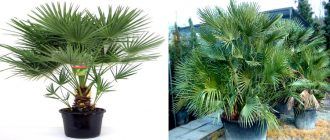
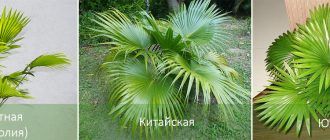
Areca palm is a palm tree. There are nearly sixty species currently known, primarily in southern and eastern Asia, Australia, and New Zealand.
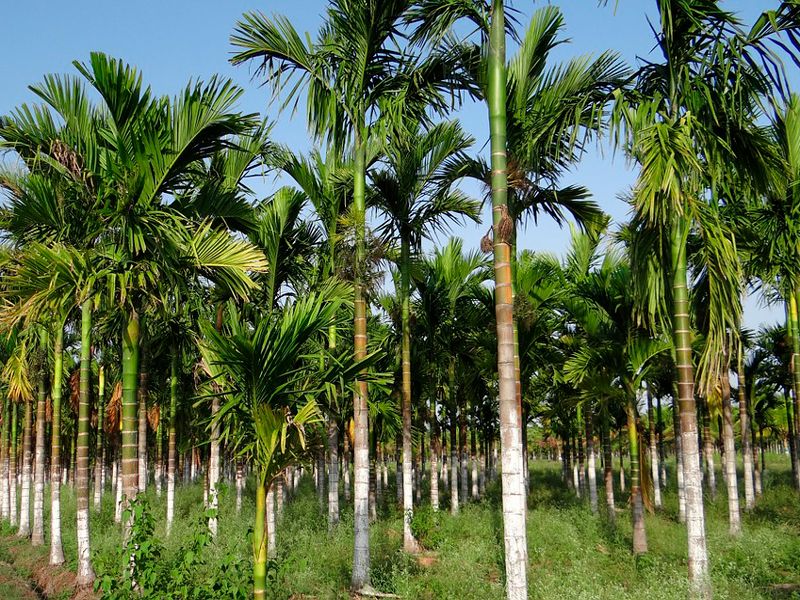
They are also abundant in the archipelagos of the Indian and Pacific Oceans. The plant was named areca by the aborigines of Hindustan.
Description
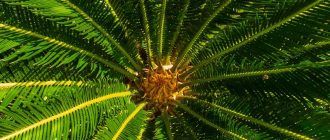
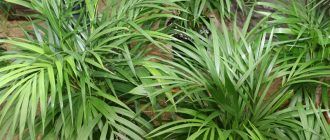
The plant usually has a single trunk, but sometimes there are several. The crown formed by the feathers looks very impressive, making it a great decorative addition to any room.
Areca grows rapidly. Five years after planting, it is already a mature plant. Indoor conditions limit its growth, and buds are practically impossible to see when grown indoors. In the wild, male flowers grow taller, while female flowers grow lower.
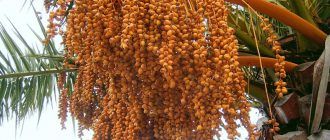
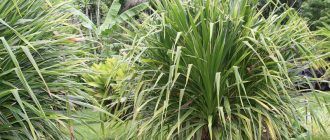
After fertilization, berries with one seed appear. In the wild, the palm often grows as a bush.
A more recent name for areca nut is chrysalidocarpus. Translated from the ancient Greek, chryseus means "golden" and karpos means "fruit," and it derives from the plant's yellow berries.
Types
| Variety | Description |
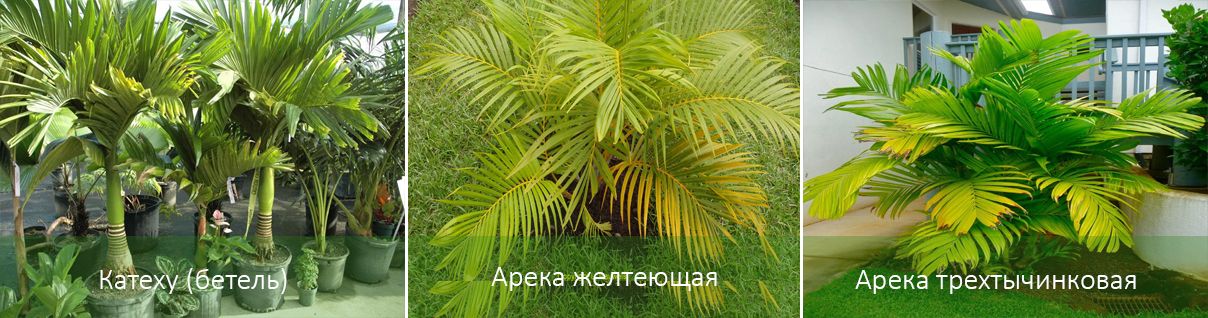
| Catechu (betel) | A large palm tree, it can grow up to 3 m indoors and up to 20 m in the wild. Its pinnate leaves reach 2 m in length. The plant stimulates the central nervous system and produces a mild intoxicating effect, although it is not considered a narcotic. |
| Areca luteskens | A smaller variety. In the wild, it typically reaches 10 m in height, while indoors it reaches 2 m. Its leaves are yellowish and curved. |
| Areca triandra | When grown indoors, it reaches 3 m, has glossy foliage, smells like lemon, and has more than one trunk. |
Areca tree care at home
Home care is necessary to recreate natural conditions for the palm. The plant loves light and prefers high indoor humidity. You can use distilled water or lemon juice for irrigation. For fertilizing, alternate mineral and organic fertilizers.
| Parameter | Spring-summer | Autumn-Winter |
| Lighting | Provide strong, diffused light. Place on a south-facing windowsill. Shade at midday. A north-facing window is also suitable, but only if there's sufficient light. | Move to a south-facing window. No additional lighting required. |
| Humidity | Born in damp places, it loves moisture. Spray with non-chlorinated, fairly soft water. | Do not spray the areca if there is no radiator nearby. |
| Temperature | +25…+30 °С, not higher than +35 °С. | +18…+23 °C, but not below +16°C. Ventilate but avoid drafts. |
| Watering | Abundant, 2-3 times a week. | Less common. Monitor soil moisture when temperatures are particularly low. |
| Top dressing | Time of greatest activity, twice each month. | Once a month. |
Transplantation, soil
The best time to repot areca palms is in April. The plant doesn't tolerate repotting well, so even young palms should only be repotted every two years. Mature palms, if properly potted, can be repotted every four years.
Transplant rules:
- preserve the root ball;
- select a pot strictly according to size;
- Do not allow the soil to become too deep; the soil must remain at the same level.
The substrate should be neutral or acidic. It should drain quickly. Avoid soil that contains water-logging components.
It is better to add to the soil for palm trees:
- turf soil;
- leaf soil;
- humus;
- coarse sand.
Ratio: 4:2:1:1.
Methods of reproduction
Reproduction can be generative and vegetative, that is, by seeds or division.
Step-by-step rules for seed germination:
- The best time is in April-May, or at the beginning of summer.
- Soak the seeds for several days in a solution of one of the biostimulants (Epin).
- Pour peat and perlite into the cups.
- Place the seeds in a moistened, but already water-absorbing, substrate. Cover with plastic or glass.
- They will begin to sprout in 1.5-2.5 months. Keep the seedlings in semi-darkness and warmth.
- Spray and ventilate the soil regularly.
- When permanent foliage appears on the shoot, move it to soil for adult palms.
Division:
- expose the roots of the plant by shaking it slightly;
- treat damaged areas with chalk or activated charcoal;
- move to a prepared new pot (according to the size of the roots);
- provide a comfortable temperature and necessary humidity;
- After 7-12 days, when the plant has adapted, feed it with a mineral composition where the concentration is reduced by half;
- After a month, transplant the palm tree into regular soil.
Possible difficulties
| Problem (what's happening to the leaves) | Cause | Prevention and treatment |
| They become spotted and curl up. | Not enough potassium. | Take into account the possibility of such a situation when choosing fertilizer. |
| They become lighter. Plant growth slows down. | Not enough nitrogen. | |
| They are starting to turn yellow. | Lack of moisture. | Water carefully, don't overdo it, but don't let it get too wet either. Wait until the top of the substrate dries out. |
| They dry out and light spots appear. | Excess of light. | Provide shade, especially if the plant is young. Older palms should also be protected from excess light at midday. |
| They wither and darken. | The temperature is insufficient. | The room must be warm. |
| The ends are drying out. | Not enough moisture. | Spray the plant, especially when it is hot and dry. |
| They darken and fall off. | Aging. | It is impossible to save the palm tree; it must be separated from other houseplants. |
| They wither and reddish-brown spots form. | Excess moisture. | Treat with any fungicides, strictly following the instructions. Stop watering. |
Diseases
| Disease | Signs | Treatment |
| Root rot | Weeping dark spots, mold forming near the base of the trunk, which has an unpleasant odor. | Remove from container, remove rotten roots and diseased tissue. Sprinkle the damaged areas with finely crushed chalk, or activated charcoal. Place outdoors for several hours. Replace the pot with fresh soil and enrich it with Gliocladin and Trichodemin. Water with a solution of Discor, Baikal-EM, and Alirin-B. |
| Penicillosis | Light spots appear on the leaves. After 10 days, a white coating forms, and the leaves lose their shape. | Water only once a day. Trim off diseased leaves. Spray the tree and soil with fungicides for three months. |
| Thrips | Silver or beige scratches and black spots appear. | Apply foam (green potassium soap or laundry soap) to the foliage for 2-3 hours. Then rinse with warm water. Treat with Fitoverm, Mospilan, or Actellic. Repeat weekly. If two or three treatments fail, change the soil and pot. |
Pests
| Pest | Symptoms | Control measures | Prevention |
| Mealybug | A wax-like coating. The areca extracts its juices and weakens it. | Treat with insecticides, such as Fitoverm, Arrivo, or Actellic. Follow the instructions carefully, as these products contain toxic substances. | Inspect the tree in a timely manner and identify insects. Remove them by hand or with a cloth soaked in a solution of alcohol and soap. Spray the plant with an infusion made from one chopped onion and a glass of boiling water. Soak the onion in the boiling water for an hour beforehand. Then strain the infusion. |
| Scale insect | Dark brown bumps appear on the plants. Spots appear, and entire parts of the palm die. | The same preparations apply. Before removing pests, apply vinegar, car oil, turpentine, or kerosene to their shells. | |
| Whitefly | The leaves are curling and turning yellow. The coating resembles sugar. | Vacuum the palm. Place it in the shower and rinse. Treat it with Komandor, Admiral, Iskra-Bio, or Intra-Vir. | Glue traps can be used to get rid of pests. Ensure adequate humidity. |
| Spider mite | The petioles are covered in webbing. Whitish spots appear on the underside. The leaves lose their shape and dry out. | Treat the palm with any alcohol-based tincture. After 15-20 minutes, place it under warm water. Spray and water thoroughly. It is recommended to keep the palm in an airtight bag for 3 days. If this doesn't help, treat it with Omite, Neoron, or Actofit two or three times every 7-12 days. | Detect the presence of pests in time. |
If you follow the areca palm care rules, the palm will become a decoration for any room, winter garden, veranda or greenhouse.