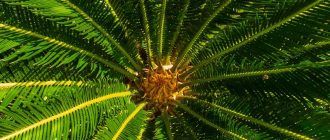
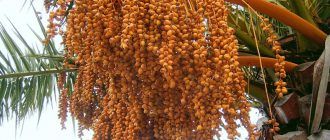
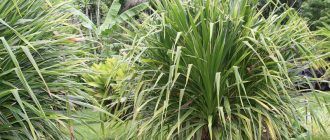
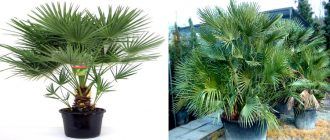
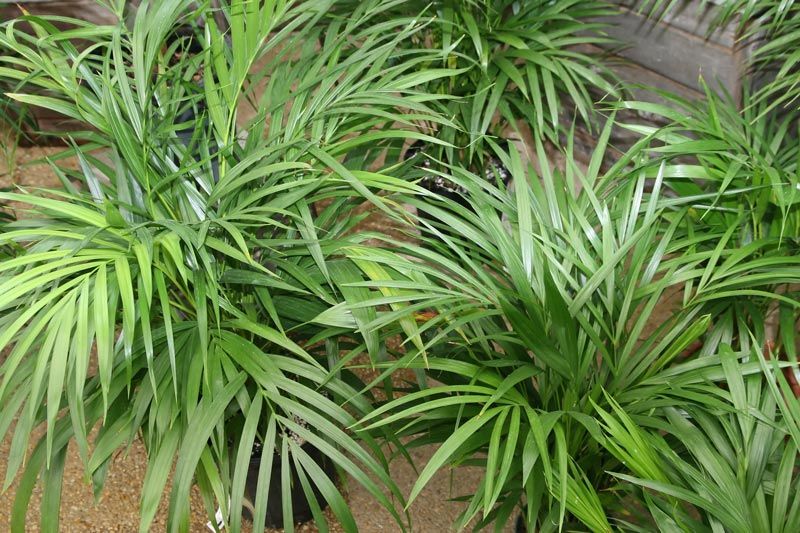
Chrysalidocarpus is a perennial evergreen palm. It is found in Madagascar, Oceania, the Comoros Islands, New Zealand, and tropical Asia. Translated from Greek, it means "golden fruit." It is also known as the Areca palm or reed palm, and it graces hallways, offices, and large rooms.
Content
- 1 Description of Chrysalidocarpus
- 2 Types of Chrysalidocarpus
- 3 Caring for Chrysalidocarpus at Home
- 4 Caring for Chrysalidocarpus after purchase
- 5 Chrysalidocarpus Care Tips
- 6 Reproduction
- 7 Top.tomathouse.com recommends: potential difficulties in caring for chrysalidocarpus and their solutions
- 8 Diseases and pests
- 9 Benefits and uses of Chrysalidocarpus
Description of Chrysalidocarpus
Chrysalidocarpus belongs to the Palm family, subfamily Arecaceae. Palms in this genus come in both multi-stemmed and single-stemmed varieties. The former are either intertwined or arranged parallel. The latter have a single, smooth trunk. They grow up to 9 m tall, but indoor specimens don't reach 2 m, grow slowly, 15-30 cm per year, and rarely produce flowers.
Stems with smooth or pubescent surfaces create a lush crown. Some have swollen shoots with lateral suckers. The leaves are pinnate or fan-shaped, rich green, with smooth or pointed edges, located at the top of the shoots, which grow on thin petioles 50-60 cm long. Each branch bears 40-60 pairs of narrow lobes.
With proper care, it begins to bloom and bear fruit in 2-3 years. During flowering (May-June), paniculate inflorescences with yellow flowers appear in the leaf axils. It is characterized by monocotyledonous and dicotyledonous plants. Chrysalidocarpus seeds are poisonous.
Types of Chrysalidocarpus
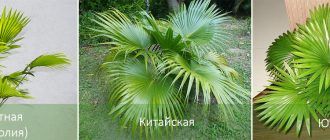
There are over 160 species of Chrysalidocarpus. The Madagascar and Yellow Chrysalidocarpus are grown indoors, while the rest are grown outdoors in gardens.
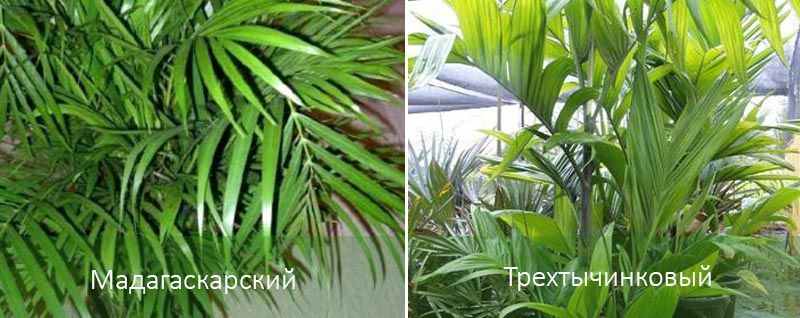
- Madagascar Dypsis has a single, straight, smooth trunk with a ringed structure, widened at the base. It is covered with white bark. It grows up to 9 m outdoors and up to 3 m indoors. The pinnate leaves, up to 45 cm long, are arranged in tufts.
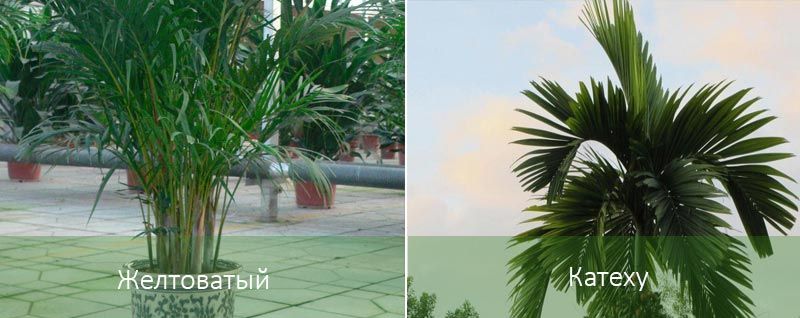
- Yellowish or Lutescens has a bushy habit, forming a dense, bushy, yellow shrub with young shoots emerging from the roots. The leaves are pinnate, with up to 60 pairs on an arching, two-meter petiole. It reaches a height of 10 meters in the wild. It grows well indoors, reaching heights of up to 3 meters.
- Tristamen – erect leaves growing from the ground in a tuft. Indoors, it reaches a height of three meters. Outdoors, it can reach up to 20 meters. The leaf blades are narrow and elongated. During flowering, it exudes a pleasant lemon scent.
- The Catechu (betel palm) is distinguished by its large trunk with long, straight leaves arranged symmetrically, creating a dense crown. In the wild, it can reach up to 20 meters in length. Indoors, it can reach heights of over 3 meters. This palm is planted in southern regions as a garden ornamental. It rarely flowers or fruits.
Caring for Chrysalidocarpus at Home
Growing chrysalidocarpus at home presents some difficulties: you need to create the right lighting, water, and maintain humidity.
| Parameters | Spring – summer | Autumn – Winter |
| Lighting | Bright, diffused light. A mature plant can tolerate direct sunlight. A young plant should be shaded from 11 a.m. to 3 p.m. | Place in a sunny spot. Use lamps if necessary. |
| Temperature | Optimal +22…+25 °С. | From +16…+18 °C. It is not recommended to place it near cold windows. |
| Humidity | High (60%+). Spray regularly, shower twice a month (in hot weather). Use automatic humidifiers. | 50%. Do not spray, wipe off dust with a damp cloth. |
| Watering | Abundant, as the soil dries out from rainwater. | Moderate, two days after the top layer of soil has dried out. Water the plants at a temperature 2°C higher than the air temperature. |
| Fertilizers | From March to October, apply mineral complexes for palms twice every 15 days. The dosage should be taken 10 times less than indicated on the package. |
Feed once a month. |
When watering, avoid pouring water onto the stems. Young plants are less resilient and may die if treated this way.
Caring for Chrysalidocarpus after purchase
After purchasing, the chrysalidocarpus needs time to acclimate to the new climate. Don't repot the plant immediately; observe it for a few days and water it with warm water.
For planting, choose a tall pot so that the roots can develop freely.
Soil and planting
Repotting is necessary when the root system almost breaks the container. Transplanting is done by removing the root ball, shaking out any remaining soil, emptying the drainage, adding new soil, and replanting in the same container. Large palms don't need to be transplanted; the topsoil is simply replaced. The time for repotting is April.
Choose fertile, light soil. It should be neutral or slightly acidic, not alkaline. Purchase a ready-made palm soil mix. Some gardeners prepare their own substrate: two parts each of leaf-humus soil and clay-turf soil, one part each of humus, peat, coarse river sand, and a little charcoal. For young seedlings, a different mixture is chosen: four parts of turf soil, two parts of peat and humus, and one part of sand.
Chrysalidocarpus Care Tips
Choose a light-colored pot to reduce heat gain in the summer. Materials include plastic and wood. Avoid planting too deep when repotting.
Use pebbles, pumice, crushed rock, and coarse perlite for drainage. Avoid stagnant water in the tray; use purified water, such as melted snow or rainwater, for irrigation and spraying.
The soil should be loosened regularly, and dried shoots and old, yellowed leaves should be removed. Only dead leaves, not partially yellowed, should be trimmed. Avoid damaging the trunk.
Ventilate the room, but avoid drafts. Only mature plants can withstand temperature and lighting fluctuations. Rotate the plant 180 degrees every ten days.
Reproduction
The palm tree is propagated by seeds and cuttings.
Seeds
Step by step reproduction actions:
- Soak the seeds for two days in warm water or for 10 minutes in a sulfuric acid solution to speed up germination (2-3 drops per 200 g of water).
- They are planted in peat, one in each container.
- They make a mini-greenhouse (cover it with film).
- The temperature is +25…+30 °C, humidity 70%.
- After the seedlings appear (after two months), they are planted.
Cuttings
For propagation in spring:
- Young shoots are cut off with a sharp knife.
- Remove all leaves.
- The cut on the plant is sprinkled with ash and dried.
- The cuttings are treated with a rooting agent (heteroauxin) and planted in sand.
- Temperature +27…+30 °С.
Roots grow back in three months.
Top.tomathouse.com recommends: potential difficulties in caring for chrysalidocarpus and their solutions
If a plant is growing poorly or is sick, it requires additional feeding, a specific watering regime, and proper lighting.
| Problem | Signs | Methods of elimination |
| Nitrogen deficiency | The leaves are initially light green, then yellow, and the plant stops growing. | Use nitrate (ammonium, sodium), ammophos, urea. |
| Potassium deficiency | Yellow, orange spots on old leaves, necrosis of the edges appears, the leaf dries out. | Feed with potassium sulfate and wood ash. |
| Magnesium deficiency | Light, wide stripes along the edges. | Apply magnesium sulfate and potassium magnesium sulfate as fertilizer. |
| Manganese deficiency | New leaves are weak, with necrotic stripes, and small in size. | Use manganese sulfate. |
| Zinc deficiency | Necrotic spots, leaves are weak and small. | Use zinc sulfate or zinc-containing fertilizers. |
| Dry, cold air, insufficient watering | Brown spots on the tips of the leaves. | Increase the temperature, humidity, and water more generously. |
| Too much sun or not enough moisture | The leaf blade turns yellow. | Shade when too hot, water more often. |
| Brown leaf spot | Watering with hard water, over-watering, low temperature. | Adjust watering, temperature according to the season, and let the water settle. |
| The lower leaves darken and die off. | Watered abundantly. Leaves were torn off by hand. | Cut the plates with sharp scissors. |
| Brown tips of the plate | Cold, dry air, lack of moisture. | Increase the temperature, humidify, water more often. |
Drainage is installed so that water flows into the tray immediately after watering.
To know when it's time to water, poke the soil with a skewer. When it's slightly damp, it's time to water; if the soil sticks to the soil, it's not time yet.
Diseases and pests
The plant can be attacked by fungal diseases and pests.
| Disease/Pest | Manifestations | Elimination measures |
| Helminthosporium | Dark spots on leaves with a yellow border. | Treat with a fungicide (Vitaros, Topaz), do not water frequently, reduce humidity. |
| mealybug | The pest causes yellowing and damage to the leaf. | Treat with an alcohol swab, then with insecticides (Aktara, Mospilan). |
| Mite | The leaves are drying out and have yellow spots on them. | Treat with an acaricide (Antikleshch, Actellic, Envidor). Maintain high humidity. |
Benefits and uses of Chrysalidocarpus
According to popular belief, chrysolidocarpus imbues positive energy and relieves negative emotions. It purifies the air of harmful substances such as benzene and formaldehyde; it increases humidity and enriches it with ozone and oxygen.
Despite the plant's toxicity, it is used as an anthelmintic and for diarrhea. In the Philippines, the palm is grown to make chewing gum.