
The date palm is an eye-catching addition to a variety of interiors. It's now possible to grow your own tree. To do so, you need to learn some gardening techniques, and the process won't seem complicated. While purchasing a ready-made plant isn't always possible, growing a date palm is possible. The tree likely won't bear fruit, but it will be a beautiful addition to any apartment, office, or country home.
Among various cultures, the palm tree is considered a symbol of fertility and hospitality. In ancient times, it was called the "queen of oases" and the "bread of the desert." The plant is hardy and adapts to indoor conditions.
Content
Types of date palms that can be grown from seeds
There are species with inedible fruit. More than a thousand varieties have been developed by breeders.
Only three of them can be grown from seeds at home:
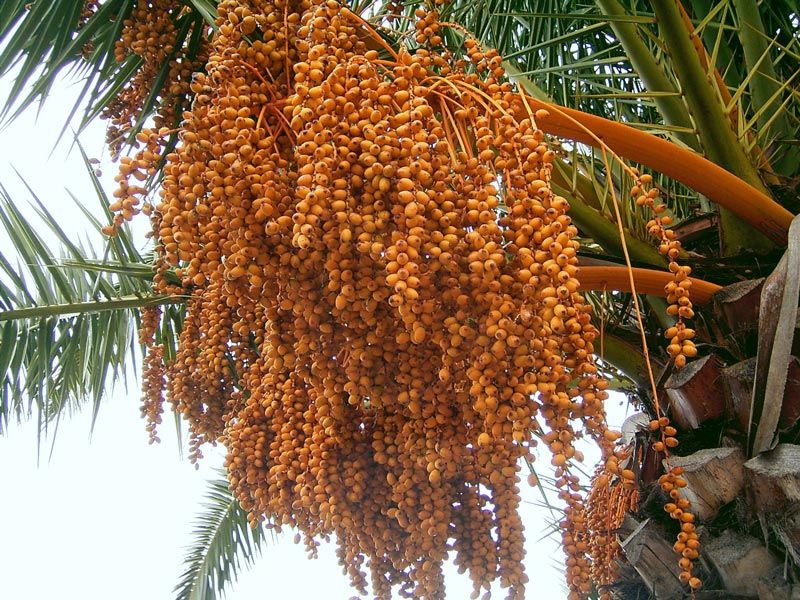
- Canary Island – grows up to 15 m, with a single trunk. Distinguished by its small, orange fruits.
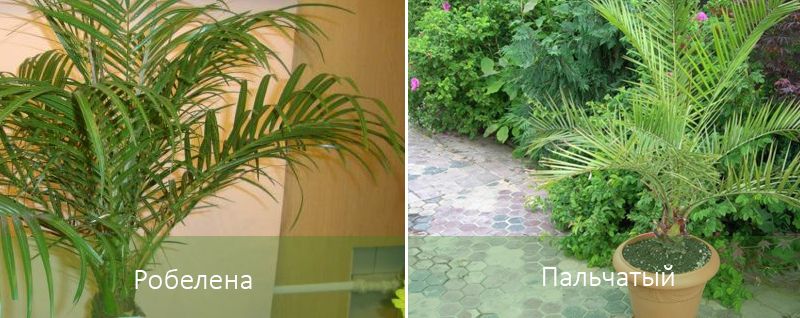
- Palmate – the fruit of this variety is sold in stores. Its trunk is constantly bare at the bottom and grows up to 15-20 m.
- Robelena has several thin trunks, produces black fruit, and is low-growing, reaching up to two meters. It can be grown indoors.
How to grow a date palm from a seed
Growing a palm tree from a seed indoors is a long process; you'll have to endure several years to admire the beautiful tree. Leaves will appear in the third year, and the plant flowers very rarely. Over the years, the height will reach two meters.
Selection and preparation of planting material
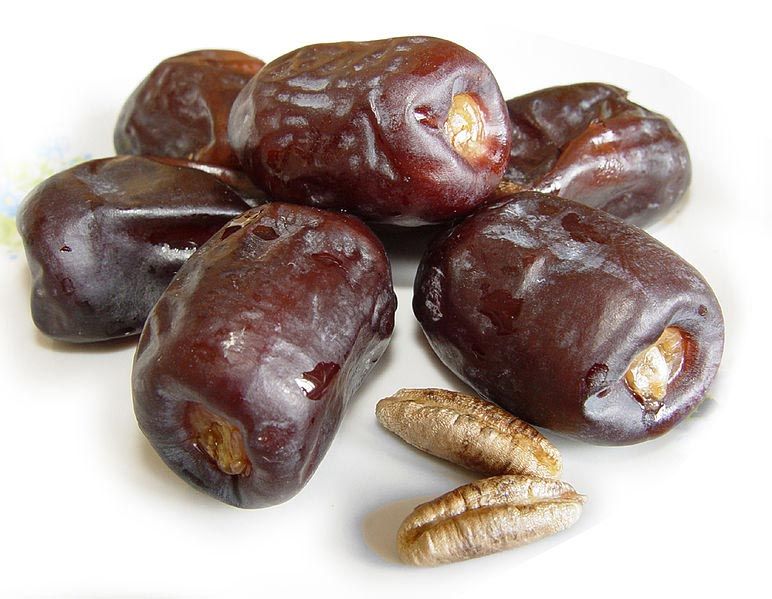
Choosing a date for a future palm tree is difficult; not every date germinates. For growing, you need unheated, unprocessed dates (fresh or dried), otherwise they won't germinate. The palm fruit contains a large, hard pit, which remains viable for several years. Dates are available year-round, so you'll need to buy several for planting.
First, carefully inspect each one, sorting out defective ones, those damaged by insects or diseases.
Before planting the seeds you should:
- Rinse under running water and remove any remaining pulp.
- Place in a glass of water at room temperature (change several times).
- Remove the remaining pulp; it will be easier to do this after it has swelled.
- Rinse.
- Let it dry.
- Place the date pit in a thermos with warm melt water for two days and add humate (a few grains).
- Place the seeds in moist soil (equal parts sawdust, peat, and sand). To prevent disease, disinfect the soil with potassium permanganate, scald it with boiling water, or bake it in the oven. The soil layer should be at least 8 cm high.
- Make a depression in the center and place the seed vertically at a depth 1.5 times its size.
- Sprinkle and put moss on top.
- Cover the container with the seeds with plastic.
- Spray the soil regularly, do not water.
- Maintain temperature at +35°C.
- After the sprouts appear, remove the film.
- Water moderately.
Germinating a seed is not easy; it takes 2-3 months, sometimes it takes longer.
To speed up the process, the bone should be subjected to more radical measures:
- Prick the surface of the seed with a needle.
- Go over it with sandpaper.
- Make cuts with a blade.
- Pour boiling water over it.
Next, place the seeds in damp cotton wool, place the cotton wool in a glass, and cover. Keep the container warm (on a radiator or in a sunny window). Do not allow it to dry out. If desired, replace the cotton wool with sawdust or hydrogel. After the mixture has swelled, plant.
Gardeners also use vermiculite (a special plant mixture) to germinate seeds. The seed is planted at its growth depth, either in a separate container or in a shared container. Cover with plastic or glass. Ventilate the container twice a day to remove excess condensation. Water regularly as the seedlings dry out; do not fertilize. Transplant when the seedlings reach 4 cm.
Secrets of planting and caring for them
For planting, take the sprouted seeds with the first leaves.
Planting seedlings
The seedlings are planted using the same soil where the seeds grew. A separate deep pot is prepared for each. The substrate is made from a mixture of one part sod, leaf mold, clay soil, and humus, and half a part peat and sand. Crushed charcoal is added. A 2-cm-thick drainage layer of expanded clay and charcoal is created. The plant is repotted again when the first leaf reaches 15 cm in length. Place it in a bright room.
Conditions for growing date palm
After planting the seedlings, they need care, maintaining proper lighting, humidity, and temperature.
| Parameters | Conditions |
| Lighting/Location |
Diffused light, no direct sunlight. Move outdoors in spring when temperatures reach 15°C. In the room on the eastern and western sides. In winter, daylight hours of up to 12 hours are required (for this, install phytolamps). To ensure uniform growth, rotate the plant 180 degrees every two weeks. Keep the room well-ventilated, avoiding drafts. |
| Temperature Humidity |
+20…+25 °С in summer. +12 …+16 °С – in winter. Humidity 50-60%, spray once every seven days. Wipe the leaves with a damp cloth. |
| Watering |
In summer, water the plant with soft water 3-4 times a week. Take a warm shower. Remove any excess water from the tray and wipe the bottom. Use settled, 30°C water. In winter, after the soil dries out, water once a week. |
| Top dressing |
During the period of active growth, fertilize with liquid mixtures for palms under the roots and on the leaves 2-3 times a month. Use chicken manure 1:3, once every ten days. In autumn – once a week, in winter – once a month. |
Transplanting a young palm tree
When a young palm reaches 15 cm, it is repotted. This is then done annually, along with the soil (its roots are very fragile), in April, and then every three years. For plants older than 10 years, the top layer of soil is replaced. The soil is watered thoroughly the day before. Drainage (brick or expanded clay) is placed at the bottom of a tall pot, and the soil composition remains unchanged. Choose a pot 4 cm larger than the previous one. The palm is removed from the old pot very carefully, being careful not to damage the roots and leaves, the soil is shaken off, and the new container is placed, with any voids filled with soil.
It is forbidden to trim the top of a palm tree and shape its crown, as it is the growth point of the tree. Only damaged and old leaves are removed.
Pests and diseases of dates
The appearance of pests and diseases is determined by the following signs:
| Pest/Disease | Signs | Control measures |
| Spider mite | Yellow, gray plaques appear, then a thin web. | Treat with infusion of garlic, onion peel or Actellic, Fitoverm. |
| Scale insect | Brown, yellow spots on the plant, sticky leaves. | Use spider mite control products. |
| mealybug | The leaves wither and dry out. | Treat with soap solution, then spray with Aktara, Calypso. |
| Thrips | The leaves are light on top and brown on the bottom. | Spray with Topsin, Fitosporin. |
| Pink rot | The leaves are softening. | Remove affected areas and treat with copper sulfate. |
| Spotting | Spots form near the veins and turn black over time. | Treat with Mancozeb, Ridomil and reduce watering. |
Problems with growing dates from seeds
If you don’t follow the care requirements, the date palm will become sick:
- Dry tips - not enough humidity, spray the plant more often.
- Yellow leaves – lack of moisture, increase watering.
- Dark leaves - too much watering, reduce.
- If growth has stopped, it means the room is too cold. If hard water is the cause, repot.
- Yellow and brown spots on leaves, curling and drying out – potassium deficiency. Fertilize with potassium humate or wood ash.
- Bright yellow spots around the edges indicate a magnesium deficiency. Add magnesium sulfate to the soil.
- Leaves are turning lighter, the plant is stunted – nitrogen deficiency. Fertilize with ammonium nitrate and manure.
- Leaf chlorosis indicates manganese deficiency. Apply manganese sulfate. Feed the tree with appropriate fertilizer.
Another method of propagating dates
Besides seeds, another way to propagate date palms is by suckers, which not all species produce. This is done if the roots are developed. Cut the sucker with a sharp knife, avoiding the trunk. Replant in seedling soil and cover with plastic wrap for a few days.
General information about the tree
The date palm, a member of the Palm family, grows in India, Saudi Arabia, Egypt, Tunisia, the Canary Islands, Iran, and Morocco. The palm prefers hot, tropical climates, with a trunk growing up to 30 meters tall and 80 cm in diameter. The tree lives up to 150 years. Its leaves are pinnate, curved, and up to 5 meters long. Twelve new leaves grow annually, and it has no branches. The inflorescences are a meter long, with male and female flowers, and the nutritious fruits are formed from the female ovary. The fruits are eaten, used as animal feed, and exported to other countries.

1 leaf grows from the seed, grows for years up to 1 meter in height, where does the trunk come from?
Good evening.
When grown from a seed indoors, a date palm takes quite a long time to grow. In the 2nd or 3rd year, it will have a few elongated leaves without a stem. By the 5th year, if all the growing and care conditions have been met, the beginnings of a stem will appear, which will grow larger each year. However, annual repotting is essential.